

When you see a brown spot spreading across your lawn in Cumming or Alpharetta, it's easy to feel a little defeated. But what's actually causing it? Most of the time, the answer for us here in North Georgia boils down to one of three things: fungal diseases that love our humidity, underground pests like grubs chewing on roots, or environmental stress from things like compacted clay soil and watering issues.
Decoding Brown Spots on Your Georgia Lawn
Think of yourself as a lawn detective for a moment. Every brown spot tells a story about what’s happening just below the surface, and learning to read those clues is the key to getting your green lawn back. It doesn't matter if you're in Johns Creek, Milton, or Dahlonega—we all face pretty similar challenges.
Your beautiful Fescue or Bermuda lawn is a living, breathing ecosystem. When something throws it out of balance, whether it's a fungal invader, a hungry insect, or a stressed-out root system, the first sign you'll see is often a dreaded brown patch. Guessing the cause won't get you very far, since the fix for a disease is worlds away from the solution for grubs or soil compaction.
The Three Main Culprits
Before we get into the nitty-gritty, let’s line up the usual suspects you'll run into here in North Georgia. Getting a handle on these main categories will help you narrow down the possibilities and get on the right path to a solution.
- Fungal Diseases: Our warm, humid summers are the perfect breeding ground for lawn diseases. Brown Patch is a big one, and it can spread frighteningly fast across lawns in Cumming and the surrounding areas.
- Pests and Grubs: There’s a whole world of invisible pests operating underground. They sever grass roots from their lifeline of water and nutrients, causing the turf above to wither and die in patches.
- Environmental and Soil Issues: Georgia's famous red clay is notorious for compacting, literally suffocating the roots. On top of that, simple mistakes in watering or mowing can stress the grass out, leaving it wide open to problems.
This quick reference infographic breaks down the visual cues for these common causes of brown spots in grass.
As you can see, the shape, the color, and even how the grass feels can give you major clues. Armed with these insights, you can stop just reacting to brown spots and start building a lawn that's genuinely healthy and resilient from the ground up.
What Fungal Diseases are Wrecking Georgia Lawns?
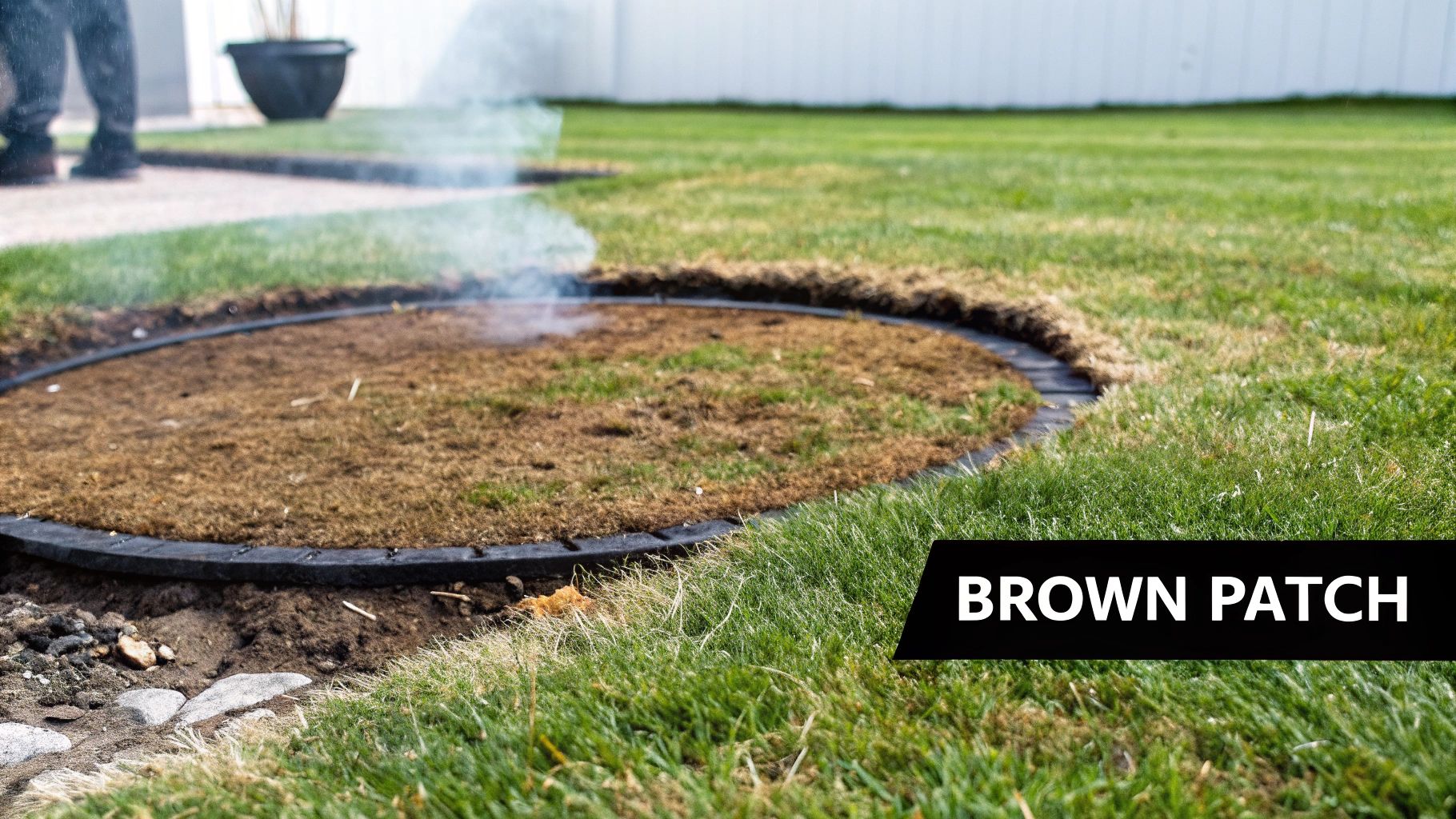
Here in Georgia, with our famous heat and humidity, fungus is almost always the prime suspect behind those mysterious brown spots. Think of it like your lawn catching a cold—it’s most likely to get sick when it’s already stressed and the conditions are just right for germs, or in this case, fungal spores, to throw a party.
Our damp mornings and sticky summer nights are the perfect invitation. From Milton to Dahlonega, I’ve seen homeowners go to bed with a green lawn and wake up to ugly brown patches. These fungi aren't picky, either; they'll happily attack Fescue, Bermuda, and Zoysia with equal enthusiasm.
The Infamous Brown Patch Fungus
If you have a Fescue lawn in the Cumming area, there's one disease you need to know: Brown Patch. This is the big one. It's an aggressive fungus that absolutely loves warm, wet weather, making late spring and summer its peak season for causing chaos.
Caused by the pathogen Rhizoctonia solani, Brown Patch is a leading cause of dead spots in turfgrass across the country. The fungus can lie dormant in your soil and thatch for years, just waiting for the right moment. That moment arrives when you have long periods of moisture combined with air temperatures between 75°F and 85°F. Once active, it creates those tell-tale circular brown spots that seem to get bigger overnight. If you want a deep dive into this common problem, Consolidated Pest Control has a complete guide to brown patches in your yard.
One of the classic giveaways of an active Brown Patch infection is the "smoke ring" you might see on the outer edge of the patch. If you look closely in the early morning dew, you may spot a dark, grayish-brown halo. That ring is the frontline where the fungus is actively spreading—a dead ringer for a proper diagnosis.
A huge mistake I see people make is watering at night. It leaves the grass blades wet for hours on end, basically rolling out the red carpet for fungal diseases like Brown Patch to thrive. Always water in the early morning so the sun has a chance to dry things out.
Other Fungal Foes Lurking in North Georgia
While Brown Patch gets most of the headlines, it's certainly not the only fungal troublemaker around here. A few others can cause some serious headaches if you don't keep an eye out for them.
- Large Patch: This is basically the warm-season version of Brown Patch, going after Zoysia and Bermuda lawns in Alpharetta and Johns Creek. It loves the cool, wet weather of spring and fall, often showing up as big, irregular dying patches just as your lawn should be greening up.
- Dollar Spot: Seeing small, bleached-tan spots about the size of a silver dollar? That's likely Dollar Spot. They might look small at first, but these little circles can merge into large, sunken areas of dead grass if left alone.
When it comes to fighting these fungal invaders, a good offense is your best defense. Being proactive is so much easier than trying to cure a full-blown infection. Start by watering deeply but infrequently, and always in the morning. This encourages deep roots without creating a soggy, disease-friendly environment. You can also improve air circulation by trimming up low-hanging tree branches and aerating compacted soil. It all helps make your lawn a less inviting place for fungus to call home.
Uncovering Pests and Grubs Damaging Your Lawn
While fungal diseases are a common headache, sometimes the enemy isn't a microscopic spore but a much hungrier pest working silently beneath the soil. For homeowners in Johns Creek, Milton, and Alpharetta, these hidden invaders are often the destructive larvae of beetles—what we all know as white grubs.
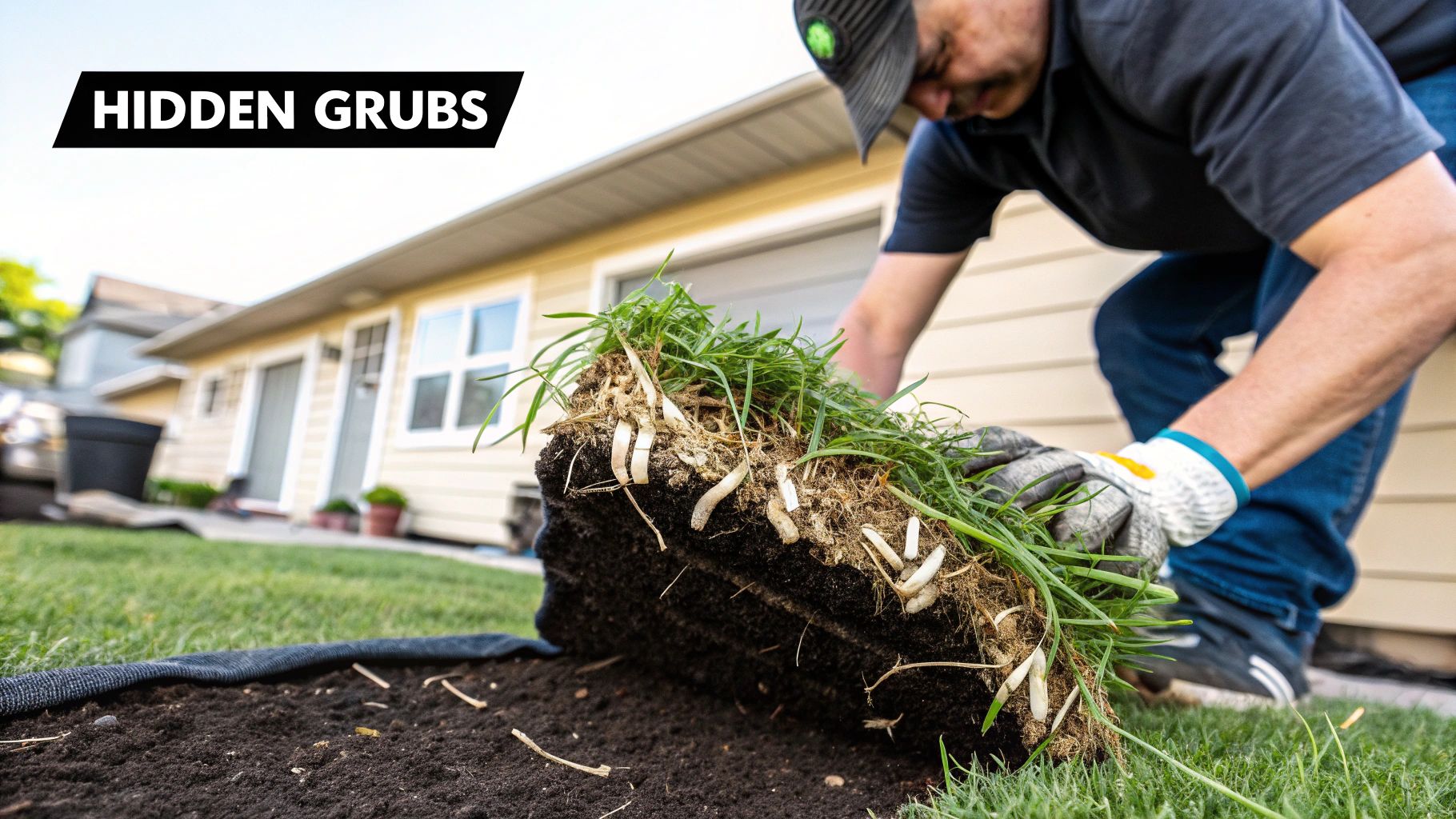
Think of these pests as the termites of the lawn world. They cause serious damage that stays completely out of sight until the grass is already dying. Grubs feast on the root system, essentially cutting off the turf's lifeline for absorbing water and nutrients. The result is wilting, brown patches that no amount of watering can fix, simply because the roots are no longer there to drink.
Identifying a Grub Problem
So, how can you be sure grubs are the ones wrecking your lawn? There's a classic diagnostic trick called the "carpet test."
Find the edge of a brown spot, grab a handful of turf, and give it a solid pull. If the sod rolls back as easily as a loose piece of carpet, you've found your culprit. You'll likely see a severed root system and maybe even a few of those tell-tale C-shaped white larvae wiggling in the soil.
This root damage is what gives them away. During peak season, grub populations can explode, with densities sometimes reaching several hundred per square meter in the worst-hit areas. The small brown spots they create will just keep getting bigger as they continue to feed. You can discover more insights about diagnosing lawn spots on scotts.com.
Timing Your Defense Against Pests
Here in North Georgia, winning the battle against grubs is all about timing and understanding their lifecycle. Adult beetles, like the notorious Japanese beetle, lay their eggs in the summer. Those eggs hatch into tiny, ravenous grubs in late summer and early fall, which is precisely when they do the most damage.
This means the best time to act is before they hatch, with a preventative treatment in late spring or early summer. If you have pets and kids, you'll want to learn more about a pet-safe grub killer to protect your lawn and your family.
The most effective grub control is preventative, not reactive. Applying a treatment before the eggs hatch in mid-summer can stop an infestation before it even begins, saving you from having to repair large dead patches later in the year.
Of course, grubs aren't the only troublemakers. Pests like armyworms can also cause rapid browning, sometimes chewing through a lawn seemingly overnight. Unlike grubs, they attack the grass blades themselves.
Keeping a close eye on your lawn from spring through fall is the best way to catch these invaders early. And if you prefer to avoid harsh chemicals, exploring natural solutions like neem oil for pest control offers an excellent, eco-friendly way to defend your turf from all sorts of damaging insects.
How Soil and Environment Cause Brown Spots
Sometimes, the culprit behind those frustrating brown spots isn't a bug or a fungus—it's the ground itself. The very foundation of your lawn, from the soil to the amount of sun and air it gets, sets the stage for success or failure. Here in North Georgia, from Cumming to Dahlonega, our famous red clay is often the main environmental villain.
The Problem With Georgia Clay
Think of healthy soil like a fluffy sponge, filled with tiny air pockets that let roots breathe, expand, and soak up water. But over time, things like foot traffic, heavy mowers, and even our intense downpours can squeeze those pockets shut. This is soil compaction, and it turns that life-giving sponge into something more like a brick.
For your grass, compacted soil is suffocating. Roots can't push through the dense earth to find water and nutrients, essentially starving the plant from the bottom up. The result? Stressed, weakened grass that turns brown at the first sign of heat or drought.
Bringing Compacted Soil Back to Life
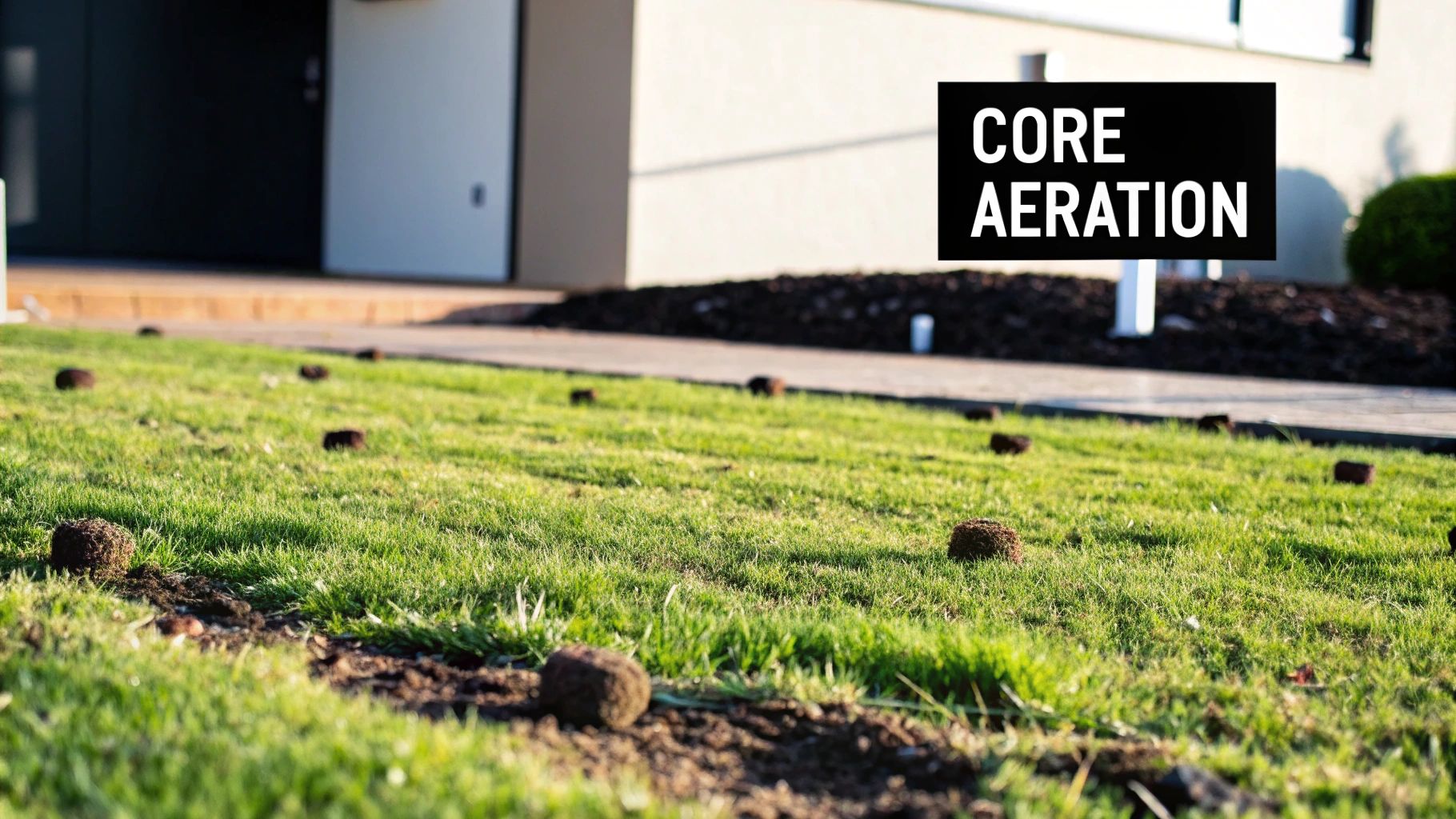
The best way to fix compacted soil, hands down, is core aeration. This process physically pulls small plugs of soil out of the ground, instantly creating space. It’s like opening a window in a stuffy room, allowing air, water, and nutrients to finally reach the roots again. It's the deep breath your lawn has been desperate to take.
Beyond compaction, knowing your soil’s chemistry is key. The first step is to understand your soil's pH levels because the wrong pH can lock up vital nutrients, even if they're present in the soil. For our local lawns, we’ve put together a simple guide on how to test soil pH that’s tailored for our region.
Other Environmental Stressors to Watch For
Compaction isn't the only environmental issue we see. Certain spots in yards around Alpharetta and Milton can create their own little trouble zones that encourage brown patches.
Think about it: poor drainage, deep shade, and stagnant air all work against your lawn. These conditions create the perfect breeding ground for fungal diseases. In fact, research shows that leaving grass blades wet for too long can spike the risk of a brown patch outbreak by up to 70%.
Keep an eye out for these common problems:
- Deep Shade: We love our mature pines and hardwoods, but they can cast dense shade that weakens turf, leaving it thin and vulnerable.
- Poor Airflow: Fences, sheds, or thick shrubs can block the breeze, trapping humidity right at the grass level. That stagnant, damp air is practically a welcome mat for fungus.
By tackling these foundational environmental issues, you stop playing defense and start building a healthier, more resilient lawn from the soil up.
5. Preventing Man-Made and Pet-Related Lawn Damage
Not every brown spot is the work of some sneaky fungus or a hidden pest. Sometimes, the culprit behind those dead patches is staring right back at us in the mirror. From our furry friends to simple lawn care mistakes, our own activities can leave ugly, preventable marks on the turf.
For pet owners from Cumming to Alpharetta, those distinct, round dead spots are an all-too-familiar headache. These are essentially burn marks caused by the high concentration of nitrogen in dog urine. Think of it like spilling a tiny, super-potent puddle of liquid fertilizer in one spot—it completely scorches the grass blades and roots.
The Problem With Pet Urine
You can usually spot dog urine damage by its signature “halo effect.” The center of the patch is totally brown and dead, but it’s often surrounded by a lush, dark green ring of grass. That outer ring is where the nitrogen was diluted just enough to act as a helpful fertilizer instead of a turf killer.
Unfortunately, the grass in the center is usually a goner and won't come back on its own. The only real fix is to get in there with a rake, clear out the dead stuff, loosen up the soil, and reseed the area.
To stop future burns, your best bet is immediate dilution. Keep a watering can or a hose nearby and thoroughly flush the spot right after your dog does their business. This washes the concentrated nitrogen away before it has a chance to do any real damage.
Common Accidental Lawn Damage
Beyond our four-legged family members, plenty of other human errors can lead to brown patches. These are often the result of simple carelessness, but the good news is they’re easy to avoid once you know what to watch out for.
A few common mishaps we see in lawns all over the Johns Creek and Milton area include:
- Fertilizer Spills: Accidentally dumping a pile of granular fertilizer or letting a loaded spreader sit in one spot for too long will create a chemical burn that looks just like a pet spot. Always fill your spreader on a driveway or patio and sweep up any spills immediately.
- Gasoline and Chemical Leaks: A leaky lawnmower can drip gasoline, which is toxic to grass and will kill it fast, leaving a dead brown trail. The same goes for any other chemical spills, so be careful when working with things like herbicides or pesticides.
- Forgotten Items: Leaving a garden hose, a kid’s pool, or even a lawn chair sitting on the grass for a few hot days is a recipe for a dead spot. It blocks sunlight and traps heat, smothering and basically cooking the turf underneath, leaving a perfectly shaped brown patch where the object was.
Simply being a little more mindful during your regular lawn care routine can prevent these man-made brown spots entirely. That way, your hard work won't be undone by a simple, avoidable mistake.
6. Your Seasonal Action Plan for a Spot-Free Lawn
Knowing what turns your grass brown is one thing, but keeping it green? That takes a proactive, year-round game plan. The absolute best defense against diseases, pests, and all the other headaches we've covered is a genuinely healthy, resilient lawn.
Let's break down a simple, season-by-season roadmap designed specifically for the challenges we face here in Cumming, Johns Creek, and across North Georgia. By syncing your lawn care with the calendar, you can stop fighting fires and start building a turf that can handle our local climate.
Spring: The Big Wake-Up Call
As your lawn shakes off its winter sleep, your job is to set it up for a strong season ahead. Think of it as spring training for your turf.
- Early Spring (March-April): This is your one and only shot to get ahead of crabgrass. Applying a pre-emergent herbicide now creates an invisible barrier in the soil, preventing weed seeds from ever getting a chance to sprout. You're eliminating the competition before the race even starts.
- Late Spring (May): Now's the time for preventative grub control. Putting down a treatment before the adult Japanese beetles start laying their eggs is the key. It's so much easier to prevent a grub problem than to fix the widespread root damage they cause in late summer.
Summer: Surviving the Georgia Heat
Summer in Milton and Alpharetta means two things: heat and humidity. This combo creates a perfect storm for fungal diseases and drought stress. The goal is to keep your lawn hydrated without rolling out the welcome mat for fungus.
By far, the biggest mistake homeowners make in the summer is watering too often for short periods. This just encourages shallow, weak roots and keeps the grass blades constantly wet—a perfect recipe for Brown Patch. Instead, water deeply but infrequently, maybe once or twice a week, always in the early morning.
Keep an eye on your lawn, especially after a few days of heavy rain. Proper watering is your secret weapon here, as it gives the morning sun plenty of time to dry the grass blades before the humid evening sets in.
Fall: Time to Recover and Rebuild
For those of us with Fescue lawns in places like Cumming and Dahlonega, fall is everything. It's the most critical season of the year. The cooler air and warm soil create the perfect environment for your grass to recover from summer stress and build strength for the coming winter.
This is the perfect window for core aeration. Pulling up those plugs of soil breaks up the compaction that inevitably builds up over the summer, allowing air, water, and nutrients to finally reach the roots. You should always follow aeration immediately with overseeding to fill in any thin spots. A thick, dense lawn is your best defense against future problems.
Winter: Prep and Plan
Even when your lawn is dormant, a little bit of work goes a long way. Make sure to keep leaves and other debris cleared off the grass. A thick blanket of wet leaves can suffocate the turf and become a breeding ground for fungal spores that will be waiting for you in the spring.
Winter is also the perfect time to get your mower blades sharpened and map out your strategy for the year ahead. To help you stay organized, we've put together a table below. For an even more detailed guide, this lawn care schedule template is a fantastic resource to keep your plan on track.
North Georgia Seasonal Lawn Care Checklist
This checklist provides a quick overview of essential preventative tasks for both cool-season (Fescue) and warm-season (Bermuda/Zoysia) lawns common in our area. Following this schedule helps you stay ahead of potential issues and cultivate a healthier, more resilient turf year-round.
| Season | Key Tasks for Fescue Lawns | Key Tasks for Bermuda and Zoysia Lawns |
|---|---|---|
| Spring | Apply pre-emergent for crabgrass. Begin preventative grub control. Monitor for disease as temps rise. | Apply pre-emergent for crabgrass. Begin fertilizing as grass greens up. Monitor for large patch fungus. |
| Summer | Water deeply and infrequently. Raise mower height to 3.5-4 inches. Watch for brown patch and grub damage. | Water deeply to prevent drought stress. Mow regularly at a lower height (1.5-2 inches). Watch for armyworms and disease. |
| Fall | Core aerate and overseed. Apply a "starter" fertilizer after seeding. Adjust watering for new seed. | Reduce fertilization to prepare for dormancy. Continue mowing as needed. Apply final pre-emergent for winter weeds. |
| Winter | Keep leaves and debris off the lawn. Avoid heavy foot traffic on dormant or frozen turf. | Lawn is dormant (brown). Keep clear of leaves. Apply post-emergent for any emerged winter weeds. |
Remember, consistency is key. A little bit of proactive care each season adds up to a huge difference in the health and beauty of your lawn.
Your Top Questions About Brown Spots in Grass
When strange brown patches show up, it's natural to have questions. We hear a lot of the same ones from homeowners all over North Georgia, from Cumming to Johns Creek. Here are some quick answers to the most common lawn care mysteries we solve.
Can My Fescue Lawn Bounce Back from Brown Patch?
Honestly, it's a long shot for a Fescue lawn to fully recover from brown patch on its own, especially with our Georgia humidity. Even if the roots of a mature plant survive a mild case, the fungus is likely to keep spreading without some help.
The best way to stop the disease in its tracks is with a targeted fungicide. Once that's done, you can nurse the lawn back to health with deep but infrequent watering in the morning. The real game-changer, though, is aerating and overseeding in the fall to rebuild the thinned-out turf.
Will the Brown Spots from My Dog Ever Go Away?
Unfortunately, the grass in the very center of a dog urine spot is dead and gone for good. Think of it as a chemical burn—the concentrated nitrogen in the urine literally scorches the grass blades and roots.
The only way to fix it is to get in there, rake out all the dead stuff, and loosen up the soil. From there, you can patch it up with some new seed or a piece of sod.
Here's a pro tip: The best defense is a good offense. Try to water down the spot right after your dog does their business. A quick dousing dilutes the nitrogen before it has a chance to burn the grass.
How Can I Tell if It's Grubs or Just a Dry Spot?
It can be tricky, but there are a few tell-tale signs. Grass that's just thirsty will usually take on a dull, almost bluish-gray tint before it turns brown, and a good, deep watering will often bring it back to life.
Grub damage is different. The patches feel spongy when you walk on them, and no amount of water will help because the roots have been chewed away.
If you really want to be sure, try the "carpet test." Grab a handful of the brown grass and give it a tug. If it peels right up like a loose piece of carpet, you've got grubs.
Ready to take back your yard and get rid of those ugly brown spots for good? The team at Barefoot Organics knows North Georgia lawns. We use natural, effective solutions built for our unique climate. Get your free quote today