

Before you can ever hope to have a truly lush, green lawn here in Cumming or Alpharetta, you first have to understand what’s happening right under your feet. Learning how to test soil pH is the most important first step you can take, because it reveals the single most critical number for your lawn's health. This one simple measurement determines whether your grass can even use the nutrients you're giving it.
Why Soil pH Is The Foundation Of Your North Georgia Lawn
Think of your soil's pH level as the gatekeeper for every essential nutrient your lawn needs to survive. You could be spending a small fortune on the best fertilizers available, but if the pH is too acidic or too alkaline, those nutrients get chemically "locked up" in the soil. Your grass roots simply can't absorb them.
The result? Weak, yellowing turf that struggles, no matter how much money you throw at it.
The North Georgia Soil Challenge
Here in areas like Johns Creek, Milton, and Dahlonega, we all know our soil. It's that heavy, red clay, and it tends to be naturally acidic. More often than not, it falls well below the ideal pH range for the most common turfgrasses in our area.
- Fescue does best in slightly acidic soil, preferring a pH between 6.0 and 6.5.
- Bermuda grass also thrives in that same range, though it can handle slightly more alkaline conditions if needed.
When your soil's pH drops too low, it's like trying to feed your lawn through a locked pantry door. The grass is essentially starving, which makes it an easy target for weeds, disease, and the stress of a hot Georgia summer. It’s a battle countless homeowners from Cumming to Dahlonega face every single year.
The right pH doesn't just feed your grass; it builds a resilient foundation. A balanced soil environment encourages deep root growth and supports the beneficial microbes that keep your lawn healthy from the ground up.
While the average soil pH across the globe is around 6.36, our local conditions mean we often have to lend a helping hand. Farmers and experienced lawn pros in Forsyth County rely on soil test results to make smart decisions, usually applying lime to raise the pH of our acidic soil or sulfur if they encounter a rare alkaline patch.
By getting a handle on these basic principles, you're already one step closer to a thriving lawn. It's all part of understanding why choosing the right lawn care methods matters.
Collecting a Soil Sample Like a Pro
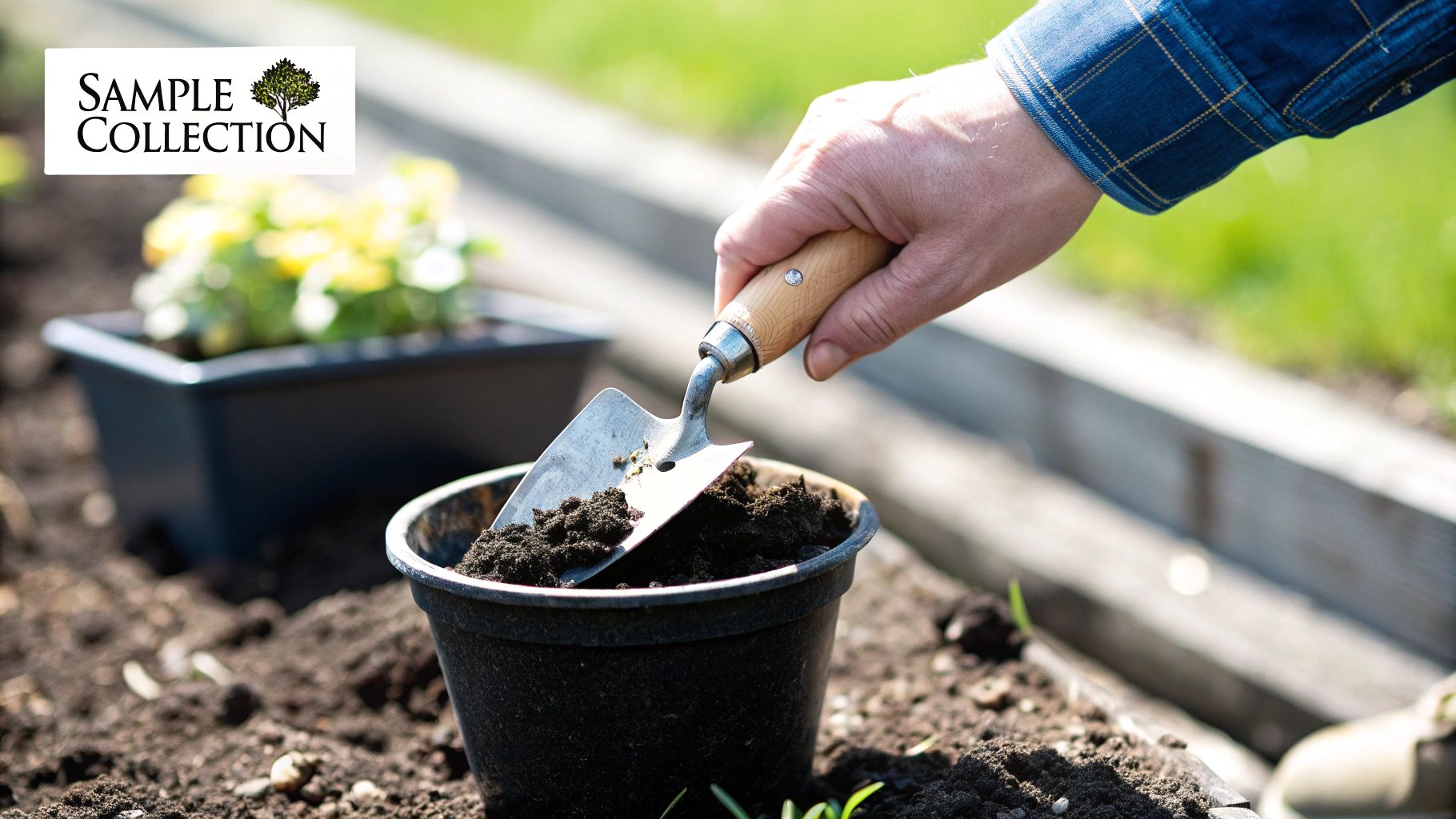
An accurate soil test all comes down to the quality of the sample you collect. This isn't just about digging a random hole; it's about creating a single, composite sample that truly represents your entire lawn. Think of it as getting an average reading for your whole property, which gives you a much clearer picture of what’s happening underground in your Alpharetta yard.
To get started, you'll just need a few basic tools: a clean plastic bucket, a garden trowel or spade, and a couple of resealable plastic bags. The key word here is clean. Make sure your bucket and trowel are completely free of any old fertilizer, soil, or chemical residue. Even a tiny amount of contamination can throw off your pH reading, so don't skip this step.
The Right Way to Gather Your Soil
Instead of digging in one or two spots, the best approach is to walk your lawn in a random zig-zag pattern. Plan to stop and grab a small sub-sample at about 10 to 15 different points along your route. This method ensures that one problem area doesn't skew the results for your entire lawn.
At each spot, first clear away the grass, thatch, and any other debris on the surface. Then, use your trowel to dig a clean slice of soil about 4 to 6 inches deep. This depth is crucial because it’s the main root zone for common turfgrasses like Fescue and Bermuda in our Johns Creek lawns. Drop each of these slices into your bucket as you go.
Pro-Tip: If you have a specific problem area—say, a stubborn brown patch in your Milton lawn that never seems to recover—it's a smart move to collect a separate, dedicated sample just from that spot. This lets you compare its pH to your main sample, helping you diagnose if a localized soil issue is the culprit.
Once you have all your sub-samples in the bucket, it's time to mix them together thoroughly. Break up any clumps and get it all blended. This mixture is now your final, representative sample. From this combined soil, scoop out about one or two cups and put it into a labeled bag for testing.
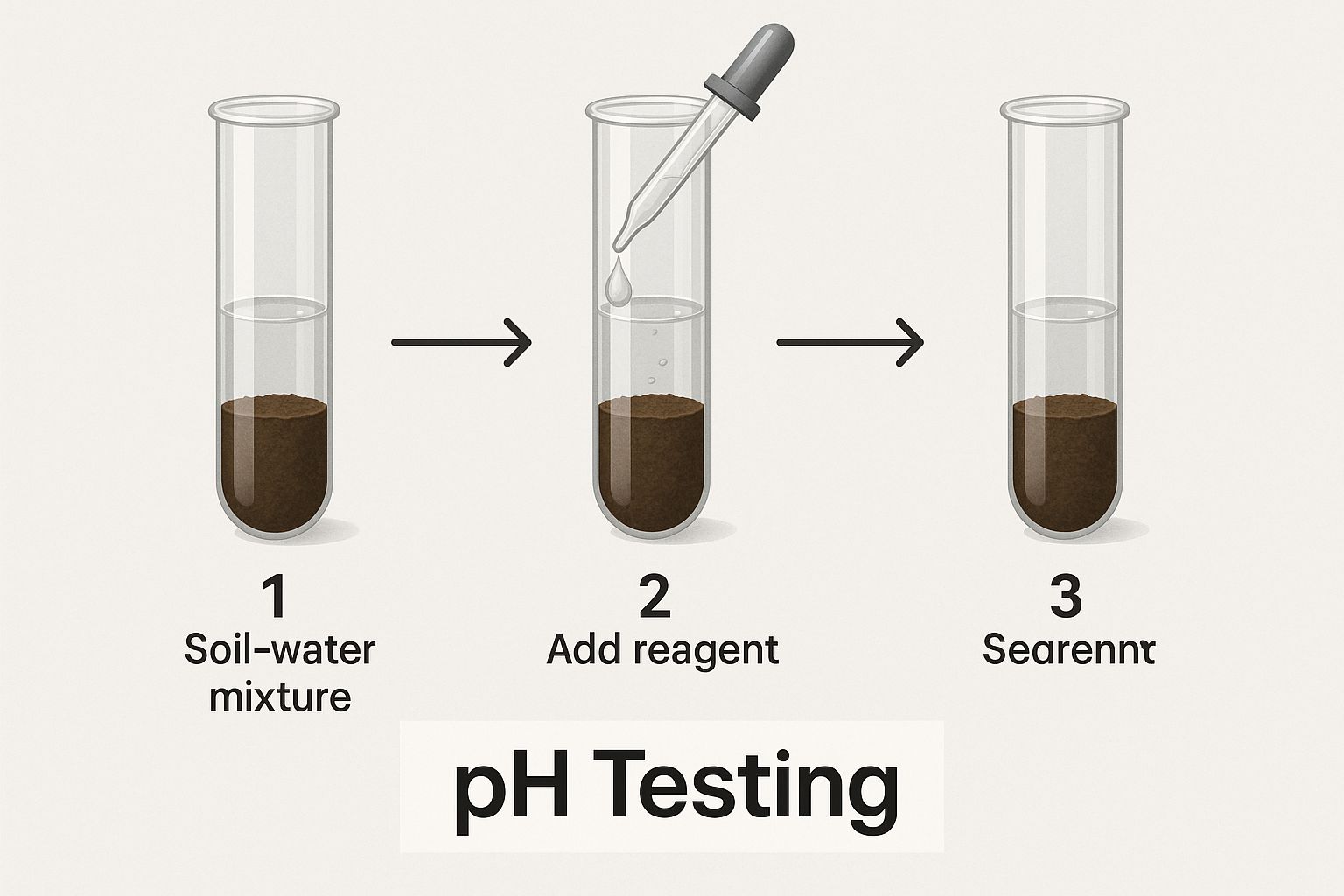
As you can see, the basic testing process involves mixing your soil with water and a reagent, which causes a color change corresponding to a specific pH level. By following these collection steps carefully, you can be confident that the soil you're testing is a true average of your lawn's condition.
DIY Kits vs Digital Meters vs Lab Tests
Alright, you’ve done the groundwork and have your soil sample ready to go. Now comes the real decision: how are you going to test it? There are a few different paths you can take, and the right one for you really boils down to your budget, how precise you need to be, and your overall goals for your lawn.
Let’s break down the three main players in the soil testing game.
The Quick and Easy Route: DIY Test Kits
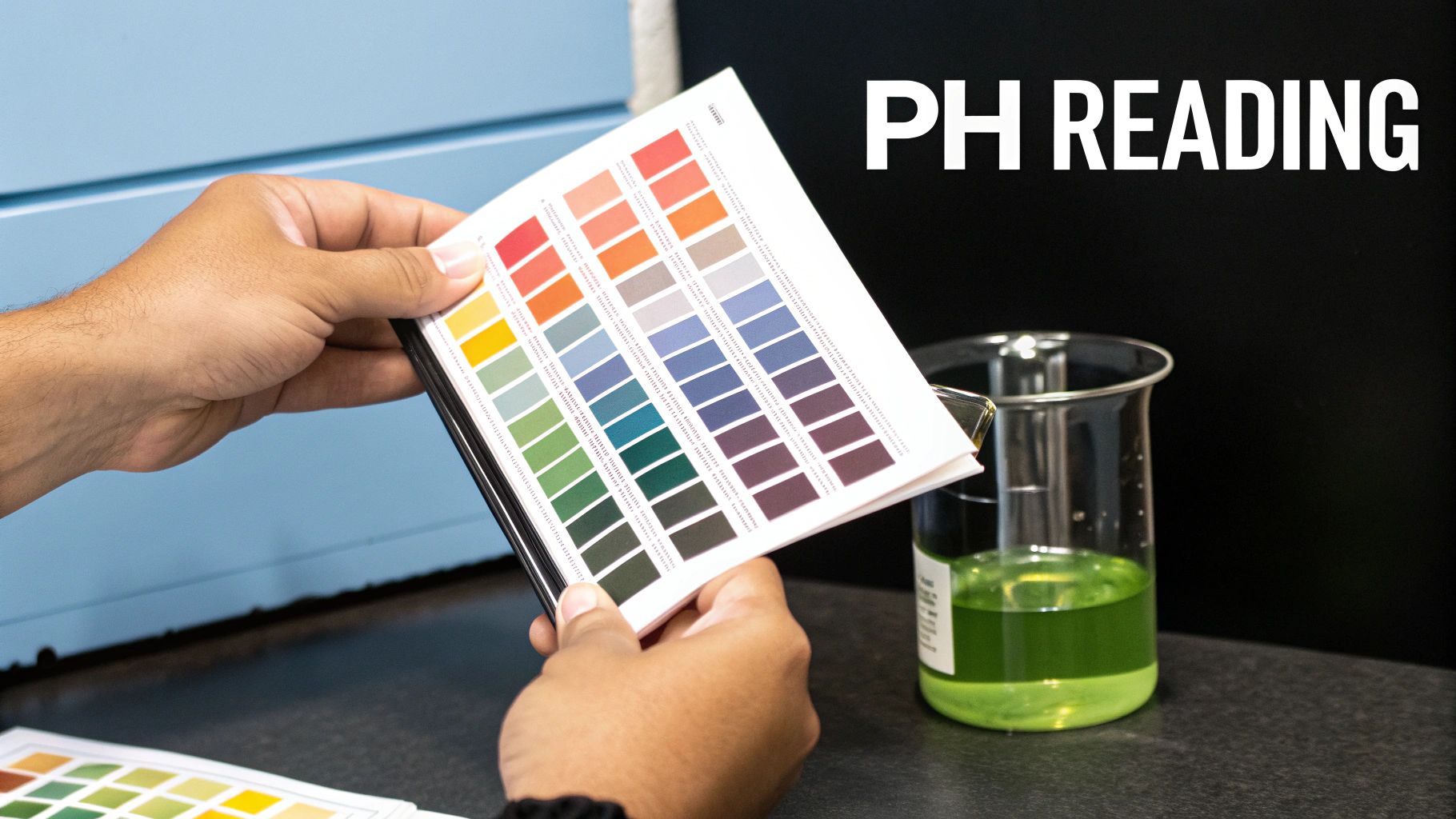
For a fast, ballpark reading, nothing beats a simple DIY test kit. These are the kits you'll often see at local garden centers around Cumming and Alpharetta. They typically use test strips or dye powders that you mix with a bit of soil and distilled water. After a few minutes, the mixture changes color, and you match it to a chart to get a general idea of your soil’s pH.
Are they perfectly accurate? No. But they're affordable and incredibly useful for a quick check to see if you're dealing with acidic, neutral, or alkaline soil. Think of them as a great first step if you're just starting to get curious about what’s happening beneath your turf.
For More Specifics: Digital pH Meters
If you want a more precise number and plan on testing your soil regularly, a digital pH meter is a worthy upgrade. You insert the probe into a slurry of soil and water, and you get an instant numerical reading on the screen. It's a fantastic tool for the dedicated homeowner in Milton or Dahlonega who wants to track how their soil pH changes over the seasons.
The one major catch with digital meters is calibration. To keep those readings accurate, you have to calibrate the device regularly. If you skip this maintenance, your readings can slowly drift, which might lead you to make the wrong decisions for your lawn.
The Gold Standard: A Professional Lab Test
When you need the most accurate, detailed, and actionable information, nothing comes close to a professional lab test. For those of us here in North Georgia, the absolute best resource is our local University of Georgia (UGA) Extension office, like the one we have right here in Forsyth County.
Sending your sample to a lab is how you test soil pH like a pro.
A lab test from the UGA Extension goes way beyond just a pH number. It gives you a complete nutrient profile of your soil, along with custom recommendations for lime and fertilizer specifically for your lawn.
Labs follow strict, scientific protocols to ensure every result is spot-on. A common method involves mixing a precise 20 grams of soil with 20 milliliters of pure water, stirring for five minutes, and letting it settle before a calibrated instrument takes the reading. You can dig into the science behind these soil pH standards to see the level of detail involved.
So, which should you choose? If you just need a quick snapshot, a DIY kit is fine. But if you’re serious about creating the best possible game plan for your Cumming or Alpharetta lawn, a lab test is an investment that pays for itself many times over.
Making Sense of Your Soil pH Results
So, you've got your number. That little figure on your soil test report is the key to unlocking your lawn's potential. It's not just data; it's a roadmap. For those of us with lawns in North Georgia, from Cumming to Dahlonega, this number tells us exactly what our next move should be.
The pH scale goes from 0 to 14, and a perfect 7.0 is neutral. Anything below that is acidic, while anything above is alkaline. The grasses we love around here, like Fescue and Bermuda, actually prefer things just a tad on the acidic side.
- Ideal for Fescue: 6.0 to 6.5
- Ideal for Bermuda: 5.8 to 6.5
If your results are outside this sweet spot, your grass simply can't grab the nutrients it needs from the soil. That's when you start seeing problems—yellowing, weak growth, and a lawn that just rolls over for any pest or disease that comes along.
What to Do About Acidic Soil
Nine times out of ten, if you're in Alpharetta or Milton, you're going to find your soil is too acidic. It’s just the nature of our native red clay and the amount of rain we get. If your test comes back with a pH below 6.0, the fix is straightforward: lime.
Lime (calcium carbonate) is your go-to for raising soil pH and making it less acidic. The best time to put it down is in the fall. The winter rain and all the freezing and thawing do the heavy lifting for you, working the lime down into the root zone. A good lab test will give you a precise application rate, usually in pounds per 1,000 square feet.
When Your Soil is Too Alkaline
It's not nearly as common around here, but every once in a while, a test will show alkaline soil (a pH above 7.0). This creates its own set of problems, mainly by locking up crucial nutrients like iron. The solution here is to apply elemental sulfur, which will gradually lower the pH.
Just like with lime, your soil test will tell you exactly how much sulfur to use. Just be prepared to be patient—sulfur takes its time changing the soil’s chemistry. A high or low pH can also be a dead giveaway for why you're seeing certain unwanted plants pop up. Getting familiar with the most common weeds in Georgia can help you connect the dots between your soil and what's growing in it.
My biggest piece of advice? Don't guess. Tossing down too much lime or sulfur can send your pH swinging wildly in the opposite direction, and you'll end up with a whole new set of headaches.
It's also a good reminder that soil isn't the same everywhere. A global dataset revealed that topsoil pH can be as low as 4.6 in some places and over 7.9 in others. This huge variation is exactly why testing your own patch of dirt in Johns Creek is so important. If you're curious, you can dig into these global soil pH findings and see just how much soil can differ from one place to the next.
Getting your soil pH right is a huge victory, but don't hang up your gloves just yet. Think of it less as a finish line and more as hitting a crucial checkpoint. Your lawn is a living, breathing system, and maintaining that perfect balance is an ongoing conversation.
Here in North Georgia, plenty of things are constantly trying to nudge your soil's pH out of that sweet spot. Heavy rains, which we see plenty of from Cumming to Dahlonega, are a big one. Over time, they can wash away essential calcium, pushing your soil towards the acidic side. Even the nitrogen fertilizer you faithfully apply can have a slow, acidifying effect. It’s a subtle drift, but it’s always happening.
Staying Ahead of the Curve
The secret to keeping your lawn thriving year after year is staying proactive. You can’t just amend the soil once and expect it to stay perfect forever.
A soil test isn't a one-and-done fix. It's more like a regular health screening for your lawn—a way to catch small imbalances before they snowball into big, frustrating problems.
So, how often should you check in? For most lawns around Alpharetta and Johns Creek, re-testing your soil pH every 2 to 3 years is a solid game plan. This cadence is frequent enough to catch any shifts and allows you to make minor, gentle corrections instead of drastic overhauls.
You should also learn to read the signs your lawn is giving you. Sometimes, your turf will tell you its pH is off long before your next scheduled test. Keep an eye out for these tell-tale symptoms:
- Stubbornly yellow grass that just won’t green up, even after you’ve fertilized.
- A sudden explosion of weeds, especially the kinds that love acidic soil, like crabgrass.
- Your lawn just looks "off" and isn't responding to your usual care routine.
You can also build resilience right into your soil with a few simple habits. Letting your grass clippings fall back onto the lawn when you mow, for instance, returns valuable organic matter. As it breaks down, it helps buffer the soil against pH swings. Likewise, working in quality organic material is one of the key host compost benefits, as it dramatically improves your soil's structure and its ability to maintain a stable pH over the long haul.
Common Questions About Georgia Soil pH Testing
Lots of homeowners I talk to in North Georgia wonder how often they really need to test their soil's pH. It's a great question, especially since our local clay soils around Cumming, Alpharetta, and Johns Creek can change their acidity pretty quickly, particularly after a season of heavy rain.
So, how often should you be checking in on your soil? Here’s the rhythm I recommend to most folks.
- Every 24 months, go for a full lab analysis. This gives you the complete picture, not just pH but a detailed profile of all your soil's nutrients.
- Once a year, usually after winter, use a digital meter. This is perfect for catching any big pH swings before the growing season really kicks off.
- Before any major fertilizing, grab a quick DIY strip test. It's a simple way to get a ballpark reading and make sure your timing is right.
When Is the Best Time to Test?
Beyond frequency, timing is everything. You'll get much clearer insights if you test your lawn and garden beds separately. A single composite sample is fine for a uniform patch of grass, but it won't tell you what's happening in unique spots like your vegetable garden or flower borders.
Most seasoned gardeners I know avoid testing during seasonal extremes. Instead, they aim for one of two windows:
- Early spring: Testing before everything greens up shows you exactly what your soil needs to support new growth.
- Late fall: A sample taken now lets you apply amendments like lime, giving the winter rains a chance to work them deep into the root zone.
"Frequent soil checks are your best defense against surprise acidity shifts that really stress out turf here in our Georgia climate."
Which Test Method Can I Really Trust?
Ever get a DIY kit result that's way off from a professional lab report? It happens, and it's usually due to a sampling error or just the timing of the test. Think of it this way: DIY kits give you a quick, approximate value, which is great for a gut check. Labs, on the other hand, measure pH with much higher precision.
My rule of thumb? If a lab result is more than 0.4 pH units different from your home meter's reading, always trust the lab. They're using calibrated, professional-grade instruments and follow strict protocols.
A smart approach I see from homeowners in Dahlonega and Milton is to combine methods. They'll start with a professional lab test to get a solid baseline, then use their own digital meters to track the trends from that point forward.
Here’s a pro tip: keep a simple log of your pH data. A basic spreadsheet or even a note in a garden journal is all you need. This makes it so much easier to compare results season over season and plan your lime or sulfur applications effectively.
Ultimately, building a consistent testing schedule tailored to our North Georgia conditions is the key. Sticking with it means you can make timely adjustments, and that always leads to healthier, happier grass. If you start testing this season, you're bound to see the improvements firsthand.
Just remember to adjust your testing frequency if you ever change your grass type or switch to a new fertilizer program.
Ready for expert support? Partner with Barefoot Organics.