

A good lawn care schedule template is the secret to a great yard, but it has to be built specifically for North Georgia's unique climate and soil. Think of it as a year-round game plan that maps out what to do and when to do it—from fertilizing to fighting weeds—so your lawn in Cumming, GA gets precisely what it needs to thrive.
Why Generic Lawn Care Schedules Fail in North Georgia
If you've ever tried a one-size-fits-all lawn schedule you found online, you know the frustration when it falls flat for your lawn in Cumming or Alpharetta. The simple truth is, our region plays by its own set of rules. Generic advice just doesn't work because it completely ignores the local environmental pressures that define lawn care around here.
What works for a lawn on Florida's sandy soil or in the cooler northern states can actually do more harm than good here. Our blend of scorching, humid summers and mild, often soggy winters creates a unique battleground for your grass. These conditions are a perfect storm for fungal diseases, like brown patch in Fescue, and put a ton of stress on every type of turf from Johns Creek to Dahlonega.
The North Georgia Lawn Gauntlet
The challenges go deeper than just the weather. Our infamous heavy, red clay soil is a huge piece of the puzzle. It gets compacted easily, which chokes off the flow of water, air, and nutrients to the grassroots. A generic template won’t tell you that fall core aeration is practically mandatory in Milton to fight that compaction, or how our soil's natural acidity messes with fertilizer absorption.
This visual really breaks down the specific challenges your lawn care schedule has to conquer.
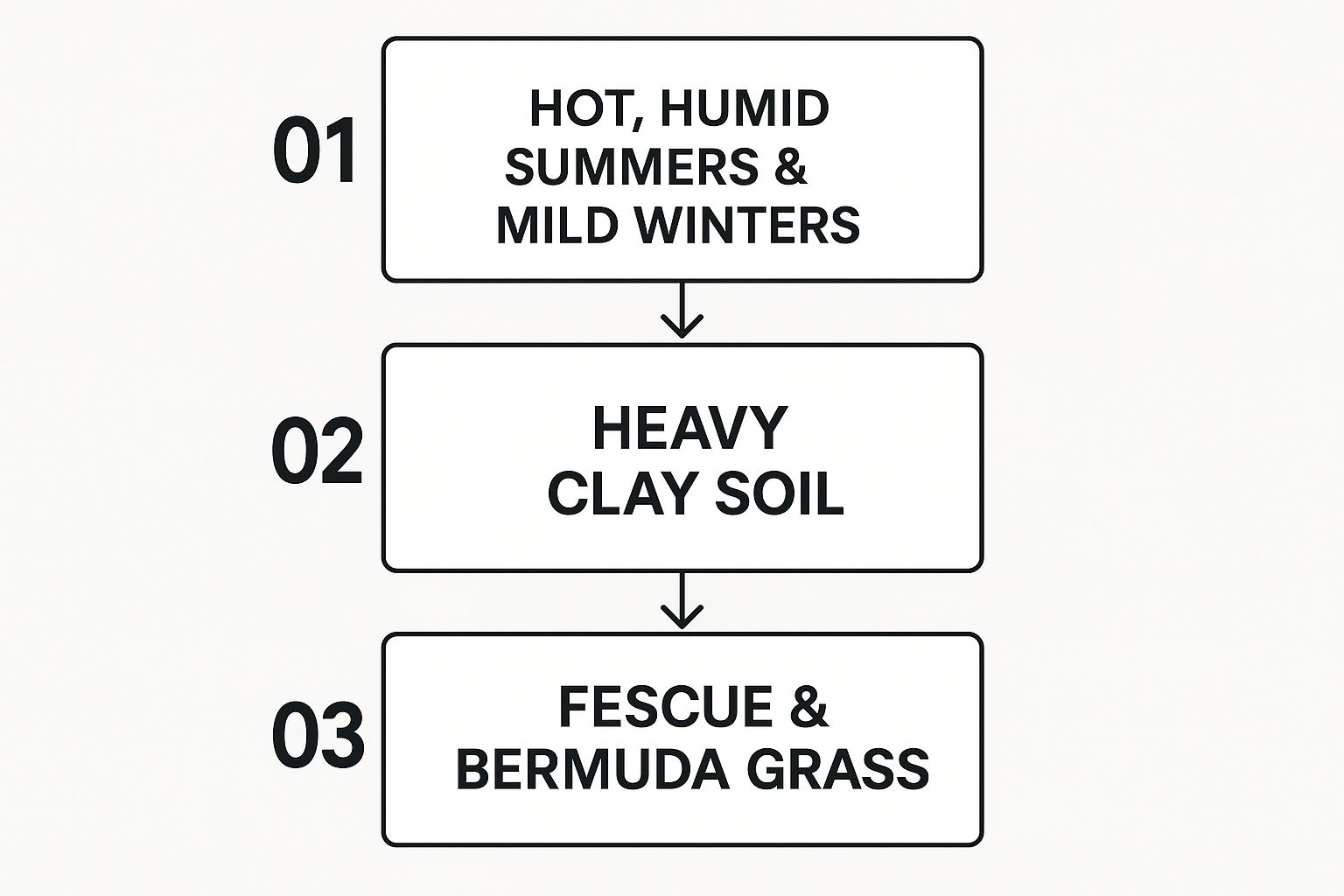
As you can see, our climate directly shapes the soil conditions, which then determines what popular local grasses like Fescue and Bermuda need to survive. This is exactly why timing is so crucial. Putting down pre-emergent in Johns Creek just a few weeks late can mean you're stuck fighting crabgrass all summer long. Likewise, you have to know if grass grows in winter in our area to time your dormant season tasks correctly.
A successful North Georgia lawn care plan isn't just a list of chores—it's a strategy designed to work with our specific climate, soil, and grass types, not against them.
The desire for beautiful, healthy yards is growing. In fact, the global lawn care industry is expected to hit $163.8 billion by 2025, with more and more homeowners looking for sustainable and well-kept outdoor spaces. A localized schedule is your single best tool for making that happen right here in our community.
The Year-Round North Georgia Lawn Care Playbook

Getting a great-looking lawn here in North Georgia is all about good timing. You have to know what your grass needs as the seasons shift, from the first hints of spring in Cumming to those cool autumn nights up in Dahlonega. Every month brings a new set of tasks, and this playbook will break it all down, taking the guesswork out of the equation.
A solid, repeatable plan is the secret to getting consistent results year after year. Think of a lawn care schedule as a roadmap, guiding you on when to fertilize, when to treat for weeds, and how to mow correctly. This is especially true given our region's specific climate, grass types, and wild weather patterns.
Following a month-by-month guide helps you stay proactive. Instead of fighting fires like a sudden weed invasion or a fungal outbreak, you're preventing them from ever starting.
H3: Late Winter and Early Spring Kickoff
What you do between January and March really sets the tone for the rest of the year. As lawns across Cumming start waking up from dormancy, this is your critical pre-emergent window.
- Pre-Emergent Application: This is non-negotiable. Sometime in late February or early March, you need to get a pre-emergent herbicide down. It forms a barrier that stops crabgrass and other nasty summer weeds before they even have a chance to sprout. Get the timing wrong, and you'll be fighting weeds all summer.
- Initial Cleanup: Get out there and rake up any leftover leaves, sticks, and other junk from winter. This simple step lets the sun and air get to the soil, which is exactly what new grass growth needs.
- First Mow: Once you see some green-up, it’s time for the first cut. For Fescue, I like to keep it on the high side, around 3 to 3.5 inches. If you have Bermuda that's still mostly dormant, you can scalp it a bit lower to clear out the dead stuff.
H3: Thriving Through the Summer Heat
From April to August, it's go-time for warm-season grasses, but it’s a marathon of survival for Fescue. Your focus needs to shift to proper feeding, smart watering, and keeping a close eye on any signs of stress.
Bermuda and Zoysia lawns are in their glory during summer in Alpharetta. I usually start a consistent nitrogen fertilizer program in late April or May to really push that deep green, vigorous growth. Mowing becomes a regular thing, but remember the golden rule: never cut off more than one-third of the grass blade at once.
Fescue, on the other hand, is just trying to hang on through the heat and humidity. Back off the high-nitrogen fertilizers during this time; it just makes the grass more susceptible to disease. The key is to water deeply but not too often, preferably in the early morning hours. This encourages deep roots and helps you avoid fungal nightmares like brown patch.
Pro Tip: Keep your eyes peeled for signs of grub damage or fungus, which are incredibly common in our humid summers. Catching these problems early makes treating them a whole lot easier and more effective.
H3: The Critical Fall Renovation Window
If you have a Fescue lawn anywhere from Milton to Johns Creek, September and October are the two most important months of your entire year. This is your one and only shot to help it recover from summer and get it ready for the seasons ahead.
This is when we perform the "fall trifecta" for Fescue: core aeration, overseeding, and a dose of starter fertilizer. The heavy clay soil we have around Cumming gets rock-hard and compacted over the summer. Aeration is the only way to relieve that pressure, allowing critical water, air, and nutrients to get down to the roots. You can get more details on getting it right in our guide on the best time to aerate a lawn.
Right after you aerate, get your high-quality Fescue seed down. This fills in any thin or bare spots and thickens up the entire lawn. Follow that up with a good starter fertilizer to give those new seedlings the food they need to get established before winter sets in.
Seasonal Lawn Care Snapshot for North Georgia
To make it even simpler, here’s a quick-reference table that breaks down the main jobs for each season. This is a great little cheat sheet whether you're in Cumming with a Bermuda lawn or in Johns Creek tending to Fescue.
| Season | Primary Focus | Key Tasks for Bermuda/Zoysia | Key Tasks for Fescue |
|---|---|---|---|
| Spring | Weed Prevention & Green-Up | Apply pre-emergent; scalp lawn before green-up; start fertilizing late spring. | Apply pre-emergent; raise mow height; spot treat weeds. |
| Summer | Growth & Stress Management | Fertilize regularly; mow 1-2 times/week; watch for grubs/fungus. | Water deeply and infrequently; avoid fertilizer; watch for brown patch. |
| Fall | Recovery & Preparation | Reduce fertilizer; raise mow height slightly; control winter weeds. | Aerate, overseed, and fertilize; maintain consistent watering. |
| Winter | Dormancy & Maintenance | Apply post-emergent for winter weeds; keep lawn clear of leaves. | Keep leaves off lawn; spot-treat winter weeds; apply lime if needed. |
This snapshot helps you visualize the flow of the year and ensures you're tackling the right task at the right time.
H3: Winter Preparation and Dormancy
From November to December, your lawn care duties really start to slow down. Both warm-season and cool-season grasses are either growing very slowly or are completely dormant.
- Final Mow: For your last cut of the season, drop the mower deck a notch lower than usual. This helps prevent the grass from getting matted down and diseased over the winter months.
- Leaf Management: Don't get lazy with the leaves. A thick, wet mat of leaves will suffocate your grass and create a perfect breeding ground for pests and fungus.
- Winter Weed Control: This is a good time to hit any winter annuals, like poa annua or henbit, with a post-emergent herbicide.
Putting together a year-round lawn plan requires a bit of foresight and organization, much like planning with effective time management schedules helps people stay productive. By breaking down your year into these seasonal chunks, you can handle lawn care methodically and make sure no crucial steps are ever missed.
Stocking Your Shed for Success
A perfect lawn care schedule is a fantastic starting point, but it's still just a plan on paper. To bring that plan to life in your North Georgia yard, you need the right tools and products ready to go. Executing your schedule effectively means having equipment that can handle the unique challenges we face here, from the rolling hills of Dahlonega to the dense clay soil in Cumming.
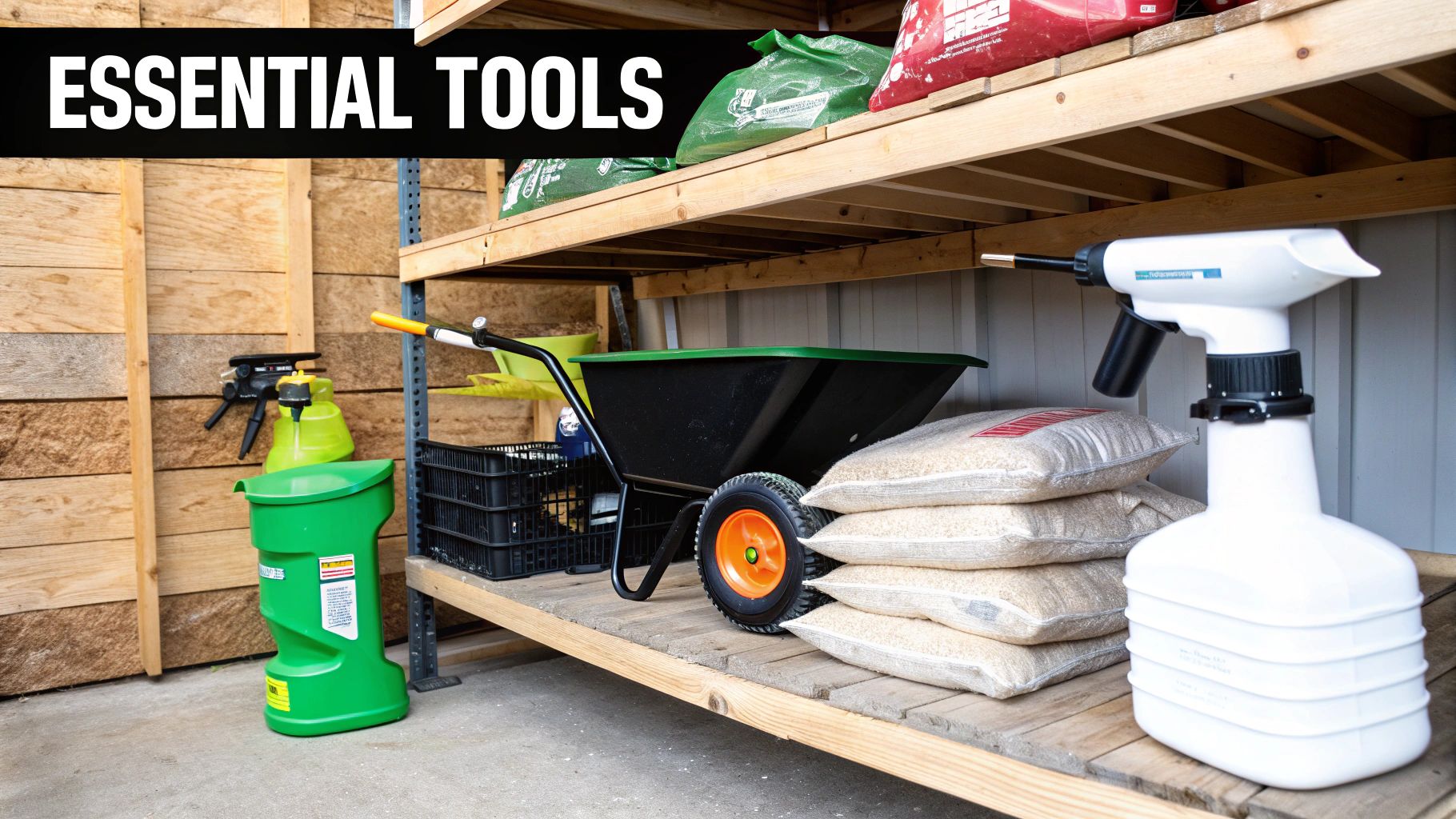
This isn't just about a weekend hobby; it's a significant investment for homeowners. The global market for lawn and garden gear was valued at around $41 billion in 2024 and is expected to soar past $77.7 billion by 2034. That tells you just how serious people are about their outdoor spaces.
Must-Have Equipment for North Georgia Lawns
Around here, certain tools aren't just luxuries—they're necessities.
Let’s talk spreaders first. Sure, any spreader can put down fertilizer, but the hilly terrain common in Alpharetta and Milton makes a broadcast spreader a much smarter choice than a drop spreader. Its wide, feathered application pattern is way more forgiving on slopes and uneven ground, helping you avoid those ugly stripes a drop spreader can easily leave behind.
Next on the list is a core aerator. Our compacted red clay soil is infamous for choking out grassroots, and a core aerator is your best defense. It's non-negotiable for pulling up plugs of soil to relieve compaction. This single action allows air, water, and nutrients to finally reach the root zone. Trust me, it's a critical fall task for any Fescue lawn in the Cumming area.
Finally, you absolutely need a calibrated pump or backpack sprayer. When you're dealing with liquid herbicides or fungicides, precision is everything. A good sprayer ensures you apply the exact amount of product evenly across the lawn, which prevents waste and protects your turf from damage. And if you're starting fresh, you might need a hand with tasks like assembling a new lawnmower.
Decoding Lawn Care Product Labels
Walking into a garden center can feel a bit overwhelming with all the different bags and bottles. Knowing the basic product categories helps you cut through the noise and stock up with confidence.
- Pre-Emergent Herbicides: Think of these as a preventative shield. Applied in late winter, they create a barrier in the soil to stop weeds like crabgrass before they even have a chance to sprout.
- Post-Emergent Herbicides: These are your reactive treatments. Use them to target and kill weeds that have already popped up in your lawn.
- Fungicides: Absolutely crucial for fighting fungal diseases like brown patch, which loves to attack Fescue during our hot, humid summers.
- Fertilizers: This is the food for your lawn. To figure out what your soil is hungry for, you'll need a soil test.
Having the right tool for the job makes every single task on your schedule more effective. Investing in quality equipment built for North Georgia's conditions will save you time, money, and a whole lot of frustration down the road.
Tailoring the Schedule to Your Yard's Personality
A great lawn care template is your roadmap, but it's not the territory. The real secret to a stunning North Georgia lawn is learning to read your specific patch of land and adjust the plan accordingly. Let's be honest, a brand-new lawn in a sunny Cumming subdivision with compacted builder-grade soil is a completely different beast than a shady, established yard in Milton.
Think of it this way: your property is its own little ecosystem. Fine-tuning your schedule is all about responding to its unique quirks and conditions. That’s how you get those truly head-turning, sustainable results.
Learning to Read Your Lawn
The best way to start is by simply walking your yard with a critical eye. Watch how the sun moves across it during the day. This simple observation tells you a ton.
- Sun vs. Shade: Do you have a side that gets hammered by the hot afternoon sun? Those full-sun spots in places like Johns Creek are going to dry out much faster, need more water, and be prone to heat stress. The shady spots under those big oaks, on the other hand, are prime real estate for fungus and probably don't need as much fertilizer.
- The Beaten Path: Pinpoint where the kids and the dog run the most. These high-traffic areas get packed down hard. You’ll want to give them some extra love, especially when it’s time for fall aeration, to loosen that soil and let the grassroots breathe.
- Problem Children: Make a mental note of any patches that always look thin, off-color, or just plain sad. These are your lawn's signals that something specific is wrong right there, maybe just below the surface.
The Ultimate Cheat Sheet: A Soil Test
If you do only one thing to customize your schedule, make it this: get a soil test. This is, without a doubt, the single most powerful tool at your disposal. Our North Georgia red clay is notoriously acidic, which can lock up nutrients and make your fertilizer basically useless. A soil test takes all the guesswork out of the equation.
You can grab a soil test kit from your local UGA Extension office, with locations serving Forsyth County and all the surrounding areas. The report you get back is gold—it’ll tell you your exact soil pH and pinpoint any nutrient deficiencies, like low phosphorus or potassium.
Relying on a soil test is like a doctor ordering blood work instead of just guessing at a diagnosis. It lets you apply exactly what your lawn is hungry for, right when it needs it, which saves you money and builds a genuinely healthy foundation.
For example, if that test comes back showing highly acidic soil (a common issue here in Cumming), you'll know to add a lime application to your fall or winter to-do list. If it shows you're low on phosphorus, you'll know to use a starter fertilizer during your fall overseeding—even on a mature lawn—to fix it. This is how your lawn care schedule template goes from a generic guide to a personalized prescription for a knockout lawn, whether you're in Alpharetta or anywhere else in our area.
Troubleshooting Common North Georgia Lawn Problems
Even the most meticulously planned lawn care schedule can't account for everything North Georgia’s climate throws at us. That signature heat and humidity we all know so well? It’s the perfect recipe for specific diseases and some incredibly stubborn weeds. Being able to spot and fix these common issues is what separates a decent lawn from a great one, whether you're in Alpharetta or Dahlonega.
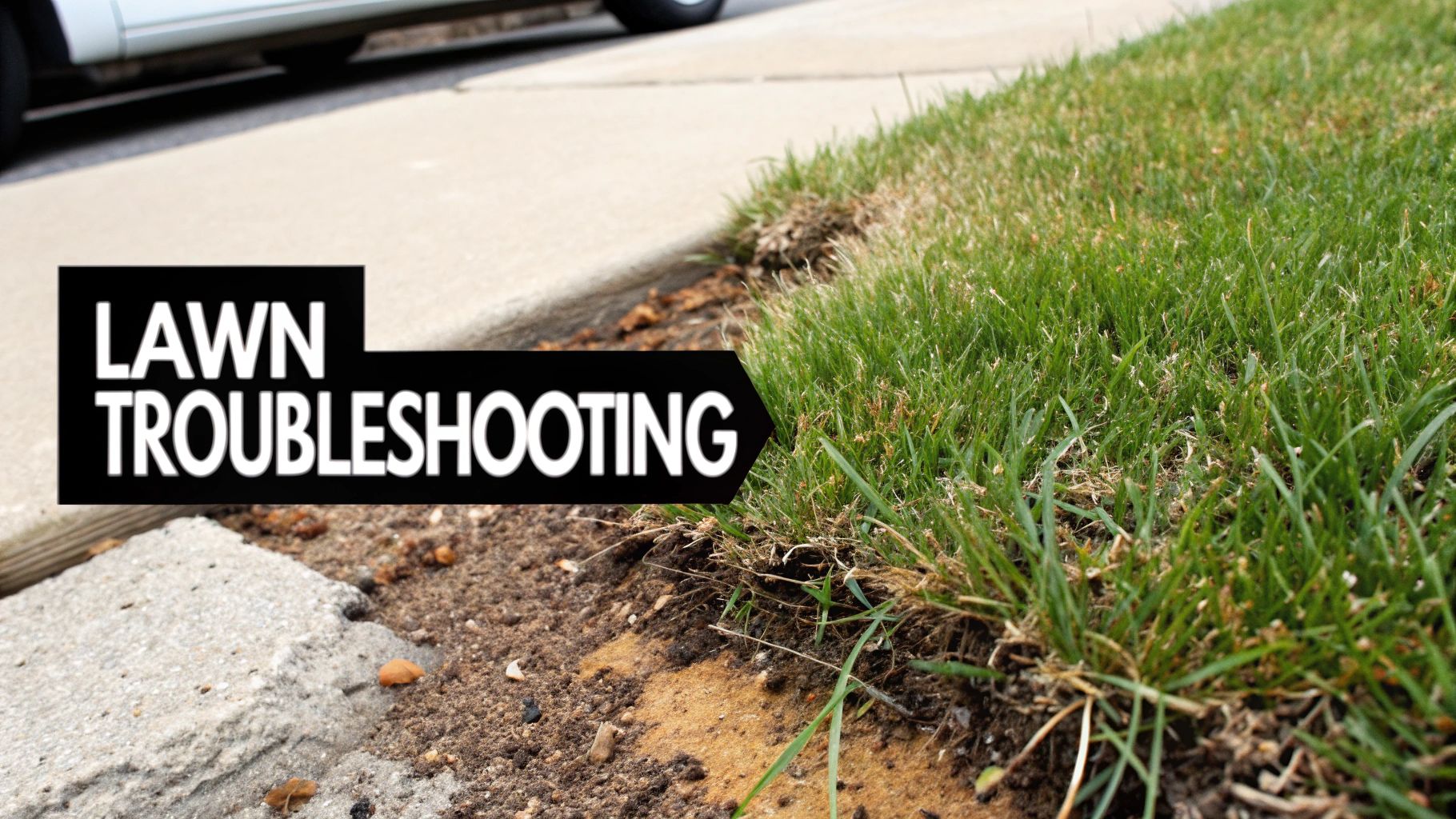
This isn't about hitting the panic button every time you see a brown spot. It's about developing an eye for what’s happening in your yard, diagnosing it quickly, and taking the right action. The right response at the right time can stop a minor issue from turning into a full-blown takeover.
Identifying and Treating Fungal Diseases
Let's talk fungus. During our sweltering summers, it's the number one enemy of Fescue lawns, especially in areas like Johns Creek and Milton. The most common problem I see is brown patch fungus. It shows up as ugly, irregular circles of brownish-yellow grass that can expand to several feet across if you don't get a handle on it.
If you have a Bermuda or Zoysia lawn in Cumming, your main adversary is likely dollar spot. True to its name, this fungus creates small, bleached-out spots about the size of a silver dollar. They might seem small at first, but they can quickly merge into much larger, damaged patches.
Honestly, the key to winning the fungus battle is to not let it start. Prevention is everything.
- Preventative Fungicide: Get this down in late spring, before the summer humidity really settles in. This is non-negotiable if your lawn has had fungal problems in the past.
- Curative Fungicide: If you do spot an active fungus, a targeted curative application will stop it from spreading further.
- Smart Watering: This is a big one. Always, always water in the early morning. This gives the grass blades all day to dry out, making the environment much less inviting for fungal growth.
A proactive approach is always better than a reactive one. Integrating preventative fungicide treatments into your schedule during May and June is the single best way to avoid a summer-long battle with lawn diseases.
Conquering Common North Georgia Weeds
Fungus aside, our region is home to a few hallmark weeds that can make a beautiful lawn look messy in a hurry. Knowing your enemy is the first step to kicking them out for good.
One of the most infuriating is nutsedge, which many people mistakenly call "nutgrass." You can't miss it—it's that bright, almost neon yellow-green weed that grows way faster than your actual grass, poking up just a few days after you mow. Whatever you do, do not pull nutsedge by hand. You’ll just activate the little "nutlets" in the soil and end up with three new plants in its place.
And then there's the classic villain: crabgrass. It absolutely loves our summer heat, which is exactly why that pre-emergent you put down in late winter is so important. If some still manages to break through, you'll need a good post-emergent herbicide to knock it out.
- For Nutsedge: You need a specialty herbicide specifically formulated to control nutsedge. Nothing else will really do the job.
- For Crabgrass: Apply a post-emergent spray while the crabgrass plants are still small and young. They’re much easier to kill then.
By learning to identify these specific threats, you can fine-tune your lawn care schedule template with the right products at the right times, keeping your Cumming lawn healthy and tough enough to handle whatever the season brings.
Your Top Lawn Care Questions Answered
When you start using a real, month-by-month plan for your lawn, questions are bound to come up. It's totally normal. Here are some of the most common things folks from Cumming to Dahlonega ask when they get serious about their turf.
How Fast Will My Lawn Actually Improve?
Honestly, it all depends on what you're starting with. If your lawn is in decent shape and you jump on the schedule in late winter with a good pre-emergent and the right spring fertilizer, you'll likely see a big difference in just 4 to 6 weeks. We're talking fewer weeds and that deep green color everyone wants.
Now, if you're dealing with a lawn that's seen better days—especially a Fescue lawn in Alpharetta that needs a full fall overhaul—your big "wow" moment will come the following spring. Real, sustainable lawn health is a year-long game, not a quick fix. Stick with it for a full calendar year to see the true transformation.
Will This Schedule Work for My Fescue and Bermuda Grass?
Yes, but you have to be careful. The key is knowing which tasks apply to your specific grass type. The needs of warm-season grasses like Bermuda and Zoysia are completely different from cool-season Fescue, and the timing is everything.
Think of it this way: in the summer, we feed Bermuda lawns in Cumming a high-nitrogen fertilizer to help them thrive in the heat. If you were to apply that same product to a Fescue lawn in the middle of July, you’d be rolling out the welcome mat for fungus and disease. The schedule clearly marks which steps are for which grass, so just follow the right path.
Using a plan designed for the wrong grass is one of the quickest ways to ruin a lawn. Our playbook keeps the tasks for each type separate so you can't go wrong.
What's the Single Most Important Thing I Should Do for My Cumming Lawn?
Every step in the schedule builds on the last, but a couple of tasks deliver the most bang for your buck, and it really depends on what you're growing.
- For Fescue lawns, nothing is more important than fall core aeration and overseeding. That September-October window is your prime time to fix summer damage and build a thicker, more resilient lawn for the next year.
- For Bermuda or Zoysia lawns, the make-or-break task is the late spring nitrogen fertilizer application. This is the rocket fuel that launches your lawn into its summer growing season, creating that dense, green carpet.
A very close second for all grass types around here? A perfectly timed pre-emergent application in late winter. It’s a game-changer. That one step prevents the vast majority of weeds from ever sprouting, saving you a massive headache all summer long.
Ready to stop guessing and start growing a lawn you can be proud of? The experts at Barefoot Organics create customized, natural lawn care programs designed specifically for our North Georgia soil and climate. We take the principles of a great lawn care schedule and do all the work for you. Get your free online quote and see the difference a professional, organic approach can make.