

For homeowners in Cumming, GA, and across Forsyth County, the choice between Zoysia and Fescue is the most critical decision you'll make for your lawn. This isn’t a small detail; it dictates whether you’ll have a lush, healthy yard or spend your weekends fighting weeds and brown patches. In the Cumming area, your entire lawn care strategy depends on this choice. Zoysia loves our summer heat, while Fescue is built for shade and stays green through the winter.
Your decision hinges on your yard's conditions. Is your property in a newer Cumming subdivision with full sun exposure? Or is it an established lot in Milton or Alpharetta shaded by mature trees? The answer will guide you to the right grass. At Barefoot Organics, we help homeowners get this right from the start.
Stop guessing and start growing. Call Barefoot Organics today for a free lawn evaluation and find out which grass is perfect for your Cumming home.
Why This Matters in Cumming: Local Lawn Challenges
Picking between Zoysia and Fescue sets the tone for your lawn's success here in Cumming. Our local conditions, from the hard-packed Georgia red clay to the blistering 90+ degree summer days and high humidity, mean you have to choose a grass that can handle the environment. This guide is a straightforward comparison to help you grow a lawn that meets HOA standards and looks fantastic, whether you're in Johns Creek, Dawsonville, or anywhere in Forsyth County.
Zoysia creates a thick, dense carpet that stands up to drought and foot traffic—perfect for a sunny, active yard. Fescue, on the other hand, is the clear winner for established properties in places like Suwanee or Sugar Hill, where large trees cast a lot of shade.
Zoysia vs Fescue Quick Comparison for Cumming, GA Lawns
This table gives you a quick, at-a-glance summary for lawns across North Atlanta. For more options, see our guide to the best lawn grasses for Georgia.
| Attribute | Zoysia Grass (Warm-Season) | Fescue Grass (Cool-Season) |
|---|---|---|
| Peak Growing Season | Late Spring through Summer (May-September) | Fall and Spring (September-November, March-May) |
| Sun Requirement | Full Sun (6+ hours direct sunlight) | Shade Tolerant (3-4 hours of sun is sufficient) |
| Drought Tolerance | High; goes dormant to survive drought | Moderate; requires consistent water in summer |
| Winter Appearance | Dormant (tan/brown color) after first frost | Green through mild North Georgia winters |
| Weed Resistance | High due to its dense growth habit | Moderate; susceptible to crabgrass in summer |
| Establishment Method | Sod or Plugs | Primarily Seed (overseeding required) |
| Best For in Cumming | Sunny, high-traffic yards in new subdivisions | Established yards with mature trees and shade |
Knowing your climate zone is a huge advantage. Cumming, GA, has a specific climate that heavily influences which grass will perform best. You can use a free online Plant Hardiness Zone tool to better understand your property's conditions.

Treatment Breakdown: Sun, Heat, and Seasonal Care
When the notorious Georgia summer arrives with its humidity and 90s temperatures, the real battle of Zoysia vs Fescue begins. How each grass handles this intense heat and sun is the single biggest difference you'll see in your Cumming lawn. One thrives under pressure; the other is just trying to survive. Our treatment programs are built around these realities.
Zoysia is a warm-season grass, and our sweltering summers are its time to shine. It doesn't just tolerate the heat—it flourishes in it. This is why you see stunning, dense Zoysia lawns in sun-drenched new subdivisions across Forsyth County.
Zoysia: The Sun Worshipper Built for Forsyth County
To get that thick, carpet-like feel, Zoysia grass needs at least four to six hours of direct sunlight per day. It uses our long, hot days to spread via underground rhizomes and above-ground stolons, creating tough turf that naturally crowds out weeds like crabgrass.
Its deep root system is a huge advantage in our climate, which swings from heavy rain to prolonged dry spells. During those dry periods in July and August, Zoysia’s roots tap into moisture deep within the Georgia clay. This lets it stay greener longer and require less watering, making it a low-maintenance champion for sunny properties from Johns Creek to Suwanee.
Fescue: The Summer Struggle is Real in North Georgia
Fescue is a cool-season grass that lives for the mild spring and fall we enjoy in North Georgia. Summer is its season of stress.
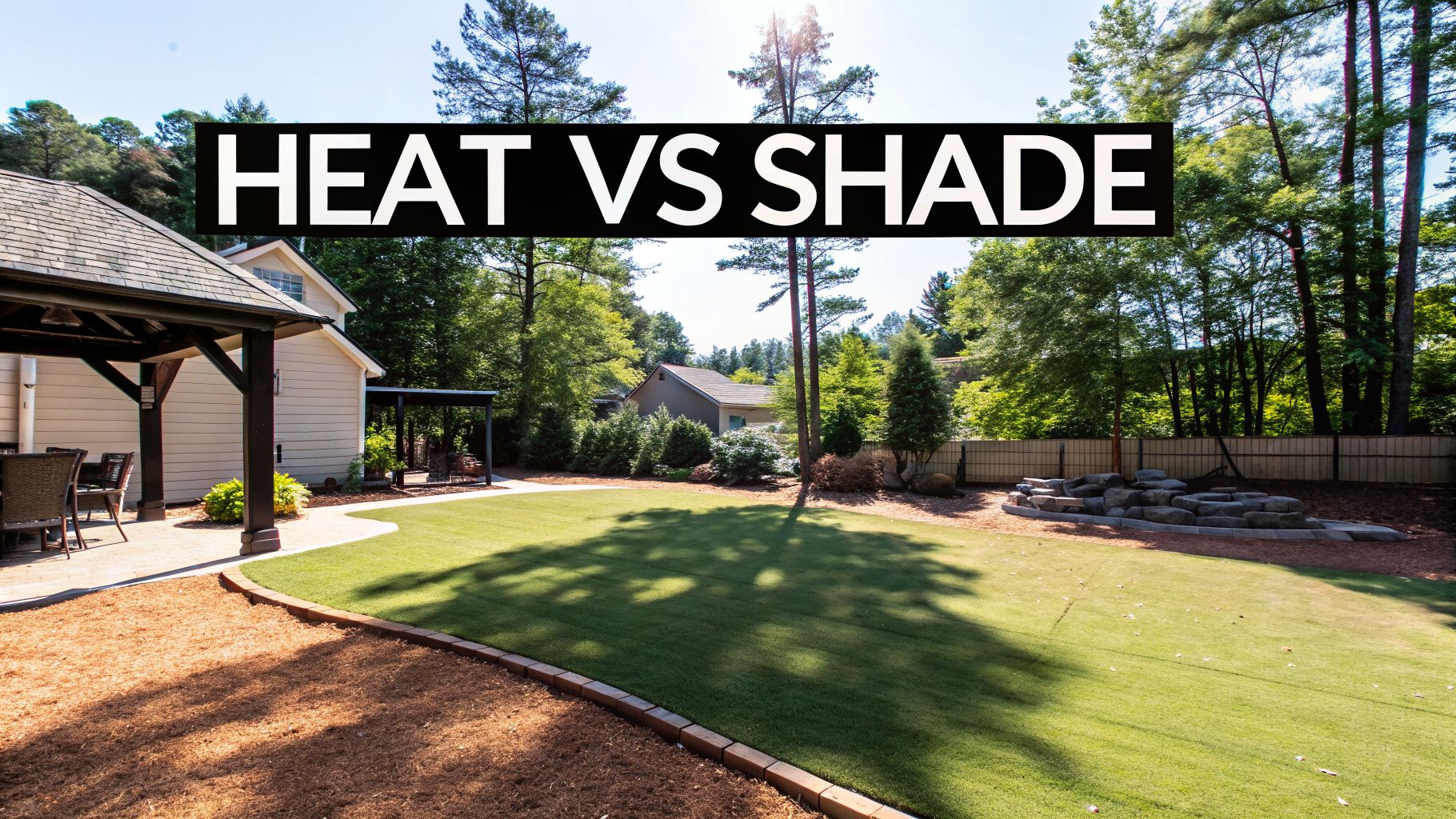
Once temperatures consistently climb above 85 degrees, Fescue's growth slows. The grass becomes vulnerable to heat stress, which welcomes diseases like brown patch fungus—a familiar and frustrating sight in Cumming lawns from June to August. A stressed Fescue lawn thins out, develops brown spots, and demands more water just to hang on.
Local Insight: For homeowners in Cumming, getting Fescue through the summer requires constant supplemental watering and proactive disease control. Without it, a lawn that looked amazing in May can be a struggling, patchy mess by August.
This is why your yard's sun exposure is the critical factor. For shady lots in Milton or Alpharetta with mature oak trees, Fescue is king. But if your yard gets full sun all afternoon, choosing Fescue means signing up for a difficult summer battle every year. Get more specific tips in our guide on grass care in summer.
Application Process: A Year in the Life of a Cumming Lawn
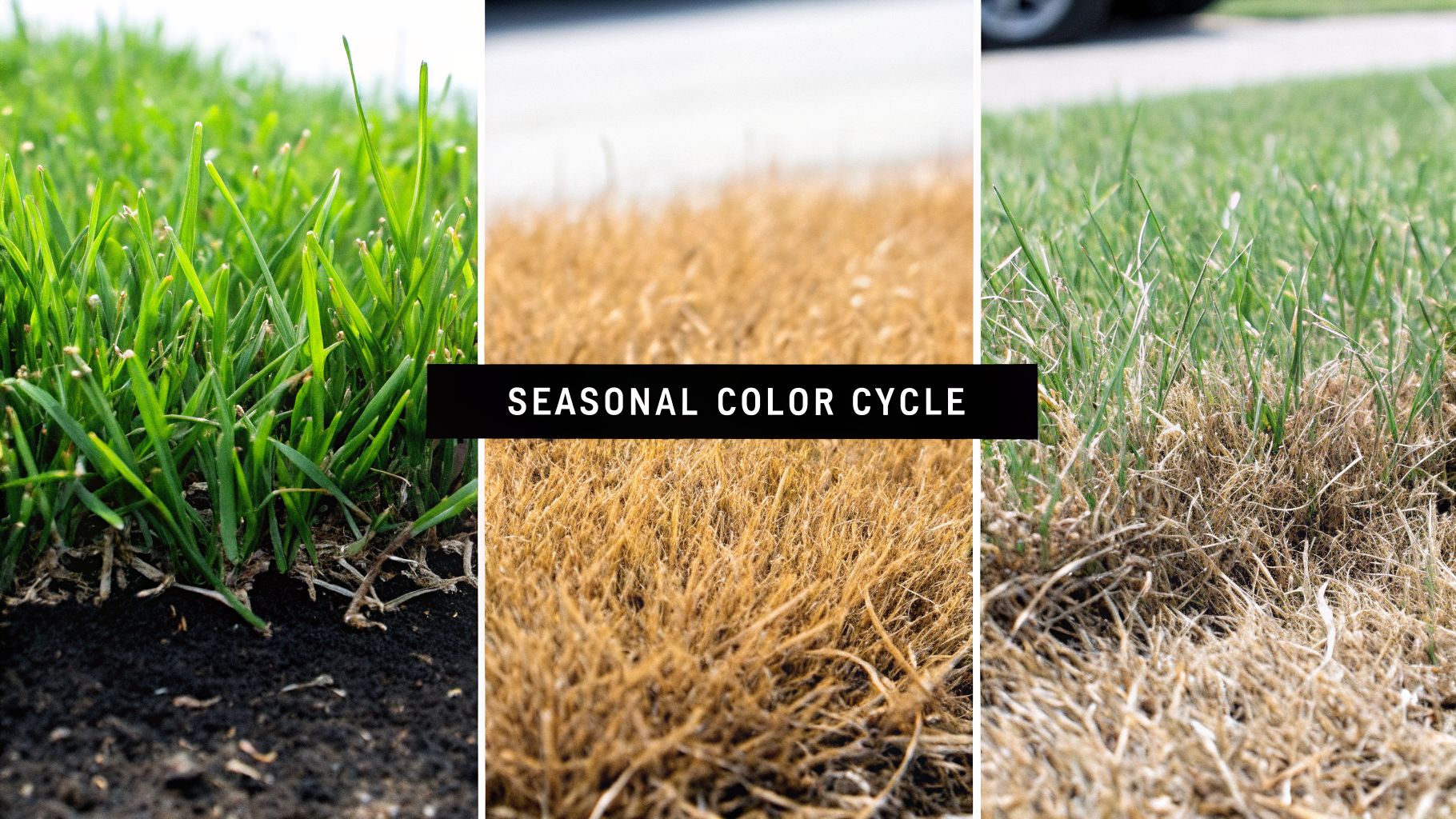
One of the biggest questions we hear from homeowners in Cumming, GA, is: "What will my lawn look like in January? What about July?" The Zoysia vs Fescue debate gets interesting here because their seasonal cycles are polar opposites. Your choice completely changes your lawn's color, texture, and care requirements throughout the year.
The visual trade-off is stark. Zoysia gives you a dense green carpet during the months you actually use your lawn, while Fescue delivers green during the holidays when Zoysia is brown and dormant.
Zoysia: The Summer Showstopper in Cumming
Zoysia grass is the star of the North Georgia summer. As soon as the soil warms up in late spring, it wakes up and starts growing aggressively, creating a lush, thick, and deep green turf. From about May through September, a healthy Zoysia lawn is the envy of any Cumming neighborhood.
This vibrant green period lasts until the first real frost hits Forsyth County, usually in late fall. Once that happens, Zoysia enters its natural dormancy period, stops growing, and turns a uniform tan or golden-brown.
A Local Reality Check: Winter dormancy is a non-negotiable part of having a warm-season grass in our climate. For HOA communities in Buford or Sugar Hill with strict "green lawn" winter rules, a dormant Zoysia lawn can cause a stir. But it's a perfectly normal and healthy cycle.
Fescue: The Winter Warrior in North Georgia
Fescue takes the opposite approach. As a cool-season grass, it thrives in the mild fall and spring weather around North Atlanta. Its peak seasons are from September to November and again from March to May. The big selling point? It maintains its green color straight through our mild winters.
While your neighbor's Zoysia lawn in Canton is brown, your Fescue can provide a beautiful green backdrop for holiday lights. However, Fescue's year-round green comes with a serious summer challenge.
During the peak heat of July and August, Fescue lawns in Cumming visibly struggle. The grass thins out, growth slows, and it becomes a prime target for brown patch fungus. While it might stay technically green, it often looks stressed and less dense. A Fescue lawn demands a lot of water and care to survive our intense summer humidity.
The decision comes down to what you value most.
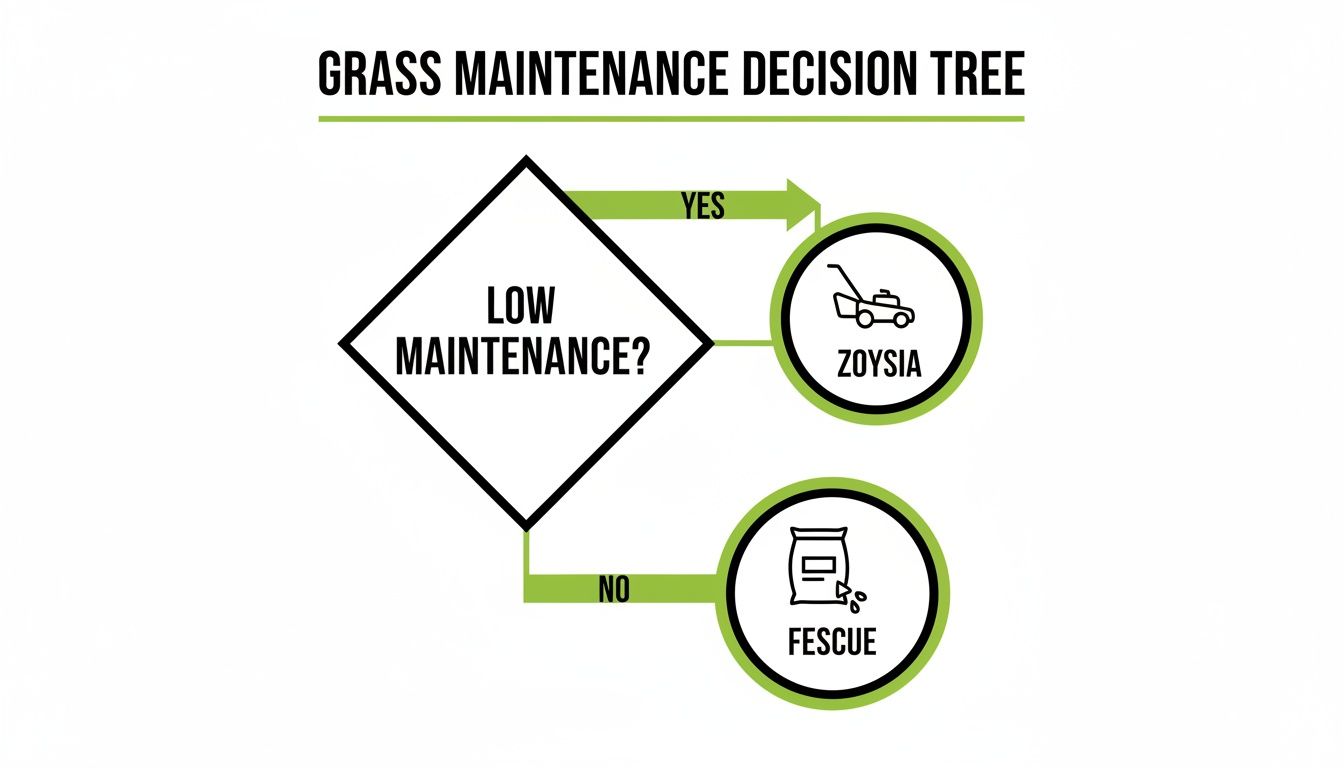
- Choose Zoysia if: You want a robust, beautiful, lower-maintenance lawn for outdoor living from spring through fall and don't mind a tan lawn in winter.
- Choose Fescue if: Year-round green color is your top priority, and you are prepared to give it the extra water and attention it needs to survive a grueling Cumming summer.
No matter which grass you choose, its performance depends on getting the right care at the right time. Barefoot Organics offers lawn treatment programs designed for the unique cycles of Zoysia and Fescue lawns here in Cumming, GA. Call us today for a free lawn evaluation.
Maintenance Needs: Comparing Zoysia vs. Fescue in Cumming
How much work will your lawn be? The time, effort, and money you'll invest are wildly different for Zoysia and Fescue, especially with the unique challenges we face in Forsyth County. Your choice dictates your summer weekends and your water bill.
Mowing: The Weekly Chore vs. The Occasional Trim
If you dislike constant mowing, Zoysia is your friend. It’s famously slow-growing.
- Zoysia Mowing: During its peak season, a Zoysia lawn only needs a cut every 10-14 days.
- Fescue Mowing: Fescue grows fast in spring and fall. Expect to mow at least once a week to keep it at its ideal height of 3 to 4 inches. Taller grass helps protect the roots from summer heat.
Watering: The Drought-Sipping Champion vs. The Thirsty Competitor
Watering is where the differences really show, especially during dry spells in July and August. Zoysia is the winner for drought tolerance, needing only about 1 inch of water per week. If a serious drought hits, it goes dormant but bounces right back with rain. Fescue is much thirstier, needing 1 to 1.5 inches of water per week to avoid thinning out from heat stress.
Fertilization and Weed Control
The fight against weeds is where professional care makes a huge difference in places like Alpharetta and Johns Creek.
Zoysia’s dense growth is its own best weapon against weeds. It requires less nitrogen fertilizer than Fescue, saving you money.
Fescue is a different story. It grows in bunches, leaving soil open for crabgrass. Annual fall overseeding is mandatory, and a professional pre-emergent application in spring is non-negotiable. At Barefoot Organics, our programs address these exact needs. Learn more in our guide on the best fertilizer for fescue grass.
Why Choose Barefoot Organics in Cumming, GA?
The zoysia vs fescue debate is just the first step. Picking the right grass sets the stage, but ongoing care determines whether it thrives. Whether you land on sun-loving Zoysia or shade-friendly Fescue, its health hinges on a lawn care program built for North Georgia's unique climate and soil.
At Barefoot Organics, we skip generic treatments. We specialize in organic-based programs that cater to the different needs of Zoysia and Fescue. Our team is out on lawns every day in Cumming, Alpharetta, and throughout Forsyth County, giving us boots-on-the-ground experience with the exact challenges your yard faces—from armyworms to brown patch fungus.
Local Expertise For Cumming Lawns
We know how to manage Zoysia's aggressive runners and how to help Fescue power through summer stress because we live and work here. From the dense Georgia red clay in new construction to the wild swings between heavy spring rains and summer droughts, our programs are designed for resilience right here in North Atlanta.
We’re not a faceless national chain that treats a lawn in Cumming the same as one in Ohio. We’re your local lawn health experts, focused on getting results that can handle our weather and keep you HOA-compliant.
Our process starts with a free, in-depth lawn evaluation. We analyze your soil, identify your grass, and diagnose any problems. That assessment allows us to build a plan that will genuinely work for your yard in Cumming, Johns Creek, or Milton. Our programs are safe for your family and pets, focusing on building strong, dense turf that naturally chokes out weeds.
Don't leave your lawn's future to guesswork. Call Barefoot Organics today to schedule your free lawn evaluation and see how our specialized, local programs can unlock the full potential of your Cumming, GA lawn.
FAQ: Zoysia vs. Fescue for Cumming, GA Homeowners
Homeowners in our area have practical questions about these two grasses. Here are straightforward answers to what we hear most often from clients in Cumming and across Forsyth County.
Q: Which grass is better for kids and pets in Cumming?
A: For active families with kids and pets, Zoysia is the clear winner in Cumming. Its dense, carpet-like growth and robust root system create a durable surface that stands up remarkably well to foot traffic. It recovers much faster from wear and tear than Fescue, which can become thin and patchy in high-traffic areas, especially during summer stress.
Q: Is Zoysia or Fescue better for dealing with weeds in Forsyth County?
A: Zoysia is significantly better at resisting weeds. Its dense, spreading growth habit naturally chokes out common Forsyth County invaders like crabgrass and nutsedge. Fescue grows in bunches, which can leave more open soil for weeds to germinate, requiring more diligent pre-emergent and post-emergent weed control treatments to stay clean.
Q: Can I mix Zoysia and Fescue in my Cumming lawn?
A: No, we strongly advise against mixing them. The result is a patchy, inconsistent lawn. Their different growth habits, textures, and seasonal dormancy cycles create an uneven, messy look. In winter, your Fescue will be green while the Zoysia is a dormant tan color, resulting in a splotchy yard that lowers curb appeal.
Q: Which grass is better for red Georgia clay soil in Cumming?
A: While both can grow in our infamous red clay, Zoysia generally handles it better. Its tough, deep root system is excellent at penetrating compacted soil, making it more resilient during our hot, dry spells. However, any lawn on Georgia clay needs regular core aeration to thrive, which is a key part of our lawn treatment programs.
Q: Will Zoysia take over my flower beds in my Alpharetta home?
A: Yes, Zoysia is an aggressive spreader and will creep into flower beds and over walkways. It sends out above-ground runners (stolons) and underground shoots (rhizomes). This requires regular edging to maintain clean lines, a common challenge for homeowners in Alpharetta, Johns Creek, and other local communities.
Q: When is the best time to plant new grass in North Georgia?
A: The timing is opposite and absolutely critical. For Zoysia sod or plugs, the best time is late spring or early summer (May-July) when the ground is warm. For Fescue seed, the ideal window is in the fall (September-October). This allows the new grass to establish strong roots before facing the stress of a Georgia summer.
No matter which grass you choose for your home, Barefoot Organics has the local knowledge to help it flourish. Give us a call for a free evaluation and a lawn care plan built specifically for your yard. You can get your lawn program started today by visiting us at https://barefootorganicsllc.com.