

Staring out at a brown, dormant Bermuda lawn is a familiar sight for homeowners around here, from Cumming to Alpharetta. But it doesn't have to be that way. What if your lawn could stay vibrant and green right through the winter? The secret isn't complicated: it’s about overseeding with ryegrass and, just as importantly, applying the right winter grass fertilizer at the right time.
Keeping Your North Georgia Lawn Green Through Winter
This guide is built specifically for our unique North Georgia climate, whether you're in Johns Creek or up in Dahlonega. We'll get into why a generic, one-size-fits-all approach just doesn't work here. A smart plan feeds your active ryegrass while also protecting your dormant warm-season turf, setting it up for a powerful return in the spring.
Getting that lush, year-round green takes more than just scattering some seeds and crossing your fingers. You have to understand the dual life your lawn is living—the sleeping Bermuda grass below and the active, cool-season ryegrass on top. Each has different needs, and a proper winter grass fertilizer program respects that delicate balance.
The Challenge of Georgia Winters
Our North Georgia winters are anything but consistent. One day it's mild and sunny in Cumming, the next a sudden cold snap hits Johns Creek. This rollercoaster of temperatures puts a ton of stress on your turf, especially the temporary ryegrass giving you that winter color. A targeted fertilizer application is what gives it the resilience it needs to hang in there.
The real goal is to provide just enough food for the ryegrass to thrive without waking up the dormant Bermuda or zoysia grass underneath. It's a fine line to walk, but getting it right ensures your winter lawn is robust and healthy, leading to a seamless transition when your primary turf comes back in the spring.
Why a Local Approach Matters
A generic plan from a big-box store just won't cut it in places like Milton or anywhere in Forsyth County. A successful strategy has to be more thoughtful.
- Nutrient Timing: We apply nutrients when the ryegrass can actually use them, which is typically several weeks after it has germinated and gotten established.
- Soil Health: Our focus is on building up the soil's vitality for the long haul, not just giving it a temporary chemical boost.
- Family Safety: We stick to natural products, so the lawn is a safe place for kids and pets to play, even right after we’ve been there.
The demand for smarter, more specialized lawn care is exploding. The global market for turf and ornamental inputs is projected to hit USD 6.80 billion soon, which just shows how much homeowners want beautiful, healthy lawns. We see that trend right here in the Dahlonega area every day.
In neighborhoods across Alpharetta, where 65% of homeowners have lawns over 5,000 square feet, the payoff for a careful approach is huge. Data from the UGA Extension service shows that organic winter treatments can reduce lawn disease by 35%. And for pet owners in Milton, using residue-free formulas slashes toxicity risks by an incredible 95%. You can discover more insights about this growing market and how it’s changing lawn care.
Choosing The Right Winter Fertilizer For Georgia Lawns
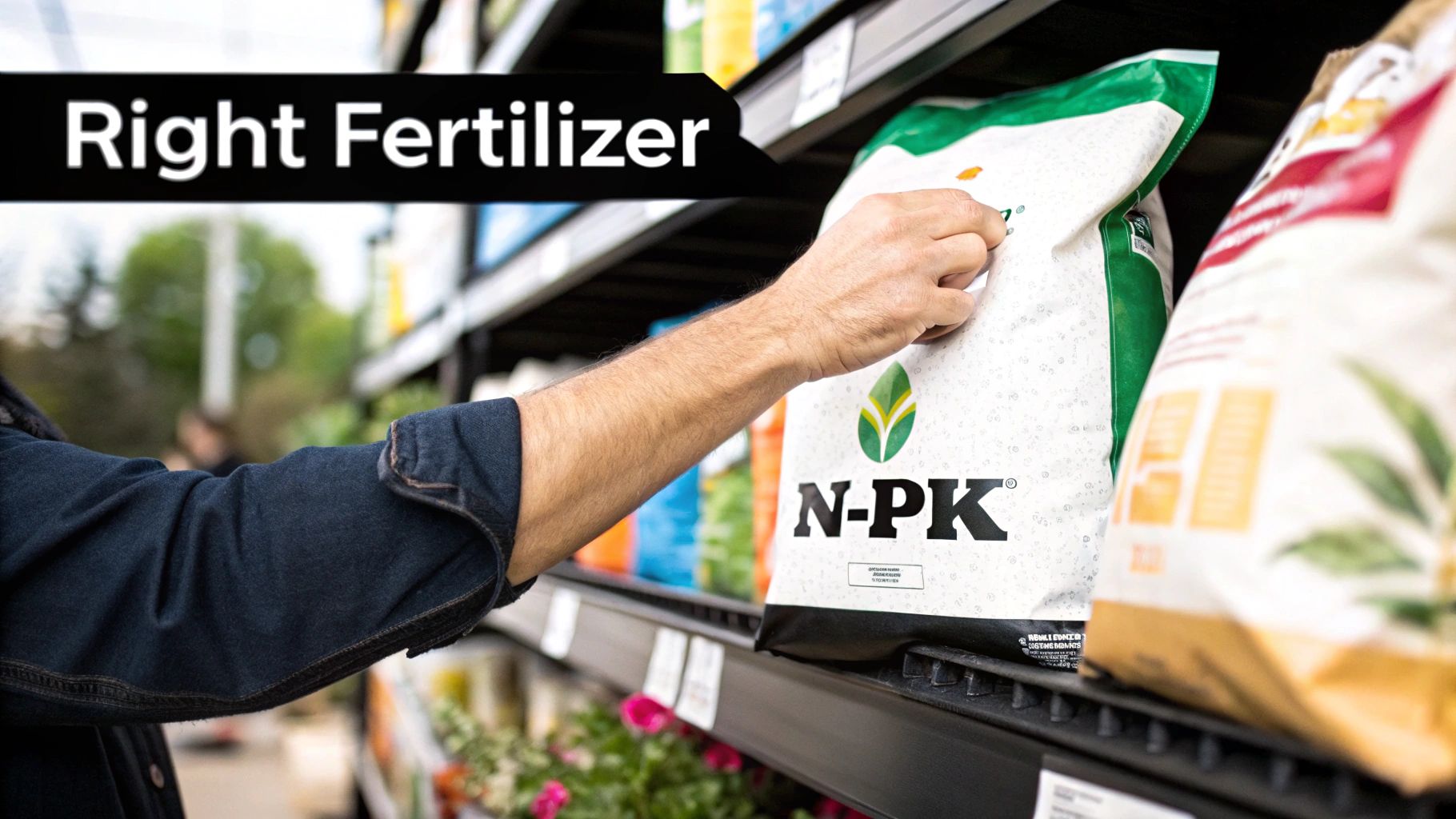
Walking into the lawn care aisle can feel like a pop quiz you didn't study for. The sheer number of bags, brands, and number combinations is enough to send any Forsyth or North Fulton County homeowner into a spin. When it comes to picking a winter grass fertilizer, getting it right is crucial for your overseeded ryegrass.
You’re essentially choosing between two completely different philosophies for your lawn's health. On one side, you have the quick-fix synthetic fertilizers promising an instant, vibrant green. On the other, you have natural, organic options that work slowly to build a healthier lawn from the soil up.
Decoding The N-P-K Numbers
Every fertilizer bag has three numbers stamped on it, known as the N-P-K ratio. It’s the legal shorthand for the percentage of Nitrogen (N), Phosphorus (P), and Potassium (K) inside. Getting a handle on these is the first step to making a smart choice.
- Nitrogen (N): Think of this as the gas pedal for green, leafy growth. Winter ryegrass needs a little nitrogen to keep its color, but too much will just encourage weak, leggy blades that can’t handle a Forsyth County frost.
- Phosphorus (P): This one is all about strong roots and energy transfer. The thing is, our Georgia clay soils are often already loaded with phosphorus. Adding more is usually a waste and can lead to environmental runoff into local waterways like Lake Lanier.
- Potassium (K): Here's the real hero of a winter fertilizer blend. Potassium is like a personal trainer for your grass, strengthening cell walls, boosting cold tolerance, and helping it fight off disease.
For lawns in Milton or Alpharetta, a true "winterizer" fertilizer for your ryegrass will always have a higher potassium number. That focus on strength and resilience is exactly what this temporary turf needs to survive our unpredictable winter weather. You can get a much deeper look into what makes the best lawn winterizing fertilizer over at our detailed guide.
Synthetic vs. Organic: The Great Debate
Choosing between synthetic and organic fertilizers really comes down to a choice between short-term looks and long-term lawn health.
Synthetics give your lawn an immediate, almost shocking, jolt of nutrients. It’s tempting, for sure. The problem is that this can force rapid, weak growth and carries a real risk of nutrient burn if you don't apply it perfectly.
Organic fertilizers, however, feed the soil itself, not just the plant. They’re made from natural ingredients that soil microbes break down over time. This slow and steady process builds a richer, more resilient soil ecosystem that benefits your lawn for years to come.
For homeowners in the Cumming area, going organic isn't just about being "green"—it's a long-term strategy. You’re building a foundation for a healthier lawn that breaks the cycle of chemical dependency and becomes naturally more resistant to pests and disease.
Comparing Winter Fertilizer Options for North Georgia Lawns
To make it clearer, let's break down the practical differences you'll see on your lawn in areas like Cumming or Alpharetta.
| Feature | Synthetic Quick-Release Fertilizer | Barefoot Organics' Natural Fertilizer |
|---|---|---|
| Nutrient Release | Immediate, fast-acting burst. | Slow, steady release over weeks. |
| Growth Pattern | Forces rapid top growth; can be weak. | Encourages strong roots and resilient blades. |
| Soil Health | Can deplete soil microbes over time. | Builds soil structure and feeds microbes. |
| Application Risk | High risk of fertilizer burn if over-applied. | Virtually no risk of burning the lawn. |
| Safety for Family | Requires waiting period before kids/pets can play. | Safe for play immediately after application. |
| Long-Term Impact | Creates dependency on chemical treatments. | Builds a self-sustaining, healthier lawn. |
The choice is about your priorities. Synthetics offer a quick, cosmetic fix, while an organic approach is an investment in the underlying health and safety of your yard.
This shift toward safer, more sustainable lawn care isn't just a local trend. The global market for organic turfgrass fertilizers was valued at USD 192.27 million in 2024 and is climbing as more people demand chemical-free solutions. In North America, this is especially true, as organics can release nutrients up to 70% more efficiently over time in our colder soils, promoting steady root growth without the risk of burn. You can learn more about these market findings on organic fertilizers and see the data for yourself.
Ultimately, this slow-release method is a game-changer for family safety. With natural fertilizers, the lawn in your Cumming backyard becomes a safe play area for kids and pets almost immediately, which is peace of mind you can't put a price on.
The Perfect Timing For Winter Fertilizer Application
In lawn care, especially here in North Georgia, timing is everything. Spreading winter grass fertilizer at the wrong moment isn't just a waste of money; it can actually set your lawn back. This timeline is fine-tuned for our local climate, helping you hit that perfect window for a healthy, green winter lawn from Alpharetta all the way up to Dahlonega.
Getting this right means you have to read your lawn's specific cues, not just blindly follow a calendar date. The whole point is to feed your new ryegrass exactly when it's ready to use the nutrients, making sure it grows strong enough to handle the wild temperature swings we often get in Forsyth County.
The First Application Window in Late Fall
Your first round of fertilizer should go down in late fall, but only after your newly overseeded ryegrass has put down some roots and gotten established. This isn't a "day after seeding" job. Rushing this is a rookie mistake that can easily burn out those delicate new seedlings.
A solid rule of thumb is to wait until about 4 to 6 weeks after germination. By then, you should have already mowed the new ryegrass two or three times. Mowing is a great signal that the root system is developed enough to handle and really use the food you’re about to give it.
Keep an eye out for these visual cues in your Johns Creek or Alpharetta lawn:
- The ryegrass looks uniform and dense, not patchy.
- The blades are strong and you've cut them at least twice.
- The grass is actively growing and has a rich, vibrant green color.
Once you see these signs, your lawn is ready for its first meal. This initial feeding gives it the fuel needed to build strong roots and keep its color as the weather gets colder.
The Second Application for Late Winter Vigor
While that first application is all about getting the grass established, the second feeding is about endurance. This application, usually scheduled for late winter—think late January or February—is a strategic boost that helps the ryegrass power through the home stretch before spring arrives.
This late-season meal is critical. It replaces the nutrients the grass burned through during the coldest months and gives it the energy to stay thick and green right up until your main Bermuda or Zoysia lawn starts to wake up. For a deeper dive into the science here, our guide on when to apply winterizer fertilizer offers some more detailed insights.
Timing this second application around our local weather is key. Applying fertilizer just before a light winter rain in Cumming or Milton is perfect, as it helps the nutrients soak into the soil. But putting it down before a heavy downpour can just wash it all away, potentially sending it into local waterways like Lake Lanier.
Navigating North Georgia's Weather
Our unpredictable local weather is the final piece of the timing puzzle. You want to apply fertilizer when the ground isn't frozen solid and there's no heavy rain on the immediate horizon. Soil that's just slightly moist is ideal for nutrient absorption.
For instance, if you see a forecast for a hard freeze in Alpharetta, it's best to hold off. Fertilizing frozen ground does absolutely no good, since the nutrients can't penetrate the soil to reach the roots. Instead, aim for those milder winter days that are pretty common in our area.
By syncing your fertilizer schedule with both your lawn's growth stage and the local weather, you make every granule count. This thoughtful approach ensures your winter grass fertilizer investment pays off with a beautiful, resilient lawn that stands out all season long. It's the difference between a lawn that just survives winter and one that truly thrives.
How To Apply Your Winter Fertilizer Like a Pro
Alright, you've got the right fertilizer and you know when to put it down. Now comes the part that makes all the difference: the application. This is where you can really separate a decent-looking lawn from one that looks like a professional handles it. It's all about being precise.
Let's get this done right. Following these steps will help you avoid the dreaded patchy, striped look that comes from a rushed or uneven application. We want every square foot of your North Georgia lawn getting exactly what it needs to stay lush all winter.
Start with Accurate Measurements
Before you even think about tearing open that bag, you absolutely must know the size of your lawn. Guessing is the quickest way to underfeed your grass or, even worse, burn the new ryegrass by putting down way too much. If you're serious about getting great results in places like Cumming or Milton, don't skip this.
Just grab a tape measure. For a simple square or rectangular yard, multiply the length by the width to get your square footage. If your yard has curves and odd shapes, just break it down into smaller, easy-to-measure sections and add them all up.
Once you have that magic number (let's say it's 6,000 sq. ft.), check the fertilizer bag. The label clearly states how much area it's designed to cover, usually something like "Covers 5,000 square feet." This is the key piece of info for the next step.
Calculate and Calibrate for Success
So, your Alpharetta lawn is 6,000 sq. ft., but the bag covers 5,000 sq. ft. What do you do? Simple: you'll need just over one full bag. Whatever you do, don't try to stretch that single bag to cover the extra ground. That just starves the grass and leads to weak, disappointing results.
Now for the step most people ignore: calibrating your spreader. This is critical. The "setting 4" you used for your summer fertilizer probably won't work for this one because the granules are a different size and weight. The bag will give you a recommended starting point—use it.
Here’s a simple trick the pros use to dial it in perfectly:
- Mark off a small test area, say 10 ft x 10 ft (that's 100 square feet).
- Figure out exactly how much fertilizer you need for that small patch based on the bag's rate.
- Pour only that amount into your empty spreader.
- Walk your test area at a steady, normal pace. Did you run out right at the end? Perfect. If you have some left, the setting is too low. If you ran out early, it's too high. A little tweaking here saves a lot of headaches later.
Perfecting Your Application Technique
The secret to that flawless, deep green carpet is perfectly even coverage. A broadcast spreader is your best friend here, throwing granules in a wide, even arc that minimizes striping. The real trick, though, is using a two-pass, crisscross pattern.
Think of it like mowing. First, go around the entire perimeter of your lawn to create a "header strip." This gives you a buffer to make your turns without dumping extra fertilizer. After that, walk the length of your lawn in straight, parallel lines, making sure to slightly overlap each pass so you don't leave any gaps.
When you're done with the first pass, cut the application rate on your spreader in half. Then, do the whole thing again, but this time walk at a 90-degree angle to your first set of lines. This crisscross method is gold. It’s the same technique used on golf courses, and it absolutely guarantees you won't have any light spots or dark green tiger stripes.
Pro Tip: For those of you in Johns Creek or Milton with driveways and sidewalks bordering your lawn, be a good neighbor to our local waterways. Grab a leaf blower or broom and sweep any stray granules off the concrete and back onto the grass. This keeps that fertilizer where it belongs and prevents it from washing into storm drains with the next rain.
Essential Post-Application Steps
You're almost there. Once the fertilizer is down, a light watering is usually a good idea. This helps dissolve the granules and gets them down into the soil where the roots can access them. It also rinses any dust off the grass blades. Just double-check the product label for its specific watering advice.
Finally, a couple of quick housekeeping items:
- Store Properly: Tightly seal up any leftover fertilizer and put it somewhere dry, well out of reach of kids and pets.
- Clean Your Spreader: Give your spreader a good rinse. This prevents the metal parts from corroding and ensures it won't be clogged up the next time you need it.
By taking the time to measure, calibrate, and apply your winter grass fertilizer with care, you're doing more than just feeding your lawn—you're setting it up for a season of vibrant, healthy growth that'll make your home stand out.
Integrating Aeration For Better Fertilizer Results
Tossing fertilizer on your winter lawn is one thing, but making sure it actually works is another, especially with the stubborn red clay we have here in North Georgia. To get real value from your fertilizer, you've got to give it a direct line to the grass roots. That's where core aeration becomes your fertilization plan's best friend.
Imagine the compacted soil in your Cumming or Johns Creek yard is a solid brick wall. You can pour all the nutrients you want on top, but next to nothing is getting through to where the roots are. Aeration essentially drills hundreds of tiny holes through that wall, creating pathways for air, water, and fertilizer to sink deep into the soil.
Why Aeration Is a Game-Changer for Georgia Clay
That heavy clay soil common across Forsyth County and the greater Alpharetta area is famous for one thing: compaction. Foot traffic, mowing, and even hard rain can pack it down so tight that it suffocates the grass roots, cutting them off from three things they can't live without:
- Oxygen: Roots need to breathe to absorb nutrients effectively and stay healthy.
- Water: On compacted ground, water just pools on top or runs off, rarely soaking in.
- Nutrients: Your expensive winter grass fertilizer just sits on the surface, unable to feed the hungry roots below.
Core aeration pulls up small plugs of soil, immediately breaking up that compaction. This opens everything up, guaranteeing the fertilizer you spread actually reaches its target. You’ll get far better results and won't feel like you're throwing money away.
Aerating in the fall right before you overseed and fertilize isn't just a lawn treatment—it's soil conditioning. This one step can radically improve how your lawn absorbs nutrients, giving you a thicker, greener, and tougher winter lawn that's ready for our unpredictable weather in Milton, Johns Creek, and beyond.
For anyone serious about getting a professional-looking lawn, understanding the benefits of lawn aeration is the first real step toward building a healthier soil environment from the ground up.
Maximizing Your Fertilizer with Soil Testing
If aeration opens the door for nutrients, a soil test tells you exactly which ones to send in. Fertilizing without a soil test is like a doctor writing a prescription without a diagnosis—it’s pure guesswork.
Think about it. A homeowner in Milton might see some yellowing in their ryegrass and assume it needs more nitrogen. But what if a soil test reveals a major potassium shortage? Or maybe the pH is so out of whack that it's "locking up" the nutrients already in the ground. You could spend a fortune on the wrong products and never fix the real problem.
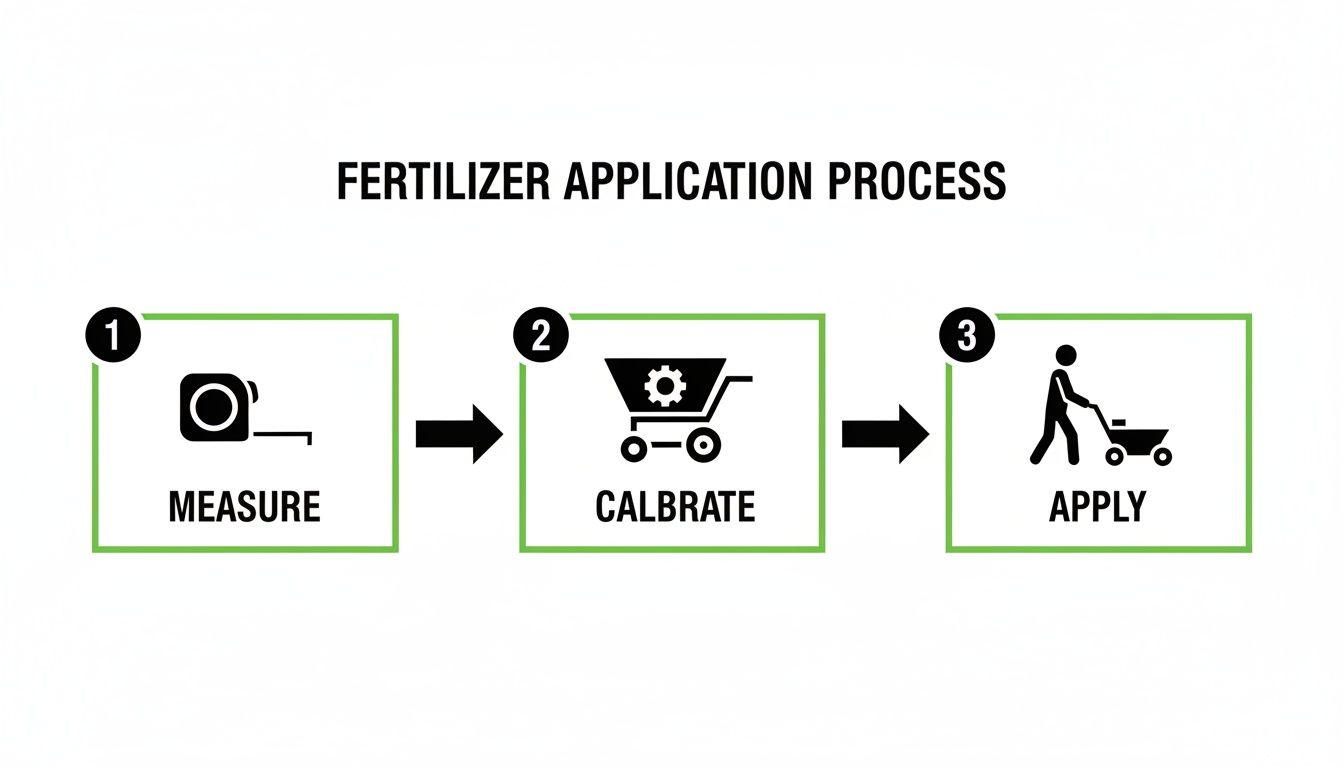
As this guide shows, a proper application is a process. Measuring your lawn and calibrating your spreader are just as critical as actually walking the yard and spreading the granules.
When you combine aeration with the data from a soil test, you've got the ultimate one-two punch for your winter lawn. Aeration gets the soil ready to accept the food, and the test makes sure you're serving up the perfect blend of winter grass fertilizer your ryegrass needs to flourish. It’s a strategy that replaces guesswork with a clear plan for a fantastic-looking lawn all winter.
Common Winter Lawn Care Mistakes To Avoid
Knowing what not to do is often just as important as knowing what to do, especially when you're dealing with the delicate balance of an overseeded winter lawn. We've seen countless well-meaning homeowners in North Georgia accidentally sabotage their beautiful ryegrass by making a few common missteps.
Let's walk through these pitfalls so you can avoid them and keep your lawn healthy all season long.
One of the biggest errors is getting too aggressive with the winter grass fertilizer, or putting it down too early. Picture this: a homeowner in Alpharetta sees a little yellowing in their new ryegrass. Their gut reaction is to hit it with more fertilizer, fast. But this often backfires, causing severe nutrient burn on the tender seedlings and creating brown, dead patches that are gone for good.
Overlooking Soil and Environmental Health
Another frequent mistake is focusing only on the green blades you can see and completely ignoring the world beneath them. True, lasting lawn health starts in the soil. Fertilizing without knowing what's happening underground is like throwing money away and can even cause harm.
Here are a few common environmental oversights we see all the time:
- Fertilizing Frozen Ground: Spreading fertilizer when the ground in Cumming is frozen solid is completely pointless. The nutrients have nowhere to go and will just wash away with the first rain or thaw.
- Ignoring pH Levels: If your soil's pH is out of whack, your grass can't properly absorb the nutrients you're feeding it. It's a frustrating cycle that a simple soil test can easily prevent.
- Letting Granules Sit on Pavement: It's easy to forget, but you have to sweep any stray fertilizer granules off your Milton driveway or sidewalk. If you don't, they'll wash straight into the storm drains, which isn't great for our local water quality.
Mismanaging Your Turf and Pests
Your mowing and pest control habits are just as critical. Cutting your ryegrass too short puts a ton of stress on the plant, leaving it vulnerable to cold snaps and disease. But if you let it get too long, it can become a damp, matted mess—the perfect breeding ground for fungus, which is a constant battle in our humid Georgia winters.
The most beautiful lawn can be quickly ruined by factors beyond fertilization. Thinking about the entire ecosystem of your yard—from soil health to pest prevention—is the key to maintaining that lush, green look through the winter months in the Dahlonega area and beyond.
Beyond getting your fertilizer routine right, smart pest management is a must. Pests like voles can wreak havoc on an otherwise perfect lawn. Taking the time to learn about identifying and controlling voles in your lawn can make a huge difference in protecting your investment. It's these small, proactive details that separate a decent lawn from a great one.
Answering Your Winter Fertilizer Questions
When it comes to keeping that beautiful winter rye green, we hear a lot of the same questions from homeowners across Cumming and Johns Creek. Let's tackle some of the most common ones we hear out in the field.
Can I Just Use My Leftover Summer Fertilizer?
I get this one all the time, and the short answer is no, it's really not a good idea. Your summer fertilizer is packed with high nitrogen to fuel your Bermuda's aggressive warm-weather growth. That's the last thing your winter ryegrass needs.
Instead, you want a "winterizer" formula. These are specifically balanced with higher potassium, which does a completely different job. It’s all about building strong roots and toughening up the grass to handle North Georgia's unpredictable cold snaps.
Do Organic Fertilizers Actually Work in the Cold?
Absolutely, and they work beautifully. It's true that the soil microbes that break down organic matter slow down in the cold, but our winters here in the Cumming area have plenty of milder days. On those warmer days, the microbes get to work, providing a slow, steady stream of nutrients.
This gentle feeding is perfect for ryegrass, as it avoids the risk of chemical burn and builds healthier soil for the long haul. It's a win-win.
How Soon After Overseeding Can I Fertilize?
Patience is key here. You need to give those new ryegrass seedlings a chance to get established before you feed them. A good rule of thumb is to wait until you've mowed the new grass at least two or three times.
This typically puts you at about 4 to 6 weeks after the seeds have germinated. Fertilizing any earlier can easily overwhelm the delicate new roots and do more harm than good.
For anyone in Milton or Alpharetta with kids and pets running around, my advice is always the same: stick with an organic, natural fertilizer. You get peace of mind knowing there are no harsh synthetic chemicals on your lawn where your family plays.
Ready to see a vibrant, green lawn all winter without any of the guesswork? Let the local experts at Barefoot Organics create a custom, family-safe plan for your property. Get your free online quote today!