

If you’re a homeowner in Cumming, GA, you know that a lush, green lawn is the goal, but our North Georgia climate makes it a real challenge. The secret to a healthier lawn isn't just about watering or fertilizing; it starts with when you mow. The absolute best time to mow your lawn in Cumming is mid-morning, right between 8 AM and 10 AM. Mowing at this time lets the morning dew evaporate but finishes before the brutal summer heat sets in, reducing stress on your grass and preventing the fungal diseases that thrive in our humidity. Getting this right is the first step toward winning the battle against weeds and thin spots.
Struggling with a weed-filled or thinning lawn in the Cumming area? Barefoot Organics provides professional lawn treatment programs that build a strong, healthy foundation for your grass. Get a free lawn evaluation today!
Why Mowing Time Matters for Cumming Lawns
For homeowners in Forsyth County, figuring out when to fire up the mower isn't just about convenience. It’s a critical decision for your lawn's health. While it’s tempting to squeeze in a mow whenever you can, the wrong timing can invite disease, weaken your grass, and undo all the hard work from your lawn treatment program. For anyone with a lawn in Cumming, from the new construction in Dawsonville to the established neighborhoods in Alpharetta, understanding why timing matters is key to a beautiful, barefoot-worthy lawn.
This guide breaks down the best and worst times to mow, helping you avoid the common pitfalls we see daily in North Georgia.
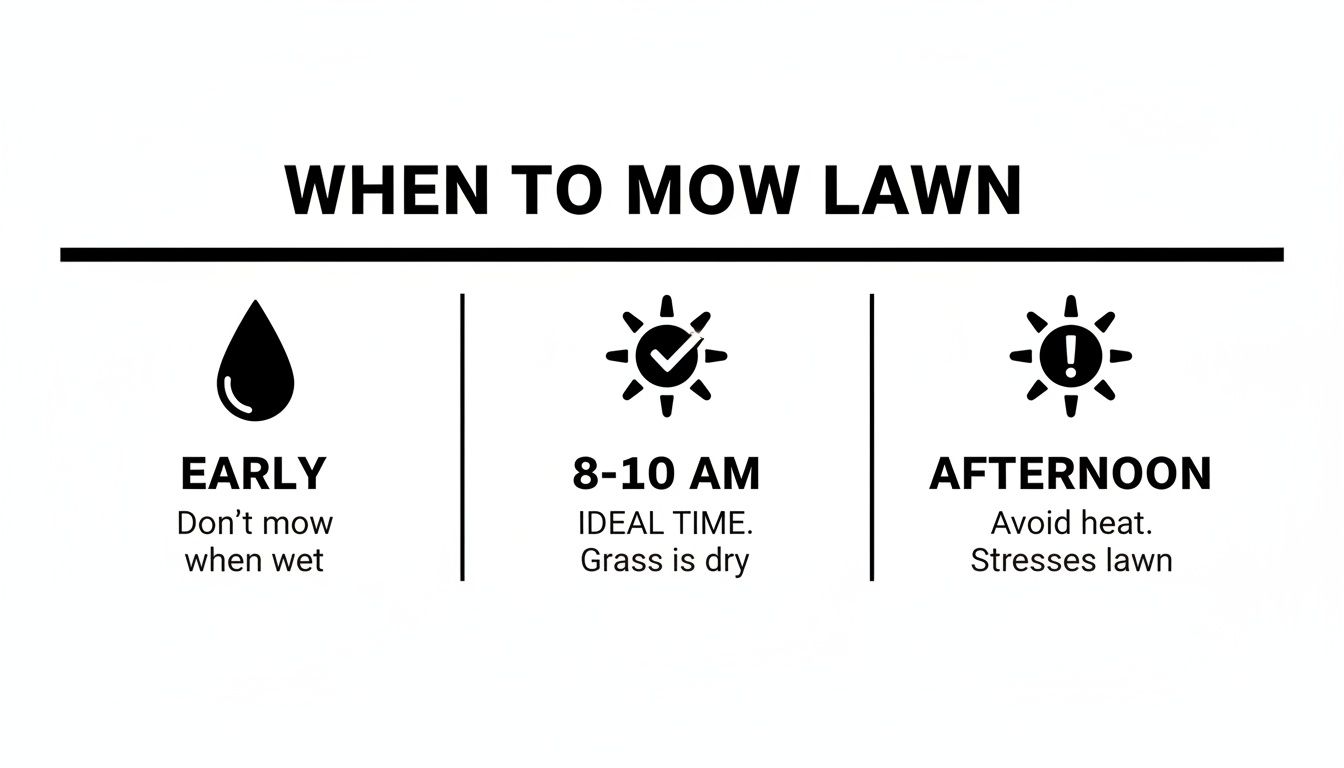
As you can see, that mid-morning window from 8 AM to 10 AM is the sweet spot for a healthy cut.
The Problem with Mowing Too Early in Georgia
Rolling the mower out at sunrise while the grass is still soaked in dew is a common mistake. Wet grass doesn't cut cleanly—it tears. This creates ragged wounds on the grass blades, stressing the plant and creating an entry point for fungal diseases like brown patch and dollar spot, which thrive in the high humidity of a Johns Creek or Suwanee summer.
Furthermore, wet clippings clump together, smothering the healthy grass beneath and blocking the sunlight it needs to grow.
Why to Avoid Afternoon Mowing in Cumming
Mowing in the afternoon—especially when a Georgia summer day pushes temperatures past 90 degrees—is just as damaging. Your lawn is already stressed, trying to survive the intense sun and heat. Cutting it then adds another layer of trauma.
- Heat Stress: Freshly cut grass loses moisture quickly. When you combine that with high heat, the tender, exposed tissue can scorch, causing brown tips.
- Slower Recovery: A lawn already stressed by heat will take much longer to heal from being cut. This weakens its defenses, making it an easy target for aggressive summer weeds like crabgrass.
- Soil Compaction: Our Georgia clay soil is often baked hard and dry by the afternoon. This makes for a tougher mow and can compact the soil under your mower's weight, restricting root growth.
The Mid-Morning Sweet Spot in Cumming
The 8 AM to 10 AM window is the perfect balance for lawns in Cumming, Milton, and all our surrounding North Atlanta communities. By then, the dew has evaporated, so you’ll get a clean, crisp cut that the grass can heal from quickly. The blades are standing upright and dry, and the temperatures are still mild.
Mowing during these hours gives your lawn the rest of the day to recover before evening. This is especially important for those of us with kids and pets who need a yard that's not just beautiful but resilient. A simple timing change can significantly boost your lawn's health, making your other efforts, like fertilization and weed control, even more effective.
You can learn more about how timing impacts lawn health and other pro tips for maintaining a beautiful yard.
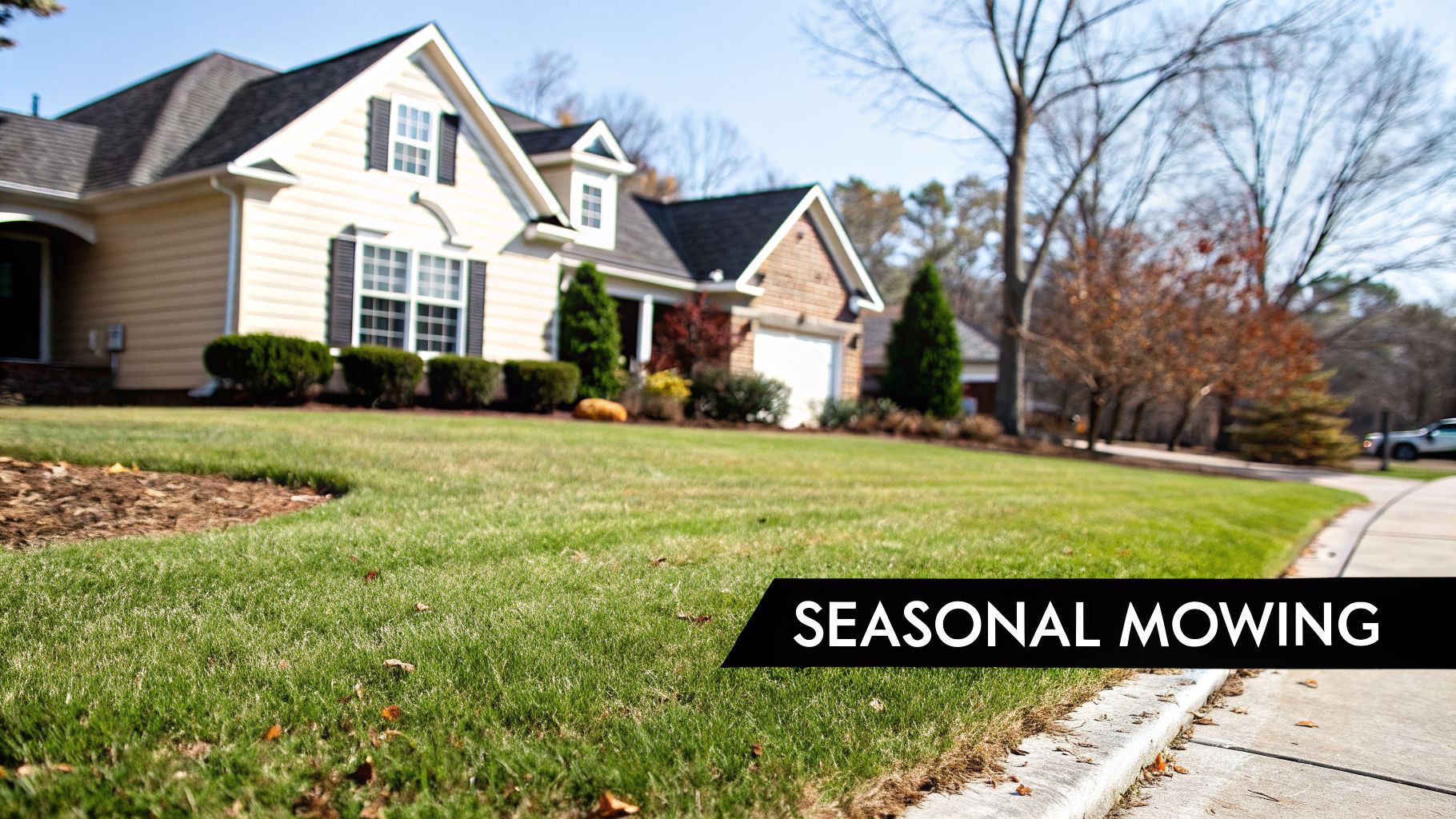
A Seasonal Mowing Calendar for Your Forsyth County Lawn
If you've lived in Forsyth County for any length of time, you know our seasons are distinct and demanding. Your lawn's growth is tied directly to that local rhythm. A strategy that works during the explosive growth of spring is the wrong approach for surviving the brutal heat of a North Georgia summer.
This isn't generic advice. This is a practical, year-round mowing calendar built from our experience treating lawns in Cumming, GA, and neighboring communities like Canton and Buford. We’ll walk through how to adjust your mowing frequency and cutting height to build a resilient lawn that naturally crowds out weeds and looks great in your subdivision.
Spring Mowing in Cumming (March – May)
As temperatures climb and the yellow haze of pollen season arrives, your lawn wakes up hungry. You’ll see a burst of growth, which means it’s time to mow more often.
- Frequency: Plan on mowing your lawn every 5 to 7 days. The goal is to stay on top of the growth spurt. Never remove more than one-third of the grass blade at a time.
- Height: Keep your mower deck set between 2.5 and 3.5 inches. This height provides a clean look without cutting it too short, which can "scalp" the turf and cause serious stress.
Letting the lawn get overgrown and then cutting it way down shocks the grass and creates a perfect opportunity for weeds to move in. Consistent mowing is key.
Summer Mowing in Cumming (June – August)
Summer in Cumming, Alpharetta, and Johns Creek brings the heat and humidity we all know. This is the most stressful time of year for your lawn, especially for cool-season turf like Fescue. Your mowing strategy must shift from managing fast growth to preserving its health.
- Frequency: Back off on mowing. Reduce your schedule to every 7 to 10 days. Less frequent mowing puts less stress on grass that's already working hard to survive the heat.
- Height: Raise your mower blades! Aim for a cutting height of 3 to 4 inches. Taller grass provides more shade for the soil. This simple adjustment helps the ground retain moisture, keeps roots cooler, and naturally chokes out summer weeds like crabgrass.
Local Tip: A taller lawn is your best defense against the scorching 90-degree days of a Georgia summer. Those longer blades act like a natural umbrella, shielding the sensitive crown of the plant and the red Georgia clay soil from drying out.
Fall Mowing in Cumming (September – November)
As the summer heat finally breaks, your lawn often gets a second wind. While growth starts to slow, mowing remains a critical step in prepping your turf for winter dormancy.
- Frequency: You can relax a bit more, stretching the time between cuts to every 10 to 14 days.
- Height: With each of the last few mows, gradually lower the deck height. For the final cut of the season, aim for about 2.5 inches. This shorter height allows more sunlight to reach the base of the plant, helping prevent common winter fungal diseases.
Ever notice how many lawns in the North Atlanta area suddenly look perfect on a Friday afternoon? Research across 100 U.S. cities revealed that over 25% of homeowners, especially in the Southeast, prefer a Friday mow. This timing works perfectly for our bustling communities in Forsyth County, getting the yard ready for weekend cookouts. You can see the data on mowing day preferences for yourself.
Winter Mowing in Cumming (December – February)
Once winter settles in, your warm-season Bermuda or Zoysia lawn will go dormant and turn tan. For the most part, your mower can go into hibernation too.
- Frequency: Only mow as needed. This usually just means a quick pass to clean up fallen leaves or the occasional winter weed that pops up. Many Cumming lawns won’t need to be mowed at all for a month or two.
- Height: If you do mow, keep the deck at that final fall height of around 2.5 inches. Avoid mowing if the ground is frozen or saturated from heavy winter rain.
Seasonal Mowing Guide for Cumming, GA Lawns
| Season | Mowing Frequency | Recommended Mower Height | Key Focus for Cumming Lawns |
|---|---|---|---|
| Spring | Every 5-7 days | 2.5 – 3.5 inches | Manage rapid growth; prevent scalping. |
| Summer | Every 7-10 days | 3 – 4 inches | Reduce heat stress; retain soil moisture. |
| Fall | Every 10-14 days | Gradually lower to 2.5 inches | Prepare for winter dormancy; prevent disease. |
| Winter | As needed (infrequent) | ~2.5 inches | Tidy up; avoid mowing frozen/wet ground. |
By following this seasonal calendar, you're working with your lawn's natural cycles. This approach leads to a healthier, more beautiful lawn that's more receptive to lawn treatments. For a deeper dive, our customizable lawn care schedule template is designed specifically for North Georgia homeowners.
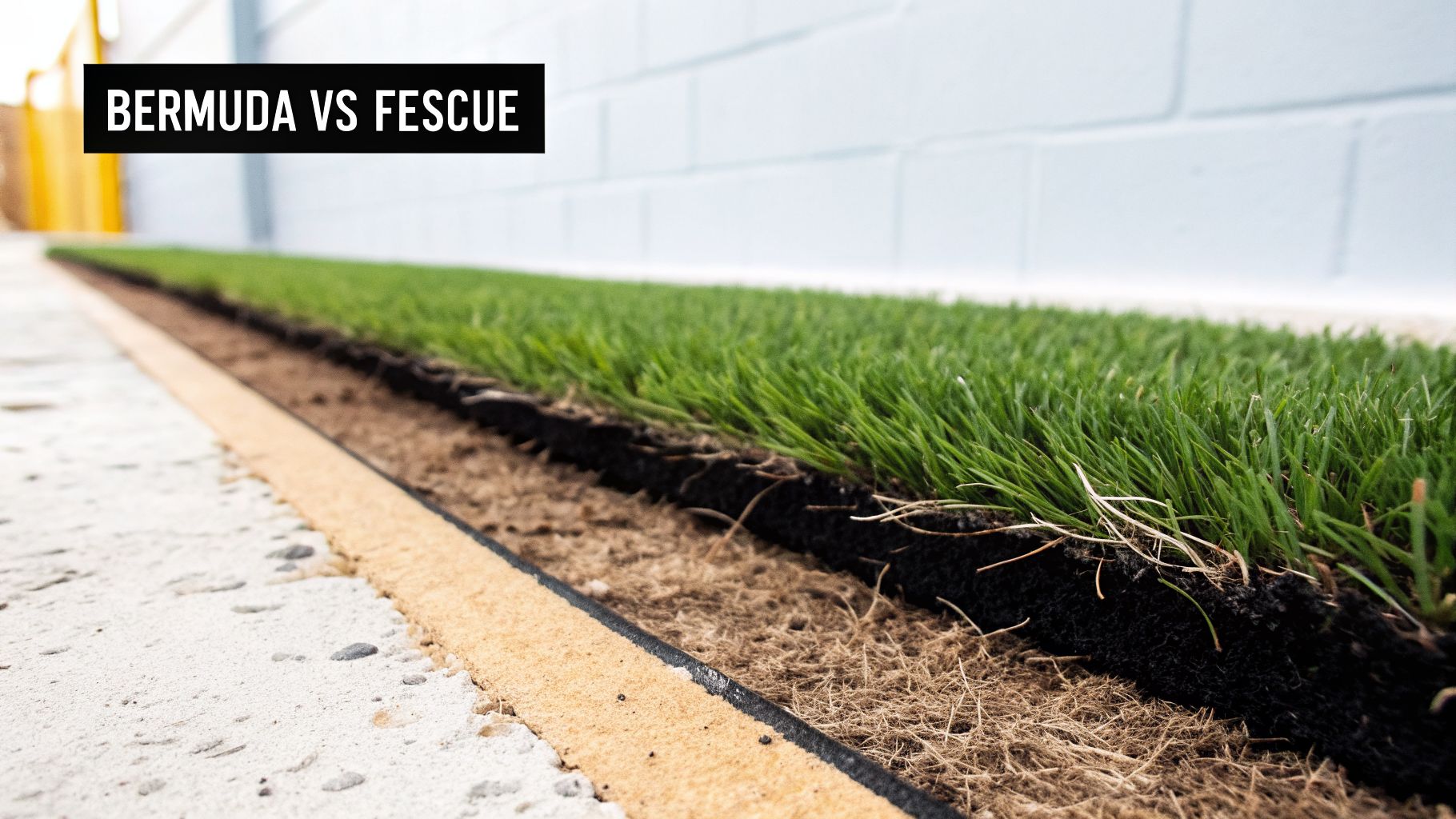
How to Mow Bermuda vs. Fescue Lawns in Cumming
Drive through any neighborhood in North Georgia—from Cumming and Johns Creek to Milton and Alpharetta—and you'll see two types of grass: Bermuda and Fescue. They are the top choices for our area, but that's where the similarities end.
These two grasses have completely different needs, especially when it comes to mowing. Treating them the same sets your lawn up for a frustrating struggle with weeds, fungus, and weak growth. The first step to a great-looking lawn is knowing which grass you have and how to mow it right.
Mowing Your Bermuda Lawn in Cumming
Bermuda grass loves our hot, humid summers, which is why it's the turf of choice for so many lawns in Forsyth County. It grows sideways with runners, creating a thick, durable turf perfect for handling backyard activity.
To get that classic, carpet-like Bermuda look, your mowing mantra should be low and often.
- Ideal Height: Set your mower blade to cut between 1.5 and 2.5 inches. This low cut encourages the grass to spread out and get thicker, not taller.
- Mowing Frequency: During its summer peak (June through August), you'll mow every 4 to 7 days. This constant trimming is what prevents a thick layer of thatch from building up.
We see it all the time in communities from Milton to Suwanee: someone lets their Bermuda get too tall, then scalps it. This exposes the brown, leafless stems and shocks the lawn. With Bermuda, consistent, frequent mowing is essential.
Protecting Your Fescue Lawn in North Georgia's Summer
Fescue is the opposite. As a cool-season grass, it looks great in spring and fall but struggles in the intense summer heat of North Georgia. Your entire mowing strategy for a Fescue lawn should be about one thing: helping it survive summer.
Mowing tall is its best defense.
- Ideal Height: Raise that mower deck. Keep your Fescue at 3 to 4 inches—or even the highest setting—during summer. Taller blades shade the soil, keeping it cool and preventing water evaporation.
- Mowing Frequency: Relax the schedule. Mowing every 7 to 10 days is perfect. Every mow puts stress on the grass, and a Fescue lawn already stressed from heat is more likely to suffer from disease or drought damage.
Barefoot Organics Pro Tip: A tall Fescue lawn is a strong Fescue lawn. Those longer blades don't just shade the ground; they protect the sensitive crown of the plant from the sun's brutal rays and encourage deeper root growth into our Georgia red clay.
The Big Difference: Winter Dormancy
When winter arrives, the difference is clear. Bermuda goes dormant after the first real frost, turning a tan, straw-like color until spring. This is normal.
Fescue, on the other hand, will try to stay green all winter if it's healthy. Many homeowners in Alpharetta and Canton will overseed their dormant Bermuda with ryegrass for winter green, but a well-cared-for Fescue lawn can provide it naturally.
To learn more about what to do with clippings, check out our guide on side-discharging vs. mulching.
Mowing Bermuda vs. Fescue in North Georgia
| Practice | Bermuda Grass (Warm-Season) | Fescue Grass (Cool-Season) |
|---|---|---|
| Ideal Height (Summer) | 1.5 to 2.5 inches | 3 to 4 inches |
| Mowing Frequency (Summer) | Every 4-7 days | Every 7-10 days |
| Primary Growing Season | Late Spring, Summer, Early Fall | Spring and Fall |
| Winter Appearance | Dormant (brown) | Green (if healthy) |
| Key Challenge in Cumming | Aggressive growth and thatch buildup | Surviving summer heat and drought |
Correctly mowing your lawn for its specific type is one of the most impactful things you can do. It costs nothing but a little know-how and makes a world of difference.
First Mow Tips for New Georgia Sod and Seed
There's nothing like looking out at a yard of fresh, new grass, especially with all the new construction around Cumming, Dawsonville, and Sugar Hill. But that first mow can be nerve-wracking. The last thing you want is to damage the fragile new turf.
When it comes to that initial cut, forget the calendar. It’s all about reading the grass and knowing when it's strong enough.

The goal of the first mow is to protect the fragile roots working their way into our dense Georgia red clay.
Is It Ready? The Gentle Tug Test
Before you pull the mower out, check if the roots have taken hold. Use the simple "tug test."
- Pick a spot on the edge of a sod roll or a patch of new seedlings.
- Grab a small handful of grass blades.
- Give it a very gentle pull.
If you feel resistance and the sod stays put, the roots have started to anchor. If the sod lifts or seedlings pull out, they need more time. For new sod in Forsyth County, this usually takes 2 to 3 weeks. For lawns from seed, wait at least 3 to 4 weeks after germination.
How to Prepare for a Successful First Cut
Once your lawn passes the tug test, it's almost time.
- Insist on Sharp Blades: Dull mower blades will rip and tear tender new grass. Your blades should be freshly sharpened for this crucial first cut.
- Go Lightweight: A heavy riding mower can create ruts and compact the soft soil under new sod. A lightweight walk-behind mower is best for the first few mows.
- Set the Deck High: Raise your mower to its highest setting. The goal is to just trim the tops, never taking off more than one-third of the total height.
Local Tip for Cumming Lawns: Our Georgia clay soil turns to mush when wet. Never mow new sod or seed when the ground is soggy. You'll leave deep ruts that are a nightmare to fix and can choke out the new roots.
Timing is everything. When your new grass reaches 3-4 inches, it's ready. A clean, dry cut encourages stronger roots. For more data, discover more insights about first mow timing on GrasshopperGardens.com.
Why Choose Barefoot Organics for Lawn Health in Cumming
Getting your mowing schedule right is one of the most powerful things you can do for your yard. It lays the groundwork for a beautiful lawn. But in our tough North Georgia climate, even the best mowing habits can only get you so far. That’s where Barefoot Organics comes in.
We aren’t a mowing company. We are your local lawn health partners in Cumming, dedicated to building strong, resilient turf that makes your mowing efforts pay off. We focus on what’s happening in the soil, creating a solid foundation that can handle the unique challenges of Forsyth County—from summer heat and drought to weed and disease pressure.
Our Treatment Breakdown: A Foundation for Health
A great lawn in Cumming needs more than a regular trim. It needs deep roots, healthy soil, and a smart plan to stop weeds. Our treatment programs are designed to complement your mowing routine.
- Pre-Emergent Weed Control: We apply treatments at the perfect time in late winter and fall to prevent crabgrass and other weeds before they germinate.
- Targeted Fertilization: Our organic-based fertilization feeds the soil, promoting deep roots that help your lawn handle dry spells and bounce back faster after each mow.
- Post-Emergent Treatments: For weeds that do break through, we apply targeted treatments that eliminate them without harming your lawn.
- Soil Amendments: We address the challenges of Georgia clay, improving soil structure so your grass can thrive.
We know local conditions because we’re out in them every day. Our approach is designed for the reality of Georgia's red clay, high humidity, and the specific needs of Bermuda and Fescue lawns across the North Atlanta area.
Stop Struggling and Start Enjoying Your Lawn
Think of it this way: your mower keeps the lawn looking neat, but our treatments are the engine driving its health. When you mow correctly and we provide targeted weed control and soil-enriching nutrients, the result is a lawn your neighbors in Johns Creek and Milton will envy.
We’re invested in the long-term health of your property. By focusing on organic-based solutions, we help you create a gorgeous outdoor space that's safer for your family and pets. You can discover more about our organic-based lawn care services near you. Stop guessing and start seeing the beautiful, healthy lawn you've always wanted.
FAQ: Your Top Mowing Questions for Cumming, GA Lawns
We get a lot of questions about mowing from homeowners in the Cumming and Forsyth County area. Our local climate has its own rules. Here are straightforward answers to the most common questions we hear.
Q: How often should I mow my lawn in Cumming, GA?
A: In Cumming, mowing frequency depends on the season. During the fast growth of spring (March-May), mow every 5-7 days. In the summer heat (June-August), reduce stress by mowing every 7-10 days. In fall, as growth slows, you can stretch it to every 10-14 days. Always follow the one-third rule, never removing more than a third of the blade at once.
Q: What is the best height to cut my Bermuda grass in the summer?
A: For Bermuda lawns in the Cumming area, you should mow low and often. Set your mower to cut between 1.5 and 2.5 inches. This low height encourages the grass to spread laterally and become denser, which is key for that classic, carpet-like Bermuda look and helps it compete against weeds during our hot Georgia summers.
Q: My Fescue lawn struggles in Cumming's summer heat. How should I mow it?
A: To help your Fescue lawn survive a Forsyth County summer, mow it tall. Raise your mower deck to the highest setting, aiming for a height of 3.5 to 4 inches. Taller grass blades provide shade for the soil, keeping it cooler, retaining moisture, and protecting the plant's sensitive crown from the intense sun.
Q: Should I bag or mulch my grass clippings in Forsyth County?
A: For most lawns in Forsyth County, we recommend mulching your clippings. This process, called "grasscycling," returns valuable nitrogen and nutrients to our dense Georgia clay soil, acting as a natural fertilizer. Only bag clippings if the lawn is overgrown, you're dealing with a fungal disease like brown patch, or you have a severe weed infestation you don't want to spread.
Q: When is the last mow of the season in North Georgia?
A: The final mow of the year in the Cumming area typically happens in late October or early November, just before your grass goes fully dormant. For this cut, lower your mower blade to about 2.5 inches. This shorter height helps prevent winter fungal diseases and allows more sunlight to reach the crown of the plant for a healthy start next spring.
Q: Can mowing fix a lawn full of weeds in Cumming?
A: Mowing at the correct height and frequency helps create a thick, healthy turf that naturally crowds out weeds. However, if your lawn is already overrun with weeds—a common issue in North Atlanta—mowing alone won't solve the problem. At that point, you need a professional lawn treatment program with targeted pre-emergent and post-emergent weed control to get your lawn back on track.
At Barefoot Organics, we know the unique challenges of getting a great-looking lawn in our corner of Georgia. We go way beyond just mowing advice, focusing on building the rich soil and dense turf your lawn needs to truly thrive. Start your journey to a healthier, barefoot-worthy lawn by requesting your free lawn evaluation today!