

For anyone in Cumming, Alpharetta, or the surrounding North Georgia area with a new lawn, the most important rule for that first feeding is simple: patience. You need to wait 4 to 6 weeks after planting your seed or laying down sod.
This waiting period is non-negotiable. Think of it like this: those brand-new, baby grass roots are incredibly delicate. Hitting them with a powerful dose of fertilizer too soon is like giving a toddler a five-course meal—it’s just too much, and you risk burning them out before they even get started.
Your First-Year Lawn Fertilization Timeline
Getting a new lawn to thrive in North Georgia isn’t about luck; it’s about a smart, well-timed plan. That initial 4-to-6-week waiting period lets the grass establish a basic root system, getting it ready for its first real feeding.
When that time finally comes, you can’t just grab any bag of fertilizer. You’ll want what’s called a “starter fertilizer.” This stuff is specifically formulated for new grass. It’s packed with phosphorus, the single most important nutrient for building a deep, strong root system. A solid root foundation is what will carry your lawn through our hot, demanding summers from Milton to Dahlonega.
This timeline gives you a clear visual of those critical first steps.
As you can see, waiting is the first step, followed by giving your lawn the right kind of food at the right time.
The Right Conditions for Fertilization
Timing your fertilizer application isn’t just about counting weeks on the calendar—it’s also about watching the weather. Here in Forsyth and Cherokee counties, soil temperature is a huge factor.
For our popular warm-season grasses, you should ideally wait until the soil temperature is consistently holding at 55°F. Fertilizing when the ground is still too cold is a waste of time and money. The roots aren’t active enough to absorb the nutrients, and you can end up weakening the grass right before its biggest test: summer. You can learn more about this in guides to seasonal lawn care.
For a new lawn, phosphorus is the hero. While nitrogen gives grass its green color, phosphorus builds the deep, strong root network necessary for your lawn to survive and thrive long-term. A strong foundation is everything.
To make things even easier, here’s a straightforward schedule for your new lawn’s first year, specifically designed for common North Georgia grasses like Bermuda and Zoysia.
First-Year Fertilization Schedule for New North Georgia Lawns
| Time Since Planting | Season (North Georgia) | Recommended Action | Key Nutrient Focus |
|---|---|---|---|
| First 4-6 Weeks | Spring/Fall | Water only; allow roots to establish without interference. | None |
| 6-8 Weeks | Spring/Fall | Apply a starter fertilizer designed for new grass. | Phosphorus (P) |
| 3-4 Months | Summer | Apply a balanced, slow-release fertilizer for steady growth. | Nitrogen (N) |
| 6-8 Months | Fall | Apply a winterizer formula to prepare for dormancy. | Potassium (K) |
This table is your roadmap for that crucial first year. Following a simple, timed approach like this takes the guesswork out of the equation and sets your new lawn up for long-term success.
Understanding North Georgia Grass Types
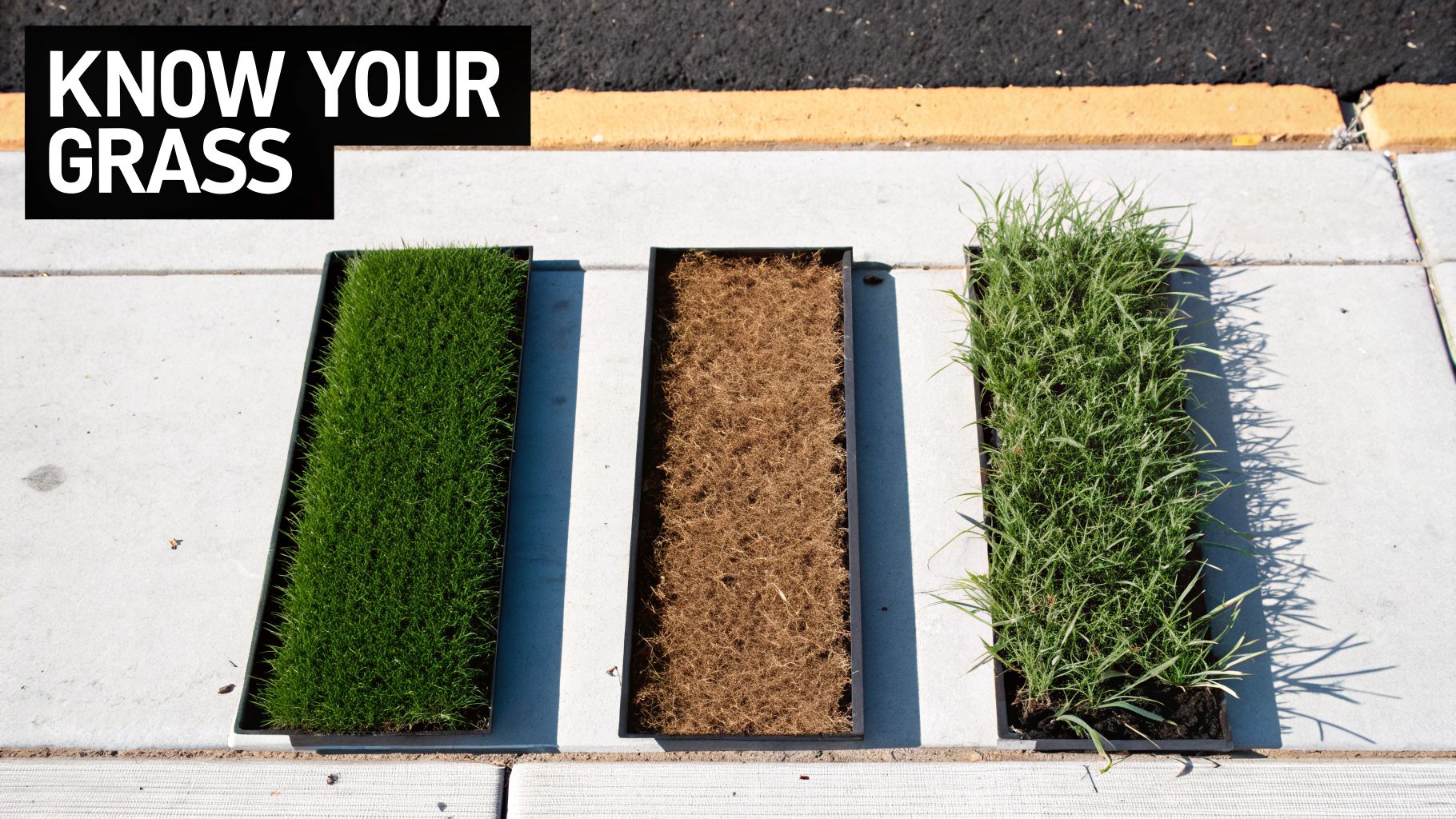
Here in North Georgia, not all grass is created equal. The specific type of grass you have growing in your yard—whether you’re in Johns Creek or Dahlonega—is the single most important piece of the puzzle. It dictates your entire fertilization strategy. Get this part wrong, and you’re basically just throwing time and money onto your lawn.
Most yards around here, from Cumming to Milton, are covered in warm-season grasses. These are the varieties that absolutely thrive in our hot, humid summers and then take a long nap (go dormant) during the winter. You’ll mostly see Bermuda, Zoysia, and Centipede grass. Each one has its own personality and its own specific appetite.
Think about it this way: trying to fertilize dormant grass in January is like trying to feed someone who’s sound asleep. It just doesn’t work. The grass isn’t growing, so its roots can’t absorb any of the nutrients you’re putting down.
The golden rule for warm-season grasses is simple: feed them when they’re awake. This means waiting until the soil warms up in the spring and continuing to provide nutrients while they’re actively growing through the summer.
Matching Fertilizer to Your Grass
Once you know the when, you have to figure out the what. Just like different athletes have different diets, different grasses have different nutritional needs. Giving your lawn the right food prevents stress and encourages that thick, healthy turf we all want.
Here’s a quick rundown of what our local favorites are looking for:
- Bermuda Grass: This one’s a heavy feeder. It needs a steady diet of nutrients, especially nitrogen, to develop that classic, dense carpet that stands up so well to foot traffic and backyard games in Alpharetta.
- Zoysia Grass: While it’s also a tough, beautiful grass, Zoysia is a bit more moderate in its needs. It loves a balanced fertilizer but doesn’t require the same intense feeding schedule as Bermuda to look fantastic.
- Centipede Grass: This is the low-maintenance cousin of the group. In fact, Centipede actually prefers a little neglect and wants less fertilizer. If you over-fertilize it, you can cause more harm than good, leading to thatch and other issues.
Figuring out which of these grasses you have is your first step. For a deeper dive into what makes each one tick, check out our guide to the best lawn grasses for Georgia. This will give you the practical insight you need to feed your lawn exactly what it needs, right when it needs it.
Building a Healthy Foundation in Georgia Clay
Think of fertilizer as a powerful multivitamin for your new lawn. It’s packed with good stuff, but even the best supplement can’t fix a poor diet. The same rule applies to your grass—if the soil isn’t healthy, even the best fertilizer won’t deliver the results you’re hoping for.
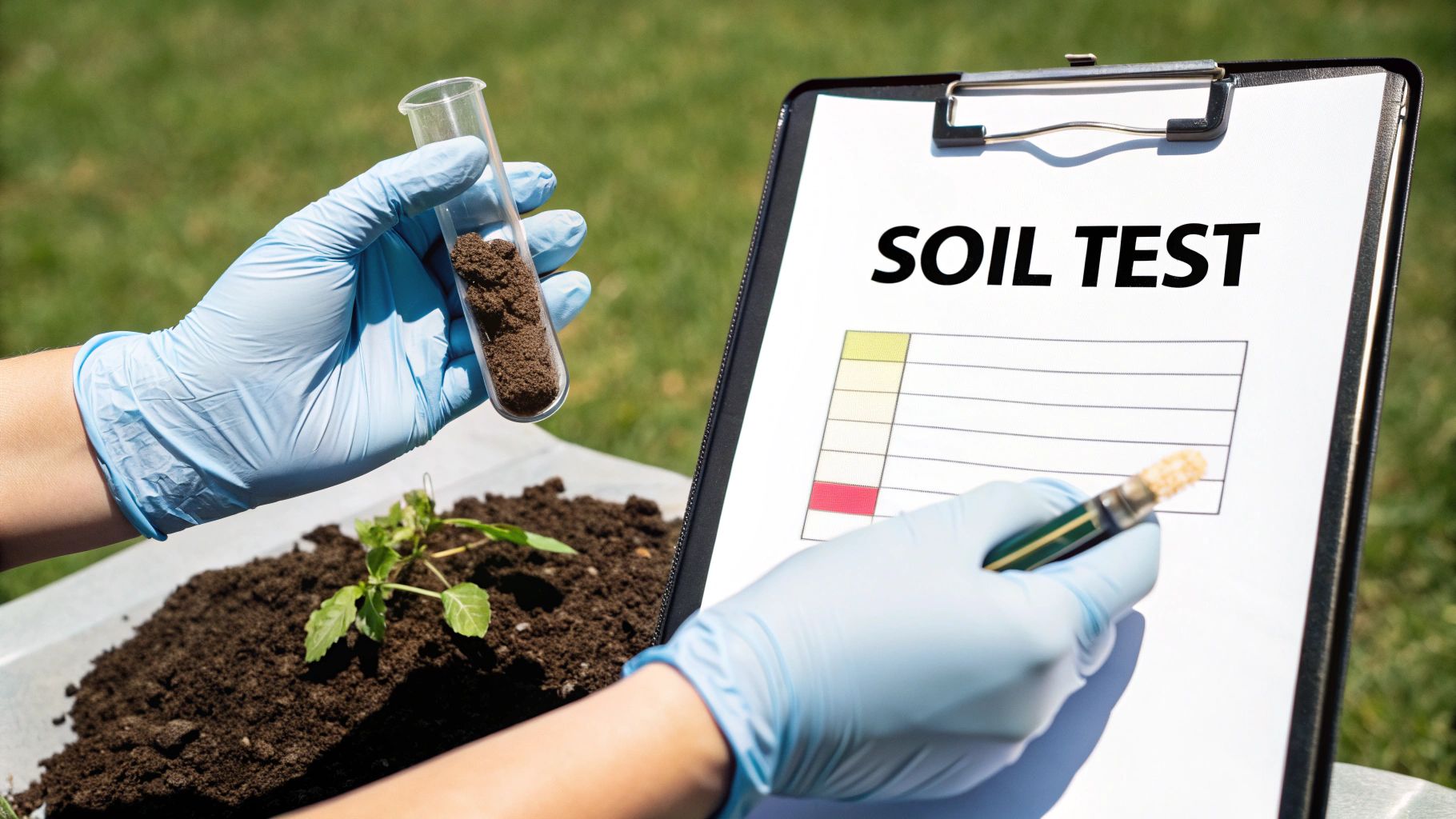
Here in North Georgia, from Cumming to Milton, our “diet” is that infamous dense, red clay. So, before you even reach for a bag of fertilizer, the single most important thing you can do is get to know your soil with a simple test.
Why a Soil Test is Non-Negotiable
A soil test is basically a report card for your yard. It takes all the guesswork out of the equation and tells you exactly what’s happening beneath the surface. For homeowners in Forsyth and nearby counties, this report reveals two critical pieces of information.
- Soil pH Level: Our Georgia clay is notoriously acidic. When soil is too acidic, it essentially “locks up” nutrients, making them unavailable to the grass roots. Your fertilizer investment literally goes to waste.
- Nutrient Deficiencies: The test also pinpoints which key nutrients your soil is missing. Is it low on phosphorus for root growth or potassium for resilience? Now you’ll know precisely what to look for in a fertilizer.
Getting a test is surprisingly easy. Your local UGA Extension office, with a branch right in Forsyth County, provides affordable and incredibly thorough soil testing services. The report you get back is a customized roadmap for building a beautiful lawn.
A soil test transforms your approach from just feeding the grass to cultivating a healthy, balanced ecosystem. It’s the single most effective way to ensure your fertilizer investment pays off.
Once you have those results in hand, you can start building that healthy foundation. This usually means working natural amendments into the soil to break up that compacted clay and balance its pH. To learn more, check out our complete guide on how to create healthy soil for your lawn. Taking this one step first makes every future fertilizer application work that much harder for you.
Choosing Natural Fertilizers for Your Lawn
More and more homeowners from Cumming to Johns Creek are looking for a safer, more sustainable way to get a beautiful lawn. That means moving away from the harsh synthetic chemicals and embracing fertilizers that actually build healthy soil for the long haul.
Think of it this way: synthetic fertilizers are like giving your lawn a shot of caffeine. You get a quick, unnatural burst of green, but it doesn’t last and does nothing for the underlying health of the grass.
Natural and organic fertilizers, on the other hand, work completely differently. Products made from things like compost, feather meal, and bone meal are food for the soil itself. They nourish the vast ecosystem of microbes living in the dirt, and those microbes, in turn, break down the nutrients and feed them to your grass roots. It’s a slow-release, symbiotic relationship.
This process creates a lawn that is naturally resilient and far less needy when it comes to constant chemical treatments.
Protecting Our Local Waterways
The benefits of this approach go way beyond your own yard. When you stop using harsh chemicals, you’re helping protect vital local watersheds like Lake Lanier. Your lawn care choices have a direct impact on the health of our Cumming and Forsyth County community.
By choosing organic methods, you slash the risk of harmful chemical runoff, creating a lawn that’s not just beautiful but genuinely safe for your kids, pets, and the local environment.
This isn’t just a niche idea anymore; it’s a massive shift. The global market for natural lawn fertilizers hit $5.5 billion in 2023 and is expected to nearly double to $10.2 billion by 2032. You can see the full breakdown in this market analysis from Dataintelo.com. People are waking up to a better way.
Using natural fertilizers is like giving your lawn a healthy, balanced diet instead of a sugary snack. It builds a strong foundation from the soil up, leading to a lawn that is naturally more resistant to drought, disease, and pests.
If you’re ready to make the switch, it’s worth understanding exactly how these products build a healthier lawn from the ground up. To dive deeper, check out our complete guide on the benefits of using a natural fertilizer for grass. It will give you the confidence to choose the right products for a truly thriving landscape.
It’s surprisingly easy to get things wrong when feeding a new lawn, even when you have the best intentions. Knowing when to fertilize is a huge step, but avoiding the common stumbles is what really sets you up for success, whether you’re in Cumming or Alpharetta.
One of the biggest blunders we see is putting down too much fertilizer, way too soon. Think of it like trying to feed a steak dinner to a newborn baby—the system just can’t handle it. The tender new grass shoots get overwhelmed by the nutrients, leading to chemical “burns” that show up as ugly yellow or brown patches. Always, always stick to the application rate on the product label.
Timing is another classic mistake. Spreading fertilizer in the peak heat of a Johns Creek afternoon is a waste of time and money. A good chunk of that valuable nitrogen will simply turn into gas and float away before it ever touches the soil. Your best bet is always the early morning or late evening when the air is cool.
Using the Wrong Gear and Grub
Choosing the wrong food for your lawn or spreading it unevenly can undo all your hard work in an instant. Grabbing a generic, high-nitrogen fertilizer instead of a proper starter formula is like telling your new grass to run a marathon without giving it the carbs it needs—it starves the roots of the phosphorus they’re craving.
Likewise, a sloppy application leads to a blotchy, inconsistent look that screams “amateur.” A few smart choices can help you sidestep these problems entirely:
- Wrong Fertilizer: For new lawns, a starter fertilizer is non-negotiable. It’s loaded with the phosphorus new roots need to establish themselves. You can switch to the more balanced, nitrogen-heavy blends once your lawn is mature.
- Patchy Application: Don’t try to spread fertilizer by hand. A decent broadcast spreader is a must-have tool for getting even coverage and avoiding the clumps that burn grass and the thin spots that weeds love.
- Ignoring the Soil: Fertilizing without a soil test is just guesswork. You could be adding nutrients your soil already has plenty of while completely missing a major deficiency.
The whole idea is to gently nurture your new lawn, not blast it with nutrients. A patient, measured approach builds a strong foundation that will reward you with a lush, healthy lawn for years.
As more people get serious about their lawns, the demand for better products is growing. The global lawn fertilizer market is expected to grow by about 4.5% each year through 2033, largely because homeowners want fertilizers that are made for their specific grass and climate. You can learn more about these lawn fertilizer market trends and see how the industry is evolving.
Answering Your Top New Lawn Fertilization Questions
Even with the best game plan, questions always come up when you’re staring at a brand-new lawn. Let’s walk through some of the most common ones we hear from folks in Cumming, Johns Creek, and Milton, so you can feel confident in your next steps.
Can I Fertilize New Sod Right After I Lay It?
Hold off on that first feeding. You’ll want to wait a good 4 to 6 weeks after laying new sod before applying any fertilizer.
This waiting period is non-negotiable. It gives the sod’s delicate new roots a chance to stretch out and anchor themselves into the soil. If you fertilize too soon, you risk chemically burning those fragile roots, which can be a major setback. For the first month, your only job is to provide light, consistent watering to encourage that critical root development.
What Do The N-P-K Numbers On The Bag Mean?
Those three numbers on the fertilizer bag represent the N-P-K ratio, which stands for the primary nutrients inside: Nitrogen (N), Phosphorus (P), and Potassium (K).
When you’re dealing with a brand-new lawn, that middle number—Phosphorus—is your hero. You’ll want to find a “starter fertilizer” specifically designed for new grass, which will have a high phosphorus content, like a 10-20-10 blend.
Think of it like this: Nitrogen (N) is all about lush, green top growth. But Phosphorus (P) is the powerhouse for building a deep, strong root system underground. For a new lawn, the roots are everything.
Should I Fertilize Before or After It Rains?
Timing your fertilizer with the rain is a pro move. The sweet spot is right before a light to moderate rain is in the forecast.
A gentle rain is perfect because it helps dissolve the fertilizer granules and carry those nutrients down into the soil where the roots can actually use them. It also does a nice job of rinsing any stray granules off the grass blades, which helps prevent leaf burn.
Just be sure to avoid fertilizing right before a heavy downpour. A major storm can easily wash away all those good nutrients before they ever have a chance to do their job.
Ready to build a lush, healthy lawn without the harsh chemicals? The experts at Barefoot Organics create customized natural lawn care plans for homeowners across North Georgia. Get your free online quote today!