

For homeowners everywhere from Cumming to Dahlonega, the question of when to fertilize your lawn is a big one. The simple answer is this: feed warm-season grasses like Bermuda and Zoysia from late spring through summer, and give cool-season grasses like Fescue their main meals in the spring and fall. Getting this timing right is the single most important step for a lush, green lawn that can handle the unique climate here in Cumming and the surrounding areas.
Your North Georgia Lawn Fertilization Calendar
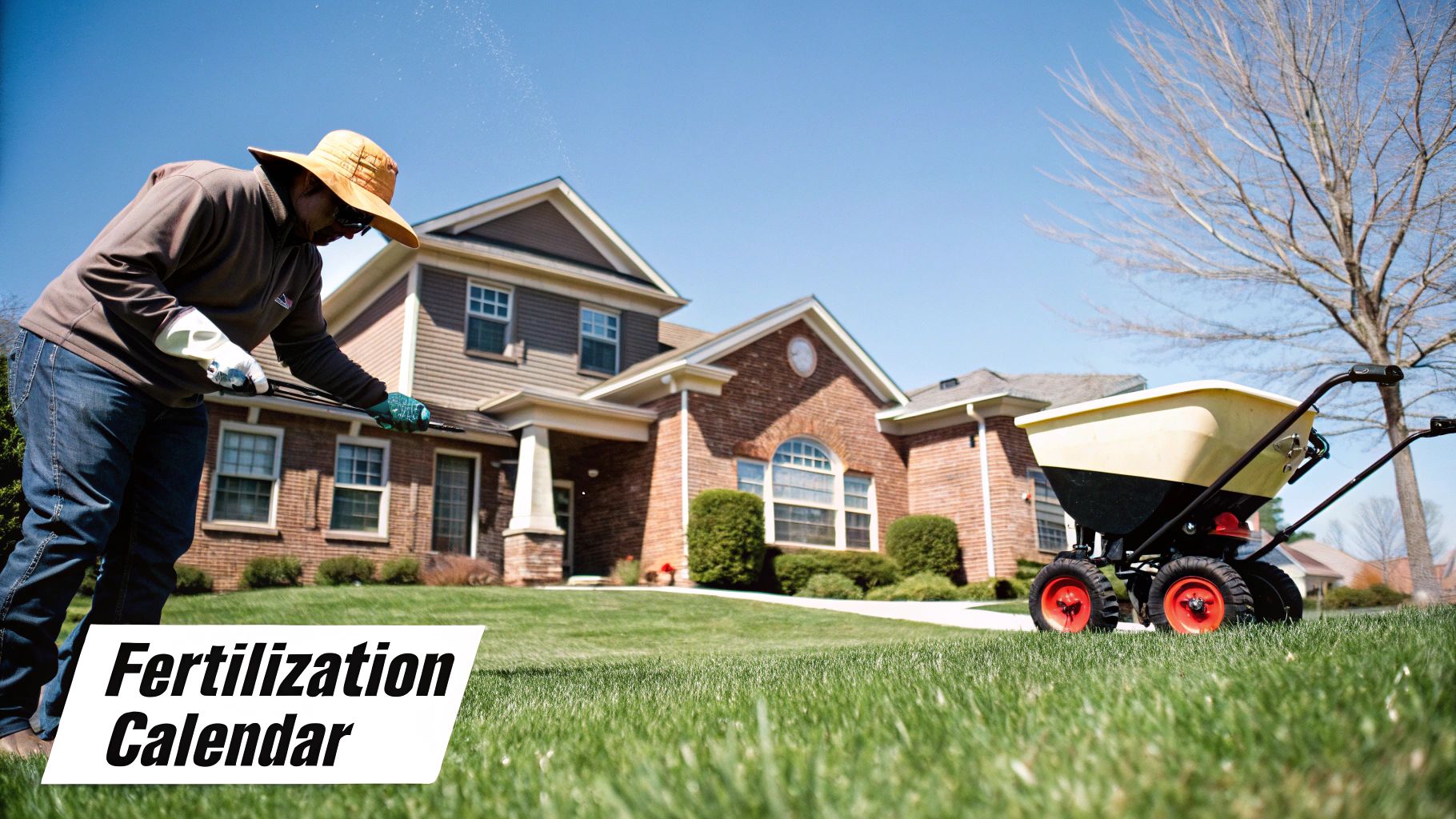
Think of fertilizer as fuel for your lawn. You wouldn't fill up your car's gas tank months before a big road trip—you’d do it right when you need the energy. It’s the same for your lawn in Alpharetta or Milton. It needs nutrients when it’s actively growing, not when it’s dormant or stressed.
This is exactly why a one-size-fits-all approach just doesn't work around here. The key is knowing which type of grass you have, because that dictates its entire yearly schedule. North Georgia is a "transition zone," which is just a way of saying we see both warm-season and cool-season grasses thriving in our Cumming-area neighborhoods.
The Two Main Grass Schedules
To make it simple, here’s a quick breakdown of the schedules for the most common grasses we see in Forsyth and Cherokee counties:
- Warm-Season Grasses (Bermuda, Zoysia): These grasses are at their best in the summer heat. They grow actively from late spring until early fall, and your job is to feed them during this peak performance window.
- Cool-Season Grasses (Tall Fescue): Fescue prefers the milder temperatures of spring and autumn. Feeding it during these times helps it build the strong, deep root system it needs to survive our hot Georgia summers.
Here’s a simple table to keep the ideal fertilization windows straight for our local turfgrasses.
North Georgia Fertilization Quick Guide
| Grass Type | Primary Fertilization Window | Secondary Application | Final Application |
|---|---|---|---|
| Bermuda & Zoysia | Late May – June | Mid-Summer (July) | Early Fall (September) |
| Tall Fescue | Early Spring (March-April) | Early Fall (September) | Late Fall (November) |
Keep in mind these are general guidelines. Weather patterns, soil health, and your specific lawn's condition in Johns Creek or Dahlonega can shift these dates slightly.
Why Timing Is Everything
Applying fertilizer at the wrong time does more than just waste your money—it can actually hurt your lawn. For example, feeding dormant Bermuda grass in the middle of a Cumming winter won't help the grass; it just encourages aggressive weeds to sprout as soon as the weather warms.
Likewise, giving Fescue a heavy dose of high-nitrogen fertilizer in the peak of July heat will only stress it out, making it an easy target for fungus and disease.
Proper fertilization timing goes hand-in-hand with other crucial lawn care practices. For your grass to actually absorb all those great nutrients, the soil has to be healthy and receptive. This is why knowing the best time to aerate your lawn is just as important. When you align these tasks, you create the perfect conditions for a vibrant, resilient yard that truly stands out in your Milton neighborhood.
Decoding Your Grass Type for Perfect Timing
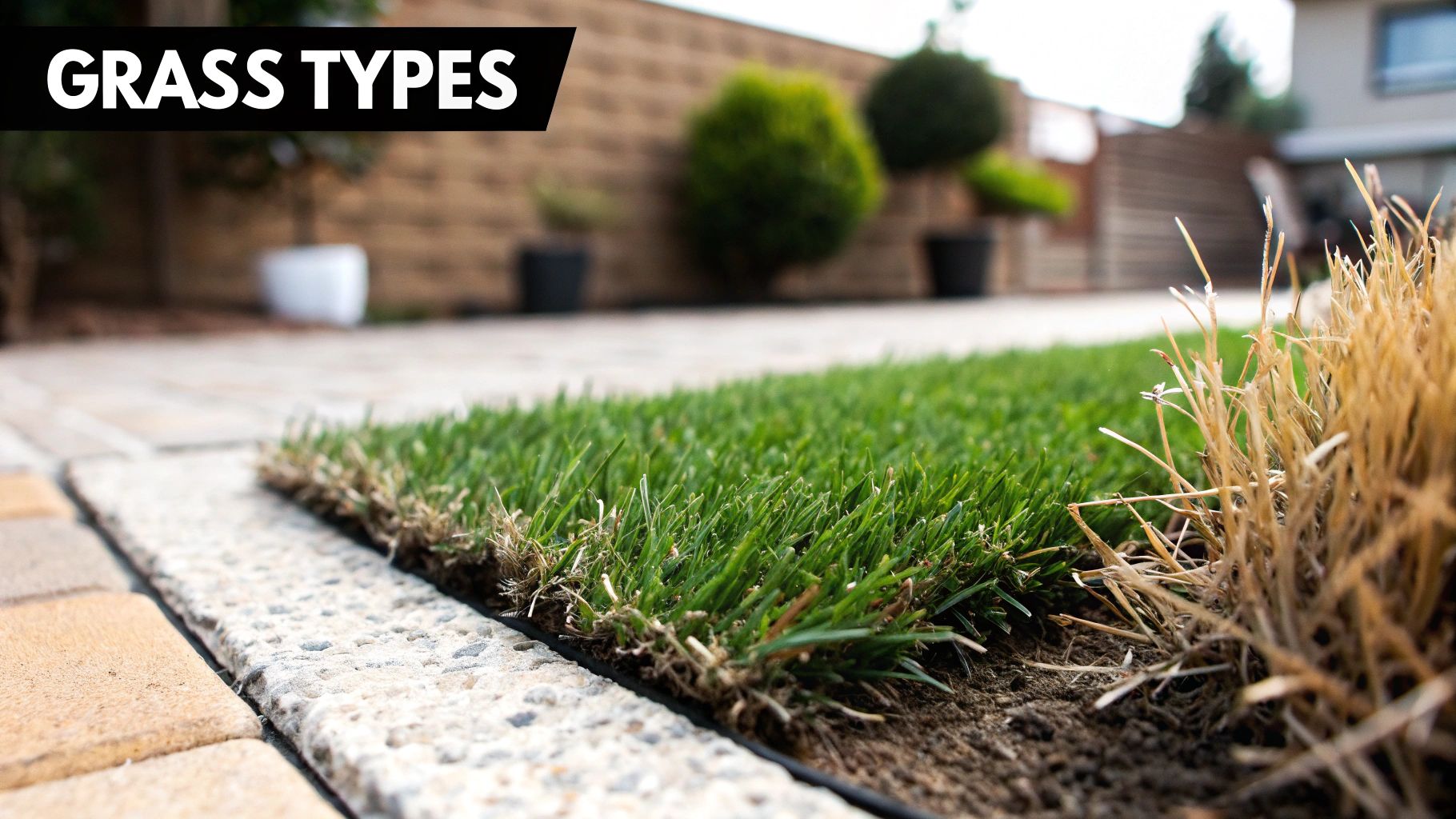
Ever wondered why your neighbor's Fescue lawn in Johns Creek gets fertilized on a totally different schedule than a Zoysia lawn over in Cumming? It's not random—it all comes down to their natural growth cycles. Nailing your fertilization timing starts with one crucial piece of information: whether you have a "warm-season" or "cool-season" grass.
Think of it this way. Warm-season grasses are like sprinters. They lie low for most of the year, then explode with growth during the hottest summer months. Cool-season grasses, on the other hand, are more like marathon runners, hitting their stride during the mild, steady temperatures of spring and fall.
Feeding them at the wrong time is like trying to force-feed a sprinter a five-course meal right before a 100-yard dash. It’s counterproductive. You have to sync up your fertilizing schedule with their natural rhythm.
Warm-Season Grasses: The Summer Sprinters
From Milton to Dahlonega, the two most common warm-season grasses you'll find are Bermuda and Zoysia. These turf types are built for Georgia summers, doing the vast majority of their growing from late May through early September when the heat and sun are at their peak.
- Bermuda Grass: This one is a true sun-worshipper, known for its rapid growth and fantastic ability to handle drought. It’s one of the last to green up in spring and the first to go dormant, turning a signature tan color after the first frost here in the Cumming area.
- Zoysia Grass: Famous for creating that lush, dense, carpet-like feel, Zoysia is a bit slower to get going but incredibly durable once established. Just like Bermuda, its growth engine roars to life in the summer.
Since these grasses are putting all their energy into growing during the summer, that’s precisely when they're hungriest. Feeding them from late spring through summer gives them the fuel they need to thicken up and choke out any would-be weeds in your Alpharetta yard.
Key Takeaway: For warm-season grasses, focus your fertilization efforts during the summer months when they're actively growing. Feeding them too early in spring or too late in fall is a waste of time and can actually help weeds get a foothold.
Cool-Season Grasses: The Marathon Runners
In North Georgia, when we talk about cool-season grass, we're almost always talking about Tall Fescue. Unlike its sun-loving cousins, Fescue really isn't a fan of our intense summer heat. It prefers the much milder weather of fall and spring to do its best work.
Fescue's biggest selling point is that it stays green nearly year-round. Its growth comes in two distinct waves: a major push in the fall and a secondary, less intense one in the spring. In the summer, it doesn't go fully dormant like Bermuda, but it definitely slows way down to conserve water and survive the stress. To learn more about which grass is right for your property, you can explore the 7 best lawn grasses for Georgia in our detailed guide.
This unique growth cycle dictates its feeding schedule. The most important time to fertilize Fescue is in the fall, which helps it build deep, robust roots to power through the upcoming summer. A follow-up feeding in the spring gives it a nice boost as it greens up. Getting this timing right is the absolute foundation of a solid lawn care plan, ensuring your grass gets what it needs, exactly when it needs it.
Why Fertilization Timing Is So Important
Spreading fertilizer isn't just a chore to check off the list; it's about giving your lawn the right food at the exact moment it's ready to eat. Think of your grass as having an internal clock that’s synced with the soil temperature, not the calendar on your wall. This clock tells it when to wake up, when to grow vigorously, and when to go dormant for the winter.
Nailing this timing is the secret to a thick, resilient lawn versus one that constantly struggles. When you feed your grass in sync with its natural growth cycle, you’re helping it build deep roots and crowd out weeds on its own. Get the timing wrong, and you might actually be hurting your lawn.
For instance, if you fertilize dormant Bermuda grass during a cold Johns Creek winter, the grass can't use any of it. All you’re doing is setting a feast for pesky winter weeds, giving them a head start to take over once things warm up. You've just fertilized the enemy.
The Science Behind the Schedule
The real signal for your grass to start growing is the temperature of the soil. Warm-season grasses, like the Zoysia and Bermuda you see all over Cumming and Forsyth County, don't really get going until the soil consistently hits about 65°F. On the other hand, cool-season Fescue, a favorite for shady Alpharetta lawns, wakes up a bit earlier, preferring soil temperatures between 55°F and 65°F.
Fertilizing before the soil is warm enough is like showing up to a party hours before the host is ready—the nutrients just sit there. Worse, a heavy rain can wash them away, or as we mentioned, they become a buffet for early-spring weeds. This is why a simple soil thermometer is one of the most valuable tools a homeowner can own.
Fast vs. Slow-Release: A Critical Choice
The type of fertilizer you put down is just as important as when you put it down. Fertilizers generally fall into two categories, and they work very differently with your lawn’s natural rhythm.
- Fast-Release Formulas: These are like an energy drink for your lawn, providing a quick, powerful jolt of nutrients for a fast green-up. The downside is a higher risk of "fertilizer burn" and the effects wear off quickly.
- Slow-Release Formulas: Think of these as a well-balanced meal. The granules are designed to break down over weeks, feeding your lawn steadily over time. This approach is far better for building deep, long-lasting health.
For sustained health that lasts the whole season, a slow-release product is almost always the right call.
A common mistake with North Georgia Fescue is fertilizing too early in March. This can force a burst of weak blade growth before the roots are ready, making the lawn more susceptible to diseases like brown patch. Waiting until mid-April usually aligns much better with the crucial root-growing phase in our climate. To see just how critical timing is, check out these insights from the LSU AgCenter on lawn fertilization.
Your Seasonal Fertilization Plan for North Georgia Lawns
Alright, let's get down to the nitty-gritty. A beautiful lawn in Cumming, GA, or anywhere nearby in Johns Creek and Alpharetta, doesn't happen by accident. It all comes down to timing. Knowing when to feed your grass is truly the secret sauce that separates a lush, green carpet from a patchy, struggling yard.
Think of soil temperature as the starting gun for your lawn's growing season. When it hits the right number, your grass wakes up and gets hungry.
The key takeaway here is simple: feed your lawn when it’s actively growing. Don't waste time, money, or fertilizer trying to feed grass that’s essentially sleeping through its dormant season.
A Year In The Life Of A North Georgia Lawn
Your lawn’s needs are a moving target, changing with every season. Here’s a clear breakdown of what you should be doing—and just as importantly, what to avoid—all year long, whether you have a warm-season or cool-season grass.
Here’s a simple table to keep on hand as a reference for your lawn care calendar.
Seasonal Fertilization Schedule for North Georgia Lawns
| Season | Action for Warm-Season Grass (Bermuda/Zoysia) | Action for Cool-Season Grass (Fescue) |
|---|---|---|
| Early Spring (March-April) | Wait. Let it fully green up first. Avoid feeding it too early, as this can lead to weak growth. | Light Meal. A gentle application helps it recover from winter and prep for the heat ahead. |
| Late Spring (May-June) | First Big Meal. Once the lawn is fully green and growing, it's time for its first feeding. | Stop. As temperatures rise, Fescue slows down. Fertilizing now will only stress it. |
| Mid-Summer (July-August) | Peak Growth Feeding. Your lawn is in high gear. A mid-summer application keeps it thick and strong. | Water Only. Focus on deep, infrequent watering. No fertilizer. Absolutely none. |
| Late Summer/Early Fall (Sept) | Final Snack. A light feeding helps it store energy for winter dormancy. | The Main Course. Fall is prime time for Fescue. Feed it well to build deep, strong roots. |
| Fall (Oct-Nov) | Winding Down. No more fertilizer. Let it prepare for its winter sleep. | Second Helping. A late-fall application is crucial for winter survival and a fast green-up next spring. |
| Winter (Dec-Feb) | Dormant. Leave it alone. The grass is sleeping. | Dormant. Also sleeping. Let it rest. |
This schedule provides a great starting point, but always watch your lawn and the weather—they are your best guides.
Key Feeding Times For Your Grass Type
Let's unpack that schedule a bit more.
For Warm-Season Grasses (Bermuda, Zoysia)
These are your classic sun-worshippers. They thrive in the heat and need their main meals when the Georgia sun is at its peak.
- Late Spring (May-June): The Wake-Up Call. Once your Bermuda or Zoysia is 100% green and you're mowing it regularly, it’s ready for its first feeding of the year. This gives it the fuel it needs to really take off.
- Mid-Summer (July): The Peak Performance Meal. With the summer heat in full swing across Forsyth and Gwinnett counties, your lawn is growing like crazy. This application sustains that vigorous growth and helps it outcompete weeds.
- Late Summer/Early Fall (August-September): The Pre-Dormancy Snack. A final, lighter feeding before it starts to fade is a smart move. This helps it bank nutrients to survive the cold and bounce back quickly next spring.
For Cool-Season Grasses (Tall Fescue)
Fescue lawns, common in shaded yards from Milton to Dahlonega, are the complete opposite. They do their best work in the milder months. Choosing the best organic lawn fertilizer is a fantastic option here, as it releases nutrients slowly and gently, which is perfect for Fescue's more sensitive nature.
- Early Spring (March-April): The Gentle Boost. Just a light meal in early spring is all it needs. This helps it perk up after winter without pushing too much growth before the summer stress sets in.
- Fall (September-November): The Main Course. Pay attention here—this is the single most important feeding for a Fescue lawn. Cool fall air and warm soil are the perfect recipe for root growth. Fertilizing heavily now builds the strong foundation it needs to tolerate next year's summer.
Critical Don'ts for Your Calendar
Whatever you do, never hit your Fescue lawn with a high-nitrogen fertilizer in the summer. It's like forcing someone to run a marathon in 100-degree heat—it will only stress the grass out and invite disease.
Likewise, for any grass type, avoid fertilizing right before a hard frost. You’ll just encourage tender new growth that the cold will immediately zap.
Fertilizing New or Damaged Lawns

A brand-new lawn from seed or sod is a lot like a newborn baby—its needs are totally different from a mature, established lawn. The same goes for turf that's trying to recover from a brutal Cumming summer or heavy foot traffic. You can't just follow a standard fertilization schedule in these situations. These delicate lawns need a special kind of care to get back on their feet.
The entire game plan comes down to one thing: strong root development. Without a deep, healthy root system, that new grass just won't make it through its first Georgia season.
Feeding New Grass for a Strong Start
When you're trying to get a new lawn going in Alpharetta or Milton, the first rule is to be patient. Don't rush out with the fertilizer spreader right away. The seed itself and the existing soil have enough fuel for the initial germination and early sprouting.
You'll want to wait about 3 to 4 weeks after sowing seeds or laying sod before that first feeding. Look for consistent, visible growth first. This is when you'll want to use a special starter fertilizer. These are high in phosphorus (the 'P' in N-P-K), which is basically rocket fuel for roots. It gives those tiny seedlings the energy they need to build a deep, resilient foundation.
After that first application, you can switch to light feedings every 4 to 6 weeks to keep the momentum going until the lawn is fully established. You can find more great details on this process from the experts at Safer Brand.
Nursing a Damaged Lawn Back to Health
But what if your lawn is already established and just… struggling? Maybe it’s got brown patches from disease, is thinning out from drought, or has bare spots from the kids playing soccer all summer. The knee-jerk reaction is to blast it with a heavy dose of fertilizer, but that can shock an already stressed-out system and do more harm than good.
Instead, think restoration, not resuscitation.
- Drought Recovery: After a long dry spell, wait until you see the grass greening up after a good rain or a few deep waterings. Then, apply a balanced, slow-release fertilizer. This provides a steady, gentle source of nutrients that won't overwhelm the weakened turf.
- Disease or Pest Damage: Always fix the root cause first. Once you've got the fungus or insects under control, a light feeding can give the grass the boost it needs to fill in the bare spots.
- High-Traffic Areas: For those worn-down paths and play areas, your best first move is aeration to relieve soil compaction. Following that up with a slow-release fertilizer will help the grass in those tough spots bounce back and thicken up.
The goal is always a deep recovery, not just a quick, superficial green-up. A gentle, nutrient-rich product helps your lawn heal from the roots up, building the resilience it needs to handle whatever the North Georgia climate throws at it next.
Common Fertilization Mistakes to Avoid in Georgia
Knowing the right time to fertilize your lawn is a huge step, but it's only half the battle. The other half is steering clear of a few common pitfalls that can sabotage all your hard work. Even with the best intentions, a few simple mistakes can leave you with a stressed-out lawn and an empty wallet.
The good news? These slip-ups are surprisingly common, but they're also easy to prevent once you know what to look for.
Over-Application and Fertilizer Burn
One of the most frequent issues we see around the Cumming area is fertilizer burn. It’s what happens when you apply way too much product, especially when the summer heat is on and the ground is dry. The excess nitrogen salts literally pull the moisture right out of the grass blades, leaving behind ugly yellow or brown stripes.
Think of it like salting your dinner—a little bit brings out the flavor, but a heavy hand ruins the entire meal. Your lawn feels the same way about fertilizer.
Poor Timing with Georgia Weather
Another critical mistake is getting the timing wrong with rainfall. It might seem smart to throw down fertilizer right before a classic Georgia downpour, but this is a major misstep for both your lawn and the environment.
A heavy rain just washes those expensive nutrients straight off your yard, down the driveway, and into the storm drains. From there, they can end up in local waterways like Lake Lanier, feeding harmful algae blooms. Instead, look for a forecast with a light, steady rain—not a gully washer.
The Most Costly Mistake of All
Perhaps the biggest and most costly mistake is skipping a soil test. Guessing what your soil needs is like a doctor prescribing medication without ever running a single test. You could be dumping on a nutrient your lawn already has plenty of while completely ignoring a critical deficiency.
A soil test from your local UGA Extension office is the single best investment you can make for your lawn. It gives you a precise roadmap, telling you exactly what’s missing and stopping you from wasting money on things your soil doesn't need.
By dodging these three common blunders—over-application, fertilizing before a downpour, and skipping a soil test—you’ll be miles ahead of the game. You'll ensure your time and money result in a genuinely healthy, beautiful lawn that can truly handle our North Georgia climate.
Got Questions? We've Got Answers
Even with the best game plan, questions pop up. It's only natural. Here are a few of the most common ones we hear from folks around Cumming, Alpharetta, and right here in North Georgia.
Can I Fertilize My Lawn in the Summer in Georgia?
You sure can, but it’s all about what kind of grass you have. For warm-season grasses like Bermuda and Zoysia, summer is their time to shine. A mid-summer feed is exactly what they need to thrive.
However, if you've got cool-season Tall Fescue, you'll want to avoid high-nitrogen fertilizers during the summer sizzle. Pushing it too hard in the heat can stress it out, leaving it wide open to disease.
What Is the Best Time of Day to Apply Fertilizer?
Early morning is your best bet. If you're using a granular fertilizer, aim for a calm morning when the grass is dry. This helps the granules fall down to the soil instead of sticking to wet blades.
The same goes for liquid fertilizers—an early application gives the grass blades time to dry, which helps keep fungal problems at bay. The big thing to avoid? Fertilizing in the scorching midday sun. That’s a fast track to burning your lawn.
How Soon After Fertilizing Can I Mow My Lawn?
This is a great question. You'll want to give it at least 24-48 hours after fertilizing before you break out the mower.
Think of it this way: you need to give those little fertilizer granules time to settle into the soil. If you mow too soon, the mower's suction will just pull them right back up, wasting your time and money. A light watering right after you fertilize can help rinse the granules down to the soil and speed things up.
Tired of trying to time everything perfectly? The team at Barefoot Organics takes all the guesswork out of it. We build natural lawn care plans tailored specifically for the North Georgia climate, giving your lawn exactly what it needs, right when it needs it.
See what a difference a truly local approach can make. Get your free, no-obligation quote today.