

When to dethatch your lawn in North Georgia isn’t just a minor detail—it’s everything. Get the timing right, and you’re on your way to a lush, healthy yard. Get it wrong, and you could be setting your turf back for a whole season.
For warm-season grasses like Bermuda, which you see all over Cumming and Alpharetta, the sweet spot is late spring to early summer. But for the cool-season Fescue that thrives in shadier spots, you’ll want to wait until early fall.
A Guide to Dethatching North Georgia Lawns
Have you ever walked across your lawn in Johns Creek or Milton and noticed it feels… spongy? Almost like there’s a thick, springy mat just above the soil? That’s a classic sign of thatch buildup.
Thatch is a tangled layer of dead and living shoots, stems, and roots that accumulates between the green grass blades and the soil surface. A little bit is fine, even healthy. But when it gets too thick, it chokes the life out of your lawn by blocking water, air, and nutrients from reaching the roots.
Dethatching is simply the job of removing that suffocating barrier, allowing your lawn to finally breathe again. For folks all over North Georgia, from the foothills of Dahlonega down to Forsyth County, knowing when to do this is the key to success. You want to time this work with your grass’s peak growing season so it can bounce back strong and fast.
Timing is Everything for Local Grasses
Think of dethatching like a necessary but stressful medical procedure for your lawn. You wouldn’t want to go through a major operation when you’re already weak, right? The same logic applies to your grass. By clearing out that dense thatch, you’re reopening the pathways for all the good stuff—water, fertilizer, oxygen—to get down to the roots where they’re needed most.
The goal isn’t to remove all thatch, just the excess. Once a thatch layer gets over a half-inch thick, it can start blocking up to 50% of the water and fertilizer you apply. It all just sits on top, never reaching the soil.
This is all about giving your lawn the best possible chance to recover and come back denser and more vibrant than before.
To make it even easier, we’ve put together a simple guide for the most common grass types we see in our area.
Quick Guide for Dethatching North Georgia Grass Types
Here’s a quick-reference table that breaks down the best times to dethatch based on the turf you have growing in your yard.
| Grass Type | Optimal Dethatching Season | Ideal Thatch Thickness for Action |
|---|---|---|
| Bermuda & Zoysia | Late Spring to Early Summer (May-July) | Over 1/2 Inch |
| Fescue & Ryegrass | Early Fall (September-October) | Over 1/2 Inch |
Matching the job to your grass’s active growing season is the single most important factor for a quick and successful recovery.
What is Thatch, Anyway? A Look Beneath the Blades
Before we talk about tearing it up, let’s get a clear picture of what thatch really is. It’s not just a pile of dead grass clippings. Thatch is the tightly woven layer of both living and dead stuff—think stems, runners, and roots—that gathers between the green grass you see and the soil below.
A little bit of thatch is actually a good thing. A thin layer, maybe less than a half-inch thick, acts like a natural mulch for your lawn. It helps hold in moisture during our hot Georgia summers, protects the roots from extreme temperatures, and gives the turf a bit of springy resilience. It’s your lawn’s built-in protective blanket.
When a Good Thing Goes Bad
The trouble starts when that blanket gets too thick. Here in North Georgia, from Milton to Dahlonega, our heavy clay soil doesn’t break down organic matter very quickly. This lets thatch build up fast, and once it gets thicker than that half-inch sweet spot, it flips from friend to foe.
This dense mat becomes a barrier, literally choking the life out of your lawn by blocking the essentials from reaching the soil.
- It Repels Water: Rain and irrigation just puddle on top instead of soaking down to the thirsty roots.
- It Steals Nutrients: The fertilizer you painstakingly apply gets trapped in the thatch, never making it to the soil where it’s needed.
- It Suffocates the Soil: It cuts off the oxygen supply, which is just as critical for healthy roots as water and nutrients.
Think of it like trying to water a plant through a sponge that’s already sitting on top of the soil. The sponge soaks up all the water, and only a few drips, if any, ever make it down to the roots. That’s exactly what a heavy thatch layer is doing to your grass.
The Downward Spiral of a Suffocating Lawn
When the roots can’t get water, air, or food, your whole lawn starts to decline. The grass roots actually start growing upward into the thatch layer itself, desperately seeking moisture. This creates a dangerously shallow root system that has no defense against drought, heat, or stress.
This environment is also a five-star resort for lawn diseases and pests. They absolutely love the damp, sheltered conditions a thick thatch layer provides. What you’re left with is a lawn that feels spongy under your feet, looks off-color, and just won’t green up, no matter what you do. Recognizing the signs and knowing when to dethatch is the key to breaking this cycle and bringing your lawn back to life.
How to Tell if Your Lawn Needs Dethatching
Knowing when it’s time to dethatch isn’t about circling a date on the calendar. It’s about learning to read the signs your lawn is giving you. For those of us with lawns in Alpharetta and Cumming, it’s best to think of dethatching as a specific treatment, not just another task on your annual to-do list. You only want to do it when it’s truly needed to avoid putting unnecessary stress on your grass.
So, how do you know if your lawn is sending out an S.O.S.? The first clue is right under your feet. Go for a walk on your grass. If it feels oddly spongy or bouncy, that’s one of the biggest red flags for a thick thatch problem. That springy feeling is the cushion of dead material getting in the way of a firm connection with the soil.
Another dead giveaway is how your lawn handles water. Pay attention after a heavy North Georgia rainstorm or after you’ve run the sprinklers. If you see water pooling on the surface instead of soaking in, that’s a problem. A dense thatch layer can act like a raincoat, preventing water from ever reaching the thirsty roots below.
The Best Way to Be Sure: A Quick “Lawn Autopsy”
While visual cues are a great start, the only way to know for certain is to get your hands a little dirty and measure the thatch layer yourself. This simple check removes all the guesswork and gives you hard evidence to work with.
- Cut a small wedge: Grab a sharp spade or even a sturdy knife and cut out a small, triangular section of your turf. Go about three inches deep.
- Lift and look: Gently pull the wedge out of the ground. You want a clean cross-section where you can see the green grass on top, the soil at the bottom, and everything in between.
- Find the thatch layer: Look for the tangled-up, brown, fibrous material sitting right on top of the soil, just below the green blades of grass. It’ll look and feel like a spongy mat.
- Measure it: Take out a ruler and measure how thick that layer is. If it’s more than a half-inch thick, your lawn is officially a candidate for dethatching.
Doing this little test yourself, whether you’re in Johns Creek or Milton, empowers you to make the right call based on what your lawn actually needs.
Making an Informed Decision
This simple diagram helps visualize when thatch becomes a problem that you need to deal with.
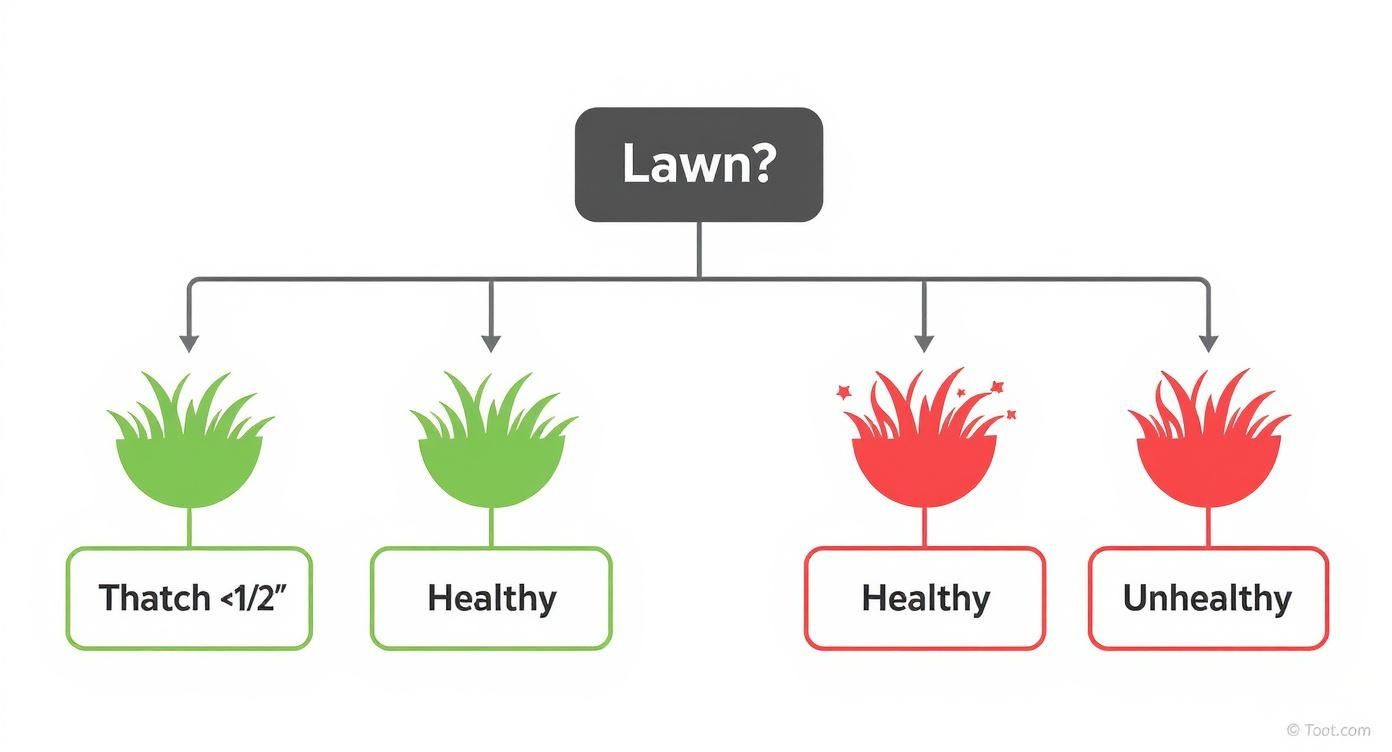
As you can see, once thatch builds up past that half-inch mark, it starts to choke out your lawn. A thin layer is fine—even healthy—but too much creates a hostile environment for your grass.
It turns out that most people are already on the right track. In a survey of 160 homeowners, a significant 44.3% reported that they only dethatch when their lawn’s condition and thatch thickness call for it. This just goes to show that the best approach is one that’s tailored to your yard’s specific needs, not a rigid schedule. You can dig into more of the homeowner survey insights on YourGreenPal.com.
Key Takeaway: Dethatching is a targeted solution for a specific issue: too much thatch. Before you even think about renting equipment or calling a pro, do the wedge test. If your thatch is less than half an inch deep, you can probably skip it and focus on other healthy practices like core aeration instead.
The Best Time to Dethatch Georgia Lawns

When it comes to dethatching your lawn in North Georgia, timing isn’t just important—it’s everything. Think of dethatching as a major workout for your turf. It’s a stressful, aggressive process, and doing it at the wrong time can knock your grass out for the count, inviting weeds and disease to take over.
The secret is to sync this heavy-duty task with your lawn’s peak growing season. You want to hit it when your grass is full of energy and ready to bounce back fast.
Dethatching Warm-Season Grasses Like Bermuda and Zoysia
For those of us in Cumming, Alpharetta, and Johns Creek with classic Georgia lawns like Bermuda or Zoysia, the calendar is pretty clear. You’ll want to dethatch from late spring to early summer.
This prime window, usually from May through July, is when these grasses are growing at their most furious pace. Hitting them with the dethatcher now means they have all the vigor they need to heal quickly and fill in any bare spots left behind.
Dethatching Cool-Season Grasses Like Fescue
Now, if your yard has more shade and you’re growing Tall Fescue, you need to flip the calendar. Cool-season grasses have two growth spurts, giving you a couple of different opportunities.
The absolute best time to dethatch Fescue is in the early fall (September to October). The soil is still warm from the summer, but the air is getting cooler—perfect conditions for grass to recover and for any new seed to take hold. A secondary, less ideal window is very early spring.
The whole point of dethatching is to carefully remove that suffocating layer without wrecking the soil and roots below. Getting the timing right is what makes it a helpful chore instead of a harmful one. For some great tips on this, check out what the experts at The Turfgrass Group have to say about dethatching.
Understanding the calendar is just one piece of the puzzle. It’s also critical to see how dethatching fits in with other lawn care jobs, like aeration. Timing these two tasks together can dramatically improve your results. You can read our guide on the best time to aerate a lawn to see how the seasonal principles line up.
Here’s the golden rule, no matter what grass you have: never dethatch a dormant or stressed lawn. Trying to dethatch Fescue in the summer heat or Bermuda grass in the middle of winter is a recipe for disaster. It leaves the turf wide open and unable to repair itself, basically rolling out a welcome mat for every weed and disease in the neighborhood.
Lawn Prep and Post-Dethatching Care
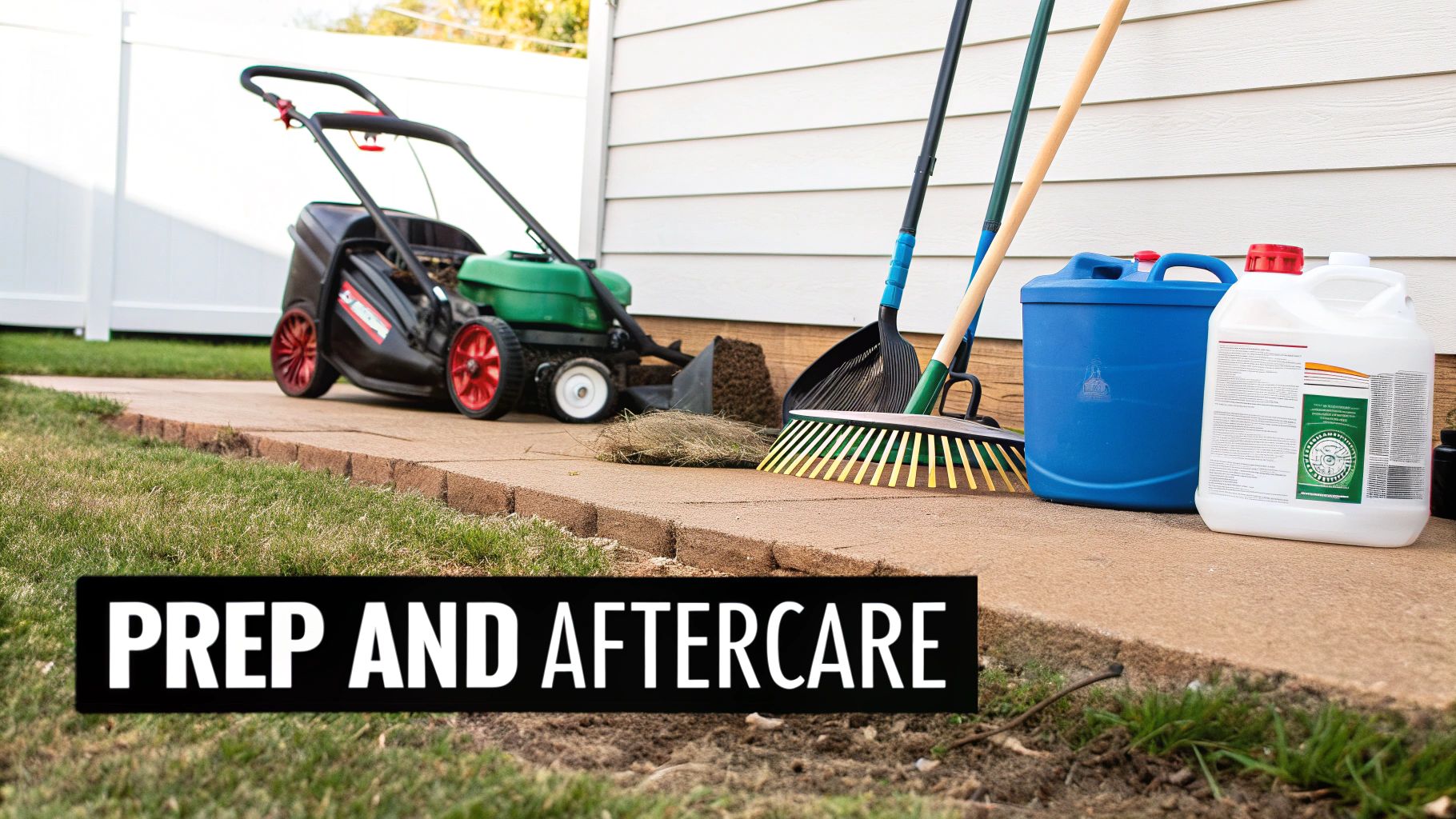
Proper prep work and thoughtful follow-up care are just as critical as the dethatching itself. Think of it like a warm-up and a cool-down for your lawn’s big workout. Nail these steps, and you’ll ensure your turf doesn’t just survive the process—it bounces back stronger and healthier than ever.
The job actually starts a day or two before you even fire up the dethatcher. First, mow your lawn a little shorter than you normally would. This gets the tall grass blades out of the way, giving the machine much better access to the thatch layer below.
Once it’s mowed, give the lawn a light watering. You’re not trying to soak the ground, just make it slightly moist. This small step softens the soil just enough, making it easier for the machine to pull up thatch without yanking out healthy grass roots along with it.
What to Do After Dethatching
After you’ve run the machine and raked away all that dead material, your lawn is going to look a bit beat up. You’ll see thin spots and bare patches, and it will generally look stressed. Don’t worry—this is completely normal. In fact, it’s a good sign you’ve successfully removed that suffocating layer.
Now, the recovery begins. The very first thing to do is feed your tired lawn. Applying a high-quality, balanced fertilizer delivers a shot of essential nutrients right where they’re needed most: the soil and exposed roots. This kick-starts the healing and regrowth process. For lawns here in Forsyth County and North Georgia, an organic-based fertilizer is a fantastic choice for building long-term soil health.
Overseeding and Watering for a Full Recovery
With that dense thatch barrier gone, you have a golden opportunity to thicken up your turf, which is especially important for the Fescue lawns so common around here. Overseeding is the key to filling in those bare spots, creating a denser, more resilient lawn that can naturally crowd out future weeds.
For the absolute best results, we often pair this with core aeration. You can see more about how we combine these two crucial steps in our aeration and overseeding services.
Finally, watering is the last piece of the puzzle. Your lawn needs consistent moisture to help the existing grass recover and to get any new seeds to germinate. Water deeply and regularly for the first few weeks, aiming to keep the soil consistently moist but never soggy.
And for pet owners, remember that a recovering lawn is a vulnerable one. Thinking ahead by creating designated dog potty areas can make a huge difference in protecting your new grass from damage.
Dethatching Alternatives and When You Might Need a Pro
Jumping straight to an aggressive dethatching isn’t always the right move, especially if your thatch problem is still minor. For homeowners here in Cumming and Alpharetta, a little prevention can go a long way in managing thatch before it ever chokes out your lawn. It’s all about building a healthier lawn from the ground up.
One of the best things you can do is core aeration. This process pulls up small plugs of soil, and it’s a lifesaver for the heavy clay we deal with in our area. Aeration loosens up that compacted ground, letting vital oxygen and water get down to the roots. More importantly, it kicks the natural microbial life into gear—the very organisms that break down thatch for you.
Choosing the Right Approach
Another fantastic method is topdressing with a thin layer of high-quality organic compost. When you do this, you’re essentially adding a fresh army of beneficial microbes to the soil surface. They get to work decomposing the thatch layer while simultaneously enriching your soil. It’s a proactive way to feed your lawn and keep thatch under control at the same time.
So how do you decide what your lawn needs?
- Core Aeration: This is your go-to for breaking up compacted soil and improving air and water flow. Think of it as a foundational practice for long-term thatch management.
- Topdressing: Perfect for adding organic matter and beneficial microbes that eat away at thatch naturally. It’s a great way to feed the soil while solving the problem.
- Mechanical Dethatching: This is the corrective action you take when thatch is already a significant problem—typically over a half-inch thick—and you need a more immediate fix.
When to Call in the Experts
Let’s be honest, sometimes a DIY project isn’t the best or safest choice. If you’ve got a large property in Milton or your lawn is struggling under a seriously thick thatch layer (we’re talking over an inch deep), it’s probably time to call for professional help. The equipment is heavy, the work is back-breaking, and a wrong move can do more harm than good to your turf.
Hiring a professional lawn service takes the guesswork out of the equation. It ensures the job is done right, with the proper equipment for your grass type, and timed perfectly for North Georgia’s unique growing seasons.
Once thatch gets thicker than a half-inch, it’s not just an eyesore; it’s actively harming your lawn by blocking water and nutrients. While annual aeration often keeps it in check, a heavy buildup demands a more direct approach. You can learn more about how excessive thatch can choke your lawn at NGTurf.com.
If you’d like a professional eye to assess your lawn’s specific needs, take a look at how we aerate and dethatch lawns to bring them back to peak health.
Common Questions About Dethatching Your Lawn
If you’re a homeowner in Cumming, Johns Creek, or anywhere in Forsyth County, you’re not alone in having questions about dethatching. Let’s clear up a few of the most common ones so you can feel confident about your lawn care decisions.
Can I Dethatch and Aerate at the Same Time?
Absolutely. In fact, doing them together is one of the best things you can do for your turf. The key is to get the order right: dethatch first, then aerate.
Think of it like clearing away the clutter before deep cleaning. Dethatching removes all that surface-level gunk, allowing the core aerator to do its job without getting jammed up. This one-two punch opens up your soil, creating perfect pathways for air, water, and nutrients to get right down to the roots. Your lawn will thank you with a much faster and healthier recovery.
How Often Should I Dethatch My Lawn?
This is a big one. Dethatching is not a yearly to-do list item. It’s a corrective measure you should only perform when the thatch layer is more than a half-inch thick.
Grasses that spread aggressively, like Bermuda, might need it more frequently than a Fescue lawn. But a well-maintained lawn might only need it once every few years, if at all. The only way to know for sure is to grab a trowel, cut out a small plug of turf, and measure. If the thatch is thin, stick to preventative care like aeration.
Think of dethatching as a prescription for a specific problem, not a vitamin you take every day. Always measure first to avoid putting your lawn through unnecessary stress.
What Is the Difference Between a Power Rake and a Dethatcher?
It’s easy to get these two mixed up, but they’re very different tools designed for different levels of thatch.
- Dethatcher (or Verticutter): This is your go-to for routine maintenance. It has vertical blades that slice through the thatch, effectively thinning it out without being too rough on your grass. It’s perfect when you have a thatch layer around a half-inch to three-quarters of an inch thick.
- Power Rake: This is the heavy-duty option. A power rake uses aggressive, spinning tines to dig in and rip out thick, compacted layers of thatch. It’s a powerful machine meant for severe situations and is often best left to the pros to prevent accidentally tearing up the lawn.
Ready to stop guessing and give your lawn the expert care it deserves? The team at Barefoot Organics has the right equipment and local knowledge to handle dethatching and aeration for North Georgia’s unique grasses. Get your free quote today!