

The key to a lush, weed-free lawn in North Georgia isn’t just about what you apply—it’s about when. For spring pre-emergent, the magic window opens when your soil temperature consistently hits 53-55°F. That’s the precise moment stubborn weeds like crabgrass start to germinate, and catching it is everything.
The Secret to a Weed-Free North Georgia Lawn
If you've ever battled a yard full of weeds in Cumming or Johns Creek, you know how quickly they can take over. The old advice to apply pre-emergent on a fixed date, like March 15th, often fails homeowners around here. Why? Because North Georgia's mild winters and early springs mean our soil warms up much sooner than in other parts of the country.
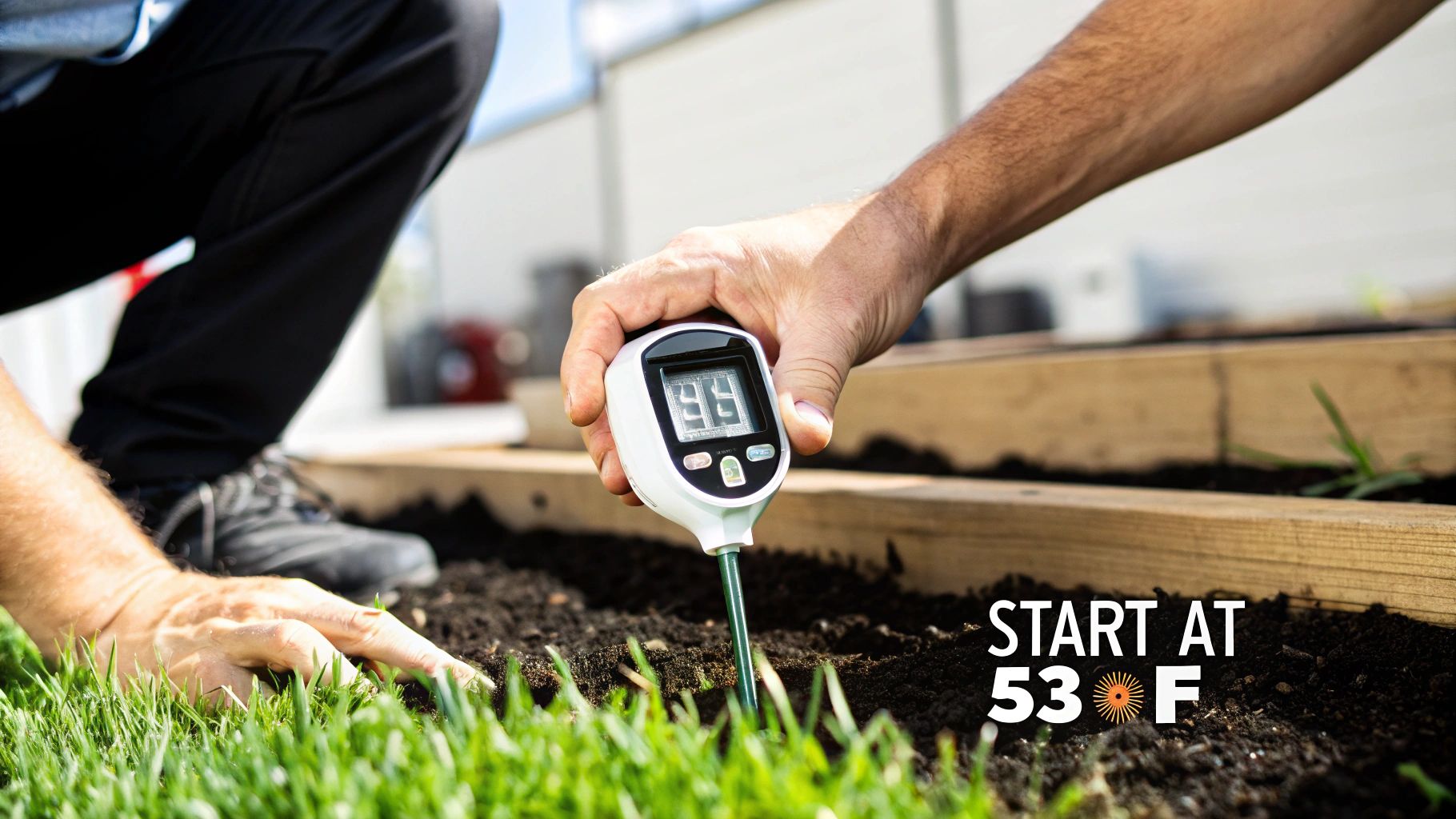
This isn't just a hunch; it's science. Pre-emergent herbicides work by creating a protective barrier in the top layer of soil that stops weed seeds from successfully sprouting. If you apply it after the seeds have already germinated—even if you can't see the tiny weeds yet—you've completely missed your chance.
Timing is Everything in the Georgia Climate
Think of it this way: you wouldn't close the barn door after the horse has already bolted. Applying pre-emergent late is the lawn care equivalent of that. For homeowners from Alpharetta all the way up to Dahlonega, watching your soil temperature is far more effective than just circling a date on the calendar. The goal is to get ahead of the germination cycle, not react to it.
Understanding this principle is the first step in managing common lawn invaders. Crabgrass, our most notorious summer annual weed, is the main target for spring applications. Its entire life cycle is dictated by soil temperature, making that number your most reliable guide for lawn care success.
A proactive approach based on soil temperature, rather than a fixed date, is the single most important factor in preventing a crabgrass invasion on your North Georgia lawn. This simple shift in strategy can save you time, money, and countless hours of frustration.
Why You Should Apply Earlier Than You Think
Recent weather patterns have only reinforced the need for an earlier application. In North Georgia, including areas like Forsyth and Gwinnett Counties, crabgrass germination kicks off when soil temperatures at a 2-4 inch depth average 53-55°F for several consecutive days.
Just look at our neighbors—North Carolina saw crabgrass emerge in late February back in 2023 because of an unusually warm January, a trend that closely mirrors our climate in Cumming and the surrounding areas. Because of this, many local experts now recommend applying by March 1st at the absolute latest, and ideally even a week or two earlier, to catch those first germinators. You can explore more about these early application findings and see how they impact our region.
This early timing ensures your lawn has a solid defense in place before the first wave of weeds even thinks about sprouting. By acting decisively, you give your desirable turfgrass—like Bermuda or Zoysia—a huge competitive advantage, allowing it to thrive without fighting for resources. It’s a foundational step for a healthy, beautiful lawn that's ready for your family and pets to enjoy all season long.
Here’s a quick-reference calendar to help you plan. Remember, these are general guidelines—always trust your soil thermometer over the calendar.
North Georgia Spring Pre-Emergent Application Calendar
| Month | Target Weed | Ideal Soil Temperature | Typical Application Window for Cumming & Alpharetta |
|---|---|---|---|
| February | Crabgrass, Goosegrass | 53-55°F | Late February to Early March |
| March | Crabgrass, Goosegrass | 53-55°F | Early March (Act quickly if you haven't applied yet) |
| April | Foxtail, Spurge | 60°F+ | Second "booster" application may be needed |
This calendar gives you a solid starting point. The key is to be prepared in late February so you can act the moment those soil temperatures start to rise.
Why a Fall Application Is a Game-Changer for Georgia Lawns
Most people think of pre-emergent as a spring-only task for stopping crabgrass. But if you talk to any lawn care pro around here, they’ll tell you that the fall application is just as critical, if not more so. This isn't a repeat performance for summer weeds; it's a completely different battle against a whole new enemy: winter annuals.
Weeds like Poa annua (that pesky annual bluegrass) and henbit are the main offenders. They love to get a foothold in the cool, damp soil of September and October. They'll hang out all winter, practically invisible, and then explode into a sea of green and purple the second spring arrives, often choking out your turf before it even has a chance to wake up.
For homeowners from Milton to the surrounding areas, this means starting the season with a lawn that looks weak and riddled with patches. A solid fall pre-emergent application lays down a protective barrier that stops these winter weeds cold, right when they try to germinate.
Your Secret Weapon Against Spring Weeds
Think of it as giving your lawn a massive head start for next year. When you prevent winter annuals from ever taking root, you’re cutting off their access to the water, sunlight, and nutrients your grass needs.
This is a huge advantage for your dormant turf, whether you have Bermuda, Zoysia, or Fescue. It allows the grass to come out of winter dormancy stronger, thicker, and ready to thrive. This proactive strike also means you’ll use far fewer post-emergent weed killers in the spring—less chemical, less work, and a much healthier lawn. It’s a simple move that pays off big time when that hot Georgia summer hits.
In North Georgia, the fall pre-emergent window is surprisingly crucial. It's your best defense against winter annuals like annual bluegrass (Poa annua) that can ruin lawns across Forsyth and Gwinnett Counties. Turf experts have found that applying by September 15th can knock out up to 85% of these weeds before they start. You can learn more about the successes of pre-emergent herbicide programs and see just how much timing matters.
Nailing the Timing for Fall Applications
Just like in the spring, timing is everything. For your fall application, the trigger isn't the calendar but the soil temperature. You're looking for the moment when soil temps start to drop and consistently hit 70°F on their way down.
For most of us, from Dahlonega down to Cumming, this sweet spot usually lands somewhere between early September and mid-October. Applying your pre-emergent then ensures the barrier is in place and active right when those winter weed seeds get the signal to sprout.
A quick heads-up if you’re planning to overseed fescue: pre-emergent doesn't know the difference between a weed seed and a grass seed. It will stop both from germinating. You absolutely must wait 8-10 weeks after applying pre-emergent before you can safely put down new seed. For a detailed schedule, check out our guide to seeding in the fall to build a timeline that won't have you working against yourself.
How to Prepare and Apply Pre-Emergent for Best Results
Knowing the perfect time to apply pre-emergent is a huge win, but your technique is what truly delivers that weed-free lawn. Proper preparation and application are what create that invisible shield that stops weeds before they can even start. Rushing the process is a common mistake we see in yards all over North Georgia, from Milton to Cumming, but taking a few extra minutes can make all the difference.
Before you even tear open the bag, you need to get your lawn ready. The whole point is to get the herbicide granules directly onto the soil, not stuck on grass blades or trapped in a thick layer of leaves.
Setting the Stage for Success
First things first, mow your lawn to its recommended height. This clears away excess foliage and gives the product a much cleaner path to the soil. A fresh cut also reduces the surface area where granules might cling, which is key for even distribution.
Once you’re done mowing, give the area a light rake to clear out any lingering debris. We're talking about fallen leaves, twigs, or any thick thatch buildup. You don't need to scalp the lawn—just clear the way so the pre-emergent has a direct line to the soil where those pesky weed seeds are waiting to sprout.
Calibrate Your Spreader for an Even Application
This is one of the most overlooked steps, but it’s absolutely critical. So many homeowners in Alpharetta and Cumming just guess the spreader setting, which almost always leads to disappointment. If you apply too little, the barrier won't be strong enough. Too much, and you risk stressing or even damaging your turf.
Most pre-emergent bags will have recommended spreader settings for popular models like Scotts or Earthway. Start there. A great pro-tip is to set your spreader to half the recommended rate and walk your lawn from north to south. Then, apply the other half by walking east to west. This crisscross pattern guarantees you get uniform coverage and helps you avoid those ugly stripes of weeds later on.
Taking five minutes to calibrate ensures you’re applying the product at the precise rate the manufacturer intended. It prevents waste, protects your lawn, and saves you months of frustration.
The Final Touch: Watering It In
Putting down the granules is only half the battle; activating them is where the real magic happens. Pre-emergent absolutely has to be "watered in." This simple step moves the herbicide from the surface down into the top inch or so of soil, where it forms that protective chemical barrier.
This diagram breaks down the essential steps for fall lawn care, which are nearly identical to what's needed for a successful spring application.
The takeaway here is simple: application is just the beginning. Activating the treatment correctly is what truly prevents weeds and helps you build a healthy lawn.
To get that activation right, your lawn needs about a half-inch of water within 24 to 48 hours after you apply the product. You can either time your application just before a gentle rain is in the forecast for the Johns Creek area or just run your sprinklers. This washes the product off the grass blades and gets it into the soil, locking the barrier into place. If you skip this, the granules just sit on the surface, doing nothing and breaking down in the sunlight.
Properly preparing your soil is foundational to all aspects of lawn health. For a deeper dive, you might find our guide on how to test soil pH really helpful.
Choosing a Natural and Safe Pre-Emergent for Your Family
For a lot of homeowners around here in the Cumming area, knowing when to put down a pre-emergent is only half the battle. The other, equally important question is what you're spreading across the lawn where your kids and pets roll around. Conventional chemical pre-emergents certainly get the job done, but more and more families are looking for safer, natural alternatives that don't force them to choose between a weed-free yard and peace of mind.

This is where natural options really shine. They give you a way to tackle weeds while putting the well-being of your family and the local environment first, letting everyone enjoy the yard without a second thought.
The Power of Corn Gluten Meal
When it comes to natural pre-emergents, the undisputed star of the show is corn gluten meal. First discovered by researchers at Iowa State University, this simple byproduct of the corn milling process is a true multi-tasker for your lawn. It’s not just a weed preventer; it’s also an excellent slow-release fertilizer.
So, how does it work? Corn gluten meal releases organic proteins into the soil that mess with the root development of brand-new seeds. It effectively stops tiny weed seedlings in their tracks before they can establish the roots they need to survive. The best part is that it leaves established plants, like your turfgrass, completely unharmed.
But it gets better. Corn gluten meal is also a great source of nitrogen, containing roughly 10% nitrogen by weight. As it naturally breaks down, it slowly spoon-feeds your lawn, encouraging the thick, lush growth that is the best defense against weeds. Homeowners from Johns Creek to Dahlonega can appreciate this proactive approach—you’re not just stopping this year's weeds, you're building a healthier lawn for the future.
By choosing a natural pre-emergent like corn gluten meal, you're not just preventing weeds—you're actively feeding your lawn and building healthier soil for the long term. This creates a more resilient and sustainable landscape that is safer for your family.
Comparing Your Options
Making the right call for your yard means knowing the real differences between natural and conventional products. Let's break it down so you can see which approach lines up best with your family's priorities and lawn care goals.
Comparing Natural vs. Conventional Pre-Emergents
| Feature | Natural Pre-Emergent (e.g., Corn Gluten Meal) | Conventional Chemical Pre-Emergent |
|---|---|---|
| Active Ingredient | Natural proteins from corn | Synthetic chemicals (e.g., prodiamine, dithiopyr) |
| Safety | Safe for children and pets immediately after application | Requires a waiting period before re-entry |
| Function | Prevents weed seed root formation and fertilizes the lawn | Prevents cell division in new weed seedlings |
| Environmental Impact | Biodegradable, improves soil health over time | Can contribute to chemical runoff into waterways |
| Effectiveness | Moderately effective; may require multiple seasons | Highly effective with a single application |
| Cost | Typically higher initial cost per bag | Generally lower upfront cost |
This table gives a clear snapshot, but the choice is ultimately a personal one based on what you value most for your outdoor space.
If you’re leaning toward an organic approach, you can learn more about how corn gluten for weed control fits into a complete lawn care plan. It's an effective way to manage weeds while creating a yard that's ready for play the moment you're done.
Common Pre-Emergent Mistakes We See All Over North Georgia
Even with the best of intentions, a few common slip-ups can completely derail your pre-emergent strategy. You're left with a yard full of weeds and a ton of frustration. Learning from these frequent missteps we see across North Georgia is the key to making sure your hard work actually pays off.
Getting the Timing Wrong
The single biggest mistake is simply applying it too late. We see it every single year. A homeowner in Johns Creek waits until the dogwoods are in full bloom, sometime in April, puts down their pre-emergent, and then wonders why crabgrass is staging a full-scale invasion by June. By that point, the soil has been warmer than 55°F for weeks. The weed seeds have already sprouted, even if you can't see them yet.
The Fix: Don't watch the calendar or what your neighbors are doing. Trust your soil thermometer. Once the ground is consistently hitting the low 50s for a few days straight, it's go-time for everyone from Alpharetta to Dahlonega. It’s always better to be a little early than even one day too late.
Botching the Application and Forgetting to Water In
Another critical error is putting down an uneven layer of product. This almost always happens when someone just wings it with an uncalibrated spreader. You end up with stripes of heavy coverage that can stress the grass and other spots with virtually no protection at all. The result is patchy, ugly weed growth that’s a real pain to get under control later.
Just as bad is forgetting the final, crucial step: watering it in. Those little granules sitting on top of your grass blades in Milton are doing absolutely nothing. They need about a half-inch of water to dissolve and wash down into the soil where they can form that protective barrier. If you don't water, the product just breaks down in the sun, and you've wasted your time and money.
- The Problem: An uncalibrated spreader creates a streaky, ineffective barrier.
- The Solution: Take a few minutes to calibrate your spreader using the settings on the product bag. A pro tip is to set your spreader to half the recommended rate and then walk your entire lawn twice, with the second pass in a crisscross pattern. You'll get perfectly even coverage every time.
- The Problem: Skipping the watering step leaves the product useless on the surface.
- The Solution: Check the forecast and plan your application just before a day of gentle rain. If there's no rain in sight, just run your sprinklers for about 20-30 minutes within a day or two of applying.
Seeding and Pre-Emergent Don't Mix
Finally, one of the most costly mistakes you can make is applying pre-emergent right before or after you seed your lawn. This is a classic case of one hand undoing what the other just did. Pre-emergent herbicides are designed to stop seeds from germinating—and they can't tell the difference between a pesky weed seed and that expensive bag of fescue you just bought.
If you put down a pre-emergent, you absolutely cannot overseed for at least 8-10 weeks, and sometimes longer depending on the specific product. On the flip side, if you've recently seeded, you have to wait until that new grass is established and has been mowed at least three or four times before it’s tough enough to handle a chemical application. Ignoring this rule is a guaranteed way to waste time and money, leaving you with bare patches where your new grass should be.
Common Questions About Pre-Emergent Application
Even when you've got the basics down, a few questions always pop up. That's a good thing—it means you're thinking like a pro. Let's tackle some of the most common things we hear from homeowners around here, from Cumming to Milton, so you can feel confident in your lawn care plan.
One of the first things people ask is about safety. "Is it safe for my kids and pets?" If you're using a natural pre-emergent like corn gluten meal, the answer is a resounding yes. There's no waiting period needed. Your family can get right back to enjoying the yard immediately after it's applied. That kind of peace of mind is a huge reason so many folks are going organic.
What About Aerating and Overseeding?
This is a fantastic question, and getting the timing right is everything. The short answer is yes, you can do both, but you absolutely have to do them in the right order. A pre-emergent's job is to stop seeds from sprouting, and it can't tell the difference between a pesky crabgrass seed and that expensive fescue seed you just bought.
So, here’s the sequence that works:
- Aerate Before You Apply. Always, always aerate your lawn before putting down a pre-emergent. Aerating punches holes in the soil, which would destroy the protective barrier the herbicide creates.
- Wait to Overseed. If you've already applied a pre-emergent, you need to be patient. Give it at least 8-10 weeks before you spread any grass seed. This gives the product time to break down so it won’t sabotage your new turf.
Following this order lets each treatment do its job without interfering with the other.
What if I Still See a Few Weeds?
Don't sweat it. Seeing a few weeds sneak through after an application doesn't mean you messed up. It's completely normal. No pre-emergent—whether it's chemical or natural—can guarantee 100% control. A few tough ones will always find a way, especially in thin patches or along the hot edges of your driveway in Alpharetta.
When this happens, the fix is simple: spot-treat. Either pull the stragglers by hand or hit them with a targeted post-emergent spray. This takes care of the problem without having to re-treat your entire lawn.
Keep in mind, the best long-term defense is a thick, healthy lawn. A dense stand of turf is nature's weed barrier, choking out invaders before they can ever get started.
Stick with these practices, and you'll build a stronger, more weed-resistant lawn season after season.
Ready to build a thick, healthy, and safe lawn without the guesswork? The team at Barefoot Organics specializes in natural lawn care solutions designed for our unique North Georgia climate. Get your free online quote today