

Every fall, as the air gets crisp here in Cumming, GA, we get the same question from homeowners: when will my Bermuda grass go dormant? It’s a great question, and the answer isn't a specific date on the calendar, but a specific temperature. Here in Cumming, your Bermuda lawn starts heading into its winter hibernation once the soil temperature consistently dips below 55°F. Across Forsyth County and surrounding communities like Alpharetta and Johns Creek, this typically kicks in around late November.
Is your lawn starting to look tan and you're worried about its health? Don't let your lawn fall behind your neighbors'. Call Barefoot Organics today for a free lawn evaluation and find out how our local, organic-based treatments can prepare your lawn for a strong spring.
Why Bermuda Grass Dormancy Matters in Cumming
If you're watching your lush, green Bermuda lawn fade to a tan, straw-like color, don't panic. This is a perfectly healthy and natural process for lawns in Forsyth County. Your lawn isn't dead—it's just going to sleep for the winter.
Think of it as your grass's built-in survival mode to handle a North Georgia winter. To protect itself from the cold, it pulls all its energy and resources away from the blades and stores them safely in the roots, deep down in our Georgia red clay soil. This allows it to weather the frost and emerge strong and vibrant when the warmth returns in spring. Taking the right steps during this dormant period is key to a beautiful lawn next year that meets your subdivision's HOA standards.
This timeline gives you a great visual of what's happening beneath the surface of your Cumming lawn.
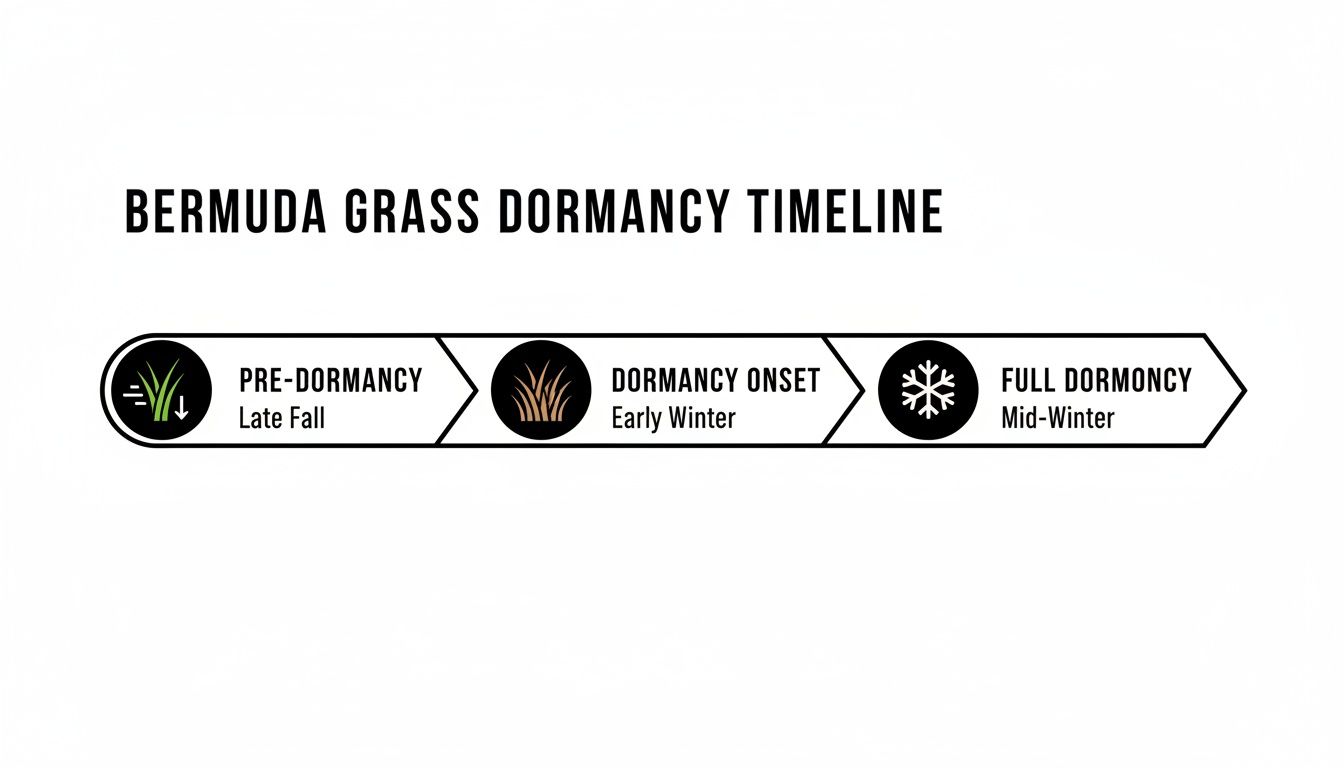
As you can see, the shift from active growth to full dormancy is a gradual response to falling temperatures. Understanding this cycle is the first step to helping your lawn through its long winter nap.
This table breaks down what you can expect to see in your yard as winter approaches in the Cumming, Alpharetta, and greater North Georgia area.
Bermuda Grass Dormancy Timeline for Cumming, GA
| Stage | Typical Timing (Forsyth County) | Key Temperature Trigger | Lawn Appearance |
|---|---|---|---|
| Pre-Dormancy | Late September – October | Soil temps drop below 65°F | Growth slows, slight loss of color. |
| Dormancy Onset | November | Soil temps consistently below 55°F | Noticeable browning/yellowing begins. |
| Full Dormancy | December – February | Soil temps below 50°F | Fully tan, straw-like appearance. |
Knowing these stages helps you time your winter lawn care perfectly, ensuring the grass has exactly what it needs, when it needs it.
The Barefoot Organics Treatment for Dormant Lawns
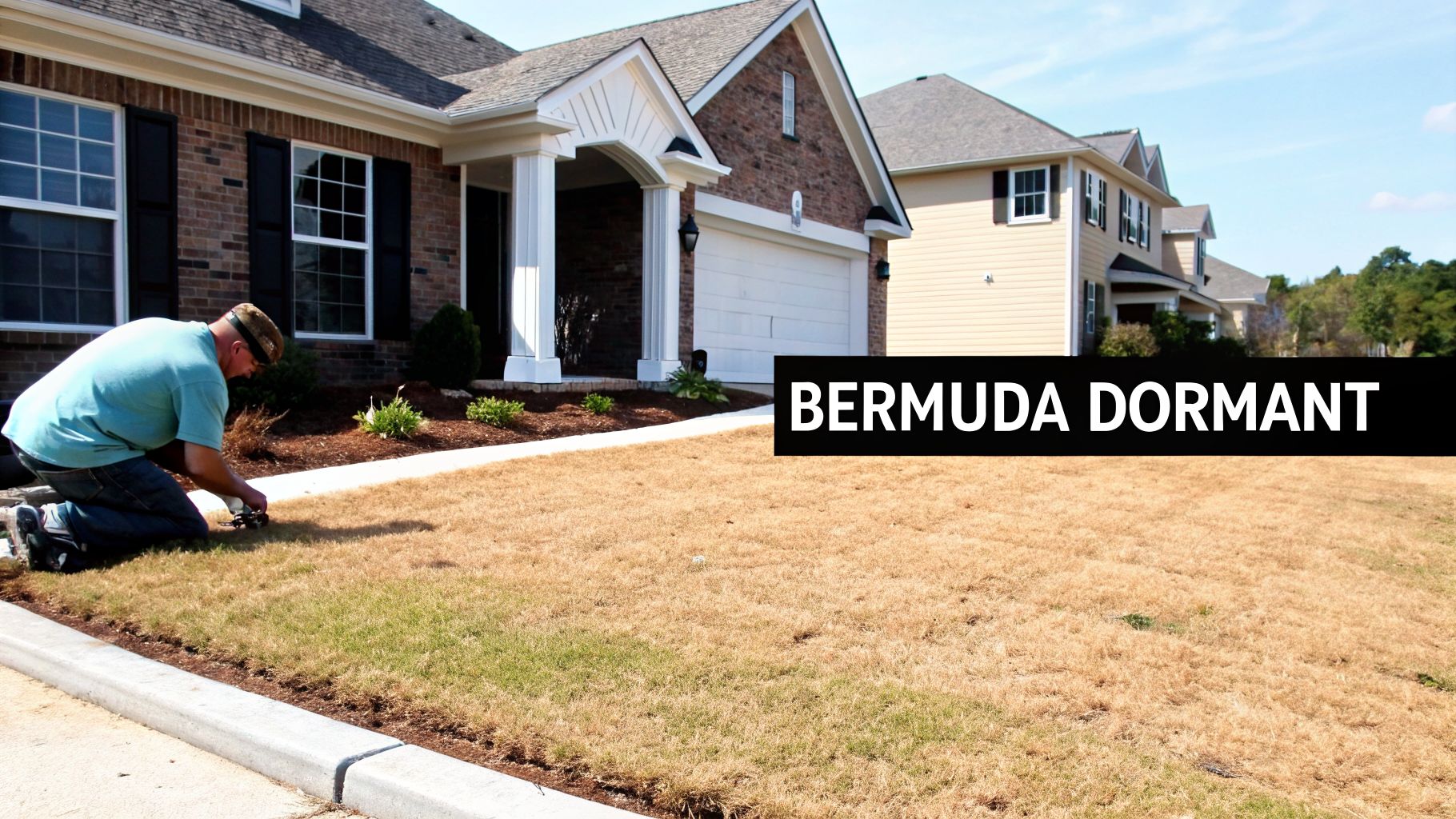
When your lush, green Bermuda lawn in Cumming starts taking on a tan, straw-like appearance, it's natural to think something is wrong. But what you're seeing isn't a sign of distress—it's actually a sign of a healthy, smart lawn getting ready for our North Georgia winter. This is the foundation of a healthy lawn lifecycle, building resilience to survive cold snaps and emerge vigorous and ready to choke out spring weeds.
This change is called dormancy, and it’s Bermuda grass’s built-in survival mode. Instead of wasting energy trying to stay green in the cold, it shuts down its top growth, stops making chlorophyll (the pigment that gives it color), and focuses all its resources on what matters most: survival.
Our Process: Supporting Healthy Dormancy
During dormancy, the most important work happens completely out of sight. The grass is busy pulling all the valuable nutrients and carbohydrates from its blades down into its root system—the rhizomes and stolons buried safely in the soil. It’s basically packing a lunch for the winter and storing it underground. This ensures the vital crown and roots stay alive and insulated from frost. That stored energy is exactly what will fuel a powerful, uniform green-up when spring returns to Forsyth County.
Our lawn treatment program supports this natural process:
- Fall Fertilization: We apply a specialized organic-based fertilizer that strengthens roots without pushing weak top growth, ensuring your lawn has a full tank of energy for its winter rest.
- Winter Weed Control: We apply essential pre-emergent treatments to create a shield against winter weeds like poa annua and early spring invaders like crabgrass.
- Soil Health Management: Our treatments improve the structure of hard Georgia clay soil, allowing roots to breathe and stay healthy even when dormant.
The Science of Dormancy in North Georgia
This shift into survival mode is triggered by two simple environmental cues: dropping temperatures and shorter days. Here in North Georgia, from Cumming to Dawsonville, we see Bermuda grass start to go dormant once soil temperatures consistently dip into the low 50s. The real trigger is when the soil hits that 55-degree threshold. At that point, the grass stops pushing out new shoots and fully commits to storing energy. You can dive deeper into the science behind Bermuda grass dormancy on qturf.com.
For homeowners in Cumming, Milton, and Suwanee, embracing this cycle is the secret to a great lawn. Our programs are designed to complement this process, ensuring your lawn has everything it needs for a spectacular spring return.
Our Application Process for Winter Lawn Care in Cumming
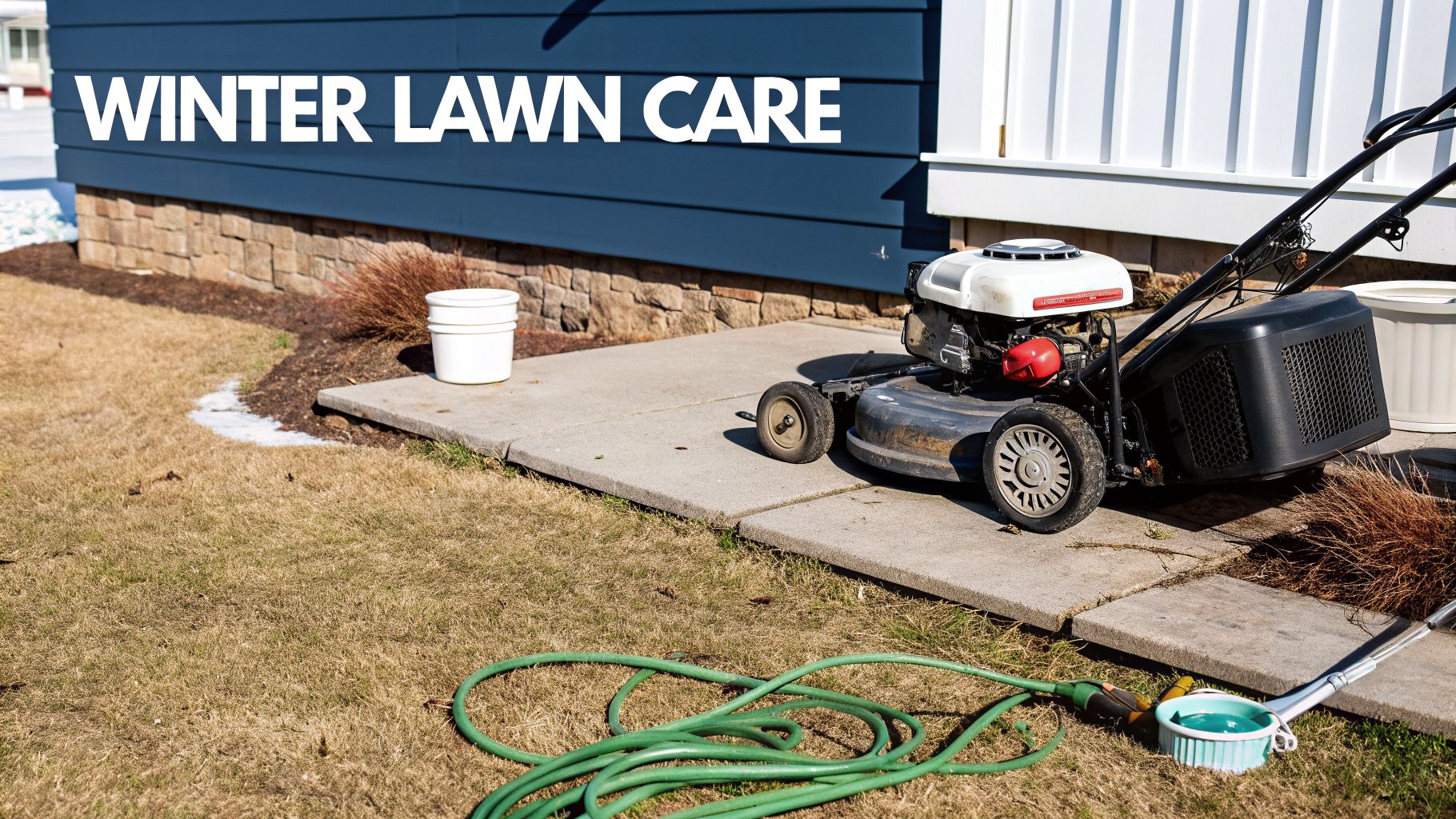
That familiar tan color across your Bermuda lawn means winter has settled in across North Georgia. While it might look like your grass is taking a long nap, what you do (and don't do) over the next few months is the secret to a spectacular spring green-up. Putting your lawn care on pause is a common mistake that can open the door to stubborn winter weeds and disease.
1. Tweak Your Mowing Routine
Even though your Bermuda grass has stopped growing, those pesky winter weeds haven't. You'll likely see things like poa annua (annual bluegrass) and henbit trying to take advantage of your lawn's vulnerable state. We recommend continuing to mow your dormant lawn every 3-4 weeks, raising your mower deck to about 3.5 inches. This chops down the weeds without risking damage to the dormant Bermuda crowns.
2. Rethink Winter Watering in North Georgia
One of the biggest pitfalls for homeowners in Cumming and the surrounding areas is overwatering dormant Bermuda grass. Our heavy Georgia clay soil combined with our typically wet winters is a recipe for trouble. When a dormant lawn stays saturated, the soil gets compacted and waterlogged, suffocating the roots and leading to root rot. Unless we get hit with a rare, extended dry spell, our natural rainfall is more than enough. You can find great insights at ngturf.com on how this natural cycle works.
3. Protect Your Lawn with Winter Weed Control
This is the game-changer. For us at Barefoot Organics, proactive winter weed control is the cornerstone of a healthy lawn, whether you're in Buford, Canton, or Alpharetta. A late-winter pre-emergent application is absolutely essential. Think of it as creating an invisible shield in the soil that stops notorious spring weeds—especially crabgrass—before they even get a chance to sprout. This gives your Bermuda a clean, competition-free head start for its spring green-up.
Pairing this with a winterizer can also help strengthen the root system without pushing out weak top growth. If you’re wondering about the right time for that, take a look at our guide on when to apply winterizer fertilizer in Georgia.
Don’t give winter weeds an open invitation. Call Barefoot Organics today to get your pre-emergent treatment on the schedule and set your Cumming lawn up for a weed-free spring.
Dormant or Damaged: How to Tell the Difference in Cumming
Every winter, we get the same worried question from homeowners in Cumming: "Is my Bermuda lawn just dormant, or is it actually dead?" It's an understandable concern. Seeing your once-lush lawn turn a uniform shade of tan can be jarring, especially in new construction neighborhoods where you're trying to establish a healthy yard.
But here’s the good news: in almost every case, that consistent, straw-colored blanket is the sign of a healthy lawn taking a well-deserved winter nap. The trick is knowing how to distinguish healthy dormancy from the real trouble spots, like winterkill or fungal disease.
Visual Clues to Check Your Cumming Lawn
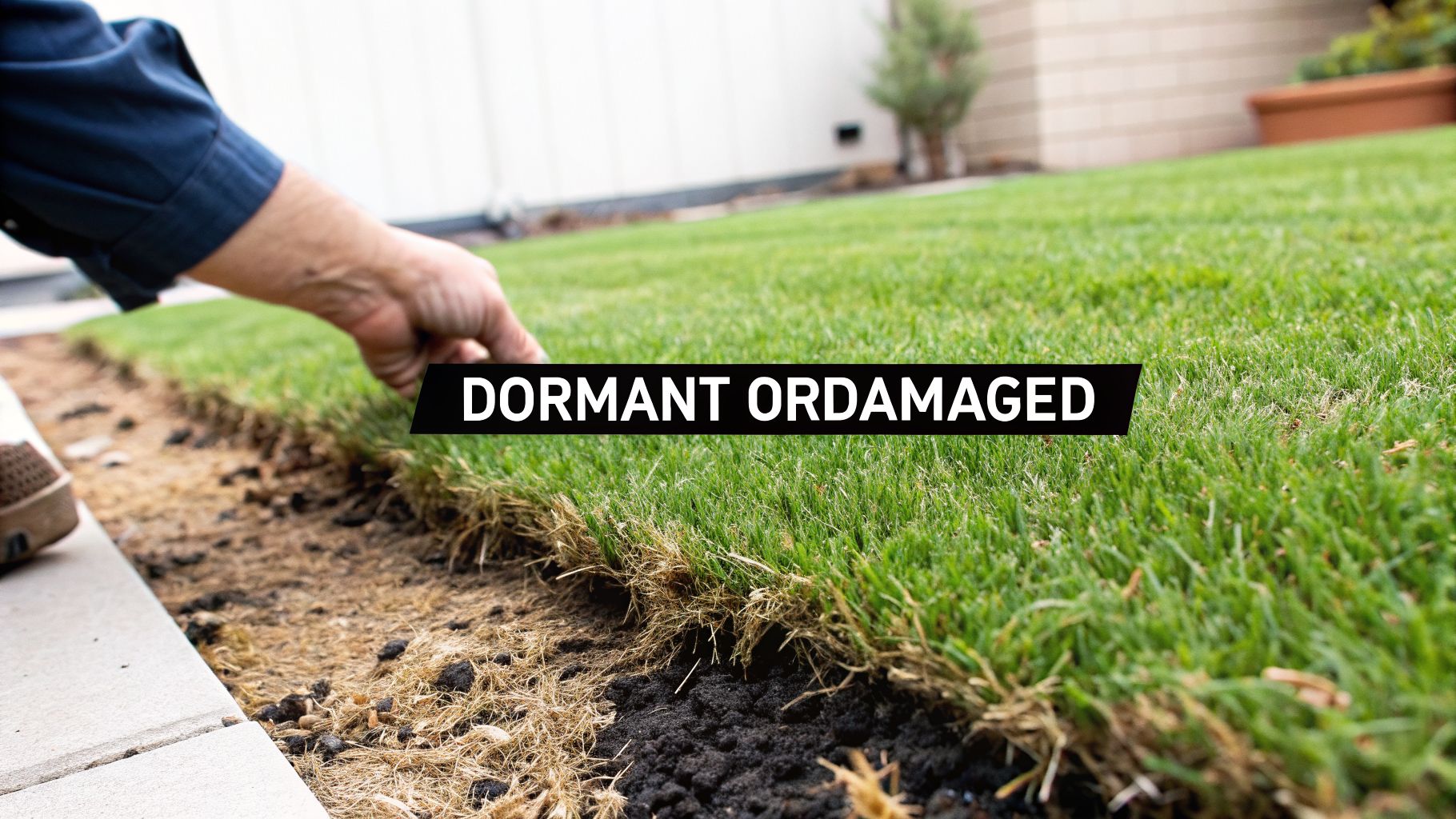
Start with a simple walk around your yard. A healthy, sleeping lawn looks consistent. It will have a uniform, tan-to-light-brown hue across the entire yard. Problem areas tend to stand out. Be on the lookout for distinct, odd-shaped patches that are darker brown, gray, or even look slimy and water-soaked. These spots are a red flag for issues like brown patch fungus, which can take hold in our cool, damp North Georgia winters.
The Simple Tug Test
If you spot a patch in your Suwanee or Dawsonville lawn that just doesn't look right, it's time for the "tug test." Find a suspicious-looking area, grab a small handful of the brown grass right at the base, and give it a gentle but firm pull. If the grass holds tight, that's a great sign. It means the crown of the plant is still alive and anchored. If the clump pulls out easily with almost no effort, that specific spot is likely dead.
Inspecting for Live Buds
For one final check, get down on your hands and knees. Gently push aside the brown, dormant grass blades at the base of the plant. You're looking for tiny green shoots or buds near the ground. Finding these little flecks of green is the ultimate confirmation that your lawn is just waiting for warmer weather to return. You can learn more about what grass does in the colder months in our article about whether grass grows in the winter.
As we’ve seen, Bermuda grass in North Georgia areas like Cumming and Forsyth County enters dormancy when soil temperatures fall below 55°F in late fall. This natural cycle is key to its survival and sets the stage for a strong rebound by mid-April when soils warm back up to 65°F. Our natural, pet-safe lawn programs are built to support this entire cycle for vibrant, year-round soil health. If you're curious about the resilience of dormant turf, you can discover insights on how dormant Bermuda withstands damage at usga.org.
If you’re seeing concerning spots on your lawn in Canton or Milton and the tug test has you worried, don't leave it to guesswork. Call Barefoot Organics today for a free lawn diagnosis. We'll get to the root of the problem and give you a clear plan.
Why Choose Barefoot Organics in Cumming
Knowing the science behind Bermuda grass dormancy is one thing. Actually guiding your lawn through it so it comes back stronger than ever next spring is where having a true local expert makes all the difference. We aren't a big, faceless national chain. We live here. We work here in Forsyth County. Our entire business is built on a deep, hands-on understanding of what it takes for a lawn to thrive in our unique North Georgia climate, from the high summer humidity to our hard clay soil.
At Barefoot Organics, our philosophy is simple: we build healthy lawns from the ground up using specialized, organic-based treatments that are tough on weeds but safe for your family and pets.
The Barefoot Organics Difference
So, why do so many of your neighbors in Cumming, Alpharetta, and Johns Creek trust us with their lawns? It’s simple.
- We're True Georgia Lawn Experts: We know Georgia’s infamous red clay isn’t just dirt—it’s a challenge. We understand how the summer heat and humidity fuel aggressive weeds, and we’ve perfected our treatments to win that battle right here in North Atlanta.
- Our Solutions are Family-First: Our programs are designed with your family’s well-being in mind. By focusing on nourishing the soil with minimal chemicals, we give you total peace of mind for kids and pets.
- You Get Personalized, No-Nonsense Service: To us, you're a neighbor, not an account number. We show up when we say we will, and we always take the time to walk you through what your lawn needs.
When we see struggling lawns in Suwanee, Milton, or Buford, we see an opportunity to restore long-term health and vitality.
Stop worrying about your dormant Bermuda and start planning for a gorgeous spring. Call Barefoot Organics today for a free, no-obligation lawn evaluation and get your personalized plan.
Frequently Asked Questions About Dormant Bermuda Grass in Cumming
Here are some of the most common questions we hear from homeowners around the Cumming area once their Bermuda lawns turn that familiar golden-tan.
Q: Should I overseed my dormant Bermuda grass in Cumming?
A: No, we strongly advise against overseeding Bermuda lawns in the Cumming area with ryegrass. While it provides temporary winter green, the rye competes directly with your Bermuda for nutrients and sunlight in the spring. This can weaken your lawn's spring green-up, leaving it thin and stressed heading into our hot Georgia summers.
Q: Is it safe for kids and pets to play on dormant Bermuda grass?
A: Yes, it is safe, especially with our pet-safe, organic-based treatments. The only thing to consider is that dormant grass is more fragile and can't repair itself from heavy wear. Constant traffic in one spot can compact the Georgia clay soil and damage the grass crowns, potentially leading to bare patches in the spring.
Q: Will late fall fertilizer keep my Bermuda green longer?
A: Absolutely not. Applying high-nitrogen fertilizer in late fall is a common mistake on Forsyth County lawns. It forces weak, vulnerable growth right when the grass needs to be storing energy in its roots for winter. This new growth is susceptible to frost damage and invites fungal diseases like brown patch. Our fall applications focus on root health, not top growth.
Q: When is the best time for pre-emergent on my Cumming lawn?
A: In Cumming, the ideal window for the first spring pre-emergent application is late winter or very early spring. The goal is to apply the treatment before soil temperatures consistently reach 55 degrees, which is when crabgrass and other weeds begin to germinate in Forsyth County. Nailing this timing is critical for preventing a weed takeover.
Q: How do I know if my brown Bermuda lawn is dead or just dormant?
A: A uniformly tan color is the sign of healthy dormancy. To check a questionable spot, give the grass a gentle tug. If it holds firm, the roots are alive. If it pulls out easily, that patch may be dead. You can also look for tiny green buds at the base of the plant near the soil, which confirm it's just sleeping.
Ready to take the guesswork out of winter lawn care? The experts at Barefoot Organics know exactly what your Cumming lawn needs to survive the winter and thrive in the spring. Get Your Free Lawn Evaluation Today!