

Picture your lawn's soil as a room that's gotten way too crowded. The grass roots can't breathe, get a drink of water, or find anything to eat. Core aeration is like throwing open all the windows in that stuffy room. It's a fundamental lawn service where a special machine pulls up small plugs—or 'cores'—of soil and thatch, instantly creating breathing room for a healthier, more resilient lawn.
Unlocking Your Lawn's Potential With Core Aeration
Here in Cumming, Alpharetta, and across North Georgia, we're all dealing with that classic dense red clay. It's just a fact of life. Over time, all the fun stuff—kids playing, pets running around, even just mowing and regular rainfall—squishes this soil down until it's hard as a rock. This compaction squeezes out the tiny air pockets that your grass roots desperately need to survive.
When the ground gets that compacted, it basically becomes a barrier. Water just puddles on top instead of soaking in deep. Fertilizer can't get down to the roots where it does its job. Before you know it, the grass is weak, thin, and an easy target for drought stress and disease. It's a story we see play out on lawns all over the Cumming area.
The Science Behind Healthy Soil
The best way to think about core aeration is as a hard reset for your lawn's foundation. During the process, a machine pulls out thousands of small plugs of soil, usually about 2-4 inches deep and half an inch wide. This is a game-changer for breaking up compaction.
It's a much better approach than spike aeration, which just pokes holes and can ironically make the soil more compacted around the edges of the hole. By physically removing the cores, we're opening up the ground. In fact, studies have shown this can boost water absorption by up to 40% in heavily compacted clay soils like ours in Georgia.
This network of small channels serves a few critical purposes:
- It relieves pressure. Right away, the soil is decompressed, giving roots the space they need to stretch out and grow deep.
- It gets resources flowing. Air, water, and nutrients can finally bypass that hardened top layer and get straight to the root zone.
- It helps with thatch. The little soil plugs left on the lawn are full of microbes that get to work breaking down the thatch layer, recycling it into useful organic matter for your turf.
By pulling up thousands of these small soil cores, we're fundamentally changing the structure of the ground beneath your grass. It is hands-down the most effective way to fight back against soil compaction and build a genuinely tough, healthy lawn from the ground up.
To give you a clearer picture, here’s a quick summary of how aeration tackles common lawn frustrations.
Core Aeration At A Glance: Key Impacts On Your Lawn
| Lawn Problem | How Core Aeration Solves It | Visible Result |
|---|---|---|
| Water Runoff / Puddling | Creates channels for water to penetrate the soil instead of sitting on top. | Dries faster after rain; less wasted water. |
| Thin, Patchy Grass | Allows roots to access more oxygen, water, and nutrients for growth. | Thicker, denser turf with fewer bare spots. |
| Hard, Compacted Soil | Physically removes plugs of soil, relieving pressure and "fluffing up" the ground. | Softer soil underfoot; easier for roots to grow. |
| Stubborn Thatch Layer | Exposes thatch to soil microbes that accelerate its decomposition. | Less thatch buildup, turning it into natural fertilizer. |
| Weak, Shallow Roots | Gives roots clear pathways to grow deeper into the soil for better stability. | More resilient, drought-tolerant grass. |
Seeing it laid out like this really shows how a single service can have such a wide-ranging, positive impact on your lawn's health and appearance.
Ultimately, once you understand what core aeration is, you see it's not just another chore on the list. It's a critical investment in the long-term health of your lawn. As you'll see, the many benefits of lawn aeration go way beyond just looking good; they create a more sustainable and vibrant outdoor space for your family to enjoy.
How Aeration Revives Compacted Georgia Clay Soil
If you live anywhere from Johns Creek to Milton or Cumming, you know our soil. North Georgia is famous for its dense, red clay. While it’s a beautiful part of our landscape, its tiny particles pack together like cement, especially after heavy foot traffic and rain. This squeezes out the tiny air pockets grass roots desperately need to breathe.
That process is called soil compaction, and it's public enemy number one for a healthy lawn around here. It creates a nearly rock-solid barrier at the surface, which leads to shallow, weak roots, poor water absorption, and grass that looks stressed out and thin.
Reversing Soil Compaction
Core aeration is the single most effective way to fight back against compaction. It's not just about poking holes in the ground; a proper core aerator pulls up thousands of small, finger-sized plugs of soil from your lawn. This simple action immediately creates a network of channels that physically break up that dense clay.
Think of it this way: if your lawn is a sponge that's been squashed flat and can't soak up anything, aeration is the process of pulling it apart. Suddenly, it can absorb air and water again. This mechanical "loosening" is exactly what your lawn needs to start recovering and building real resilience.
This graphic breaks down how core aeration creates pathways for the big three—air, water, and nutrients—to finally reach your lawn's root system.
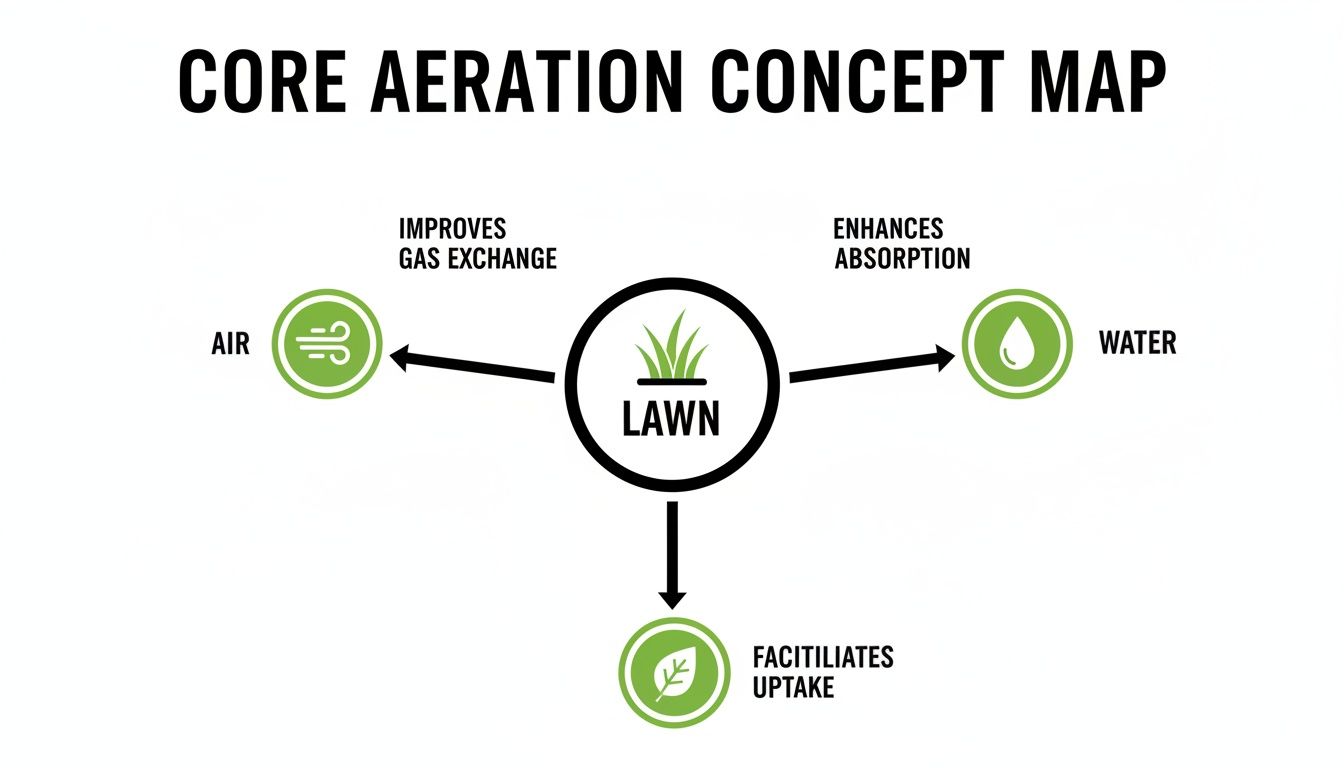
As you can see, pulling those plugs directly improves the lawn's ability to "breathe" and take in resources, leading to a much healthier turf overall.
The Science of a Thriving Lawn
Once those channels are opened up, a few critical things start happening right away. First, oxygen floods the root zone. Grass roots are living things, and they need to breathe. Without enough oxygen, they start to suffocate and weaken, making the grass above an easy target for disease and pests.
Next, water can finally soak deep into the ground instead of pooling on the surface or running off into the street. A well-aerated lawn acts like a proper reservoir, holding moisture where the roots can grab it during those dry spells we often get in Dahlonega and Forsyth County. This makes a huge difference in your lawn's drought tolerance.
Finally, any fertilizer you apply can actually get where it needs to go. On compacted soil, expensive treatments often just sit on the surface, washing away before they do any good. Aeration ensures those vital nutrients are delivered straight to the root system, so you get the most bang for your buck.
The real power of core aeration is its ability to physically pull out soil plugs and fundamentally change the soil structure. This process can boost oxygen flow to the roots by 20-30%, which is a game-changer for preventing diseases in high-traffic backyards in Alpharetta where kids and pets play all day.
The numbers don't lie. Aerated soils show 15-20% better drought tolerance—a massive advantage during our unpredictable North Georgia summers. A single session can also improve nutrient uptake by as much as 50% and reduce wasteful runoff by 30% compared to untreated lawns.
Building a Healthy Soil Ecosystem
Beyond the immediate physical perks, aeration gets a healthy soil microbiome going. Those little plugs of soil left on the surface are packed with microorganisms. As they break down, they go to work on the thatch layer—that spongy mat of dead grass between the green blades and the soil. These microbes turn thatch into valuable organic matter.
This whole process—more air, deeper water, better nutrient delivery, and a thriving community of microbes—gives grass roots the freedom to grow down, not just out. Deeper roots create a stronger, tougher plant that can handle the stress from heat, drought, and daily life. If you're seeing signs that your soil is already rock-hard, you can learn more about turning things around in our guide on how to fix compacted soil. It’s how you build a truly healthy lawn from the ground up.
How to Tell if Your North Georgia Lawn Needs Aerating
Believe it or not, your lawn has its own way of communicating. It can’t exactly talk, but it will definitely show you when it's struggling. If the soil underneath is packed down too tightly, your grass will send out some pretty clear distress signals. Learning to spot these clues is the first step any homeowner in Cumming or Johns Creek can take toward a healthier, more resilient lawn.
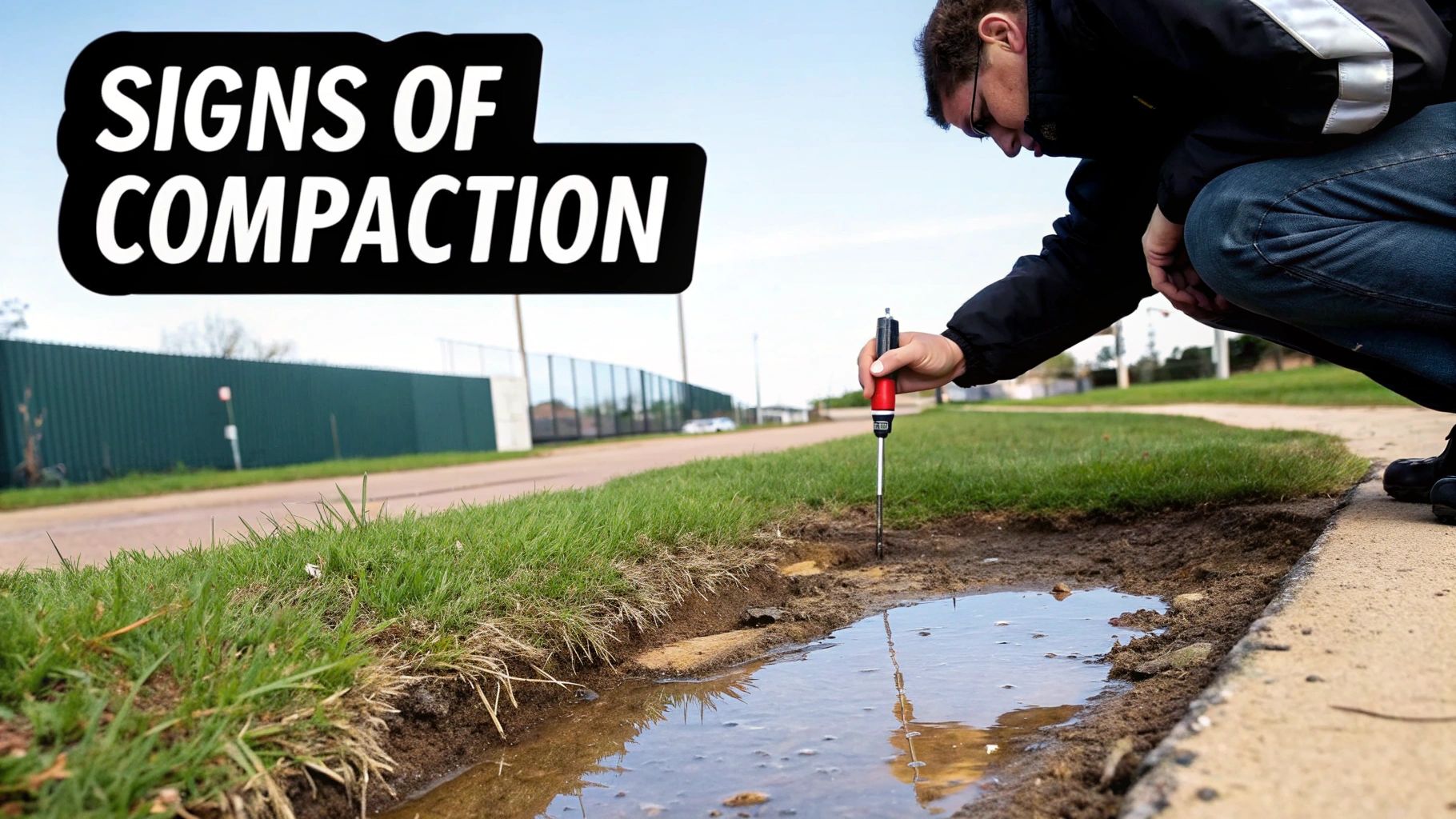
The most in-your-face sign is standing water. Think about what happens after a quick rain shower or after your sprinklers run. Do you see puddles hanging around on the grass long after they should have disappeared? That's a classic symptom of compaction. The soil is packed so tight that it acts more like a slab of concrete than a sponge, leaving the water with nowhere to go but to sit on top or run off into the driveway.
What Your Eyes and Feet Can Tell You
Beyond obvious puddles, just take a good, hard look at the grass itself. Are you noticing thinning turf, stubborn bare spots, or areas that just look weak and tired? This is especially common in the parts of your yard that get the most use.
- Well-Worn Paths: That shortcut everyone takes from the driveway to the back door, or the path your dog has worn along the fence, is ground zero for compaction.
- Kids' Play Zones: The patch of grass under the swing set or the makeshift soccer goal in the backyard often gets beaten down and turns to hard dirt.
- Mower Lines: Over time, even the weight of your lawnmower traveling the same routes can create compacted tracks.
These spots are under constant pressure, literally squeezing the life out of the soil and choking the grass roots. When you see these patterns, your lawn is telling you it can't breathe.
The feel of your lawn underfoot is a great indicator. A healthy lawn should have a little bit of give, like a firm mattress. If it feels rock-hard or, on the flip side, excessively spongy from thatch buildup, you've likely got a compaction problem.
The Easiest Trick in the Book: The Screwdriver Test
You don’t need any fancy equipment to diagnose compaction. In fact, one of the best tools for the job is probably sitting in your garage right now: a simple screwdriver.
After a good rain or a deep watering (when the ground is soft), try pushing a screwdriver into the soil. In a healthy lawn, it should slide in several inches with just a bit of effort. If you find yourself straining to get it even an inch or two deep, you've got your answer. The soil is definitely compacted. It's a surprisingly effective test for homeowners in places like Alpharetta and Milton who can't figure out why their lawn is struggling.
To make it even simpler, we've put together a quick checklist to help you connect the dots.
Is It Time To Aerate Your North Georgia Lawn Checklist
| Symptom To Check | What It Indicates | Action Recommended |
|---|---|---|
| Water Puddles After Rain | Your soil is so dense water can't soak in. | Core aeration creates channels for water to penetrate. |
| Thinning Grass in High-Traffic Areas | Foot traffic has suffocated the roots. | Aerating relieves the pressure and lets roots breathe again. |
| Failing the Screwdriver Test | The soil is hard-packed and roots can't grow through it. | Core aeration physically breaks up the compacted layer. |
| Excessive Thatch Buildup | A thick, spongy layer is blocking air, water, and nutrients. | Aeration punches through thatch and helps it decompose. |
Catching these signs early makes all the difference. When you spot them, you know the problem isn't just with the grass blades—it's with the very foundation they grow in. Professional core aeration is the most effective way to fix these issues at their source, giving your lawn the fresh start it desperately needs.
When’s The Best Time To Aerate In North Georgia?
In lawn care, timing is everything. That’s never more true than with core aeration. Get it wrong, and you can actually stress out your grass. But get it right? You set the stage for rapid recovery and incredible results.
For those of us here in North Georgia—from Dahlonega all the way down to Johns Creek—the perfect time to aerate comes down to one simple thing: what kind of grass you have.
Our area is home to two main types of turf, warm-season and cool-season grasses, and they’re on completely different calendars. Knowing which one is in your yard is the secret to getting the timing just right, ensuring your lawn is actively growing and ready to fill in those holes for a thicker, healthier stand of grass.
The Ideal Window For Warm-Season Grasses
Warm-season grasses, like the Bermuda and Zoysia you see all over Cumming and Milton, live for the summer heat. They do their most aggressive growing when the temperatures are soaring. That’s your cue.
The absolute best time for aerating these lawns is from late spring into early summer.
Think May through July. Aerating during this window lines up perfectly with their natural growth explosion. The grass is actively sending out new runners (stolons and rhizomes), which will quickly patch up the small holes left behind by the aerator. This means you get all the benefits of breaking up that compacted soil without leaving your lawn vulnerable.
Try to aerate a Bermuda or Zoysia lawn too early in the spring or late in the fall, and you’ll run into problems. The grass is either dormant or heading that way, so it won’t be able to recover. You’ll be left with open holes that are a perfect invitation for weeds to move in.
The Perfect Time For Cool-Season Grasses
Now, cool-season grasses like Fescue are a whole different story. Fescue is a favorite across the northern Atlanta suburbs, from Alpharetta to Johns Creek, because it keeps its green color for most of the year. The trade-off is that it really struggles in our intense summer heat. Fescue’s prime growing time is in the cooler months of spring and, especially, fall.
For any Fescue lawn, early fall is the undisputed champion for aeration. Aim to get it done between September and October. This gives your lawn the perfect chance to bounce back during its peak growing season when the soil is still warm but the air has cooled off—ideal conditions for strong root growth.
The real magic of fall aeration for Fescue is how perfectly it pairs with overseeding. Aerating first creates thousands of little seedbeds. This gives new grass seed the direct soil contact it needs for fantastic germination, leading to a much thicker, more robust lawn before winter arrives.
By sticking to this seasonal playbook, you’re working with your lawn's natural rhythm, not fighting against it. It’s a simple scheduling decision, but it makes all the difference in building a lawn that can handle the unique weather challenges we face here in North Georgia.
DIY vs. Professional Aeration For Your Georgia Lawn
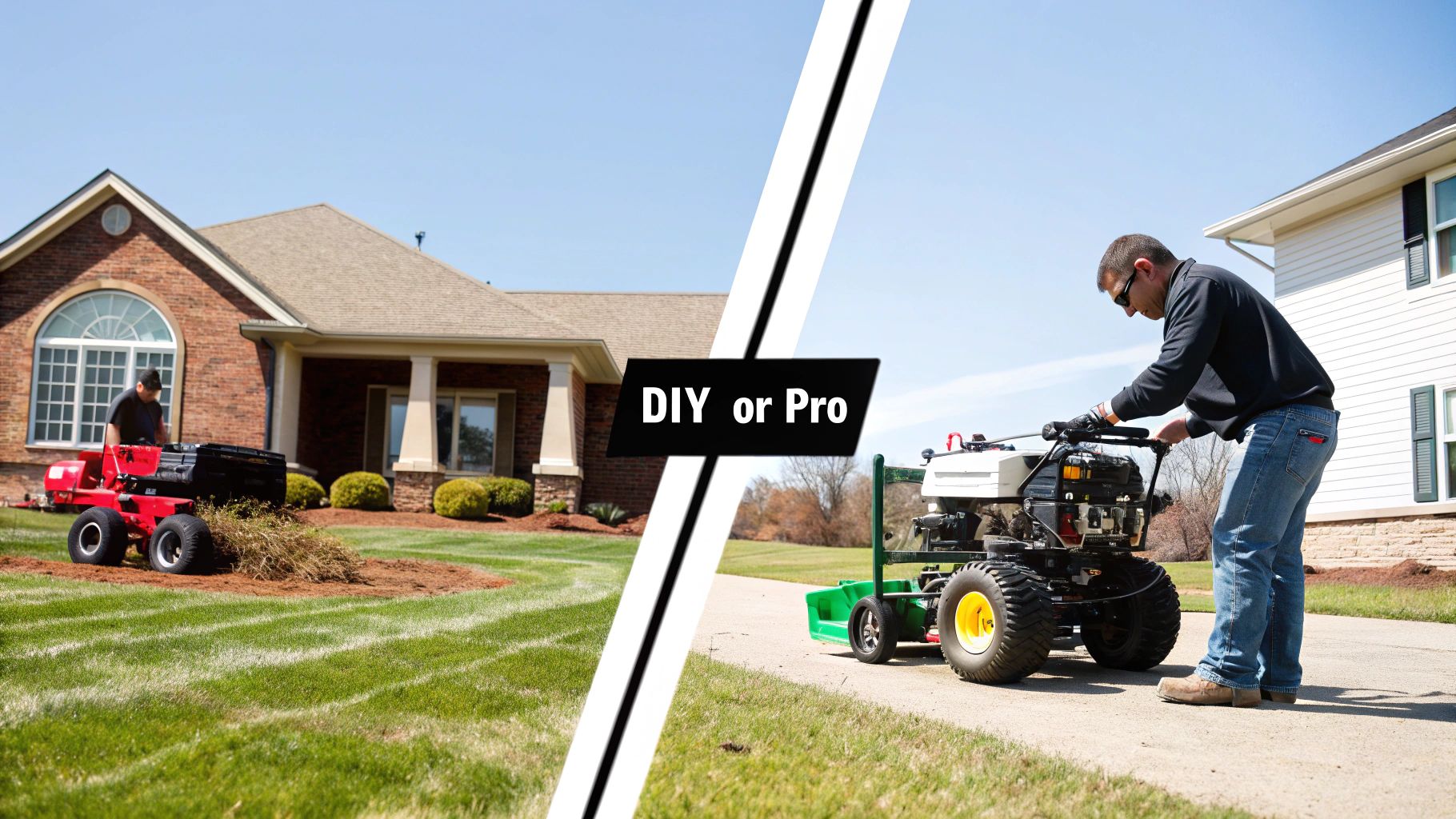
So, you've realized your lawn is crying out for aeration. That's the first step. Now for the big question every homeowner in Cumming and Alpharetta faces: do you block off a weekend and wrestle with it yourself, or do you bring in the pros? The right answer really boils down to what you value most—saving a few bucks upfront, your own time and convenience, or getting guaranteed, top-notch results.
At first glance, the do-it-yourself route looks like a great way to save money. You can pop over to a local rental shop and pick up a walk-behind core aerator. Easy, right? Well, the reality of the job is often a lot more grueling than most people bargain for.
The Realities of DIY Aeration
Just getting the aerator home is a project in itself. These machines are beasts, often tipping the scales at over 200 pounds. That means you need a way to transport it, plus the muscle to load and unload it safely. Once it's on your lawn, maneuvering it takes some serious physical effort, especially on the rolling hills and slopes so common here in North Georgia.
Beyond the back-breaking labor, there’s a real learning curve to using an aerator correctly. You have to be incredibly careful to avoid hitting shallow irrigation lines, sprinkler heads, and invisible dog fences. One wrong move can lead to a costly repair bill that completely wipes out any money you thought you were saving.
A lot of people learned this the hard way during the DIY boom of the 1990s. Since then, professional adoption has jumped by 35% as homeowners realized the value of getting it done right without the hassle. It's the same in the pro world—today, 70% of all golf and sports turf, which is over 3 million acres, relies on annual core aeration. Want to see more on this trend? Check out the data over at MarketReportAnalytics.com.
For families and property owners across the Cumming area, a professional service is the ticket to a healthier lawn that can actually stand up to our brutal summer heat. After a proper aeration, grass can recover up to 50% faster, keeping your yard looking great all year.
The Professional Advantage
Hiring a professional service like Barefoot Organics turns what would be a difficult weekend project into a simple, hands-off solution. Our trained technicians show up with commercial-grade equipment that's leagues ahead of the rental models in both power and efficiency.
This professional-grade gear makes all the difference:
- Deeper Core Penetration: Our machines pull deeper, more consistent plugs of soil, which is absolutely essential for breaking up our dense Georgia clay.
- Greater Efficiency: Our team can aerate an entire lawn in a fraction of the time it would take a homeowner, ensuring every square foot gets the same, even treatment.
- Safety and Expertise: We know exactly what to look for. We identify and mark potential hazards like sprinkler heads before we even start, so the job gets done safely and correctly.
Comparing The True Costs
When you really add it all up—the rental fee, your own time, the physical toll, and the very real risk of expensive damage—the "cost" of DIY aeration is often much higher than it seems. The professional route gives you peace of mind and, most importantly, delivers far better results for the long-term health of your lawn. We understand the specific soil conditions from Johns Creek to Milton and use that expertise to make sure you get the maximum benefit from the service.
Ultimately, the choice is yours. You can take on the hands-on challenge yourself or opt for the proven efficiency of an expert service. For homeowners who want to guarantee the best possible outcome for their investment, professional core aeration is the clear winner. You can get a closer look at what the process involves in our guide on how to aerate your lawn, which will help you make a fully informed decision for your property.
Let's Work Together on Your North Georgia Lawn
Choosing someone to care for your lawn is a big decision. You're not just hiring someone to do a task; you're trusting them with a major part of your home's curb appeal and your family's outdoor space. Here in the Cumming area, our heavy clay soil can be a real headache, and a cookie-cutter approach just won't cut it. At Barefoot Organics, we see core aeration as much more than a simple service—it’s the cornerstone of our entire organic lawn care philosophy.
Our whole program is designed to build a lawn that's naturally healthy and tough enough for real life, all while being safe for your family. We firmly believe that a stunning lawn begins with living, breathing soil, not an endless cycle of chemical treatments. Core aeration is the critical first step, literally opening up the ground so it can breathe and soak up the air, water, and organic nutrients it's starving for.
A Smarter Plan for North Georgia Lawns
We don't just poke holes in the ground and call it a day. We weave aeration into a complete system that turns your yard into a thriving little ecosystem. Once we've opened up those vital channels in the soil, we follow up with services like organic topdressing. This isn't just throwing down some dirt; it's adding a carefully selected layer of rich, organic material that works its way into the aeration holes, improving the soil's structure and kickstarting the microbial life within it.
Think of it as a powerful one-two punch for your lawn's health:
- Aeration is the physical workhorse, breaking up that stubborn compacted clay.
- Topdressing then fills those new pathways with the essential building blocks for healthy soil.
- Organic Fertilization can finally reach the roots where it's needed most.
This process gets to the heart of the problem. Instead of just temporarily fixing brown spots or thin patches, we build a strong soil foundation from the ground up. Over time, this naturally reduces the need for chemical quick-fixes.
We’re not about masking problems. We're about building a truly sustainable, barefoot-worthy lawn. Our goal is a yard that's as healthy and safe for your kids and pets as it is beautiful.
Local Pros Who Know Your Soil
Our technicians aren't just lawn care experts; they're North Georgia lawn care experts. They have years of hands-on experience dealing with the specific challenges we face across Forsyth County, Johns Creek, Alpharetta, and all the surrounding communities. From the hills of Dahlonega to the backyards of Milton, we get the local soil and climate.
This deep local knowledge means we can pinpoint the exact issues plaguing your property and develop a plan that actually works. We know the perfect time to aerate Bermuda grass in Cumming and the right way to combine it with overseeding for a Fescue lawn in Johns Creek.
Ready to see what a dedicated, organic approach can do for your yard? It's time to get a healthier, greener, and safer lawn for your family to truly live on. Get your free, no-obligation online quote from Barefoot Organics today and let us help you build the beautiful, sustainable lawn you've always wanted.
Common Questions We Hear About Core Aeration in Georgia
Even after seeing how much good it can do, it's totally normal for folks in Cumming and Alpharetta to have a few questions. Knowing what to expect before, during, and after makes the whole process feel a lot more comfortable. Here are the answers to the questions we get asked the most.
One of the first things people always wonder is, "What am I supposed to do with all these little dirt plugs all over my lawn?" The best answer is also the easiest one: just leave them be! Those soil cores are full of beneficial microbes from deep in your soil.
As they break down over a week or two with a little rain and a couple of mows, they'll vanish back into the turf. More importantly, they'll release those microbes to help break down the thatch layer, essentially turning that dead stuff into free fertilizer. Think of it as a complimentary topdressing treatment for your lawn.
Results and Recovery Time
Another big question is, "How long until I see a difference?" While the benefits to the soil are immediate, the visible changes in your grass take a little more patience. You'll probably notice right away that the ground feels a bit softer and that water doesn't run off as quickly.
The really good stuff—thicker growth and richer color—usually starts showing up within a few weeks. That's the sign that the roots are finally stretching out and enjoying their newfound space. The most dramatic improvements, however, often come the following season, after your lawn has had a full growth cycle to take advantage of its stronger foundation.
The real magic of core aeration is in the long-term health of your lawn. It becomes tougher against drought, better at absorbing nutrients, and less prone to disease, building a more resilient turf year after year.
How Often to Aerate and What About New Lawns?
"How often does this need to be done?" We hear this a lot, especially from homeowners in Johns Creek and Milton who are fighting that heavy Georgia clay. For most lawns around here, aerating once a year is the gold standard. This is particularly true if you have clay soil, a lot of foot traffic from kids and pets, or a persistent thatch problem.
An annual aeration is typically enough to undo a year's worth of compaction from mowing, playing, and weather. If a lawn is in really rough shape, though, your technician might recommend doing it twice the first year just to get the soil back on the right track.
Finally, what about a brand-new lawn? This is crucial: you need to wait before aerating newly seeded or sodded grass. A new lawn needs time—usually a full year or at least one complete growing season—to get its root system properly established. Aerating too early can tear up that fragile new growth before it has a chance to take hold. Patience is key here.
Ready to give your lawn the breathing room it needs to thrive? The local experts at Barefoot Organics understand the unique challenges of North Georgia soil. We provide professional core aeration services that deliver real, lasting results for homeowners in Cumming, Alpharetta, and beyond. Get your free online quote today!