

If you've walked across your lawn in Cumming, GA and noticed it feels strangely spongy underfoot, you've likely encountered a thick layer of thatch. But what does dethatching really do for your lawn? For homeowners in Forsyth County, dealing with thatch isn't just a minor cleanup—it's a critical step toward restoring your lawn's health, especially with our challenging Georgia red clay soil and humid summers.
At Barefoot Organics, we know that a thick thatch layer is one of the biggest roadblocks to a healthy, green lawn. Dethatching is the process of mechanically removing this suffocating mat of dead and living organic material that builds up between the grass blades and the soil. By clearing it away, you allow your lawn to breathe, drink, and eat again. Ready to solve your thin, weak lawn problems? Call Barefoot Organics today for a free lawn evaluation.
Why This Matters for Your Lawn in Cumming
A little bit of thatch—less than a half-inch—is actually a good thing. It acts like a natural mulch, helping the soil hold moisture and protecting grassroots from North Georgia’s scorching summer heat. It’s a normal part of a healthy lawn.
The problem starts when that layer gets too thick. Here in Cumming and surrounding cities like Alpharetta and Johns Creek, our Bermuda and Zoysia lawns can build up thatch surprisingly fast. What started as a helpful cushion quickly turns into a suffocating barrier that can ruin your lawn.
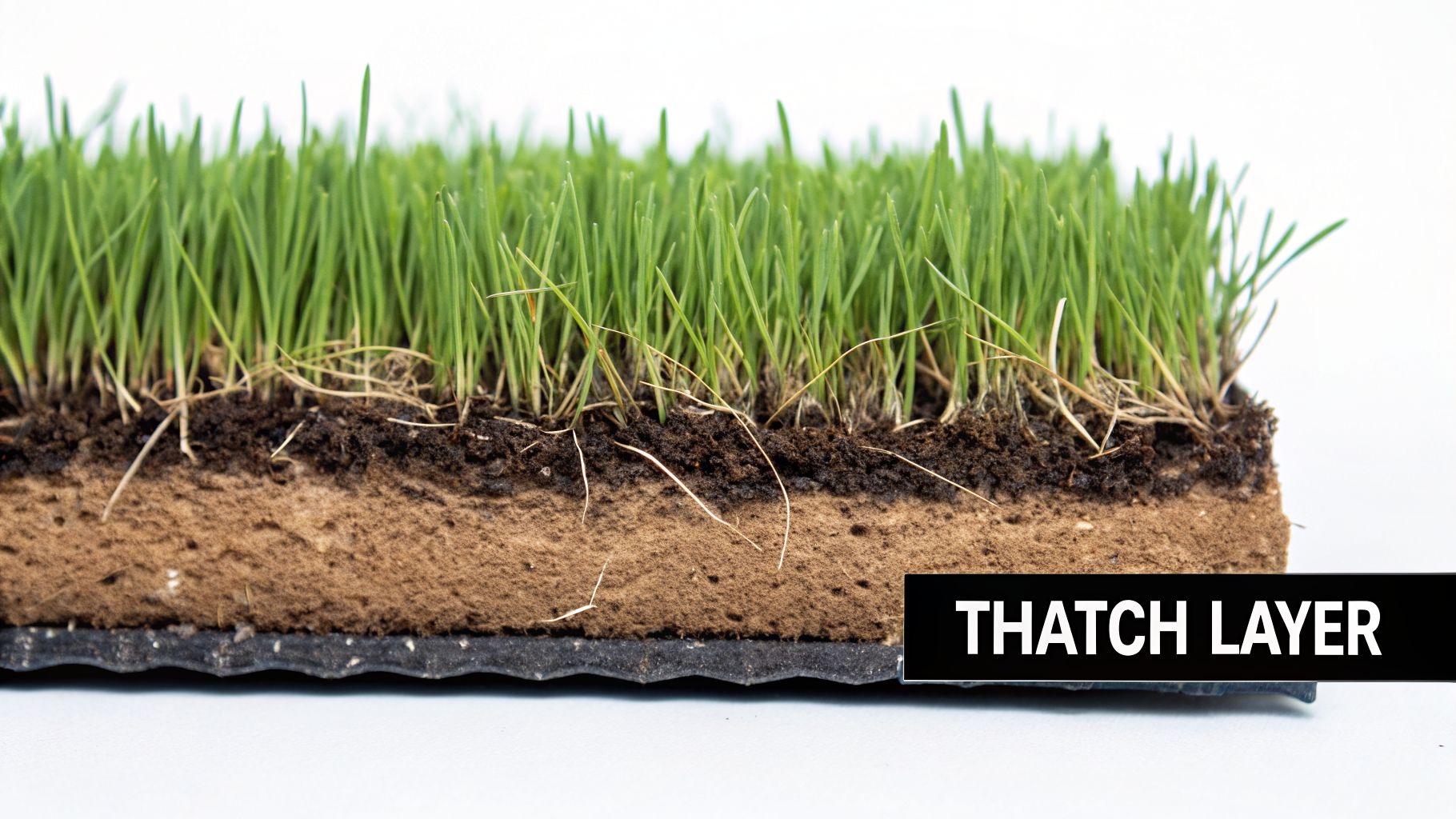
When that thatch layer creeps past the half-inch mark, it starts to choke the life out of your turf. This dense mat sits right on top of our infamous Georgia red clay, creating a nearly waterproof shield that prevents the good stuff from getting in and causes a whole host of problems for Forsyth County homeowners.
A thick thatch layer is like putting a waterproof tarp over your lawn. Rain, air, and nutrients can't get through to the soil, leading to a weak, shallow-rooted lawn that's an easy target for disease and drought—a common sight in many subdivision lawns that don't receive proper care.
Here’s a breakdown of the damage an excessive thatch layer can do:
- Blocks Water and Nutrients: Rain and fertilizer treatments get trapped in the spongy thatch instead of reaching the soil. This starves your grassroots of the very resources they need to thrive through a hot Georgia summer.
- Restricts Airflow: Healthy soil and roots need to breathe. A thick thatch layer suffocates the soil, killing off the beneficial microbes that keep your lawn’s ecosystem in balance.
- Invites Pests and Disease: That damp, dense thatch is the perfect breeding ground for fungal diseases like brown patch and dollar spot. It also offers a safe harbor for destructive pests like chinch bugs and armyworms, which can tear through a lawn in Suwanee or Milton in no time.
- Causes Shallow Roots: Since water is only available at the surface, grass roots won't grow deep into the soil to search for it. This creates a weak, fragile root system that can’t handle the stress of a hot, dry summer in North Atlanta.
How to Tell If Your Cumming Lawn Needs Dethatching
Not sure if thatch is the culprit behind your lawn's troubles? Here's a quick reference guide to help you spot the signs on your property.
| Symptom | What It Looks Like in Your Lawn | Why It Happens in the Cumming Climate |
|---|---|---|
| Spongy or Bouncy Feel | Your lawn feels like you're walking on a thick carpet instead of firm ground. | Rapid growth of Bermuda or Zoysia grass in Forsyth County contributes to a fast buildup of runners and stems. |
| Poor Water Absorption | Water from rain or sprinklers runs off the surface instead of soaking into the clay. | The dense, matted thatch layer acts as a water-repellent barrier over our compacted Georgia clay soil. |
| Thinning or Patchy Grass | The lawn looks weak, with brown or bare spots appearing, especially during summer stress. | Roots are starved of water, air, and nutrients, causing the grass to die off in sections. |
| Increased Disease or Pests | You notice more brown patch, dollar spot, or insect damage than usual. | The moist thatch layer and high humidity create an ideal environment for fungi and pests to thrive. |
The easiest way to confirm is with a quick physical check. Grab a small shovel and cut out a small, wedge-shaped plug of turf, about 3-4 inches deep. Pull it out and examine the cross-section. You’ll see the green grass on top and the soil at the bottom. The brown, fibrous, and spongy material in between is your thatch layer.
If that layer is more than a half-inch thick, it’s time to dethatch. Homeowners in newer neighborhoods around Dawsonville and Canton should be especially mindful, as poor soil prep during construction can often lead to rapid thatch accumulation.
The Treatment Breakdown: Core Benefits of Dethatching Your Lawn
So, what does dethatching actually do for your lawn? Think of it like giving your yard a much-needed deep breath. By clearing out that thick, suffocating layer of thatch, you’re finally letting air, water, and vital nutrients get down to where they matter most: the soil and the roots.
Here in Cumming, with our dense Georgia red clay, this isn't just a helpful step—it's transformative. Our soil is already notorious for getting compacted and not draining well. A heavy blanket of thatch just compounds those problems, but dethatching breaks that barrier right up and starts reviving the grass from the ground up.
Stronger Roots for Cumming Summer Survival
One of the biggest wins from dethatching is how it promotes deeper, stronger roots. When all the water and nutrients get trapped in the surface-level thatch, grass roots get lazy. They have no incentive to dig deep, leading to a shallow, weak root system that’s incredibly vulnerable to the stress of a hot North Georgia summer.
Once that thatch is gone, your lawn’s roots have to work for their food and water, pushing deeper into the soil. This builds a tough, resilient turf foundation that is far better prepared for our 90+ degree summer days and the random dry spells we always get in Forsyth County. A lawn with deep roots is a lawn that stays green and healthy when the heat is on.
From Johns Creek to Sugar Hill, this is a critical prep step for any lawn facing our intense summer conditions.
Maximizing Your Lawn Treatment Investment in Cumming
Are you spending money on lawn fertilization or weed control treatments? If your Cumming lawn has a thick thatch layer, a good portion of that investment could be going to waste. Instead of soaking into the soil, those expensive products get caught up in the spongy thatch, never reaching the roots.
By removing this barrier, dethatching ensures that 100% of your lawn treatment gets to the roots where it's needed most. This is what makes our organic-based lawn programs so much more effective, delivering the results you can actually see in your yard.
Every application on your lawn in Suwanee or Buford will deliver a much better return, giving you a greener, denser yard without throwing money away.
Creating a Healthier, Greener Lawn
Ultimately, a dethatched lawn is simply a healthier lawn. With better access to air, water, and nutrients, you’ll see a dramatic improvement in your turf's color and density. As the grass bounces back, it starts to fill in those thin, patchy areas, creating that lush, uniform look that meets any HOA standard.
For the warm-season grasses like Bermuda and Zoysia that dominate lawns from Cumming to Alpharetta, dethatching removes that excessive buildup. When we dethatch after the spring green-up, we see root growth that is 20-30% deeper, allowing them to tap directly into the soil. This efficiency boost means your irrigation needs can drop by 25-35%, saving water and money for families in Milton and Dawsonville.
While dethatching clears out harmful thatch, understanding related practices like why mulching is important for gardens can also boost your property's overall health. Both are centered on improving the soil your plants depend on. In the end, dethatching helps your grass grow thicker, which naturally crowds out weeds like crabgrass before they even get a foothold. It's a proactive approach that leads to a healthier lawn that your kids and pets can enjoy barefoot all season long. Ready to help your lawn breathe? Call Barefoot Organics today for a free lawn evaluation.
Application Process: Dethatching vs. Aeration for Cumming Lawns
It’s easy for homeowners in Cumming to get dethatching and aeration mixed up, but they’re two very different tools for two very different lawn problems. Getting it right is key to seeing great results and not putting your lawn through unnecessary stress, especially in our climate.
Think of it like this: dethatching is like aggressively combing out a thick, matted layer of tangles right at the surface. On the other hand, core aeration is like a deep-tissue massage for the ground itself, relieving tension and compaction far below the surface.
Dethatching is all about removing that spongy, dead organic layer that’s literally smothering your grass. Aeration, however, is meant to break up our dense Georgia clay soil, allowing grassroots to finally breathe, stretch, and grow deeper.
A Surface Problem vs. a Deeper Issue in Forsyth County
Dethatching exclusively targets the thatch layer sitting right on top of the soil. It's the right call when your lawn feels bouncy underfoot and you can see a thick mat of brown gunk—if it's more than a half-inch thick, it's time to act. The machine physically rips out and clears away that suffocating barrier.
Aeration tackles a problem you often can't see: compacted soil. Over time, all that foot traffic, weekly mowing, and heavy North Georgia rain can squeeze soil particles together. The ground becomes rock-hard. You’ll notice water pooling on top instead of soaking in, and your grass just can’t seem to put down strong roots. We see this all the time in developments across Forsyth County, from new builds in Dawsonville to older, established neighborhoods in Alpharetta.
This simple chart can help you decide which service your lawn is crying out for.
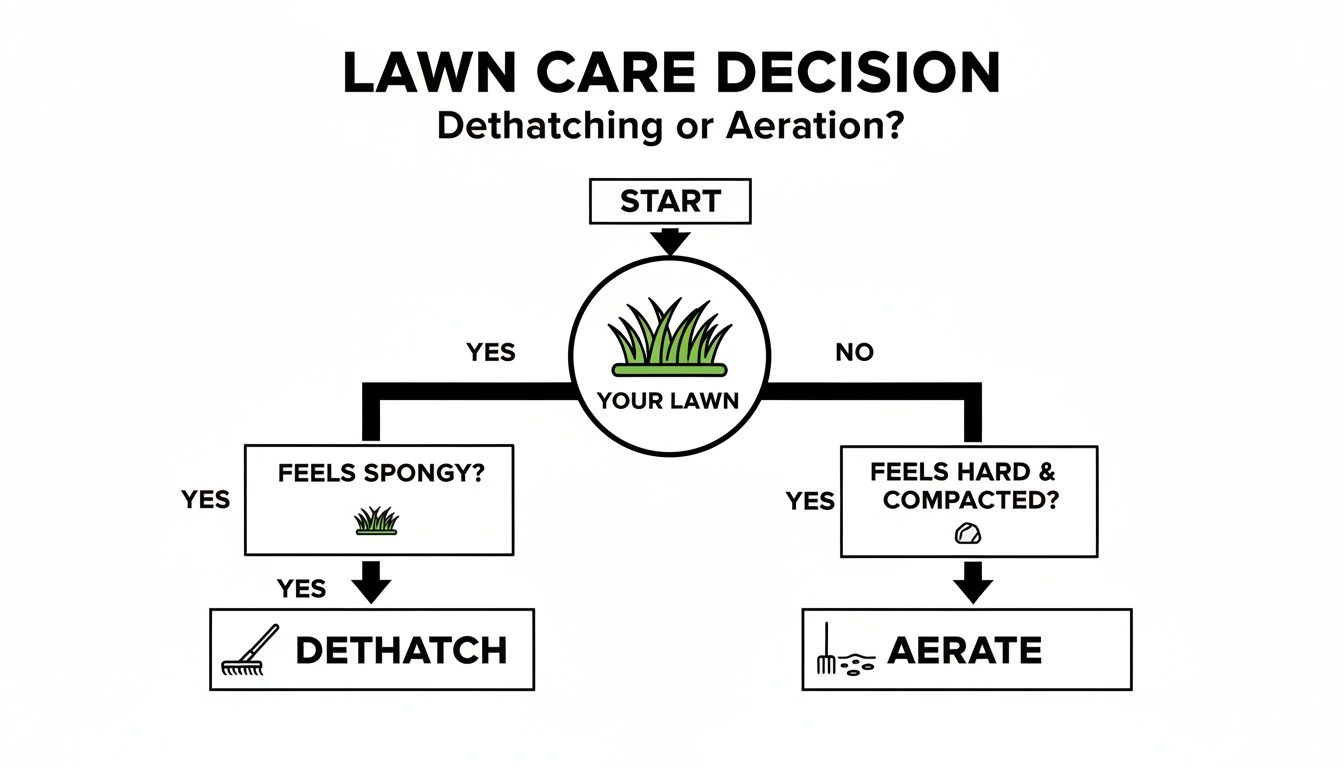
The takeaway is straightforward: if your lawn feels spongy, dethatching is your answer. If it feels more like concrete, you need to aerate.
Dethatching vs. Aeration Key Differences
To put it all in one place, let’s look at a side-by-side comparison tailored for our local lawns here in the Cumming, GA area. This table breaks down what each service does and when to do it.
| Service | Primary Goal | Best For… | Ideal Timing in Cumming, GA |
|---|---|---|---|
| Dethatching | Removing the thick, spongy layer of dead organic matter on the soil surface. | Lawns that feel bouncy and have more than a half-inch of thatch. | Late spring/early summer for Bermuda & Zoysia. Early fall for Fescue. |
| Core Aeration | Relieving deep soil compaction by pulling plugs of soil. | Hard, compacted clay soil where water runs off and grass roots are struggling to grow. | Spring and fall, when grass is actively growing. |
While both are incredibly beneficial, they are not interchangeable. Dethatching a hard, compacted lawn won't fix the root-level problem, and aerating a lawn that just has a thick layer of thatch won't do much to clear that surface debris. Choosing the right tool for the job is everything.
The Best of Both Worlds for North Georgia Lawns
So, what's the best approach for a homeowner "near me"? For many lawns in Cumming, Suwanee, and Canton, the most powerful strategy is actually doing both. Our notoriously heavy clay soil is practically begging to be compacted, while popular warm-season grasses like Bermuda and Zoysia are thatch-building machines.
By performing core aeration first, you break up that compacted soil and start loosening the thatch layer from below. Following up with dethatching then becomes far more effective, easily clearing away the debris. It’s a one-two punch that can completely turn around a struggling lawn. If you're weighing the options, our guide can help you decide whether you should aerate or dethatch first.
The result is a lawn with loose, healthy soil and a clean surface—a perfect canvas ready to soak up water, air, and the nutrients from our organic-based treatments. This combined approach gives your turf the absolute best foundation to thrive through a hot Georgia summer.
When to Dethatch Lawns in Cumming and North Georgia
When it comes to dethatching, timing isn't just important—it's everything. Get it wrong, and you can seriously stress your grass, essentially rolling out the welcome mat for aggressive weeds like crabgrass and nutsedge. I've seen it happen: a well-intentioned dethatching job at the wrong time can set a lawn back for an entire season.
The key is to work with your lawn's natural rhythm. You should only dethatch when your grass is actively and vigorously growing. This ensures it has the strength to bounce back quickly, fill in any thin spots, and grow back even thicker than before. Hitting that perfect window is what separates a successful dethatch from a disaster.
Best Dethatching Time for Cumming Lawns
Here in North Georgia, we deal with two main types of turf, and each has its own non-negotiable schedule for dethatching.
Warm-Season Grasses (Bermuda & Zoysia)
For the Bermuda and Zoysia lawns that blanket so many yards in Cumming and Forsyth County, the sweet spot is late spring to early summer. We're talking about the period from May to early July, right after the turf has fully greened up and is hitting its peak growth spurt.
Dethatching during this window allows the grass to use its natural, aggressive growth to its advantage. It will rapidly send out new runners to repair itself and cover any bare areas before the intense heat of late summer arrives.
Cool-Season Grasses (Fescue)
The game plan is completely different for Fescue lawns, which you'll often find on shadier properties in neighborhoods across Milton, Johns Creek, and Alpharetta. For Fescue, you want to wait for early fall—typically September or early October.
Fescue absolutely loves the cooler weather of fall, which creates the perfect conditions for it to recover from the stress of dethatching. This timing also works hand-in-glove with fall overseeding, as it prepares a perfect seedbed for new grass to germinate and establish strong roots before winter.
Why Dethatching at the Wrong Time Is a Disaster
Trying to dethatch a lawn that's dormant or already stressed is a recipe for failure. Tearing into dormant Bermuda in early spring, for example, rips up the turf before it even has a chance to start growing, leaving it wide open for a massive weed invasion. On the flip side, dethatching Fescue in the punishing heat of a Georgia summer can be a death sentence; the grass is already struggling and simply won't have the energy to recover.
A professional evaluation is the only way to be certain your lawn is ready. We assess your specific turf type, current health, and soil conditions to ensure dethatching will help, not hurt, your Cumming lawn.
Making the wrong call can leave your lawn weaker and thinner than when you started, inviting problems that will take months, and a lot of effort, to correct. You can learn more about the specifics of when to dethatch your lawn in our detailed guide.
Excessive thatch—anything over a half-inch—can block up to 70% of applied fertilizers from reaching the soil. By mechanically removing this layer in early summer, you create direct pathways for nutrients to reach the roots, which can boost growth by 30-50%. For more information on this, you can discover more insights about aeration and dethatching benefits.
Preventing Weeds and Pests by Dethatching Your Cumming Lawn
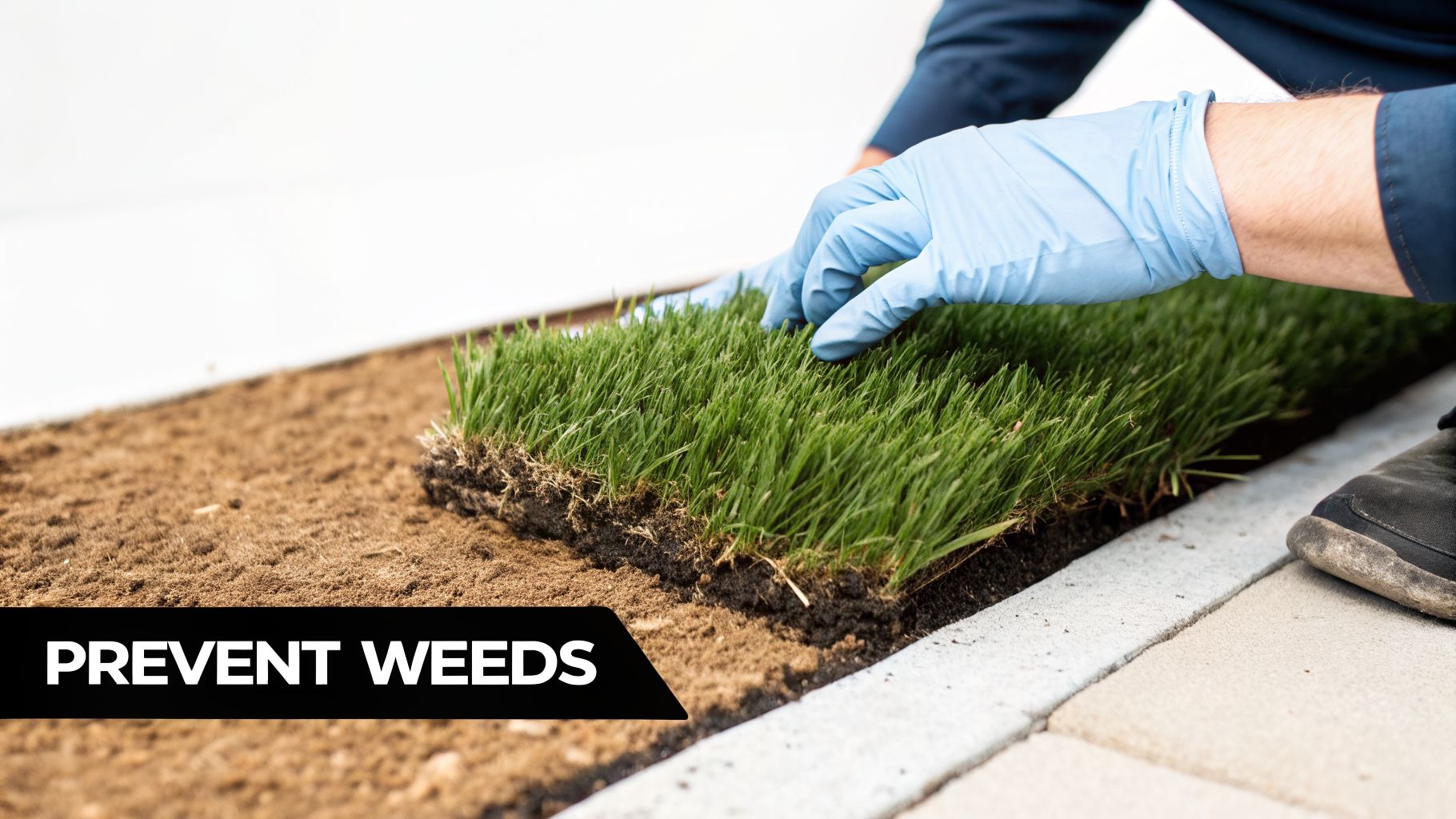
A thick thatch layer does more than just starve your grass; it rolls out the welcome mat for some of the most frustrating lawn problems we see across Forsyth County. Think of that dense, spongy mat as a damp, dark basement—the perfect environment for destructive pests and fungal diseases to move in and thrive.
For anyone with a lawn in Cumming, this is a real headache. Our heavy summer humidity combined with a thick layer of thatch is a recipe for disaster. It traps moisture right up against the soil, creating an ideal breeding ground for diseases like brown patch fungus, which can quickly turn a beautiful lawn into a patchwork of ugly, dead spots.
On top of that, this layer provides a safe harbor for damaging insects. Pests like chinch bugs and armyworms, notorious for wrecking Georgia lawns, absolutely love to hide, feed, and multiply within the protective cover of thick thatch.
Creating an Unfriendly Environment for Fungus in Cumming
When you physically pull that thatch layer out, you immediately restore airflow across the soil surface. This is a game-changer in our humid climate, as it allows your lawn to dry out much faster after a downpour or even just heavy morning dew.
A lawn that can breathe is a lawn that fungi can't stand. By reducing that constant surface-level moisture, you make it incredibly difficult for fungal spores to ever get a foothold, let alone spread. It’s a powerful, preventative step that protects your lawn’s health—a core part of our family-safe philosophy in communities from Dawsonville to Buford.
Natural Weed Prevention Through Dethatching
Here’s the thing about weeds: they’re opportunists. They look for weak, thin turf where they can get easy access to sunlight and soil. When thatch is choking out your grass, it inevitably thins out, creating the exact openings that weeds are waiting for.
Dethatching flips the script in two key ways:
- It Promotes Thicker Growth: Once the thatch is gone, your grass can finally breathe and get the water and nutrients it needs. It responds by growing back thicker and denser than before.
- It Crowds Out Weeds: This new, vigorous turf growth naturally fills in any bare spots, literally squeezing out weeds and blocking their seeds from getting the sunlight they need to sprout.
This whole process is about building a resilient lawn that can defend itself. Instead of constantly battling weeds after they’ve taken over, you’re creating an environment where they struggle to get started in the first place. You can check out our guide on common lawn weeds to identify what you might be up against.
Dethatching is a proactive strike against future weed and pest problems. By removing their preferred habitat, you strengthen your lawn and reduce the need for reactive chemical treatments down the road.
Lawns with thatch over an inch thick can see moss and weeds take over up to 40% of the turf in a single year. Removing that layer exposes the soil and can improve lower shoot growth by 25%, strengthening the grass to outcompete invaders. In areas like Johns Creek, dethatching warm-season turf in late spring can slash subsequent weed pressure by 35-50%.
Why Choose Barefoot Organics for Dethatching in Cumming
When you're looking for a lawn service in Cumming, you're not just renting a machine for the afternoon. You're looking for a local expert who actually understands your specific yard. Dethatching can be an aggressive process, and if it's done wrong, it can set your lawn back instead of helping it. At Barefoot Organics, we bring a level of hands-on, local knowledge that the big national chains just can't replicate.
We live and work right here. We know exactly how Bermuda and Zoysia lawns act up in Forsyth County, and we’ve seen firsthand the unique struggles Fescue has in the shadier spots of Alpharetta and Milton. This isn’t generic advice from a manual—it's practical know-how built from years of treating lawns right here in North Atlanta.
The Local Expert Difference in Forsyth County
Sure, any company can run a power rake across your grass. What sets Barefoot Organics apart is our promise to conduct a holistic lawn health evaluation before we ever suggest a service. We simply won't sell you on dethatching if your lawn doesn’t truly need it. We’ll walk your property, get a feel for the thatch layer, check for soil compaction, and give you an honest-to-goodness assessment.
We believe in doing what’s right for your lawn, not just what’s easy to sell. Our goal is to build a long-term relationship with you based on trust and real, visible results—creating a lawn in Cumming that’s as healthy as it is beautiful.
Our deep understanding of the local soil and climate means we know things like:
- How to time dethatching perfectly for your specific grass type to avoid stressing it out during a brutal Suwanee summer.
- The subtle differences between a thick thatch problem and soil compaction on our Georgia red clay.
- The right follow-up steps needed to ensure a quick recovery for a thicker, greener lawn in neighborhoods from Johns Creek to Canton.
More Than a Service, It's a Partnership
We see dethatching as one critical step in a much larger strategy for your lawn's health, not just a one-and-done job. It’s an integral part of our organic-based program, which is designed to improve your soil from the ground up, strengthen your turf, and create a lawn that’s truly safe for your kids and pets. Homeowners from Dawsonville to Buford choose us because they want a genuinely healthy lawn without the corporate runaround.
We don’t just fix problems; we build resilient lawns that can naturally fight off weeds and disease on their own. When you search for "dethatching service near me," what you’re really looking for is someone who can make your lawn thrive. That’s what we’re here to do.
Ready for a lawn that’s the envy of your subdivision? Contact Barefoot Organics today for a free lawn evaluation and see what a local difference really makes.
FAQ: Your Questions About Dethatching in Cumming Answered
We get a lot of the same questions from homeowners around here, and for good reason—dethatching can seem a bit mysterious. To clear things up, here are the answers to the questions we hear most often from folks in the Cumming area, based on our years of experience with North Georgia's unique lawns.
Q: How can I tell if my Cumming, GA lawn has too much thatch?
A: In Cumming, the easiest sign is a spongy, bouncy feel underfoot. For a definite check, cut a small plug of turf 3 inches deep. If the brown, matted layer between the green grass and our red clay soil is over a half-inch thick, it’s time to dethatch your Forsyth County lawn to improve its health.
Q: When is the best time to dethatch a Bermuda lawn in Cumming?
A: For Bermuda lawns in Cumming, the ideal time to dethatch is late spring to early summer (May to July). This is after the grass has fully greened up and is growing aggressively. This timing allows the turf to recover quickly and fill in before the peak heat of a North Georgia summer sets in.
Q: Will dethatching damage my lawn in Cumming?
A: Immediately after dethatching, your Cumming lawn will look rough—this is normal. The process is aggressive to remove the matted layer and stimulate new growth. With proper watering, your Bermuda or Zoysia lawn will bounce back in a few weeks, returning thicker, greener, and much healthier than before.
Q: Is dethatching a good DIY project for my Cumming lawn?
A: We advise against it for most Cumming homeowners. Power rakes are aggressive and can easily damage your lawn by setting the depth too low, tearing up grassroots. Professional service ensures the right timing for our Georgia climate and proper technique, preventing costly mistakes and guaranteeing a better result.
Q: How often should I dethatch my lawn in Forsyth County?
A: It depends on your grass type and lawn care routine. Most Bermuda and Zoysia lawns in Forsyth County only need dethatching every 2-3 years. Aggressive growth from frequent fertilization may require it more often. An annual lawn evaluation is the best way to know if your lawn needs the service.
Q: What's the difference between dethatching and aeration for my lawn in Cumming?
A: Dethatching removes the spongy layer of dead material on top of the soil. Aeration relieves compaction within our hard Georgia clay soil by pulling out plugs. If your lawn is spongy, dethatch. If it’s rock-hard and water runs off, you need to aerate. Many lawns in Cumming benefit from both.
Q: Why is dethatching so important before a summer in Cumming?
A: Dethatching before our hot, humid Cumming summers is crucial because it allows water and nutrients to reach the grassroots. This encourages a deeper, more drought-tolerant root system. It helps your lawn survive 90+ degree heat and reduces the risk of fungal diseases like brown patch that thrive in our summer humidity.
Ready to see what a professional, locally-focused approach can do for your yard? The team at Barefoot Organics is here to help homeowners in Cumming and across North Atlanta achieve a lawn they can be proud of.