

Lawn aeration is one of the most important things you can do for a lawn here in North Georgia, especially with our notoriously dense, red clay soil. It's basically the process of opening up the ground so that air, water, and nutrients can finally get down to the roots of your grass. For lawns in Cumming, Johns Creek, and the surrounding areas that are struggling, this isn't just a "nice-to-have" service—it's often the key to bringing your turf back to life.
What Lawn Aeration Does for Your North Georgia Yard
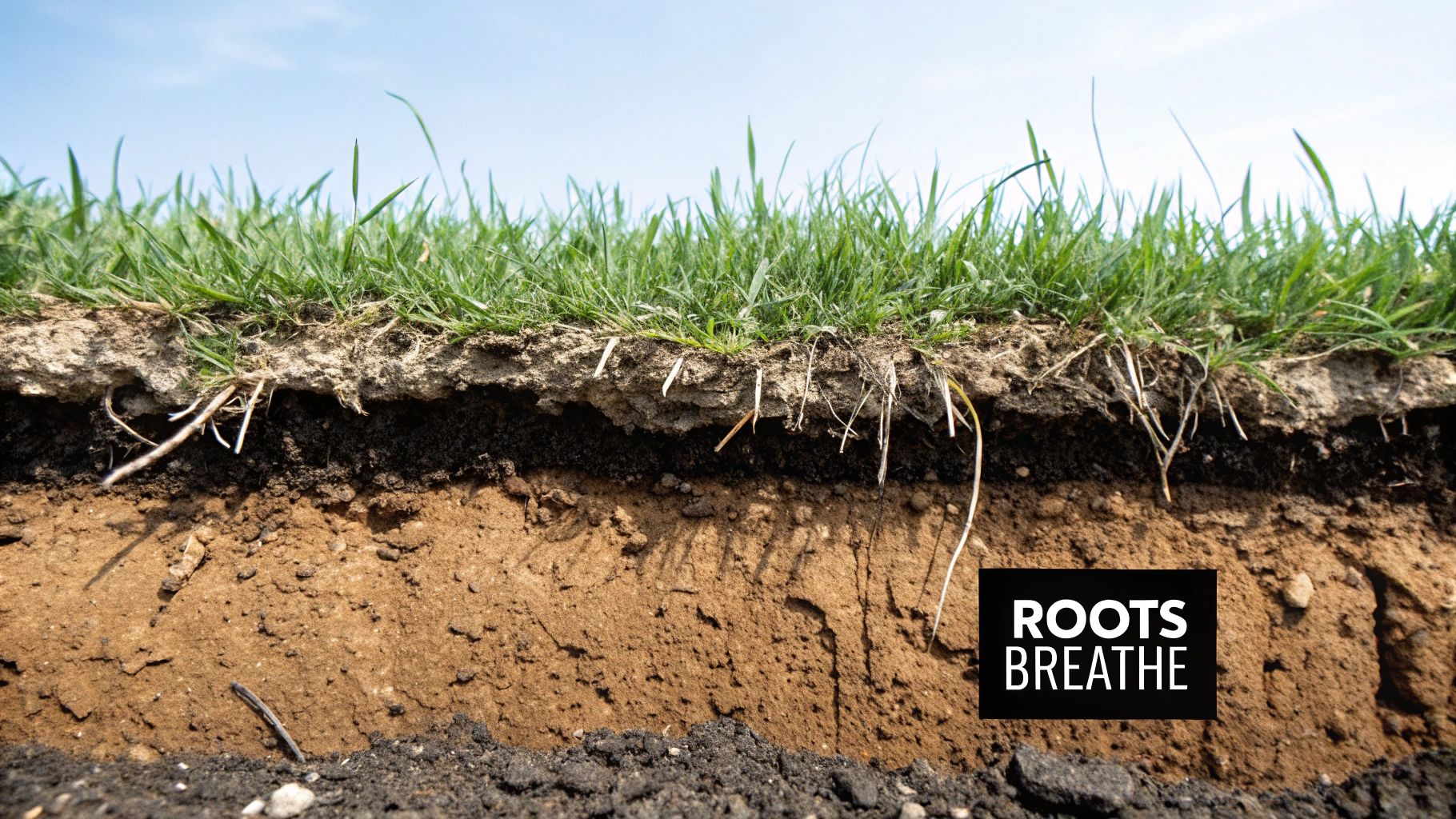
Think of your lawn's soil like a hardened, dried-out sponge. If you pour water on it, most of it just pools on top and runs off instead of soaking in. That’s a perfect picture of what happens to the heavy clay soil we have all over Cumming, Alpharetta, and Forsyth County.
Daily life—kids playing, pets running around, regular mowing, and even heavy rain—all work together to press the soil particles together. This is called soil compaction, and it's a huge problem because it squeezes out the tiny air pockets that grass roots desperately need to survive. The result is a stressed-out lawn with shallow roots, puddles after it rains, and a weak, thin appearance, no matter how much you water or fertilize.
Breaking Through the Barrier
So, how does aeration fix this mess? It's a direct counter-attack on compaction. By pulling up small plugs of soil, it immediately creates channels for all the good stuff to get deep into the ground. It’s like hitting a reset button for your soil's health.
This one simple act kicks off a powerful chain reaction, delivering three core benefits that lay the groundwork for a thick, green lawn that's safe for your whole family to enjoy.
- Relieves Soil Compaction: Pulling out those little soil cores physically loosens the ground, giving roots room to stretch out and grow deep. This is the main goal and solves a ton of common lawn issues we see in places like Johns Creek and Milton.
- Improves Water Absorption: The new channels act like express lanes for water, allowing it to bypass the hard-packed surface and get straight to the root zone. This means less wasteful runoff and more effective watering.
- Boosts Nutrient and Oxygen Uptake: Just like us, grass roots need to breathe. Aeration gets oxygen flowing and creates a direct path for fertilizers and organic treatments to reach the roots, making every other part of your lawn care plan work that much better.
At its heart, aeration transforms your lawn from a hard, suffocating surface into a living, breathing ecosystem. It’s the foundation for building a thicker, stronger turf that can handle Georgia's brutal summer heat and naturally fend off weeds and disease. It's the first—and most critical—step toward a beautiful, organic lawn that doesn't need harsh chemicals.
The Hidden Enemy Under Your Feet: Soil Compaction
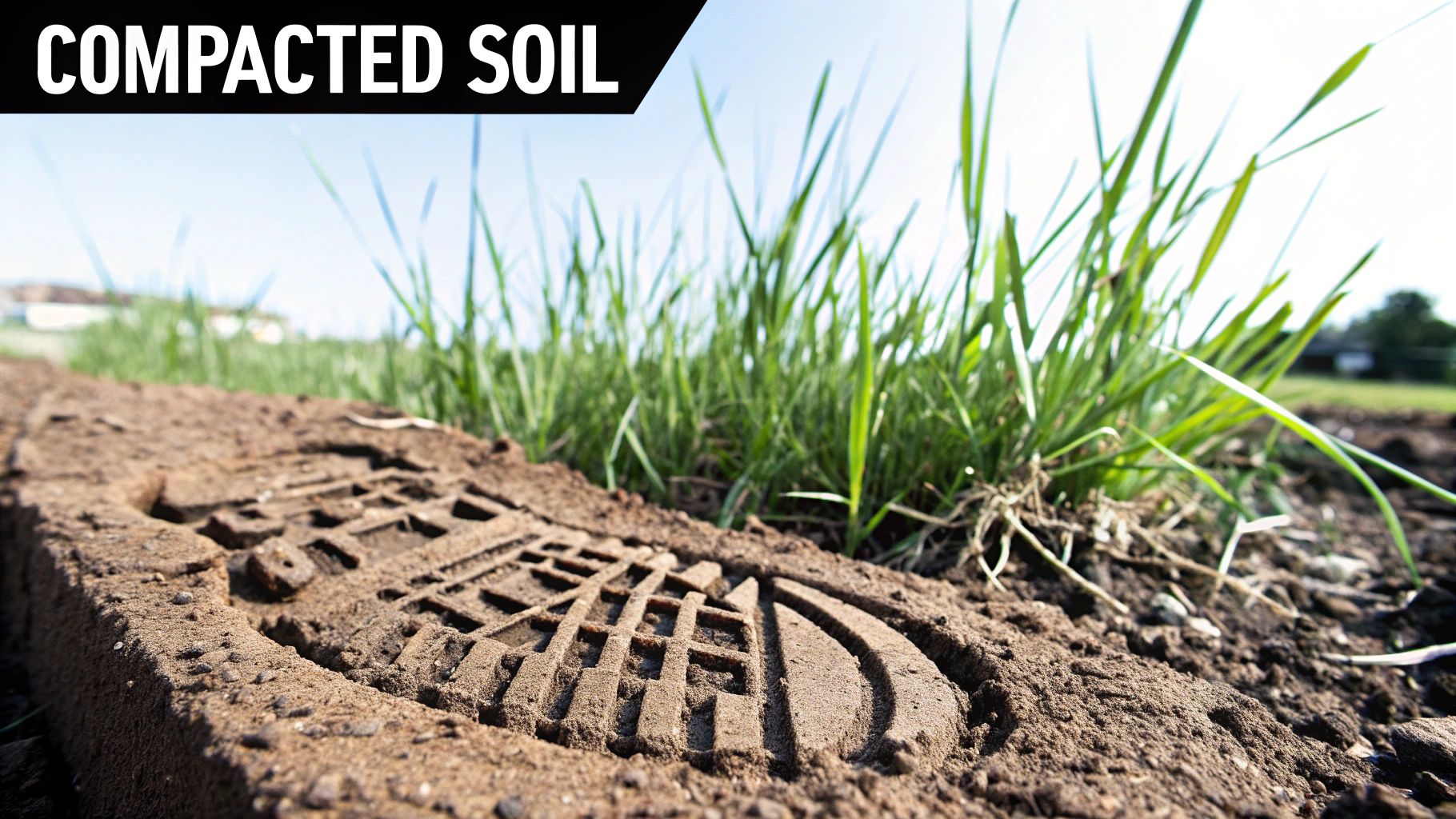
For so many homeowners in Milton, Dahlonega, and right across North Georgia, a frustrating lawn has a secret, underground cause. The problem isn’t a lack of effort on your part; it’s an invisible barrier keeping your grass from truly flourishing. That enemy is soil compaction, and it's a huge issue in our region.
Our famous red clay soil is naturally dense to begin with. Then, you add the constant pressure from everyday life—kids playing soccer, the dog chasing squirrels, the weight of your lawnmower, and even the pounding force of a heavy downpour. All this activity presses the soil particles tighter and tighter together.
This process squeezes out the tiny, life-giving air pockets in the soil. Think of it as a constant traffic jam right beneath your turf. Water, oxygen, and nutrients can't get where they need to go: your grass's roots. Your lawn is, quite literally, suffocating from the ground up.
The Consequences of Compacted Georgia Clay
When soil gets packed down, it triggers a chain reaction of problems that stand between you and the lush, green lawn you’re working toward. The symptoms are often mistaken for other issues, causing people to waste money on fertilizers and water that can’t even be absorbed. Simply put, a compacted lawn can't function properly.
The most immediate effects of this underground struggle are easy to spot once you know what to look for:
- Shallow Root Growth: Grass roots just can't push through hardened soil. Instead of growing deep and strong, they stay near the surface. This makes your entire lawn incredibly vulnerable to drought and heat stress—a massive problem during our sweltering Georgia summers.
- Poor Drainage and Puddling: Compacted ground might as well be concrete. Water pools on the surface after it rains instead of soaking in, creating muddy messes and starving the roots of moisture. That standing water is also a perfect breeding ground for lawn diseases.
- Nutrient and Fertilizer Runoff: If you’re investing in high-quality organic treatments, compaction means they’re going to waste. Instead of feeding your lawn, those vital nutrients wash away with the next storm, often ending up in our local waterways.
- Increased Thatch Buildup: Thatch is that layer of dead organic stuff that collects between the grass and the soil. Healthy soil has tons of microorganisms that break it down, but they can't survive in compacted, oxygen-starved soil. So, the thatch layer gets thicker and thicker, forming a suffocating mat.
This is precisely why a struggling lawn often isn't about a lack of fertilizer, but the soil's inability to receive it. For homeowners in Alpharetta or Cumming dealing with thin, patchy grass, understanding soil compaction is the first real step toward a solution.
Ultimately, soil compaction creates a stressful environment where only the toughest weeds seem to thrive, while the turfgrass you actually want gets weaker and eventually dies out. This is the powerful "why" behind aeration. It’s not just another chore on the list; it’s a rescue mission for your soil that directly tackles the root cause of these common lawn problems. If you're looking for solutions, our guide on how to fix compacted soil offers deeper insights into restoring your lawn's foundation.
The Real-World Benefits of Aeration for Families and Pets
Here in North Georgia—from Milton to Johns Creek—our lawns are much more than just grass. They're the backdrop for family barbecues, the field for impromptu soccer games, and the place where our kids and pets can run free. Aeration is one of the most important things you can do to make that space as safe, lush, and enjoyable as possible. It's not just lawn maintenance; it's an investment in your family's outdoor life.
The first thing you'll see is a tougher, more vibrant lawn. Aeration creates small channels in the soil, giving your grassroots the freedom to stretch out and grow deeper. This builds a thick, resilient turf that can handle the constant foot traffic of active kids and pets without turning into a patchy mess.
A stronger lawn is also a softer lawn. That dense, well-rooted grass provides a natural cushion, which is a big deal for toddlers finding their footing or kids who love to tumble. It creates a much safer landing spot than hard, compacted dirt.
Building a Healthier Lawn from the Ground Up
For so many families I talk to in Forsyth and Gwinnett County, the goal is to have a great-looking lawn without dousing it in chemicals. Aeration is the cornerstone of making that happen naturally. It fundamentally changes how well your lawn can feed itself.
Think of it this way: aeration physically opens up the soil so that water, air, and organic nutrients can get straight to the roots. When your lawn can easily access everything it needs to thrive, its reliance on synthetic fertilizers plummets. You're creating a healthy, self-sufficient ecosystem right under your feet.
This doesn't just make your lawn healthier; it helps protect our local environment. When water soaks into the ground instead of running off, it keeps fertilizers and other treatments on your property and out of our community's streams and rivers.
Smarter Watering for a Greener Georgia
Water conservation is on everyone's mind these days, especially with our hot Georgia summers. From Alpharetta to Cumming, homeowners are looking for ways to be more efficient, and aeration is a game-changer for your watering routine.
- Better Water Absorption: Aeration breaks up that dense clay soil, allowing rain and sprinkler water to penetrate deep instead of pooling on top or running off into the street. The water goes directly to the roots where it’s actually needed.
- Built-in Drought Resistance: With deeper roots and better access to moisture, your lawn becomes incredibly resilient. A well-aerated lawn will stay greener for much longer during dry spells and won't need to be watered as often to survive.
Your lawn essentially becomes a more efficient system, saving a precious resource while also cutting down your water bill. It's a win for your wallet and a win for the environment.
A Long-Term Investment in Outdoor Memories
At the end of the day, aeration helps you create a healthier, safer place for your family to enjoy the outdoors. It’s about transforming that hard, compacted patch of dirt into a vibrant green space where you feel good about letting your kids and pets play.
In the US, where residential properties make up 70% of the lawn aeration service market, homeowners are seeing real results. For our Barefoot Organics clients in Alpharetta or Dahlonega, aeration means their soil holds onto organic nutrients better, allowing them to reduce fertilizer use by 20-25% per application. Environmentally conscious parents in places like Forsyth County love that it improves water infiltration so well that it can cut irrigation needs by up to 30%. You can dig deeper into the growing demand for professional aeration services on marketreportanalytics.com.
A healthy lawn is an invitation for kids and pets to get outside and play. And when you look into the benefits of outdoor play, you realize just how important that is. By investing in the health of your soil, you're not just growing grass—you’re cultivating a space for family memories, laughter, and years of carefree fun.
Core Aeration Versus Spike Aeration
When you hear about aerating your lawn, it’s easy to think all methods are created equal. They’re not. For those of us dealing with North Georgia’s signature dense clay, the difference between core aeration and spike aeration is huge. One offers a real, lasting solution, while the other can sometimes make the problem worse.
Spike aeration is pretty much what it sounds like: poking holes in your lawn. This is usually done with a spiked roller or even those strap-on spike shoes you see online. It seems like a good idea, creating quick pathways for air and water. But there's a major catch.
This method doesn't actually remove any soil. It just pushes the dirt aside, which further compacts the soil around each and every hole. If you’re a homeowner in Johns Creek fighting that stubborn red clay, the holes from spike aeration will close up in no time, leaving your soil even more packed down than when you started.
Why Core Aeration Is the Professional Standard
This is where core aeration comes in, and it's the only method we trust at Barefoot Organics. Instead of just poking holes, a core aerator machine uses hollow tines to physically pull out small plugs—or "cores"—of soil and thatch. These finger-sized plugs are left on the lawn to break down and return nutrients to the soil.
By pulling out these cores, the process genuinely relieves soil compaction. It creates lasting channels and space, giving your grassroots room to breathe, expand, and grow deeper. It’s the only way to truly fix the suffocating conditions that hold back so many lawns in Forsyth and surrounding counties.
The real difference is simple: spike aeration just shoves soil around, while core aeration removes it. For the heavy clay we have here, pulling out plugs of soil is the only way to make a real, lasting change to its structure and give your turf a fighting chance.
Not sure if your lawn needs this? This simple visual can help.
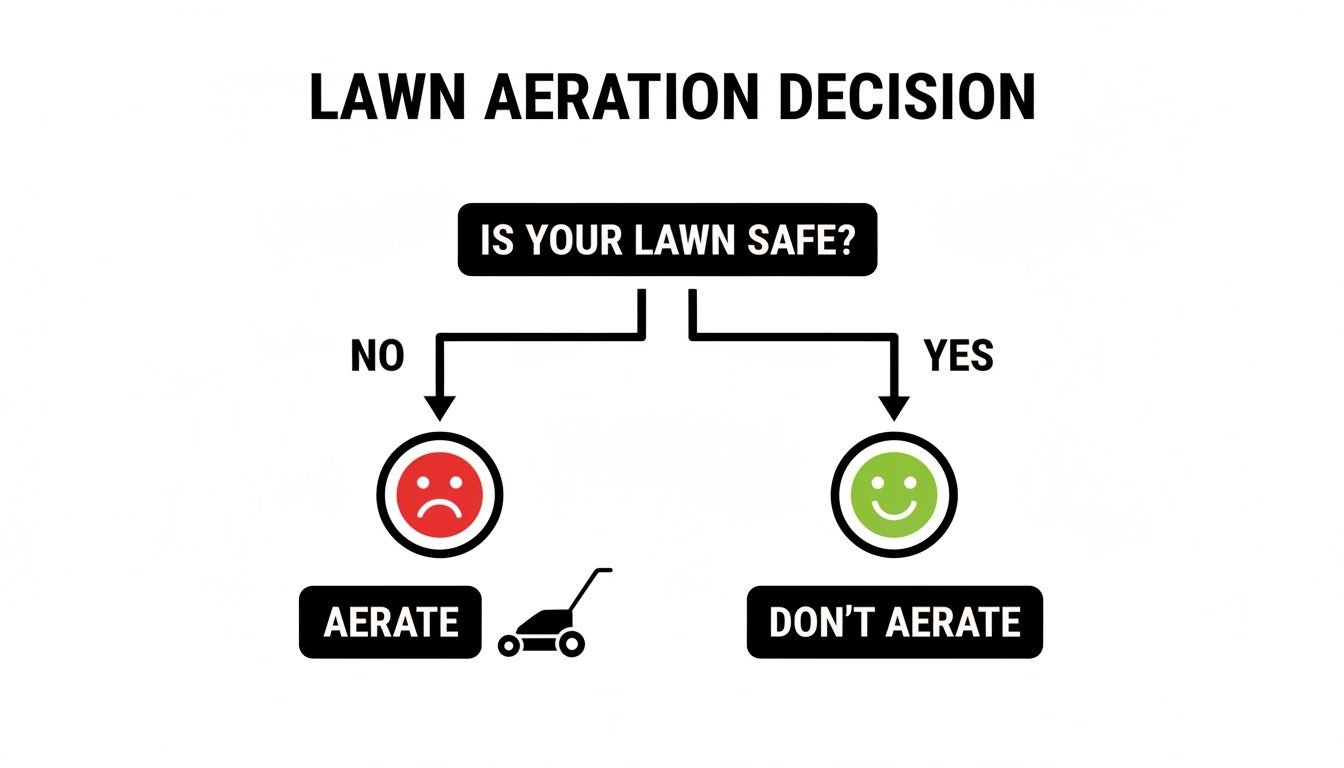
It all comes down to giving your lawn what it needs to recover from the stress of compaction.
A Clear Comparison for Georgia Lawns
Making the right choice here will directly impact your lawn's health for years to come. For anyone looking to truly improve their yard, understanding the real-world differences is crucial.
Core Aeration vs Spike Aeration for Georgia Lawns
| Feature | Core Aeration (Professional Method) | Spike Aeration (DIY Method) |
|---|---|---|
| Action | Physically removes plugs of soil and thatch. | Pokes holes, displacing and compressing soil. |
| Soil Compaction | Directly relieves compaction for lasting results. | Can increase compaction around the holes over time. |
| Root Growth | Creates ample space for roots to grow deep and strong. | Offers limited, temporary space for root growth. |
| Water & Nutrients | Opens clear channels for deep penetration. | Channels are shallow and close up quickly. |
| Long-Term Effect | Substantially improves soil structure. | Provides minimal and often temporary benefits. |
For homeowners anywhere from Cumming to Milton, the verdict is in. While spike aeration might look like a quick and easy DIY job, it simply doesn't fix the underlying compaction issues common in our region's soil.
To see exactly what the professional method looks like, you can learn more about what core aeration is and see why it’s a cornerstone of our organic lawn care programs. It’s the best approach for creating that lush, resilient, and family-safe lawn you’re looking for.
The Best Time to Aerate Your Georgia Lawn
When it comes to lawn care, timing is everything. That’s especially true for aeration. Get it wrong, and you can actually stress out your grass. But get it right? You’ve just given your lawn a massive growth boost.
For homeowners anywhere from Dahlonega down to Johns Creek, the golden rule is simple: aerate during your lawn's active growing season.
Think of it this way: aeration is a bit of an ordeal for your grass. We're literally pulling thousands of soil plugs out of the ground. By doing this when your turf is already growing like crazy, it bounces back with a vengeance. The grass aggressively fills in those new open spaces with strong, healthy roots and shoots, turning a temporary disruption into a long-term win for your lawn's health.
Timing for Warm-Season Grasses in North Georgia
Most of the lawns you see around here—in Cumming, Alpharetta, and Forsyth County—are warm-season grasses. These are the turf types that thrive in the summer heat and take a nap during the winter.
- Common Types: Bermuda, Zoysia, Centipede, and St. Augustine.
- Best Aeration Window: Late spring to early summer, which for us is typically May through July.
This is their peak performance window. Aerating now means the turf heals incredibly fast, sending out runners and rhizomes to colonize the open holes. This powerful recovery phase is what builds a thicker, tougher lawn that’s ready to face the worst of a Georgia summer.
Timing for Cool-Season Grasses
While not as common, some North Georgia homes have cool-season grasses like Fescue, especially in shadier spots or certain neighborhoods in Milton and Alpharetta. These grasses love the mild temperatures of spring and fall and really struggle through our summers.
- Common Types: Tall Fescue, Kentucky Bluegrass.
- Best Aeration Window: Early fall, usually from September to October.
An autumn aeration gives these grasses the perfect conditions—cool, moist air—to recover and strengthen their root systems before winter sets in. This leads to a much healthier, greener lawn come springtime. It also creates the absolute perfect seedbed for fall overseeding, a non-negotiable step for keeping a Fescue lawn thick and full.
For North Georgia's clay soil, proper timing maximizes what aeration does for your lawn. It’s not just about poking holes; it’s about creating an opportunity for explosive, healthy growth at the most opportune moment.
Watering issues are a constant battle for yards in our area. A well-timed aeration can completely change the game, slashing runoff and letting your soil finally drink deeply. This is a lifesaver in often drought-prone areas like Forsyth County.
Hard, compacted soil can repel up to 80% of the water you put down. But aeration creates channels that allow water to soak 4-6 inches deeper, which can cut your water usage by 25-50%. In places like Cumming where the summer heat index can climb past 100°F, an aerated lawn can retain moisture up to 40% longer, fighting off that dreaded yellowing. You can find more details about how this works by reading about lawn aeration for ultimate health at FairwayLawns.com.
One more critical piece of the puzzle is soil moisture. You can’t effectively aerate a bone-dry, brick-hard lawn; the machine just won't be able to pull deep, clean plugs. On the flip side, aerating a soggy, muddy lawn just creates a huge mess and can tear up the turf.
The sweet spot is soil that’s moist but not waterlogged—imagine the consistency of a perfectly baked brownie. A deep watering a day or two before the service creates the perfect canvas. A professional service like Barefoot Organics handles all these variables for you, making sure the timing and conditions are exactly right for your specific lawn to get the best possible results.
How to Maximize Your Results After Aeration
Aeration is a powerful reset for your lawn, but what you do after is where the real magic happens. Think of it like tilling a garden bed; you've just created the perfect, receptive environment for new life. For homeowners here in Cumming and Alpharetta, seizing this moment is what separates a good result from a truly great one.
Those thousands of little holes punched by a core aerator are more than just openings—they’re tiny, perfectly prepared seedbeds and direct conduits to your lawn's root system. This is your golden opportunity to get water, seed, and nutrients exactly where they need to go, bypassing any lingering thatch or compacted soil. Not following up is like renovating your kitchen but never actually cooking in it. You've done all the hard work but are missing out on the best part.
The Critical First Steps Post-Aeration
Once the aerator has done its job and left those little soil plugs all over your lawn, your next few moves are crucial. These steps are all about taking advantage of that freshly opened soil to ensure a quick recovery and build the kind of thick, resilient turf that can handle a North Georgia summer.
- Water Deeply and Consistently: Your lawn is thirsty. Watering right after aeration helps the soil around the holes stay moist, which encourages roots to stretch out into the newly available space. It also starts the process of breaking down the soil plugs on the surface, returning those valuable nutrients and microbes right back into the earth. Aim for a good, deep watering of about one inch.
- Overseed for Maximum Density: If you have a Fescue lawn or are trying to fill in thin spots in your Bermuda or Zoysia, there is simply no better time to spread seed. The aeration holes provide incredible seed-to-soil contact, protecting the seeds from birds and washout while giving them a perfect, sheltered spot to germinate. This one step can radically improve your lawn's thickness.
- Apply Organic Nutrients: Now is the ideal time for a natural, nutrient-rich feeding. Whether it's a high-quality organic fertilizer or a light top dressing with compost, the nutrients have a direct, unimpeded path to the root zone. This means less waste from runoff and an immediate, powerful boost for recovery and new growth.
The one-two punch of core aeration followed by overseeding is one of the single most effective things you can do for a tired lawn. The aeration creates the perfect germination environment, which leads to a much higher success rate for new grass. This powerful duo is a cornerstone of building a tough, family-friendly lawn.
Why Top Dressing After Aeration Is a Game Changer
For anyone in Johns Creek and Milton looking to take their lawn's health to the next level, adding a thin layer of organic compost—a practice known as top dressing—after aeration is a fantastic move. This process infuses rich organic matter directly into your soil profile.
As the compost works its way into the aeration holes, it begins to permanently improve the structure of our dense Georgia clay. Over time, this practice builds healthier, more porous soil that holds moisture better, supports deeper root growth, and nurtures a thriving ecosystem of beneficial microbes. It turns aeration from a simple maintenance task into a foundational step in a long-term, natural soil improvement strategy. To see how this fits into a complete lawn care plan, you can learn more about how to properly aerate and overseed your lawn for the best results.
Got Questions? We've Got Answers
It’s one thing to understand the what and why of aeration, but it's another to feel completely comfortable with the process. If you're a homeowner in Cumming or Johns Creek, you probably have a few practical questions, and that's perfectly normal. Let's tackle some of the most common ones we hear.
A major concern for many is the risk to their irrigation system. We get it—nobody wants a broken sprinkler head. That's why a professional service always starts with a simple precaution: we ask you to mark your sprinkler heads and any shallow lines you know about. This quick step allows us to navigate your lawn safely, protecting your investment while we get to work improving your soil.
What Do I Do With All These Dirt Plugs?
After we've finished, you'll see small plugs of soil scattered across the lawn. It might look a bit odd at first, but the best thing you can do is leave them right where they are. Seriously, don't rake them up!
These little soil cores are full of beneficial microbes. Over the next week or two, they’ll break down naturally with watering and mowing, returning all that organic goodness right back into the turf. Think of it as a free, mini top dressing that feeds your lawn from the top down.
A quick note for new lawns: It's tempting to want to give a new lawn every advantage, but hold off on aerating for at least one full year. Young grassroots from new sod or seed need time to establish a strong, deep network before they're ready for the process.
How Often Should I Aerate My Lawn in North Georgia?
This is a big one for folks in Alpharetta and Milton. Given our region's notoriously heavy clay soil and the wear and tear from kids and pets, annual aeration is the gold standard for most lawns. Doing it once a year is the best way to consistently fight soil compaction and keep your grass thriving.
Of course, not every lawn is the same. If yours is already in fantastic shape or sits on sandier soil, you might only need to aerate every two or three years. The best way to know for sure is to have an expert take a look. We can evaluate your soil, grass type, and how you use your yard to create a schedule that makes the most sense.
Ready to unlock your lawn's full potential? The experts at Barefoot Organics are here to answer all your questions and provide a natural, effective aeration service tailored for your North Georgia lawn. Get your free quote today at https://barefootorganicsllc.com.