

If you’ve ever stared out at your lawn in Cumming, Alpharetta, or Dahlonega and seen more weeds than grass, you know the frustration. It’s a familiar battle for homeowners all over North Georgia. Our unique climate and stubborn red clay soil can feel like a perfect welcome mat for invasive plants that seem to pop up overnight.
This guide is your new game plan. We're going to turn that frustration into a lawn you can be proud of.
Winning the War on Weeds in Your North Georgia Lawn
A lush, green lawn is more than just grass; it’s the heart of a North Georgia home, from the peaceful neighborhoods of Milton to the vibrant communities in Johns Creek. But nothing ruins that beautiful picture faster than a weed invasion. These aggressive plants are more than just an eyesore—they're thieves, stealing water, sunlight, and vital nutrients from your turf.
When your grass is fighting for resources, it gets weak, making it an easy target for pests and diseases. For many people in the Cumming area, lawn care becomes a frustrating cycle of pulling a few weeds here, spraying a little something there, and just hoping it works.
Effective weed control isn't about luck, though. It's about strategy. It all starts with knowing exactly what you're up against.
Know Your Enemy to Win the Battle
Treating all weeds the same is a recipe for failure. Think about it: the method that knocks out crabgrass in your Alpharetta lawn might do absolutely nothing to that stubborn patch of nutsedge in your flowerbed. This is precisely why identifying your weeds is the first, most important step.
The key to taking back your lawn is simple: identify the weed, then choose the right tool for the job. This saves you time, money, and protects your grass from the wrong treatments.
Consider this your field manual for the most common weeds we see right here in our area, from Milton to Dahlonega. We’ll help you move from guessing to knowing, so you can finally put a real plan in place.
Here’s what we’ll cover:
- Visual Identification: Learn to spot the key features of common local weeds.
- Effective Control Methods: Discover what actually works in North Georgia's specific environment.
- Proactive Prevention: Find out how to build a tough, healthy lawn that naturally crowds out weeds.
Your Field Guide to Common Georgia Weeds
If you want to win the war against weeds, you first have to know your enemy. Think of it like being a detective for your own yard; every weed leaves behind clues about its identity, its habits, and, most importantly, its weaknesses.
Putting a name to the invaders taking over your lawn—whether you're in Cumming, Milton, or anywhere in between—is the single most important step. It allows you to skip the guesswork and choose a targeted plan that actually works, saving you from the frustration (and cost) of using the wrong product at the wrong time. This guide is your visual playbook, designed to make you an expert at spotting the most common culprits.

Feeling a little overwhelmed is normal. But the solution always starts with one simple thing: correctly identifying the problem. From there, you can take empowered, effective action.
North Georgia’s Most Wanted Weeds
Let's meet the usual suspects you'll find trying to stake a claim in your Forsyth or Cherokee County lawn. We'll break down their key features so you can spot them with confidence.
1. Crabgrass (Digitaria spp.)
Crabgrass is probably the most infamous weed in Georgia, and for good reason. This summer annual absolutely loves the heat and humidity we get in places like Johns Creek and Alpharetta. It gets its name from its sprawling, low-growing stems that look a bit like crab legs scuttling across your turf. The blades are wider and a noticeably lighter shade of green than your Zoysia or Fescue.
- Life Cycle: Annual (it completes its life cycle in one year)
- Key Feature: Dies off after the first hard frost, but not before dropping thousands of seeds that will happily sprout next spring.
- Best Time to Act: A pre-emergent herbicide applied in early spring is the absolute key to stopping those seeds from ever germinating.
2. Yellow Nutsedge (Cyperus esculentus)
Don't let this one fool you—it looks like grass, but it's actually a sedge. The dead giveaway is its stem. Roll it between your fingers, and you'll feel three distinct edges; it’s triangular, while grass stems are round or flat. Its shiny, yellowish-green leaves also grow much faster than your lawn, so it will stick out just a few days after mowing in your Milton yard.
- Life Cycle: Perennial (it comes back year after year from its roots)
- Key Feature: Spreads like crazy through underground tubers called "nutlets." This is why hand-pulling is so frustrating—you almost never get all the nutlets.
- Best Time to Act: Targeted post-emergent herbicides are the only real answer here, as pre-emergents won't touch the underground tubers.
3. Dallisgrass (Paspalum dilatatum)
This is one tough customer. Dallisgrass is a clumping perennial that forms ugly, circular patches in lawns across the Cumming area. It has coarse, grayish-green leaves and shoots up tall, unattractive seed stalks that have tiny black specks along the stem. It grows way faster than desirable turf, creating a lumpy, uneven mess.
- Life Cycle: Perennial
- Key Feature: Its deep, fibrous root system makes it nearly impossible to pull out by hand once established.
- Best Time to Act: Post-emergent control in the fall tends to be most effective, but be prepared for a multi-season battle. It rarely goes down without a fight.
A healthy, dense lawn is the best defense. Many weeds, especially opportunistic ones like crabgrass, thrive in thin, weak turf. By focusing on your lawn's health, you create an environment where weeds simply can't get a foothold.
Seasonal Weed Calendar for North Georgia
Timing is everything in weed control. This table gives you a quick reference for when our most common weeds are actively growing and when they are most vulnerable to treatments in areas like Cumming and Dahlonega.
| Weed Type | Primary Growing Season | Best Time for Pre-Emergent | Best Time for Post-Emergent |
|---|---|---|---|
| Cool-Season Annuals | Fall, Winter, Spring | Early Fall (Sep/Oct) | Late Fall & Early Spring |
| (Poa annua, Henbit, Chickweed) | |||
| Warm-Season Annuals | Spring, Summer, Fall | Early Spring (Feb/Mar) | Late Spring & Summer |
| (Crabgrass) | |||
| Warm-Season Perennials | Spring, Summer, Fall | N/A (Doesn't stop roots) | Late Spring through Fall |
| (Nutsedge, Dallisgrass, Clover) |
This calendar helps you think proactively. By applying the right product at the right time, you're not just reacting to weeds—you're stopping them before they even start.
Other Common Lawn Invaders
Beyond the "big three," several other weeds frequently pop up in lawns from Alpharetta to Dahlonega. Keeping an eye out for these helps you act fast before they become a bigger headache.
- White Clover (Trifolium repens): Easily spotted by its three-lobed leaves and small, white, ball-shaped flowers. Clover often signals low nitrogen in your soil, as it can create its own.
- Poa Annua (Annual Bluegrass): This pesky winter weed germinates in the fall, looks decent through the winter, then produces a ton of whitish seed heads in spring before dying in the summer heat. You can learn more about tackling it in our guide to common winter weeds that affect Georgia lawns.
- Chickweed (Stellaria media): Another cool-season weed, chickweed forms dense, low-growing mats. It has small, egg-shaped leaves and tiny, white, star-like flowers.
- Henbit (Lamium amplexicaule): You can identify Henbit by its distinctive square stems and scalloped leaves. In the spring, it produces small, purple, trumpet-shaped flowers, often taking over thin or dormant lawns in places like Milton.
The Bigger Picture: Georgia's Weed Challenge
While these lawn weeds are a nuisance, they're part of a much larger ecological story. The Georgia Exotic Pest Plant Council (EPPC) classifies invasive plants based on the threat they pose to our state's natural habitats. The most severe, Category 1 – ALERT, includes notorious invaders like kudzu, Chinese wisteria, and cogongrass that cause widespread harm.
This reminds us that controlling the weeds in our own backyards is a small but important part of protecting Georgia's beautiful native ecosystems. You can explore the full list of invasive plants on the Council’s official website.
Why That Weed in Your Yard is a Bigger Deal Than You Think
That stubborn weed popping up in your flowerbed is more than just an eyesore. While it’s easy to write it off as a personal landscaping headache in your Johns Creek or Alpharetta yard, that single plant is actually part of a much larger ecological battle raging across North Georgia.
Think of our beautiful local ecosystems—like the forests around Dahlonega or the natural spaces in Forsyth County—as a finely tuned orchestra. Every native plant has its part to play, a specific instrument contributing to the whole symphony. Invasive weeds are like a rogue musician crashing the stage, playing loudly and out of tune, completely drowning out the others and throwing the entire performance into chaos.
The Ecological Domino Effect
Invasive plants are, simply put, bullies. They didn't grow up here, so they have no natural enemies—the insects and diseases that keep native plants in line don't recognize them. This gives them a massive head start, allowing them to spread like wildfire.
They quietly wage a war for resources, and our native species are almost always on the losing side. This isn't just a battle for a patch of dirt; it's a fight for the very building blocks of life:
- Sunlight: Aggressive vines can literally smother native trees and shrubs, creating a thick blanket that blocks out the sun.
- Water: Invasive plants often have greedy, deep-reaching roots that monopolize groundwater, leaving our local flora high and dry.
- Nutrients: They strip the soil of vital minerals, effectively starving the plants that are supposed to be there.
This resource theft kicks off a devastating chain reaction. When native plants vanish, so do the insects, birds, and other animals that rely on them for food and shelter. The entire local food web starts to crumble, and it can all start with a single invasive weed in a suburban yard in Cumming.
Your lawn care efforts are more than just weekend chores. They're a direct contribution to protecting the ecological health and biodiversity of our entire state. Controlling invasive weeds of georgia is a powerful act of local environmental stewardship.
A State Rich in Life, A State Under Threat
Georgia is famous for its incredible biodiversity. Our state is a vibrant tapestry of life, but that richness is more fragile than it seems. Georgia is home to roughly 4,400 native plant species, but it also hosts at least 380 non-native species, many of which are aggressively invasive. These invaders pose a direct threat to our natural treasures, especially in areas officially designated for high conservation value. You can dive deeper into how these plants impact Georgia's unique ecosystems.
So, the next time you identify and remove an invasive plant from your property in Cumming or Milton, remember what you’re really doing. You aren't just tidying up your yard. You're actively defending the native birds that need local berries, the pollinators that depend on native flowers, and the very soul of the landscape we all love. Every weed pulled is a small but meaningful victory for Georgia's natural heritage.
Smart and Effective Weed Control Strategies

Alright, you’ve identified the enemy. Now, how do you win the war for your lawn? For homeowners in Cumming and Alpharetta, the answer isn’t about scorched-earth tactics with the harshest chemicals you can find. It’s about being smarter than the weeds.
A truly effective weed control plan is a multi-layered defense. It’s about building a toolkit of methods that are tough on invaders but gentle on your family, pets, and the local environment. Let’s start with the fundamentals.
Building Your Foundation: Manual and Cultural Controls
Before you even think about reaching for a spray bottle, your first line of defense should always be getting your hands dirty and making your lawn an inhospitable place for weeds. These low-impact strategies are the bedrock of any healthy lawn care routine.
Hand-pulling is often the most satisfying way to deal with scattered weeds. There’s a trick to it, though. For stubborn weeds with deep taproots like dandelions, wait until after a good rain when the soil is soft and forgiving. Use a weeding fork to loosen the dirt around the base, grab the plant as low as you can, and pull steadily. If you snap it off at the surface, you’ve just given it a haircut—it’ll be back with a vengeance.
Beyond pulling, your everyday lawn care routine can be a powerful tool.
- Mow Higher: One of the most common mistakes is cutting the grass too short. Aim for a mowing height of 3-4 inches for Fescue. This allows the grass blades to form a dense canopy that literally shades out weed seeds, denying them the sunlight they need to sprout.
- Water Deeply, Not Daily: A light sprinkle every day does more harm than good. It encourages shallow grass roots and creates a perfectly damp surface for weeds to thrive. Instead, water deeply just once or twice a week. This trains your grass to grow deep, strong roots that can outcompete weeds for every drop of moisture.
These practices are the core of a strong defense. For a deeper dive into these techniques, you can explore a range of organic weed control methods that build on this solid foundation.
Understanding Chemical Controls: Pre-Emergent vs. Post-Emergent
When you’re facing a more stubborn or widespread weed problem in areas like Johns Creek or Milton, herbicides can be an important part of the solution. But using the wrong one is like trying to unlock a door with the wrong key—it just won’t work. Herbicides fall into two main camps.
Pre-emergent herbicides are your proactive defense. They create an invisible barrier in the top layer of soil that stops weed seeds from ever germinating. Think of it as putting up a "Do Not Enter" sign before the party even starts. This is your number one weapon against annuals like crabgrass in North Georgia.
Timing is everything with pre-emergents. For summer weeds, you absolutely must apply them in early spring before soil temperatures consistently hit 55°F. For winter weeds, a fall application is key.
Post-emergent herbicides, on the other hand, are the cleanup crew. They’re designed to target and eliminate weeds that have already sprouted and are actively growing. This is what you’ll use for tough perennial weeds or for any annuals that snuck past your pre-emergent barrier.
Choosing and Applying Herbicides Safely
When you do turn to chemicals, read the label. Read it again. Make sure the product you choose is safe for your specific grass type (Zoysia and Fescue have different needs!) and is formulated to kill the specific weeds you’re fighting.
For the best results, apply post-emergents when weeds are young and actively growing. And a word of caution: avoid spraying on brutally hot days (above 90°F) or when your lawn is stressed from drought, as you can easily damage your desirable grass.
Remember, this isn't just about our yards. A 2010 survey revealed that invasive plants were found in a staggering 56% of all forested plots across Georgia. This shows just how easily unwanted plants can escape our properties and disrupt the delicate balance of our native ecosystems.
For a truly sustainable, long-term strategy, it pays to learn the Integrated Pest Management (IPM) principles. This approach intelligently combines cultural, mechanical, and chemical methods to give you lasting results without relying on a single solution.
How to Build a Weed-Resistant Georgia Lawn
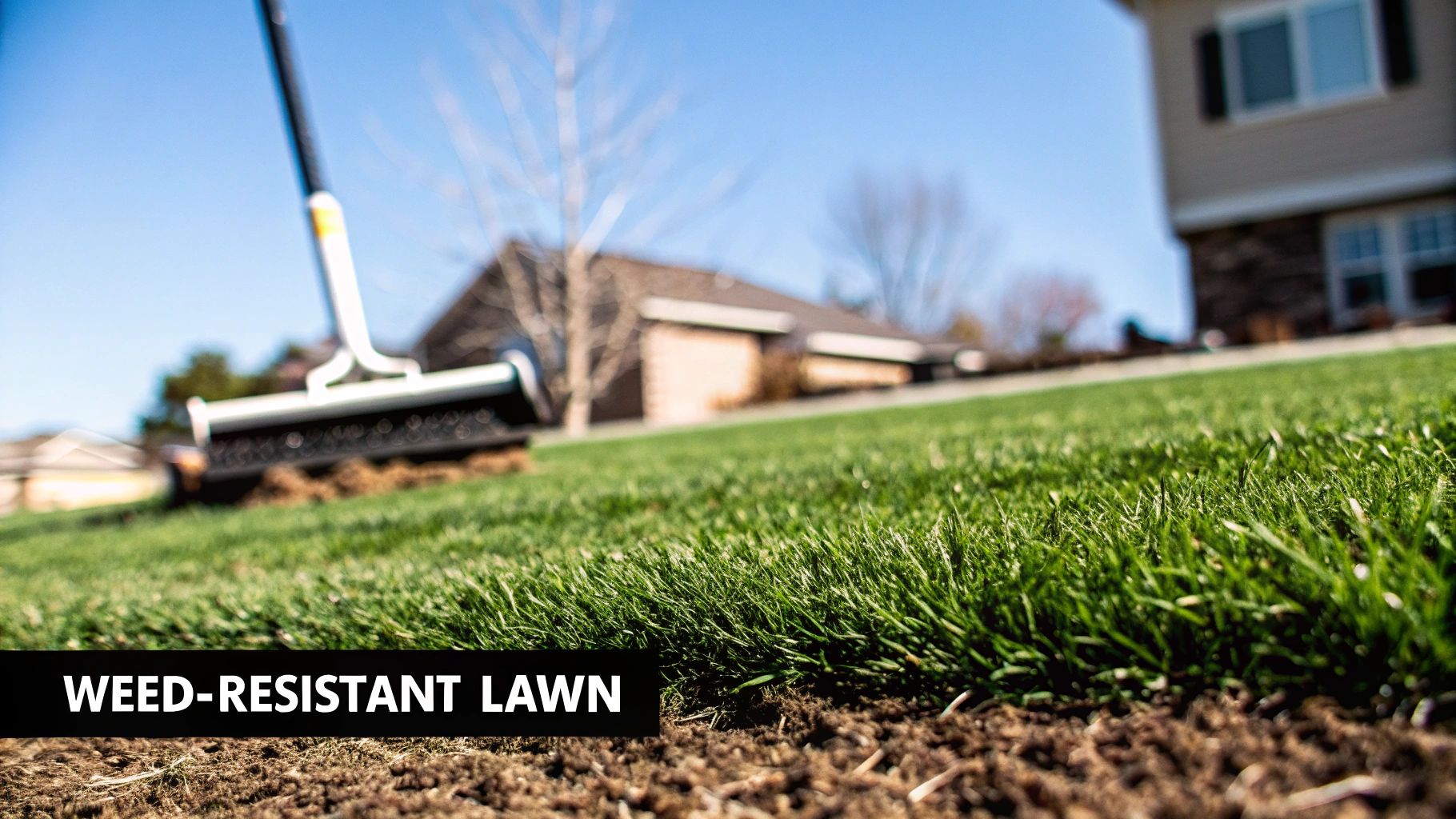
If you're always fighting weeds after they've popped up, you're playing a game you can't win. The real secret isn't just killing the weeds you see today; it’s building a lawn so thick and healthy that weeds don't even have a chance to get started. It's about proactive defense, not reactive warfare.
Think of it this way: a dense, thriving lawn is its own best bodyguard. It creates a physical barrier that denies weeds the three essentials they need to sprout: sunlight, water, and space. For homeowners in Cumming, Alpharetta, and across the region, creating this "green fortress" is the most effective way to achieve long-term victory over the most common weeds of Georgia.
Start With Strong Foundations: Your Soil Health
It all begins right under your feet. That dense, red Georgia clay we all know and love in Forsyth and Cherokee counties gets compacted over time. When that happens, your grass roots struggle for everything—air, water, and nutrients. This creates a stressed-out, weakened lawn, which is basically an open invitation for opportunistic weeds to move in.
The single best thing you can do to fight compaction is core aeration. This process physically pulls small plugs of soil out of the ground, instantly relieving pressure and opening up channels for air, water, and fertilizer to reach the root zone where they're needed most. For most lawns here in North Georgia, aerating once a year in the late spring or early summer is a total game-changer.
The best time to feed your soil is right after aerating. Spreading a quality organic compost improves the soil's structure and nutrient content, creating an environment where grass thrives but weeds struggle. If you want to dig deeper into this topic, our guide on how to create healthy soil is a great resource for understanding your lawn's most basic needs.
Choose the Right Grass for the Fight
Not all grass types are created equal in the battle against weeds. Picking the right turf for the specific sun and shade conditions on your property in Milton or Johns Creek is a critical first step.
- Zoysia Grass: This warm-season grass is an absolute champion for our area. It grows into an incredibly dense, carpet-like turf that literally chokes out weeds by blocking sunlight from ever reaching the soil. Its aggressive growth habit makes it a formidable opponent for invaders like crabgrass.
- Tall Fescue: As a cool-season variety, Fescue holds its green color longer into the fall and winter. The key is to mow it high—around 3-4 inches. This encourages the blades to grow tall and thick, creating a natural shade canopy over the soil that prevents many weed seeds from ever germinating.
When you match the right grass to your yard's environment, you give yourself a huge head start before the first weed ever appears. A happy, thriving turf is a crowded one, leaving no room for unwanted guests.
A healthy lawn is a competitive ecosystem. Your goal is to make your grass the dominant species. By focusing on soil health, smart watering, and proper fertilization, you tip the scales heavily in favor of your turf, naturally squeezing out the competition.
Smart Fertilization and Watering Schedules
The way you water and feed your lawn has a direct impact on its strength. One of the biggest mistakes we see in the Cumming area is frequent, shallow watering. This bad habit encourages weak, shallow grass roots and creates the perfect damp surface for weed seeds to sprout.
The better approach? Water deeply, but infrequently. Give your lawn a good, long soak just once or twice a week. This trains the grass to grow deep, resilient roots that can find moisture far below the surface, making it tougher and more drought-tolerant than any shallow-rooted weed.
A proper fertilization schedule works the same way, giving your turf the exact nutrients it needs to grow thick and strong. For warm-season grasses like Zoysia, this means feeding it during its active growing season from late spring through summer. Following a consistent, well-timed plan ensures your lawn is always at peak strength, ready to outgrow and overpower any weeds that dare to show up.
When Is It Time to Call in the Pros?
Tackling lawn care yourself can be incredibly rewarding, but let's be honest—sometimes the weeds just win. Waging war against some of the more stubborn weeds of Georgia can feel like a full-time job, and knowing when to wave the white flag and call for backup isn't defeat. It's actually the smartest move you can make, saving you time, money, and a whole lot of headaches down the road.
There are certain weed problems that are just too big or too tricky for the products you'll find at a big-box store. For instance, if you've ever tried to get rid of Nutsedge, you know it's a nightmare. Its complex underground tuber system means it just keeps coming back, stronger than ever. A lawn care pro serving areas like Cumming or Johns Creek has access to professional-grade treatments and, more importantly, knows exactly how to use them without scorching your prized turf.
The Tipping Point: From DIY to Pro Help
If you look out your window and see more weeds than grass, it's probably time. A professional can put together a comprehensive recovery plan that would be completely overwhelming for the average homeowner to tackle alone. They've got the right equipment and experience to get a widespread infestation under control quickly.
You should seriously consider making the call if you're dealing with:
- Stubborn Weeds That Won't Quit: Think Nutsedge or Dallisgrass—the kind that laugh at your efforts and return with a vengeance.
- A Full-Blown Invasion: When more than 50% of your yard is overrun with weeds, it’s a clear sign of deeper issues with your soil or turf health.
- Not Enough Hours in the Day: Let's face it, effective lawn care requires consistency. If you don't have the time or the right tools (like a core aerator), your efforts might not be enough.
Bringing in a local expert isn't just about paying someone to spray your yard. You're investing in their specialized knowledge. A pro from Alpharetta or Milton knows our infamous red clay, understands the specific climate challenges we face, and has the timing for treatments down to a science for North Georgia.
At the end of the day, a true professional does more than kill weeds. They get to the root of the problem, whether it's compacted soil, a pH imbalance, or a lack of key nutrients. By taking this bigger-picture approach, they ensure that once the weeds are gone, they’re much less likely to come back, leaving you with a truly healthy and resilient lawn.
Common Questions About Georgia Weeds
Even with the best game plan, weeds in Georgia have a way of throwing a curveball. From Cumming to Johns Creek, homeowners often run into the same tricky situations. Let's tackle some of the most common questions we hear.
Pre-Emergent vs. Post-Emergent: What's the Real Difference?
Think of it like defense versus offense.
A pre-emergent herbicide is your defensive line. You put it down before weed seeds even think about sprouting, creating a barrier in the soil that stops them cold. This is your go-to for preventing annual headaches like crabgrass before they ever show their face.
A post-emergent is your offense—it’s what you send in to tackle weeds that have already broken through and are actively growing in your lawn. See a patch of clover or nutsedge? That’s a job for a post-emergent. One prevents the problem; the other solves it after it starts. A truly effective lawn strategy uses both.
How Can I Control Weeds Safely with Pets and Kids Around?
This is, understandably, a top priority for families in Alpharetta and Milton. The safest and most effective strategy is one that doesn't rely solely on chemicals. The absolute best defense is a thick, healthy lawn that simply crowds weeds out. You can achieve this with good habits like mowing high and watering deeply but less frequently.
When you need an extra hand, look for organic or low-toxicity products. Corn gluten meal, for instance, can work as a natural pre-emergent. No matter what you use, the golden rule is to follow the label to the letter. Keep kids and pets off the lawn for the time specified, which is usually just until the product has completely dried.
Why Do Weeds Keep Popping Up in the Same Spot?
It’s incredibly frustrating, isn't it? When you see the same weeds return to the same area year after year in your Cumming lawn, it's a huge clue that something is wrong with the underlying conditions in that spot. Weeds are opportunists; they exploit weaknesses where your turf is struggling.
The usual suspects are:
- Compacted Soil: When soil gets packed down hard, grass roots can't grow deep, leaving a perfect opening for tough-rooted weeds to move in.
- Poor Drainage: Boggy, constantly damp areas are an open invitation for moisture-loving weeds like nutsedge.
- Thin Turf: Bare spots are a welcome mat for weeds. All that direct sunlight gives seeds the energy they need to sprout and take over before your grass has a chance.
Weeds are really just symptoms of a deeper issue. By figuring out and fixing the root cause—like aerating that compacted patch by the driveway—you change the environment to favor your grass. When your lawn wins, the weeds lose.
When Should I Aerate My Lawn in North Georgia?
Aeration is a game-changer for our heavy clay soil, but getting the timing right is everything. For warm-season grasses like Zoysia and Bermuda that dominate our region from Cumming to Dahlonega, you want to aerate when they are growing most aggressively.
That prime window is from late spring into early summer, typically May through July. Aerating then allows the grass to recover quickly, sending new roots into the freshly opened channels to grab all that wonderful air, water, and fertilizer.
Ready to stop fighting weeds and start building a beautiful lawn? The team at Barefoot Organics knows North Georgia's soil and climate inside and out. We focus on creating healthy, resilient turf that naturally pushes weeds aside, so you can spend less time pulling and more time enjoying your yard.