

It’s a feeling every homeowner in Cumming, GA knows well. You spend a weekend carefully designing and planting a beautiful flower bed, only to watch stubborn weeds muscle their way in just a few weeks later. This is a common lawn problem across Forsyth County, from new subdivisions in Dawsonville to established neighborhoods in Alpharetta. If you’ve tried to win this battle by just hand-pulling, you already know it’s a losing fight against our tough Georgia clay and humid climate.
Lasting weed control isn’t about endlessly yanking out weeds. It’s about creating a healthy, resilient garden bed from the ground up—one that naturally crowds out invaders before they ever get a chance to take root. That's the secret to a beautiful landscape that thrives in our unique North Georgia climate. Barefoot Organics is here to show you how.
Tired of losing the battle for your flower beds? Call Barefoot Organics today for a free lawn and garden evaluation and let us build a weed-free plan for your Cumming home.
Why This Matters in Cumming: Reclaiming Your Flower Beds from Weeds
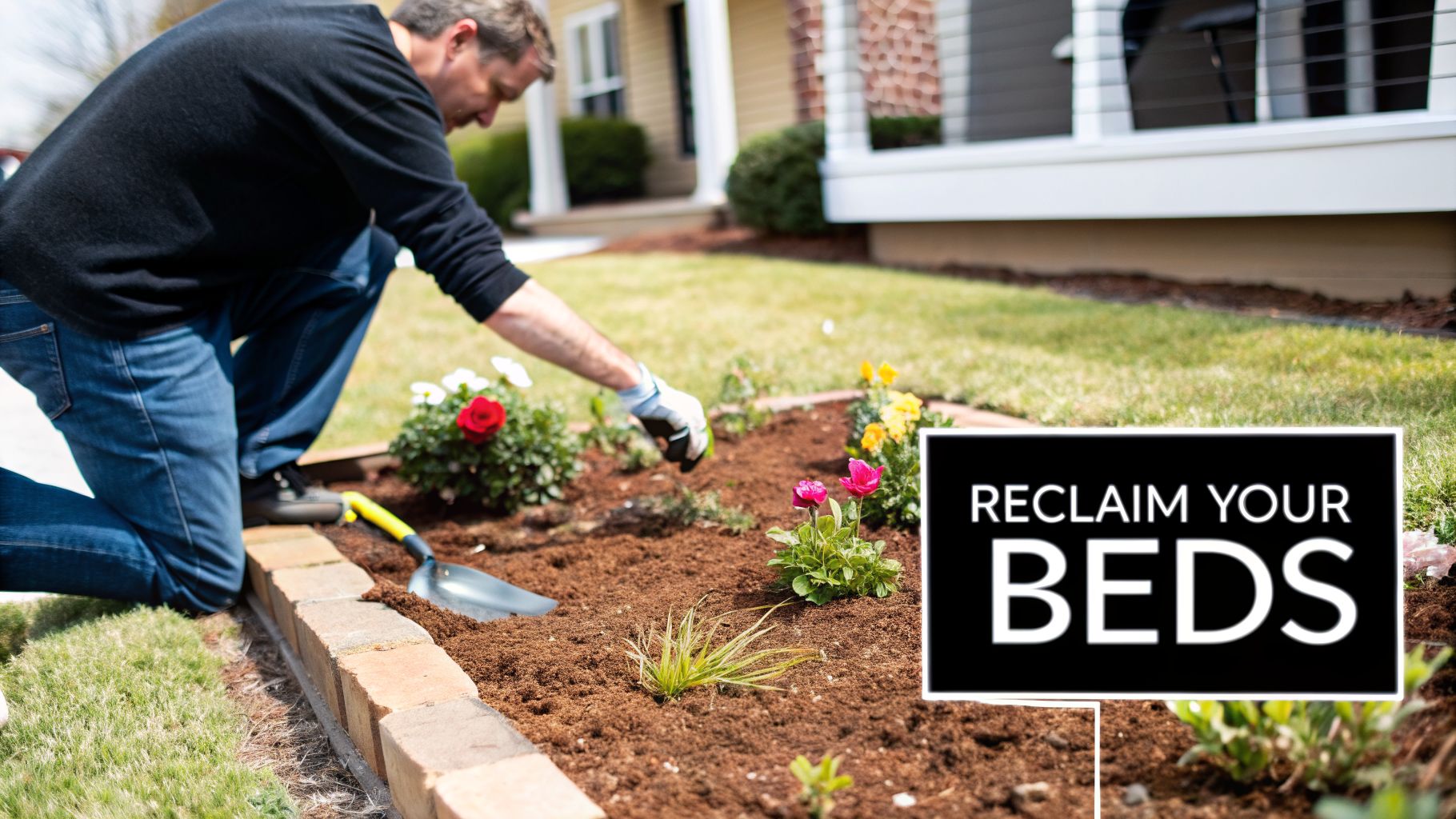
Here in North Georgia, our notorious red clay soil and high humidity create the perfect storm for aggressive weed growth. From the moment the spring pollen settles until the 90-degree summer heat finally breaks, weeds seem to erupt overnight. It’s a constant struggle for anyone with a flower bed in Cumming, Johns Creek, or Milton.
But this guide is designed to give you a real, lasting solution. We're going to move past the quick fixes that never seem to work and show you how to build a pet-safe, weed-free garden bed you can be proud of. At Barefoot Organics, we’ve spent years helping your neighbors do just that, and we want to show you how to win this fight for good.
More Than Just an Eyesore
Those weeds aren't just ugly—they're actively robbing your prized flowers and shrubs of everything they need to survive. They are fierce competitors for water, sunlight, and nutrients. In the thick of a Forsyth County summer, that competition can be the difference between a vibrant, blooming garden and a bed of stressed, wilting plants. This is especially true in newer construction homes in neighborhoods across the Cumming area, where the soil is often compacted and stripped of nutrients, giving opportunistic weeds a serious head start.
This guide will give you the straightforward, experienced advice you actually need. We'll walk you through:
- Identifying the most common weeds you'll find in beds from Suwanee to Buford.
- The best pet-safe methods for getting rid of the weeds you have right now.
- Proven, long-term strategies to keep them from ever coming back.
We’re firm believers that a healthy garden shouldn’t depend on harsh chemicals. Our entire approach is built on years of experience with the Cumming climate, using organic-based methods that are completely safe for your kids, pets, and our local environment.
A Local Solution for a Local Problem in Cumming
Big-box store advice often falls flat here because it doesn't account for our specific challenges—like the relentless spread of nutsedge in damp spots or the way Bermuda grass creeps in from the lawn. We’ve seen it all, and we understand the unique pressures you face, whether you’re gardening near Lake Lanier or in a new Canton subdivision.
We're here to help you finally win the battle for your flower beds. We aren’t some faceless corporate chain; we’re your neighbors, dedicated to restoring the health and beauty of our Forsyth County communities one yard at a time. Think of this as our promise to you: a healthier, more beautiful garden your family can enjoy, season after season.
Ready to reclaim your beds? Let's get started.
Treatment Breakdown: Identifying Common Weeds in Cumming Flower Beds
If you want to win the war on weeds in your flower beds, you first have to know what you’re up against. For homeowners here in Cumming, GA, simply identifying the unwanted plants invading your garden is a huge first step. Using the wrong removal method can be a waste of time and money, and even worse, it can harm the flowers and shrubs you’ve worked so hard to cultivate.
The biggest mistake we see is homeowners in Forsyth County just grabbing a tool and pulling whatever looks out of place. The problem is, not all weeds are the same. They fall into different categories—grassy weeds, broadleaf weeds, and sedges—and each one has its own lifecycle and Achilles' heel. This is exactly why that all-in-one weed killer from the hardware store often produces such disappointing results on North Atlanta lawns.
Grassy Weeds vs. Broadleaf Weeds in Cumming
Learning to tell the difference between a grassy weed and a broadleaf weed is probably the most important distinction you can make in your garden.
Grassy Weeds: Think crabgrass and invading Bermuda grass. These pop up with a single leaf and look like unwanted blades of lawn grass right in the middle of your flowers. They have hollow, round stems with noticeable joints. Their root systems are aggressive, letting them spread fast and steal nutrients, especially during our hot, humid summers in Forsyth County.
Broadleaf Weeds: This is a massive category that includes everything from chickweed to the dreaded Chinese privet. They start with two initial leaves and have a distinct, net-like vein pattern. Many of them produce obvious flowers and have either a single deep taproot or a tangled web of roots just below the surface.
This difference is critical because most organic and chemical treatments are selective. A product that targets broadleaf weeds won't do a thing to the crabgrass strangling your perennials.
Local Insight: One of the most common misidentifications we see in neighborhoods from Alpharetta to Dawsonville is nutsedge. It looks like a grass, but it's technically a sedge. You can tell by rolling the stem between your fingers—it feels triangular, not round. Standard grassy weed killers won't touch it, which is why it frustrates so many homeowners "near me".
Georgia’s Most Wanted Flower Bed Invaders
The battle against weeds is a serious one. Across the country, controlling these invasive plants and dealing with the damage they cause costs the U.S. economy an estimated $34 billion every year. When you look at it that way, a professional management plan starts to make a lot of sense.
To help you get started, we've put together a quick-reference guide to the most common culprits you'll find trying to take over your flower beds here in North Georgia.
North Georgia's Top 5 Flower Bed Weeds
| Weed Name | Type | Primary Challenge in Flower Beds | Peak Season in Cumming |
|---|---|---|---|
| Crabgrass | Grassy Annual | Thrives in heat and sun, forming dense mats that steal resources. A major issue in beds with thin mulch. | Summer |
| Yellow Nutsedge | Sedge Perennial | Spreads via underground "nutlets" and is incredibly hard to pull by hand. Loves our damp Georgia clay. | Summer |
| Chickweed | Broadleaf Annual | Forms low, dense mats in cool weather, smothering emerging bulbs and small flowers. | Early Spring & Fall |
| Chinese Privet | Woody Perennial | Starts as a small seedling and quickly grows into a monstrous shrub that's tough to remove once established. | Year-round |
| Bermuda Grass | Grassy Perennial | Its aggressive runners invade from the lawn's edge, creating a tangled, persistent mess in garden beds. | Summer |
Learning to spot these five invaders is a game-changer. It allows you to move past the guesswork and start using a targeted, effective strategy. Correctly identifying the problem is the very first step our technicians take. It ensures we apply the right, pet-safe solution to protect your plants in Cumming, Milton, Canton, and all across North Atlanta.
Application Process: Your Guide to Safely Removing Weeds
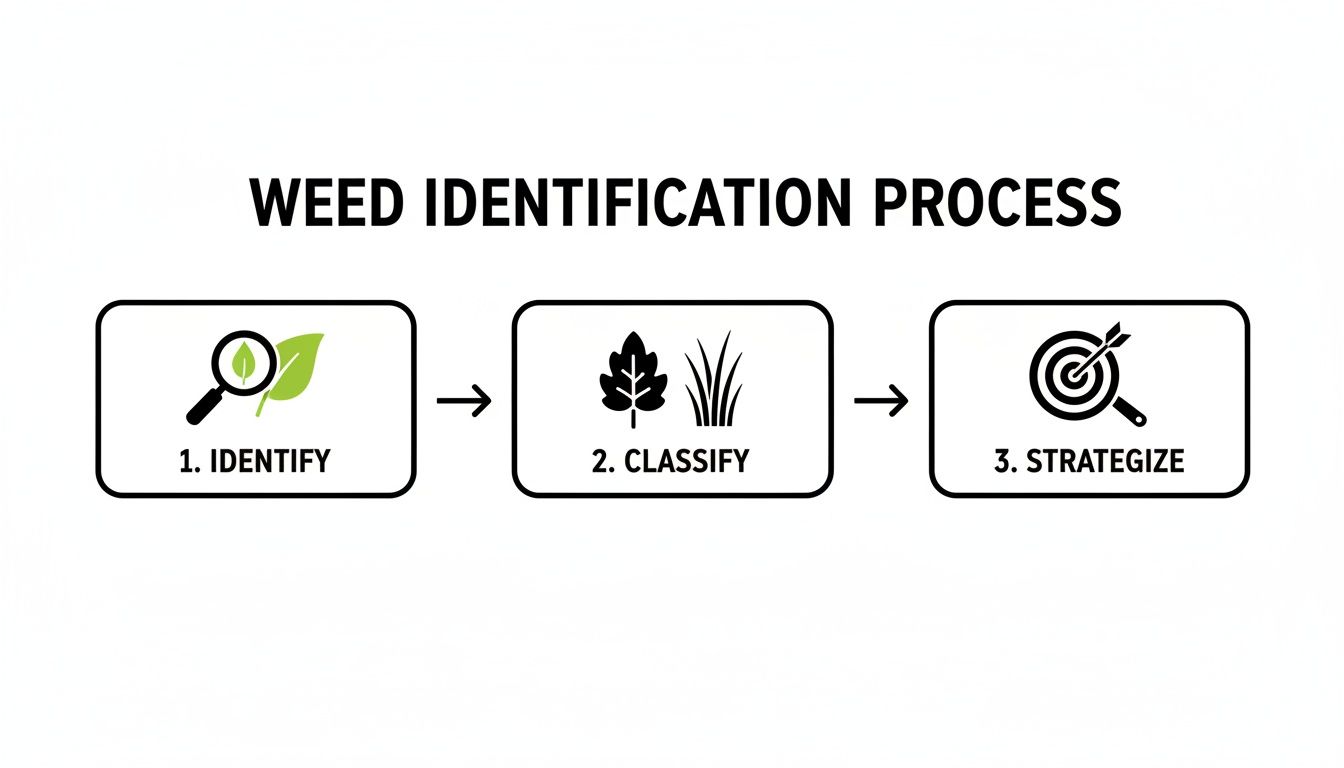
It’s a familiar sight: you step out to admire your flower beds, only to find a fresh crop of weeds has moved in. That frustration is real, but tackling them doesn't have to ruin your weekend. Before you start yanking, it pays to have a plan. The first step is always figuring out what you’re up against—is it a broadleaf weed or a grassy one? Knowing the enemy helps you choose the right weapon.
Once you know what you're dealing with, you can clear out those unwanted guests effectively and, most importantly, safely. Here are our proven methods for removing existing weeds without putting your kids, pets, or precious perennials at risk.
The Best Time to Hand-Pull Weeds in Forsyth County
We’ve all been there. You try pulling a stubborn weed out of dry, sun-baked Georgia clay, and the top just snaps right off. The root, of course, is left behind to gleefully sprout a new plant in a week.
There's a secret to winning this battle: timing. The absolute best time to hand-pull weeds is right after a good rain. When the soil is moist and soft, roots lose their grip and slide out with surprising ease. Just wait for one of our classic North Georgia downpours, let the water soak in for an hour or so, and then head out. You'll be amazed at how even tough invaders like dandelion and thistle surrender their entire taproot with a gentle, steady pull.
For deep-rooted perennial weeds like nutsedge, getting the entire root system is non-negotiable. If even a tiny piece of the root or its "nutlet" stays behind, a new plant will sprout in its place. Timing your work with wet soil is your biggest advantage.
Using Pet-Safe Spot Treatments
Let's be honest—sometimes hand-pulling just isn't practical, especially in large flower beds. Aggressive runners like Bermuda grass have a nasty habit of creeping in from the lawn, and pulling every last piece is nearly impossible. For these tough spots, a targeted treatment is your next best option.
Horticultural vinegar, which is a 20% acetic acid solution, is a common choice. It’s a contact killer, meaning it works by burning the foliage of any plant it touches. And that’s the key thing to remember: it’s non-selective, so it will damage your hydrangeas just as quickly as it will a patch of clover.
To use it without causing collateral damage:
- Pick a calm, sunny day. Wind is not your friend here, as it can cause the spray to drift onto your prized plants. Sunshine helps the vinegar work faster.
- Shield your flowers. Use a simple piece of cardboard as a backstop to block any overspray from hitting your desirable plants.
- Spray the weed directly. Get in close and saturate the weed's leaves, aiming for the center of the plant.
This method is most effective on young, annual weeds. For more stubborn perennials with deep, established roots, you'll likely need to reapply a few times. If you're looking to mix up a batch yourself, we share some tips in our guide to a non-toxic weed killer recipe.
The Secret to Fewer Weeds: A Healthy Foundation
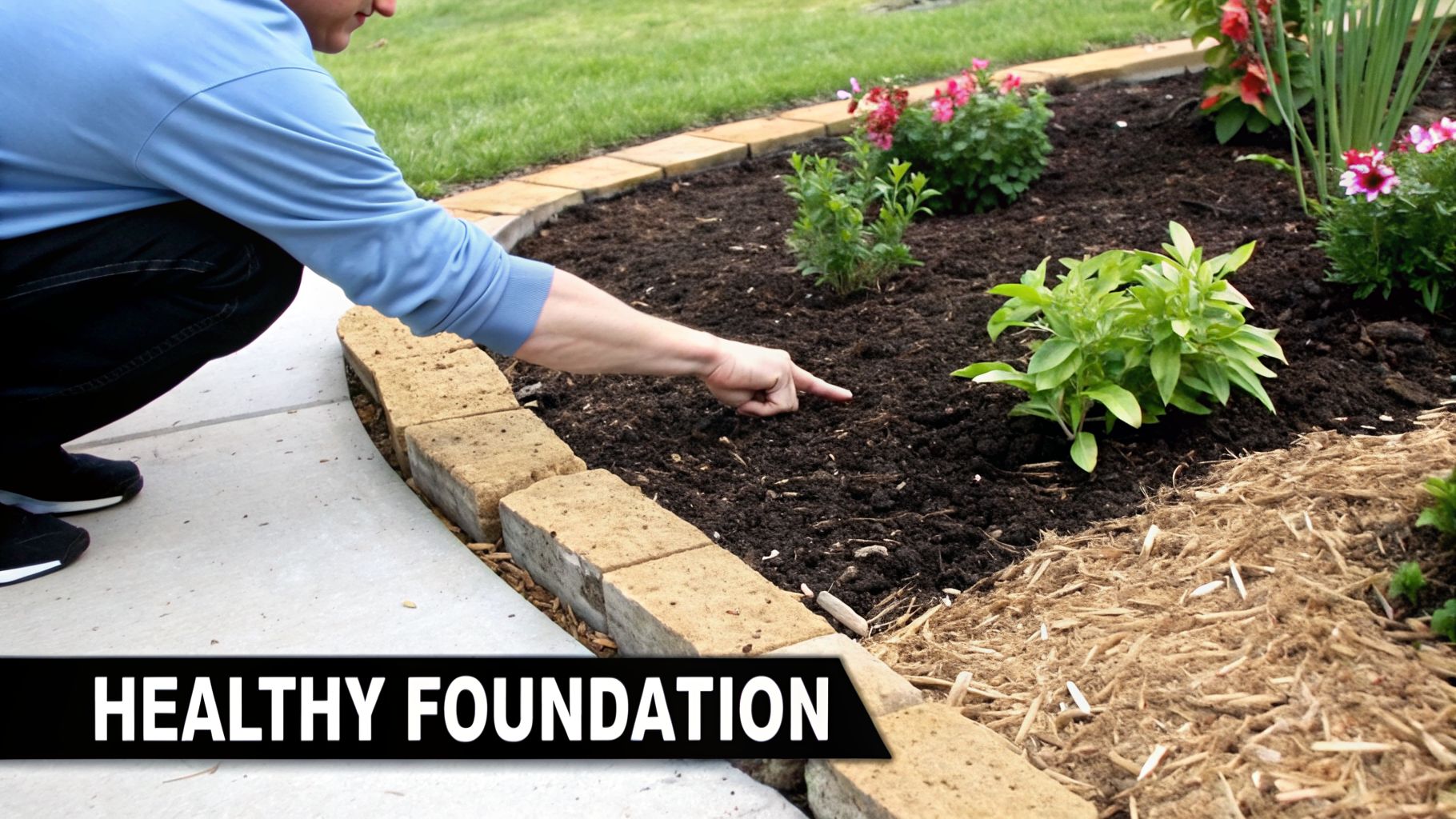
While yanking out weeds is satisfying in the moment, it’s really just a temporary fix. If you want to spend less time weeding and more time enjoying your flowers, the real game-changer is building a garden that weeds can’t stand in the first place.
This is the exact strategy we use for our clients’ gardens from Cumming to Dawsonville. Instead of just reacting to weed problems, we focus on creating a foundation where your desirable plants thrive so intensely that weeds simply don't get a chance. It’s about playing defense, and it saves countless hours of back-breaking work in the long run.
Master Mulching in North Georgia
In the fight against weeds, mulch is the best tool you have. A good layer of mulch does two things perfectly: it blocks sunlight from reaching weed seeds lying dormant in the soil, and it physically smothers any ambitious sprout that tries to break through.
No matter which you choose, spread a layer 2 to 3 inches deep across the entire bed. Just be sure to pull it back from the stems of your flowers and shrubs. Piling it up against the plant can trap moisture and lead to rot.
Building Health from the Soil Up in Cumming
Mulch is your garden's first line of defense, but the real secret weapon is what’s underneath it: your soil. When your soil is rich and full of life, your plants grow strong and vigorous. They develop thick canopies and deep root systems that naturally muscle out any weeds trying to compete for light, water, and nutrients.
That tough, compacted red Georgia clay? It gives opportunistic weeds a massive head start while your flowers struggle. By adding compost and other organic amendments, you completely flip the script. You're not just feeding your plants; you're building a healthy ecosystem that can defend itself.
Think of your flower bed as a thriving community. When your chosen plants are healthy and taking up all the available space, there’s simply no room for unwelcome squatters like crabgrass and nutsedge to move in.
Creating physical barriers also makes a huge difference. Well-built retaining garden walls can define your beds and stop invasive lawn grasses—I’m looking at you, Bermuda grass—from creeping in. This is a common battle in yards across Suwanee and Buford.
This proactive mindset is more important than ever. Researchers have found that rising CO2 levels can make some invasive species grow faster. For homeowners in Alpharetta and Johns Creek, that means building resilient gardens isn't just a good idea—it's essential. This one-two punch of a thick mulch layer combined with rich, healthy soil is the most powerful and sustainable way to keep weeds out of your flower beds.
Why Choose Barefoot Organics in Cumming
While you can certainly get some temporary relief with your own two hands, winning the war against weeds in your flower beds is often more than a weekend project. Here in Cumming, GA, the combination of our heavy Georgia clay and relentless humidity gives weeds a serious home-field advantage. That’s where having a local expert on your side can make all the difference.
We're not some big, faceless chain applying the same generic product from Canton, GA to Canton, OH. As a local Cumming business, we live and work right here in Forsyth County. We're your neighbors, and we tackle the exact weed problems you’re seeing in your own flower beds, whether you're in Milton, Sugar Hill, or right down the street.
Professional Weed Treatment for Cumming Homeowners
Hand-pulling and mulching are fantastic first steps, but they often can't stop the most stubborn invaders we see all over North Georgia. Think about that Bermuda grass that relentlessly creeps in from the lawn or the nutsedge that pops up in any damp spot. Those guys require a much more strategic game plan.
Our specialized, organic-based pre-emergent and post-emergent treatments offer a level of prevention that’s nearly impossible to match with DIY products alone. Our technicians are trained to use targeted, pet-safe applications that do three things really well:
- Stop weeds before they start by preventing stubborn seeds from ever sprouting.
- Knock out existing weeds without putting your prized flowers and shrubs at risk.
- Improve your soil’s long-term health, which naturally makes it harder for weeds to grow back.
This approach isn’t just about getting rid of weeds; it's about protecting the time and money you've poured into your landscape. If you're tired of the constant battle, looking into professional organic landscaping services can give you the backup you need.
The Hidden Threat in Local Garden Centers
One of the most frustrating things we see is when a homeowner unknowingly plants an invasive weed they bought themselves. It's shocking, but research has found that 61 percent of the 1,285 known invasive plant species in the U.S. are still sold at nurseries and online.
This includes federally banned plants like Cogongrass, which someone in Alpharetta or Johns Creek might mistake for a beautiful ornamental grass, only to watch it aggressively swallow their entire flower bed. It’s a huge problem. You can read the research on SmithsonianMag.com to get the full story.
We've seen it firsthand. A single "pretty" plant bought at a garden center in Buford or Sugar Hill can turn into years of headaches. A big part of our job is helping you spot these problem plants before they ever make it into your cart.
When you work with Barefoot Organics, you’re getting a team that truly knows Forsyth County’s unique ecosystem. We’ll build a complete program that not only gets rid of the weeds you have now but keeps new ones from ever gaining a foothold. You get your weekends back, and you get pristine flower beds to enjoy all year long.
FAQ: Your Top Weed Control Questions in Cumming, GA
When it comes to keeping flower beds looking their best here in Forsyth County, we hear a lot of the same questions from homeowners. Let's clear things up and give you some straightforward answers based on what we see and do in local gardens every single day.
Q: When is the best time for pre-emergent in Cumming flower beds?
A: In Cumming, GA, pre-emergent timing is key. For summer weeds like crabgrass, we apply in late winter or very early spring before soil temperatures consistently hit 55°F. This creates a barrier to stop germination. A second application in the fall is vital for preventing cool-season weeds like chickweed that pop up in our damp winters.
Q: Are your flower bed treatments safe for my pets?
A: Absolutely. This is our top priority for families in Cumming. We use organic-based products chosen for their safety around pets and kids. We take great care during application and will always give you clear instructions on when it’s safe for your family and pets to get back to enjoying your yard.
Q: Can mulch alone stop weeds in my Cumming flower beds?
A: A thick, 3-inch layer of mulch is a fantastic defense in any Forsyth County garden. It smothers annual weeds by blocking sunlight. However, tough perennial weeds like nutsedge can push right through it, and Bermuda grass runners will tunnel underneath. We recommend combining mulching with a professional pre-emergent treatment for the best results.
Q: How do you protect my delicate flowers during treatment in Cumming?
A: This is where our local experience really matters. Our technicians use specialized sprayers with precision nozzles and shields. This allows us to treat the soil around your delicate plants without getting any product on them. We are meticulous because protecting your investment in your landscape is a core part of doing the job right.
Q: Do you only prevent weeds or do you get rid of existing ones too?
A: We do both. Our comprehensive flower bed program for Cumming homeowners starts with targeted post-emergent applications to clear out any current weeds for immediate relief. At the same time, we apply pre-emergents to prevent new seeds from sprouting. This two-part strategy is the only way to break the cycle and achieve long-term control.
Tired of the constant battle against weeds in your flower beds? Let the local experts at Barefoot Organics give you a pristine, worry-free garden that meets your HOA standards and keeps your weekends free.