

For homeowners in Cumming, Johns Creek, and Alpharetta, a lush Bermuda grass lawn is a point of pride. But let's be honest, our humid Georgia climate is also a five-star resort for aggressive weeds. Getting ahead of them—and staying ahead—is the real secret.
The best approach isn’t just about spraying what you see. It involves a smart, year-round strategy that combines preventative pre-emergent herbicides in the spring and fall with targeted post-emergent treatments during the peak growing season. This way, you’re not just playing defense; you’re stopping weeds before they even have a chance to sprout.
Your Guide to a Weed-Free Bermuda Lawn in North Georgia
A dense, vibrant Bermuda lawn is the gold standard for so many of us here in North Georgia. Whether you’re in Cumming, Milton, or have a sprawling yard out in Dahlonega, that tough, sun-loving turf is the very picture of a southern landscape. But getting that perfect green carpet takes more than just firing up the mower and sprinkler. It demands a real game plan against the weeds that absolutely love our local climate.
This guide is built to give you just that—a clear, practical strategy. We’ll go beyond the quick fixes and break down the year-round approach your lawn actually needs to thrive. You'll learn the crucial difference between putting up a "shield" (pre-emergents) and fighting back with a "cure" (post-emergents), so you know exactly what to do and when.
Why Local Knowledge Matters
Controlling weeds in Bermuda grass isn't a one-size-fits-all job. The soil in Johns Creek isn't quite the same as in Forsyth County, and the perfect timing for an application can vary between Dahlonega and Alpharetta. Our humid subtropical climate creates a unique battleground where weeds can explode seemingly overnight if you give them an inch.
And Bermuda grass is a big deal. In the world of turf and ornamental products, it holds a commanding 27% share, making it the top choice for everything from sports fields to golf courses and residential lawns across the country. Right here in North Georgia—in towns like Cumming and Alpharetta—Bermuda blankets over 60% of warm-season lawns. Using the wrong weed control can slash its health by up to 40%, leaving you with a patchy, disappointing yard. You can learn more about the turf inputs market and how it shapes regional lawn care.
Key Takeaway: A healthy lawn is your best defense. A proactive, year-round plan tailored to our local North Georgia conditions is far more effective than simply reacting to weeds after they’ve appeared.
We'll also dig into safer, natural alternatives that are a much better choice for your family, pets, and our local environment. We’ll show you how our proven, localized approach at Barefoot Organics helps you build a lawn that’s not just beautiful, but genuinely resilient and safe for everyone to enjoy.
Getting to Know Your Bermuda Grass and Its Weed Problems
Before you can pick the right weed killer, you really have to get a feel for your lawn's personality. Here in North Georgia, from Cumming to Alpharetta and Milton, Bermuda grass is the undisputed champion of summer. It absolutely loves our intense heat and direct sun, spreading with a vigor that creates a tough, dense turf perfect for everything from backyard football to summer cookouts.
What makes it so aggressive? It spreads in two ways: with above-ground runners called stolons and underground stems called rhizomes. This one-two punch helps it fill in bare spots fast, choking out most weeds during its prime growing season. But even champions have an off-season.
When the temperatures start to dip in late fall, your Bermuda grass goes dormant. It stops growing and turns that familiar tan, straw-like color, basically hibernating for the winter. This is a vulnerable time. While your lawn is asleep, a completely different crew of winter weeds is just waking up, eager to move into the undefended territory.
Georgia's Two Seasons of Weeds
In our local climate, stretching from Cumming to Johns Creek and beyond, weed control isn't a one-and-done job. It's more like a year-round battle fought on two different fronts. Getting a handle on this seasonal cycle is the secret to winning the war.
- Summer Annual Weeds: These are the invaders you see when it's hot, like the infamous crabgrass. They sprout in the spring as the soil warms up, grow like crazy all summer, drop thousands of seeds, and then die at the first frost.
- Winter Annual Weeds: This bunch, featuring culprits like poa annua (annual bluegrass) and henbit, works on the opposite schedule. Their seeds germinate in the fall as the ground cools, they grow through our mild Georgia winters, and then they set seed and check out when the summer heat returns.
This constant rotation means your lawn is never really off the hook. A plan that only focuses on summer weeds leaves your dormant Bermuda lawn wide open to a winter invasion, and the reverse is just as true.
Identifying the Main Troublemakers in Your Lawn
You can't fight an enemy you don't know. While a huge variety of weeds can pop up, homeowners in Milton, Alpharetta, and Cumming typically see the same handful of troublemakers over and over. Figuring out which ones you have is the crucial first step to choosing a product that will kill the weeds without hurting your Bermuda.
For a deep dive into the most common offenders, check out this guide to weeds in Georgia. But for now, here are the main ones to keep an eye out for:
- Crabgrass: Probably the most hated summer weed. Crabgrass has wide, light-green blades that spread out low to the ground, almost like a star, creating ugly, sprawling patches in your lawn.
- Dallisgrass: This is one tough perennial weed that forms nasty-looking clumps. You can spot it by its coarse texture and its tall, distinctive seed stalks that seem to shoot up just a couple of days after you mow.
- Poa Annua (Annual Bluegrass): A major winter weed, poa annua stands out with its bright, light-green color against dormant Bermuda. It produces little whitish-green seed heads, even when mowed low, giving your lawn a bumpy, uneven look in the early spring.
- Clover: Easy to spot with its classic three-leaf clusters and small white or purple flowers. Clover loves lawns that are low in nitrogen and can quickly spread into dense mats.
- Dandelions: Everyone knows this one. Those bright yellow flowers quickly morph into the puffy white seed heads that scatter with the slightest breeze, guaranteeing they’ll be back next year.
Why Identification Matters: Grabbing the wrong herbicide is an expensive, frustrating mistake. A product formulated for broadleaf weeds like clover will do absolutely nothing to a grassy weed like crabgrass. When you know exactly what you're up against, you can be sure you're using the right tool for the job the first time around.
Choosing Your Weapon: Pre-Emergent vs. Post-Emergent Herbicides
When it comes to keeping your Bermuda lawn weed-free, it helps to think like a military strategist. You've got two main lines of defense: a proactive shield to stop invaders before they even show up, and a reactive cure to take out any enemies that manage to break through. In the lawn care world, we call these pre-emergent and post-emergent herbicides.
Knowing how and when to use each is the secret to a pristine lawn in Cumming, Alpharetta, and across North Georgia. Using the wrong one at the wrong time isn't just a letdown; it's a complete waste of your time, money, and effort.
Pre-Emergent Herbicides: The Proactive Shield
Imagine you could lay down an invisible barrier just below the soil's surface. That’s pretty much what a pre-emergent herbicide does. It doesn’t kill weeds that are already growing or even stop seeds from germinating. Instead, it creates a chemical barrier that stops a newly germinated seed from ever developing roots and sprouting. It neutralizes the threat before you even see it.
This preventative approach is hands-down the most powerful weapon you have against predictable annual weeds. For homeowners in Forsyth County and the Milton area, this is your secret to stopping notorious invaders like crabgrass and poa annua before they ever get a foothold.
For a truly weed-free Bermuda lawn, proactive prevention is far more effective than reactive treatment. Applying a pre-emergent 'shield' at the right time stops weeds from ever becoming a problem in the first place.
Timing is everything. This shield only works on seeds that are trying to sprout, so it has to be on the ground before soil temperatures hit that magic number for weed germination.
- Late Winter Application (Late Feb-Early March): This is your big move against summer annuals. As the ground starts to thaw in places like Johns Creek and Milton, applying a pre-emergent creates the barrier that will stop crabgrass from sprouting all spring and summer.
- Early Fall Application (September-October): This one is just as critical. As your Bermuda grass gets ready to go dormant for the winter, this application sets up a shield to block winter weeds like poa annua and henbit from taking over your lawn while it’s sleeping.
Post-Emergent Herbicides: The Targeted Cure
No matter how strong your defenses are, a few stubborn weeds are bound to break through. This is where post-emergent herbicides come in. These are the products you use to spot-treat or spray weeds that are already up, visible, and actively growing in your lawn.
The global herbicide industry is projected to grow from USD 34.9 billion to USD 56.8 billion by 2034, and precise foliar sprays—the kind used for post-emergents—make up over half of all treatments. Here in the Cumming and Dahlonega area, where Bermuda grass covers countless residential lawns and public spaces, a few weeds can quickly spiral out of control, slashing turf density by 50% in a single season. You can learn more about these market trends and their impact on lawn care.
The flowchart below gives you a simple way to start figuring out what kind of invader you're dealing with.
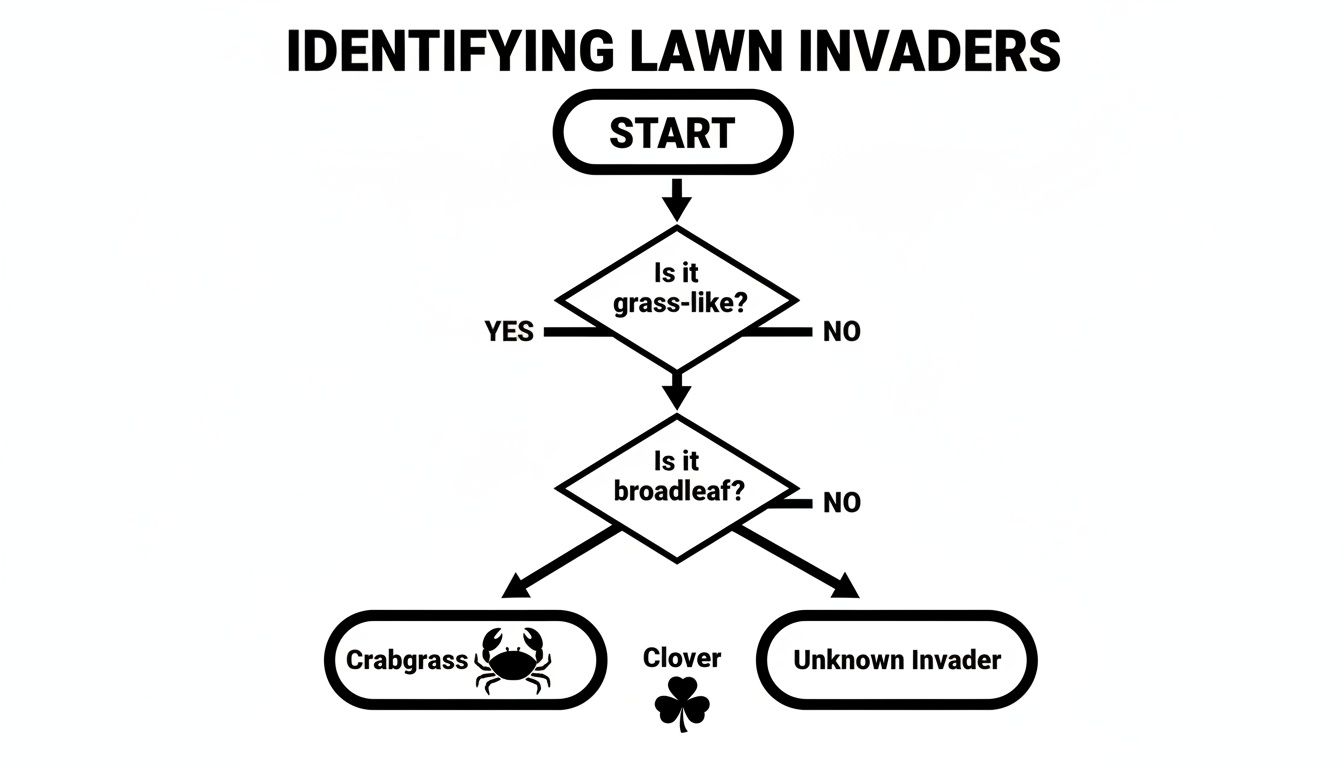
Knowing whether you’re up against a grassy weed like crabgrass or a broadleaf weed like clover is the first step, as it dictates exactly which treatment you'll need to use.
Selective vs. Non-Selective: Know the Difference
Post-emergent products come in two very different flavors, and mixing them up can be a disaster for your Bermuda grass.
- Selective Herbicides: Think of these as the smart bombs of lawn care. They are specifically formulated to target certain types of weeds (like broadleaf weeds) while leaving your Bermuda grass unharmed. Always, always check the label to make sure a product is "safe for Bermuda grass."
- Non-Selective Herbicides: This is the nuclear option. Products with ingredients like glyphosate will kill any plant they touch, including your prized lawn. Their only real use is for clearing out everything in an area, like weeds in driveway cracks, or for carefully spot-treating a single weed with surgical precision.
Pre-Emergent vs. Post-Emergent Weed Killer At a Glance
Feeling a bit overwhelmed? This quick table breaks down the key differences to help you decide which tool you need for the job right now.
| Attribute | Pre-Emergent Herbicide ('The Shield') | Post-Emergent Herbicide ('The Cure') |
|---|---|---|
| Purpose | Prevents new weed seeds from sprouting. | Kills existing weeds that are already visible. |
| When to Apply | Before weeds appear, based on soil temps. | After weeds appear and are actively growing. |
| Target | Ungerminated weed seeds in the soil. | Leaves and stems of visible weeds. |
| Best For | Stopping annual weeds like crabgrass and poa annua. | Killing broadleaf weeds (clover, dandelions) or grassy weeds. |
| Analogy | A security guard at the gate. | A medic treating a problem on the battlefield. |
Ultimately, choosing the right weed killer for Bermuda grass means having both a shield and a cure in your arsenal and, most importantly, knowing exactly when to use each one to keep your lawn looking its best.
A Safer Lawn for Your Family: Natural Weed Control
For families from Johns Creek to Dahlonega, a beautiful lawn is one thing, but knowing it's safe for your kids and pets to play on is everything. The idea of little feet and paws running across turf treated with harsh chemicals is a real worry for most of us. This is exactly why natural and organic weed control isn't just a trend; it's a vital part of creating a truly healthy home.
Conventional lawn care often gets stuck in a cycle of spraying synthetic chemicals to kill weeds. The natural approach flips that idea on its head. Instead of just nuking the weeds, our primary goal is to build such a healthy, robust ecosystem in your yard that weeds don't even get a chance.
Building a Lawn That Fights Its Own Battles
At its core, our philosophy at Barefoot Organics is to create soil so rich and alive that your Bermuda grass can't help but thrive. Think of it this way: a thin, stressed-out lawn is like rolling out the welcome mat for weeds. But a lawn rooted in healthy soil grows so thick and dense that it literally chokes out weeds before they can ever establish themselves.
We make this happen by focusing on what's going on under the grass. By feeding the soil with natural nutrients and beneficial microbes, we create a vibrant foundation that supports deep roots and lush top growth. Your Bermuda grass becomes its own best defense. It's a more patient, long-term strategy, but the payoff is a beautiful, sustainable lawn that isn't dependent on a constant stream of chemicals.
What Actually Works: Natural Weed Killer Alternatives
Going organic doesn't mean you have to surrender your yard to dandelions and crabgrass. There are some fantastic natural products that work hand-in-hand with our soil-first strategy to keep your Bermuda grass looking sharp.
- Corn Gluten Meal: This is our go-to natural pre-emergent. When we apply it in early spring, right before weed seeds wake up, it stops tiny weed roots from forming. It's especially good at preventing crabgrass before you ever see it.
- Iron-Based Products: Certain iron-based sprays are incredible for targeting broadleaf weeds. When applied, the iron essentially overloads plants like clover and dandelions, causing them to blacken and die off. Your Bermuda grass, on the other hand, just sees it as a helpful nutrient and greens up.
- Vinegar and Salt Solutions: You'll see these mentioned a lot for DIY weed control, but a word of caution is needed. These are non-selective, which means they will kill your prized Bermuda just as easily as the weed. We only recommend them for targeted spots, like weeds popping up in driveway cracks or between patio stones, well away from the lawn itself.
For pet owners across Cumming and Milton, choosing a natural path brings incredible peace of mind. Studies show that organic lawn care can slash a pet's exposure to lawn toxins by as much as 80%. The bio-stimulants Barefoot Organics uses have been shown in University of Georgia trials to encourage Bermuda grass growth that is 20% denser. As the demand for safer lawn care grows, our approach helps North Georgia families create vibrant, resilient lawns that can even boost property values by 10-15%. You can explore more on the growing weed control market to see why these sustainable solutions are becoming so popular.
Committing to natural care builds a lawn that isn't just green, but is a truly safe and healthy ecosystem for your whole family to enjoy. You can dig deeper into our specific organic weed control methods to see exactly how we build a safer lawn from the soil up.
Healthy Lawn Practices That Prevent Weeds Naturally
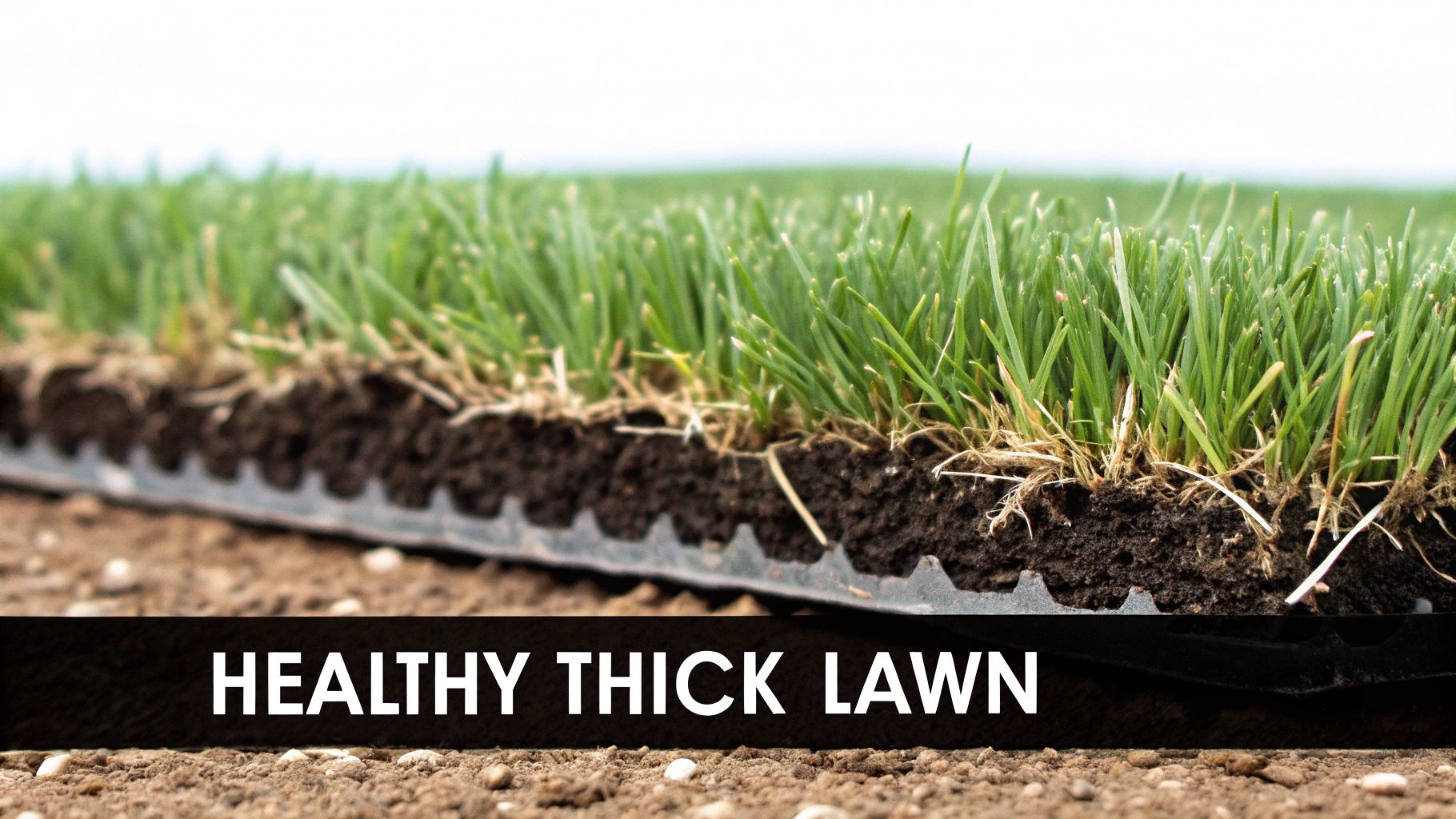
While herbicides are a great tool in the toolbox, the best weed killer for Bermuda grass isn't something you spray from a bottle—it's the lawn itself. A thick, healthy stand of Bermuda is a bully. It aggressively spreads and chokes out weeds, fighting its own battles for sunlight, water, and nutrients.
So, let's shift our focus from just reacting to weeds to proactively building a lawn that becomes its own best defense. The strategy is simple: make your Bermuda so tough that weeds don't even get a chance to sprout. By mastering the fundamentals of lawn care right here in North Georgia, you create a resilient turf that naturally pushes back against invaders.
Perfecting Your Mowing and Watering Routine
For anyone with a lawn in Cumming or Alpharetta, how you mow and water makes all the difference. Bermuda grass loves to be cut low and often. This encourages it to spread sideways with its runners (stolons and rhizomes), which is exactly what creates that dense, carpet-like lawn we all want.
- Mowing Height: Keep your Bermuda grass cut between 1 and 2 inches tall. If you go shorter, you risk stressing the plant. Let it get too tall, and it grows thin and leggy, leaving plenty of open real estate for weeds.
- Mowing Frequency: In the heat of summer, you'll probably be mowing every 5-7 days. The golden rule is to never cut off more than one-third of the grass blade in a single pass.
- Watering Strategy: Water deeply, but not often. Giving your lawn a long, thorough soak once or twice a week trains the roots to grow deep, making the grass far more drought-tolerant. Quick, shallow watering every day just creates weak roots and a damp surface that’s a perfect nursery for weed seeds.
The Foundation of Health: Fertilization and Soil Care
You can't have a great lawn without great soil. Here in North Georgia, from Milton to Dahlonega, we’re often dealing with that classic red clay. It gets compacted easily and tends to be acidic, which means it can lock up the very nutrients your Bermuda needs to get strong.
Giving your lawn the right fuel through a proper fertilization plan is key. But tossing down fertilizer without knowing what your soil actually needs is like guessing. That’s why getting a handle on your soil’s chemistry is the critical first step. You can learn exactly how to do that in our guide on how to test soil pH.
The Soil-First Philosophy: A healthy lawn is a mirror image of the soil it's growing in. When you improve the soil's structure and unlock its nutrients, you give your Bermuda grass the power to grow thicker and stronger, naturally crowding out any weeds that try to move in.
This is precisely why core aeration and top dressing are so important for our lawns in the Cumming area. These services are staples in the Barefoot Organics program because they directly tackle the challenges of our local soil.
- Core Aeration: We use a machine to pull small plugs of soil out of the lawn. This immediately relieves compaction and opens up channels for air, water, and nutrients to get down deep where the roots are.
- Top Dressing: Spreading a thin layer of rich compost or organic matter over the lawn after aeration is the final touch. It dramatically improves the soil’s structure and injects a dose of vital organic nutrients.
When you embrace these core practices, you stop playing defense and start playing offense. You’re no longer just fighting weeds; you're building a powerful, healthy lawn that does most of the hard work for you.
When to Call the Pros for Your Bermuda Lawn
Even the most dedicated DIYer can hit a wall with lawn care. You’ve followed all the steps, you've put in the time, but stubborn weeds just won't budge. Or maybe life just gets in the way, and you can't give your Bermuda grass the consistent attention it needs to thrive.
Knowing when to call in a professional isn't giving up—it's just being smart. If you're facing a weed problem that feels out of control, you're not sure which products are truly safe for your kids and pets, or you'd simply rather have your weekends back, it’s probably time to call for backup.
Your Local North Georgia Lawn Experts
Hiring a lawn care company isn't just about finding someone to spray weeds. It’s about finding a partner who genuinely understands our unique North Georgia climate and soil. The heavy clay in Forsyth County is a world away from other soil types, and the microclimates around Cumming, Milton, and Alpharetta demand a localized approach. This is where Barefoot Organics really shines.
Our expertise is homegrown, right here in your community. We know exactly how Bermuda grass struggles through a humid summer and hunkers down for a chilly winter in places like Johns Creek and Dahlonega. That hands-on, local knowledge means we develop treatment plans with timing and formulations that actually work for your lawn.
We are committed to providing North Georgia families with lawn care that is not only effective but also responsible. Our programs deliver a beautiful, barefoot-worthy lawn while protecting your children, pets, and our local ecosystem from unnecessary chemicals.
Getting Expert Help Is Easy
When the to-do list gets too long and the weeds get too tall, bringing in the pros is the right call. A good local SEO guide for home service companies can be a great resource for finding reputable experts nearby. We believe getting started should be simple and completely stress-free.
If you're in Cumming, Alpharetta, or anywhere across our North Georgia service area and ready to see what a professional, natural approach can do, your next step is a simple one.
You can get a free, no-obligation online quote from Barefoot Organics in just a couple of minutes. Let our team of local pros show you how to get the healthy, vibrant, and safe Bermuda lawn your family deserves. It’s time to stop fighting the frustrating battle and start enjoying your yard again.
Your Bermuda Weed Control Questions Answered
Folks all over North Georgia, from Cumming to Alpharetta, run into the same challenges with their Bermuda lawns. Here are some of the most common questions we get, with straightforward answers from our experience in the field.
What’s the Best Time of Year to Apply Weed Killer in Georgia?
When it comes to weed control, timing is everything, especially with Georgia's distinct seasons. You really need to think about two separate attack plans: one for prevention and one for weeds that are already showing up.
Prevention is key. Your first big move is in late winter (late February to early March). This is your chance to apply a pre-emergent herbicide, which creates a barrier to stop summer annuals like crabgrass before they even think about sprouting in the Cumming area. The second critical window is in the early fall, when you apply another pre-emergent to head off winter weeds like poa annua before they can invade your dormant lawn.
For weeds you can already see, you'll need a post-emergent herbicide. The best time to spray these is when both your Bermuda and the weeds are actively growing, which is usually from spring through early summer. Try to avoid spraying during the peak heat of July and August or when your lawn is stressed or dormant.
Can You Actually Kill Weeds Without Harming the Bermuda Grass?
Absolutely! That’s the entire goal of a good weed control strategy. The secret is using what's called a selective herbicide.
These products are specifically formulated to target common broadleaf or grassy weeds while being perfectly safe for your Bermuda turf. It’s a bit like a smart bomb for your lawn.
The most important step is to read the product label and make sure it explicitly says "safe for Bermuda grass." Following the mixing and application rates to the letter is just as critical. The opposite of this is a non-selective herbicide (like glyphosate), which will kill any plant it touches—great for sidewalk cracks, but a disaster for your lawn.
Do Natural Weed Killers Really Work on Tough Georgia Weeds?
Yes, they do, but they operate on a different principle. Instead of a one-time chemical blitz, natural and organic methods are all about playing the long game and building a stronger, healthier lawn from the ground up.
At Barefoot Organics, our philosophy is simple: we focus on creating incredibly healthy soil. A lawn with robust soil grows such thick, vigorous Bermuda grass that it naturally chokes out weeds. A dense lawn becomes its own best defense.
Natural products like corn gluten meal, for instance, are great pre-emergents. Certain iron-based sprays can also knock back existing broadleaf weeds. The real magic of an organic approach, though, comes from consistency and focusing on lawn health first. This is the core of our programs right here in the Milton and Johns Creek area.
Ready to stop fighting weeds and start enjoying a beautiful lawn? The team at Barefoot Organics has the local know-how and natural solutions to protect your Bermuda grass while keeping your family and pets safe. Get your free, no-hassle quote today and let us build the healthy lawn you've always wanted. Find out more at https://barefootorganicsllc.com.