

When it comes to weed control for lawns, the best defense is a good offense. Instead of constantly reacting to new weeds, the goal is to cultivate a lawn so thick and healthy that it naturally squeezes them out. This proactive mindset, combined with well-timed organic treatments, is the secret to a great-looking lawn in North Georgia, from Cumming to Dahlonega.
A Natural Approach to a Weed-Free Lawn in North Georgia
If you live anywhere from Cumming and Alpharetta to Johns Creek and Milton, you know the fight against lawn weeds is real. Our humid summers and compacted red clay are a dream for stubborn invaders like crabgrass, nutsedge, and clover. It's tempting to reach for a chemical quick-fix, but those often harm our local ecosystem and aren't ideal for families and pets.
This guide is your season-by-season playbook for getting a lush lawn the organic way. It’s not about finding a magic bullet; it’s about building a resilient turf that becomes its own defense system. The result is a beautiful, green outdoor space that’s truly safe for everyone.
Timing is Everything: The North Georgia Weed Calendar
Winning the war on weeds is all about timing. Different weeds pop up at different times of the year here in the Cumming area. A smart organic plan works with these cycles, staying one step ahead instead of always playing catch-up once weeds have already taken root.
Early Spring Action: This is your prime opportunity to get down a natural pre-emergent, like corn gluten meal. It creates a barrier that stops summer annuals like crabgrass before they even have a chance to sprout.
Summer Vigilance: As the heat cranks up in places like Alpharetta, your focus should be on keeping your grass strong. Proper mowing and deep, infrequent watering will help your turf outcompete the weeds that thrive in the summer stress.
Fall Preparation: Don't forget this crucial step. A second pre-emergent application in the fall is your best defense against winter weeds like Poa annua (annual bluegrass) from taking over a dormant lawn.
Winter Rest: While your lawn is sleeping, you can plan. This is the perfect time to address any underlying soil compaction or nutrient issues before the spring growing season kicks into high gear.
More and more homeowners are demanding safer, sustainable lawn care. Globally, the weed control market was valued at USD 38 billion in 2025 and is projected to hit USD 58 billion by 2033. This growth is largely fueled by the shift toward organic methods. It's a trend that really resonates with parents in places like Milton and Johns Creek who want to avoid harsh chemicals where their kids and pets play. You can find more lawn care statistics on LawnChick.com.
This timeline gives you a great visual for the year-round effort.
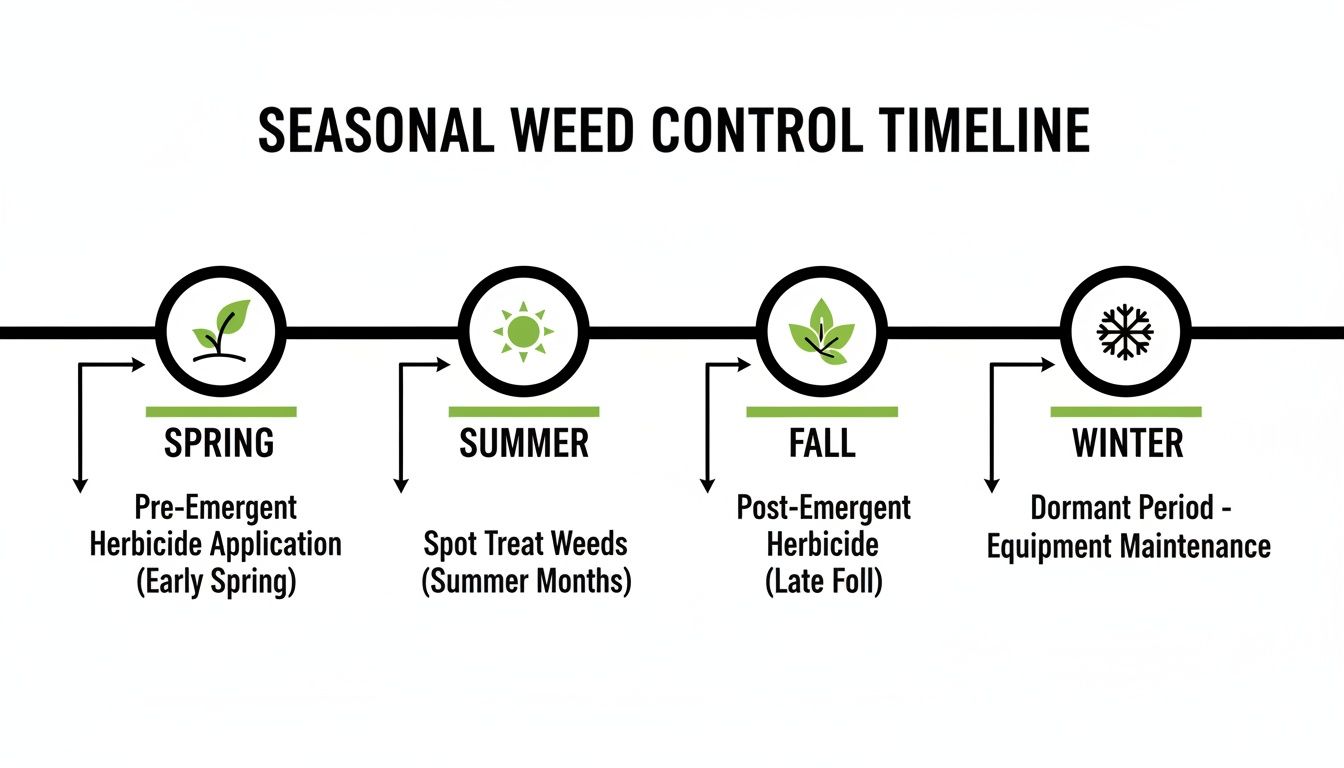
As you can see, organic lawn care is a continuous cycle. The preventative steps you take in the spring and fall are what set you up for success the rest of the year.
For those who like a quick reference, here’s a simple breakdown of the key tasks for each season.
Seasonal Organic Weed Control at a Glance for North Georgia
| Season | Primary Goal | Key Organic Actions |
|---|---|---|
| Spring | Prevent Summer Weeds | Apply corn gluten meal pre-emergent. Aerate and topdress to improve soil. |
| Summer | Strengthen Turf | Mow high (3-4 inches). Water deeply but infrequently. Spot treat weeds as needed. |
| Fall | Prevent Winter Weeds & Build Roots | Apply second pre-emergent. Overseed to thicken turf. Fertilize with organic compost. |
| Winter | Plan & Prepare | Test soil pH. Clean up leaves and debris. Sharpen mower blades. |
This table serves as a handy checklist to keep your lawn on the right track throughout the year, ensuring you're always proactive rather than reactive.
Getting to Know the Enemy: Common Weeds in Cumming and Alpharetta Lawns
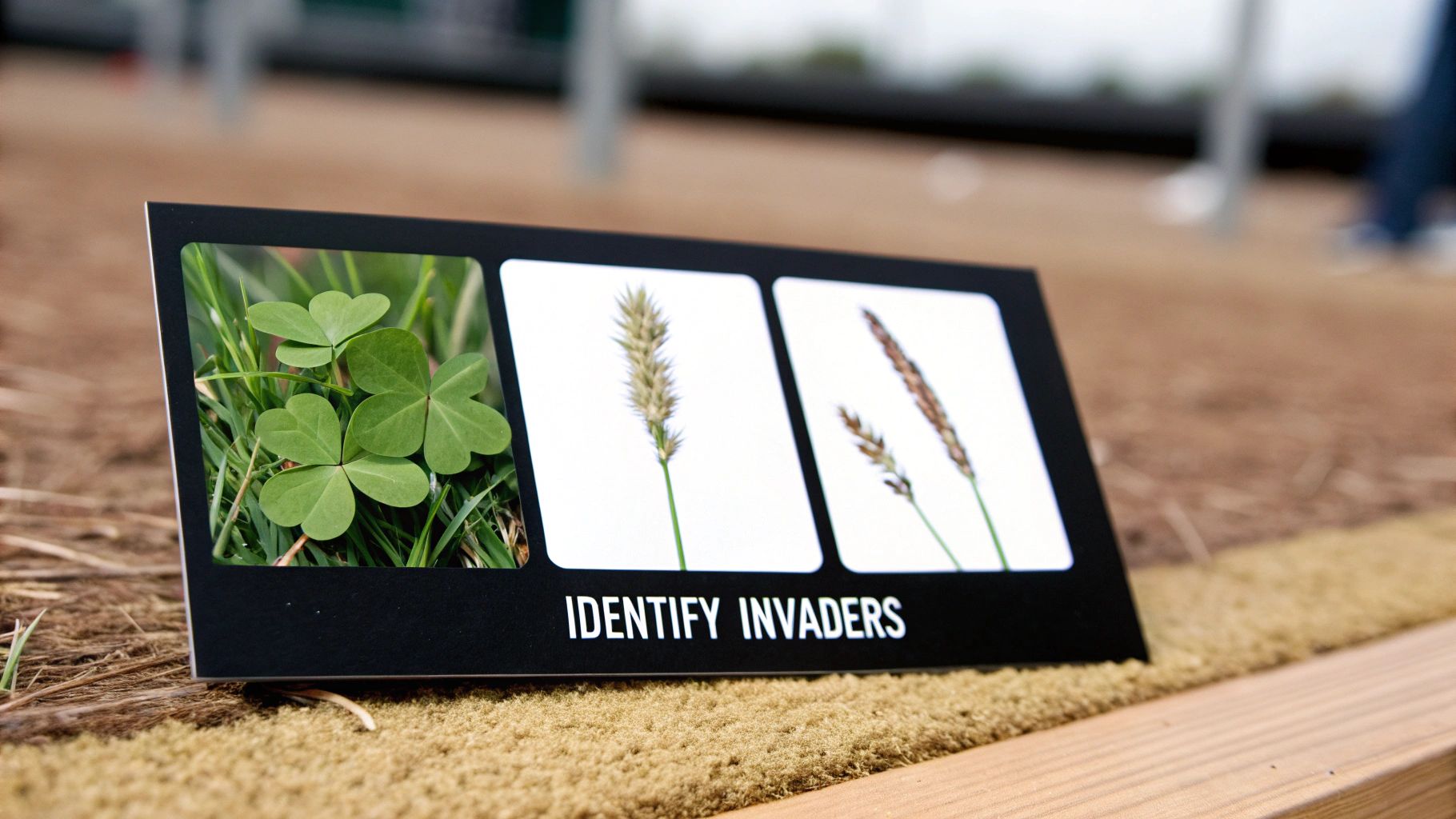
Before you can win the war on weeds, you’ve got to know exactly who you’re fighting. I can’t tell you how many homeowners I’ve seen waste time and money on the wrong treatments simply because they misidentified the problem.
A generic "weed killer" just doesn't cut it here in North Georgia. Different weeds have completely different life cycles and weaknesses. What works on clover won’t do a thing to nutsedge, and the strategy for stopping crabgrass is useless against established dallisgrass.
Folks from Johns Creek all the way to Dahlonega tend to see the same cast of characters popping up in their yards. Taking a few minutes to learn what’s what is the single most important step you can take.
Grassy Weeds: The Imposters in Your Turf
These are the sneaky ones. Grassy weeds blend right in with your lawn, and you often don't notice them until they’ve already dug in and started to spread. They grow just like turfgrass, which makes getting rid of them a real challenge.
Here are the main grassy culprits I see every day in Cumming, Milton, and the surrounding areas:
*Crabgrass (Digitaria spp.):* The undisputed king of summer weeds around here. It’s got that coarse, light-green look and sprawls out from a single point, creating those ugly, thin patches. Give it a little heat and a bare spot, and it'll take over in a flash.
*Nutsedge (Cyperus spp.):* People always mistake this for grass, but here’s the trick: roll the stem between your fingers. If it’s triangular, you’ve got nutsedge. Its leaves are also a brighter, almost lime green, and they shoot up past your turf just a couple of days after you mow.
Dallisgrass (Paspalum dilatatum): A truly tough perennial that forms those clumpy, star-shaped eyesores. It has wide, coarse blades and sends up tall, ugly seed stalks with little black specks on them almost immediately after you cut the grass.
Goosegrass (Eleusine indica): You might hear this called silver crabgrass because of its distinctive whitish-silver center. It grows very low to the ground, with flat stems that radiate out. Mowing alone won't get rid of this one.
The real headache with grassy weeds is timing. An annual like crabgrass is best handled with a pre-emergent in the spring before it even starts. But a perennial like dallisgrass laughs at that—it comes back from its roots every year, so you have to be much more persistent and targeted.
Broadleaf Weeds: The Easy-to-Spot Intruders
Thankfully, not all weeds are masters of disguise. Broadleaf weeds stick out like a sore thumb in a healthy Bermuda or Zoysia lawn because they look nothing like grass. With their wide leaves and obvious flowers, you can’t miss them.
These are a few of the broadleaf weeds you're almost guaranteed to encounter in the Cumming area:
White Clover (Trifolium repens): Everyone knows this one by its three-leaf clusters and little white puffball flowers. If you see a lot of clover, it's a huge sign your soil is low on nitrogen. Improving your lawn's fertility is the best long-term fix.
Chickweed (Stellaria media): This cool-season weed forms dense, low-growing mats in your lawn. It has small, egg-shaped leaves and tiny white flowers, and it absolutely loves any spot that’s damp and shady.
Henbit (Lamium amplexicaule): Look for the square stems and scalloped, heart-shaped leaves that seem to hug them. Henbit is one of the first weeds to show up in early spring, producing little purple-pink, tube-shaped flowers.
Knowing these differences is everything. If you really want to become an expert, you can learn more about common weeds in Georgia lawns and get familiar with the entire rogue's gallery. When you get the ID right, you can pick an organic solution that takes out the bad guy without hurting your grass.
Building Your Lawn’s Natural Weed Barrier
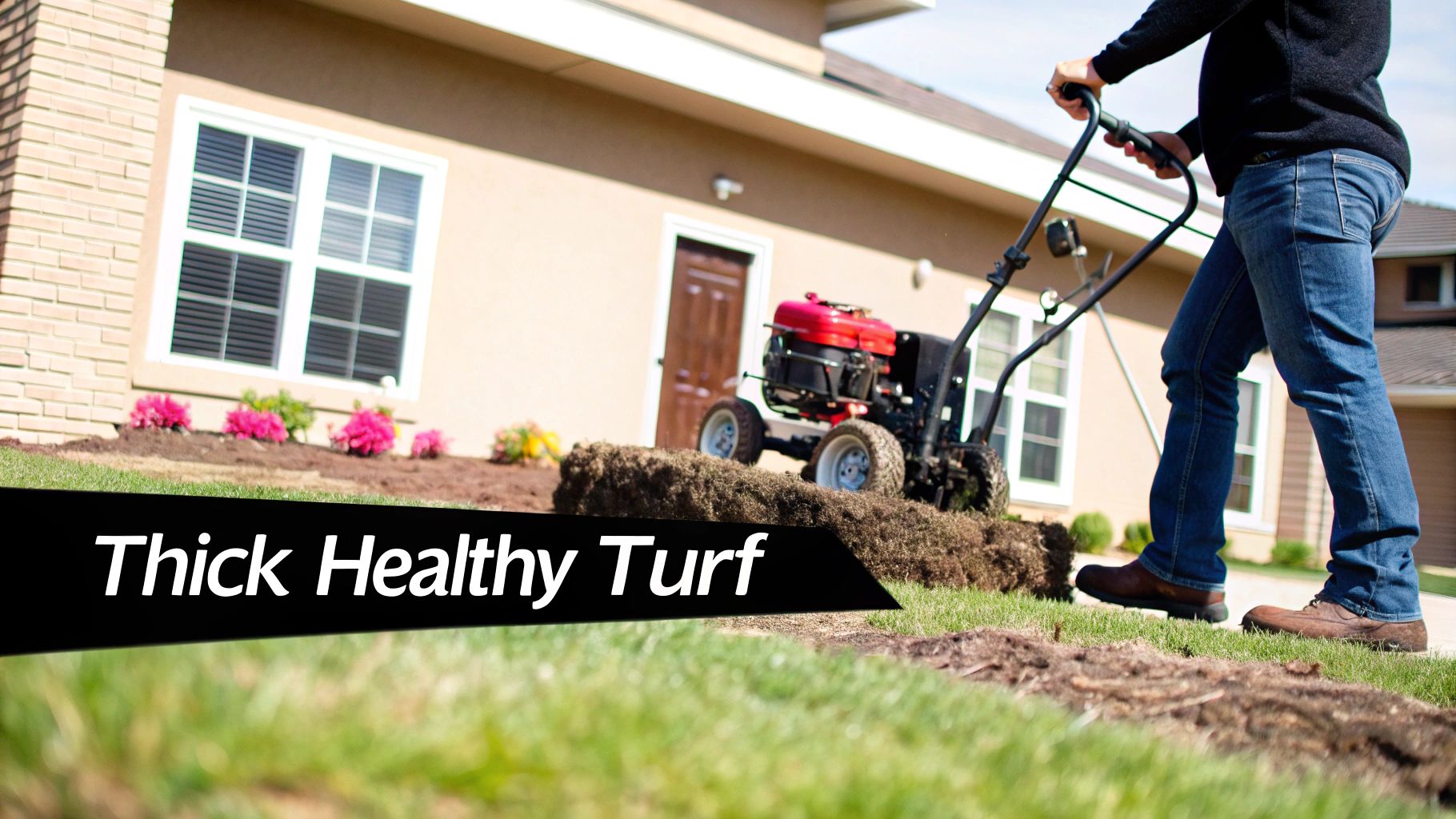
The best defense against weeds isn't found in a spray bottle. It's built from the ground up by fostering a lawn so thick and healthy that weeds simply get crowded out. This is the whole idea behind a natural weed barrier—letting your grass become the hero.
Instead of constantly fighting a losing battle against weeds, this approach tackles the real problem. A thin, stressed-out lawn is basically a welcome mat for crabgrass, clover, and other invaders. By focusing on the fundamentals of turf health, you create a robust, self-sufficient ecosystem in your own yard.
Mowing Taller for a Stronger Turf
One of the easiest and most powerful changes you can make is to simply raise your mower deck. Cutting the grass too short is a classic mistake I see all over North Georgia, and it directly weakens your lawn. Short grass means shallow roots, leaving it vulnerable to our summer heat, drought, and weed pressure.
Mowing taller lets the grass blades act like tiny solar panels, soaking up more sunlight to fuel deep, strong root growth. That dense canopy of grass also throws shade on the soil, which stops weed seeds from ever getting the light they need to sprout. It's like a living, breathing mulch layer.
For the turf types we have here in the Cumming area, this is what you should aim for:
- Bermuda and Zoysia: These warm-season grasses can be kept a little shorter, but you still want to aim for 2 to 2.5 inches. That’s the sweet spot for encouraging density without causing too much thatch.
- Fescue: As a cool-season grass, fescue needs its height to survive our summers. Keep it at 3 to 4 inches to protect the roots from heat stress and shade out opportunistic weeds.
A sharp mower blade is absolutely non-negotiable. A dull blade tears and shreds the grass instead of making a clean cut. Those ragged edges are an open door for disease and stress. Make a point to sharpen your blades at least twice a year.
The Right Way to Water Your Lawn
How you water is just as critical as how you mow. So many homeowners in Milton and Alpharetta make the mistake of watering a little bit every day. This only encourages shallow, weak roots and creates the constantly damp surface that weeds like crabgrass absolutely love.
The goal is deep and infrequent watering. You want to train your grass to send its roots deep into the soil searching for moisture. A lawn with a deep root system is incredibly resilient to drought and can easily outlast any weeds.
As a general rule, your lawn needs about 1 inch of water per week, and that includes any rain we get. Instead of a light daily sprinkle, give it a good, long soak just once or twice a week. This ensures the water gets way down into the soil where the roots need it most.
Aerating and Topdressing Our Georgia Clay
If you live in places like Cumming, Johns Creek, or Milton, you know all about our compacted red clay soil. This dense soil makes it incredibly tough for air, water, and nutrients to get down to the grassroots. The result is a stressed, thinning lawn—which is prime real estate for weeds.
Core aeration is the answer. The process of pulling up small plugs of soil instantly relieves that compaction, opening up channels for everything good to reach the root zone. For most lawns around here, aerating once a year in the spring is a total game-changer.
Following up aeration with topdressing—spreading a thin layer of rich, organic compost over the lawn—is the ultimate one-two punch. The compost falls into the aeration holes, infusing our poor clay with vital organic matter and beneficial microbes.
It’s no surprise that demand for these fundamental lawn services is on the rise. The global landscaping market hit an impressive $312.55 billion in 2023, with North America leading the way. A huge part of that growth comes from homeowners seeking effective, natural weed control solutions that are safer for their families.
At the end of the day, it all comes back to the soil. Building that natural weed barrier means getting the foundation right, and that includes mastering soil pH and other key soil health metrics. A healthy foundation is what supports the proactive, weed-resistant lawn you’re working toward.
Effective Organic and Natural Weed Treatments
Even with the best lawn care practices—mowing high, watering deeply, and keeping the soil aerated—some stubborn weeds are going to pop up. It’s just a fact of life here in North Georgia. This is where having a smart, targeted treatment plan makes all the difference.
For homeowners from Cumming to Dahlonega, the goal isn’t to scorch the earth with harsh chemicals. It's about using safe, effective organic solutions that knock out the invaders without harming your turf, your family, or the local environment. The good news? Natural weed control has come a long way, and you have some seriously powerful options.
The Power of Pre-Emergent Prevention
Honestly, the best way to handle notorious summer annuals like crabgrass is to stop them from ever showing up in the first place. That’s the whole idea behind a pre-emergent herbicide, and in the organic world, our gold standard is corn gluten meal.
This stuff is a natural byproduct of the corn milling process, and it works by preventing germinating seeds from forming roots. When you spread it at the right time—usually in early spring when the soil temperature stays around 55°F—it creates an invisible barrier. As weed seeds like crabgrass and foxtail start to sprout, the corn gluten stops their roots from developing, and the seedling dies off.
Timing is everything. Get it right, and a March application can prevent up to 60% of crabgrass in the first year. The results get even better in the following years as your lawn gets thicker and healthier. If you really want to master this strategy, you can find a deep dive on corn gluten for effective weed control right here.
Tackling Weeds That Have Already Sprouted
So what do you do when weeds have already broken through your lawn's defenses? You’ll need a post-emergent solution to deal with them directly. Organic options work a bit differently than their chemical cousins. Most are non-selective, which means they can damage any plant they touch—including your grass. That’s why careful, targeted application is an absolute must.
Here are a few of the most reliable organic post-emergent treatments:
Horticultural Vinegar: This isn't the stuff you have in your kitchen pantry. Horticultural-grade vinegar has a much higher concentration of acetic acid (20-30% vs. household's 5%). It works by burning the foliage of the weed on contact, causing it to wither away. It’s most effective on young annuals on a hot, sunny day.
Iron-Based Herbicides: Products that use chelated iron are a fantastic selective option for broadleaf weeds. The iron essentially overloads plants like clover and dandelions, causing them to turn black and die within hours. The best part? It won’t harm your grass. In fact, it often gives your lawn a nice, temporary dark green boost.
Boiling Water: For those annoying weeds popping up in driveway cracks or between patio pavers, you can't get simpler or cheaper than this. A careful pour of boiling water will instantly cook the plant, killing it down to the root. Just be extremely careful not to splash your feet or any nearby plants you want to keep.
Remember, precision is the name of the game with these treatments. Use a small, directed sprayer for liquids and hit the weed directly. Do your best to avoid letting the spray drift onto your surrounding turf.
The Underrated Art of Hand-Pulling
In our rush for a quick fix, it's easy to forget the most time-tested method of all: pulling weeds by hand. For a few scattered weeds or a small patch, manually yanking them is often the fastest and most satisfying organic option. It ensures you get the whole plant, root and all, which is critical for tough perennials like dallisgrass and plantain.
The secret is to do it right after a good rain or a deep watering. The soil will be soft and moist, allowing the entire root system to slide out cleanly instead of snapping off and re-sprouting. A simple weeding fork or a dandelion puller can save your back and make the job much easier.
Organic Weed Treatment Methods Compared
Choosing the right tool for the job is crucial for winning the war on weeds organically. Whether you're in Cumming, Alpharetta, or the surrounding areas, not every treatment is right for every situation. This table breaks down the best uses and key considerations for each method to help you build a smarter plan.
| Method | Best For (Weed Type) | Application Timing | Pros | Cons / Cautions |
|---|---|---|---|---|
| Corn Gluten Meal | Annual grassy weeds (Crabgrass, Foxtail) | Early Spring / Early Fall | Prevents weeds before they start; safe for pets and kids; adds nitrogen to soil. | Timing is critical; less effective on established perennial weeds. |
| Horticultural Vinegar | Young, annual broadleaf weeds | Hot, sunny days on active growth | Fast-acting; completely natural; breaks down quickly in soil. | Non-selective (will harm grass); requires careful spot application; can be corrosive. |
| Iron-Based Products | Broadleaf weeds (Clover, Dandelion) | Any time weeds are actively growing | Selective (safe for grass); works quickly; fertilizes the lawn. | May temporarily darken turf; less effective on grassy weeds. |
| Hand-Pulling | Isolated perennial & annual weeds | After rain or watering | Removes entire root system; no cost; immediately effective. | Labor-intensive; not practical for large infestations. |
At the end of the day, a one-two punch is your best bet. A preventative spring application of corn gluten meal combined with diligent spot-treating and hand-pulling will let you manage almost any weed problem that crops up in your North Georgia lawn—all without reaching for a single synthetic chemical.
Is It Time for a Lawn Overhaul or Professional Help?
Sometimes, even with the best organic game plan, you feel like you're losing the war on weeds. If you’ve been fighting the good fight in your Cumming area yard and the weeds are still winning, you've hit a crossroads. There are moments when a lawn is just too far gone for spot treatments and good habits to make a dent. This is when you have to consider a hard reset or calling in the pros.
So, how do you know you've reached that point? It really comes down to an honest, realistic look at your lawn. Take a step back and assess the big picture before you pour more time and money into a strategy that might not be working.
When a Full Lawn Renovation Makes Sense
Think of a full lawn renovation as hitting the "Ctrl+Alt+Delete" button on your yard. It’s a major move that involves killing off everything—grass, weeds, the works—and starting from scratch with new seed or sod. It’s not a decision to take lightly, but for some situations, it's the most effective way to get back on track.
You should seriously consider a renovation if your lawn looks like this:
- Weed Coverage is Over 50%: Take a walk around your property. If more than half of what you see is weeds instead of grass, you’re past the point of no return. The weed competition for water, sun, and nutrients is just too intense for your turf to stand a chance.
- You're Overrun with Tough Weeds: Your lawn is dominated by aggressive perennial weeds that are nearly impossible to remove organically once established. If your yard is a sea of dallisgrass, nutsedge, or wild violet, a renovation might be the only way to truly clear the slate.
- The Soil is the Real Problem: If you're dealing with extreme soil compaction, a thatch layer thicker than two inches, or major grading and drainage issues, killing weeds is just a band-aid. A renovation lets you fix the foundation by bringing in fresh topsoil and prepping the ground correctly.
A renovation is a big project, for sure. But look at it as a long-term investment. By starting fresh on properly prepared soil, you can grow a thick, healthy lawn that naturally crowds out weeds for years to come.
Knowing When to Call in a Pro
Even if your lawn doesn’t need a complete overhaul, there are definite signs that it’s time to hand the reins over to a professional lawn care service. Taking care of your own lawn is rewarding, but there's no substitute for local expertise, commercial-grade equipment, and the consistent timing a pro can provide.
Here’s when picking up the phone is your best move:
- You've Tried It All: You've aerated, mowed high, watered deep, and spot-treated until you're blue in the face, but the weeds just keep coming back. A professional can diagnose underlying problems you might miss, like a hidden nutrient deficiency or a soil pH imbalance that’s letting weeds thrive.
- Life Gets in the Way: Consistency is everything in lawn care. If your busy schedule in a place like Alpharetta or Johns Creek means you’re missing key application windows, a professional service ensures your lawn gets what it needs, right on time.
- The Problem is Spreading Fast: You notice that pesky patch of crabgrass in the corner is suddenly staging a takeover of the whole yard. An expert can identify the invader and contain it quickly before it becomes a full-blown infestation.
Weeds aren't just an eyesore; they inflict massive economic damage, costing the US economy between USD 15-20 billion every year. That number really puts into perspective why homeowners in Cumming and Milton are smart to invest in solutions that protect their property's value. You can find more details on the financial impact of weeds at Research Nester. It can also be helpful to see how the pros operate; learning about effective marketing for landscaping services company gives you a peek behind the curtain at how they connect with and serve homeowners like you.
In the end, whether you opt for a renovation or bring in a professional, the goal is the same: a healthy, beautiful lawn you can actually enjoy. Taking a clear-eyed look at your lawn's condition and your own resources is the first step to making that happen.
Your Top Questions About Organic Weed Control in Georgia
Switching to an organic lawn care program is a big step, and it's natural to have questions. Here in North Georgia, from Cumming all the way up to Dahlonega, homeowners often ask us about what the process really looks like.
Let's break down some of the most common questions we hear from folks looking to create a healthier, greener lawn without the harsh chemicals.
How Long Before I Actually See a Difference?
This is probably the number one question we get, and it's a fair one. The honest answer? It’s a marathon, not a sprint. Unlike synthetic chemicals that give you that quick, often temporary, weed-killing flash, organic methods are all about building a stronger lawn from the soil up.
You’ll definitely see a noticeable drop in weed pressure within the first full growing season. That means fewer new weeds popping up and a much richer color in your grass. But the real transformation—that thick, resilient turf that naturally crowds out weeds—that takes time. You're typically looking at two to three seasons of consistent care to build a truly self-sustaining lawn.
Think of it this way: An organic program creates a healthy ecosystem in your yard. The work you put in upfront pays dividends for years, resulting in a lawn that gets easier to manage and more beautiful each season.
This slow-and-steady improvement is the best sign that the program is working exactly as it should be.
Are "Pet-Safe" Weed Killers Actually Safe?
For families in Alpharetta and Milton, this is a huge deal. The term "pet-safe" on a product label can be a bit tricky. Many of those products still recommend keeping your pets and kids off the grass for a certain amount of time after you spray.
Truly organic and natural options work differently.
- Corn Gluten Meal: This is a food-grade product. It's totally safe for pets and kids to be on the lawn right after application.
- Horticultural Vinegar: The concentrated acetic acid can be an irritant while it's wet, but as soon as it dries on the weed, the area is safe to use again.
- Iron-Based Sprays: These target broadleaf weeds and are generally considered safe for pets once the product has dried, with no lingering risk.
The best rule of thumb is to stick with products made from natural ingredients and always read the label. A professional organic company will always prioritize materials that are safe for your entire family, so your yard can be a true haven.
Can I Really Get Rid of Tough Weeds Like Nutsedge Organically?
Yes, you absolutely can. But it’s going to take patience and persistence, especially with stubborn perennial weeds like nutsedge and dallisgrass. These guys are tough to eliminate even with the strongest chemicals because of their deep, aggressive root systems.
The organic game plan is to weaken these weeds season after season until your healthy turf simply overpowers them.
For a weed like nutsedge, which drives so many homeowners in Johns Creek crazy, you have to be relentless with hand-pulling. The trick is to get them before their underground tubers (or "nutlets") can spread and create more plants. It’s always easiest to pull them and get the nutlet out when the soil is damp.
With dallisgrass, your best bet is to physically dig out the entire clump and its root system. At the same time, focus on aerating and improving your soil’s drainage. This makes your lawn a less welcoming home for these particular weeds. In the end, nothing beats a thick, healthy lawn as your primary defense—it will win the battle for sunlight, water, and nutrients every time.
Are you ready to stop fighting weeds and start building a beautiful, resilient lawn that's safe for your family? The team at Barefoot Organics has the local expertise to create a customized natural lawn care program for your North Georgia property. We'll help you achieve the healthy, green lawn you've always wanted. Get your free online quote today!