

A pristine, green lawn is a point of pride for any homeowner in Cumming, GA, but achieving that perfect look often feels like an uphill battle against our unique North Georgia climate. The intense summer heat, high humidity, and heavy red Georgia clay soil create the perfect storm for a variety of lawn diseases. One day your Bermuda or fescue looks healthy, and the next, you’re spotting mysterious brown circles, orange dust, or slimy patches. These are classic signs of turf disease, a problem many Forsyth County residents face each year, from new construction neighborhoods to established homes.
If your lawn looks sick, don't wait for the problem to spread. Call Barefoot Organics today for a free lawn evaluation in Cumming!
Understanding the different types of lawn fungus is the first step toward effective treatment and prevention. Lawn diseases are not a one-size-fits-all problem; what works for Brown Patch won't touch Dollar Spot. Misdiagnosing the issue can lead to wasted time, money, and further damage to your turf, whether you're in a growing subdivision in Cumming or an established community in Johns Creek. Before diving into specific types of lawn fungus, it's helpful to understand common plant pests and diseases that can affect your green spaces.
This guide is your local resource for identifying and managing the most common lawn fungi found in the North Atlanta area. We'll break down eight specific diseases, showing you what to look for, what causes them, and how to treat them using methods that are safe for your family and pets. We'll cover everything from Brown Patch and Dollar Spot to less common but equally damaging issues like Pythium Blight and Take-All Patch, providing actionable advice tailored for our challenging Georgia environment.
Why This Matters for Cumming Homeowners
Fungus isn't just a cosmetic issue; it's a direct threat to your lawn's health and your home's curb appeal, especially with local HOA standards in many Forsyth County communities. The warm, humid air that settles over Cumming, Suwanee, and Alpharetta from May to September is a breeding ground for these diseases. Heavy spring rains followed by 90-degree summer heat stress out Fescue and Bermuda lawns alike, making them vulnerable. A minor Dollar Spot problem can quickly escalate, leaving you with large dead patches right before you host a family barbecue.
At Barefoot Organics, we don't just spray and leave. We focus on building your soil's health to create a lawn that naturally resists these fungal invaders. Our organic-based lawn treatment programs are designed specifically for the challenges of Georgia clay soil and our local climate, ensuring your lawn stays healthy year-round.
1. Dollar Spot (Sclerotinia homoeocarpa)
Among the various types of lawn fungus that plague Forsyth County, Dollar Spot is one of the most common and recognizable. Homeowners in Cumming, Alpharetta, and Johns Creek often notice its signature marks: small, straw-colored, circular patches that are typically the size of a silver dollar. While initially small, these spots can merge into large, irregular, sunken areas of dead grass if left untreated, severely damaging your lawn's appearance.
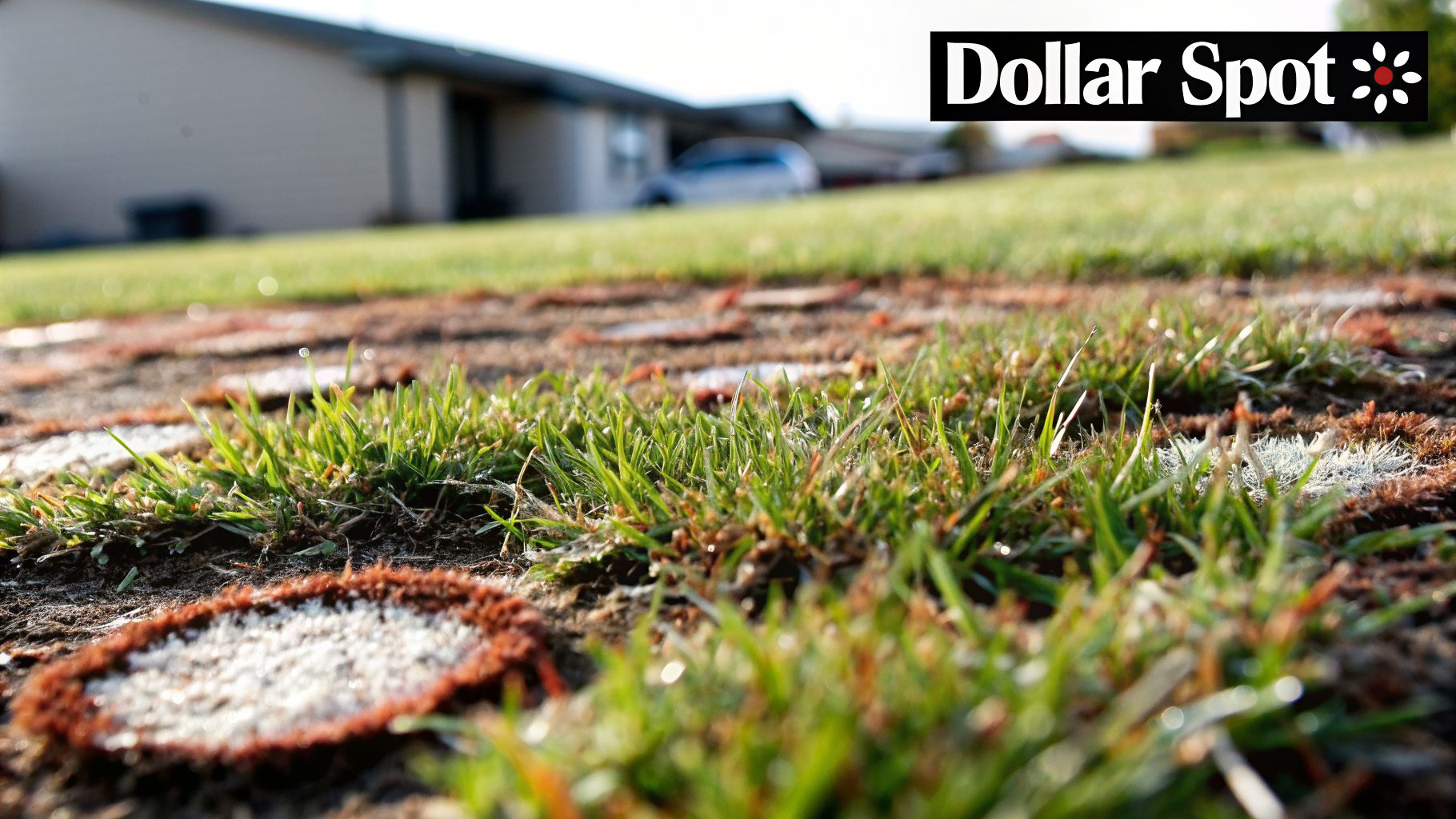
This disease thrives in the high humidity and fluctuating temperatures common in North Georgia during late spring and early fall. Mornings with heavy dew followed by warm, dry afternoons create the perfect breeding ground for the Sclerotinia homoeocarpa fungus. Lawns with heavy thatch, compacted clay soil, and improper watering schedules are particularly vulnerable.
Identifying and Managing Dollar Spot in Your Cumming Lawn
Early detection is key to controlling Dollar Spot. Look for a cobweb-like mycelium (the fungal body) on the grass blades in the early morning when dew is present. As the sun dries the grass, the mycelium disappears, leaving behind the distinct bleached-tan lesions on the blades.
To effectively manage Dollar Spot and protect your Cumming lawn, focus on correcting the environmental conditions that allow it to flourish:
- Proper Watering: Water deeply but infrequently, and always in the early morning. This allows the grass blades to dry completely during the day, reducing the "leaf wetness" period the fungus needs to grow. Avoid evening watering at all costs.
- Improve Airflow: Compacted Georgia clay soil restricts air movement. Annual core aeration is essential to relieve compaction and allow the soil to breathe, which helps combat fungal growth. This is a critical step for lawns in dense Cumming subdivisions.
- Thatch Management: A thick thatch layer (over ½ inch) holds moisture against the grass stems and provides a home for dormant fungal spores. Dethatching in the fall can significantly reduce your risk.
- Fertilization: Dollar Spot often attacks lawns that are deficient in nitrogen. A balanced, organic-based fertilization program from Barefoot Organics ensures your turf has the nutrients it needs to fight off disease pressure naturally.
If you suspect an infection, it's important to act quickly. For many homeowners, finding the best treatment for grass fungus that is also safe for children and pets is a top priority. Our targeted, pet-safe treatments and soil health programs are designed to suppress active disease and strengthen your lawn against future outbreaks.
2. Brown Patch (Thanatephorus cucumeris)
Of all the diseases that can strike a North Georgia lawn, Brown Patch is one of the most destructive and fast-moving. Caused by the fungus Thanatephorus cucumeris, this warm-season ailment creates large, roughly circular brown or yellowish patches in the turf. Homeowners in Cumming, Suwanee, and Milton often see these patches expand rapidly during the humid summer months, sometimes growing to 3 feet or more in diameter and leaving behind significant damage.
Brown Patch thrives from June through September when Forsyth County experiences high humidity and warm nighttime temperatures that remain above 70°F. Lush, heavily fertilized fescue lawns are particularly susceptible, as the excess nitrogen growth fuels the fungus. The disease spreads through infected grass blades, soil, and even water, making it a persistent threat during Georgia's hot, muggy summers.
Identifying and Managing Brown Patch in Forsyth County
Early identification of Brown Patch is critical to minimizing its spread. A key sign is the presence of a "smoke ring" – a dark, grayish-purple border on the outer edge of the patch, which is most visible in the early morning when dew is on the grass. The grass blades within the patch will appear water-soaked and dark at first, quickly fading to a light brown as they die and dry out.
To effectively manage Brown Patch and keep your Cumming lawn healthy, you must address the specific environmental factors that encourage its growth:
- Mindful Watering: Water deeply but infrequently, and only in the early morning between 4 a.m. and 10 a.m. This practice ensures grass blades can dry completely before evening, robbing the fungus of the prolonged moisture it needs to infect the turf.
- Improve Drainage and Airflow: Heavy Georgia clay soil is notorious for poor drainage and compaction. Annual core aeration is essential to break up compacted soil, allowing air and water to penetrate the root zone and reducing surface moisture.
- Fertilization Timing: Avoid applying high-nitrogen fertilizers during the hot summer months. This can create excessive, tender growth that is highly vulnerable to Brown Patch. A balanced, organic-based program from Barefoot Organics provides steady, healthy growth without feeding the disease.
- Thatch Control: A thick thatch layer acts like a sponge, holding moisture and providing a perfect habitat for the fungus to survive. Dethatching in the fall will remove this disease-harboring material.
If an infection takes hold, quick action is necessary to prevent widespread damage. Many homeowners are searching for information on how to treat lawn fungus naturally to protect their families and the local environment. At Barefoot Organics, we utilize targeted, organic-based products and soil health strategies to suppress active Brown Patch and strengthen your lawn's natural defenses against future outbreaks.
3. Pythium Blight (Pythium species)
Of all the types of lawn fungus that can strike a North Georgia lawn, Pythium Blight is one of the most destructive and fast-moving. Often called "grease spot" or "cottony blight," this water mold disease can devastate large sections of turf in just a few days under the right conditions. Homeowners in Cumming and surrounding areas like Dawsonville often see it appear suddenly during periods of intense summer heat, high humidity, and heavy rainfall—a common recipe for Forsyth County summers.
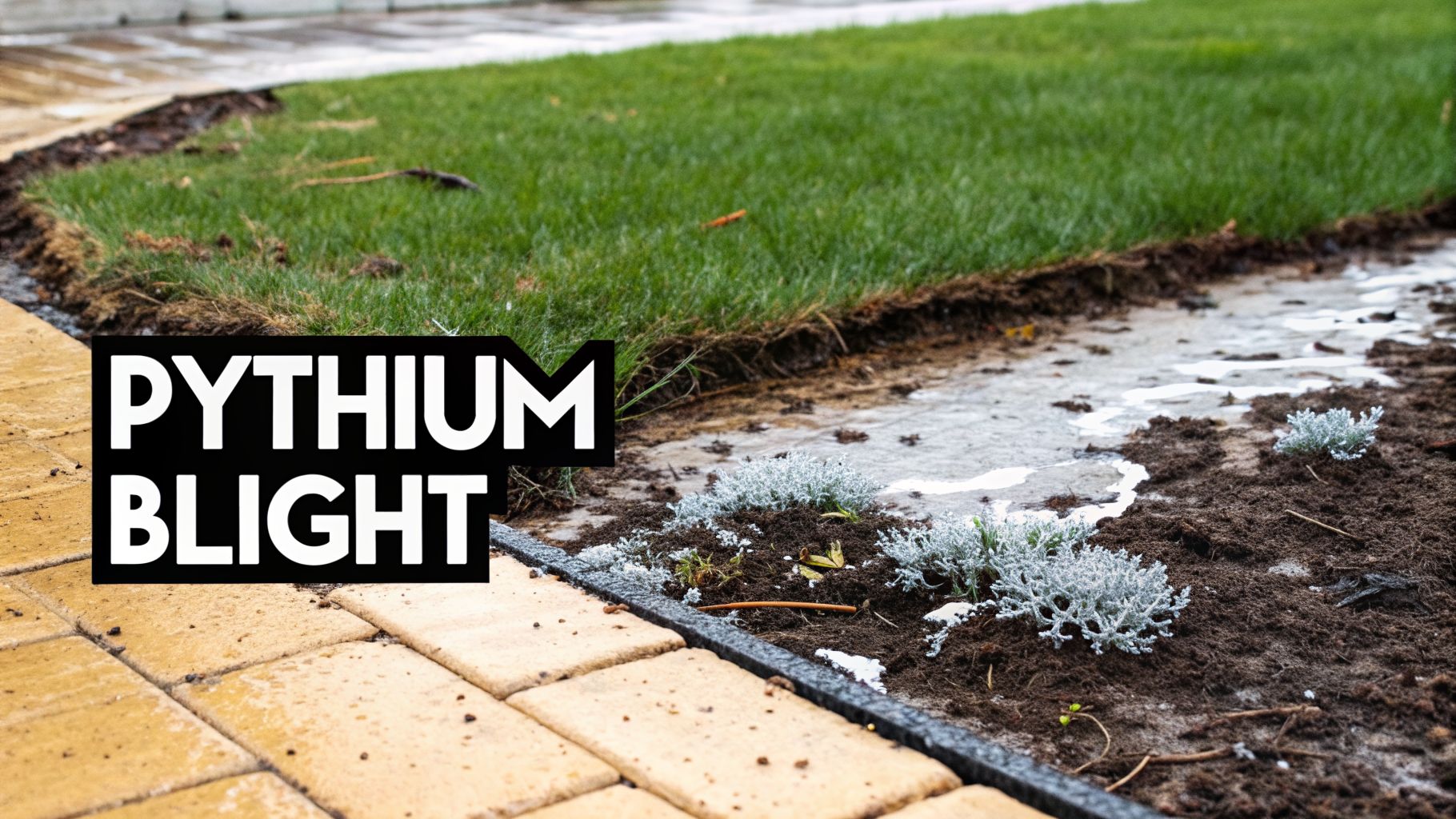
This disease is caused by Pythium species, which thrive in overly wet, poorly drained soil when temperatures are between 80-95°F. Lawns with compacted Georgia clay soil, low-lying areas that collect water, and properties with excessive thatch are prime targets. The rapid progression of Pythium Blight makes it a serious threat, capable of turning lush green grass into a slimy, matted, brown mess almost overnight.
Identifying and Managing Pythium Blight in a Cumming Climate
Catching Pythium Blight early is difficult but crucial. The first signs are often small, circular spots (up to 6 inches) that appear dark and water-soaked. In the early morning, you might see a white, cottony mycelium on the affected grass, which gives it its "cottony blight" nickname. As the grass dies, it turns from greasy-looking to straw-colored and feels matted. The disease spreads along drainage patterns, so you may see streaks of dead grass following the flow of water.
Preventing the conditions that favor Pythium is the best defense for your Cumming lawn:
- Improve Drainage: This is non-negotiable for fighting Pythium in our clay-heavy region. Annual core aeration is essential to break up compaction and allow water to penetrate the soil instead of pooling on the surface.
- Water Wisely: Never overwater your lawn. Water deeply but only when the grass shows signs of stress, and always in the early morning. This gives the blades plenty of time to dry before evening, reducing the prolonged leaf wetness the disease needs.
- Enhance Air Circulation: Prune low-hanging tree branches and overgrown shrubs to improve airflow across your lawn. Stagnant, humid air is a major contributor to fungal outbreaks in dense Cumming subdivisions.
- Manage Thatch: Dethatch your lawn if the thatch layer exceeds ½ inch. A thick thatch layer acts like a sponge, holding moisture against the grass and creating an ideal environment for water molds.
- Avoid Spreading Spores: Do not walk on or mow the lawn when it is wet, especially if you suspect an infection. The fungal spores are easily spread by foot traffic and equipment.
Because Pythium Blight moves so quickly, professional intervention is often necessary. A properly timed organic phosphite-based fungicide can act as a preventive measure. Aligning these treatments with your overall lawn care plan is key, and our lawn care schedule template can help you understand the seasonal needs of your North Georgia turf. At Barefoot Organics, we focus on improving soil health to build a lawn that is naturally resilient to disease.
Concerned about fungus in your lawn? Contact Barefoot Organics for a professional diagnosis and a free service estimate.
4. Leaf Spot and Melting Out (Bipolaris and Drechslera species)
A deceptive and destructive problem for many lawns, Leaf Spot and its more severe stage, Melting Out, are among the most persistent types of lawn fungus in North Georgia. Caused by fungi from the Bipolaris and Drechslera genera, this disease often starts subtly during the cool, wet spring and fall seasons common to Forsyth County. Homeowners in Cumming and Dawsonville might first notice small, dark purple or brown spots on their grass blades, which can easily be mistaken for drought stress.
As the disease progresses into the "melting out" phase, the fungus moves from the leaves down into the crown and roots of the grass plant. This causes entire patches of the lawn to thin out, yellow, and die, creating a melted or rotted appearance. Heavy thatch, excessive moisture from evening watering, and compacted clay soil create the ideal environment for this disease to take over lawns from Suwanee to Canton.
Identifying and Managing Leaf Spot in Cumming
Catching Leaf Spot early is crucial to prevent it from "melting out" your entire lawn. Look for distinct, oblong lesions on the grass blades. These spots typically have a dark brown or purplish border with a tan or straw-colored center. As these lesions multiply, the entire blade will wither and die back.
To stop the progression of Leaf Spot and protect your Cumming-area lawn, you must address the underlying cultural practices that favor its growth:
- Proper Watering: Water your lawn deeply and only in the early morning hours. This gives the grass blades ample time to dry under the Georgia sun, minimizing the prolonged leaf wetness the fungus requires.
- Thatch and Aeration: A thick thatch layer and compacted soil are major contributors. Annual core aeration is a must for Cumming's clay soil to improve air circulation and drainage. Power raking (dethatching) removes the spongy layer where fungal spores hide.
- Mowing Height: Avoid mowing your grass too short. Scalping the lawn puts immense stress on the turf, making it far more susceptible to infection. Mowing at the correct height for your grass type encourages a stronger, more resilient plant.
- Fertilization: Be careful with nitrogen, especially in the spring. Applying too much nitrogen can cause a flush of tender new growth that is highly vulnerable to Leaf Spot. A balanced, organic-based program provides steady, controlled growth.
- Sanitation: When the disease is active, bag your grass clippings to avoid spreading the spores across the lawn. Also, avoid walking on or mowing the grass when it's wet to prevent transferring the fungus.
If you see the tell-tale signs, proactive measures are needed. Our pet-safe, organic-based lawn treatments are designed to manage active disease and, more importantly, improve soil health to build a lawn that naturally resists these common fungal invaders.
5. Rust (Puccinia species)
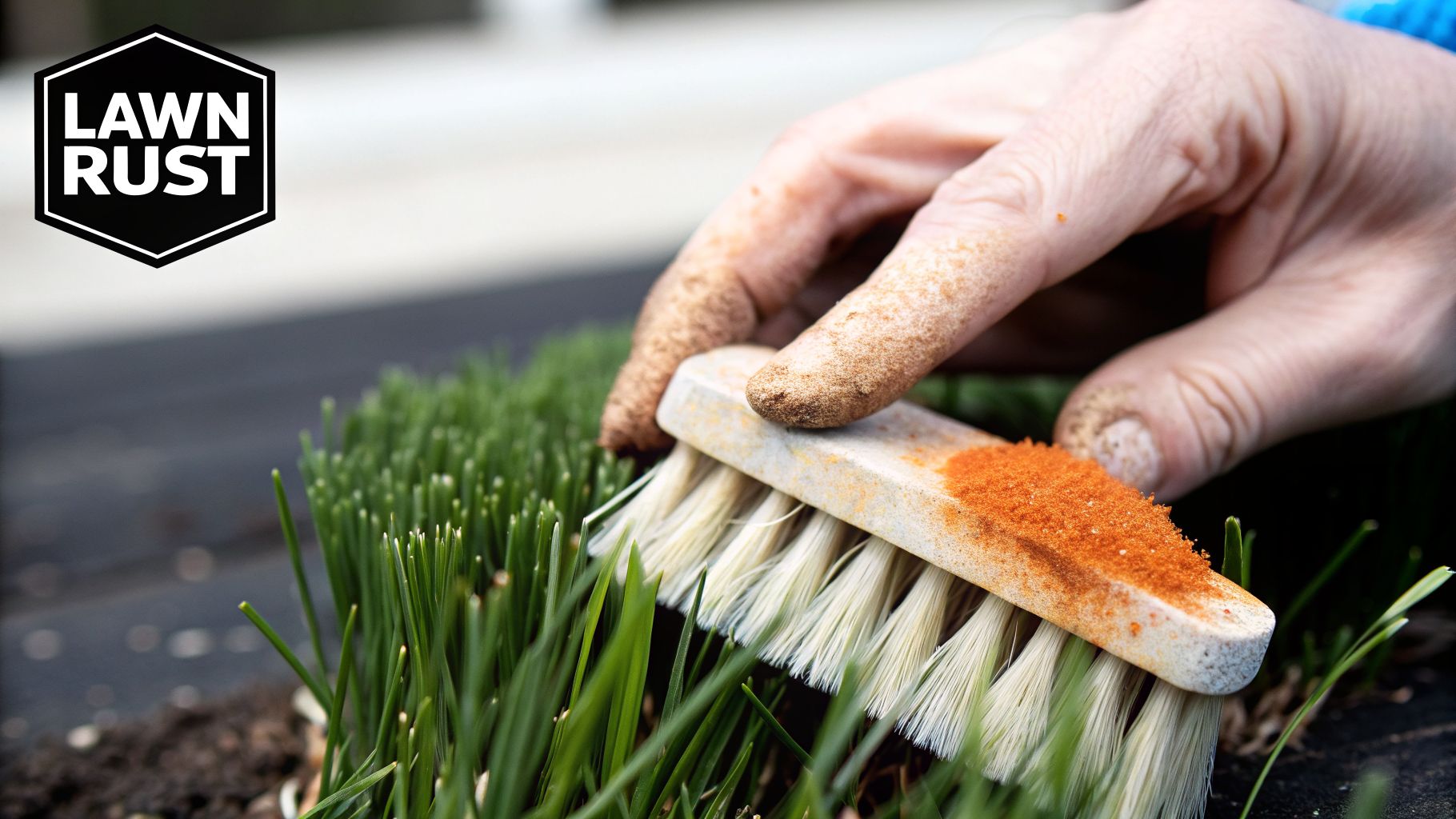
If you've ever walked across your lawn and noticed a fine, powdery orange or reddish-brown dust coating your shoes, you've likely encountered Rust fungus. Among the different types of lawn fungus we see in Forsyth County, Rust is easily identified by this colorful spore dust that appears on grass blades. While it might look alarming, this disease is generally less destructive than Brown Patch, but it can still weaken your turf, making it more susceptible to other stresses common in North Georgia.
Rust, caused by Puccinia species, thrives in the cool, moist conditions of spring and fall, particularly during periods of slow grass growth. It’s a frequent issue on fescue lawns in Cumming, Suwanee, and Milton that are stressed from low nitrogen, drought, or shade. The spores are easily spread by wind, water, and foot traffic, which is why you'll often see the tell-tale orange powder on shoes, mower wheels, and pets' paws.
Identifying and Managing Rust in Cumming
To confirm a Rust infection, gently rub a few grass blades between your fingers. If an orange, yellow, or reddish powder comes off, you're dealing with this specific lawn fungus. The blades themselves may also appear yellowed and thin as the infection progresses.
Controlling Rust in your Cumming lawn involves altering the conditions that favor its growth and strengthening your grass to outgrow the damage:
- Balanced Fertilization: Rust often indicates a nitrogen deficiency. Implementing a proper, organic-based fertilization schedule provides your lawn with the nutrients needed for vigorous growth, allowing it to grow faster than the fungus can damage it. Be careful not to over-apply nitrogen, as that can lead to other fungal issues.
- Proper Watering: Like most fungi, Rust needs moisture to spread. Water deeply in the early morning to ensure the grass blades dry completely during the day. Avoid frequent, light sprinklings and evening watering, which prolong leaf wetness.
- Mowing and Airflow: Mow your lawn regularly at the correct height, bagging the clippings if the infection is heavy to reduce spore spread. Annual core aeration is crucial for Cumming's clay soil, improving air circulation and water penetration to create a less hospitable environment for fungal growth.
- Increase Sunlight: If possible, trim overhanging tree branches or thin out dense shrubs to allow more sunlight to reach the turf. This helps dry the grass faster and reduces the humidity that Rust loves.
While Rust often resolves on its own with improved cultural practices and a return to warmer, drier weather, a persistent infection can weaken your lawn ahead of summer heat. If your lawn is struggling to recover, the team at Barefoot Organics can provide targeted, pet-safe treatments to suppress the disease and a soil health program to build your lawn's natural defenses against all types of lawn fungus.
6. Anthracnose (Colletotrichum species)
Anthracnose is a stress-related disease that can cause serious damage to lawns across Forsyth County, especially during the hot, humid summer months. Caused by the Colletotrichum fungus, this disease attacks both the blades (foliar blight) and the base of the plant (basal rot). Homeowners in Cumming and Johns Creek may notice irregular patches of grass turning yellow, then reddish-brown, before dying off completely. Because it thrives on stressed turf, it's a major concern for fescue lawns struggling with Georgia's summer heat and compacted clay soil.
The fungus is most active during warm, wet periods. A poorly maintained lawn suffering from compaction, low fertility, drought stress, or improper mowing provides the perfect environment for an outbreak. What starts as thinning grass can quickly progress to large, dead areas as the fungus attacks the crowns and roots, making recovery difficult. It is one of the more destructive types of lawn fungus when conditions are right.
Identifying and Managing Anthracnose in Cumming
Early signs of Anthracnose can be subtle. Look for yellowing or reddish-brown lesions on individual grass blades. A key diagnostic feature is the presence of tiny, black, spiny structures called acervuli, which can be seen with a magnifying glass on dead plant tissue. As the disease advances to basal rot, the base of the plant will turn dark and rotten, and the shoots will pull out easily.
Effectively managing Anthracnose in your Cumming lawn means reducing plant stress and improving overall turf health:
- Proper Fertilization: Lawns deficient in nutrients, particularly nitrogen and potassium, are highly susceptible. A balanced, organic-based fertilizer program provides the strength your grass needs to resist disease pressure from Anthracnose.
- Core Aeration: Heavy Georgia clay soil is prone to compaction, which stresses grass roots. Annual core aeration is vital to relieve this pressure, improving drainage and oxygen flow to the root zone, a critical step for lawns in dense Cumming subdivisions.
- Correct Watering: Water deeply and only in the early morning to allow grass blades to dry during the day. Overwatering or evening watering creates the extended leaf wetness period that Colletotrichum needs to infect the plant.
- Mowing Height: Avoid mowing too short, which scalps the lawn and induces stress. Raise your mower height, especially during the hot summer months, to help the grass cope with heat and drought.
- Overseeding: For thin, damaged areas, overseeding with certified, disease-resistant grass varieties in the fall can help build a more resilient turf that is less prone to future infections.
7. Red Thread (Laetisaria fucosa)
If you’ve noticed patches of your lawn turning pinkish-red, you're likely dealing with Red Thread, one of the most distinct types of lawn fungus. Homeowners in Cumming, Alpharetta, and Suwanee often see this disease emerge during the cool, wet weather of spring and fall. Named for its signature red, thread-like strands (mycelium) that bind grass blades together, it can give affected turf a ragged, discolored appearance.
This disease thrives in the cool, damp conditions common in North Georgia, especially when temperatures are between 50-70°F. The Laetisaria fucosa fungus is often a sign of undernourished turf, specifically a deficiency in nitrogen. Lawns in Forsyth County with heavy thatch, poor drainage, and prolonged leaf wetness create the perfect environment for Red Thread to take hold, though it’s typically more of a cosmetic issue than a fatal one for your grass.
Identifying and Managing Red Thread in Cumming
The easiest time to spot Red Thread is in the early morning when dew is heavy. The reddish-pink fungal threads will be clearly visible, often forming small, irregular patches from a few inches to a couple of feet in diameter. As the day warms and the grass dries, the threads may become less noticeable, leaving behind frayed, tan grass blades.
To effectively manage Red Thread and keep your Cumming lawn looking its best, you must address the root causes that encourage its growth:
- Proper Fertilization: Because Red Thread is strongly linked to low nitrogen, a balanced fertilization program is your first line of defense. Applying a quality, organic-based fertilizer in the spring and fall provides the essential nutrients your lawn needs to outgrow the fungus and maintain its vigor.
- Improve Air Circulation: Compacted Georgia clay soil is a major contributor to fungal issues. Annual core aeration is vital for lawns in dense Cumming subdivisions, as it breaks up compaction and allows air and water to reach the root zone, creating a less favorable environment for disease.
- Watering Wisely: Stick to a deep and infrequent watering schedule, always in the early morning. This ensures the grass blades have all day to dry. Evening watering is a primary cause of prolonged leaf wetness in North Georgia and should be avoided.
- Thatch and Mowing: Keep your thatch layer under ½ inch to prevent moisture from being trapped against the grass. Mow regularly at the correct height for your grass type (fescue or Bermuda) to promote good airflow and remove affected leaf tips.
While Red Thread often clears up once growing conditions improve, a severe or persistent case can weaken your lawn. At Barefoot Organics, our organic-based lawn care programs are designed to build strong, resilient turf that is naturally more resistant to these types of lawn fungus. By improving soil health and providing proper nutrition, we address the cause, not just the symptom.
8. Take-All Patch (Gaeumannomyces graminis)
Of all the types of lawn fungus that can damage a North Georgia lawn, Take-All Patch is one of the most destructive root-rotting diseases. It attacks the root systems of warm-season grasses like Bermudagrass and Zoysiagrass, causing large, irregular patches of dead or dying turf. Homeowners in Cumming, Suwanee, and Milton often see its effects in late spring and early summer as grass fails to green up, revealing extensive, hidden damage from the Gaeumannomyces graminis fungus.
This disease thrives in moist, compacted, and often acidic soil conditions, which are common issues in many Forsyth County yards with dense clay soil. The fungus attacks the stolons and roots, effectively choking off the plant's ability to absorb water and nutrients. The damage develops slowly underground over the cooler months before becoming visible as large, bleached-out areas that can be very difficult to recover.
Identifying and Managing Take-All Patch in Cumming
Early signs of Take-All Patch can be subtle, appearing as yellowing or thinning turf in circular or irregular patterns. As the disease progresses, the roots of affected grass become dark and rotted. The turf can often be easily pulled up from the soil, revealing the extent of the root destruction. In many Cumming lawns, weeds will quickly invade these dead patches.
Because Take-All Patch is a root disease, surface-level fungicide applications are often less effective. The best approach is to improve the soil environment to make it less hospitable for the fungus.
- Test and Adjust Soil pH: This disease favors acidic soil. A soil test is the first step. If your lawn's pH is below 6.5, applying lime can help raise it to the optimal 6.5-7.0 range, creating a less favorable environment for the fungus.
- Improve Drainage and Aeration: Annual core aeration is critical for breaking up compacted Georgia clay soil. This service improves water drainage and airflow to the root zone, which is essential for managing root diseases in communities from Johns Creek to Dawsonville.
- Fertilization and Soil Health: Avoid high-nitrogen and acidifying fertilizers. Instead, focus on a balanced fertilization program and applying organic soil amendments. These improve soil structure and can help suppress the fungal activity.
- Proper Watering: Water your lawn deeply but infrequently in the early morning. This prevents the soil from becoming consistently waterlogged, which is a key trigger for Take-All Patch development.
Controlling this stubborn disease requires a soil-first approach. For homeowners looking for a reliable and pet-safe solution, the programs at Barefoot Organics focus on correcting the underlying soil imbalances. Our treatments and aeration services are designed to build a stronger, more resilient lawn that can naturally resist devastating diseases like Take-All Patch.
Why Choose Barefoot Organics in Cumming?
When you’re facing lawn problems, you need a local expert, not a national chain that uses a one-size-fits-all approach. We are a locally owned company that lives and works right here in Forsyth County. We understand the specific challenges our neighbors in Cumming, Alpharetta, Buford, and Canton face every season.
Here’s what sets us apart:
- Local Expertise: We know Georgia clay. We know how the humidity affects Fescue. We know when Brown Patch will hit and how to stop it. Our programs are built for North Georgia lawns, period.
- Organic-Based & Pet-Safe: We believe in creating beautiful lawns without harsh, unnecessary chemicals. Our treatments are designed to be effective while keeping your kids and pets safe.
- Focus on Soil Health: We don’t just treat symptoms. Our entire approach is built on improving your soil. Healthier soil means a stronger, more resilient lawn that can fight off fungus, weeds, and drought on its own.
- Honest, Straightforward Service: We’ll give you a clear diagnosis and a practical plan. No aggressive sales tactics, just honest advice from a local lawn professional.
Frequently Asked Questions about Lawn Fungus in Cumming, GA
Q: What is the most common lawn fungus in Cumming, GA?
A: In Cumming and Forsyth County, Brown Patch and Dollar Spot are the two most common and damaging types of lawn fungus. Brown Patch thrives in the high heat and humidity of our summers, creating large brown circles, while Dollar Spot appears in spring and fall, leaving small, silver-dollar-sized dead spots on lawns with poor nutrition.
Q: When is the best time to apply fungicide to my lawn in Cumming?
A: The best time for fungicide in Cumming is often preventative, applied in late spring before the summer heat and humidity trigger diseases like Brown Patch. For active fungus, applications should be made immediately upon diagnosis. Timing is critical and depends on the specific disease, so a professional evaluation is always recommended for North Georgia lawns.
Q: Can I get rid of lawn fungus without chemicals?
A: Yes, you can significantly reduce lawn fungus by improving cultural practices. Core aeration to combat our Georgia clay soil, watering only in the early morning, and following a balanced, organic-based fertilization plan are crucial. These steps make your lawn less hospitable to fungus and are the foundation of our pet-safe lawn care programs near you.
Q: Does my Bermuda lawn get different fungus than my neighbor's Fescue lawn in Cumming?
A: Yes, grass type matters. Fescue lawns in Cumming are highly susceptible to Brown Patch in the summer heat. Bermuda and Zoysia lawns, while more heat-tolerant, are common targets for Dollar Spot and the root-rotting disease Take-All Patch. We tailor our treatments based on your specific grass type and its vulnerabilities.
Q: Why does my lawn get fungus every year?
A: Recurring fungus in Forsyth County is almost always due to underlying environmental issues. Compacted red clay soil, a thick thatch layer, improper watering (especially at night), and poor air circulation create the perfect breeding ground. Until these core soil and cultural problems are fixed, the fungus will likely return each season.
Q: How can I tell if I have fungus or just dead spots from my dog?
A: Dog spots are typically dark green on the edges with a dead, straw-colored center caused by high nitrogen in urine. Fungal patches, like Brown Patch, often have a distinct "smoke ring" border and a more uniform dead or dying appearance. Dollar Spot creates many small, bleached-tan circles. If you're unsure, it's best to have a professional diagnose the issue.
Don't let lawn fungus win the battle for your turf this season. The experts at Barefoot Organics specialize in identifying and treating the specific types of lawn fungus that plague Forsyth County lawns, using customized, organic-based programs that are safe for your family and pets. Request your free lawn evaluation today and let us build a defense plan for your Cumming home.