

If you're dealing with fleas in your yard, the real fight isn't with the adult fleas you can see. It's about breaking their life cycle right where it starts: in your soil. Winning this battle means taking a holistic approach, creating an environment where fleas simply can't survive, all while sticking to pet-safe methods instead of reaching for harsh chemicals.
It’s all about getting to the source of the infestation, not just chasing symptoms.
Understanding North Georgia's Flea Problem
Anyone living in Cumming, Alpharetta, or really anywhere across Forsyth County knows how quickly fleas can take over. Our warm, humid climate is basically a perfect flea paradise, allowing a few stragglers to explode into a full-blown infestation before you even know what's happening.
And here's the thing most people miss: the problem isn't your pet. Fleas just use your dog or cat as a mobile buffet. After feeding, they hop right off to lay eggs in the surrounding environment—which means your lawn, your garden beds, and your mulch.
Why Your Yard is a Prime Target
Think about the typical yard here in Milton or Johns Creek. We have plenty of shade and moisture, which are the exact ingredients fleas need to thrive and reproduce. They're not out sunbathing in the middle of the lawn; they're hiding out in protected spots.
Here are a few classic flea hotspots in North Georgia landscapes:
- Shady Spots Under Decks: That dark, cool, and often damp soil beneath your deck or porch? It’s a five-star hotel for developing flea larvae.
- Overgrown Shrubbery: Dense bushes, ivy, and other ground covers are notorious for trapping moisture and blocking the sun, creating an ideal breeding ground.
- Piles of Leaf Litter: That corner of the yard where leaves and pine straw pile up is a perfect nursery for flea eggs and pupae waiting to hatch.
Here's why just treating your pet never seems to work. An adult female flea can lay up to 50 eggs per day. But the really shocking number is that 95% of the total flea population—all the eggs, larvae, and pupae—lives in your yard, not on your pet. This is exactly why a yard-focused strategy is the only way to break the cycle for good.
Treating your yard for fleas naturally does more than just fight the pests you see today. It wipes out the next generation before it even has a chance to hatch. This is the only truly sustainable path to long-term flea control.
This is where natural treatments really shine. They go after these hidden life stages in the soil without spraying harsh chemicals where your kids and pets play. By understanding the flea life cycle and hitting it where it’s weakest, you can finally reclaim your yard and protect your family from these frustrating pests.
Using Beneficial Nematodes for Real, Lasting Flea Control
When you’re serious about getting rid of fleas naturally and for good, it's time to bring in the secret weapon of organic lawn care: beneficial nematodes. Forget what you think you know about "worms"—these are microscopic powerhouses that live in the soil. Think of them as a tiny, targeted army that actively hunts down and destroys flea larvae and pupae right where they’re hiding.
Most sprays only deal with the adult fleas you can see, which is like bailing water out of a boat without plugging the hole. Nematodes go straight to the source, attacking the problem before it can jump onto your pets and into your home. This makes them the cornerstone of any effective natural flea treatment, especially in the damp, shady soil we see all over yards from Cumming to Dahlonega.
This is the flea life cycle. Notice how much of it happens out of sight, in the soil.
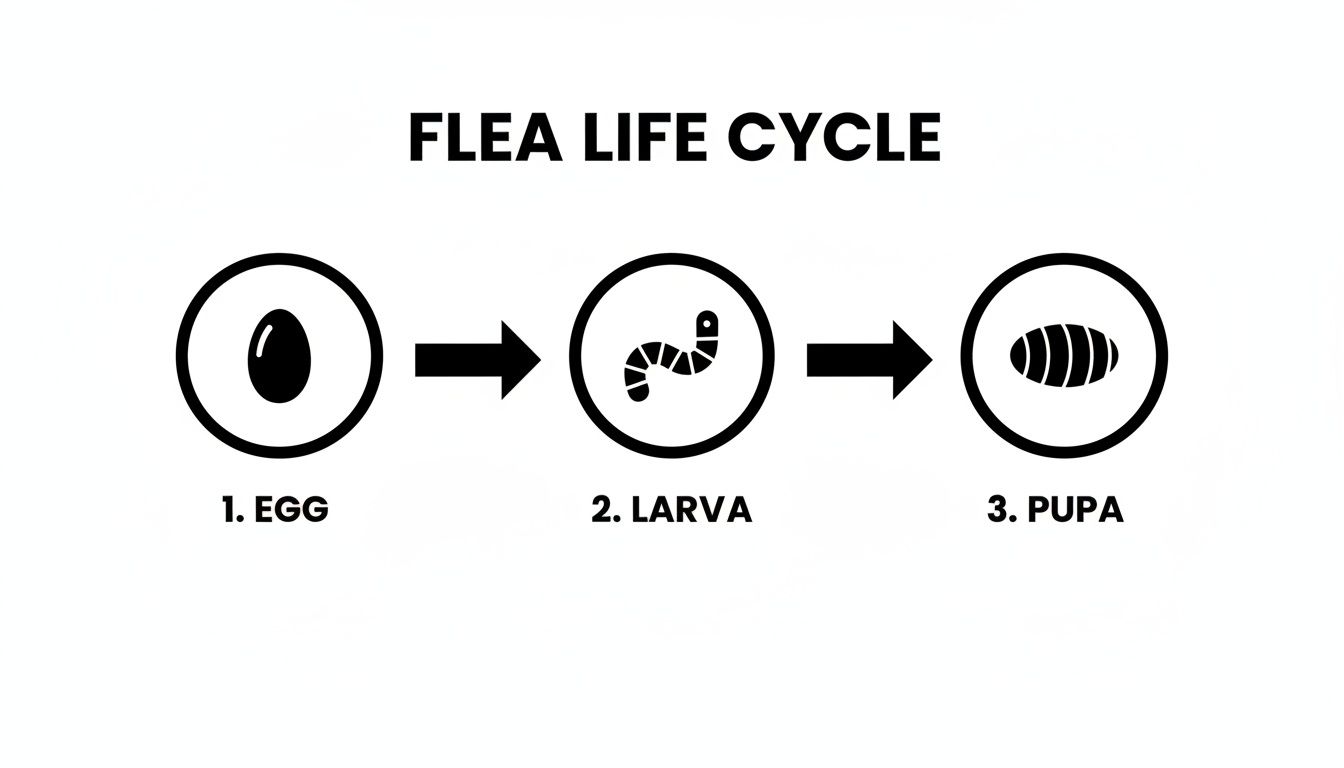
This is exactly why just spraying for adult fleas feels like a losing battle. The vast majority of the flea population—the eggs, larvae, and pupae—are developing in your lawn. That’s the stage nematodes are built to eliminate.
How These Tiny Warriors Win the War on Fleas
Beneficial nematodes are predators, plain and simple. Once you apply them to your lawn, they get to work seeking out flea larvae. When they find one, they enter its body and release a specific bacteria that’s harmless to everything else but lethal to the flea, killing it from the inside out within 24 to 48 hours.
But here’s the best part: the nematodes reproduce inside the dead flea, releasing a whole new generation of flea-hunters back into your soil. It’s a self-sustaining cycle of pest control that keeps working for you long after you’ve put the sprayer away.
The real beauty of using nematodes is their safety. They are completely harmless to people, pets, plants, and beneficial insects like bees and earthworms. They are a targeted solution that only affects specific soil-dwelling pests.
And they are remarkably effective. Did you know that a healthy population of beneficial nematodes can wipe out 70% to 100% of fleas in your yard by stopping them from ever becoming biting adults? This isn't just a guess; it's a proven organic solution that works wonders in humid areas like North Georgia, where fleas thrive in the warm, moist soil found in backyards across Cumming, Johns Creek, and Forsyth County.
Applying Nematodes in Your North Georgia Yard
Putting nematodes to work is a straightforward DIY project. You can find them online or at specialty garden centers, usually shipped in a dormant state on a sponge or as a powder that you keep refrigerated until you’re ready.
Here’s how to get it done right:
- Time it Perfectly: The key is to apply nematodes when your soil temperatures are consistently above 55°F. For us in North Georgia, that means the best windows are late spring and early fall. Always avoid applying them in the harsh midday sun—early morning or dusk is the way to go.
- Prep the Area: Give your lawn a good watering before you start. Nematodes travel through moisture in the soil, so applying them to a damp lawn gives them the head start they need to get established.
- Mix the Solution: Follow the directions on the package. It’s usually as simple as mixing the nematode concentrate into a bucket of cool, clean water. Give it a gentle stir to get them evenly distributed.
- Spray Evenly: Pour the mix into a hose-end sprayer or a simple pump sprayer. Walk your lawn and apply the solution evenly, paying extra attention to the flea hotspots we talked about earlier.
Focus your application on the spots fleas love most in a typical North Georgia yard:
- Underneath decks and porches
- Cool, shady spots along fence lines
- In and around dog runs or other pet areas
- Beneath dense bushes and ground cover plants
- Any part of your lawn that stays damp and shady
Once you’re finished spraying, give the treated areas another light watering. This helps rinse the nematodes off the grass blades and down into the soil where they belong. For the next few days, keep the soil consistently moist to ensure your new allies establish a healthy, thriving population. You can dive deeper into the world of these amazing organisms on our page dedicated to beneficial nematodes.
By bringing in these microscopic allies, you aren’t just fighting a flea problem. You're actually restoring your lawn’s natural balance and creating a safer, healthier yard for your entire family to enjoy.
Putting Diatomaceous Earth and Cedar Granules to Work
While beneficial nematodes are busy working underground for long-term control, sometimes you need to deal with the fleas you can see right now. For that, two of the best natural treatments are food-grade diatomaceous earth (DE) and cedar granules.
Think of these as your frontline defense. They're perfect for treating your yard for fleas naturally because they work on contact, creating no-go zones where fleas just can't survive. They're especially handy in those drier spots where nematodes might not thrive, giving you a complete, one-two punch against pests.
Here in North Georgia, where a sudden dry spell can hit right after a week of rain, these dry treatments are a lifesaver. Those are precisely the conditions that send flea populations exploding.
The Power of Diatomaceous Earth
Diatomaceous earth is a fascinating material. It’s a fine powder made from the fossilized remains of tiny aquatic organisms called diatoms. To us, it feels soft, but on a microscopic level, it's all sharp edges.
When a flea crawls through DE, those tiny, sharp particles scratch its waxy exoskeleton. This causes the flea to dry out and die from dehydration—a process called desiccation. It’s a purely physical kill method, which is great because it means fleas can’t build up an immunity to it.
CRITICAL TIP: You must use food-grade diatomaceous earth. The industrial-grade version you find at pool supply stores is treated differently and can be harmful if inhaled. Food-grade DE is safe when applied correctly around your home and garden.
For homeowners in Alpharetta and Johns Creek, DE is the perfect tool for tackling those dry, sheltered spots fleas love—places that don’t get hit by rain or heavy dew.
How to Apply DE Safely and Effectively
Applying DE is straightforward, but doing it right makes all the difference.
- Wait for Dry Weather: DE only works when it's dry. Check the forecast for Cumming and make sure you have a clear 24-48 hour window with no rain. Morning dew can also make it ineffective, so it’s best to apply it on a sunny afternoon.
- Use a Duster for a Light Touch: A powder duster is your best friend here. You're aiming for a very thin, almost invisible layer, not big clumps or piles.
- Target Flea Hangouts: Focus on the areas where fleas take shelter. Think along your house's foundation, under covered patios, in dog runs, and at the base of retaining walls.
- Gear Up for Safety: Even though it's non-toxic, DE is a fine dust. It’s smart to wear a simple dust mask and some safety glasses to avoid irritating your lungs or eyes.
Creating a Cedar Barrier
If DE is the silent assassin, cedar granules are your property’s bouncer. Fleas, ticks, and a host of other pests can't stand the smell of cedar oil. Spreading cedar granules or chips creates an aromatic barrier that basically tells fleas, "You're not welcome here."
This makes cedar a fantastic choice for protecting areas where your family spends the most time. For folks in Milton and Alpharetta, scattering cedar granules around play areas, sandboxes, and pet lounging spots creates a safe, chemical-free repellent zone. Our guide to natural pest control for lawns has even more ideas for keeping your outdoor spaces safe and enjoyable.
Putting down fresh cedar after one of North Georgia's classic thunderstorms is a particularly savvy move. The rain can wash away old repellents, and the humidity that follows makes fleas extra active.
Application couldn't be easier. Use a broadcast spreader or just toss the granules by hand in your target areas. I recommend creating a perimeter around your home and along the edges of any wooded parts of your property to stop fleas from migrating into your lawn. The fresh, woodsy scent is a nice bonus for you—and a powerful warning sign for them.
Making Your Lawn an Unfriendly Place for Fleas
Active treatments like nematodes and diatomaceous earth are fantastic for knocking down an existing flea population. But if you want to win the war, not just a few battles, you have to think long-term. The best strategy is all about prevention.
This means transforming your yard from a flea paradise into a place they simply can't stand. It all comes down to smart lawn care and habitat modification—some of the most powerful and natural tools in your arsenal.
The best part? These methods don't just fight fleas; they also create a healthier, more beautiful lawn. For homeowners in Forsyth County and the surrounding areas like Johns Creek and Milton, this approach is a sustainable blueprint for a gorgeous yard that’s also safe for your family.
Let the Sunshine In with Proper Mowing
Fleas are creatures of the dark and damp. Their larvae literally can't survive in direct sunlight or dry conditions. This is a huge vulnerability, and you can exploit it with one of the simplest lawn care tasks you already do: mowing.
The key is to mow at the right height. Cutting your grass too short stresses the turf, but letting it get too tall creates a shady, humid canopy right at the soil level—a perfect flea nursery. Aim for a mowing height of around 2.5 to 3 inches. This keeps the grass healthy while letting enough sunlight hit the soil and dry things out, making life miserable for flea larvae.
Regular mowing also removes the tall blades of grass that adult fleas use for "questing"—waiting for a passing host like your dog or cat. A consistently trimmed lawn is just a much less inviting place for them to hang out.
Eliminate Flea Breeding Grounds
Beyond mowing, a few strategic cleanup tasks can make an enormous difference. Fleas absolutely thrive in that thick, matted layer of dead grass and organic debris we call thatch. This layer acts like a sponge, holding moisture and blocking the sun.
A proactive approach to lawn maintenance is the foundation of natural flea prevention. By removing their preferred habitats, you're not just treating the problem—you're preventing it from ever starting.
Here’s how to turn your yard into a flea-free zone:
- Dethatch Your Lawn: If your thatch layer is more than a half-inch thick, it’s time to get it out of there. Dethatching, which we typically do in the spring here in North Georgia, pulls up this dense mat and exposes the soil to crucial air and sun.
- Clear Leaf Litter and Debris: Don't let leaves, pine straw, or grass clippings pile up. Rake them regularly, paying special attention to areas under shrubs and along fence lines where pests love to hide.
- Trim Overgrown Plants: Prune back those dense bushes and shrubs, especially any close to your home's foundation or in your pet's favorite play spots. This simple step improves airflow and allows sunlight to hit the ground underneath.
Control Moisture to Control Fleas
Water is essential for a healthy lawn, but too much of it creates the high-humidity environment that flea larvae need to develop. I see it all the time—well-meaning homeowners in Alpharetta and Milton overwatering their lawns and inadvertently rolling out the welcome mat for pests.
The trick is to water your lawn deeply but infrequently, rather than giving it a light sprinkle every day. This encourages your grass to grow deep, strong roots and allows the soil surface to dry out completely between waterings. That dry-out period is death to flea larvae.
Also, take a minute to check your sprinklers. Make sure they're adjusted correctly and that you don’t have any low spots in your yard where water pools after a classic Georgia downpour.
Taking these steps is a critical part of a holistic pest control strategy. While you're treating the yard for fleas, it’s also wise to ensure your home itself is buttoned up against other biting insects. For instance, you can find great tips on how to get rid of no see ums in the house. By making your entire property less attractive to pests, you create a safer, more enjoyable space for everyone.
Natural Sprays for Quick Flea Repellent Action
Sometimes you need a solution that works right now. While nematodes and diatomaceous earth are fantastic long-term strategies, they don't offer immediate relief. That’s where natural liquid sprays come in.
If you’re prepping for a backyard barbecue in Alpharetta or just want to reclaim your pet's favorite sunbathing spot in Milton, a good natural spray acts as an instant repellent. It creates a temporary "no-go" zone for fleas, giving you peace of mind when you need it most.
Mixing Up Your Own DIY Flea Repellent Spray
Going the DIY route is surprisingly simple and gives you total control over what you're putting on your lawn. You're not dealing with mystery chemicals—just the power of plants. The trick is to use essential oils that fleas absolutely hate.
Cedarwood and lemongrass are my top two recommendations. They are powerhouse repellents and safe for most yards when properly diluted.
Here’s a straightforward recipe to get you started:
- Grab your gear: You’ll need a clean garden sprayer, water, a few drops of a mild, biodegradable dish soap, and your essential oils.
- Perfect the potion: For every gallon of water, I usually add 10-15 drops of cedarwood oil and another 10-15 drops of lemongrass oil. Then, squeeze in about a teaspoon of the dish soap. The soap is crucial—it acts as an emulsifier, helping the oils and water actually mix together.
- Shake it up: Seal the sprayer and give it a good, hard shake to combine everything. You'll want to give it another quick shake every few minutes during application to keep the mixture from separating.
A Quick Tip for Our North Georgia Yards: Always, and I mean always, test your spray on a small, out-of-the-way patch of grass first. Give it 24 hours to see how your lawn reacts before you go all out. Our hot, humid summers in places like Forsyth County can make plants a bit sensitive, so it's a simple step to avoid any trouble.
How to Apply It for the Best Results
Your timing and technique make all the difference. Always spray in the cooler hours of the day, either early in the morning or later in the evening. This gives the essential oils a chance to work before the sun evaporates them and also prevents any potential leaf scorch on your grass and plants.
Zero in on the flea hotspots: shady areas under decks, damp spots in garden beds, and right along the foundation of your house. You’re aiming for a light coating, not a complete drenching. This is about repelling them, not drowning the landscape.
Remember, these natural sprays are repellents, not long-term pesticides. You’ll need to reapply your mix every 7-10 days to keep the barrier fresh, especially after one of our classic Georgia downpours.
To help you decide which natural method is right for your situation, here's a quick comparison of the most common and effective options.
Natural Flea Control Methods at a Glance
This table gives you a snapshot of the best natural treatments for a North Georgia yard, so you can pick the perfect approach for your home.
| Method | How It Works | Best For | Application Tips |
|---|---|---|---|
| Beneficial Nematodes | Microscopic worms that hunt and kill flea larvae and pupae in the soil. | Long-term, preventative control in lawns and garden beds. | Apply to moist soil in spring or fall when soil temps are above 50°F. Water before and after. |
| Diatomaceous Earth (DE) | A fine powder of fossilized algae that dehydrates and kills fleas on contact. | Dry, protected areas like patios, under decks, and along foundations. | Apply a light dusting on a calm day. Use food-grade DE for safety around pets and kids. |
| DIY Essential Oil Sprays | Cedarwood, lemongrass, or peppermint oils repel adult fleas with their strong scent. | Immediate, short-term repellent for specific areas before outdoor activities. | Reapply every 7-10 days or after rain. Test on a small patch of lawn first. |
| Habitat Modification | Removing leaf litter, mowing high, and reducing moisture to make the yard less inviting. | Overall flea population reduction and prevention. | A continuous effort. Focus on sunny, well-drained areas and keep clutter to a minimum. |
Each of these methods plays a unique role in a comprehensive flea management plan. Often, the best strategy is a combination of two or more.
Choosing a Good Store-Bought Natural Spray
If you'd rather buy a ready-to-use product, there are plenty of great options out there. The key is to read the label carefully.
Look for products that clearly list active ingredients like:
- Cedarwood Oil: A reliable, broad-spectrum repellent.
- Peppermint Oil: The strong scent is a major turn-off for fleas.
- Clove Oil (Eugenol): A potent natural insecticide.
- Lemongrass Oil: That citrusy smell we love, fleas despise.
Be wary of sprays with vague "natural fragrance" descriptions or a long list of inactive ingredients. Transparency is a good sign you’re getting a quality product that will actually help you get your yard back.
When to Call in a Natural Lawn Care Pro
Doing it yourself can be incredibly rewarding and effective, but there are times when a stubborn flea problem in North Georgia just won't quit. If you've thrown everything you have at them—nematodes, diatomaceous earth, the works—and they just keep coming back, it’s time to consider calling for backup.
The same goes if the battle has already moved inside your home. An indoor flea issue is a sure sign the outdoor infestation is deeply entrenched and likely has hidden breeding grounds you haven't been able to find. This is a common story in yards across Cumming and Johns Creek, especially those with dense landscaping or tricky drainage areas.
Getting a Custom Plan for Tough Infestations
When you’re dealing with a widespread infestation, a professional service can bring in the heavy-duty (but still natural!) solutions. We can take a look at your specific property, whether you're in Milton or Dahlonega, and pinpoint the root causes of the problem. From there, we build a targeted treatment plan that hits the fleas where they live.
For a truly holistic fix, pairing professional treatments with smart professional landscape design services can fundamentally change your yard's environment, making it a place where fleas simply can't thrive.
Honestly, sometimes the best move is to hand the reins to an expert. A pro can roll out a layered strategy that tackles the entire flea life cycle at once, giving you peace of mind and guaranteed results without the guesswork.
This kind of comprehensive approach means no stone is left unturned. We look at everything from your soil health to the unique pest pressures in your area. If you’re ready for a guaranteed solution that’s completely safe for your family and pets, you can find out more about our organic lawn service near me.
Got Questions About Natural Flea Treatments? We've Got Answers.
As a local North Georgia lawn care company, we get a lot of questions about tackling fleas the natural way. Homeowners in Cumming, Alpharetta, and all over Forsyth County are looking for solutions that work without harsh chemicals. Here are some of the most common things people ask us.
How Long Until I See Results?
That's the big question, isn't it? The answer really depends on what you’re using. Some natural methods are quick on the draw, while others are playing the long game to disrupt the flea life cycle.
- Beneficial Nematodes: These microscopic workhorses get busy almost immediately. They start targeting flea larvae in the soil within 24 to 48 hours of application. You won't see a change overnight, but you should notice a real drop in the number of adult fleas within a few weeks as their life cycle gets cut short.
- Diatomaceous Earth & Cedar: These options offer more instant gratification. DE is a desiccant that works on contact, and the scent of cedar sends fleas packing right away. The catch? They don't stick around. You’ll need to reapply them, especially after one of our classic Georgia downpours.
My best advice is to layer your approach. Combining a long-term solution like nematodes with a fast-acting repellent like cedar gives you the best of both worlds—immediate relief and lasting control.
Are These Treatments Genuinely Safe for My Family and Pets?
Yes, and that’s the number one reason we recommend them. It’s why so many families in communities like Milton and Johns Creek are making the switch. Safety is at the core of why we choose products like beneficial nematodes, food-grade diatomaceous earth, and cedar oils.
Unlike conventional pesticides that can leave questionable residues behind, these natural options are non-toxic for your yard's most important inhabitants. Nematodes, for instance, are completely harmless to people, pets, plants, and even beneficial critters like earthworms and bees. The main precaution is simple common sense—just let any liquid sprays dry completely before letting the kids and dogs run wild on the grass again.
How Often Do I Need to Treat My Yard?
Here in North Georgia, our flea season is long and stubborn, often stretching from early spring deep into the fall. Your treatment plan needs to be just as persistent.
A great preventative strategy is to apply beneficial nematodes twice a year—once in the spring as things warm up and again in the fall to knock back any lingering populations. For repellents like cedar granules or essential oil sprays, you'll likely need to reapply them every few weeks. If it rains heavily, you'll need to do it sooner. If you're already in the middle of a full-blown flea infestation, you'll need to be more aggressive with applications at the start to break that reproductive cycle and get the upper hand.
When you need to bring in the pros, Barefoot Organics can design a professional and effective natural flea control plan that’s right for your North Georgia yard. Get your free quote today!