

Keeping a lawn green through a Georgia summer is no small feat. The heat and humidity around here, from Cumming to Alpharetta, can be absolutely brutal on our turf. It’s a battle, and one that requires a smart strategy—not just more water.
This guide is your game plan. We're going to cover the essential adjustments you need to make to keep your grass healthy and vibrant, even when the temperature soars. It's about helping your lawn withstand the stress, not just survive it.
Your Summer Lawn Care Playbook for North Georgia
Think of summer lawn care as building resilience. When the sun is beating down day after day in places like Johns Creek and Milton, your lawn’s biggest enemy isn't just the heat itself, but also the stress it causes. A stressed lawn is a magnet for problems like brown patch fungus, dollar spot, and stubborn weeds.
The secret isn't just watering more—in fact, that can often invite disease. The real key is a proactive approach that strengthens your turf from the soil up, helping it handle whatever a Cumming, GA summer throws its way.
Smart Habits for a Tougher Lawn
Your goal is to create a lawn that can fend for itself. For homeowners in the Cumming area with Fescue, a cool-season grass, the summer strategy is all about survival and stress management. For those with warm-season grasses like Zoysia or Bermuda, it's about supporting peak growth without overdoing it.
Success boils down to a few core principles that work for any grass type in our area:
- Deeper Roots Are Better: The most important thing you can do is encourage deep root growth. Deeper roots can find moisture well below the surface, making your lawn significantly more drought-resistant.
- Mow High to Shade the Soil: Taller grass blades provide natural shade for the soil. This keeps the ground cooler, reduces water evaporation, and helps choke out pesky weeds.
- Feed Wisely, Not Heavily: The right nutrients at the right time are crucial. Summer isn't the time for aggressive fertilizing, which can cause weak growth that's vulnerable to pests and disease.
- Stay Ahead of Problems: A healthy, well-maintained lawn is its own best defense. Proper mowing and watering naturally prevent many of the fungal issues and insect infestations that thrive in our humid climate.
A strong, healthy lawn is your best line of defense against summer stress. Focusing on building deep roots and healthy soil will always give you better results than constantly trying to fix brown spots and kill weeds after they appear.
We'll walk through a practical schedule that's built specifically for our unique North Georgia conditions, from Dahlonega to Johns Creek. This is more than just generic advice; these are actionable steps to get your lawn ready for the challenge.
For a quick overview, here's a simple schedule to keep in mind. This is a great reference for homeowners in the Cumming, GA area looking for a straightforward timeline for their summer lawn care tasks.
Quick Summer Lawn Care Schedule for North Georgia
| Lawn Care Task | Early Summer Priority | Mid to Late Summer Priority | Core Goal |
|---|---|---|---|
| Watering | Establish a "deep and infrequent" watering routine to encourage deep roots before peak heat. | Monitor for signs of drought stress; water early in the morning 1-2 times per week. | Drought Resistance |
| Mowing | Raise mower blade height (3-4 inches for Fescue, 2-2.5 inches for Zoysia) to shade soil. | Maintain a consistent high cut; avoid mowing during the hottest part of the day. | Heat Stress Reduction |
| Fertilization | Apply a slow-release, low-nitrogen fertilizer if needed for warm-season grasses. | Avoid fertilizing Fescue. Monitor warm-season grass for nutrient needs. | Sustainable Growth |
| Weed Control | Spot-treat broadleaf weeds like crabgrass and clover before they spread. | Continue spot-treating as needed; a healthy, thick lawn is the best weed deterrent. | Competition Prevention |
| Pest/Disease | Proactively apply fungicide for brown patch, especially on Fescue lawns. | Scout for signs of grubs or fungus; treat problems immediately before they escalate. | Damage Mitigation |
This table gives you a bird's-eye view, but remember that every lawn is a little different. Pay attention to what your grass is telling you and adjust as needed. The goal is consistency and proactive care.
Mastering Your Watering Strategy for Georgia's Climate
When it comes to keeping your lawn alive through a hot North Georgia summer, watering is everything. From Cumming to Dahlonega, the heat can be intense, and the first instinct for many homeowners is to just douse the lawn with water every day. But honestly, that often does more harm than good. It encourages shallow roots and creates a damp, humid environment that fungal diseases absolutely love.
The real goal isn't just to keep the grass wet. It's to train it to be resilient. You do that with a method called deep and infrequent watering. By soaking the soil thoroughly but less often, you force the roots to dig deeper for moisture. This creates a tougher, more drought-resistant lawn that won't panic at the first sign of a summer dry spell.
How to Tell When Your Lawn Is Thirsty
Before you even think about turning on the sprinkler, you need to learn to read the signs your lawn is giving you. Watering on a strict schedule without actually looking at the grass is a classic mistake. Instead, keep an eye out for these tell-tale signs of drought stress:
- A Color Shift: The grass will develop a subtle bluish-gray tint. This is one of the first cries for help, well before it starts turning brown and crispy.
- The Footprint Test: Take a walk across your lawn. If your footprints stick around for more than a few minutes instead of bouncing right back, the grass blades don't have enough moisture.
- Curling Blades: Look closely at the individual blades of grass. They’ll start to fold or curl inward along the edges as a way to conserve water.
Catching these signals early means you can water before real damage sets in. It’s a crucial skill for anyone dealing with the humidity around Milton and Alpharetta.
This infographic gives a great overview of how different lawn care jobs, including mowing, all work together to build a healthy lawn for the summer.
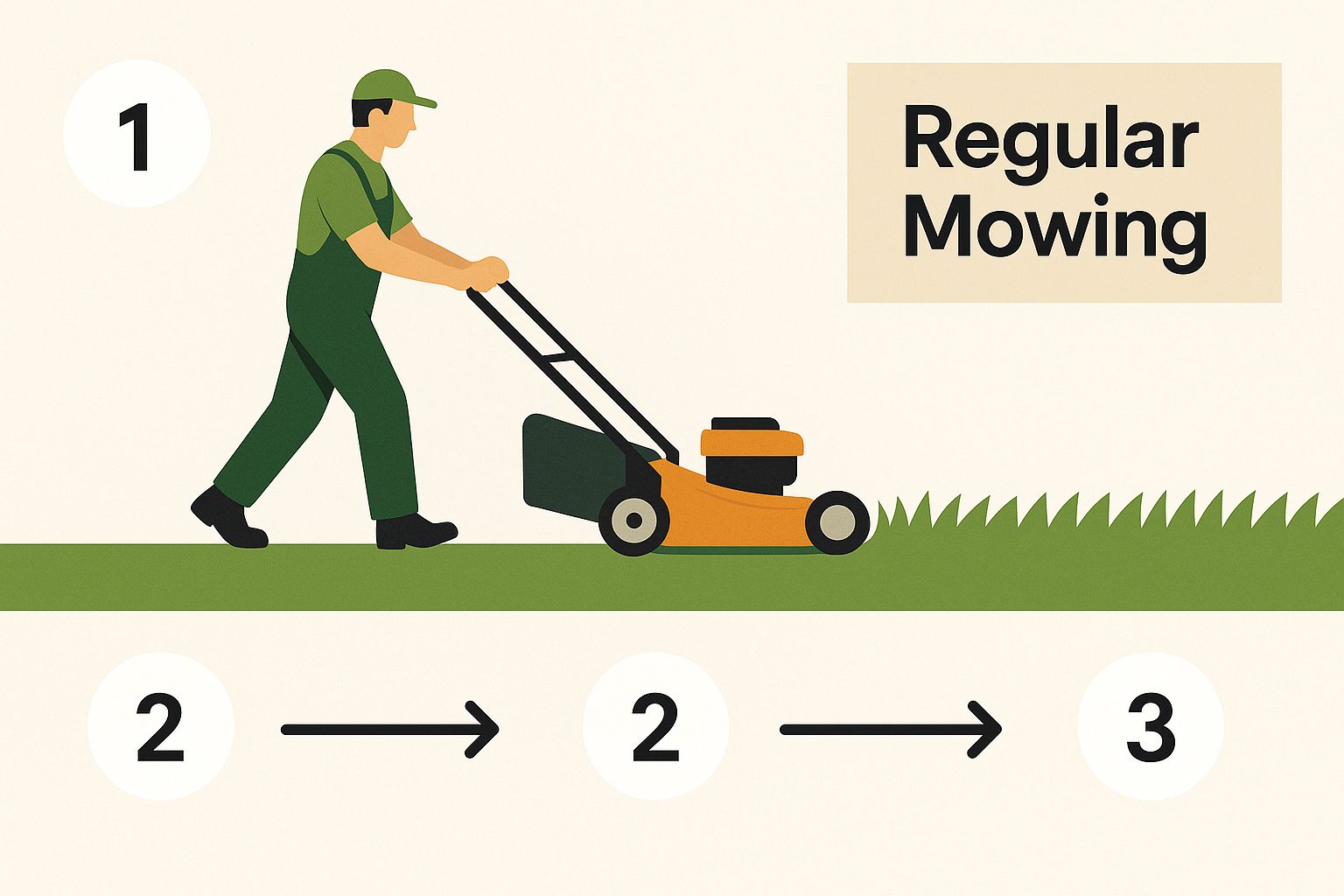
It really drives home the point that a consistent routine is the secret sauce. Each task, from watering to mowing, supports the others to create a turf that can handle almost anything.
The Best Time and Method for Watering
When you water is just as important as how much you water. Watering in the heat of the afternoon is a waste of time and money—a surprising amount of that water, sometimes up to 30% or more, evaporates before it even has a chance to soak in. And while watering in the evening might seem like a good idea, it leaves the grass blades wet all night, basically rolling out the welcome mat for common fungal diseases like brown patch.
The absolute best time to water your lawn is in the early morning, somewhere between 4 AM and 9 AM. This gives the water plenty of time to soak deep into the soil with minimal evaporation from sun and wind. Plus, it allows the grass blades to dry out completely during the day, which dramatically cuts down on disease risk.
You’re aiming to give your lawn about 1 to 1.5 inches of water per week, and that includes any rain we get. Don't just guess. Here's a simple trick I've used for years: scatter a few empty tuna cans across your yard. Turn on your sprinkler and time how long it takes to fill them to the one-inch mark. Now you know exactly how long you need to run your system to deliver a good, deep soak.
Of course, effective watering starts with good soil. Healthy soil absorbs and holds onto moisture far more efficiently. If you want to dive deeper into this, we have a complete guide that shows you how to improve your soil.
Choosing the Right Irrigation System
Having the right tools can make a world of difference and take a lot of the guesswork out of your watering strategy. Depending on your lawn's layout and your own needs, different systems can really help.
- Smart Irrigation Controllers: For homeowners in Cumming, Alpharetta, and Milton, these are a game-changer. They connect to local weather stations and automatically adjust your watering schedule based on recent rainfall, temperature, and humidity. Your lawn gets exactly what it needs, and you don't waste a drop.
- Soaker Hoses: These are perfect for garden beds, foundation plantings, or lines of shrubs. They deliver water directly to the soil, so you get almost zero evaporation and the leaves stay dry, which helps prevent disease.
- Professional Irrigation Audits: If you have an in-ground sprinkler system, it's worth getting a professional to do an audit every few years. They can spot leaks, make sure your sprinkler heads are aimed correctly, and fine-tune the timing for each zone to maximize efficiency. It's a small investment that can save you a lot of water and money in the long run.
Why Mowing Taller Is Better for Your Lawn
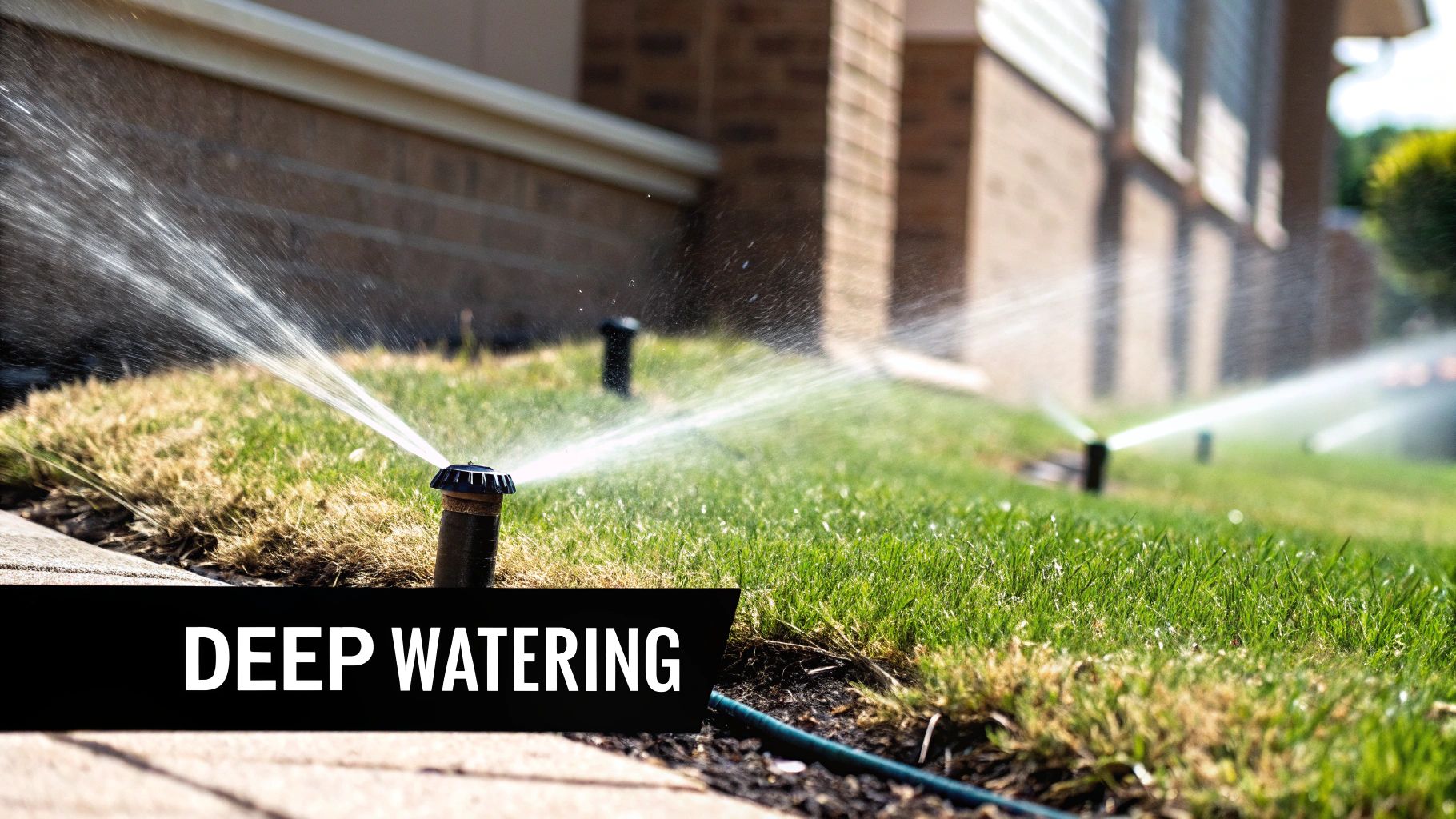
Here in North Georgia, from Johns Creek all the way up to Dahlonega, the summer heat can be absolutely brutal on our lawns. A common mistake I see homeowners make is cutting their grass super short, thinking it looks neater and saves them a mow. In reality, that's one of the most stressful things you can do to your turf, leaving it wide open to heat damage, drought, and disease.
Believe it or not, one of the most powerful changes you can make to your summer lawn care routine is surprisingly simple: raise your mower blade. Letting your grass grow a bit taller isn't laziness; it's a strategic move that helps your lawn build its own defense system for a greener, more resilient summer.
Shade the Soil and Keep It Cool
Think of each blade of grass as a tiny umbrella for your soil. When you mow taller, you're creating a dense canopy that shades the ground from the relentless sun. This natural shield is a huge advantage.
For one, it keeps the soil temperature down. This is critical for the grass's root system, especially for cool-season grasses like Fescue that are already stressed by our high temperatures in Cumming. Cooler soil means healthier roots.
This shade also means less water evaporates from the soil surface. So, when you do give your lawn that deep, infrequent watering it needs, the moisture sticks around longer, giving the roots more time to drink it up. You're getting more bang for your buck with every drop of water.
The Magic of Grasscycling
What do you do with your grass clippings? If you're bagging them up, you're essentially throwing away free fertilizer. The practice of grasscycling—just leaving the clippings on the lawn after you mow—is a total game-changer.
Grass clippings are full of water and nitrogen, which are exactly what your lawn craves in the summer. As they break down, they feed those nutrients right back into the soil, creating a fantastic, self-sustaining cycle.
Leaving your grass clippings on the lawn can provide up to 25% of the fertilizer your turf needs throughout the year. It's a natural way to reduce your reliance on store-bought products and boost your soil's organic matter.
The key to successful grasscycling is mowing often enough that the clippings are short. You don't want big, wet clumps smothering the grass. The only times you might want to bag are if the grass is excessively long or if you're battling a fungal disease.
Keep Your Mower Blades Sharp for a Clean Cut
This is one of those details that people often overlook, but it's crucial. A dull mower blade doesn't slice the grass; it rips and tears it. This violent shredding action leaves a jagged, wounded tip on every single blade of grass.
A torn blade not only loses more moisture and turns brown, giving your lawn a hazy, yellowish tint, but it also creates an open invitation for pests and fungal diseases to move in. A clean cut from a sharp blade, on the other hand, heals quickly and helps the grass conserve its energy for growth.
- How Often? Get your blades sharpened at least once a season. If you have a big lawn in Alpharetta or Milton, you might need to do it more.
- What to Look For: A day or two after mowing, look at the grass tips. A sharp blade leaves a clean, crisp edge. A dull blade leaves frayed, whitish-brown tips that look torn.
Paying attention to your mower's condition ensures your efforts are helping, not hurting, your lawn. The lawn mower is the centerpiece of any good maintenance plan, and it's no surprise that the industry is booming. The global lawn mower market is projected to grow from USD 32.11 billion in 2024 to USD 54.39 billion by 2033, fueled by a growing interest in landscaping and the rise of efficient electric and robotic models. You can discover more insights about these lawn mower market trends and see how new technology is shaping the future of yard care.
Fertilizing and Weed Control for Georgia Summers
Figuring out fertilization and weed control during the peak of summer heat can feel like a high-wire act. One wrong move, and you could end up with a burnt, stressed-out lawn. Especially in places like Milton and Johns Creek, a successful summer strategy comes down to knowing exactly what your grass needs when the temperatures soar.
If you have warm-season grasses like Zoysia or Bermuda, summer is their time to shine. They're in their peak growing season, actively looking for nutrients, so a light feeding can do them a world of good. On the flip side, cool-season grasses like Fescue are just trying to survive the heat. Pushing them with heavy fertilizer right now is a recipe for stress and potential damage.
Feeding Your Lawn Without the Burn
Summer fertilizing isn't about forcing a massive growth spurt—it's about providing a gentle, steady source of food to keep the grass resilient. The fertilizer you choose is absolutely critical here. Slapping down a heavy, fast-release product in the middle of July is one of the quickest ways to scorch your grass blades and overwhelm the root system.
What you really want is a slow-release, low-nitrogen fertilizer. Think of it as spoon-feeding your lawn. This type of product breaks down over time, giving your turf a consistent supply of nutrients without that sudden, vulnerable burst of growth. This approach helps build strong roots and boosts overall plant health, which is your lawn's best defense against drought and disease.
One of the most common mistakes I see homeowners in the Cumming area make is over-fertilizing in the summer. A big dose of nitrogen forces the grass to pour all its energy into growing new blades, completely neglecting the root system. That's the exact opposite of what your lawn needs to make it through the heat.
For those leaning towards a more natural path, looking into the best organic lawn fertilizer is a fantastic option. Organic products deliver that same slow-release benefit while also improving your soil's structure and feeding the beneficial microbes that create a healthy turf ecosystem.
A Smarter Way to Handle Summer Weeds
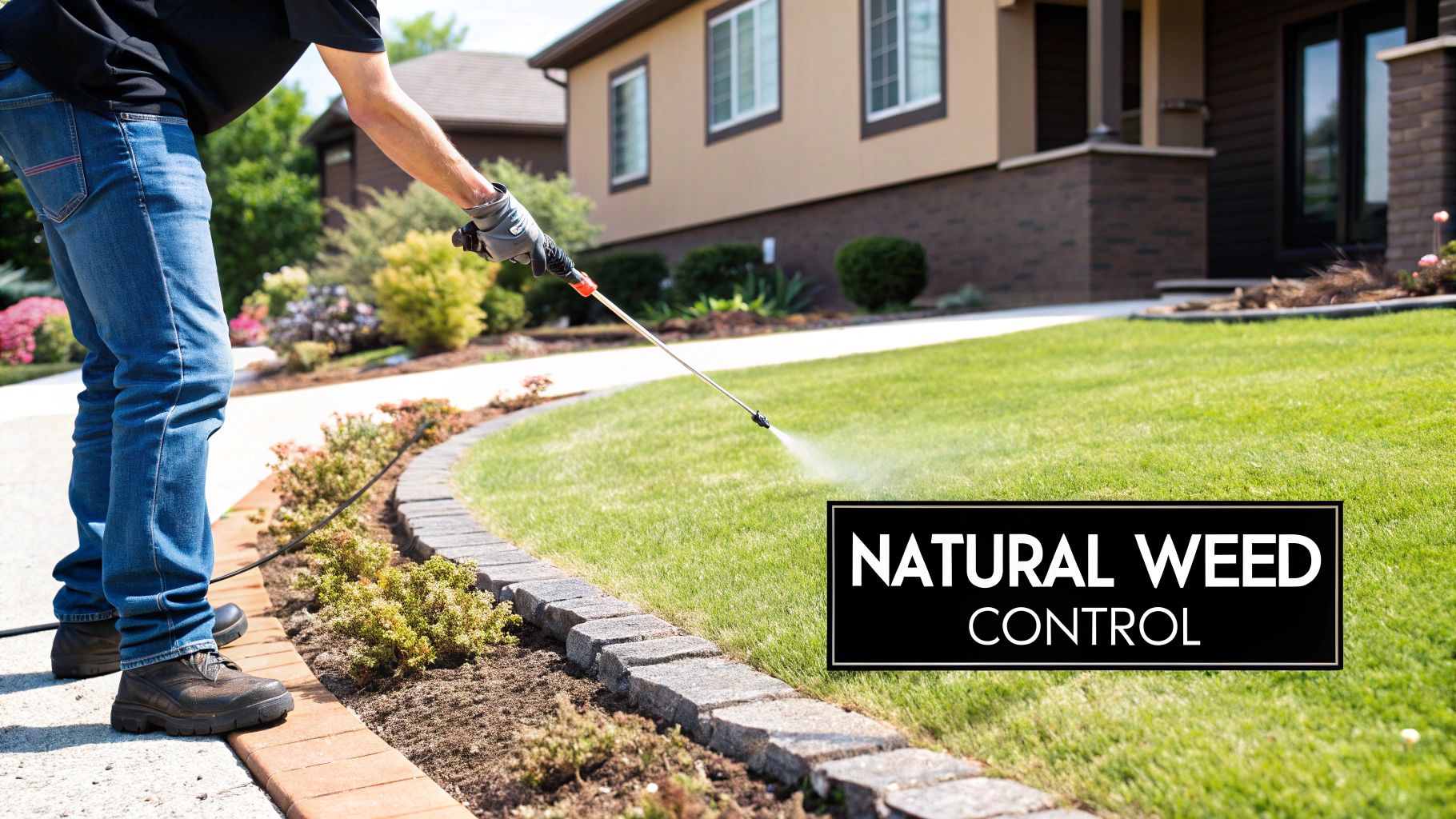
While you're carefully feeding your turf, you can bet that opportunistic weeds are looking for their chance to move in. The combination of intense heat and the occasional downpour in our area creates the perfect storm for intruders like crabgrass, nutsedge, and spurge to invade any thin or weak patches. A thick, thriving lawn is always your best line of defense, but sometimes you have to step in.
Here’s how to deal with these common summer weeds without putting your already-stressed grass at risk:
- Spot-Treat, Don't Blanket Spray: Instead of dousing your entire yard with herbicide, target individual weeds or small clusters. This drastically cuts down on the amount of chemical you're using and protects the surrounding turf from collateral damage.
- Pick Your Moment: Never, ever apply herbicides in the heat of the day or when temperatures climb above 85-90°F. High heat can cause the product to turn into a vapor, which not only wastes it but can also drift and damage your grass and nearby garden plants. Early morning is the ideal time.
- Know Your Target: Different weeds need different solutions. A broadleaf killer will take care of things like clover and dandelions, but grassy weeds like crabgrass require a specific post-emergent herbicide. And then there's nutsedge—it looks like grass but has a unique triangular stem and needs a product formulated specifically for it.
To make sure your summer feeding plan fits into a successful year-round strategy, it helps to understand the bigger picture. Learning about the best time to fertilize your lawn will give you a complete playbook for lawn nutrition. By feeding your lawn the right way and managing weeds with a careful, targeted approach, you can guide your turf through the toughest months of the year and keep it looking great.
Identifying and Treating Summer Pests and Diseases
The intense heat and humidity we get in a North Georgia summer don't just stress out your lawn; they roll out the welcome mat for a whole host of pests and diseases. If you live in Cumming, Alpharetta, or anywhere around here, you know that being reactive is a losing game. The key is to spot the early warning signs before a small issue becomes a full-blown yard catastrophe.
Keeping your lawn healthy isn't just about curb appeal; it's a huge part of your property's value. The entire landscaping industry, which is expected to be a $350 billion global market by 2025, is built around this very idea. You can learn more about these lawn care industry statistics to see just how important this work is.
Common Foes in Georgia Lawns
During our hot, sticky summers, I see the same few problems pop up over and over again. Telling them apart is crucial because the fix for a fungus will do absolutely nothing for an insect problem.
Here are the top culprits to keep an eye out for:
- Brown Patch Fungus: This is enemy number one for Fescue lawns in our area. It appears as weirdly circular brown patches. The tell-tale sign is a dark, almost smoky-looking ring around the edge, which is easiest to spot when there's dew on the grass in the morning.
- Dollar Spot: If you're seeing small, bleached-out spots about the size of a silver dollar, you've probably got dollar spot. Look closely at the individual grass blades—you'll see tan-colored lesions with reddish-brown borders.
- Grub Infestations: These are the sneaky ones. Grubs are beetle larvae that do their damage underground, feasting on your lawn's root system. If you have irregular brown patches that feel spongy and peel back like a cheap rug, grubs are almost certainly the cause.
Your Best Defense is a Healthy Lawn
While chemical treatments have their place, your best strategy is always prevention. It's simple: a strong, healthy lawn is just naturally better at fighting off pests and diseases. All the things we’ve already talked about—watering deeply but not too often, mowing high, and doing it all at the right time of day—are your most powerful weapons.
Proper watering, in particular, can make or break your lawn's defenses. When you water in the evening, the grass blades stay wet all night long, creating the perfect damp, dark environment for fungal spores to thrive. Likewise, soil that's been packed down by foot traffic weakens the roots, making them an easy meal for hungry grubs.
Your goal should be to create a lawn that is naturally inhospitable to problems. Healthy, well-aerated soil and a dense turf canopy are the best repellents you can have.
If you find yourself fighting a losing battle, it's always a good idea to explore organic and less-toxic solutions first. For a detailed look at these methods, check out our guide on natural pest control for lawns; it's packed with safe, effective strategies for homeowners here in Georgia.
Knowing When to Call for Backup
For small, contained issues, a DIY approach can work just fine. Spot-treating a little patch of fungus or applying a targeted grub treatment can often nip the problem in the bud. But some issues can spread like wildfire and require a professional touch.
You should seriously consider calling a local lawn care expert in the Cumming area if you run into these situations:
- The problem is widespread. If more than a third of your lawn is affected, it's time for a pro. They can accurately diagnose the problem and apply a treatment that won't cause even more stress to your grass.
- You can't identify the cause. It's incredibly common to mistake a pest issue for a fungus, or vice versa. This means you waste time and money on the wrong fix while the real problem just gets worse.
- The issue keeps coming back. If you're fighting the same battle every single summer, there's likely an underlying problem with your soil health, drainage, or overall care routine that an expert can help you pinpoint and correct for good.
Your Top Summer Lawn Care Questions Answered
Here in North Georgia, keeping a lawn happy through the summer heat is a unique challenge. We field tons of questions from folks in Cumming, Dahlonega, and all over the area, so I've gathered the most common ones right here to give you some straight, practical answers.
How Often Should I Really Water My Fescue Lawn in a Dry Spell?
When we hit a classic hot and dry stretch in July or August, your Fescue is thirsty. It needs a good, deep soak two, maybe even three, times a week. The absolute worst thing you can do is give it a light sprinkle every day—that just encourages shallow roots that get fried by the sun.
Instead, let your sprinklers run long enough to get the water 6-8 inches down into the soil. A simple trick is to stick a long screwdriver into the ground an hour after watering. If it slides in easily, you've watered enough. Always try to water in the early morning to cut down on evaporation and keep fungus from taking hold.
Is It Safe to Use Weed Killer on My Zoysia When It's Over 90 Degrees?
That's a risky move. Spraying most herbicides when the temperature is over 85-90°F can seriously stress out, or even kill, your Zoysia. The heat can also cause the chemicals to turn into a vapor and drift, which is bad news for your flower beds and trees.
If you're in a pinch and have to tackle some weeds in your Johns Creek yard, find a product that specifically says it's safe for summer use on Zoysia. Make sure to apply it in the coolest part of the day (early morning is perfect) and just spot-treat the individual weeds. Don't broadcast it over the whole lawn.
Good summer lawn care isn't just about keeping things green. It's about building a tough, resilient lawn from the ground up. A healthy lawn can fight off heat, drought, and pests on its own, which saves you a lot of headaches and money down the road.
My Lawn Has Brown Patches—Is It Fungus or Just the Heat?
This is probably the number one question we get, especially since our humid Georgia climate is a perfect breeding ground for lawn diseases. Figuring out which one you're dealing with is crucial.
- Heat Stress: If the grass is just dormant from the heat, you'll see large, uniform patches of tan or straw-colored grass, usually in the sunniest spots. The browning is pretty consistent, and the lawn should bounce back once it gets a few deep waterings.
- Brown Patch Fungus: This troublemaker shows up as funky, irregular circles. Sometimes, you'll spot a dark, almost smoky-looking ring around the edge of the patch, which is easiest to see when there's dew on the grass in the morning. The grass blades right at the soil level might even look slimy or rotted.
If you think you've got a fungus problem, stop watering in the evenings and look into a targeted fungicide to stop it from spreading.
When’s the Best Time of Day to Mow in the Summer?
The sweet spot for mowing a Georgia lawn in the summer is mid-morning. You want to wait for the dew to dry off but get it done before the full force of the midday sun kicks in. Mowing wet grass gives you a sloppy cut, clogs your mower, and can help spread fungus around.
Cutting grass in the peak heat of the afternoon is just plain stressful for your turf (and for you!). If morning doesn't fit your schedule, early evening is your next best bet. It gives the grass blades a few hours to heal up before night.
Can I Still Aerate My Lawn During the Summer?
As a general rule, it's best to hold off on core aeration during the hottest part of the summer. This is especially true for cool-season grasses like Fescue, as the process adds a lot of stress when the turf is already just trying to survive.
For Fescue lawns in North Georgia, the best time to aerate is in the fall. Warm-season grasses like Bermuda and Zoysia, on the other hand, get the most benefit from aeration in late spring or early summer while they're growing like crazy. If your soil is packed down like concrete, a liquid aeration product can be a gentler option for the summer months.
The tools we rely on for jobs like aeration and mowing are part of a huge industry. The global market for lawn and garden equipment was valued at around USD 44.0 billion in 2025 and is expected to nearly double to USD 81.9 billion by 2035. This boom is driven by a growing interest in landscaping and new tech like robotic mowers. You can discover more insights about the lawn and garden equipment market to see where the industry is heading.
What Should I Do with All the Clippings and Garden Debris?
After a regular mow, just leave the clippings on the lawn. This is called "grasscycling," and it's fantastic for your soil. The clippings break down and act as a natural fertilizer, feeding nutrients and moisture right back into the ground.
But for those bigger summer clean-up jobs—like clearing an overgrown patch, trimming back shrubs, or tearing out old sod—you're going to have a lot of waste. For those situations, a practical guide to skip hire for garden waste can be a lifesaver for managing all that debris efficiently.
At Barefoot Organics, we live and breathe North Georgia lawn care. Our natural programs are built to create a strong, healthy turf that can handle our climate, so you know it’s safe for your kids, pets, and the local environment.
Ready for a lawn in Cumming, Alpharetta, or Milton that looks great all summer? Get your free online quote today and see the Barefoot Organics difference for yourself at https://barefootorganicsllc.com.