

When the Georgia heat really cranks up, your lawn care strategy has to shift gears. The key to a thriving lawn from Cumming to Dahlonega isn't just about throwing more water on it; it's about being smart—watering deeply, mowing higher, and feeding the soil what it actually needs. You have to work with our climate, not fight it, especially if you have Bermuda or Zoysia grass common in the Alpharetta area.
Your North Georgia Summer Lawn Care Playbook
Surviving a summer in North Georgia is one thing. Having a lawn that actually thrives is another story. The heat and humidity we get from June through August can be brutal on lawns in Alpharetta, Johns Creek, and Milton. This isn't generic, one-size-fits-all advice. This is a specific playbook designed for our local conditions, our infamous red clay soil, and the warm-season grasses that grow here. Forget what your cousin in Ohio does; our lawns in Cumming and the surrounding areas play by a different set of rules.
This guide gives you a direct, no-nonsense game plan for the most critical summer tasks. We're going to get past just watering and mowing and dig into the "why" behind each step. Once you understand these core principles, you're on your way to a lawn that isn't just green on the surface but is genuinely healthy from the soil up.
What to Expect in This Guide
I've designed this playbook for real-world use, focusing on the problems I see homeowners from Dahlonega to Johns Creek struggle with every summer. You'll learn the techniques that truly work for our climate:
- Strategic Watering: We'll cover the art of deep, infrequent watering. It’s the single best way to encourage strong, deep roots that can find water even when the weather is dry.
- Smarter Mowing: You'll find out why letting your grass grow a bit taller is one of your best defenses against the summer sun. It shades the soil, holds in moisture, and reduces overall stress on the plant.
- Organic Soil Health: Learn how to shift your focus from just feeding the grass to nourishing the soil itself. A healthy soil ecosystem is your best defense against pests and disease.
This focus on building a healthy, resilient lawn is catching on. More and more homeowners are investing in their outdoor spaces, and the demand for professional summer lawn care reflects that. The global market was valued at a staggering $134.09 billion in 2024 and is only expected to grow. You can dig into the market trends and the growth of residential services if you're curious.
The goal here is simple: to give you the confidence and the know-how to handle a Georgia summer. By putting these region-specific practices into play, you can make sure your lawn doesn't just limp through the heat but comes out on the other side healthier and stronger than before. This is your starting point.
Here's a quick cheat sheet to keep you on track.
North Georgia Summer Lawn Care At a Glance
This table breaks down the essential summer tasks for anyone with a lawn in the Cumming, GA area and surrounding communities like Alpharetta and Milton. Think of it as your quick-glance guide for what to do and when.
| Task | Frequency | Best Practice for North Georgia |
|---|---|---|
| Watering | 1-2 times per week | Water deeply in the early morning to deliver 1-1.5 inches of water total. This encourages deep root growth. |
| Mowing | Every 5-7 days | Mow Bermuda at 2-2.5 inches and Zoysia at 2.5-3 inches. Never remove more than 1/3 of the blade at once. |
| Fertilizing | 1-2 times during summer | Use a slow-release, natural fertilizer. Avoid high-nitrogen products that cause weak, fast growth. |
| Pest/Disease Check | Weekly | Walk your lawn and look for signs of brown patch, dollar spot, or grubs. Early detection is key. |
| Aeration | Do not aerate in peak summer | Wait until the next growing season (spring) for core aeration. Summer heat adds too much stress. |
By keeping these core principles in mind, you're setting your lawn up for success. It's all about working smarter, not harder, to handle our unique summer challenges.
Smart Watering Strategies for Georgia's Summer Heat
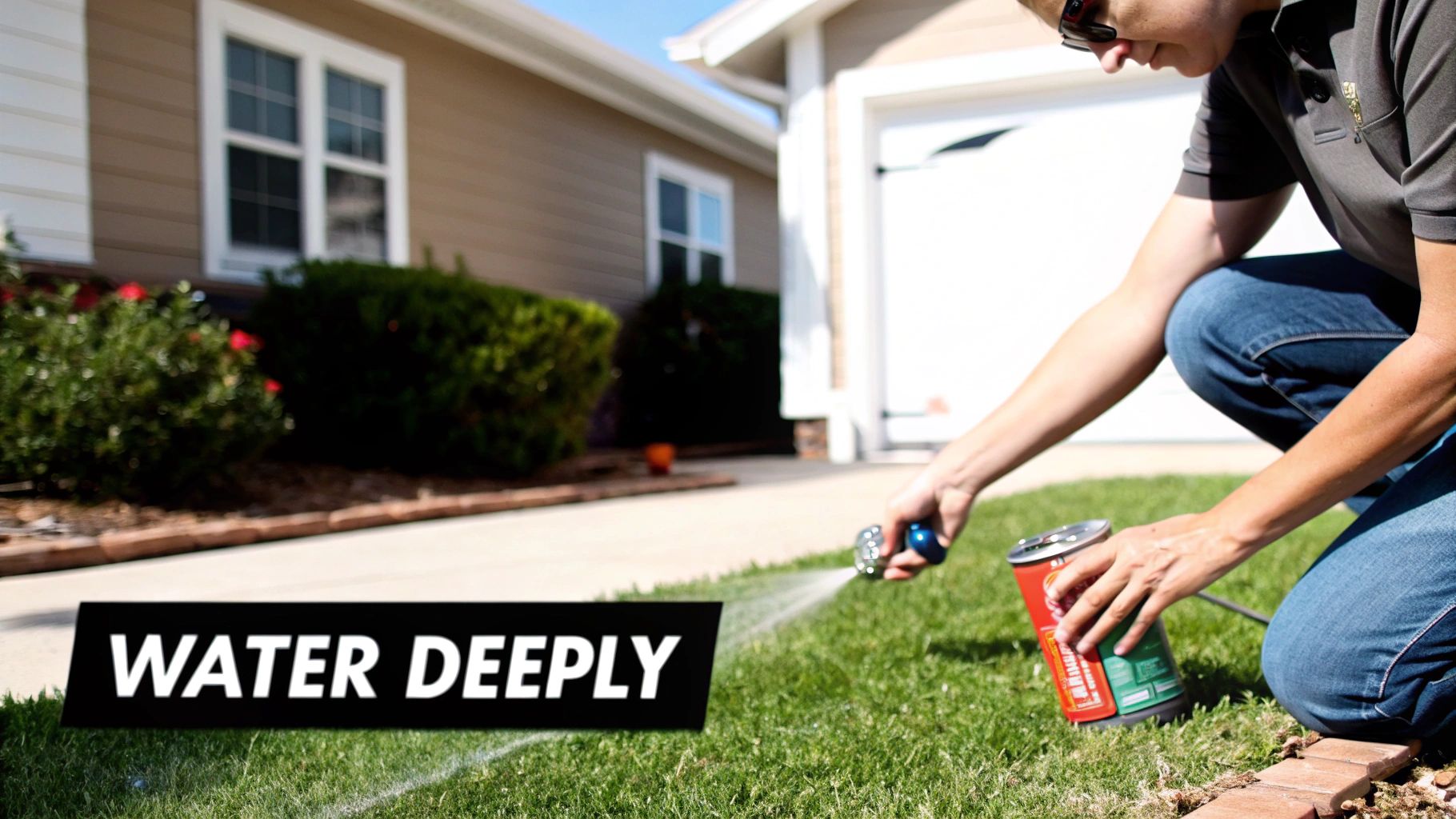
When the Georgia summer hits full force, your lawn's survival comes down to smart watering. This isn't about blasting your grass with water every day. It's about a strategic approach that builds deep, drought-resistant roots ready to handle the intense sun we get from Milton to Cumming.
Honestly, the biggest mistake I see homeowners make is watering too often and way too lightly.
This kind of frequent, shallow watering just encourages lazy roots to hang out near the surface. They become incredibly vulnerable to heat stress and dry out in a flash. The real goal of summer lawn care is to train your grass to be tough and resilient.
We do this by focusing on deep, infrequent watering. This simple shift pushes moisture further down into the soil, forcing the roots to chase after it. What you get is a much stronger, more self-sufficient lawn that doesn't panic at the first sign of a dry spell.
How Much Water Does Your Lawn Actually Need?
A good rule of thumb for North Georgia lawns is about one inch of water per week, and that includes any rain we get. During the peak of summer, when temperatures are consistently screaming past 90°F, you might need to bump that up to 1.5 inches. But how do you actually measure that?
One of the easiest tricks in the book is the "tuna can test." Just scatter a few empty, clean tuna cans (or any small, straight-sided container) around your lawn before you start the sprinklers. Let your irrigation system run and time how long it takes for the cans to collect one inch of water.
Boom. Now you know exactly how long to run your sprinklers for each session to deliver the right amount. For many systems around the Alpharetta and Johns Creek area, this might be anywhere from 30 to 60 minutes per zone, but it really depends on your water pressure and sprinkler heads.
Key Takeaway: Deep watering once or twice a week is so much better for your lawn than a light sprinkle every day. It builds the strong root structure your Bermuda or Zoysia needs to survive the brutal summer conditions common across Forsyth and North Fulton counties.
The Best Time of Day to Water
Timing is everything. Watering in the middle of a hot afternoon is one of the most wasteful things you can do—a huge chunk of that water will just evaporate before it even thinks about reaching the roots.
The sweet spot for watering is in the early morning, between 5 a.m. and 9 a.m. Here’s why this window works so well:
- Evaporation is at its lowest, so more water actually soaks into the soil where it's needed.
- The air is usually calmer, giving you more even water distribution across the lawn.
- The grass blades have the entire day to dry out, which drastically reduces the risk of fungal diseases like brown patch.
Watering in the evening might seem like a decent alternative, but it can open a can of worms. When grass blades stay wet all night in our humid climate, you’re basically rolling out the welcome mat for fungus—a headache for homeowners in Johns Creek and Cumming. You can learn more about dialing in the perfect schedule in our guide on how often to water your lawn in the summer.
Recognizing the Signs of a Thirsty Lawn
Your lawn will absolutely tell you when it’s thirsty. Instead of sticking to a rigid calendar, learn to spot these early signs of drought stress:
- Dull, Bluish-Gray Color: Healthy, hydrated grass has a rich green color. When it starts looking dull or takes on a grayish-blue tint, it’s getting dehydrated.
- Visible Footprints: Take a walk across your lawn. If your footprints are still there after a few minutes, the grass blades don’t have enough moisture to spring back up.
- Curling Blades: The individual grass blades will start to fold or curl inward on themselves as a way to conserve water.
Watching for these signals and watering when your lawn needs it—not just because it's Tuesday—is the core of a smart summer strategy. This mindful approach is a big reason why the U.S. lawn care market is projected to hit $60 billion by 2025. Homeowners are getting smarter, and new irrigation tech is helping optimize water use by an impressive 25-50%.
Mowing Techniques to Promote Health and Beat the Heat
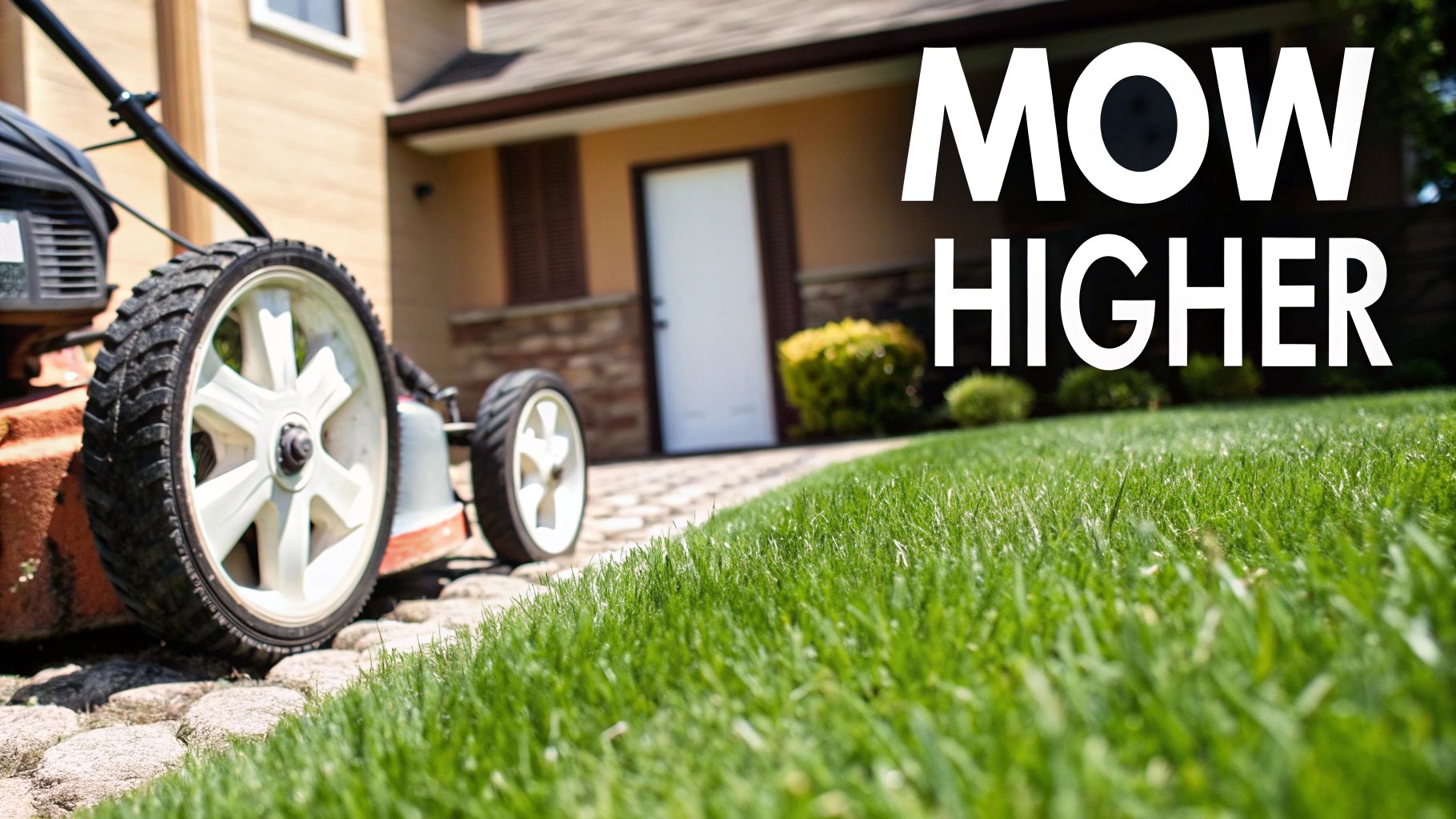
For a lot of folks in North Georgia, mowing is just another chore to get done. But you can actually use your mower as one of the most powerful tools for keeping your lawn healthy through the summer. How you mow has a massive impact on your lawn's ability to handle the intense heat we get in places like Cumming and Alpharetta.
Giving your lawn a buzzcut is one of the worst things you can do to it in the middle of a Georgia summer. Taller grass provides shade for the soil, which is absolutely critical for retaining moisture and keeping the roots from baking. That extra height also creates a natural canopy that blocks sunlight from reaching opportunistic weed seeds, stopping them before they can even get started.
Ideal Mowing Heights for North Georgia Grasses
Every type of grass has a sweet spot—a height where it's happiest and most resilient. When you cut it shorter than that, you're just inviting stress, disease, and weeds. Around here, from Milton to Dahlonega, we’re mostly dealing with warm-season grasses that love the sun but need a bit of help to get through the hottest months.
Here’s a quick rundown of where you should be setting your mower deck for our most common local grasses:
- Bermuda Grass: Aim for 2 to 2.5 inches. I know it's tempting to go shorter with Bermuda, but this height is key for building up its drought tolerance.
- Zoysia Grass: This one really thrives when kept between 2.5 and 3 inches. The dense, carpet-like nature of Zoysia benefits from that extra blade length.
- Tall Fescue: If you have Fescue in shadier spots, you'll want to keep it long—around 3 to 4 inches—to help it capture as much sunlight as possible.
These aren't just random numbers. Taller grass blades encourage deeper roots, and deep roots are the lifeline that allows your lawn to find moisture far below the sun-scorched surface. Making this one simple adjustment is a cornerstone of smart summer lawn care.
A healthy lawn isn't just about what you put on it; it's also about what you don't take off. Mowing higher is your lawn's first line of defense against the brutal Georgia sun, helping it conserve water and outcompete weeds naturally.
The One-Third Rule and Mowing Frequency
Forget about a rigid weekly mowing schedule. Instead, let your lawn’s growth rate tell you when it’s time to mow. When we're getting plenty of rain in the Johns Creek area, you might need to mow every five days. During a dry spell, you might stretch it to ten days. The golden rule is simple: never remove more than one-third of the grass blade in a single go.
Violating this rule sends the grass into shock. Hacking off too much at once exposes the tender, lower part of the blade to the harsh sun and can actually stop root growth in its tracks. So, if your target height for Zoysia is 3 inches, you need to be out there with the mower before it gets any taller than 4.5 inches.
Sharp Blades and Grasscycling Benefits
The final pieces of the mowing puzzle are your equipment and what you do with the clippings. First, always mow with sharp mower blades. A dull blade doesn't slice the grass; it rips and tears it. Those ragged edges are an open invitation for fungal diseases like brown patch, which absolutely loves our humid summer nights.
And please, don’t bag your clippings! Leaving them on the lawn—a practice called grasscycling—is one of the best things you can do. Those clippings are full of water and nutrients. They break down quickly and return valuable nitrogen back to the soil, acting like a free, gentle feeding every time you mow.
Think of it this way: your grass clippings are a resource, not waste. By grasscycling, you cut down on the need for fertilizer and help build a healthier soil ecosystem right under your feet. It's a simple change that reduces yard waste and strengthens your lawn, making it a win-win for homeowners all the way from Milton to Dahlonega.
Building a Resilient Lawn with Organic Soil Health
A gorgeous, deep-green lawn is what we all see, but the real secret to a tough, healthy lawn lies underground. True resilience, especially during a brutal North Georgia summer, is built from the soil up. This means we need to stop thinking about just force-feeding the grass blades with chemicals and start nourishing the living ecosystem in the soil itself.
This is a non-negotiable for anyone from Cumming to Alpharetta who's ever tried to dig into our infamous red clay. It's dense and challenging, no doubt. But with an organic mindset, you can turn that stubborn clay into a rich, supportive foundation for your turf.
Why Healthy Soil is Your Lawn's Best Friend in Summer
Summer puts your lawn through the wringer. The relentless sun and heat demand a ton from your grass, and a strong soil foundation is its absolute best line of defense. Think about it: synthetic, fast-release fertilizers give you a quick burst of green, but it's often weak, flimsy growth that can't handle drought and is a magnet for disease.
An organic approach is completely different. It's all about feeding the billions of microscopic allies—the bacteria, fungi, and other organisms—that make your soil a living, breathing system. These little powerhouses are the ones breaking down organic matter and delivering nutrients to your grass roots in a slow, steady stream, right when the plant needs them.
By feeding the soil, you’re essentially creating a self-sufficient ecosystem. A biologically active soil holds on to more water, naturally suppresses diseases, and provides a constant trickle of nutrients. You end up with a lawn that can shrug off the summer heat with a lot less help from you.
Over time, this process literally changes the structure of your soil. It breaks up compacted clay, creating tiny channels for air and water to move deeper. That improved water retention is a game-changer during our summer dry spells in Milton and Johns Creek, meaning you won't have to water nearly as often.
Choosing the Right Organic Goodies
Walking into a garden center can feel a bit overwhelming with all the bags and bottles promising a perfect lawn. For a North Georgia summer, you want to ignore the quick-fix chemicals and look for products that build your soil for the long haul.
Here’s what I recommend focusing on for our local lawns:
- Compost: This is the undisputed champion of organic soil building. Spreading a thin layer of quality compost gives you a slow-release buffet of nutrients and, more importantly, injects a massive dose of beneficial microbial life right into the soil.
- Slow-Release Organic Fertilizers: Look for granular products made from natural stuff like feather meal, bone meal, or alfalfa meal. These materials have to be broken down by soil microbes, which means they feed your lawn consistently for weeks without causing that weak surge of growth.
- Humates and Soil Conditioners: These are fantastic for improving the texture of our heavy clay. They act like tiny magnets, clumping clay particles together. This opens up pore space, which improves drainage and aeration and makes it much easier for grass roots to dig down deep and strong.
The goal is a balanced diet for your soil, not just a sugar rush for your grass. This philosophy is the key to building a truly sustainable lawn. For a much deeper look at this, check out our complete guide on how to create healthy soil that can handle Georgia's climate.
Getting the Timing and Application Just Right
When you apply these amendments is just as important as what you apply. For our warm-season grasses like Bermuda and Zoysia, a good feeding with a slow-release organic fertilizer in late May or early June is perfect. It gives them the fuel they need as they enter their peak growing season, helping them store up energy to survive the stress of July and August.
Try to avoid applying heavy doses of any fertilizer in the absolute peak of summer heat; it can just add more stress to an already stressed-out plant. Instead, you can focus on conditioning the soil. A light topdressing of compost is great anytime because its main job is to improve the soil environment, not force-feed the grass.
Now, let's talk about compaction—a huge issue on high-traffic lawns or around new construction lots in Alpharetta and Cumming. The fix here is core aeration, but timing is everything. Punching holes in your lawn during the scorching mid-summer heat can do more harm than good. For warm-season grasses, the sweet spot is late spring or early summer when the turf is growing vigorously and can heal quickly. This physically opens up the soil, finally letting that air, water, and organic goodness get down to the root zone where it matters most.
Managing Summer Pests and Diseases Organically
The intense summer heat in North Georgia doesn't just make your lawn thirsty; it rolls out the welcome mat for all sorts of opportunistic pests and diseases. When your grass is already stressed and working overtime just to survive, its natural defenses are down. This is prime time for problems like brown patch fungus and grub infestations to take hold in lawns all over our area, from Cumming to Milton.
But here's the good news: you don't need a cocktail of harsh chemicals to fight back. A proactive, organic approach not only tackles the immediate issue but also builds a stronger, more resilient lawn for the long haul. The real goal is to create a healthy environment where pests and diseases simply can't thrive in the first place.
This smart, strategic approach is at the heart of modern, eco-friendly lawn care. As the global lawn and garden equipment market is forecasted to reach $77.7 billion by 2034, it’s clear homeowners are choosing safer, more sustainable maintenance methods. You can read the full research about these lawn and garden market trends to see how residential users like us are driving this important shift.
Identifying Common North Georgia Culprits
Before you can fix a problem, you have to know what you’re looking at. The single best thing you can do is walk your lawn once a week to catch these issues before they get out of hand.
Here are the most common troublemakers we see in Forsyth, Cherokee, and North Fulton counties:
- Brown Patch Fungus: This is the big one around here. It shows up as ugly, irregular circular patches of brown, dying grass. You’ll often spot a darker, "smoke-ring" border around the patch, which is especially visible in the morning dew. It absolutely loves our hot, humid nights in places like Johns Creek.
- Dollar Spot: Look for small, silver-dollar-sized patches of straw-colored grass. If you look closely at the grass blades, you'll see distinctive tan lesions with reddish-brown borders. This fungus often signals a lack of nitrogen in your soil.
- Armyworms: These voracious caterpillars literally march across your lawn in large groups, chewing grass blades down to the nub. They leave behind what look like large, brown, dead patches. A tell-tale sign is a sudden increase in birds hanging out on your lawn—they're there for the buffet.
- Grubs: These C-shaped beetle larvae live just below the surface, feasting on the roots of your grass. The damage—spongy turf that peels back like a piece of carpet and patches of brown, dying grass—often doesn't show up until it's too late.
A healthy lawn is your best defense, and that always starts with healthy soil. This decision tree helps visualize the foundational steps.
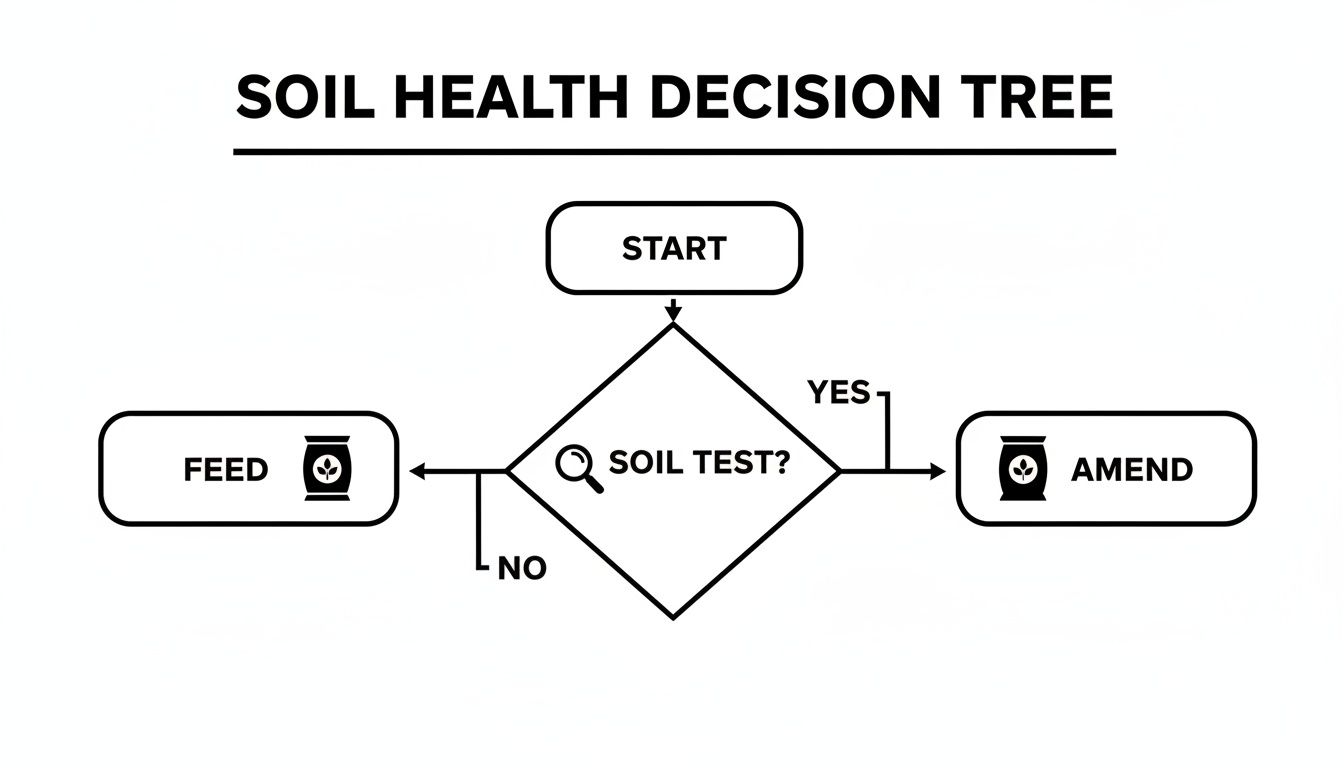
As you can see, starting with a soil test is the smartest way to diagnose underlying issues before they spiral into full-blown pest and disease outbreaks.
Your Organic Treatment Toolkit
Once you've identified the enemy, it's time to choose your weapon. An organic strategy focuses on using naturally derived solutions that target the specific pest or disease without nuking the surrounding ecosystem of beneficial insects and soil microbes.
This handy table can help you diagnose and treat some of the most frequent issues we see during North Georgia summers.
Common North Georgia Lawn Problems and Organic Solutions
| Problem (Pest/Disease) | Symptoms to Look For | Recommended Organic Treatment |
|---|---|---|
| Brown Patch Fungus | Irregular brown circles, often with a dark "smoke ring" border. Thrives in humidity. | Apply horticultural cornmeal preventatively. Ensure deep, infrequent watering early in the morning. Improve air circulation. |
| Dollar Spot | Small, straw-colored spots the size of a silver dollar. Tan lesions on grass blades. | Apply a slow-release, natural nitrogen fertilizer. Cornmeal can also help. Correct watering practices are critical. |
| Armyworms | Large, rapidly expanding brown patches. Grass blades chewed down to the soil. Increased bird activity. | Apply Beneficial Nematodes (Steinernema carpocapsae) or a product containing B.t. (Bacillus thuringiensis). |
| White Grubs | Spongy, soft turf that can be rolled back like a carpet. Irregular patches of dead grass. | Apply Beneficial Nematodes (Heterorhabditis bacteriophora) or Milky Spore disease. Apply in late summer/early fall for best results. |
Remember, these organic solutions work best when paired with healthy lawn care habits, like proper mowing and watering, which create a less inviting environment for these problems to begin with.
For fungal issues, prevention is everything. Proper watering—deeply and early in the morning so the grass blades dry quickly—is your most powerful tool.
When it comes to grubs and other insects chewing away at your roots, you have some fantastic organic options:
- Beneficial Nematodes: These are your microscopic allies. They are tiny worms that actively hunt down and kill pests like grubs and armyworms right in the soil, and they are completely safe for people, pets, and plants.
- Milky Spore: This is a naturally occurring bacterium that is deadly to Japanese beetle grubs but harmless to everything else. It can take a season or so to really get established in your soil, but it provides excellent, long-term control.
These methods are the foundation of a robust Integrated Pest Management (IPM) strategy. By focusing on your lawn's health first and using targeted, safe treatments only when needed, you can keep your lawn beautiful and safe for your family to enjoy. If you're facing a stubborn infestation and need more ideas, feel free to explore our complete guide to natural pest control for lawns.
When to Tag in an Organic Lawn Care Pro
Look, even the most dedicated DIY-er can run into a wall. Sometimes, North Georgia lawns throw curveballs that a trip to the big-box store just can't solve. Our notorious red clay, combined with the brutal summer heat, can create some seriously tricky situations.
Knowing when to call for backup isn't giving up—it’s just being smart about protecting your investment and saving yourself a ton of headaches.
Signs You Might Need an Expert Eye
If any of these scenarios sound a little too familiar, it might be time to bring in a professional. I see these all the time in lawns from Milton to Alpharetta, and they usually point to a deeper issue that needs more than a quick fix.
-
You've Got a Recurring Villain: Are you stuck in a frustrating loop, fighting the same brown patch fungus or armyworm invasion year after year? When pests or diseases keep making a comeback, it's a huge red flag. It often means there’s an underlying problem—like poor soil health or a thick thatch layer—that’s basically rolling out the welcome mat for them.
-
Your Yard Feels Like Concrete: If you walk on your lawn and it feels more like a sidewalk, that’s a problem. Water pooling after a rainstorm or grass thinning out in high-traffic areas are classic signs of severely compacted soil. Hand tools and spike aerators from the hardware store barely scratch the surface of our heavy clay. You really need professional core aeration to pull up those deep plugs and give the soil room to breathe.
-
Large Patches Are Fading Fast: Is a significant chunk of your lawn turning yellow or brown, or just looking generally miserable? When you can't figure out why, it’s time for a professional diagnosis. You could be dealing with anything from a specific nutrient deficiency to a hidden pest problem or a completely out-of-whack soil pH.
Calling in a pro like Barefoot Organics isn't just about putting out a single fire. It’s about getting a holistic game plan that fixes the root of the problem. That’s what saves you time, money, and frustration in the long run.
A professional service brings a level of know-how and equipment that most homeowners simply don't have. We can run detailed soil tests to create custom-blended organic treatments that give your lawn exactly what it's missing.
For those stubborn pests, we have access to powerful, targeted organic solutions that are still completely safe for your kids and pets. Think of it as bringing in a specialist to ensure the long-term health and beauty of your property.
Your North Georgia Summer Lawn Care Questions Answered
We’ve covered the big three—watering, mowing, and feeding your soil. But let's be honest, lawn care isn't always that straightforward. Real-world problems pop up, from dealing with HOA rules in Johns Creek to figuring out why a new brown patch has appeared out of nowhere in your Cumming backyard.
This is where the rubber meets the road. I've put together answers to some of the most common questions we get from homeowners every summer. Think of this as your go-to reference for those head-scratching moments.
Can I Plant New Grass Seed in the Summer to Fix Bare Spots?
I get this question all the time, especially after a brutal dry spell leaves a few casualties in the yard. The short answer is: it’s risky.
For our warm-season grasses like Bermuda and Zoysia, you can technically seed in the summer, but you're signing up for a tough job. The intense heat means you have to be incredibly diligent with watering, keeping those new seeds constantly moist so they can sprout. It's a real battle against the sun.
A much better bet for summer repairs? Sod. It establishes so much faster and is way more equipped to handle the immediate stress of our summer. Now, if you have a cool-season grass like Fescue, don't even think about it. Hold off until the cooler, wetter days of fall for the best results.
My HOA Has Summer Watering Restrictions. How Do I Keep My Lawn Alive?
This is a familiar struggle in many Alpharetta and Forsyth County neighborhoods. When the government issues watering restrictions, the key isn't to panic—it's to make every single drop of water count.
Here’s how you can help your lawn survive:
- Water Deeply on Your Allowed Days: When it’s your day to water, don't just sprinkle it. Focus on delivering that full 1 inch of water in one go. This forces the moisture deep into the soil where it won't evaporate.
- Time It Right: Always water in the early morning. This gives the soil all day to soak it up before the afternoon heat kicks in.
- Improve Your Soil's Sponginess: Applying a topdressing of good compost can work wonders. It helps your soil act like a sponge, holding onto moisture for much longer between waterings.
A lawn that has been watered deeply all season will have a much more resilient root system, making it far better prepared to handle these restrictions without going completely dormant.
Why Are Brown Patches Appearing Even Though I Water Regularly?
This is one of the most frustrating things to see in your lawn. You feel like you're doing everything right, but the lawn says otherwise. Nine times out of ten, it’s not about the amount of water, but about other underlying issues.
Here in North Georgia, the prime suspect is almost always brown patch fungus. It absolutely loves our summer humidity. The most common trigger is watering too late in the evening, which leaves the grass blades wet all night and creates the perfect breeding ground for disease.
But don't stop there. It could also be insect damage—grubs love to munch on grass roots. Or, the soil could be so compacted that water can't even get down to the roots. Before you treat for anything, get on your hands and knees at the edge of a brown patch. Look for fungal spots on the grass blades. Does the turf feel spongy? Can you pull it up easily? That's a classic sign of grub activity.
Ready to hand over the tough questions and complex lawn problems to the experts? The team at Barefoot Organics provides specialized, natural lawn care services designed specifically for North Georgia's climate, serving Cumming, Alpharetta, Johns Creek, Milton, Dahlonega, and more. Get your free online quote today!