

As the chill of winter recedes and the iconic dogwoods of North Georgia begin to bloom, homeowners from Cumming to Johns Creek and Alpharetta face a critical window of opportunity. Spring isn't just a change of season; it's the foundational period that dictates your lawn's health, color, and resilience for the entire year. The unique challenges of our region, from the acidic red clay soil common in Forsyth County to the unpredictable spring rains, demand more than just a generic approach. A haphazard strategy can lead to a summer of battling weeds, brown patches, and soil compaction.
This comprehensive spring lawn care checklist is specifically tailored for the landscapes found throughout North Georgia, including areas like Cumming, Johns Creek, Alpharetta, Milton, and Dahlonega. We move beyond the obvious, providing a detailed, step-by-step roadmap that focuses on building a healthy, sustainable, and beautiful lawn from the soil up. Following the right steps at the right time is crucial for preventing common issues like crabgrass, dollar spot, and grub infestations later in the season.
This guide provides the specific actions and optimal timing needed to create a robust, vibrant turf that can withstand the summer heat. Whether you're a DIY enthusiast in Milton preparing your Bermuda grass or seeking professional guidance in Dahlonega for your Fescue, these ten essential steps will empower you to cultivate a lush lawn that’s safe for family, pets, and the local environment. Let's dive into the tasks that will set your property apart this season.
1. Early Spring Lawn Cleanup and Debris Removal
The first crucial step in any North Georgia spring lawn care checklist is a thorough cleanup. After a long winter, your lawn is likely covered in a layer of fallen leaves, pine needles, twigs, and other organic debris. This accumulation smothers the turf, blocking essential sunlight, air, and water from reaching the soil and the roots of your warm-season grass like Bermuda or Zoysia. Removing this winter blanket is the foundational task that sets your lawn up for a healthy growing season in Cumming and the surrounding areas.
This initial cleanup does more than just improve your lawn's appearance. It's a critical diagnostic and preventative measure. By clearing the surface, you expose any potential winter damage, such as snow mold patches or areas of thinning grass. Furthermore, this debris provides a perfect, damp habitat for pests and fungal diseases to thrive as temperatures rise. A clean lawn is a less hospitable environment for these unwelcome guests.
Implementation and Local Examples
Across North Georgia, from the pine-heavy lots in Dahlonega to the manicured neighborhoods of Alpharetta, homeowners tackle this task as soon as the ground is no longer saturated, typically from early March through April. In communities like Milton, where large properties often contend with significant pine straw and leaf accumulation, many residents opt for professional debris removal services to efficiently clear their landscapes. Conversely, in the Cumming area, it's common to see homeowners using mulching mowers to shred and repurpose the last of the autumn leaves, turning them into a light, natural compost for the turf.
Actionable Tips for a Successful Cleanup
To make the process efficient and effective, follow these specific strategies:
- Work When It's Dry: Raking or blowing wet, heavy leaves is significantly more difficult. Wait for a dry day to make the job easier and avoid compacting moist soil.
- Divide and Conquer: For larger properties in areas like Cumming, break the lawn into smaller, manageable sections. Clean one area completely before moving to the next to avoid feeling overwhelmed.
- Inspect as You Go: Use this opportunity to walk your entire property. Look for matted-down grass, bare spots, or signs of pests. This initial inspection will inform the next steps in your spring lawn care checklist.
- Compost Creatively: Don't just bag the debris. If you have a compost pile, add the leaves and small twigs. This creates a nutrient-rich amendment you can use later in your flower beds and garden.
2. Soil Testing and pH Analysis
Before applying any fertilizer or soil amendments, the next essential task in your spring lawn care checklist is understanding what your soil actually needs. Conducting a soil test provides a detailed report on your lawn's nutrient composition and, most importantly, its pH level. For homeowners in North Georgia, from Cumming to Alpharetta, where the native red clay is often acidic (typically pH 5.0-6.5), this step is not just recommended; it's fundamental for effective and efficient lawn care. Testing in early spring, from March to early April, gives you a precise roadmap for your warm-season turf like Bermuda or Zoysia, preventing wasteful applications and promoting robust growth.

This scientific approach moves beyond guesswork, saving you money and protecting the local environment. An accurate soil analysis reveals specific nutrient deficiencies or excesses, allowing for targeted treatments instead of a one-size-fits-all fertilizer application. It's the key to unlocking your soil's potential, ensuring that the nutrients you apply are available for your grass to absorb. Without a balanced pH, even the highest quality fertilizer can be rendered ineffective, as the nutrients become chemically "locked up" in the soil.
Implementation and Local Examples
Across the region, from Cumming to Johns Creek, a soil test can reveal surprising truths. For instance, some properties in Alpharetta have used soil tests as the first step in transitioning from traditional chemical programs to safer, organic-based lawn care. Similarly, homeowners in certain parts of Dahlonega have discovered isolated alkaline soil pockets that require sulfur amendments, a problem they would have never identified otherwise. This data-driven strategy ensures that whatever program you choose, it is perfectly tailored to your lawn's unique conditions.
Actionable Tips for Accurate Soil Testing
To get the most reliable results, follow these specific guidelines:
- Sample Strategically: On larger properties, like those found in Milton, test different areas separately, such as the front yard, back yard, and any problem spots.
- Dig Deep: Collect samples from a depth of 4 to 6 inches, which is the primary root zone for turfgrass. Skimming from the surface won't provide an accurate picture.
- Time it Right: Always collect your soil samples before applying any lime, fertilizer, or pre-emergent treatments for the season.
- Use Local Resources: For a comprehensive and regionally accurate analysis, work with your local University of Georgia Cooperative Extension Office. After you get your results, you can learn more about how to read the soil test results to make informed decisions.
- Retest Periodically: Plan to retest your soil every 2-3 years to monitor changes and adjust your lawn care plan accordingly.
3. Lawn Aeration and Soil Compaction Relief
After cleaning the surface, the next critical task in a comprehensive spring lawn care checklist addresses what lies beneath: soil compaction. Throughout the year, foot traffic, heavy rains, and mowing compact the soil, squeezing out the air pockets that are vital for a healthy root system. Lawn aeration is the process of creating small holes in the turf, which allows air, water, and essential nutrients to penetrate deep into the root zone, directly combating North Georgia’s notoriously dense red clay found in Cumming, Alpharetta, and beyond.
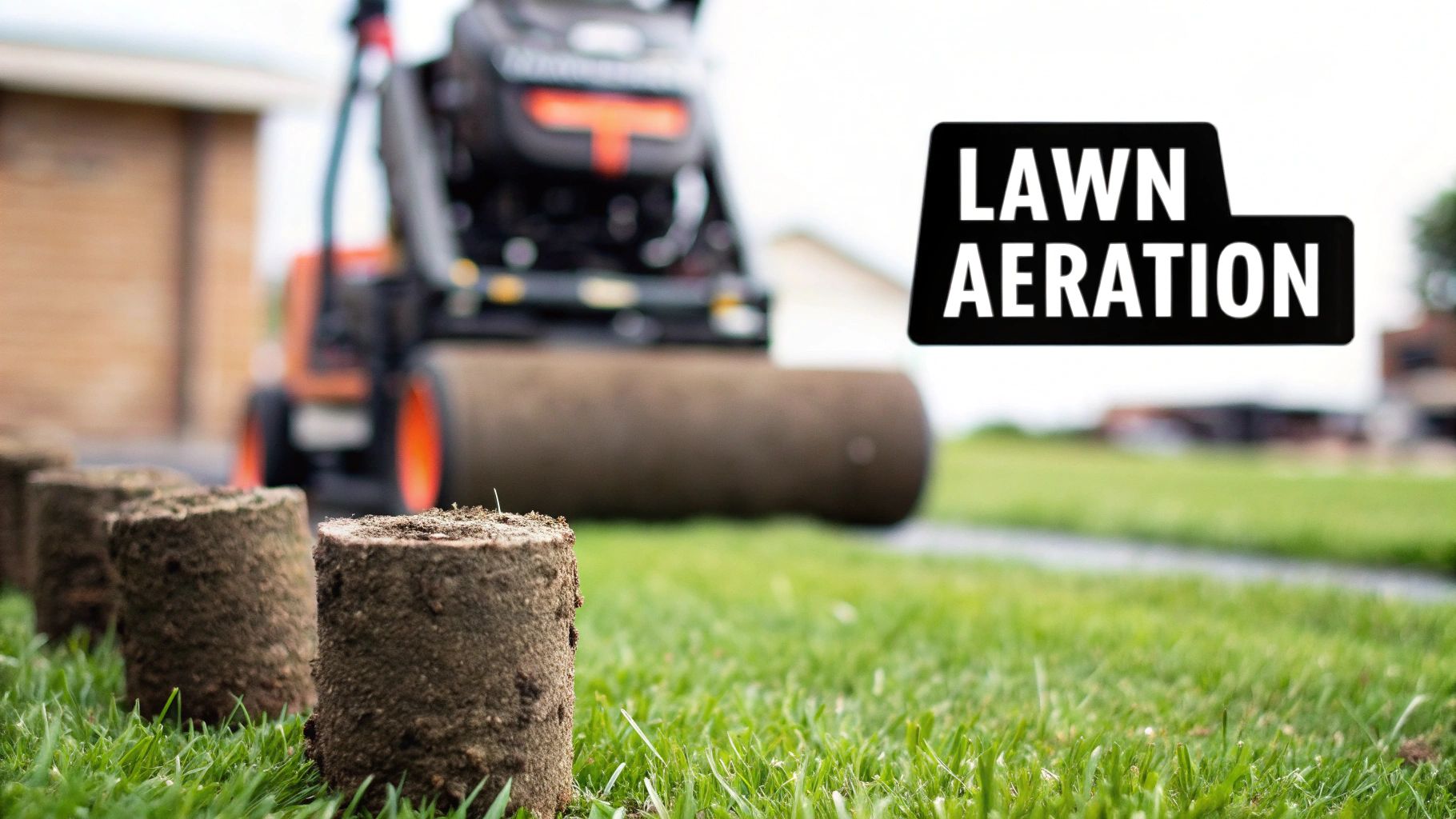
This mechanical process is especially beneficial for the warm-season grasses like Bermuda and Zoysia prevalent in our region. Aerating in late spring, typically from April to May, invigorates the turf just as it enters its most active growth phase. It encourages deeper, more resilient root development, which is crucial for surviving the intense heat and potential drought conditions of a Georgia summer. Relieving compaction is a foundational step for improving grass density and overall lawn vitality.
Implementation and Local Examples
The benefits of aeration are clearly visible across North Georgia communities. In Johns Creek, for example, many homeowners report significant improvements in water penetration and reduced runoff after a spring core aeration service. Similarly, properties in Cumming that once struggled with standing water after rainstorms have seen these issues eliminated through systematic aeration programs, which improve the soil's ability to absorb moisture. This proactive step leads to dramatically improved turf density and color just four to six weeks later.
Actionable Tips for Successful Aeration
To get the most out of this crucial service, proper timing and technique are key.
- Time It Right: Schedule aeration for when your warm-season lawn is actively growing, usually late April through May. Crucially, this should be done before applying any pre-emergent herbicides, as the process can disrupt the chemical barrier.
- Moisture is Key: The soil should be moist but not waterlogged. Water your lawn thoroughly a day or two before the scheduled aeration to allow the machine’s tines to pull deep, clean plugs.
- Leave the Cores: After a core aeration, leave the small soil plugs on the lawn. They will break down over a week or two, recycling valuable nutrients back into the soil.
- Combine with Other Services: For maximum impact, combine aeration with overseeding and top dressing. The newly created holes provide the perfect seed-to-soil contact for germination and growth. If you want to learn more, our detailed guide explains how to fix compacted soil effectively.
4. Overseeding and Bare Spot Repair
Winter can be tough on North Georgia lawns, often leaving behind thin patches or completely bare spots from foot traffic, disease, or frost. Overseeding is the process of broadcasting grass seed over your existing turf to fill in these gaps, improve overall density, and enhance the lawn's resilience against weeds and summer stress. For warm-season grasses like Bermuda and Zoysia, this step is a crucial part of any comprehensive spring lawn care checklist, transforming a sparse lawn in areas like Cumming or Milton into a thick, vibrant carpet.
A dense, healthy turf is your best natural defense against invasive weeds like crabgrass and nutsedge. By introducing new, robust grass seedlings, you are actively crowding out potential weed growth. This technique not only fixes visible winter damage but also proactively strengthens the entire lawn, making it better equipped to handle the heat and potential drought conditions of a Georgia summer.
Implementation and Local Examples
In North Georgia, the optimal window for overseeding warm-season grasses is typically from late April into May, once soil temperatures are consistently above 65°F. Homeowners in communities like Milton have seen thin, winter-damaged areas become lush and full within just 4 to 6 weeks of a well-timed overseeding. In Alpharetta, where mature trees can create challenging light conditions, targeted overseeding with shade-tolerant Zoysia varieties has successfully revitalized once-struggling lawns under canopies. The goal is to give the new seed enough time to germinate and establish strong roots before the peak summer heat arrives.
Actionable Tips for Successful Overseeding
To ensure your seeding efforts pay off, follow these specific, proven strategies:
- Time it with Aeration: For maximum effectiveness, overseed immediately after core aeration. The holes created by the aerator provide the perfect protective pockets for seeds to lodge and germinate.
- Ensure Seed-to-Soil Contact: After spreading the seed, lightly rake the area. This simple step is critical for pressing the seeds into the soil, which is necessary for germination.
- Water Wisely: Keep the newly seeded areas consistently moist, but not waterlogged, for the first 3 to 4 weeks. This often means light, daily watering rather than deep, infrequent sessions.
- Stay Off the Grass: Minimize foot traffic on seeded areas until the new grass is well-established and has reached a mowing height of about 3 inches. This prevents seedlings from being crushed or uprooted.
- Select the Right Seed: In heavily wooded areas common in Dahlonega and parts of Cumming, choose a grass blend specifically formulated for shade tolerance to ensure success under tree canopies.
5. Pre-Emergent Weed Control Application
A proactive approach to weed management is a cornerstone of a successful spring lawn care checklist, and nothing is more proactive than applying a pre-emergent herbicide. This treatment creates an invisible barrier in the top layer of soil that stops weed seeds, like those of notorious crabgrass and annual bluegrass, from successfully germinating. For North Georgia lawns in Cumming, Johns Creek, and surrounding areas, timing this application is everything, as it must be done before these pesky invaders have a chance to sprout and compete with your desirable turfgrass.
Applying pre-emergent isn't just about preventing weeds; it’s about resource management for your lawn. By stopping weeds before they start, you ensure that all the sunlight, water, and nutrients from your fertilization efforts go directly to your Bermuda or Zoysia grass. This preventative step significantly reduces the need for post-emergent herbicides later in the season, which can be more stressful for the turf and often require multiple applications to control established weeds.
Implementation and Local Examples
The key to success, as emphasized by the University of Georgia Extension Service, is applying pre-emergent when soil temperatures consistently reach 50-55°F. For the North Georgia region, this typically occurs from late February to mid-March. In Johns Creek, homeowners who time their application with this soil temperature window effectively prevent spring dandelion and crabgrass problems. In Alpharetta, many environmentally conscious residents and clients of services like Barefoot Organics are seeing great success with organic options like corn gluten meal, which can reduce crabgrass germination by up to 85% without harsh chemicals.
Actionable Tips for a Successful Application
To maximize the effectiveness of your pre-emergent treatment, apply it with precision:
- Monitor Soil Temperature: Don't just follow the calendar. Use a soil thermometer, starting in late February, to apply the product when your soil is consistently at 50°F.
- Ensure Even Coverage: Whether using a granular spreader or liquid sprayer, apply the product systematically across the entire lawn to create a consistent, unbroken barrier.
- Water It In: Most pre-emergent products require about a half-inch of water (from rainfall or irrigation) within a few days of application to activate and move into the soil.
- Use Organic Options: For a child- and pet-safe approach, consider corn gluten meal. It acts as a natural pre-emergent and provides a slow-release source of nitrogen.
- Time it Right with Seeding: Avoid applying pre-emergent to areas you plan to seed soon, as it will prevent grass seeds from germinating just as effectively as weed seeds. Wait at least 4-6 weeks after application before seeding.
6. Spring Fertilization with Organic Amendments
Once your lawn is awake and actively growing, typically in late April or May, it's time to provide the essential nutrients needed for vigorous growth. A crucial part of a modern spring lawn care checklist involves moving beyond synthetic chemicals and embracing organic, slow-release fertilizers. This approach focuses on feeding the soil, not just the plant, which is particularly beneficial for North Georgia's often acidic, heavy clay soils found in Cumming, Alpharetta, and Johns Creek. Organic amendments rebuild soil structure, boost microbial life, and provide a steady supply of nutrients for your Bermuda or Zoysia grass.
Implementing practices such as spring fertilization with organic amendments is a significant step towards practical environmental stewardship, contributing to the health of your local ecosystem. This method avoids the nutrient runoff associated with synthetic products, protecting local waterways while creating a safer environment for children and pets. By building a foundation of healthy soil, you create a resilient, self-sustaining lawn that is naturally more resistant to drought, disease, and pests.
Implementation and Local Examples
This soil-first philosophy is gaining traction across North Georgia. In Cumming, clients using organic fertilizers have seen their soil's organic matter increase by 1-2% annually, leading to greener, more resilient turf. Similarly, many properties in Milton have successfully eliminated their dependency on synthetic fertilizers, improving grass quality through a natural, soil-building approach. Homeowners in Alpharetta are also establishing exceptionally dense and vibrant lawns by prioritizing the long-term health of their soil with organic products. For a deeper understanding of these methods, you can explore the benefits of using a natural fertilizer for grass.
Actionable Tips for Successful Organic Fertilization
To effectively feed your lawn and soil, follow these specific strategies:
- Test, Don't Guess: Use your soil test results to guide your application. For a spring feeding, apply the appropriate nitrogen rate, which is typically around 1/2 pound per 1,000 square feet for warm-season grasses.
- Boost the Biology: Choose products that contain beneficial microbes like mycorrhizae and bacteria. These microorganisms help unlock nutrients in the soil and make them available to your grass roots.
- Time It Right: Apply fertilizer when the grass blades are dry and rain is forecasted within the next 48 hours. This helps activate the nutrients and move them into the root zone.
- Ensure Even Coverage: Use a broadcast spreader and apply in a stripe pattern, walking back and forth and slightly overlapping each pass. This prevents missed spots or over-application.
- Water It In: After applying, water the lawn lightly. This helps wash the granules off the grass blades and into the soil where they can begin to break down and release nutrients.
7. Weed Management and Targeted Removal
Even with a perfectly timed pre-emergent application, some stubborn weeds will inevitably find their way into your lawn. The next critical item on your spring lawn care checklist is managing these invaders with targeted post-emergent and mechanical methods. This approach focuses on removing established weeds like dandelions, clover, and henbit without resorting to broad, indiscriminate chemical applications, thereby protecting your soil's health and the surrounding ecosystem in our Cumming community.
This selective strategy is about precision, not power. Instead of blanketing your entire yard with herbicides, spot-treating only the affected areas minimizes chemical usage, which is safer for children, pets, and beneficial insects. Mechanical removal, or hand-pulling, is another effective tool, especially for deep-rooted perennials that can be difficult to control chemically. This integrated approach ensures you're fighting the weeds, not your lawn's overall health.
Implementation and Local Examples
This targeted philosophy is gaining traction across North Georgia. For example, some homeowners in Johns Creek and Milton are managing broadleaf weeds with organic spot treatments containing citric acid or clove oil, effectively killing weeds without harming their Bermuda grass. In the Cumming area, it’s common to see residents tackling dandelions with a two-pronged approach: using a specialized weeding tool for mechanical removal and then spot-treating any regrowth. This combined method helps maintain pristine turf without the harsh chemical impact that could affect nearby Lake Lanier. To keep your lawn pristine, a comprehensive homeowner's guide to weed control for lawns is essential throughout the season.
Actionable Tips for Successful Weed Removal
For an effective and environmentally conscious weed management plan, follow these targeted strategies:
- Identify Your Enemy: Properly identify the weed species in your lawn. Different weeds require different control methods; what works for clover might not work for nutsedge.
- Spot-Treat Actively Growing Weeds: Apply post-emergent herbicides directly onto the leaves of actively growing weeds, typically from late April through May. A small, targeted spray is far more effective than a broadcast application.
- Pull After Rain: The best time to hand-pull deep-rooted weeds like dandelions is after a good rain when the soil is soft. This makes it easier to remove the entire taproot, preventing regrowth.
- Maintain a Dense Turf: Remember that the best long-term weed defense is a thick, healthy lawn. A dense stand of Zoysia or Bermuda grass will naturally choke out most new weed seeds before they can germinate.
8. Mulching and Top Dressing Application
Beyond basic fertilization, top dressing with organic compost is a transformative step in a holistic spring lawn care checklist. This process involves spreading a thin, uniform layer of high-quality compost or other organic material across your lawn. For North Georgia's often-compacted clay soils in Cumming and Alpharetta, this introduces vital organic matter that improves soil structure, enhances water retention, and builds a robust, living foundation for your warm-season turf like Bermuda or Zoysia. It's a proactive investment in long-term soil health rather than just a short-term green-up.
Applying top dressing in the spring, typically from late April to May, allows the organic material to integrate into the soil just as your lawn enters its most active growth phase. This practice, popularized by organic lawn care specialists like Barefoot Organics, mimics the natural process of decomposition found on a forest floor, gradually building soil fertility year after year. It's an essential strategy for creating a resilient, self-sustaining lawn that requires fewer chemical inputs over time.
Implementation and Local Examples
This soil-building approach has shown remarkable results across North Georgia. For instance, Barefoot Organics has helped clients in Cumming and Johns Creek establish incredibly healthy turf through multi-year top dressing programs that focus on restoring soil biology. In Milton, homeowners use spring top dressing to improve the drainage and structure of heavy clay, reducing runoff and waterlogging issues. Similarly, properties in Alpharetta that have adopted annual applications have seen dramatically increased soil organic matter content over just a few seasons, leading to greener, more drought-tolerant lawns.
Actionable Tips for Successful Top Dressing
To get the most out of your top dressing application, follow these precise strategies:
- Use Quality Compost: Always use a high-quality, fully composted material. Immature compost can rob the soil of nitrogen and introduce weed seeds.
- Apply After Aeration: For maximum benefit, apply top dressing immediately after core aeration. This allows the organic material to fall directly into the root zone, accelerating soil improvement.
- Keep It Thin: Spread a thin layer, approximately 1/4 to 1/2 inch thick. Applying too much can smother the grass. You should still see the grass blades poking through the dressing.
- Water It In: Lightly water the lawn after application. This helps settle the compost down to the soil surface and washes it off the grass blades, initiating the integration process.
- Target Problem Areas: Use this opportunity to level low spots or address thin, compacted zones with a slightly more concentrated application to encourage new growth.
9. Moss, Thatch, and Lawn Disease Management
Over the winter, two common culprits, thatch and moss, can create a dense barrier that chokes your lawn. Thatch is a layer of dead grass, roots, and debris between the green grass blades and the soil surface. Moss often indicates underlying soil issues like acidity, compaction, or excessive shade. Addressing these problems, along with preventing spring fungal diseases, is a critical step in any comprehensive spring lawn care checklist for a thriving North Georgia turf in areas from Dahlonega to Johns Creek.
This combined approach is about more than just removal; it's about correcting the conditions that allow these issues to develop. Dethatching mechanically removes the suffocating layer, while managing moss requires addressing soil pH, drainage, and light exposure. Proactively managing these factors also creates a less favorable environment for common spring diseases like brown patch and dollar spot, which flourish in damp, matted-down turf.
Implementation and Local Examples
This integrated strategy is crucial across North Georgia. For example, many properties in Johns Creek and Milton with mature trees often battle moss in shaded, acidic areas. Here, a combined approach of liming to adjust soil pH, dethatching, and overseeding with a shade-tolerant fescue blend proves highly effective. In the Cumming area, it’s common to see lawns revitalized after a spring dethatching removes over a half-inch of buildup, finally allowing water and nutrients to reach the soil. This proactive care helps prevent the onset of fungal diseases that often plague lawns in Alpharetta during the warm, wet months of late spring.
Actionable Tips for a Healthy Turf Foundation
To effectively manage thatch, moss, and disease, apply these targeted strategies:
- Measure Before You Act: Dethatch only when the thatch layer exceeds 1/2 inch. You can check this by cutting out a small wedge of turf. The best time is late April to May, when your Bermuda or Zoysia is actively growing.
- Improve Air and Light: For moss-prone areas, judiciously prune lower tree limbs to increase sunlight and air circulation. This simple change can dramatically reduce moss growth and disease pressure.
- Water Wisely: Always water in the early morning to allow grass blades to dry completely during the day. Deep, infrequent watering encourages strong roots and discourages the shallow, damp conditions that fungi love.
- Combine and Conquer: Schedule aeration and dethatching together. Aerating first helps the dethatcher pull up more material and relieves the compaction that contributes to both thatch and moss issues. Follow up with overseeding to fill in any bare areas.
10. Spring Tree, Shrub, and Ornamental Care Integration
A truly healthy North Georgia lawn doesn't exist in isolation; it's part of a larger landscape ecosystem. The tenth essential step in our spring lawn care checklist is integrating the care of your trees, shrubs, and ornamental plants with your turf management. The health of your trees directly impacts the sunlight, water, and nutrients available to your Bermuda or Zoysia grass. Addressing these elements together creates a cohesive, thriving outdoor space in Cumming or Johns Creek, rather than just a patch of green grass.
This holistic approach involves strategic pruning to improve light penetration, proper mulching to conserve moisture and suppress weeds, and targeted fertilization for your ornamentals. Neglecting your trees and shrubs can lead to problems for your lawn, such as excessive shade causing thin turf or competing roots stealing vital resources. By caring for the entire landscape, you prevent these issues before they start and enhance your property's overall curb appeal and health.
Implementation and Local Examples
This integrated strategy is a cornerstone of comprehensive landscape management, championed by full-service providers like Barefoot Organics and ISA-certified arborists. In tree-heavy communities like Johns Creek and Alpharetta, homeowners see dramatic improvements in lawn density by simply crown lifting their trees, removing lower branches to allow more sunlight to reach the turf below. Properties throughout the Cumming area benefit from this comprehensive approach, where proper mulching around tree bases reduces root competition and improves the health of both the tree and the surrounding lawn.
Actionable Tips for Integrated Landscape Care
To successfully incorporate tree and shrub care into your spring routine, follow these specific strategies:
- Prune with a Purpose: Trim spring-flowering shrubs like azaleas after they bloom. For other trees and shrubs, a light pruning before new spring growth emerges is ideal. Remove any branches within six feet of the ground to improve air circulation and light for your lawn.
- Mulch Correctly: Apply a 2-3 inch layer of quality, organic mulch around the base of trees and shrubs, creating a "donut" shape. Never pile mulch against the trunk, as this "volcano mulching" can trap moisture and cause rot.
- Fertilize Separately: Avoid using your high-nitrogen lawn fertilizer on ornamental plants. Their nutritional needs are different, so use a balanced fertilizer specifically designed for trees and shrubs if a soil test indicates a deficiency.
- Inspect and Treat Early: As you walk your property, inspect trees and shrubs for winter damage or early signs of pests like bagworms and scale insects. Addressing these issues in early spring is far easier than tackling a full-blown infestation later.
10-Point Spring Lawn Care Comparison
| Service | Implementation Complexity 🔄 | Resource & Time ⚡ | Expected Outcomes ⭐📊 | Ideal Use Cases 📊 | Key Advantages ⭐ | Quick Tips 💡 |
|---|---|---|---|---|---|---|
| Early Spring Lawn Cleanup and Debris Removal | 🔄 Low–Medium (DIY possible) | ⚡ Basic tools or pro equipment; 2–4 hrs typical | ⭐⭐⭐ — Cleaner turf, reduced pest/disease habitat, reveals winter damage | 📊 Wooded/suburban lawns in early March–April needing prep for other services | ⭐ Low cost; immediate visual improvement; compostable waste | 💡 Rake on dry days; use blower; compost leaves; work in sections |
| Soil Testing and pH Analysis | 🔄 Medium (sampling technique) | ⚡ $20–50/test; 7–10 day turnaround | ⭐⭐⭐⭐ — Accurate nutrient/pH data guiding amendments and fertilizer | 📊 Before fertilizing or lime/sulfur application; variable soils | ⭐ Eliminates guesswork; prevents over-application; eco-responsible | 💡 Sample 4–6 in deep; test zones separately; retest every 2–3 yrs |
| Lawn Aeration and Soil Compaction Relief | 🔄 Medium–High (pro equipment recommended) | ⚡ Aerator rental/pro service; best mid-April–May | ⭐⭐⭐⭐ — 25–40% better infiltration; deeper roots; visible in 3–4 weeks | 📊 Compacted clay soils, high-traffic lawns, drainage problems | ⭐ Improves water absorption and root depth; reduces runoff | 💡 Aerate moist (not saturated) soil; leave cores; combine with overseed |
| Overseeding and Bare Spot Repair | 🔄 Medium (timing/technique sensitive) | ⚡ Seed cost + watering regime; 2–8 weeks to establish | ⭐⭐⭐ — Increased turf density; fills thin/bare areas; weed suppression | 📊 Thin or winter-damaged lawns; after aeration (late Apr–May) | ⭐ Cost-effective vs. sod; selects suitable varieties | 💡 Seed after aeration; keep seed moist; avoid traffic/mowing until 3" |
| Pre-Emergent Weed Control Application | 🔄 Medium (timing critical) | ⚡ Product application in late Mar–Apr; barrier lasts 6–8 weeks | ⭐⭐⭐⭐ — Prevents annual weeds (e.g., crabgrass) when timed correctly | 📊 Preventive weed control on established lawns (not new seed) | ⭐ Reduces season-long weed pressure; cost-effective | 💡 Apply at ~50°F soil temp; water lightly after; avoid new seed areas |
| Spring Fertilization with Organic Amendments | 🔄 Medium (rate & timing considerations) | ⚡ Higher cost than synthetics; slow-release 6–12 weeks effect | ⭐⭐⭐⭐ — Builds soil health, deeper roots, gradual green-up in 2–3 weeks | 📊 Soil-building programs; homeowners preferring organic approaches | ⭐ Long-term soil improvement; safe for children/pets; reduced leaching | 💡 Follow soil test rates; apply when dry and rain forecasted; use microbes |
| Weed Management and Targeted Removal | 🔄 Medium (ID & method matching) | ⚡ Labor or spot-treatment products; may need repeats | ⭐⭐⭐ — Removes established weeds; limits spread if treated early | 📊 Post-emergent control for visible infestations; spot treatments | ⭐ Minimizes chemical use; preserves soil health; effective on perennials | 💡 ID species; spot-treat; hand-pull deep roots; repeat as needed |
| Mulching and Top Dressing Application | 🔄 Medium (even application; equipment helps) | ⚡ Quality compost cost; 1/4–1/2" applied; best after aeration | ⭐⭐⭐⭐ — Increases organic matter, evens surface, improves structure | 📊 Long-term soil-building, leveling low spots, improving clay drainage | ⭐ Long-term soil health gains; organic and safe | 💡 Use fully composted material; apply 1/4–1/2"; top-dress after aeration |
| Moss, Thatch, and Lawn Disease Management | 🔄 High (diagnosis + integrated fixes) | ⚡ May need dethatcher, pH amendments, aeration; ongoing monitoring | ⭐⭐⭐ — Removes barriers to healthy turf; prevents disease with cultural care | 📊 Lawns with >½" thatch, moss in shade/acidic spots, recurring disease | ⭐ Addresses root causes; reduces fungicide/herbicide reliance | 💡 Dethatch only >½"; correct pH/drainage; monitor weekly Apr–Jun |
| Spring Tree, Shrub, and Ornamental Care Integration | 🔄 Medium–High (pruning expertise advised) | ⚡ Pruning tools, mulch, targeted fertilization; Mar–Apr timing | ⭐⭐⭐ — Healthier landscape, improved light/air for turf, reduced pest pressure | 📊 Wooded properties where trees/shrubs affect lawn light and roots | ⭐ Holistic landscape health; increases lawn vigor indirectly | 💡 Prune properly (or hire pro); mulch 3–4" but not against trunks; coordinate services |
From Checklist to Reality: Partnering for a Healthier Lawn
Navigating the transition from a dormant winter landscape to a vibrant spring oasis is a rewarding process, and this comprehensive spring lawn care checklist serves as your detailed road map. We've moved beyond generic advice, diving deep into the specific actions that create a truly resilient and beautiful lawn here in North Georgia. From the foundational importance of soil testing and core aeration to the strategic timing of overseeding and pre-emergent applications, each step is a critical component in building a healthy turf ecosystem.
The core takeaway is that proactive, informed care in the spring sets the stage for success throughout the entire year. By addressing soil compaction, balancing pH levels, and applying organic amendments, you are not just treating symptoms; you are solving problems at their source. This approach, which integrates tree and shrub care with turf management, creates a holistic environment that is naturally more resistant to the pressures of drought, disease, and pests common to the Alpharetta, Cumming, and Dahlonega regions.
Key Takeaways for North Georgia Lawns
Mastering this checklist means shifting your perspective from simply maintaining grass to cultivating a living, breathing ecosystem. Here are the most vital principles to remember:
- Timing is Everything: The window for tasks like aeration, overseeding Fescue, and applying pre-emergents is specific to our region. Acting too early or too late can diminish results or even harm your lawn.
- Soil Health is Paramount: You cannot have a healthy lawn without healthy soil. Soil testing isn't an optional step; it's the diagnostic tool that informs your entire fertilization and amendment strategy.
- Organic Inputs Build Long-Term Resilience: While synthetic fertilizers can provide a quick green-up, organic matter and natural amendments feed the soil biology, creating a sustainable foundation for turf health that is safer for families and pets.
- Integrated Care is a Necessity: Your lawn does not exist in a vacuum. The health of your trees, shrubs, and flowerbeds directly impacts your turf. Proper mulching, pruning, and watering strategies must work in harmony.
Your Actionable Next Steps
Transforming this knowledge into a lush, green reality requires a plan. Your immediate next steps should be to assess your lawn's current state and prioritize the checklist items. Begin with a thorough cleanup to see what you’re working with, and if you haven't already, get a soil test kit. This single action will provide invaluable data to guide your fertilization and pH correction efforts for the rest of the season.
The true value in mastering this spring lawn care checklist lies in the long-term benefits. You’re not just growing grass; you're increasing your property value, creating a safe and enjoyable outdoor space for your family, and contributing to a healthier local environment. A well-managed lawn in Cumming or Johns Creek is more than just curb appeal; it's a personal investment in your home and a functional, beautiful extension of your living space. Embracing these steps empowers you to build a landscape that doesn't just survive but truly thrives.
Ready to turn your checklist into a professionally managed, beautiful reality? The experts at Barefoot Organics specialize in the soil-first, organic approach detailed throughout this guide, creating lush, resilient lawns that are safe for your children and pets. Visit Barefoot Organics to get your free, instant quote and partner with a local team that understands the unique needs of North Georgia landscapes.