

For homeowners in Cumming, Alpharetta, and Johns Creek, the choice between side discharge vs mulching usually boils down to one critical factor: long-term lawn health. If you're looking for the definitive answer for routine care, it's mulching. It naturally feeds your lawn and helps improve Georgia's notoriously tough clay soil.
However, side discharge isn't without its place. It's an indispensable tool for specific situations, like when you're tackling overgrown grass after a vacation or mowing a damp lawn, a common scenario in North Georgia.
Your Quick Guide To Mowing Methods In North Georgia

Picking the right mowing technique is more than just getting the job done. It's a strategic decision that directly impacts the health and look of your lawn. For families here in Forsyth County and nearby communities like Milton and Dahlonega, truly understanding the differences between these two methods is the first real step toward a lush, resilient yard.
Each approach serves a very different purpose. One is a fast, powerful method for heavy-duty jobs, while the other is a slower, more refined process that actively nurtures your turf. This guide will walk you through the details, helping you decide which is best for your lawn’s immediate needs and your long-term goals.
What Is The Fundamental Difference
The core distinction is all about what happens to the grass clippings. A side discharge mower cuts the grass once and shoots the long clippings out of a side chute. It’s a straightforward, efficient design built for speed and handling a high volume of grass.
On the other hand, a mulching mower uses a specialized deck and blades to cut, lift, and re-cut the clippings over and over into tiny particles. These fine bits are then pushed deep into the turf, where they decompose and act as a natural, slow-release fertilizer.
Did you know that mulching can return up to 25% of the nitrogen your grass needs? That's a huge deal, as it cuts down on your fertilizer needs significantly. Those tiny clippings are like a free nutrient boost every time you mow.
For us in North Georgia, where warm-season grasses like Bermuda and Zoysia thrive from Cumming to Alpharetta, this makes a massive difference in soil vitality. It's a key principle behind our Natural Lawn Care Program. You can learn more about the science behind mulching your lawn from industry experts.
Side Discharge vs Mulching At A Glance
Here’s a quick summary table that breaks down the key attributes of each mowing method. It's a great way to see the differences side-by-side for an easy comparison.
| Feature | Side Discharge | Mulching |
|---|---|---|
| Best Use Case | Tall, overgrown, or wet grass | Routine weekly mowing on dry grass |
| Mowing Speed | Faster, ideal for large properties | Slower, more deliberate pace required |
| Lawn Health Impact | Neutral; does not feed the lawn | Excellent; returns nutrients to the soil |
| Appearance | Can leave clumps or windrows | Clean, professionally manicured look |
| Frequency Needed | More forgiving of less frequent mowing | Requires consistent, weekly mowing |
| Soil Improvement | Minimal impact on soil structure | Gradually improves soil organic matter |
| Safety Concern | Can eject rocks and debris at high speed | Safer, as the deck is typically closed |
Ultimately, choosing the right method depends on the condition of your lawn at that specific moment. Having the flexibility to switch between the two is what truly sets a great lawn care strategy apart.
How Each Mowing Method Actually Works
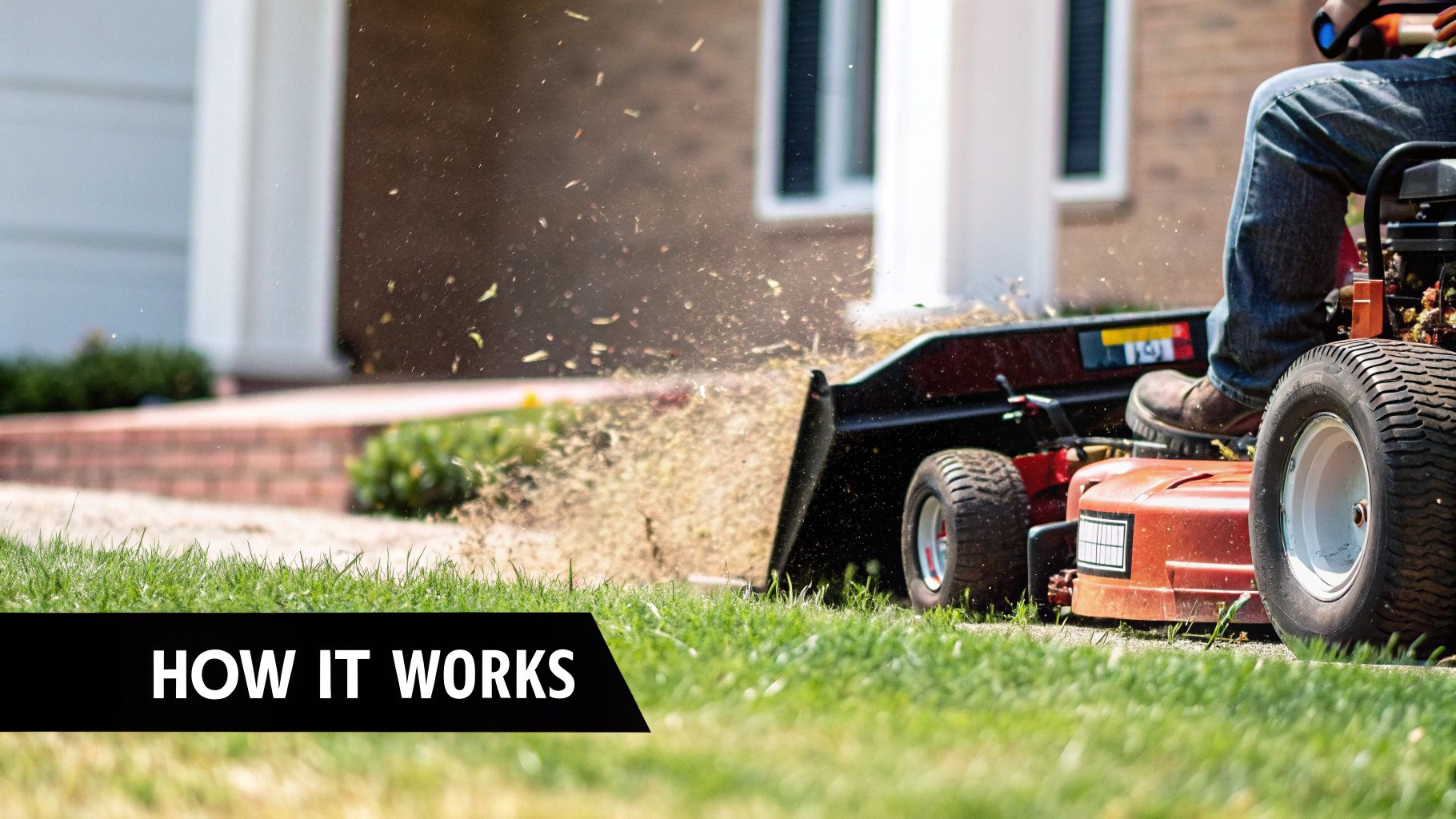
To really nail down the right choice in the side discharge vs mulching debate, you have to get a picture of what’s happening under the mower deck. These two approaches are fundamentally different. One is all about raw power and getting the job done fast, while the other is a more deliberate process designed to feed your lawn.
Think of side-discharge mowing as the straightforward, no-nonsense option. It’s built for one thing: cutting grass and moving on, as efficiently as possible.
The Mechanics Of Side Discharge Mowing
Side discharge is a simple, one-and-done deal. As the blade spins, it makes a single, clean slice through the grass. The shape of the deck and the airflow it generates immediately shoots those long clippings out the side chute with some serious force.
This is exactly why side discharge is the undisputed champ for tackling tall, thick, or damp grass. If you live anywhere from Johns Creek to Dahlonega, you know what it’s like after a classic North Georgia downpour. That powerful ejection keeps the mower deck from getting clogged up, letting you power through tough conditions without losing speed or sacrificing cut quality.
How Mulching Mowing Nurtures Your Lawn
Mulching, on the other hand, is a much more elegant, multi-step process. It's less about just cutting and more about turning those clippings into a free, natural fertilizer for your turf.
A true mulching mower has a specially designed domed deck and a blade with multiple cutting surfaces. This setup creates a vortex that pulls the grass clippings up into the chamber after the first cut.
The clippings don't just get cut once; they are suspended and repeatedly chopped by the blades, sometimes 5 to 10 times, until they are reduced to minuscule particles.
These tiny, almost dust-like pieces are then forced down deep into the turf, settling right at the soil line where you can't even see them. This completely avoids the clumpy rows of clippings that side-discharging can leave behind.
But here’s where the real magic happens. Those tiny clippings break down quickly, releasing vital nutrients like nitrogen, phosphorus, and potassium right back into the ground. It’s a slow-release, all-natural fertilizer that works wonders on the dense clay soil we see all over Alpharetta and Milton. This process feeds the soil’s microbiome, creating a healthier foundation for a resilient lawn.
It also helps you get more out of other lawn care services. For instance, when you aerate and dethatch your lawn, mulching ensures those nutrients can better penetrate the soil. In short, mulching works with your lawn’s ecosystem to build a stronger, greener turf from the ground up.
How Each Mowing Method Affects Your Lawn's Health and Look
When you get right down to it, the side discharge vs. mulching debate always circles back to two things every homeowner cares about: the long-term health of their grass and how it looks right after a mow. Each method leaves its own signature on your yard. One is all about building a resilient, healthy lawn over time, while the other is a fast, no-nonsense solution for when the grass gets a little wild. For folks here in Cumming and Alpharetta, knowing the difference is the secret to getting that perfect landscape.
Think of mulching as a long-term investment in your soil. The whole idea is to chop those grass clippings up into tiny, almost invisible pieces and drop them right back into the turf. It's a cornerstone of any good organic lawn care plan.
Mulching: Building Great Soil from the Ground Up
Here in North Georgia, we're all too familiar with that heavy, compacted clay soil. Mulching is one of the best ways to tackle it head-on by consistently adding organic matter. As those tiny grass bits break down, they create a much richer, healthier soil structure.
This has a few huge benefits for your lawn's health:
- Better Water Retention: All that organic matter acts like a natural sponge, helping your soil hang onto moisture for longer. That's a massive plus during our hot, dry summers in Johns Creek and Milton, making your lawn much more resilient to drought.
- A Feast for Microbes: Those decomposing clippings are food for the good bacteria and fungi in your soil. A thriving microbial ecosystem is the engine that drives nutrient absorption and keeps your grass healthy.
- Natural Weed Control: The single best defense against weeds is a thick, lush lawn. By feeding your turf and encouraging dense growth, mulching helps to naturally squeeze out those pesky invaders over time.
Because the clippings are so fine, they just disappear into the grass. You get a clean, professionally manicured look without ever touching a rake. It’s like fertilizing and mowing all in one go.
Side Discharge: The Aesthetic Trade-Offs
While mulching delivers that polished look, side discharge is built for speed and power, and that comes with a few visual compromises. The biggest issue is the "windrows" it creates—those noticeable lines or clumps of clippings left sitting on top of the lawn.
These clumps aren't just an eyesore. If you don't deal with them, they can smother the grass underneath, blocking out sunlight and air. That's how you end up with yellow or brown patches that ruin the uniform, green carpet look you're going for. Even though side-discharging can create some nice stripes, the messy clippings can really take away from the final result.
For homeowners in Forsyth County, the choice often comes down to weighing the short-term convenience of quickly clearing tall grass against the long-term soil health and superior finish that consistent mulching provides.
This is especially true for our dense clay, which just gets more compacted without a steady diet of organic material. If you're fighting that battle, it's worth learning other ways to improve your soil. Check out our guide on how to fix compacted soil for some practical solutions.
A Closer Look at Efficiency and Nutrients
The conversation also has to include a practical balance between saving time and managing nutrients. Here's a game-changer: side discharge mowers can slash mowing time by 40-50% compared to mulching, which is why they're the top choice for overgrown grass that would choke a mulching deck. That speed is a lifesaver after a big rain in Alpharetta or Johns Creek, when the grass seems to shoot up overnight. With side discharge, you get even clipping spread and crisp stripes—pros say up to 25% better striping quality.
On the flip side, mulching requires a slower pace to chop the clippings finely, often adding 20-30 minutes per acre as the blades rework the material 5-10 times. But for environmentally-conscious families in Milton, mulching's nutrient recycling is far more valuable than speed. It can boost soil organic matter by 5-10% annually, encouraging deeper roots that stand up to Georgia's unpredictable weather. In contrast, side-discharged lawns lose 15-20% more nitrogen as the clippings dry out on the surface. You can find more great insights from a mowing method comparison on LawnStarter.com.
When To Choose Each Mowing Method In Georgia
Figuring out whether to mulch or side discharge isn't a decision you make once and forget about. It's something you'll adjust all year long, especially with North Georgia's unique climate. The right call changes with the seasons, from that first big cut in the spring to keeping your lawn alive during summer's peak. Getting it right is key to protecting your landscape investment and keeping your grass looking great.
This simple decision tree is a great visual for making a quick call on mowing day.

As you can see, it really boils down to a simple rule: if you've let the grass get too tall, side discharge is your friend. But for regular, healthy maintenance, mulching is almost always the better choice.
Early Spring Scalping In Forsyth County
For those of us with Bermuda or Zoysia lawns in Cumming and the surrounding areas, the first mow of the season is the "spring scalp." This is where you cut the dormant, brown grass super low to make way for new green growth.
In this case, side discharge is the clear winner. That first aggressive cut creates a massive amount of dead material. If you tried to mulch it, you'd smother the lawn. Side discharging (or bagging) gets that thatch-like layer off the turf, letting sunlight and air hit the soil and wake everything up.
Peak Summer Heat In Johns Creek
When the intense summer heat rolls in from June through August, mulching is non-negotiable for a healthy lawn. The scorching sun and unpredictable rain we get around Alpharetta and Milton can stress your grass out in a hurry.
A consistent, weekly mulching routine gives you two huge advantages:
- Moisture Conservation: Those tiny clippings create a natural blanket over the soil, slowing down evaporation and helping your lawn stay hydrated between waterings.
- Natural Fertilization: As they break down, the clippings slowly release nitrogen back into the soil, feeding your grass right when it's growing the most.
This simple step builds up your lawn's resilience against drought and heat, which is absolutely critical for surviving a Georgia summer.
When To Mulch vs Side Discharge In North Georgia
Every lawn situation is a little different. Here’s a quick-glance table to help you decide on the fly based on common scenarios we see all the time in the Cumming area.
| Lawn Condition Or Season | Recommended Method | Why It's The Best Choice |
|---|---|---|
| Weekly mow on healthy, dry grass | Mulching | Returns valuable nutrients and moisture to the soil, building turf health over time. |
| First mow of spring (scalping) | Side Discharge | Removes a large volume of dormant grass quickly without smothering new growth. |
| Overgrown or wet grass after rain | Side Discharge | Prevents the mower deck from clogging and avoids leaving heavy, wet clumps on the lawn. |
| Peak summer heat and drought | Mulching | Helps the soil retain moisture and provides a natural, slow-release fertilizer. |
| First few mows on newly seeded grass | Side Discharge | Gentler on delicate seedlings; avoids pulling them up or smothering them. |
| Managing thick, leafy areas | Side Discharge | Effectively processes a high volume of material that would overwhelm a mulching mower. |
This table covers the most frequent decisions you'll make, but remember to always assess your lawn's specific needs before you start the mower.
A Week Of Rain In North Georgia
We’ve all been there. A week of non-stop spring or summer rain turns the yard into a jungle. Trying to mulch tall, damp grass is a recipe for a clogged mower and a mess. You'll end up with thick, wet clumps that can actually lead to fungus and other lawn diseases.
In this situation, temporarily switching to side discharge is the only practical solution. It gives your mower the power to chew through all that heavy growth without getting bogged down.
Once things dry out and you're back on a regular schedule, you can switch right back to mulching.
Managing New Grass And Overseeding
If you've just put down new seed to fill in some bare spots, your mowing strategy has to be gentle. For those first couple of mows, the priority is protecting the fragile new grass blades. A lot of homeowners ask how soon they can even start. The trick is to wait until the new grass is well-established, and for a deeper dive, you can check out our guide on how long after overseeding you can mow.
When it is time for that first cut, mulching is usually too aggressive. A gentle side discharge is the way to go, as it's less likely to bog down and yank out those young shoots. After two or three mows, when the new turf has firmed up, you can safely go back to your normal mulching routine.
Safety, Environment, and Equipment Maintenance

When you're deciding between side discharge vs. mulching, you're making a choice that goes far beyond just how your lawn looks. It's a decision that directly impacts your family's safety, your environmental footprint, and even how much time you'll spend maintaining your mower. For homeowners here in North Georgia, getting this right is key.
Let's start with what matters most. The biggest functional difference between these two methods comes down to safety. A side-discharge mower is built to clear grass fast, and it does that by shooting clippings—and anything else it picks up—out the side with a lot of force.
A Top Priority: Family Safety
If you live in a community like Milton, Alpharetta, or Cumming, lawn safety is non-negotiable. A side-discharge mower can easily turn a small rock, an acorn, or a forgotten dog toy into a dangerous projectile. We've all seen or heard stories of cracked windows and dented cars from flying debris.
Even more seriously, it creates a real hazard for people and pets. A child playing nearby or a dog chasing a squirrel could be seriously hurt by something flung from the mower deck.
Mulching mowers are just fundamentally safer for residential yards. Because the deck is closed off to keep the grass inside for re-chopping, it also contains potential projectiles. This simple design difference makes mulching the hands-down winner for family-friendly mowing.
By keeping all the action under the deck, a mulching mower provides peace of mind that you just don't get when debris is flying out the side.
Your Lawn and Environmental Stewardship
How you mow has a surprising impact on the local environment. Mulching is a perfect fit for a more sustainable, organic approach to lawn care, a value many families in Johns Creek and Dahlonega share.
For starters, mulching is basically a self-fertilizing system. Those tiny clippings break down quickly, feeding nutrients back into the soil. This process alone can reduce your need for synthetic fertilizers by up to 25%, which means less chemical runoff finding its way into our local creeks and streams.
It also completely eliminates yard waste. When you bag clippings, they often end up in a landfill, and many Georgia towns now ban or restrict yard trimming disposal. Mulching solves this problem by recycling the grass right where it was cut. Integrating this with broader environmentally friendly practices creates a much more sustainable home and yard.
The Demands of Equipment Maintenance
Finally, you have to consider the mower itself. Each method places different demands on your equipment. A mulching mower, in particular, relies on being in top shape to do its job well.
-
Mulching Mower Care: To get that fine, almost invisible mulch, the blades have to be sharp. Dull blades don't slice the grass; they tear it, which leads to ugly brown clumps and stresses out your lawn. You'll also need to scrape the underside of the deck regularly to prevent wet clippings from building up, which can hinder airflow and cause rust.
-
Side Discharge Mower Care: A side-discharge setup is a bit more forgiving. Since its main job is to get clippings out of the way as fast as possible, it's not as prone to clogging up if the blades aren't razor-sharp or the deck is a little dirty. Of course, you still need to do regular engine maintenance, but the cutting performance won't suffer as much from minor neglect.
This is a really practical difference. Mulching rewards you for staying on top of maintenance, while side-discharge gives you a little more breathing room, which makes sense for a tool often used on rougher, less manicured areas.
How Your Mowing Choice Works With Professional Lawn Treatments
Deciding between side-discharge and mulching isn't just a choice you make on mowing day. It's a strategic move that can either boost or hinder the professional lawn care services you invest in. Think of it this way: your mowing strategy is one half of the equation, and professional treatments are the other. When they work together, you get a healthy, resilient North Georgia lawn that neither approach could achieve on its own.
For homeowners from Cumming to Alpharetta, getting this synergy right is the secret to unlocking your property's true potential. The right mowing technique makes sure you squeeze every bit of value from your investment in professional care.
Getting More from Aeration in Georgia Clay
One of the best tag teams in lawn care is combining consistent mulching with core aeration. If you live anywhere in Forsyth County or nearby, you know the struggle with our dense, compacted clay soil. Core aeration is the classic remedy, pulling up small plugs of soil to open up channels for air, water, and nutrients to finally reach the grassroots.
This is where a mulching mower becomes an incredible partner. The tiny, nutrient-packed clippings fall right into the holes left by the aerator. This creates a powerful double-benefit:
- Deeper Nutrient Delivery: It’s like spoon-feeding your lawn’s roots with a natural, slow-release fertilizer exactly where they need it.
- Better Soil Structure: Over time, all that organic matter helps break down the compacted clay, improving drainage and giving roots more room to grow.
Clippings from a side-discharge mower are just too big to fall into the aeration holes; they mostly just sit on top. Mulching, on the other hand, makes the benefits of aeration last longer and work harder for your lawn.
Supercharging Organic Lawn Care Programs
If you're using an organic lawn care program, mulching isn't just a good idea—it's practically essential. The entire goal of a natural program is to build up a thriving soil ecosystem filled with beneficial microbes. These microscopic powerhouses are what break down nutrients and feed your grass naturally.
By returning finely-chopped organic material to the lawn with every mow, you’re providing a constant food source for that vital microbial life. This is how you build a healthy soil food web, which is the cornerstone of a lawn that can sustain itself and fight off problems without a lot of chemical help.
When you partner with a service like Barefoot Organics, how you mow becomes a crucial part of the overall strategy. A steady mulching routine perfectly complements our natural treatments. This integrated approach—smart mowing combined with expert care—is the surest way to get that lush, green lawn your family can safely enjoy.
Mowing Questions We Hear All the Time
We’ve dug into the great side discharge vs. mulching debate, but I know many of you in Cumming and Alpharetta still have some specific questions. Let's walk through the most common ones I hear from homeowners to clear things up so you can feel confident about your lawn care routine.
Can I Get Away with Mulching Every Two Weeks?
I really wouldn't recommend it, especially when things are growing like crazy during a Georgia summer from May to September. For mulching to really work, you have to stick to the "one-third rule"—never cutting more than a third of the grass blade in a single mow. Waiting two weeks lets the grass get far too long. You'll end up with big, wet clumps of clippings that just sit on top of your lawn, smothering the turf instead of feeding it.
If you live in places like Johns Creek or Milton and want to mulch, weekly mowing is non-negotiable for a healthy lawn.
Does Mulching Lead to Thatch?
This is probably the biggest myth in lawn care, and it's time to bust it. The truth is, when you do it right—with sharp blades and a consistent schedule—mulching does not cause thatch. In fact, it does the opposite. Those tiny clippings break down quickly and become food for the good microbes in your soil.
Thatch is almost always a symptom of other problems, like using too much fertilizer, having compacted soil, or watering incorrectly. A healthy microbial environment, which mulching promotes, can actually help decompose any existing thatch.
Think of mulching as actively improving your soil's health from the top down.
Do I Need a Special Mower to Mulch?
Not necessarily. While a dedicated mulching mower with a specially designed deck will give you the cleanest cut, you don't have to run out and buy one. Most standard side-discharge mowers can be converted into pretty effective mulchers.
It's usually a straightforward two-step process:
- Pop in a mulch plug: This is just a simple insert that blocks the side-discharge opening. It keeps the grass clippings trapped under the deck so they can be chopped up again and again.
- Change the blade: You'll want to swap out your standard blade for a mulching blade. These have more curves and cutting edges designed to mince clippings into fine pieces.
This is a great, budget-friendly way for most people to get started with mulching without investing in a whole new machine.
What’s the Best Way to Deal with Fall Leaves in North Georgia?
Your mower is your best friend when the leaves start to fall. Instead of spending hours raking and bagging, just mow right over them. We call this "leaf mulching," and it's fantastic for your lawn. The mower shreds the leaves into tiny, confetti-like bits that settle down into the grass.
Over the winter, those shredded leaves decompose and add a huge boost of carbon and other organic nutrients back into your soil. It’s a much better solution than piling them up on the curb. If you've got a really thick blanket of leaves, you might just need to make a second pass to get them chopped up nice and fine.
Are you ready to create a healthier, more resilient lawn that your family can enjoy? The team at Barefoot Organics combines expert knowledge of Georgia's climate with natural, effective lawn treatments. Let us help you build a beautiful landscape from the ground up.
Get your free, no-obligation quote today at https://barefootorganicsllc.com.