

For those of us with lawns in places like Cumming, GA, and the surrounding areas like Johns Creek and Alpharetta, seeding in the fall is hands-down the best thing you can do to get that thick, green turf you're after. This is your moment. The brutal summer heat has finally backed off, but the ground is still warm—the perfect welcome mat for new grass seed to sprout and dig in before winter arrives.
Why Fall is Georgia's Gold Standard for Seeding
If you've ever battled a patchy, struggling lawn in North Georgia, the real culprit is often just bad timing. It seems like spring would be the time to seed, but around here, that sets up new grass for failure. Tender new seedlings just can't handle a Georgia summer right out of the gate.
Seeding in the fall completely changes the game.
From September through November, the conditions in our area—from Milton to Dahlonega—are just right. The soil is still holding onto that summer warmth—usually well above 55°F—while the cooler air means less stress on the plant. This creates a natural incubator for cool-season grasses like Tall Fescue, letting them germinate quickly and put all their energy into growing deep, healthy roots.
The Real-World Benefits of Seeding Now
Think of it as giving your lawn a massive head start for next year. Here’s why this timing works so well in our local climate:
- Weeds Are Waving the White Flag: Summer pests like crabgrass are on their way out. This means your new grass won't have to compete for precious water, sun, and nutrients.
- It's All About the Roots: Without the stress of scorching heat, new grass can focus on driving its roots deep into our infamous Georgia clay. This is what prepares it to survive next year's inevitable dry spells.
- Mother Nature Helps with Watering: We typically get more predictable rain and heavy morning dew in the fall in the Cumming area. This keeps the soil consistently moist, which is exactly what seeds need to germinate without you having to run the sprinklers 24/7.
The work you put in this autumn is the secret weapon for a lawn that’s not just greener, but also tough enough to handle a hot Georgia summer. You’re building a foundation for a healthier turf that can naturally choke out weeds and fend off disease.
Picking the Right Grass Seed for Your North Georgia Lawn
Walking into a garden center can be a bit overwhelming. You’re faced with a wall of different grass seeds, all promising a perfect, lush lawn. So, what actually works for our unique North Georgia climate?
For homeowners here in Johns Creek, Milton, and the surrounding areas, the answer almost always comes down to one hero grass: Tall Fescue.
Unlike warm-season grasses like Bermuda that go dormant and turn brown at the first sign of frost, Tall Fescue is a cool-season variety. This means it stays a vibrant green for most of the year here. Modern varieties, which you'll often see labeled as “turf-type tall fescue,” are the real game-changers. They've been specifically bred to have finer blades and, most importantly, better tolerance for our notoriously hot and sometimes dry summers in places like Alpharetta.
How to Read a Seed Label Like a Pro
Before you even think about putting a bag of seed in your cart, flip it over and look at the analysis tag. This little label is your best friend—it tells you exactly what you’re buying and separates the good stuff from the bags full of filler and future weeds.
Here’s what you need to zero in on:
- Germination Rate: You want to see 85% or higher. This number tells you how much of the seed in that bag is actually capable of growing. Anything less, and you're paying for duds.
- Weed Seed Content: This should be 0.00%. Seriously. Even a tiny percentage means you're willingly planting weed seeds right alongside your new grass.
- "Other Crop" Seed: This number shows how much of other desirable grass types are mixed in. A low number is usually best unless you're buying a specific blend. This helps ensure your lawn has a consistent look and feel.
When you invest in certified seed with a high germination rate and zero weed content, you're not just buying grass seed—you're buying peace of mind and preventing a whole lot of future headaches. A quality blend is truly the foundation of any successful fall seeding project.
Comparing Cool-Season Grass Seed for Georgia Lawns
Most of what you'll find for our area are blends of different Tall Fescue varieties, each with its own strengths. Choosing the right one often comes down to the specific conditions in your yard.
This table breaks down some common Tall Fescue blends you might encounter.
| Grass Seed Type | Sun Tolerance | Drought Resistance | Best For |
|---|---|---|---|
| Full Sun Fescue Blend | Excellent | Good | Large, open yards in places like Milton with 6+ hours of direct sun |
| Sun & Shade Fescue Mix | Good | Moderate | Typical Johns Creek yards with a mix of sun and dappled shade from trees |
| Drought-Tolerant Fescue | Good | Excellent | Lawns with minimal irrigation or south-facing slopes common in Dahlonega |
| Dense Shade Fescue Mix | Moderate | Moderate | Areas under heavy tree canopies that get limited light |
The key is to match the seed to your yard's environment. A blend designed for full sun will struggle in a shady backyard in Dahlonega, and vice versa.
Taking the time to get this step right makes all the difference. For a deeper look into how we prep a lawn and ensure these seeds take root successfully, check out our comprehensive guide on lawn overseeding services.
Prepping Your Lawn for Seeding Success
I've seen it time and time again—the difference between a lawn that pops and one that flops almost always comes down to the prep work. Here in North Georgia, from Cumming to Alpharetta, you can't just toss some seed on the ground and hope for the best. Our tough clay soil demands a little more effort to create an environment where those new seeds can truly thrive.
First thing's first: give your lawn a short haircut. You'll want to mow it down to about one to two inches. This isn't for aesthetics; it’s a strategic move. A shorter cut lets precious sunlight and water reach the soil where the new seeds need it most and reduces competition from the existing turf.
Next up, you have to tackle the thatch. Thatch is that spongy layer of dead grass and debris that sits on top of the soil. If it's too thick, it acts like a shield, blocking seeds from ever reaching the dirt. A good, vigorous raking with a dethatching rake or a pass with a power dethatcher will clear the way for your seeds to make contact with the soil.
Breaking Through That Tough Georgia Clay
Let's be honest, our soil here is notoriously compacted. This dense clay can be a real barrier for new, tender grass roots trying to dig in. That’s why core aeration is an absolute must-do if you're serious about getting great results from your fall seeding.
Core aeration involves pulling up small plugs of soil, which might sound aggressive, but it's incredibly beneficial. It accomplishes a few key things:
- It breaks up that compacted soil, giving new roots space to stretch out and grow deep.
- It opens up channels for water, air, and nutrients to get down to the root zone.
- The little holes it creates are perfect pockets for seeds to settle into, protecting them from the elements and ensuring good seed-to-soil contact.
Trust me, this is far more effective than just poking holes with a spike aerator, which often makes the compaction worse around the holes. Once you’ve aerated, you’ve created the perfect seedbed. This is ground zero for a healthy lawn.

As you can see, getting the soil ready is the foundation. It’s all about creating a welcoming home for those new seeds before you even think about spreading them.
Don't Forget to Check Your Soil's pH
Finally, let's talk about soil chemistry, something people often skip. Most Georgia soil, especially around Cumming, leans acidic, which can prevent your grass from absorbing the nutrients it needs to grow strong. A quick soil test is the only way to know what you're working with.
Most grasses are happiest in a soil pH between 6.0 and 7.0. If your test shows the soil is too acidic, an application of lime is needed to bring that number up and unlock the available nutrients for your new grass.
This one adjustment can have a huge impact on your lawn’s long-term health. If you're new to this, we have a straightforward guide on how to test your soil pH. Taking cues from broader agricultural planting strategies can also provide a deeper understanding of how to get the most out of any seeding project.
Spreading Seed and Watering It In: The Make-or-Break Stage
After all that hard work prepping the soil, it's finally time for the main event: getting that seed down. If you want that lush, even lawn you see in neighborhoods from Milton to Dahlonega, the secret is in how you spread the seed. Tossing it by hand or just walking in straight lines is a recipe for a striped, patchy mess.
Here's a technique the pros use. Take your total amount of grass seed and split it into two equal piles. Set your broadcast spreader to about half the rate recommended on the bag. Walk your entire lawn in one direction, say north to south, spreading the first half. Then, take the second pile of seed and walk a perpendicular pattern, east to west. This simple crisscross method is the key to getting complete and even coverage and avoiding those frustrating bare spots later on.
Your Initial Watering Strategy
Once the seed is down, we enter the most critical phase of the whole process. For the first 10 to 14 days, your one and only goal is to keep the seed consistently moist. I’m not talking about a deep, heavy soaking—that will just wash the seed away. Think frequent, light misting.
- How often? You'll want to water lightly two or three times a day. A quick spray in the morning, another around noon, and one more in the early afternoon usually does the trick.
- How long? It only takes a few minutes each time. You just want the very top layer of soil to stay damp, kind of like a wrung-out sponge.
- The biggest mistake to avoid: Don't let those seeds dry out. Not even once. If a seed starts to germinate and then dries completely, it's game over for that seedling.
I always tell people to think like a farmer planting a crop. Their success often depends on perfect timing with natural rain cycles to get seeds started. Your initial watering is just you creating that perfect, gentle environment to trick the seeds into sprouting.
Give Your New Grass a Head Start with Starter Fertilizer
Right after seeding, I highly recommend putting down a starter fertilizer. This isn't your regular lawn food. Starter fertilizers are specifically designed for new grass, with a much higher percentage of phosphorus. Phosphorus is the nutrient that really drives strong, deep root development.
Giving your new seedlings this boost of energy helps them establish a solid root system before the cold weather sets in. It’s the same logic farmers use for winter wheat. By seeding in the fall, they allow the crop to get its roots down before going dormant, which leads to a much healthier and more productive plant in the spring. You can actually discover more insights about these agricultural practices and how they impact future yields.
After you start to see a green haze across the lawn and germination is well underway, you can begin to change your watering. Slowly back off on the frequency but increase how long you water each time. This encourages those brand-new roots to start digging deeper into the soil to find moisture, which is exactly what you want.
Nurturing Your New Lawn Through Fall and Winter
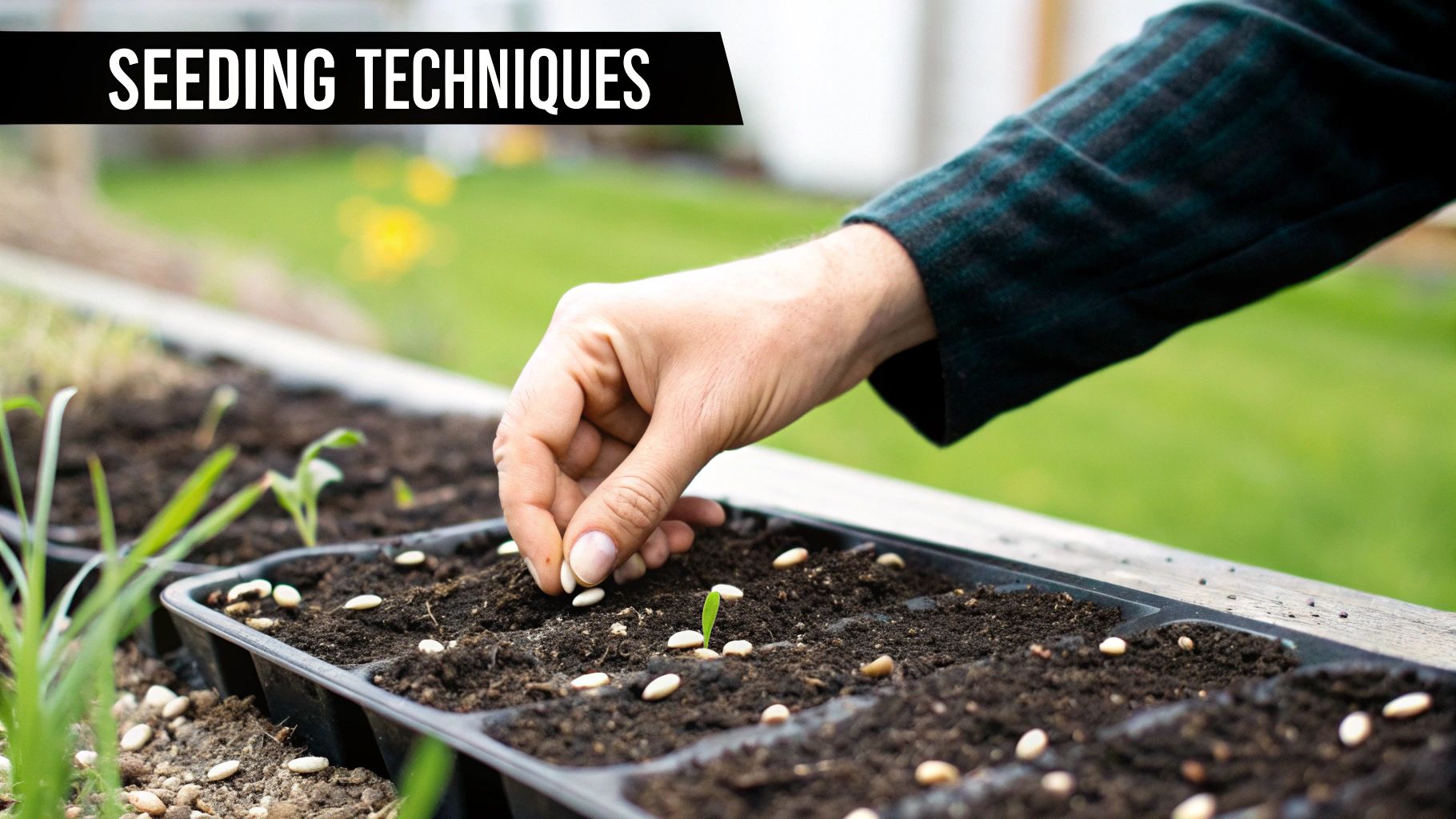
Watching those first green sprouts pop up is a fantastic feeling, but your work isn't quite finished. The real secret to a lush lawn next spring is protecting those delicate seedlings through their first fall and winter. This is where you guide that new growth into becoming a tough, resilient turf.
The First Mow and Ongoing Cuts
One of the biggest questions I get from homeowners around Cumming and Alpharetta is, "When can I finally mow it?" The answer requires a bit of patience. You need to wait until the new grass is at least three to four inches tall before you even think about that first cut. This gives the seedlings plenty of time to sink their roots deep into the soil.
When it's time, set your mower deck to its highest setting. A good rule of thumb is to never trim more than the top third of the grass blade. Mowing too aggressively at this stage can seriously stress the young grass and stunt its growth.
Dealing with Leaves and Other Tasks
As autumn rolls on, those beautiful North Georgia leaves will start to blanket your new lawn. A thick mat of leaves is bad news—it suffocates the new grass by blocking sunlight and trapping moisture, which is a perfect recipe for fungal diseases.
Whatever you do, don't grab a heavy rake; you'll just pull up your new seedlings. A much better approach is to use a leaf blower on its lowest setting or, even better, mulch the leaves with your mower. A light layer of finely mulched leaves actually feeds the soil with valuable organic matter.
Here's what else to keep on your radar:
- A Second Feeding: Give your lawn a follow-up meal about four to six weeks after the seeds have germinated. Applying a balanced, natural fertilizer for your grass now helps the turf store up the energy it needs to get through the winter.
- Watch for Fungus: The cool, damp weather of a Georgia fall is prime time for issues like brown patch. Keep an eye out for any circular, discolored patches and act fast before they have a chance to spread.
- Stay Off the Grass: Limit traffic as much as you can. Keep feet, pets, and heavy equipment off the newly seeded areas until the lawn is fully established.
This whole idea of planting in the fall to build resilience for the coming seasons isn't just for lawns. Farmers have been doing it for centuries with crops like winter wheat. They plant in the fall to let the crop establish strong roots before going dormant, leading to explosive growth in the spring. It’s a time-tested strategy that works just as well in your backyard as it does in a hundred-acre field.
Still Have Questions About Fall Seeding?
It's completely normal for questions to pop up when you're in the middle of a lawn project, especially here in the Cumming, GA area. Let's tackle a couple of the most common ones I hear from homeowners.
Can I Just Spread Seed Over My Patchy Lawn?
Many people wonder if they can just toss seed over thin or bare spots. The short answer is yes, but only if you've done the prep work first. You absolutely need good seed-to-soil contact, which means you have to aerate and dethatch before you even think about seeding. Simply throwing seed on top of compacted soil and thatch is a waste of time and money.
What If We Get a Sudden Warm Spell?
Georgia weather is anything but predictable. If an unexpected warm streak hits after you’ve seeded, don't panic. The key is to keep up with your watering schedule. You'll want to water lightly but frequently, maybe a few times a day, just enough to keep the soil surface and the new seeds from drying out. Even with warm days, the cooler nights we get in places like Dahlonega and Milton are exactly what new grass needs to thrive.
The very principle of seeding in the fall is what makes large-scale farming so successful. Think about it—strong global grain forecasts are often linked to successful fall plantings of winter crops that get a head start before spring. You can actually read more about these global agricultural trends.
And if you've gotten so good at this that you're thinking of going pro, there's a lot to learn about how to get lawn care customers and turn your passion into a business.
Ready to skip the guesswork and guarantee a beautiful lawn? The team at Barefoot Organics has the local expertise for Cumming, Johns Creek, Alpharetta, and beyond to get it done right. Get your free quote today!