

Creating a Pet-Safe Lawn in North Georgia
Why Pet Safety Matters So Much
Let’s be honest, for most of us in Milton and Dahlonega, our pets are part of the family. They roll around in the grass, chew on random sticks, and dig in the dirt. This puts them in direct contact with literally anything we apply to the lawn. Unfortunately, many conventional pesticides can cause a whole host of health problems in pets, from skin irritation and upset stomachs to much more serious neurological issues. This isn’t just a local concern; it’s a global one. The demand for pet-safe pesticides is growing fast, driven by pet owners who, like us, refuse to compromise on their furry family members’ well-being.The global pet insecticide market was valued at roughly USD 793 million in 2025. Experts project it will grow at a steady clip of 6% annually through 2033. This growth is a direct result of more people owning pets and spending more on their health and safety.That data makes one thing crystal clear: homeowners are actively looking for safer, better lawn care solutions. Before we dive into the specific products, here’s a quick look at the types of pet-safe pesticides you’ll encounter. This can help you understand what to look for on the label when you’re at the store.
Pet-Safe Pesticide At-a-Glance
| Pesticide Type | Key Ingredients | Best For | Pet Safety Level |
|---|---|---|---|
| Botanical Oils | Neem Oil, Cedarwood Oil, Peppermint Oil | Surface-dwelling insects like fleas, ticks, and ants. Acts as a repellent. | High – Generally safe once dry; minimal residue. |
| Diatomaceous Earth | Fossilized diatoms (silica) | Crawling insects like slugs, ants, and beetles by dehydrating their exoskeletons. | High – Non-toxic, but can be a lung irritant if inhaled in large amounts. |
| Beneficial Nematodes | Microscopic soil organisms | Soil-dwelling pests like grubs and flea larvae. | Very High – Completely non-toxic to pets, humans, and plants. |
| Iron-Based Herbicides | Iron (HEDTA) | Broadleaf weeds like dandelions and clover. | High – Safe for pets to re-enter the area once the product has dried. |
A Year-Round Commitment to Safety
Keeping your pet safe outdoors is about more than just what you do in the spring and summer. While our main focus here is on a green, pest-free lawn, it’s smart to think about other potential hazards all year long. As the seasons change, so do the challenges. For instance, while you’re thinking about your lawn, don’t forget about winter safety. It’s worth taking a moment to learn what sidewalk salt is safe for dogs to ensure your property is a safe haven for them no matter the weather. Being mindful year-round is the best way to create a beautiful yard where your pets can play without worry.Figuring Out What’s Bugging Your North Georgia Lawn
The Usual Suspects Around Here
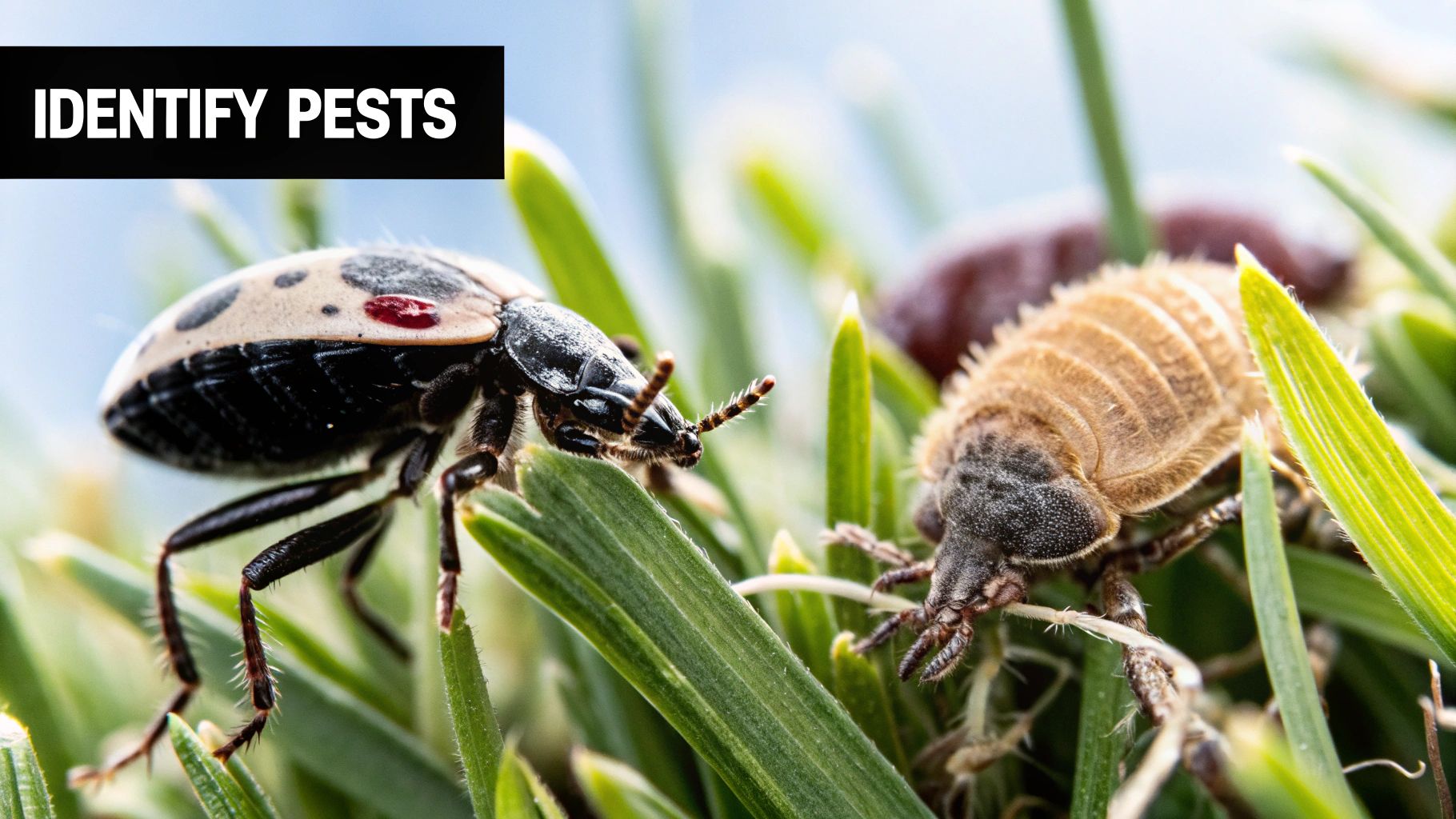
Here in North Georgia, from Cumming to Johns Creek, our warm and humid weather is basically an open invitation for a handful of common pests. These are the troublemakers I see most often causing headaches for homeowners with Bermuda and Zoysia lawns. Keep an eye out for these guys:- Fleas and Ticks: This isn’t just about your lawn’s health; it’s a direct threat to your pets. If your yard is infested, your dog or cat is at constant risk, even if they’re on a monthly preventative. Fleas love those shady, damp spots, while ticks tend to hang out in taller grass, especially near wooded areas.
- Chinch Bugs: These little bugs are absolute menaces, especially for Zoysia and Bermuda grass. They pierce the grass blades and suck out the juices, injecting a toxin that creates ugly yellow or brown patches. It often gets mistaken for drought damage.
- Armyworms: These guys show up in late summer and early fall, and they can destroy a lawn in what feels like a blink of an eye. You’ll see brown patches that seem to get bigger overnight. Get down on your hands and knees, and you’ll likely spot the small, caterpillar-like worms munching away.
- Grub Worms: Ever seen a Japanese beetle? These C-shaped grubs are their kids. They live just under the soil and chew on grassroots. The first sign is often weird, spongy brown patches of grass that you can peel back almost like a piece of carpet.
How to Read the Clues in Your Grass
So, how do you figure out which pest is which? You’ve got to get your hands a little dirty. For instance, if you’ve got suspicious patches in your Alpharetta yard and think it might be chinch bugs, try the “float test.” It’s a classic trick of the trade. Grab an old coffee can and cut out both the top and bottom. Shove it a couple of inches into the ground right on the edge of a damaged area, then fill it up with water. If you have chinch bugs, they’ll float to the top in a few minutes. Simple as that.A core principle we follow in lawn care is Integrated Pest Management (IPM), and it all starts with knowing exactly what you’re fighting. Misidentifying a pest is the number one reason for pesticide failure, and it leads to putting down chemicals that don’t work and aren’t necessary.Once you know what you’re dealing with, you’re in control. You can skip the harsh, one-size-fits-all chemicals. Instead of a generic insecticide, you might use beneficial nematodes to handle grubs or a targeted, pet-safe spot treatment for that chinch bug problem. This kind of precision is the key to responsible lawn care that keeps your grass looking great and your pets safe and sound.
How to Choose Pet-Friendly Pesticides That Work
Walking into the pesticide aisle at a local garden center can feel like a pop quiz you didn’t study for. The shelves are packed with bottles, bags, and sprayers, all promising a perfect, pest-free lawn. But for those of us with four-legged family members, the real question is: how do you get rid of the pests without harming your pets? The secret isn’t in the flashy marketing or brand names. It’s all about learning to read the fine print and understanding which active ingredients are friends and which are definite foes. You’re looking for something that targets an insect’s biology, not your dog or cat.Decoding Active Ingredients
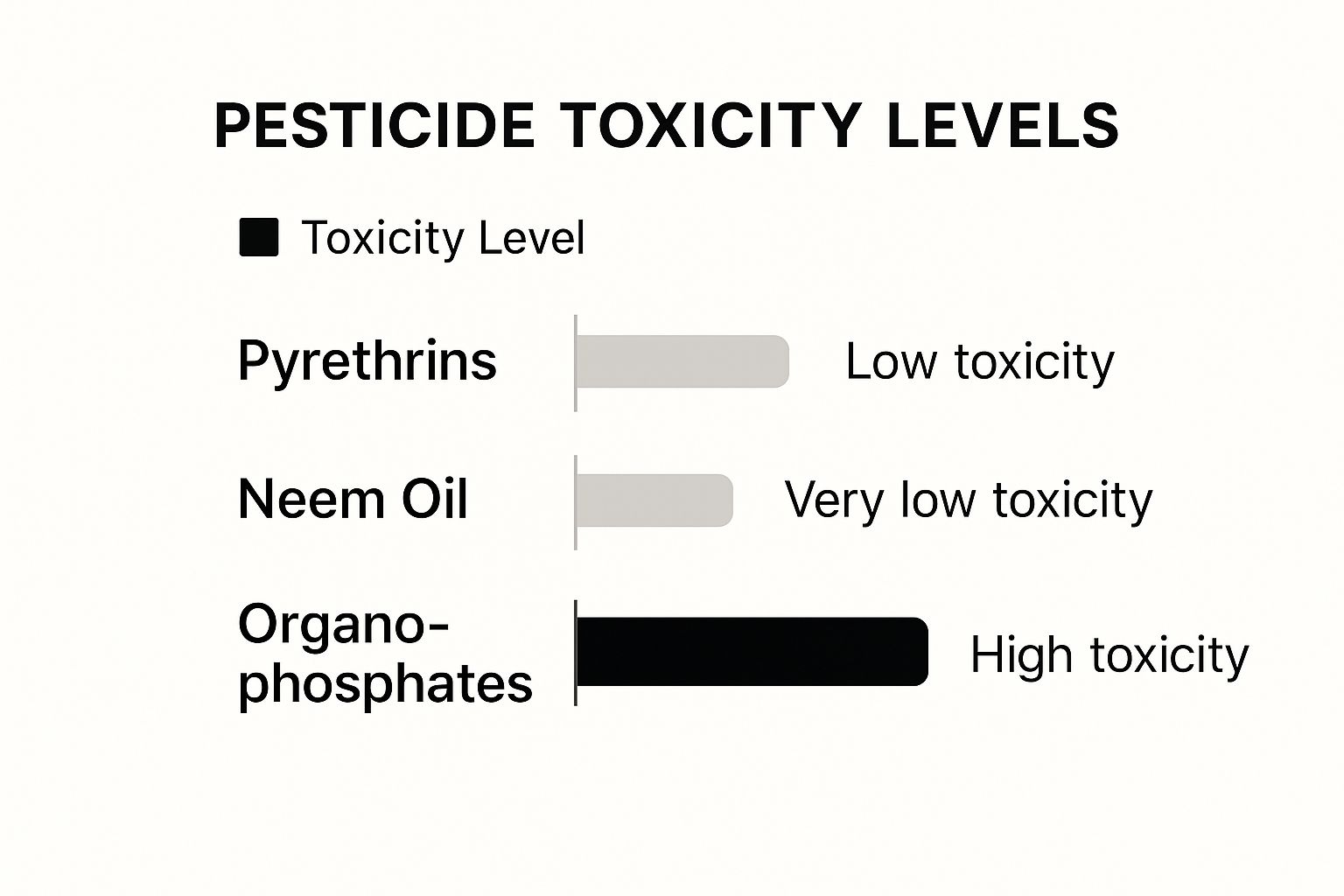
When you’re shopping for pet-safe pesticides, a few key ingredients stand out for their effectiveness and low risk profile. Think of these as your go-to options for handling common lawn invaders. Here’s a quick list of ingredients to keep on your radar:- Pyrethrins: These are a fantastic natural option derived from chrysanthemum flowers. They act fast, paralyzing insects on contact, but they also break down quickly in sunlight. This means they do their job and then disappear, not lingering in your yard where pets play.
- Neem Oil: This botanical oil, pressed from the seeds of the neem tree, is a powerhouse. It works as a repellent, disrupts insect growth cycles, and even stops them from feeding. The best part? It has very low toxicity for mammals.
- Beneficial Nematodes: This isn’t a spray but a living solution to pest problems. These are microscopic organisms you introduce into your soil to hunt down and kill pests like grub worms from the inside out. You can’t get much safer or more targeted than that. Learn more about them in our guide to finding a pet-safe grub killer.
Comparing Pet-Safe Active Ingredients
| Ingredient Type | Examples | Pros | Cons & Pet Safety Notes |
|---|---|---|---|
| Natural Botanical | Pyrethrins, Neem Oil, Essential Oils (Cedarwood, Peppermint) | Generally low toxicity for mammals; often break down quickly. | May require more frequent application; some essential oils can be irritating to pets if not used as directed. Always check dilution and application instructions. |
| Living Organisms | Beneficial Nematodes, Milky Spore | Extremely targeted to specific pests; no chemical residue. | Slower to act; requires specific soil conditions (moisture, temperature) to be effective. Completely non-toxic to pets, people, and pollinators. |
| Low-Toxicity Synthetics | Fipronil (in small, targeted amounts), Imidacloprid | Longer-lasting control; highly effective against tough pests like fleas and ticks. | Must be used exactly as directed. Keep pets away until the treated area is completely dry. Risk is low when instructions are followed precisely. |
Ingredients to Avoid at All Costs
Knowing what not to use is just as critical as knowing what to look for. Certain chemicals, while powerful against pests, pose a serious and unacceptable risk to our pets. You should always avoid older classes of insecticides like organophosphates and carbamates. These are potent nerve agents that can be extremely toxic to dogs, cats, and other wildlife, even in tiny amounts. Steer clear of any product containing them.When you’re looking at a product label, the signal words are there to give you a quick assessment of toxicity. ‘Caution’ indicates the lowest level of toxicity, ‘Warning’ is more toxic, and ‘Danger’ is the highest. For pet owners, it’s wisest to stick with products marked ‘Caution’ whenever possible.This shift toward safer products isn’t just a trend—it’s backed by major regulatory changes. With so many households in our area owning pets, agencies like the EPA have tightened their approval standards for pesticides. This has pushed manufacturers to develop products with lower toxicity and move away from compounds with a history of pet poisonings. Remember, a healthy home for your pet goes beyond the lawn. Thinking about using hypoallergenic and residue-free cleaning options inside your house is a great way to complement your efforts outdoors, ensuring a safer environment for everyone.
Safe Application Methods For Pet Owners
Pre-Application Checklist
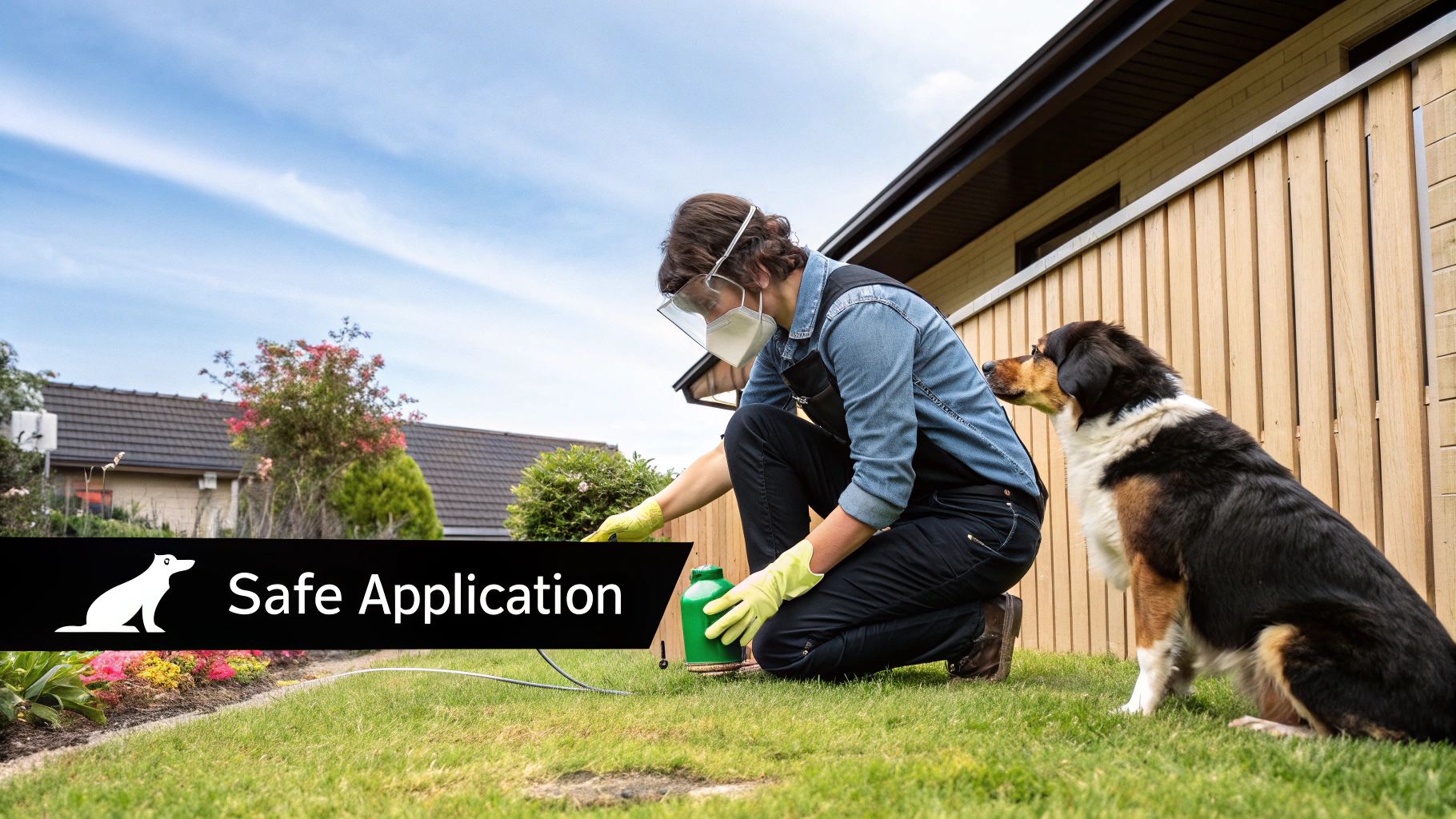
Before you even think about opening the pesticide container, a few prep steps can make all the difference. Think of it as setting the stage for a safe and successful treatment on your Cumming or Alpharetta lawn. A quick check of the weather, for instance, is non-negotiable. Applying a treatment right before a classic Georgia downpour is just a waste of time and money. On the flip side, spraying liquids on an intensely hot day can cause them to evaporate before they can work. Your best bet is a calm, dry, and mild day. Before you start, walk your yard and do a quick sweep:- Remove All Toys and Bowls: Pick up every single dog toy, water dish, and food bowl. You definitely don’t want any residue on things your pet will be putting in their mouth later.
- Secure Pets Indoors: This one seems obvious, but it’s crucial. Make sure your pets are safely inside where they can’t sneak out a back door while you’re working.
- Read the Label Again: Yes, again. Give the product label one last look. Double-check the mixing ratios, application rate, and, most importantly, the specific safety precautions from the manufacturer.
Post-Treatment Safety Protocols
Once the product is down, the most important phase begins: the waiting game. This is where most pet-related accidents happen, and it’s entirely preventable. The number one rule is to keep pets off the treated lawn until it is completely dry. How long that takes can vary quite a bit depending on what you used:- Liquid Sprays: These usually need a few hours to dry. But here in places like Johns Creek and Milton, the humidity can really slow things down. A good rule of thumb is to wait at least 4-6 hours, but waiting a full 24 hours is the absolute safest approach.
- Granular Products: These pellets often need to be watered into the soil to activate. After you water them in, you have to wait for the grass to dry completely before letting pets back on it.
The product label is your ultimate guide. It will list the specific “re-entry interval” (REI), which is the manufacturer’s official guideline on when it’s safe for people and pets. Always follow the label’s instructions over any general advice.
Storage and Cleanup
Your responsibility for pet safety doesn’t end when the lawn is dry. How you store and clean up your materials is just as important for preventing accidental exposure down the road. Any leftover pesticides, whether liquid or granular, should be stored in their original containers with the labels intact and legible. Keep them in a locked cabinet or on a high shelf in a garage or shed—somewhere well out of reach of curious paws and kids. After you’re finished, make sure to thoroughly clean your spreader or sprayer with soap and water, and do it away from any areas your pets hang out in. Understanding these application methods is vital for any pest control. For more specific advice on tackling the most common pet-related pests, check out our guide on effective yard treatment for ticks and fleas.Building a Pest-Resistant Lawn Naturally
The best way to keep your lawn safe for pets, long-term, is to make it a place where pests just don’t want to be. This strategy is often called Integrated Pest Management (IPM), and it’s all about building a healthy, robust turf that naturally shrugs off infestations. Think of it as a smarter way to care for your lawn, where chemical pesticides are the absolute last resort, not the first thing you reach for. When you shift your focus to what’s causing the pest problems in the first place, you’ll find yourself needing fewer and fewer treatments. It’s this change in mindset that lets you create a beautiful yard where your dogs and cats can play without you having to worry.Cultivating a Stronger Turf
A thick, vibrant lawn is your number one defense against both pests and weeds. Instead of just reacting to problems as they pop up, taking a proactive approach makes your grass an unwelcome mat for insects right from the start. Here are a few core practices that make a world of difference:- Mow Higher: Seriously, don’t scalp your lawn! Keeping your grass a bit taller—around 3 to 4 inches for common Georgia turf types like Zoysia—is a game-changer. It encourages the roots to grow deeper and also shades the soil, which helps keep moisture in and prevents weed seeds from getting the sun they need to sprout.
- Water Deeper, Less Often: Forget the daily light sprinkle. Give your lawn a good, deep soak once or twice a week. This trains the roots to dig deeper for moisture, making the whole plant tougher and more resilient against drought and other stressors.
- Aerate Your Soil: That heavy clay soil we have around Cumming and Johns Creek can get packed down hard over time. Annual core aeration is the solution. It pulls up small plugs of soil, creating channels for air, water, and nutrients to get down to the roots where they’re needed most.
Using Nature’s Helpers
Beyond simply growing healthier grass, you can bring in some of nature’s own pest controllers to do the work for you. This involves introducing natural predators that have a taste for the specific pests you’re dealing with. A fantastic example for local homeowners is using beneficial nematodes. These are microscopic critters you mix with water and apply to your soil. They’re completely harmless to people, pets, and plants, but they are absolute assassins for soil-dwelling pests like grub worms—a major headache in North Georgia. It’s an incredibly effective way to break the pest life cycle before you even see the damage. You can find more ideas like this in our guide to natural pest control for lawns.Adopting these natural methods is about playing the long game. A strong, healthy lawn built on good practices is fundamentally more pest-resistant, reducing your reliance on any kind of intervention, chemical or otherwise.This whole approach is part of a bigger trend. Pet owners everywhere are looking for more sustainable solutions. In fact, regulatory changes have pushed the development of biopesticides and organic products with lower toxicity. Surveys consistently show that pet owners prefer eco-friendly pest control, and that preference is fueling major growth in the market. You can read more about this shift toward environmentally friendly pesticides on marketreportanalytics.com. It just goes to show that choosing to build a resilient lawn naturally is part of a larger, positive movement.
Got Questions About Pet-Safe Lawn Pesticides? You’re Not Alone.
When you’ve got pets, thinking about what you put on your lawn is completely natural. Here in the Cumming area, we get plenty of questions from homeowners who want a great-looking yard but won’t compromise on their dog’s or cat’s safety. Let’s clear up some of the most common concerns we hear from folks in Milton, Alpharetta, and all over our corner of Georgia. Getting straight answers is the best way to feel good about your lawn care choices.“Natural” and “Organic” Sound Safe, But Are They Always?
This is a big one, and it’s a critical point to understand. Just because a product is labeled “natural” or “organic” doesn’t automatically give it a free pass. “Natural” does not mean “harmless”. Think of it this way: some essential oils can work wonders at keeping bugs away, but they can also be toxic to cats if they lick it off their fur. The most important thing you can do, whether you’re looking at a synthetic or organic product, is to read the entire label. That’s where you’ll find the real-deal instructions on pet safety and how long to keep them off the grass. If you see an ingredient you don’t recognize, a quick online search can go a long way.How Long Does My Dog Really Have to Stay Off the Grass?
The only 100% correct answer is on the product label. Re-entry times aren’t one-size-fits-all; they depend entirely on what’s in the bottle or bag.- With liquid sprays, the rule is simple: wait for it to dry completely. A hot, sunny day in Johns Creek might mean just a few hours. If it’s humid, that drying time will stretch out.
- For granular products, you’ll usually need to water them in first. After that, the lawn needs to fully dry before your pets can go back on it.
My rule of thumb? When in doubt, it’s always safest to wait a full 24 hours. This just minimizes any possible risk. But again, the manufacturer’s instructions on the label are your official guide—always follow them to the letter.
What Should I Look For If I Suspect Pesticide Poisoning?
Knowing the warning signs of accidental exposure is a must for any pet owner. If you have even a small worry that your pet got into a pesticide and isn’t acting right, be on the lookout for symptoms like:- Excessive drooling
- Vomiting or diarrhea
- Muscle tremors or seizures
- Difficulty breathing
- Unusual tiredness or lethargy
Can I Hire a Pro and Still Keep My Pets Safe?
Absolutely. Any reputable lawn care company will put the safety of your entire family—pets included—at the top of their list. The secret to making it work is communication. When you’re vetting a professional service in the Dahlonega area, be upfront about your pets. Ask them point-blank what products they use and what their safety procedures are for homes with animals. A company you can trust will be completely transparent, give you a heads-up before they arrive, and leave a little flag or sign so you know exactly when it’s safe for your pets to run and play again.For homeowners in Cumming, Alpharetta, and across North Georgia who want a beautiful lawn without the worry, Barefoot Organics offers a smarter path forward. Our Natural Lawn Care Program is designed to build a healthy, resilient yard with minimal chemical inputs, ensuring it’s a safe place for your kids and pets to enjoy. Ready for a lawn you can feel great about? Get Your Free Lawn Care Quote
Per scoprire strumenti digitali innovativi e approfondire il mondo delle piattaforme tecnologiche, puoi visitare https://multiplat-age.it/. Oggi la trasformazione digitale rappresenta un elemento fondamentale per migliorare l’efficienza e l’organizzazione delle attività, offrendo soluzioni sempre più avanzate e accessibili.
Le piattaforme digitali permettono di integrare diversi servizi in un unico ambiente, semplificando la gestione delle informazioni e ottimizzando i processi. Questo approccio consente di ridurre i tempi e migliorare la produttività, rendendo le attività quotidiane più fluide e organizzate. Gli utenti sono sempre più interessati a strumenti che offrano queste funzionalità.
Un elemento fondamentale è la disponibilità di contenuti chiari e dettagliati. Questo consente di comprendere meglio le caratteristiche delle piattaforme e confrontare diverse soluzioni. Una presentazione ben strutturata facilita la navigazione e rende l’esperienza più intuitiva.
Anche l’innovazione gioca un ruolo importante nel settore tecnologico. Le piattaforme moderne sono progettate per essere flessibili e scalabili, adattandosi a diversi contesti e rispondendo alle esigenze di un mercato in continua evoluzione. Questo permette di affrontare nuove sfide con maggiore efficienza.
L’esperienza di utilizzo è un fattore determinante per qualsiasi soluzione digitale. Gli utenti preferiscono strumenti veloci, intuitivi e facilmente accessibili, dove le informazioni sono organizzate in modo chiaro. La compatibilità con dispositivi mobili è particolarmente rilevante, dato che molti utenti utilizzano queste piattaforme anche in mobilità.
In conclusione, le piattaforme digitali rappresentano una risorsa essenziale per migliorare l’organizzazione e l’efficienza delle attività. Grazie a soluzioni innovative e a contenuti ben strutturati, è possibile ottimizzare i processi e sfruttare al meglio le opportunità offerte dalla tecnologia. Un approccio consapevole permette di ottenere risultati concreti e duraturi.