

If you're dreaming of a lush, dense lawn, let me tell you, reseeding in the fall is the single best thing you can do for your grass in North Georgia. It’s the time of year when nature is on your side. The combination of still-warm soil and cooling air, with way fewer weeds to worry about, creates the perfect runway for new grass to take off.
This gives those tiny seedlings a massive head start to get established before winter sets in.
Why Autumn Is Georgia’s Golden Season for Lawn Renovation
Ever tried planting grass seed in the spring, only to watch it get absolutely baked by our brutal Georgia summers? If so, you already know why we're so big on fall seeding. The wild temperature swings and torrential downpours of a southern spring can be a real killer for fragile new grass.
Fall, on the other hand, is a whole different ballgame. It’s a much calmer, more nurturing season, especially for the cool-season grasses like Tall Fescue that do so well in our area, from Cumming all the way up to Dahlonega.
This isn’t just old-school lawn advice; there's solid science to it. That window from September through late October gives us a perfect balance. The ground is still holding onto that summer warmth, which is exactly what seeds need to germinate quickly. At the same time, the cooler air means the young grass isn't fighting for its life against the heat. Instead, it can pour all its energy into growing deep, strong roots.
The Science Behind Fall Seeding Success
Think of fall as nature’s own planting season. All the right conditions just line up to create a "perfect storm" for lawn success.
Here's a quick look at why it works so well for us locally:
- Perfect Soil Temps: Grass seed, especially the Tall Fescue we love here, sprouts best when the soil is between 50°F and 65°F. That’s the sweet spot for North Georgia soil right as autumn gets going.
- Less Weed Competition: Those aggressive summer weeds like crabgrass are on their way out. This means your new grass seed isn’t battling for sunlight, water, and nutrients. It gets a clean slate to grow.
- Helpful Weather: We typically get more consistent, gentle rain and plenty of morning dew in the fall. This provides the steady moisture new seeds need without you having to run the sprinkler 24/7.
Key Takeaway: The whole point of fall reseeding is to give your new grass at least 4 to 6 weeks of solid growing time before the first hard frost hits. That's the critical period for building the root system it needs to survive the winter and come back strong in the spring.
Fall vs Spring Reseeding in Georgia: A Quick Comparison
To really drive the point home, let's look at a side-by-side comparison. It becomes pretty clear why autumn is the champion for lawn renovation in our region.
| Factor | Fall Reseeding (September-October) | Spring Reseeding (March-April) |
|---|---|---|
| Soil Temperature | Ideal. Warm soil (50-65°F) promotes fast germination. | Inconsistent. Soil is often too cold initially, then heats up too quickly. |
| Air Temperature | Perfect. Cool air reduces stress on young grass shoots. | Volatile. Can quickly become too hot, stressing or killing seedlings. |
| Weed Competition | Low. Summer weeds are dying off, giving grass a clear path. | High. Crabgrass and other aggressive weeds are just starting to grow. |
| Watering Needs | Moderate. Natural rainfall and dew are more reliable. | Intense. Requires constant watering to combat heat and dry spells. |
| Root Development | Excellent. Two full seasons (fall & spring) to establish deep roots. | Poor. Shallow roots struggle to survive the approaching summer heat. |
| Success Rate | High. An impressive 80-90% of seedlings typically establish. | Low. Up to 50% of seedlings can be lost to heat, disease, or weeds. |
As you can see, the deck is stacked in favor of fall. You're working with the seasons, not against them.
A Clear Advantage Over Spring Planting
There's a reason the pros overwhelmingly seed in the fall. Both scientific research and years of hands-on experience show that autumn is the prime season. In fact, 66% of professional turf managers choose August through October for this job.
The numbers don't lie. The scorching Georgia heat can wipe out up to 50% of spring-sown seedlings, whereas fall’s milder conditions boost survival rates to an incredible 80-90%. This leads to a lawn that’s up to 25% thicker by the time winter rolls around. For homeowners in Alpharetta, Milton, and Johns Creek, that means less wasted money on seed, less work, and a much greener payoff next year. If you want to dive deeper, you can explore the detailed findings on why autumn reseeding is superior.
Getting Your Lawn Ready for New Seed
Once you’ve decided to reseed this fall, the real work begins. The success of the entire project really comes down to what you do before a single seed hits the dirt. It’s a lot like painting a room—you wouldn't just throw a new color on a dirty, cracked wall and expect it to look good. Good prep work creates the perfect environment for those new seeds to sprout and ensures your investment pays off with a thick, healthy lawn.
For those of us in Cumming, Alpharetta, and Milton, this step is non-negotiable. We all know how tough our compacted red clay soil can be. Simply tossing seed over your existing lawn is a surefire way to waste your time and money. The new seed has to make direct contact with loose, welcoming soil to have any chance at all.
These next few steps are all about turning your yard from a hard-packed barrier into a perfect seedbed for a successful lawn renovation.
Cut the Grass Down Low
First things first, give your lawn a serious haircut. You'll want to mow the existing grass down to about 1.5 to 2 inches. I know, it feels a bit drastic, but there are two very good reasons for it.
Mowing this low temporarily slows down the growth of the existing grass, so it won’t immediately crowd out your tiny new seedlings as they try to get sunlight. More importantly, it clears the way to the soil surface, which is exactly where you need that new seed to land. Just be sure to rake up and get rid of all the clippings afterward so the ground is completely clear.
Get Rid of the Thatch
After you've mowed, get down and take a close look at the base of your grass. See that spongy, tangled layer of dead grass and roots? That's thatch, and it's a major obstacle for new seed.
If that thatch layer is any thicker than half an inch, it acts like a waterproof blanket, stopping water, air, and your expensive grass seed from ever reaching the soil. For smaller lawns, a good, stiff dethatching rake will do the job. If you've got a larger yard here in Forsyth County, you might want to rent a power dethatcher. Either way, clearing this stuff out is a must for good seed-to-soil contact.
Pro Tip: Not sure if you have a thatch problem? Just cut out a small wedge of turf a few inches deep with a trowel. If that brown, spongy layer between the green blades and the actual soil is more than half an inch thick, it’s time to dethatch.
This infographic breaks down why fall is the absolute best time to get all this prep work done.
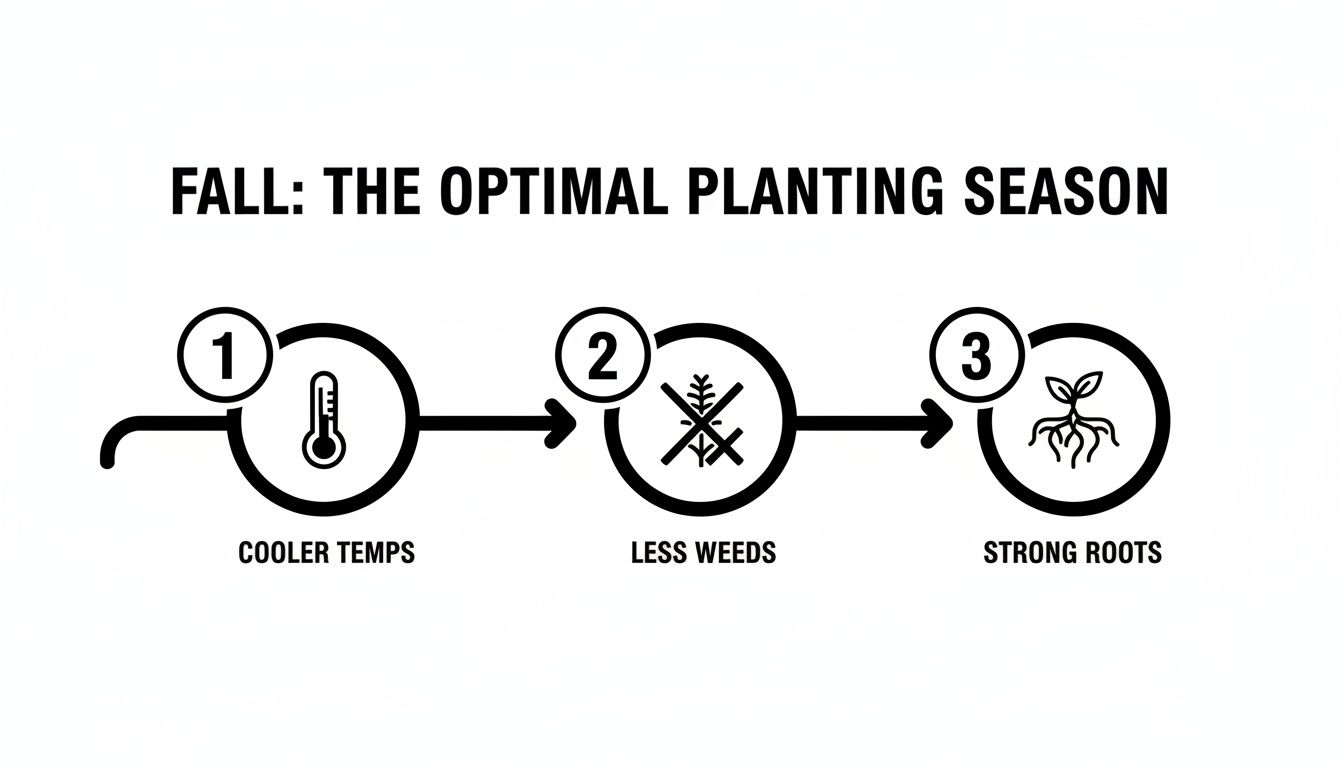
As you can see, the cooler air, fewer weeds, and prime conditions for root growth all line up to give your new grass the best possible start.
The Real Game-Changer: Core Aeration
If there is one step you absolutely cannot skip in North Georgia, this is it. Our heavy clay soil gets incredibly compacted from summer foot traffic, weekly mowing, and even heavy rain. This compaction literally squeezes the life out of your soil, making it nearly impossible for roots to grow or water to soak in.
Core aeration is the answer. A machine pulls up small plugs (or "cores") of soil, leaving thousands of little holes across your lawn. This does a few critical things:
- Breaks Up Compaction: It instantly loosens the soil, giving new grass roots the space they need to grow deep and strong before winter.
- Improves Air and Water Flow: The holes are direct channels for oxygen, water, and nutrients to get down to the root zone where they’re needed most.
- Creates Perfect Pockets for Seed: These holes are the ideal little divots for grass seed to fall into, guaranteeing the seed-to-soil contact that's essential for germination.
Honestly, aerating right before you spread your seed is probably the single most important thing you can do to make sure your fall reseeding project is a success. If you're thinking about calling in the pros, you can learn more about how it all works from Barefoot Organics' guide on their aeration and overseeding services.
Test and Fix Your Soil
At the end of the day, great grass grows in healthy soil. Before you put down any seed, it’s a smart move to find out what you’re working with. A simple soil test from your local extension office in Forsyth or Fulton County will tell you everything you need to know about your soil's pH and nutrient levels.
Most turf grasses are happiest in soil with a pH between 6.0 and 7.0. Here in Georgia, our soil tends to be acidic. A soil test will tell you if you need to add lime to raise the pH, which helps unlock nutrients for the grass. The results will also point you toward the right kind of starter fertilizer. By getting the soil health right from the start, you give your new seedlings every advantage to sprout fast and build a tough, resilient lawn.
Choosing the Right Grass Seed for Your Georgia Yard
This is where the rubber meets the road. Picking the right grass seed can make or break your entire fall reseeding project. In North Georgia, from the clay soils of Cumming to the shaded yards in Milton, you can't just grab any old bag off the shelf and expect great results. Our unique climate, with its blistering summers and relatively mild winters, calls for a specific type of grass.
For a fall planting in our region, the hands-down champion is Tall Fescue. This cool-season grass is practically built for the job. It grows a deep root system that gives it a fighting chance against our summer heat and drought, and it holds its beautiful green color straight through the winter when warm-season grasses like Bermuda have long since gone to sleep.
Learning to Read a Grass Seed Label
When you're standing in the store aisle staring at a wall of different seed bags, the little tag on the back is your best friend. It’s the nutritional label for your lawn, telling you exactly what you're buying. Don't just look at the price—a few key numbers will tell you the real story.
Here’s what you need to zero in on:
- Purity: How much of the bag is actually the grass seed you want? You’re looking for a number that’s as high as possible, ideally above 95%.
- Germination Rate: This tells you the percentage of seeds that are expected to actually sprout. A strong number here—think 85% or more—means you're not paying for duds.
- Weed Seed: This one is simple. You want it as close to 0% as you can get. The last thing you want to do is introduce a bunch of new weeds while you're trying to fix your lawn.
- Crop Seed: This refers to other types of grass or agricultural seeds you don't want. Just like with weed seed, look for a tiny percentage.
Spending a little more on a high-quality seed blend with great purity and germination numbers always pays off in the long run. You get a thicker, healthier lawn with far fewer headaches. To get a better handle on which blends work best around here, take a look at our detailed guide on the best grass seed for Georgia.
The Pro Trick: Calculating Pure Live Seed
If you really want to compare the value between two bags of seed, the pros use a simple formula to calculate what's called Pure Live Seed (PLS). It sounds technical, but it just tells you how much of what's in the bag is viable seed that will actually grow.
The math is easy: Purity % x Germination % = PLS %
So, if a bag has 98% purity and a 90% germination rate, your PLS is 88.2% (0.98 x 0.90). This means that for every 10 pounds of product in that bag, only about 8.8 pounds is live seed ready to grow. This quick calculation helps you make sure you're buying enough viable seed and not just paying for filler.
Why Your Seeding Rate Matters So Much
Once you know your seed quality, you can dial in your application rate. This is critical. For most Tall Fescue lawns here in areas like Alpharetta and Johns Creek, you should aim for 5 to 10 pounds of seed per 1,000 square feet.
It's a delicate balance. Go too light, and you'll end up with a thin, patchy lawn that invites weeds to move in. Go too heavy, and you create a crowded environment where the tiny seedlings are forced to compete against each other for sunlight and water, leading to weak, disease-prone grass.
Expert Insight: Hitting that seeding rate sweet spot is everything. Under-seeding might save a few bucks upfront, but you'll likely end up with a sparse lawn that won't look full until the following spring. Over-seeding is just as bad—it literally chokes the new grass out before it can get established.
To get a better sense of how things like global production can affect seed availability and pricing, you can find great industry information over at DLF.com.
Before we dive into the specific seed types, let's look at a quick comparison of the best options for our area. This table breaks down what works best for fall planting in North Georgia yards.
North Georgia Grass Seed Selection Guide
| Grass Type | Ideal For | Sun Tolerance | Key Benefit |
|---|---|---|---|
| Tall Fescue | The go-to for most North Georgia lawns. Great for overseeding or bare spots. | Full Sun to Partial Shade | Stays green all winter and is more heat-tolerant than other cool-season grasses. |
| Perennial Ryegrass | Often mixed with Fescue for fast germination and initial green-up. | Full Sun | Sprouts very quickly, providing fast ground cover while slower grasses establish. |
| Kentucky Bluegrass | Blended in small amounts with Fescue for its self-repairing ability. | Full Sun | Spreads via rhizomes to fill in small bare spots on its own. |
| Fine Fescue | An excellent choice for heavily shaded areas where other grasses struggle. | Mostly Shade | The most shade-tolerant cool-season grass available. |
Ultimately, for most homeowners in our region, a high-quality Tall Fescue blend, possibly with a small percentage of Kentucky Bluegrass or Perennial Ryegrass mixed in, is going to give you the best shot at success for a fall reseeding project.
The Problem with Overseeding Bermuda Grass
A lot of homeowners in Forsyth and nearby counties have warm-season lawns like Bermuda or Zoysia. A common practice is to overseed these with Ryegrass in the fall to keep the lawn looking green through winter.
While this gives you that temporary color, it can cause problems down the road. The ryegrass is an aggressive competitor. Come spring, when your Bermuda is trying to wake up and green up, it’s still stuck fighting the established ryegrass for sunlight, water, and nutrients. This can seriously delay and weaken your primary warm-season turf, so it's a trade-off you really need to think about.
Getting Seed and Fertilizer Down the Right Way
You’ve done the hard work of prepping your lawn, and now it’s time for the main event. All that prep work in your Cumming or Alpharetta yard is about to pay off. Spreading the seed and applying the right fertilizer are the two steps that will transform those bare, aerated patches into the lush, green carpet you're aiming for.
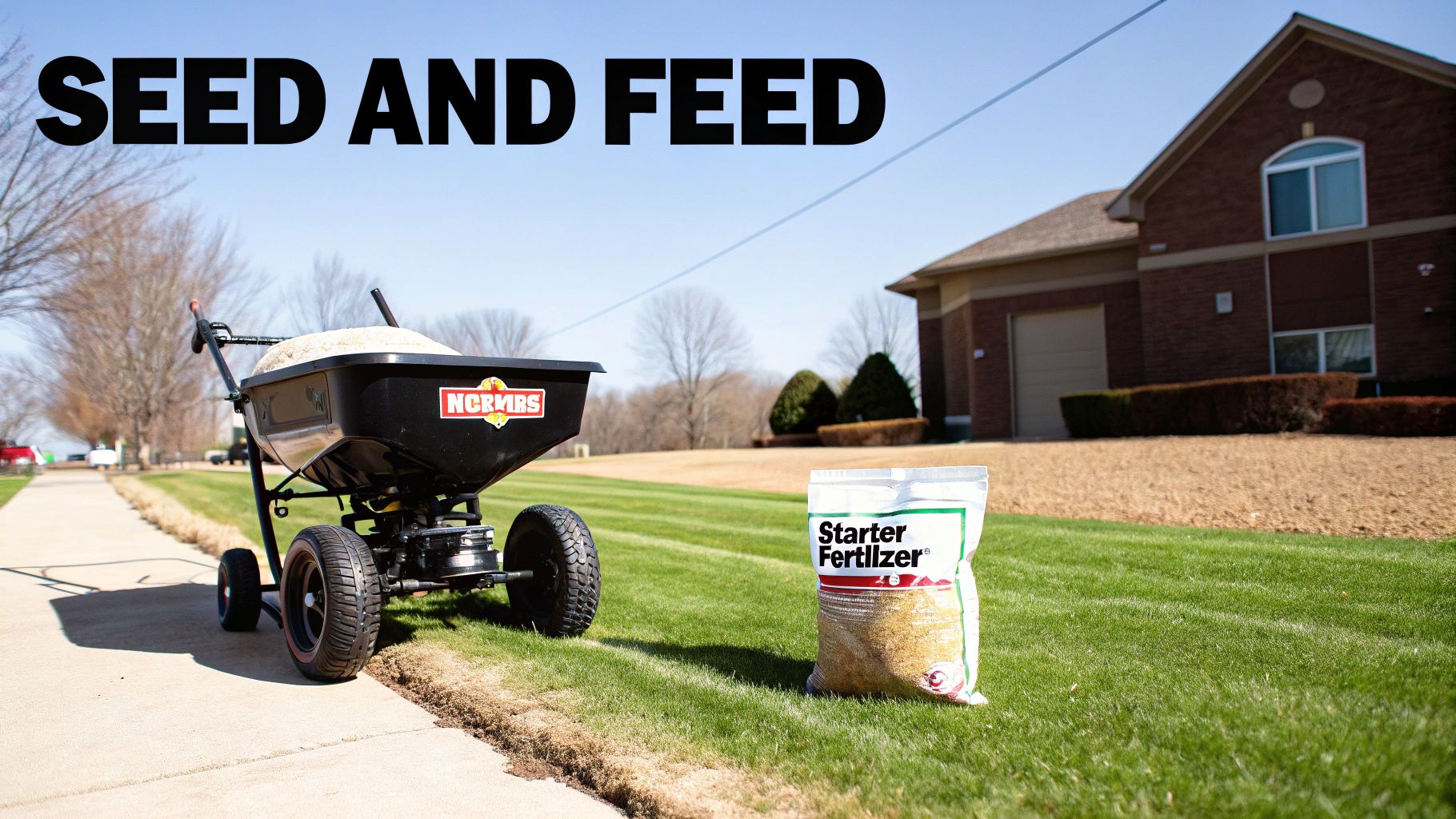
It's tempting to just toss seed out by hand, but trust me, that's a shortcut to a clumpy, uneven mess. A more methodical approach is what separates an okay lawn from a great one. It ensures every square foot of your property, whether it's a small yard in Johns Creek or a larger lot in Milton, gets what it needs for that professional look.
Mastering the Art of Spreading Seed
The real secret to avoiding a striped or patchy lawn is all about even coverage. This means using a broadcast spreader and making two passes over your entire lawn. It might sound like a little extra effort, but it's the only way I've found to guarantee a consistently thick and beautiful result.
First things first, calibrate your spreader based on the instructions on the seed bag. Then, split your total amount of grass seed in half. You'll use one half for the first pass and the other for the second.
This two-pass method is brilliantly simple but incredibly effective:
- First Pass: Start walking your spreader back and forth across the lawn in one direction, say north to south. Keep your pace steady and consistent.
- Second Pass: Now, take the other half of your seed and walk the spreader in a perpendicular pattern—east to west this time. This crisscross pattern catches all the little gaps you might have missed on the first go-around, preventing those telltale stripes.
This is the gold standard for reseeding a lawn in fall because it gets rid of thin spots before they even have a chance to appear.
Why Starter Fertilizer is Non-Negotiable
With the seed down, it’s time to give it the fuel it needs to get growing. This is where starter fertilizer comes in, and no, it’s not the same as your regular lawn food. Think of it as a high-octane energy drink designed specifically for new seedlings.
Starter fertilizers are formulated with a high percentage of phosphorus, the crucial nutrient that drives strong root development. For a new blade of grass trying to make it through its first winter in Dahlonega, strong roots are everything.
A healthy root system is the foundation of a resilient lawn. It helps new grass find water, survive the inevitable summer dry spells, and establish itself much, much faster. Skipping this step is one of the biggest mistakes you can make.
Apply the starter fertilizer using the exact same two-pass method you used for the seed. This ensures every single seedling gets an equal shot at the nutrients it needs to thrive.
The Finishing Touch: A Light Topdressing
This final step is one that many people skip, but it can make a huge difference in your success rate. Applying a very thin layer of topdressing over the seed protects it and, most importantly, keeps it moist. For those of us in Johns Creek and Cumming dealing with that classic Georgia red clay, this is a game-changer for moisture retention.
You have a couple of fantastic options for this:
- Compost: A good, screened compost is my top choice. It not only covers the seed but also infuses your soil with organic matter and beneficial microbes, improving its health for years to come.
- Peat Moss: Another great option is peat moss. It’s lightweight and acts like a sponge, holding onto moisture right where the seeds need it during that critical germination period.
You're not trying to bury the seed. Just spread a very light layer—no more than ¼ inch thick—over the entire area. You should still be able to see about 50% of the soil underneath. This light blanket prevents seeds from drying out in the sun or getting washed away in a heavy downpour, creating the perfect little micro-environment for them to sprout.
Watering and Aftercare: The Make-or-Break Phase
You’ve done the heavy lifting—the soil prep, the seeding, the fertilizing. It’s easy to feel like the job is done, but honestly, what you do next is what separates a lush, thriving lawn from a patchy, disappointing one. This is where your hard work truly pays off, and it all comes down to consistent, smart care.
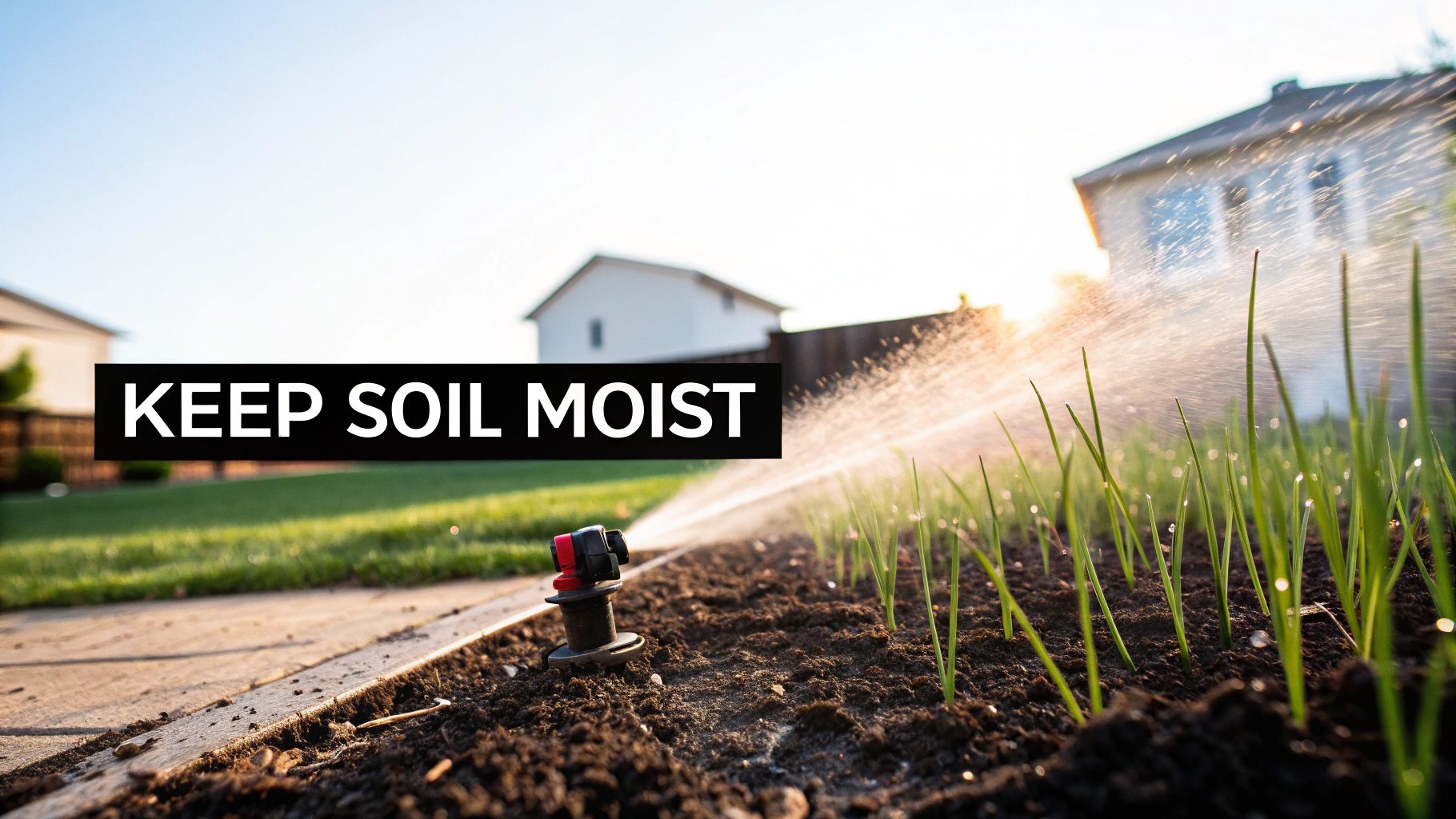
Think of those tiny seeds as newborns. They are incredibly vulnerable right now, and your job is to give them the perfect environment to sprout and grow deep roots before winter sets in across Forsyth County.
The Initial Watering Game: Light and Frequent
For the first week or two, your watering philosophy needs to be "light and frequent." The goal isn't to flood the soil; it's to keep the very top inch consistently moist, like a well-wrung-out sponge. If those seeds dry out, even for a few hours on a sunny afternoon, germination can screech to a halt.
This usually means watering 2-3 times a day for just 5-10 minutes at a time. I find that early morning and mid-afternoon work best. This gentle approach gives the seeds the moisture they crave without washing them away.
Local Tip: Here in the Cumming and Alpharetta area, our fall days can fool you with unexpected warmth and sun. On those days, don't be afraid to add a third, very brief watering cycle just to keep the soil surface from crusting over.
Shifting Gears to Deeper Watering
Once you start seeing that beautiful green haze appear across the yard—typically within 7 to 14 days—it's time to change your strategy. Now, we need to encourage those new roots to dig deep into our Georgia clay. The way we do that is by switching to deeper, less frequent watering.
You can back off to watering just once a day, but run the sprinkler for a longer period to make sure the water is soaking several inches down. A week or so after that, you can transition to a standard North Georgia watering schedule of 1 to 1.5 inches of water per week, split between two or three sessions. This forces the roots to chase the moisture downward, building a stronger, more drought-tolerant lawn.
That Anxious First Mow
I know you're eager to mow, but hold off! Mowing too early is a classic mistake that can literally pull the fragile seedlings right out of the ground. Patience is key here. Wait until most of the new grass is at least 3 to 4 inches tall before even thinking about its first haircut.
When it's finally time, make sure your mower blade is razor-sharp—a dull blade will rip and tear the young grass, causing a lot of stress. Set the mower to its highest setting. You only want to trim the top third of the blade on this initial mow. For a more detailed look at the timing, check out our guide on how long you should wait to mow after overseeding.
Troubleshooting Common Headaches
Even with perfect prep, things can go sideways. Here’s how I handle some common issues I see on lawns around Johns Creek and Milton after a fall reseeding.
- Bare or Patchy Spots: It happens. Uneven watering or poor seed-to-soil contact can leave you with thin areas. Just lightly scratch the surface of these spots with a rake, sprinkle on a bit more seed and starter fertilizer, and pay extra attention to keeping them consistently moist.
- Washouts from Heavy Rain: A sudden North Georgia downpour can create little rivers, washing your seed into clumps. If this happens, wait for the area to dry out slightly, then gently rake the seeds back into place. Spreading a very thin layer of compost over the top can help anchor them down.
- "Keep Off the Grass!" Really. This is the simplest but most important rule. Keep everyone—kids, pets, even yourself—off the newly seeded areas for at least 3 to 4 weeks. Those new sprouts are incredibly delicate, and any foot traffic can crush them or compact the soil, killing them before they even get started.
Answering Your Top Fall Reseeding Questions
Even with a solid game plan, questions always pop up when you're in the middle of a lawn project. Homeowners from Cumming to Alpharetta run into the same real-world hurdles. Here are some straightforward answers to the questions we hear most often, so you can tackle the final steps with confidence.
Can I Still Seed if Leaves Are Falling?
You absolutely can, but you have to stay on top of it. Falling leaves are just part of the deal in a Georgia autumn. The real danger is letting them pile up—a thick blanket of leaves will smother your tiny new grass seedlings, blocking precious sunlight and trapping moisture, which is a perfect recipe for disease.
You’ve got two good ways to handle this:
- Mow and Mulch: If you just have a light dusting of leaves, run your mower over them. A good mulching mower shreds them into tiny bits that fall right down to the soil. They'll break down quickly and add some nice organic matter back into your lawn.
- Use a Leaf Blower: When the leaves really start coming down, a leaf blower is your best friend. Just be sure to use it on a low setting. You want to gently whisk the leaves away without sending your grass seed flying. A quick pass every couple of days is all it takes.
The bottom line is simple: don't let a thick layer of leaves sit on your new grass for more than a day or two.
How Long Until I Can Use My Lawn Normally?
This is the million-dollar question for anyone with kids or pets! The short answer is: patience. You really need to keep everyone off the newly seeded areas for at least three to four weeks. Those new grass shoots are incredibly delicate. A single footprint can crush them or compact the soil just enough to stop them in their tracks.
After you’ve mowed the new grass two or three times, its root system should be strong enough for light, careful use. But if you're planning any backyard football games or big family cookouts, I'd strongly suggest waiting six to eight weeks. This gives the turf in your Milton or Johns Creek yard the time it truly needs to mature and toughen up.
Remember, fall reseeding is an investment in next year's lawn. Giving it a stress-free start now is what leads to a resilient, beautiful yard next spring.
What if I Applied Weed Control Recently?
This is where timing is everything. Most pre-emergent herbicides—the kind that prevent seeds from sprouting—are not picky. They’ll stop your new grass seed just as effectively as they stop crabgrass. These products create a barrier in the soil that can last for months.
If you used a post-emergent (a spray that kills existing weeds), the wait time is usually much shorter.
- Pre-Emergents: If you put down a crabgrass preventer in the spring or summer, you almost certainly cannot seed that fall. You have to wait for the product to break down, which usually pushes you well past the ideal seeding window.
- Post-Emergents: For most common liquid weed killers, the rule of thumb is to wait anywhere from seven to 21 days after spraying before you spread your seed. Always, always read the product label. It will tell you the exact waiting period you need to observe.
A little planning goes a long way here. Try to tackle any major weed problems in the late summer so you have a clean slate when it's time to reseed.
Should I Hire a Professional for Reseeding?
This really boils down to your time, your equipment, and the results you're after. Going the DIY route can be incredibly satisfying and budget-friendly, especially for smaller lawns. You get to be hands-on and control every single step.
However, for larger properties or for folks in areas like Alpharetta and Cumming battling our infamous compacted clay soil, hiring a pro offers some serious advantages. They bring in commercial-grade equipment like core aerators and slit seeders that make a night-and-day difference. While this guide focuses on DIY reseeding, some homeowners may consider hiring professional landscape garden services for their lawn care needs. A good pro can also spot underlying soil problems you might miss and build a plan to fix them, saving you from costly mistakes and ensuring the job gets done right the first time.
Ready to transform your lawn without the guesswork? At Barefoot Organics, we specialize in creating thick, healthy, and beautiful lawns across North Georgia using natural and effective methods. Let us handle the hard work so you can enjoy the results.