

For homeowners here in North Georgia, timing is everything when you're trying to cultivate a truly beautiful lawn. If there's one golden rule we've learned over the years, it's this: reseed your lawn in the fall. That window—after the brutal summer heat has passed but well before the first real frost—is the absolute sweet spot for cool-season grasses like Tall Fescue to sink in and establish strong, deep roots.
Your Lawn's Golden Opportunity in North Georgia
Ever looked out at a patchy, thin lawn after a scorching Georgia summer and just felt defeated? You're not alone. We see it all the time with homeowners from Cumming to Dahlonega and all across Forsyth County who are fighting our tough climate.
Trying to seed in the spring often feels like a losing battle. You’re up against aggressive weeds that seem to pop up overnight and the sudden arrival of intense heat, which can quickly cook and kill off delicate new grass seedlings. And summer seeding? It’s simply not a viable option here.
This is exactly why autumn is the prime time for lawn renovation. The ground is still warm from the summer sun, creating perfect temperatures for seeds to germinate. At the same time, the cooler, crisp air is much gentler on the new grass, letting it grow strong without the constant stress of heat and drought.

The Science Behind Fall Seeding Success
It really all boils down to the natural growth cycle of cool-season grasses. Turf types like Tall Fescue, which are the go-to for a green lawn in places like Milton and Johns Creek, absolutely thrive when soil temperatures are holding steady between 50°F and 65°F. Fall gives us that sweet spot for weeks on end.
When you reseed your lawn in fall, you’re giving it a massive head start. That new grass gets the entire autumn and a typically mild Georgia winter to put all its energy into developing a robust root system. By the time spring rolls around, your lawn is already dense and mature, which makes it far more resilient.
A lawn with a head start is better prepared for:
- Weed Competition: A thick, healthy lawn is the best defense against weeds. It simply crowds them out, leaving no room for intruders like crabgrass to get a foothold.
- Summer Stress: Deep roots established in the fall can find moisture far below the surface, helping the turf survive the inevitable heat and dry spells of a Georgia summer.
- Disease and Pests: A vigorous lawn is naturally more resistant to common turf diseases and insect damage.
This isn't just a local secret; it's a proven best practice. In fact, fall reseeding has become the dominant strategy worldwide, with a remarkable 66% of grassland managers choosing the autumn months between August and October. Here in North Georgia, where summer can scorch soils to over 85°F, fall seeding avoids the pitfalls of spring and can lead to lawns with 20-30% thicker turf cover by the following year. You can discover more insights about these grassland management trends from recent studies.
An Organic Approach for a Safer Yard
Choosing to reseed in the fall aligns perfectly with an organic, family-safe philosophy. When you work with nature's cycles, you create a naturally resilient lawn that requires fewer chemical interventions later on. A dense lawn built on a strong foundation doesn't need as much herbicide to fight weeds or fungicide to combat disease.
By establishing your lawn in the fall, you're setting the stage for a self-sufficient turf. This proactive step is the cornerstone of an organic lawn care program, fostering a healthy ecosystem from the soil up.
Whether you're in Cumming, Alpharetta, Milton, Dahlonega, or anywhere across North Georgia, this guide is designed to give you practical, location-specific advice. We'll walk you through every step to help you achieve that beautiful, healthy lawn that’s safe for your family and pets to enjoy all year long.
Getting Your Timing and Seed Selection Just Right
If you want to transform your lawn, two things matter more than anything else: when you plant the seed and what seed you choose. Here in North Georgia, from Dahlonega to Johns Creek, the calendar is your best friend. When you reseed your lawn in the fall, you’re working with our local climate, not fighting it, which gives that new grass the absolute best shot at success.
The sweet spot for our area—covering Cumming, Alpharetta, Milton, and everywhere in between—is typically from early September through mid-October. This isn't just a random date on a calendar; it’s all about the soil. Grass seed, especially the cool-season types that thrive here, germinates best when soil temperatures hover between 50°F and 65°F. In September, the ground is still warm from the summer, but the cooler air protects those delicate new seedlings from the brutal heat that would scorch them in spring.
Nailing this window gives the new grass a solid two months to grow deep roots before the first hard frost hits, which is usually around mid-November for our region. That head start is everything. It's what allows your lawn to survive the winter and come back thick, green, and ready to go next spring.
Picking the Best Grass Seed for the Georgia Transition Zone
Living in North Georgia puts our lawns in what's known as the "transition zone." It's a notoriously tough climate where it’s too hot for some cool-season grasses and too cold for some warm-season grasses. But one type has consistently proven it can handle our wild swings and create a stunning year-round lawn: Tall Fescue.
Tall Fescue is a cool-season grass we love because its deep root system makes it far more drought-tolerant and resilient than other options. It's become the go-to for homeowners in Johns Creek, Milton, and Alpharetta for a few very good reasons:
- Green All Year: Unlike Bermuda or Zoysia, which turn a dormant brown in the winter, a healthy Tall Fescue lawn stays beautifully green through the colder months.
- Handles Sun and Shade: Modern Tall Fescue varieties are workhorses. They perform well in the direct sun and can handle the moderate shade you find in neighborhoods with big, beautiful oak trees.
- Tough and Durable: It holds up well to foot traffic from kids, pets, and backyard get-togethers, making it a practical choice for a family lawn.
When you're at the store, look for high-quality, certified seed blends. These bags usually contain several different types of Tall Fescue, which gives your lawn better genetic diversity. Think of it as a built-in defense system against disease and other stressors. For a deeper dive into the specific blends we trust, you can learn more about the best grass seed for Georgia in our detailed guide.
What Are Your Real Options?
While Tall Fescue is the undisputed champion for a permanent lawn, you'll see other seeds on the shelf. Annual Ryegrass, for example, pops up incredibly fast and gives you a quick flush of green. But don't be fooled—it's a temporary fix. It dies off completely as soon as we get a hard frost or the summer heat returns. It’s really only good for short-term erosion control, not for building a lasting lawn.
Another common practice is overseeding dormant warm-season lawns, like Bermuda, with a perennial seed. This is a great strategy for keeping your yard green all winter. The fescue provides color while the Bermuda sleeps, and then it naturally thins out as the summer heat wakes the Bermuda up again.
The most important thing I can tell you is this: invest in quality seed. The cheap stuff is often packed with filler, weed seeds, and old varieties that just don't perform. A bag of high-quality, certified seed is the best money you can spend on your lawn.
To make it even clearer, let's compare the seeds you'll likely be considering for your fall project in Cumming, Alpharetta, Milton or the surrounding areas.
Comparing Grass Seed for Fall Seeding in North Georgia
This table breaks down the most common seed types we see used in our area. It’s designed to help you match the right seed to your specific goals, whether you’re starting from scratch or just looking for some winter color.
| Seed Type | Best Use Case | Germination Time | Drought Tolerance | Barefoot Organics Recommendation |
|---|---|---|---|---|
| Tall Fescue (Blends) | The best all-around choice for a permanent, year-round green lawn in North Georgia. Ideal for new lawns or thickening existing fescue. | 7-14 Days | Good to Excellent | Highly Recommended. This is our go-to for building resilient, beautiful lawns that thrive in our local climate. |
| Perennial Ryegrass | Often included in mixes for fast germination and initial turf establishment. Also used for overseeding dormant Bermuda grass for winter color. | 5-7 Days | Fair to Good | Recommended for winter color on warm-season lawns. Not ideal as a standalone permanent lawn due to lower heat tolerance. |
| Annual Ryegrass | A temporary, fast-growing grass used primarily for erosion control on bare soil or for a very short-term green-up. | 3-5 Days | Poor | Not Recommended for Lawns. It dies off quickly and does not create a lasting turf, requiring you to reseed again. |
Choosing the right seed isn't just about grabbing a bag and hoping for the best. It’s about understanding what will truly thrive in our unique North Georgia environment. By pairing a top-tier Tall Fescue with that perfect fall timing, you’re not just planting grass—you’re setting the foundation for a fantastic lawn for years to come.
How to Prepare Your Lawn for Seeding Success
Proper groundwork isn't just a suggestion; it’s what makes or breaks a fall reseeding project. If you just toss expensive seed onto unprepared ground here in North Georgia, you're pretty much just feeding the birds. The real goal is to create the perfect little nursery for germination, and that work starts long before you even rip open the seed bag.
Think of your existing lawn as a thick, green canopy. It blocks sunlight and prevents new seeds from ever touching the dirt. Your first job is to open up that canopy. Before anything else, mow your lawn much shorter than you normally would. For folks in Cumming and Alpharetta with Tall Fescue, that means dropping the mower deck down to about 1.5 to 2 inches.
This "scalping" cut does two critical things. First, it lets that vital sunlight hit the soil surface, which helps trigger germination. Second, it cuts down on competition from the established grass, giving the new seedlings a real shot at life without being immediately choked out.
The Two Most Important Steps for Georgia Clay
Once the lawn is cut low, it's time to deal with what’s underneath. Here in North Georgia, we're all too familiar with our infamous red clay soil, which gets packed down hard as a rock. After a long, hot summer of foot traffic, mowing, and sparse rain, that soil becomes so dense that new grass roots don't stand a chance.
This is where the game-changing duo of core aeration and dethatching comes in. For a successful fall seeding in our area, these two steps are the absolute cornerstones.
- Core Aeration: This is where a machine pulls small plugs of soil right out of the ground. These holes instantly relieve compaction, finally letting air, water, and nutrients get down to the root zone where they belong. For new seeds, these holes become perfect little germination pockets, providing the seed-to-soil contact that is absolutely non-negotiable for sprouting.
- Dethatching: Thatch is that spongy layer of dead grass, old roots, and other gunk that builds up between the soil and the green grass blades. A thin layer is fine, but anything over half an inch acts like a waterproof mat, stopping seeds and water from ever reaching the soil. Dethatching (sometimes called power raking) rips out this excessive layer.
For most lawns I see in Johns Creek and Milton, a combination of both is the ticket. Core aeration is almost always a must-have on our clay. Try this: if you can't easily stick a screwdriver a few inches into your lawn, that's a dead giveaway. Your soil is compacted. To learn more about this common headache, check out our guide on how to fix compacted soil.
Don't skip aeration. It's the single most effective thing you can do to ensure your investment in good seed actually pays off. It physically opens up the soil, creating the perfect seedbed for new roots to grab hold.
Creating a Clean Slate for New Seed
After mowing low, aerating, and maybe dethatching, your lawn will look a bit torn up. That’s a good thing! The final prep step is a good, thorough cleanup. Grab a rake or a leaf blower and get all the soil plugs, pulled-up thatch, leaves, and sticks off the lawn.
This final cleanup ensures absolutely nothing gets between your new seed and the soil. You want to see as much bare earth as possible, pockmarked with thousands of holes from the aerator. This clean, receptive surface is now ready for seed, giving it the best possible chance to germinate and grow strong roots before winter sets in. This is what building a great lawn from the ground up really looks like.
Spreading Seed and Topdressing for a Pro-Level Finish
Okay, you've done the hard work. You've mowed, aerated, and cleaned up, and now your lawn is a perfect canvas. This is where all that prep really starts to pay off. It’s time to lay down the two most important ingredients for a lush, dense lawn: top-shelf seed and a layer of organic topdressing. Getting this part right is what turns a patchy yard into that thick, green carpet everyone envies.
For this step, your best friend is a broadcast spreader. Seriously. While you can spread seed by hand, it’s almost impossible to get the even, consistent coverage you need for a uniform look. A good spreader prevents those frustrating clumps of overcrowded seedlings and sad, bare patches, giving every seed a fighting chance to thrive.
To get that seamless, professional look, walk your spreader in a pattern that ensures you slightly overlap each pass. A great trick I've used for years is to apply half the seed while walking in one direction (say, north to south) and then apply the other half walking perpendicular to that (east to west). This crisscross pattern is your best bet against those tell-tale lines or missed spots.
Nailing the Seeding Rate
Applying the right amount of seed is probably one of the most misunderstood parts of reseeding. This is definitely not a "more is better" situation. If you put down too much seed, you’re just forcing the new grass to fight for sunlight, water, and nutrients. The result? Weak, spindly seedlings that are magnets for disease. But if you’re too stingy, you'll end up with a sparse lawn that’s just an open invitation for weeds to move right in.
For the Tall Fescue blends we love here in North Georgia, the target rate is everything. The University of Georgia actually recommends a rate of 5-10 pounds of certified, fungicide-treated seed per 1,000 square feet for homeowners in places like Milton, Johns Creek, and Cumming. This rate is dialed in to ensure you get a quick, dense lawn before the first frost hits.
As a rule of thumb, for a typical 5,000 sq ft suburban lawn in Alpharetta or Milton, plan on using a 25 to 50-pound bag of quality seed. But always, always double-check the bag itself—different blends can have slightly different ideal rates.
The Finishing Touch: Organic Topdressing
Once your seed is down, it’s time for the step that takes your project from good to truly great: topdressing with high-quality organic compost. This is a cornerstone of our organic lawn care philosophy because it delivers a whole host of benefits that starter fertilizer just can't match. Spreading a thin layer—about a quarter-inch—of compost over the fresh seed is like tucking your new lawn into a nutrient-rich bed.
This organic layer works its magic in a few different ways all at once:
- Boosts Seed-to-Soil Contact: The fine compost gently covers the seeds, making sure they’re pressed right up against the soil, which is exactly what they need to germinate.
- Locks in Moisture: Think of compost as a sponge. It holds moisture right where the new seeds need it most, keeping the seedbed consistently damp during those critical first few weeks.
- Provides Slow-Release Nutrients: As it breaks down, compost feeds both the soil and the seedlings with a steady, natural supply of nutrients. You're building a healthier lawn from the ground up.
- Keeps Birds at Bay: A light dusting of compost also helps hide the seed from hungry birds who see your freshly seeded lawn as an all-you-can-eat buffet.
This chart shows how each step of the prep process builds on the last one, creating the perfect foundation for your new seed.
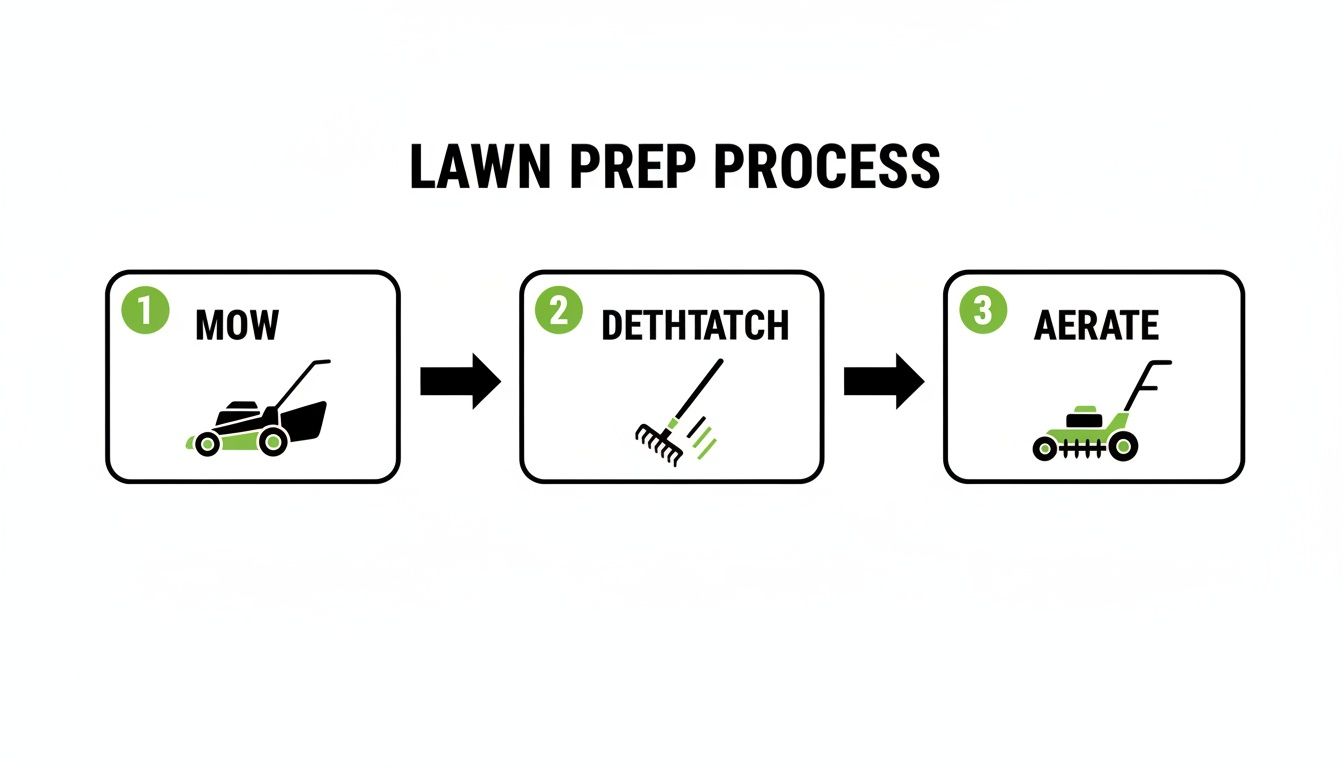
You can see how mowing low, dethatching, and aerating are the essential groundwork. Without them, the seeding and topdressing just won't be as effective.
Spreading compost is easy enough. You can use a shovel and a rake for smaller areas, or rent a specialized compost spreader for larger lawns in places like Cumming. The goal is just a light, even dusting that covers the seed without burying it too deep. If you want to see how this fits into a full year of lawn care, check out our guide on the best time to top dress your lawn.
By combining precise seeding with the natural power of compost, you aren't just planting grass. You're building a thriving soil ecosystem that will support a beautiful, resilient lawn for years to come.
Your Post-Seeding Watering and Mowing Plan
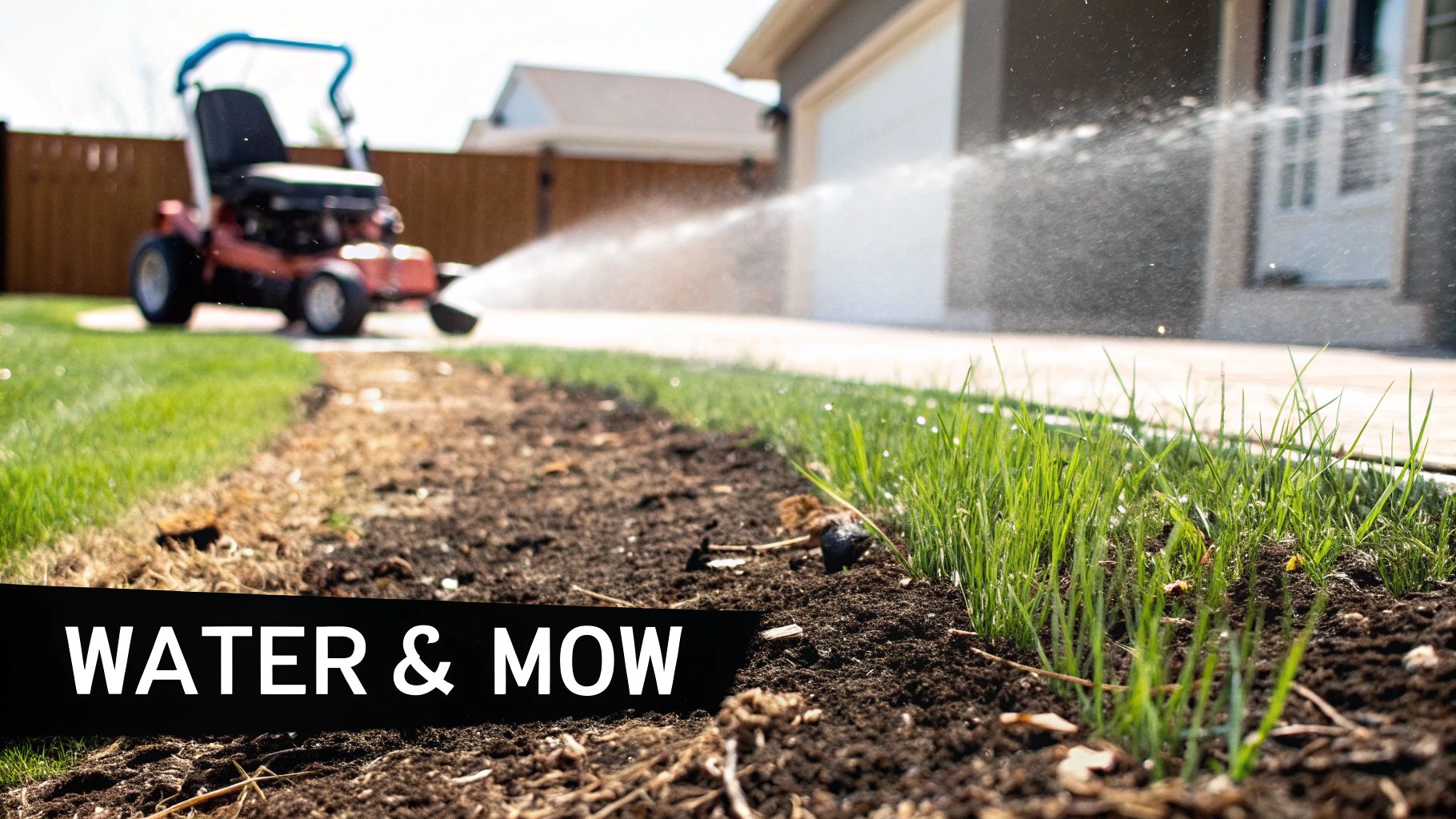
You’ve done the hard work of prepping, seeding, and topdressing. Now comes the part that makes or breaks your success. The next few weeks are the most critical time for your new lawn, and it all boils down to a smart watering and mowing plan. This consistent care is what transforms those tiny seeds into a thick, resilient turf ready to handle a North Georgia winter.
Think of your new seedbed as a delicate nursery. The single most important goal is keeping the top inch of soil consistently moist—think of a well-wrung-out sponge. If those seeds dry out, even for a little while, germination stops dead in its tracks.
The Critical First Few Weeks of Watering
For the first 7 to 14 days, your watering plan needs to be frequent but light. You aren't trying to flood the ground; you're just keeping that surface layer damp so the seeds can sprout.
Here’s what a typical schedule looks like for a lawn in Cumming or Alpharetta at this stage:
- Water two to three times per day for short bursts, about 10-15 minutes per zone.
- Run the sprinklers in the morning and early afternoon to cut down on evaporation.
- Use a sprinkler setting that produces a fine mist. A heavy, driving spray can easily wash away seeds or create puddles that rot the seed.
Consistency is everything here. A programmable timer is your best friend during this phase, ensuring the seedbed never gets a chance to dry out. Remember, you’re aiming for constant moisture, not a swamp.
Transitioning to Deeper Root Growth
Once you see a carpet of green fuzz appearing across your lawn—usually after about two weeks—it’s time to change your watering strategy. The goal now is to train those new roots to grow deep into the soil. This is the secret to building a lawn that can handle the summer heat next year.
To do this, you’ll start watering less often but for much longer. This lets the water soak deeper into the ground, encouraging the roots to chase after it.
For instance, a homeowner in Johns Creek might switch from three 10-minute sessions a day to one long, 30-40 minute session every other day. Over the next month, as the grass gets taller, you can scale back even more, eventually aiming for a deep watering just once or twice a week, depending on how much rain we get.
The biggest mistake I see people make is sticking with light, frequent watering for too long. It creates a lawn with shallow, weak roots that simply can’t survive our hot summers. Shifting to deep, infrequent watering is the key to a truly resilient lawn.
The First Mow and Ongoing Care
It’s exciting to watch that new grass shoot up, but don't get impatient with the mower. Mowing too soon can literally pull the delicate seedlings, roots and all, right out of the ground. The golden rule is to wait until the new grass blades are about 3 to 4 inches tall.
When it's time for that crucial first cut:
- Sharpen Your Blades: Dull blades don't cut; they tear. This puts a ton of stress on young grass plants.
- Mow High: Set your mower deck to its highest setting. You never want to cut more than the top third of the grass blade. For Tall Fescue, a height of 3.5 inches is perfect.
- Wait for Dry Ground: Mowing a wet, soft lawn is a recipe for ruts and uprooted seedlings. Make sure the ground is dry.
That first mow is a big deal. It signals the grass to start tillering—producing new shoots from the base of the plant—which is how your lawn gets that thick, dense look.
Finally, keep everyone off the grass! This includes kids, pets, and even yourself. Stay off the newly seeded areas for at least three to four weeks. The fragile seedlings just can't handle the foot traffic. After you’ve mowed it two or three times, the lawn should be established enough for light use. A little patience now pays off with a beautiful, durable lawn for years to come.
When to Hand the Reins to a Pro
There's a special kind of pride that comes from a DIY project done right. But when it comes to getting your fall lawn reseeding just right, sometimes calling in an expert is the smartest move you can make. It can save you a ton of time, a surprising amount of money, and a whole lot of frustration.
Let's be honest, some lawn situations in North Georgia are just plain tough.
Think about your own yard. Are you looking at a huge lawn in Cumming or Milton that would take your entire weekend just to aerate? Is the ground in your Johns Creek yard that infamous Georgia red clay, packed down so hard you can barely get a shovel in? Or maybe you've got those annoying, stubborn bare spots in Alpharetta that just laugh at every bag of seed you throw at them.
These aren't just minor inconveniences; they're signs of bigger underlying problems. Tackling them often requires specialized equipment and a level of experience that most of us just don't have.
This same logic applies to other parts of your landscape. Just as you'd want a lawn expert for your turf, understanding the importance of hiring certified professionals for something as critical as tree care is key to a healthy, safe, and beautiful yard.
Bringing in a service like Barefoot Organics is about more than just throwing down seed. We’re talking about an entire system: high-powered core aeration that truly breaks up compacted soil, our custom-blended premium seeds, and a healthy dose of organic topdressing to build incredible soil for the long haul.
Hiring an expert isn't giving up—it's making a strategic investment in your lawn's future. It’s simply the most effective way to get that thick, vibrant, and healthy lawn you've been dreaming of, without all the guesswork.
Answering Your Top Georgia Reseeding Questions
Even the best-laid plans can leave you with a few questions. It's only natural. Having helped countless homeowners across Cumming, Alpharetta, Milton, Dahlonega, and all over North Georgia, we've heard just about every question in the book when it comes to fall reseeding. Here are the answers to a few of the most common ones.
Can I Overseed My Bermuda Lawn for Winter Green?
Absolutely. This is a very common and smart move for keeping some green in your yard through the colder months. Many folks in places like Johns Creek and Milton will overseed their dormant warm-season turf (think Bermuda or Zoysia) with a cool-season grass like Tall Fescue.
It’s a great way to enjoy a lush-looking lawn while your main turf is taking a winter nap. Just keep in mind, this is a temporary fix. That fescue will almost certainly thin out and fade away once our brutal summer heat returns and the Bermuda grass roars back to life. Think of it as a beautiful, seasonal green carpet.
Help! Weeds are Sprouting With My New Grass!
First off, don't panic. Seeing a few weeds, especially a notorious one like annual bluegrass (poa annua), pop up with your new grass is completely normal. The single most important thing to do right now is… nothing. Specifically, avoid all herbicides.
Those products can't tell the difference between a weed and your brand-new, delicate grass seedlings. They’ll wipe out everything. Your best bet is to focus on creating a thick, healthy stand of turf with consistent watering and proper mowing. As your new lawn matures and fills in, it will naturally crowd out and smother most of those early weeds.
The best defense against weeds isn't a bottle of chemicals—it's a dense, healthy lawn. By focusing on thick turf growth, you naturally crowd out weeds, creating a stronger, more resilient yard without the need for constant spraying.
How Soon Can My Kids and Pets Play on the New Lawn?
This one requires some patience, which I know can be tough. You really need to keep everyone—kids, pets, even yourself—off the newly seeded areas for at least 2 to 3 weeks. Those tiny seedlings are incredibly fragile and can't handle any foot traffic while they're just starting to root.
After the new grass is tall enough for its first mow (around 3 to 4 inches high), it can tolerate very light activity. But for any real running around or heavy play, you’ll want to wait until the lawn has been mowed at least 2 or 3 times. That’s a good sign that the root system is getting established and can handle the stress.
Bringing a lawn back to life shouldn't feel like a second job. If you're wrestling with compacted clay soil or simply want to ensure you get professional results the first time, the team at Barefoot Organics is here to help. We bring together expert aeration, top-tier seed, and our signature organic topdressing to build a healthy, beautiful lawn from the ground up.