

To really get rid of clover for good, you first have to understand why it showed up in the first place. This isn't just about pulling weeds or spraying a chemical. It’s about figuring out what your soil is lacking that allows clover to move in while your turfgrass struggles. Usually, it boils down to low nitrogen and compacted soil.
Understanding Why Clover Is Taking Over Your Georgia Lawn
If you're seeing those tell-tale, three-leaf patches popping up in your yard from Cumming to Dahlonega, you've got plenty of company. Clover is everywhere in North Georgia, but it's more than just a nuisance—it's a bright green flag waving at you, signaling that your lawn is missing something critical.
Instead of just seeing clover as the enemy, think of it as a helpful indicator of your soil's health.
The main reason clover gets a foothold is because of a unique superpower it has: it can make its own nitrogen. Your fescue or Bermuda grass desperately needs nitrogen from the soil to stay thick and green. Clover, on the other hand, couldn't care less. It just pulls nitrogen straight from the air and feeds itself, allowing it to thrive where your grass is starving.
The Main Culprits Behind a Clover Invasion
Here in areas like Milton and Johns Creek, our heavy red clay soil is a big part of the problem. Clay compacts easily, squeezing the life out of the soil and making it tough for grass roots to breathe or find water and nutrients. Clover, with its shallow roots, has no problem setting up shop in these dense, difficult spots.
Your own lawn care habits can also roll out the welcome mat. Mowing your grass too short is a classic mistake. It stresses the turf, thins it out, and lets sunlight hit the soil surface, giving clover seeds the perfect opportunity to sprout and spread. A weak, thin lawn is basically an open invitation for clover to take over.
The most common reasons clover appears in a Georgia lawn are straightforward: low nitrogen levels, compacted soil, and a cutting height that's too low for your grass type. Addressing these root causes is the only way to achieve a long-term solution.
At the end of the day, clover is an opportunist. It simply fills in the bare spots where your grass is failing. To get rid of it permanently, you have to shift your focus from just killing the weed to building a thick, healthy, and resilient lawn.
That process starts from the ground up by improving your soil structure. You can dive deeper with our guide on how to improve soil to build a better foundation for your turf.
Interestingly, clover's nitrogen-fixing ability isn't all bad. It actually fertilizes the soil as it grows. In some scenarios, a small amount of clover can provide a natural, slow-release source of nitrogen for cool-season grasses, which might even reduce your need for fertilizer down the road.
Your Seasonal Game Plan for Clover Control in Georgia
Winning the battle against clover here in the Cumming area is all about timing. It’s not a one-and-done deal; it's a year-round commitment to building a healthier, more resilient lawn that can naturally crowd out weeds.
Your strategy needs to flex with the seasons. What works in the cool, wet spring is entirely different from the approach you'll need during our hot, dry summers. Let's break down the year.
Spring: Time for Proactive Treatments
Spring is when clover really takes off, growing aggressively and spreading fast. As temperatures rise in areas from Milton to Dahlonega, this is your prime window to act.
This isn't just a hunch; the numbers back it up. Research from the University of Georgia Extension shows that spring applications (think March through May) have an impressive 85% success rate. Compare that to fall treatments, which drop to just 60%. To really nail the timing, check out our guide on the best time to weed and feed your lawn.
The image below shows exactly how clover gets its foot in the door—it almost always starts with a lawn that's already struggling.

As you can see, a weak lawn environment is practically an open invitation for clover to move in and take over.
Summer: Management and Prevention
Summer in North Georgia means serious heat and stress for our turf. That intense sun can weaken Fescue and Bermuda grass, creating the perfect opportunity for clover to creep into any thin or bare patches. Your focus this season should shift from aggressive treatments to smart, supportive lawn care.
Here’s what to do:
- Mow High: Set your mower blade to at least 3-4 inches. Taller grass blades create a canopy that shades the soil. This keeps it cooler and blocks the sunlight clover seeds need to sprout.
- Water Deeply: Water your lawn deeply but less often. This simple change encourages your grass to grow deep, strong roots, making it far more competitive against shallow-rooted weeds like clover.
Fall: Laying the Foundation for Next Year
Autumn is arguably the most critical season for long-term clover control. The cooler temperatures and more consistent rainfall create the perfect conditions for strengthening your turf. Now is the time for core aeration—especially with our heavy clay soil—and overseeding to fill in any bare spots left over from summer.
Focusing on building a thick, dense lawn in the fall creates a natural, living barrier. When spring rolls around, there’s simply no room for clover to get established. A dense lawn is truly your best defense.
To make it even simpler, here's a quick-reference guide to the best clover management tasks for each season in our area.
North Georgia Clover Control Calendar
| Season | Primary Goal | Key Actions |
|---|---|---|
| Spring | Knock back active growth | Apply post-emergent controls. Manually pull small patches. Address soil fertility with a nitrogen boost. |
| Summer | Reduce lawn stress & prevent spread | Mow high (3-4 inches). Water deeply and infrequently. Avoid fertilizing cool-season grasses during peak heat. |
| Fall | Build turf density for future prevention | Core aerate to relieve soil compaction. Overseed bare spots. Apply a winterizing fertilizer. |
| Winter | Plan & Prepare | Test your soil's pH and nutrient levels. Sharpen mower blades. Plan your spring feeding and pre-emergent strategy. |
By following this seasonal calendar, you're not just fighting the clover you see; you're actively creating a lawn environment where it can't thrive in the first place.
Pet-Safe and Natural Ways to Get Rid of Clover
For families across Cumming and the surrounding areas, a gorgeous lawn shouldn't come at the cost of your peace of mind. If you’re like most homeowners I talk to, keeping kids and pets safe is the absolute top priority. The good news is, you don’t have to reach for harsh chemicals to deal with clover. There are some fantastic, all-natural ways to get it out of your yard that are safe for your family and the local environment.
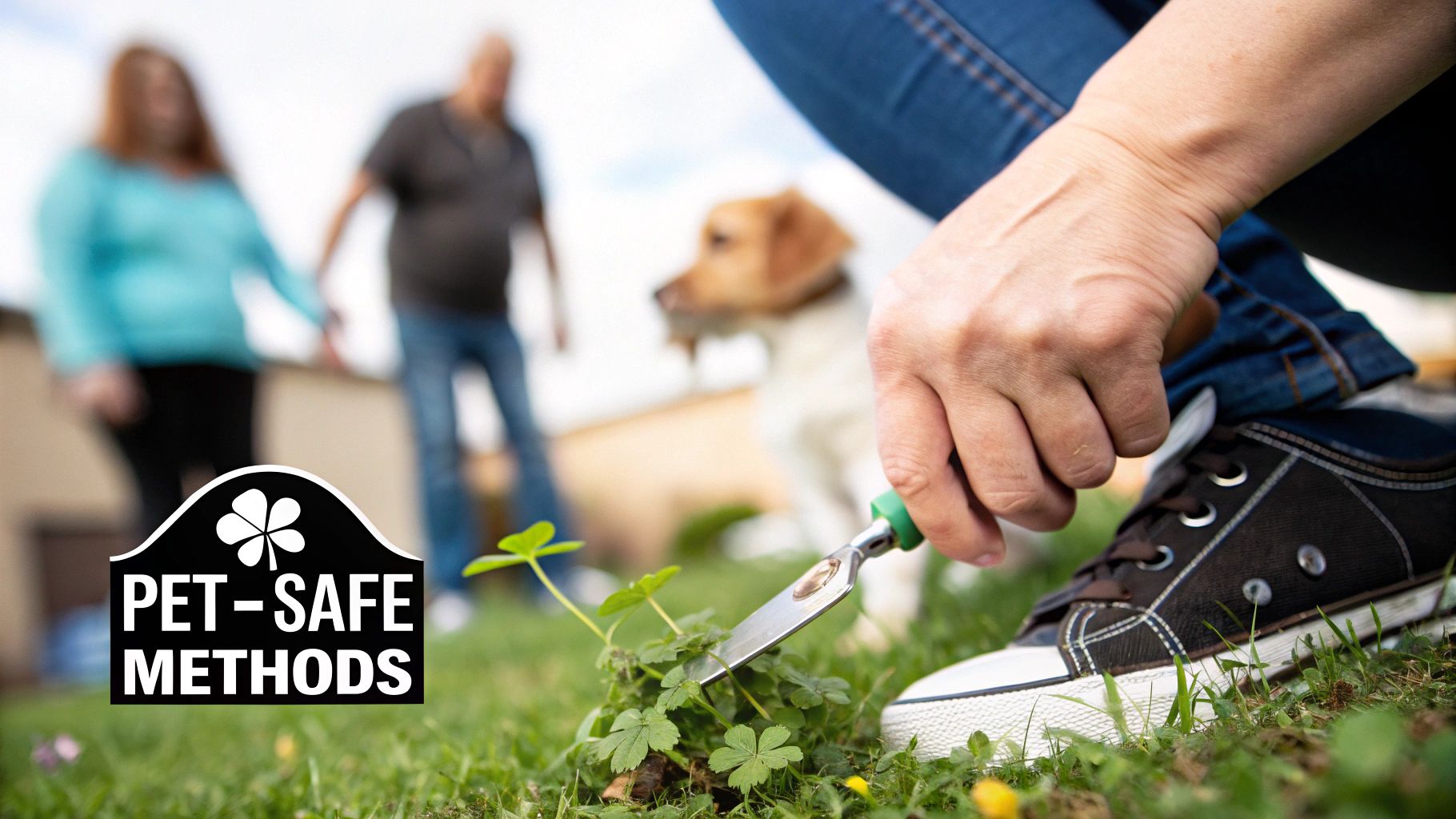
Honestly, for small patches of clover, nothing beats getting out there and pulling them by hand. It's direct, oddly satisfying, and completely chemical-free. If you're in Cumming or Johns Creek and just noticing a few clumps popping up, this is always the best first move.
This hands-on approach is simple, but doing it right is what makes it effective. You have to get the entire root system, otherwise, that clover will be back before you know it.
Pro Tip: The best time to pull weeds is right after a good rain. Our Georgia clay soil gets much softer when it's wet, making it so much easier to pull the whole clover plant—roots and all—without anything breaking off underground.
Getting Hands-On with Clover Removal
To really succeed, you need to go in with more than just your bare hands. Clover has a sneaky, creeping root system that will happily regrow from any tiny piece you leave behind.
Here’s how to do it effectively:
- Grab the Right Tool: A basic garden trowel is okay, but a forked weeder or a dandelion puller is a game-changer. These tools are specifically designed to slide under the root ball and lever it up without tearing up your lawn.
- Master the Technique: Start by loosening the soil around the base of the clover clump. Then, work your tool deep underneath the central root and gently pry upwards. You should feel the entire plant pop loose.
- Fill the Bare Spot: This is a crucial step! As soon as you pull the clover, fill that bare patch with a bit of topsoil and grass seed. If you leave it empty, you're just rolling out the welcome mat for new weed seeds to move in.
Exploring Other Natural Options
If hand-pulling isn't your idea of a good time, or if the clover has started to spread a bit more, don't worry. A few other organic strategies can make your lawn a much less inviting place for it to grow.
One of the most popular is corn gluten meal. Think of it as a natural birth control for seeds. It's a pre-emergent, which means it stops clover seeds from sprouting. To get the timing right here in North Georgia, you need to apply it in early spring before the soil temperature consistently gets above 55°F.
Another tool in the natural arsenal is horticultural vinegar. This is a much more potent version of the stuff in your kitchen pantry, and it works by burning the leaves and stems of the clover. But be careful—it’s non-selective, so it will burn your grass, too. This makes it best for careful spot treatments on a calm, sunny day. Keep in mind it usually doesn't kill the root, so you'll likely need to reapply it.
For a deeper dive into these and other organic solutions, check out our guide to natural weed control methods that work great for lawns in our area.
Building a Thick, Clover-Resistant Lawn for the Long Term
Pulling and treating clover is just putting out fires. If you want to win the war, you have to stop thinking about removing clover and start thinking about building a lawn where it can't even get started. The real secret is creating a turf so thick and healthy that weeds like clover simply get choked out.
This is where your long-term lawn care habits, or "cultural practices," become your most powerful weapon.
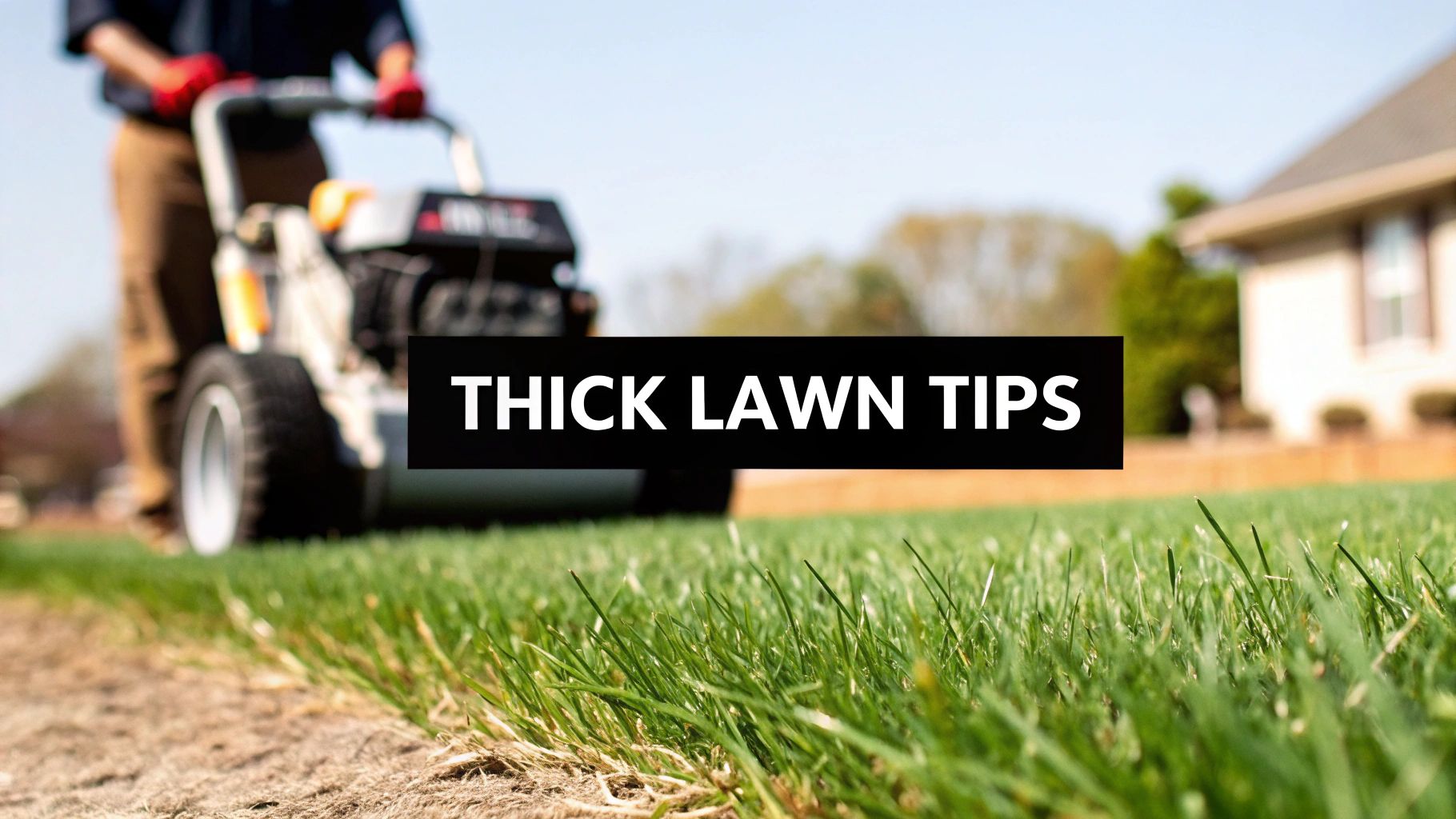
There’s no single magic trick here. It’s about consistently doing a few key things right that give your grass the upper hand. For homeowners from Alpharetta to Dahlonega and across North Georgia, mastering these fundamentals is what separates a frustrating, weedy yard from a beautiful one.
Master Your Mowing and Watering Habits
The easiest change you can make also happens to be one of the most effective: mow your grass higher. I know it’s tempting to scalp it short for that super-neat look, but you’re actually stressing the grass and rolling out the welcome mat for clover. A short cut opens up the canopy, lets sunlight hit the soil, and practically begs clover seeds to sprout.
Do your lawn a favor and raise your mower deck to 3 to 4 inches. This simple adjustment creates a dense canopy of grass that shades the soil, keeping it cool and dark—an environment where clover struggles. Taller grass also grows deeper roots, which is a massive advantage when our hot Georgia summers hit.
Watering is the other side of that coin. Ditch the daily light sprinklings; that just encourages shallow, weak roots. Instead, water deeply but less frequently. This forces your grass to send its roots down deep in search of moisture, creating a tougher, more drought-resistant lawn that easily outcompetes shallow-rooted weeds.
Fight Compaction with Core Aeration
Anyone with a lawn from Cumming to Alpharetta knows the struggle with our heavy, compacted clay soil. It’s dense, squeezes out air and water, and suffocates grass roots. But you know what loves it? Clover.
This is why core aeration isn't just a good idea—it's essential.
By pulling up small plugs of soil, core aeration does a few critical things all at once:
- It immediately relieves compaction, letting oxygen, water, and nutrients finally get down to the roots where they’re needed.
- It helps break down thatch, that suffocating layer of dead grass that can choke out your turf.
- It creates the perfect seedbed for overseeding, giving new seeds direct contact with the soil.
For our North Georgia clay, annual core aeration in the fall is arguably the single most beneficial thing you can do to improve your lawn’s underlying health and structure.
Feed the Soil for a Stronger Lawn
A great lawn is built from the ground up, starting with healthy soil. Stop thinking about just feeding the grass with synthetic fertilizers and start focusing on feeding the soil itself. A balanced, organic approach nurtures the microbial life that helps grass thrive, making it naturally resistant to weeds and disease.
This means using organic-based, slow-release fertilizers that provide a steady diet of nutrients. Clover gets a foothold in lawns that are low in nitrogen, so simply making sure your lawn is properly fed is a huge preventative step. If you're not sure what your soil needs, a soil test takes all the guesswork out of it.
Finally, never skip fall overseeding. Right after you aerate is the perfect time to spread a high-quality grass seed, like a good turf-type tall fescue blend. This fills in any thin or bare patches, creating a dense physical barrier that leaves absolutely no room for clover to move in. It’s how you set the stage for a lush, clover-free lawn next spring.
When Should You Call a Lawn Care Professional?
Trying to get rid of clover on your own can feel like a win, but let's be honest—sometimes the problem is just too big for a weekend warrior. For homeowners here in Cumming, Johns Creek, and across North Georgia, knowing when to tag in a professional can save you a ton of time, money, and headaches.
There's a tipping point. If you look out your window and see that clover has taken over more than 40% of your lawn, it's no longer just a weed problem. That’s a clear sign of major underlying soil issues that pulling weeds by hand or spot-treating will never solve. Your grass is losing the war.
Signs It's Time for Expert Help
Another red flag is when the clover just won't quit. You've done everything right—you're mowing high, you've tried the natural treatments, maybe you even aerated. But every season, it comes roaring back. That kind of stubborn, recurring clover usually points to deeper soil imbalances, like serious compaction or a nutrient deficiency that needs a professional strategy to fix for good.
Reaching this stage isn't about giving up; it's about making a smart investment in your home. Calling in a pro brings a level of expertise and equipment that most of us just don't have in our sheds.
- Real Soil Diagnostics: A professional service can run detailed soil tests to figure out exactly what’s going on. Is the pH off? Is there no nitrogen left? They find the root cause.
- A Plan That Actually Works: Based on those tests, they build a custom organic treatment plan that attacks the source of the problem, not just the leafy green symptoms.
- Better Tools for the Job: Experts use professional-grade equipment for things like core aeration that goes deeper and is far more effective than the rental machine from the hardware store.
When you're facing a widespread clover invasion, a pro can diagnose and treat the deep-seated soil health problems much more effectively than any one-size-fits-all bag of product. This is how you get lasting results, not just a temporary fix.
Of course, picking the right company matters. When you're looking for help, a company's online presence can tell you a lot about their professionalism; it’s no surprise that the best local services often have strong website design strategies for lawn care businesses to clearly communicate their expertise.
At the end of the day, if your hard work isn't giving you the green, healthy lawn you want, or if you're just plain overwhelmed, it's the right time to call for backup. A pro has the know-how and the tools to bring your lawn back to life and, just as importantly, give you back your free time.
Got Questions About Clover in Your Georgia Lawn? We’ve Got Answers.
Even with the best game plan, you're bound to have questions. Here in North Georgia, from Cumming to Dahlonega, we get asked the same things over and over by folks battling stubborn clover patches. Let's tackle some of the most common ones we hear.
Will Georgia Winters Kill Off My Clover?
Wouldn't that be nice? Unfortunately, the answer is a firm no. White clover is a hardy perennial, more than capable of handling a typical North Georgia winter. A few hard frosts might knock it back and make it look a little sad, but its root system is tucked safely underground, just waiting.
The moment the soil starts to warm up in spring, that clover will roar back to life, often greening up before your grass even wakes up. Simply hoping winter will do the job for you isn't a real strategy. The key is being proactive in the fall to build a thicker lawn and getting ahead of new growth in the spring.
I Spent Hours Pulling Clover by Hand, and It Grew Right Back. What Gives?
This is easily the number one frustration we hear from homeowners in Alpharetta and Milton. When clover comes back with a vengeance after you've pulled it, it's almost always because tiny pieces of the root system were left behind.
Clover has these creeping stems, called stolons, that run along the ground. Even a small fragment of a stolon or root left in the soil can sprout into a whole new plant. This is a huge problem in our heavy clay soil, where it’s incredibly easy for roots to snap off when you pull.
Pro Tip: Before you start weeding, water the area lightly about an hour beforehand. This softens the soil, making it much easier to get a forked weeding tool under the plant and pry the entire root system out in one piece.
Don't forget the final step! Immediately after you pull a clump, fill that bare spot with a little topsoil and grass seed. An empty patch of dirt is just a welcome mat for the next weed to move in.
Is Clover Actually Bad for My Lawn, Though?
That's a fantastic question, and honestly, the answer depends entirely on what you want your lawn to be. There's no single right or wrong here; it's all about your personal goals.
From a purely ecological standpoint, clover has some great things going for it. It's an incredible food source for bees and other pollinators. Plus, it has the unique ability to pull nitrogen from the air and "fix" it in the soil, which is basically a free, natural fertilizer for your grass. Some people are intentionally creating "bee lawns" or mixed-species yards for these very reasons.
On the other hand, if you're aiming for that classic, uniform, carpet-like turfgrass lawn, then clover is definitely a weed. Its different texture, color, and growth habit stand out and disrupt that consistent look. It really just comes down to your personal preference and what you envision for your yard.
Still have questions that need an expert eye? The team at Barefoot Organics has seen just about every clover situation you can imagine on Georgia lawns. We focus on building thick, healthy turf that naturally crowds out weeds. Let's figure out a plan that works for you. Get Your Free Lawn Care Quote today