

That stubborn patch of crabgrass ruining your otherwise perfect Bermuda lawn in Cumming? Those dandelions popping up all over your fescue in Johns Creek? It’s a familiar frustration for homeowners all across North Georgia. When these unwelcome plants have already crashed your lawn party, a post-emergent weed killer is the tool you need to send them packing.
This is the reactive solution for weeds you can already see.
Winning the War on Weeds in Your North Georgia Lawn
The dream of a lush, barefoot-worthy lawn is a big part of life in our communities, from Milton all the way up to Dahlonega. But getting that perfect green carpet can feel like a full-time job, and invasive weeds are almost always the number one enemy. This is where truly understanding your weed control options makes all the difference.
The Two Fronts of Weed Control
Most of us have heard about pre-emergent treatments. These are the proactive shields we apply in early spring to stop weed seeds from ever sprouting in the first place. You can think of it like building a fortress around your lawn before the siege begins. But what do you do when the invaders are already inside the walls?
That’s when post-emergent weed killers become your go-to. They are the special forces you send in to target and eliminate weeds that have already broken through the soil and are now actively stealing sunlight, water, and nutrients from your grass. It's the critical difference between prevention and cure.
One of the biggest mistakes we see in the Cumming and Alpharetta area is relying only on post-emergent sprays to manage a lawn. This just creates a never-ending cycle of spraying chemicals, season after season. A truly effective long-term strategy focuses on building healthy soil and thick turf that naturally chokes out weeds, drastically reducing the need for any chemical treatments down the road.
It's More Than Just a Green Lawn
For families in Alpharetta, Milton, and throughout Forsyth County, the conversation about lawn care has shifted. It’s no longer just about looks; it's about creating a safe environment. The desire for a beautiful yard now goes hand-in-hand with the need for it to be a safe place for kids and pets to play.
The conventional weed killers lining the shelves at big-box stores can be a real source of anxiety for health-conscious homeowners. These products often contain harsh chemicals that can stick around on grass blades and leach into the soil, creating potential risks for your family and the local environment around Johns Creek and Dahlonega. It's no wonder a growing number of residents are searching for a better way.
At Barefoot Organics, we get it. We believe the best approach doesn't start with a bottle of chemicals, but with the soil itself. By focusing on natural, organic-based solutions, we help homeowners grow lawns that aren't just beautiful and weed-free, but are genuinely safe for the people and pets you love. This guide is here to walk you through the options so you can make the best choices for a healthier North Georgia lawn.
So, What Exactly Is a Post-Emergent Weed Killer?
Think of a post-emergent weed killer as your go-to solution for weeds that have already crashed the party. While a pre-emergent stops them from ever showing up, a post-emergent is what you use when you can physically see the weeds growing and trying to take over your turf. It's the reactive part of your lawn care strategy, designed to clean up the unwelcome guests you can see right now.
But here’s where a lot of homeowners get into trouble: not all post-emergents are created equal. They fall into two completely different camps, and picking the wrong one can mean the difference between a gorgeous lawn in Alpharetta and a patchy, brown mess. Knowing the distinction is critical.
Selective Herbicides: The Precision Tool
The first type, and the one most of us use on our lawns, is the selective post-emergent. Picture this one as a skilled surgeon. Its entire job is to go after specific targets—like clover, dandelions, or that annoying crabgrass—while leaving your beautiful Fescue or Bermuda grass completely untouched.
This precision is exactly why selective products are so indispensable for lawn maintenance. You can spot-treat a stubborn patch of dollarweed in your Milton yard or spray a broader area of chickweed in Cumming without accidentally killing the grass you’ve spent all season nurturing. It works because these products are formulated to attack biological traits found in broadleaf weeds but not in turfgrass.
Non-Selective Herbicides: The "Clear Everything" Button
Then you have the complete opposite: non-selective post-emergent herbicides. These aren't surgeons; they're more like a total reset button for any plant life. A non-selective product is built to kill everything it touches, from the toughest weeds right down to your healthiest grass.
So why would anyone in Johns Creek ever need something so aggressive? There are a few key scenarios.
- Prepping a new garden bed before you put in flowers or veggies.
- Wiping out all the growth in the cracks of your driveway or along a fence line.
- Starting a lawn from scratch by killing off all the old, weedy turf to get a clean slate.
For the average homeowner in areas like Cumming or Milton, a non-selective herbicide is a powerful tool that demands serious respect. Just a little bit of overspray can leave big, dead, brown spots in your lawn that won't recover for a full season. It’s a frustratingly common mistake we see all the time.
Why This Matters for Your Lawn and Community
Choosing between selective and non-selective isn't just about getting a pretty lawn; it’s about being a responsible caretaker of your property and local environment. The scale of herbicide use is massive. In fact, the market just for compounds that make these products safer for crops is expected to reach USD 605.9 million by 2026, which shows how important targeted application is.
Here in the Cumming area, the stakes are even higher. The conventional post-emergents you grab off the shelf can easily run off into local watersheds like the Chattahoochee River or Lake Lanier. Studies have shown these chemicals can reduce fish populations by 20-30% in areas with heavy runoff. On top of that, the EPA links improper herbicide use to over 10,000 pet poisoning cases in the U.S. each year. If you're interested, you can explore more data on the global herbicides market to see the bigger picture.
Grasping this fundamental difference is the first step. It gives you the power to make choices that not only get rid of weeds but also protect your family, pets, and the beautiful corner of Georgia you call home.
Identifying Common Weeds in North Georgia
To win the war against weeds, you have to know your enemy. Just grabbing a generic weed killer off the shelf and spraying is a recipe for frustration and a still-weedy lawn. Here in North Georgia, from Cumming to Dahlonega, we face a specific lineup of unwanted guests, and getting rid of them starts with proper identification.
Think of it this way: you wouldn't use a hammer to turn a screw. In the same way, you can't expect a broadleaf weed killer to handle a grassy weed. Pinpointing exactly what's invading your turf is the single most important first step toward taking back your yard.
Once you know what you're dealing with, you can choose your strategy. Post-emergent herbicides fall into two main camps.
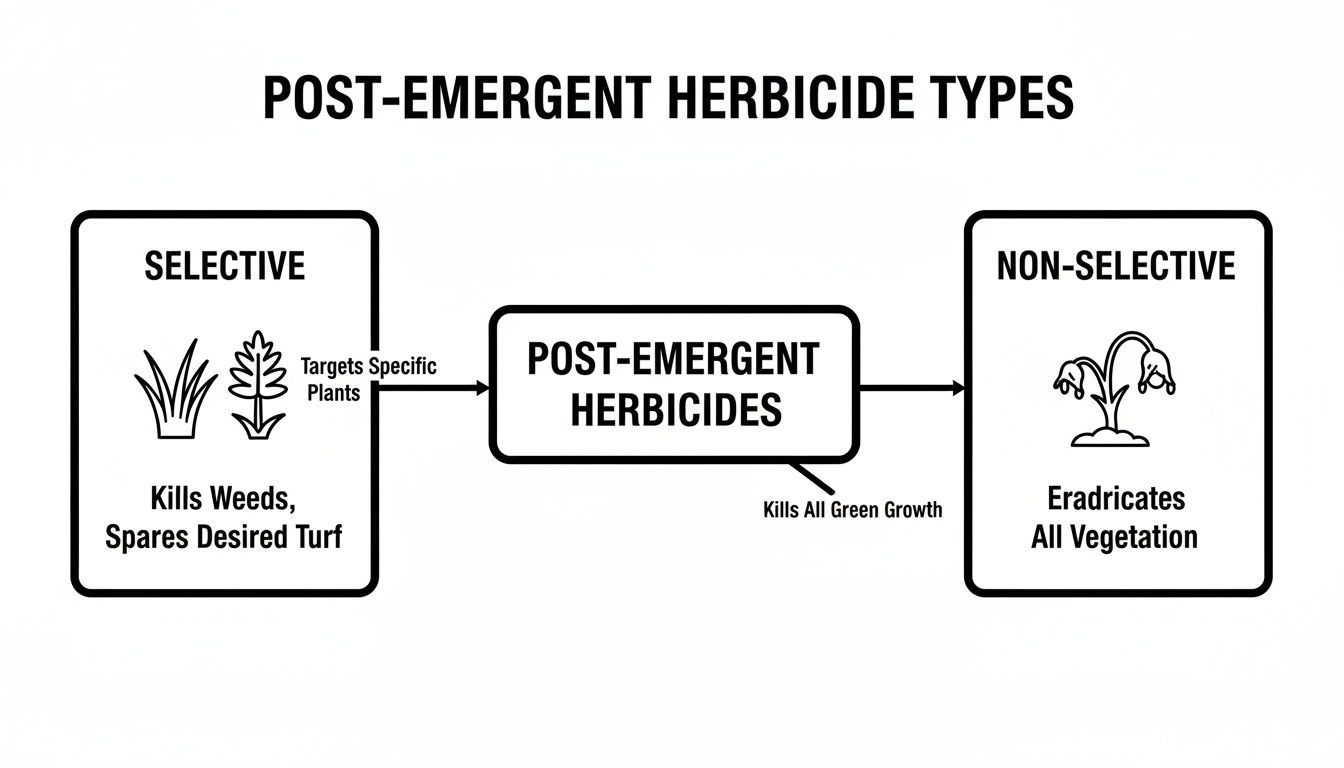
The difference is critical: selective herbicides are formulated to target specific weeds while leaving your precious turfgrass unharmed. On the other hand, non-selective herbicides are designed to kill all vegetation they touch—weeds, grass, flowers, you name it. Understanding this is absolutely fundamental.
The Grassy Invaders
Our warm, humid climate is practically a paradise for certain grassy weeds. They’re sneaky, often blending in with your lawn until they’ve suddenly established a major foothold. Homeowners across Forsyth and surrounding counties know these aggressive competitors all too well.
Crabgrass: This is public enemy number one for most lawns in Cumming and Johns Creek. It pops up in late spring as soil temperatures climb, forming ugly, sprawling clumps with wide, light-green blades. A post-emergent works best on crabgrass when the plants are still young, with fewer than four leaves. Mature plants become much, much tougher to control.
Nutsedge: This one is a real impostor. People often mistake it for grass, but you can identify it by its distinctly triangular stem (grass stems are round or flat). It also grows ridiculously fast, shooting up above your mowed lawn just a few days after you cut it. Both yellow and purple nutsedge are a constant plague in areas from Milton to Dahlonega, and they demand a specialized post-emergent weed killer made specifically for sedge control.
Pesky Broadleaf Weeds
Unlike their grassy cousins, broadleaf weeds are impossible to miss. With their distinctive leaves, they shatter the uniform look of a healthy lawn and are a constant headache for homeowners from Alpharetta to Cumming.
Clover: Some people don't mind it, but for most, this three-leafed invader is a problem. It spreads through creeping stems, quickly forming dense mats that can choke out your grass. A selective broadleaf herbicide is highly effective, especially when applied to actively growing clover in the spring or fall.
Dandelion: Everyone knows the dandelion, with its iconic yellow flower that turns into a puffball and its stubbornly deep taproot. The best time for post-emergent control is not spring, but fall. This is when the plant is sending energy down to its roots for winter, and a fall application ensures the herbicide travels down with those nutrients, killing the entire plant for good.
Dollarweed (Pennywort): If you see this weed, you likely have a moisture problem. Dollarweed thrives in soggy, poorly drained soil and is easy to spot by its round, silver-dollar-sized leaves that look like tiny lily pads. It's a huge issue across the Cumming area, especially in compacted, damp lawns. While a post-emergent helps, you also have to fix the underlying drainage issue.
To help you get started, we've put together a quick-reference guide for some of the most common weeds we see in local lawns.
North Georgia's Most Wanted Weeds: A Homeowner's ID Guide
This table will help you quickly identify the troublemakers in your yard and understand the best way to approach them.
| Weed Name | Appearance | Common Season (North GA) | Best Control Tactic |
|---|---|---|---|
| Crabgrass | Sprawling, light-green clumps with wide blades | Late Spring, Summer | Young plants: Post-emergent. Mature plants: Difficult; prevention is key. |
| Nutsedge | Taller than turf, with a distinctive triangular stem | Summer | Specialized sedge control post-emergent; multiple applications may be needed. |
| Clover | Low-growing mats with three-leaflet clusters | Spring, Fall | Selective broadleaf post-emergent on actively growing plants. |
| Dandelion | Yellow flower, puffball seed head, deep taproot | Spring, Fall | Fall application of a selective post-emergent is most effective. |
| Dollarweed | Round, scalloped leaves resembling small lily pads | Summer (in wet areas) | Post-emergent, plus improve soil drainage and aeration. |
Learning to spot these common culprits lets you move beyond the "spray and pray" method. It allows you to build a smarter, targeted strategy that saves you time, money, and headaches.
To go even deeper and become a local weed expert, check out our guide on common weeds in Georgia for more detailed photos and professional tips. This knowledge is power, empowering you to make the right decisions for a healthier, more beautiful lawn.
The Hidden Risks of Conventional Weed Killers
It's easy to understand the appeal of grabbing a powerful post emergent weed killer from the hardware store. A quick spray promises to make those ugly weeds disappear, and fast. But for families in Cumming and the surrounding area, that convenience often comes with significant, hidden risks that can compromise the safety of their favorite outdoor space.
Most conventional herbicides get their power from synthetic chemicals. While they are certainly effective at killing weeds, these compounds don't just vanish once their work is done. They can leave a residue on grass blades, creating a direct exposure risk for children and pets who live and play on the lawn.
This isn't a small thing. These chemicals can be absorbed through the skin, inhaled, or even ingested when a dog licks its paws or a toddler puts their hands in their mouth. For any health-conscious homeowner in Alpharetta or Johns Creek, this can turn a backyard sanctuary into a source of constant worry.
The Environmental Toll on North Georgia
The impact of these chemical treatments doesn't stop at your property line. Here in North Georgia, our yards are all part of a much larger, interconnected ecosystem. Every time it rains, the runoff from treated lawns in Cumming, Alpharetta, and Johns Creek carries those chemical residues straight into our storm drains.
From there, it’s a direct path into our precious local watersheds, including the Chattahoochee River and Lake Lanier. These aren't just places we go for fun; they are vital habitats for local wildlife and the source of our drinking water. The widespread use of synthetic herbicides adds to a chemical burden that can harm aquatic life and throw the delicate natural balance out of whack.
The sheer scale of this is staggering. The global herbicide market is projected to skyrocket toward USD 51.89 billion by 2034. Right here at home, this translates to an endless battle for families in Milton and Dahlonega, especially when summer weeds invade fescue lawns. Unfortunately, the go-to synthetic post-emergents often leach into groundwater, with some studies finding them in as many as 70% of U.S. streams, creating potential dangers for children and pets. If you're interested in the data, you can read more about these herbicide industry insights.
Creating a Cycle of Chemical Dependency
Maybe the most ironic risk of all is the long-term damage these weed killers do to the soil itself. The ground under your grass is a living, breathing ecosystem, full of billions of beneficial microbes, fungi, and earthworms. This microscopic world is the real secret to a naturally healthy lawn.
When you drench your soil with harsh chemicals, you're not just killing weeds; you're carpet-bombing this vital underground community. Wiping out beneficial microbes damages the soil's natural ability to cycle nutrients, retain moisture, and fend off diseases.
This kicks off a vicious cycle. The weakened soil can no longer support a thick, resilient turf. As the grass thins out, it leaves plenty of open space for new weeds to take root, which sends you right back to the store for another bottle of spray. Your lawn becomes weaker and more dependent on chemical fixes with each passing season.
It’s a frustrating loop, but it’s one you can break. By understanding these hidden dangers, you can start looking for better, safer ways to handle weeds—methods that work with nature instead of against it. For those ready to break free, you can even explore your own alternatives. In fact, you might be interested in our non-toxic weed killer recipe as a simple starting point. It’s a great first step toward building a truly healthy and safe lawn from the ground up.
The Barefoot Organics Approach: A Safer, Smarter Lawn Solution
After weighing the risks of conventional chemical treatments, it becomes pretty clear that a different game plan is in order—one that works with nature, not against it. This is where Barefoot Organics offers a fundamental shift in thinking for homeowners in Cumming, Alpharetta, and all over North Georgia. Our philosophy is simple: the best post-emergent weed killer is a lawn so healthy and thick that weeds just can’t find an inch to sprout.
Instead of constantly putting out fires with chemical sprays, we focus on building a fire-proof lawn. We don’t just treat the symptoms (the weeds you see); we fix the root cause (poor soil and thin grass). This approach creates a resilient, self-sufficient lawn that naturally crowds out weeds and resists pests and disease.
Building a Lawn That Defends Itself
Our Natural Lawn Care Program is all about creating a vibrant soil ecosystem that gives your grass the upper hand. We focus on feeding the soil because we know that’s the foundation of any great lawn. It’s a process we’ve fine-tuned specifically for the tough red clay and unique climate here in our corner of Georgia, from Cumming to Johns Creek.
We bring it all together through a few key practices:
- Soil Improvement: We add beneficial microbes and rich organic matter to breathe new life into your soil. This helps break up that dense clay, improve water absorption, and make critical nutrients available to your grass roots.
- Organic-Based Fertilization: Our custom fertilizer blends deliver a slow, steady stream of nutrients. This encourages strong, resilient growth, unlike the sudden, weak surge you often get from synthetics.
- Core Aeration: This is a game-changer. By pulling small plugs of soil, we relieve compaction and allow air, water, and nutrients to get deep into the root zone. A properly aerated lawn in Milton or Dahlonega will always have deeper, stronger roots.
- Top Dressing: We apply a light layer of high-quality compost over the lawn. This practice continuously enriches the soil, improves its structure, and adds even more beneficial organic material.
A Smarter Solution for Local Lawns
This holistic strategy creates an environment where your grass has the home-field advantage. A thick, vigorous lawn casts shade on the soil, blocking the sunlight that weed seeds need to even start growing. Its dense root system simply outcompetes weeds for water and nutrients, starving them out before they can ever become an eyesore.
The global herbicides market is projected to hit a staggering USD 52.1 billion by 2031, and many of those chemicals can linger in our soil and waterways. That's a real concern for kids and pets playing in yards across Forsyth County. This is exactly why our Natural Lawn Care Program is so vital—it dramatically cuts down on the need for these products. Imagine a lawn in Alpharetta thriving on its own, with weed pressure cut by 50% or more using purely organic methods, all while giving you peace of mind.
By strengthening your lawn from the soil up, we reduce or even eliminate the need for reactive, harsh post-emergent chemicals. It’s a proactive path to a beautiful, sustainable lawn that you can feel good about.
This process transforms your yard from a chemical-dependent battleground into a robust, living ecosystem. It's about shifting from constantly fighting weeds to cultivating a lawn that wins the fight all on its own. For anyone interested in taking a deeper dive into these sustainable practices, we encourage you to learn more about natural weed control methods in our detailed guide. This resource will give you even more tools to build a safe, beautiful outdoor space for your family.
Answering Your Post-Emergent Weed Control Questions
Even with the best-laid plans, weeds can still pop up, leading to a lot of common questions. We hear them all the time from homeowners across North Georgia, from Cumming to Milton. Let's clear up some of the confusion and show you a better way forward—one that’s built on our core belief that healthy soil is the real secret to a beautiful, safe, and weed-free lawn.
When Is the Best Time to Apply Post-Emergent Weed Killer in Cumming, GA?
The honest answer is: it completely depends on the weed. If you're fighting summer annuals like crabgrass, you need to hit them in early summer while they're young and haven't set seed. Once they mature, they become much tougher to manage.
On the other hand, for stubborn perennials like dandelions, fall is your most powerful ally. As the weather cools, these plants start sending energy down to their deep taproots for winter survival. A fall application means the herbicide gets pulled down right along with it, ensuring you get the whole plant, root and all.
That said, the Barefoot Organics approach is different. Instead of just reacting to a weed calendar, we build a proactive lawn health plan for homes in Cumming, Alpharetta, and Johns Creek. By focusing on creating dense, vigorous turf all year long, your lawn becomes its own best defender. This dramatically cuts down on the need for any "emergency" post-emergent sprays in the first place.
Are There Any Truly Effective Pet-Safe Post-Emergent Weed Killers?
Yes, there are options, but it's important to know what you're working with. Natural and organic-based products made from ingredients like iron (FeHEDTA), concentrated acetic acid (a strong vinegar), or certain botanical oils can knock back young, broadleaf weeds.
But there are a few trade-offs you need to be aware of:
- They are usually non-selective. This is a big one. It means they can burn or even kill your good grass if you aren't extremely careful. Think of them as tools for precise spot-treating only.
- They work on contact. These products burn down the leafy top growth you can see, but they often don't have the horsepower to kill the root system, especially on tough perennial weeds. You'll likely need to reapply them to keep the weeds from coming back.
- They work best on young weeds. A tiny, new dandelion is a much easier target for a natural product than a big, established one with a deep taproot.
Ultimately, the most effective "pet-safe" strategy isn't a spray at all—it's a holistic approach. We focus on improving your soil through core aeration and boosting organic matter. This helps you grow grass so thick and healthy that it naturally crowds out weeds, creating the ultimate pet-friendly lawn. This is the foundation of our programs in communities like Johns Creek and Alpharetta.
Can Post-Emergent Herbicides Get Rid of My Weeds Permanently?
This is one of the biggest myths in lawn care. Post-emergent herbicides are a treatment for the weeds you have now, not a permanent cure for your weed problem. They kill the plants currently growing, but they do absolutely nothing to address the thousands of dormant weed seeds just waiting for their chance to sprout in your soil.
Think of it this way: a yard with thin grass and compacted, lifeless soil is a perpetual weed factory. Relying only on post-emergent sprays traps you in a frustrating and costly cycle of killing weeds, watching them regrow, and spraying again. It’s treating the symptom while completely ignoring the underlying disease.
The only way to get real, long-term weed reduction is to change the environment itself. By building incredible soil health and promoting turf so dense it chokes out invaders, you make your lawn a place where grass wins and weeds simply can't get a foothold.
My Lawn Is Overrun with Weeds. Should I Use a Post-Emergent First?
We get this question constantly from new clients in Cumming, Milton, and Dahlonega who feel like their lawn is a lost cause. It's tempting to reach for a powerful chemical to "wipe the slate clean," but that approach can actually set you back by further damaging your soil's already fragile ecosystem.
A much better long-term strategy is to start an organic program right away. Our process gets to work healing the soil from day one. We start with core aeration to relieve compaction and introduce beneficial microbes that wake up the soil's natural, self-sustaining processes.
While we might use carefully selected, reduced-risk products for very severe infestations as part of an integrated plan, our main goal is to empower your grass. A healthy lawn, fed with the right organic nutrients, will start to outcompete many weeds on its own within the very first season. This is how you build a resilient, beautiful lawn from the ground up, instead of just slapping on a temporary chemical fix. It’s about building a better future for your yard, not just reacting to today's problems.
Ready to stop the endless cycle of spraying and start building a lawn that's naturally beautiful and safe for your family? The team at Barefoot Organics is here to help homeowners across North Georgia create the healthy, weed-resistant lawn they've always wanted. Get your free, no-obligation quote today and discover the difference a soil-first approach can make. Visit us at https://barefootorganicsllc.com to get started.