

For those of us in the Cumming, GA area, a beautiful green lawn is a source of real pride. But when you have pets, that pride comes with a big responsibility: making sure our yards are safe for the four-legged members of our family. That's where a pet safe lawn treatment comes in. It’s all about using natural, organic, or specially designed products to handle weeds and pests without putting our dogs and cats at risk. The whole idea is to build up healthy soil and skip the harsh chemicals found in a lot of traditional lawn care products.
Creating a Pet-Friendly Paradise in Your North Georgia Yard
If you live in places like Cumming, Alpharetta, or Johns Creek, you know your backyard is so much more than just grass. It's a true extension of your home. It’s the spot where your dog plays fetch, the kids run around, and you fire up the grill for a summer barbecue. The problem is, many of the standard lawn treatments use chemicals that can be seriously harmful if a pet licks them off their paws or ingests them. This makes finding a safer way to care for your lawn absolutely essential for families in our community.
Shifting to pet-safe lawn care isn't just about preventing a scary trip to the vet. It’s about creating a space where you don't have to worry. Think about it: conventional pesticides and herbicides have been linked to everything from skin irritation in pets to much more serious internal health problems. When you choose a pet-friendly approach, you're no longer forced to decide between having a great-looking lawn and protecting your pet’s health. You can have both.
Why Local Knowledge Matters
Every area has its own set of lawn care puzzles, and our slice of North Georgia is certainly no different. Here in Cumming, Milton, and Dahlonega, we're often dealing with specific turfgrasses like Bermuda and Zoysia, not to mention the pests that just love our humid climate. A generic, off-the-shelf solution simply won't cut it.
A smart, pet-safe strategy has to be built around our local conditions:
- Soil Composition: That famous Georgia red clay often needs specific nutrients and regular aeration to really let the grass thrive.
- Common Weeds: We need non-toxic ways to get a handle on local troublemakers like crabgrass and all sorts of broadleaf weeds common to the Johns Creek area.
- Pest Cycles: Dealing with grubs and fire ants means using pet-friendly treatments at just the right time to be effective without harming your animals.
The goal is to create that perfect outdoor space where everyone, including our pets, can relax and have fun.
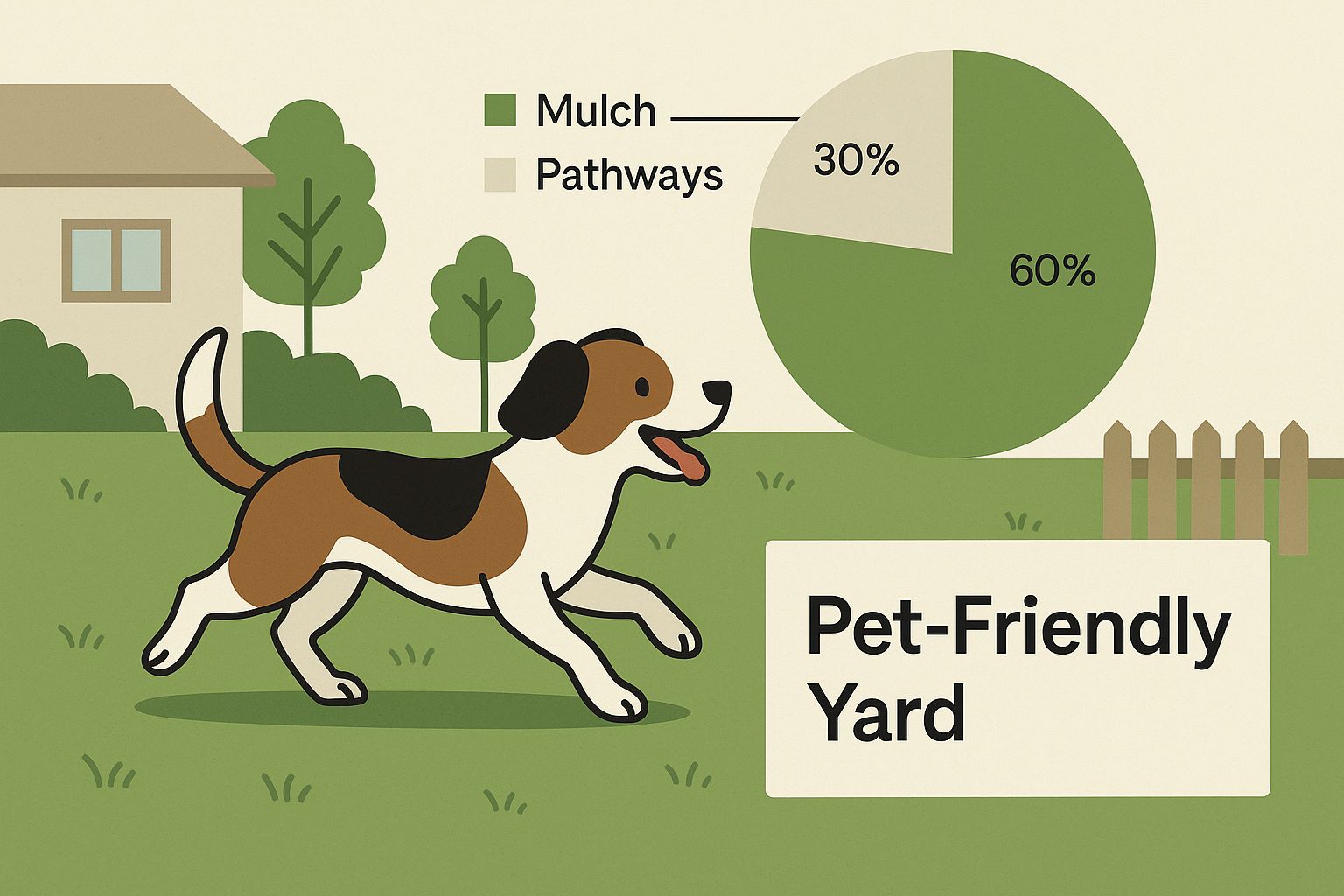
This image really captures what we're all aiming for: a gorgeous yard where our pets can roam and play without a single worry. If you want to dig deeper into specific products, our guide on safe pesticides for pets is a great resource for making informed choices. By truly understanding our local environment, we can build a healthy, resilient lawn from the soil up, which ultimately means we'll need fewer chemical treatments down the road.
What Does "Pet Safe" Really Mean for Your Lawn?
If you've ever stood in the lawn care aisle, you know how confusing the labels can be. Terms like "pet safe," "natural," and "organic" get thrown around a lot, and for homeowners in Cumming and Alpharetta, it's easy to assume they all mean the same thing. They don't. The distinctions are crucial for keeping your pets healthy and your lawn thriving.
A product labeled "pet safe" usually means your furry friends won't be harmed if they come into contact with it after it's been applied correctly. But that doesn't automatically mean it's free of chemicals. To really know what you’re putting on your grass, you have to look past the marketing slogans.
A "natural" product is generally made from things found in nature, like plants or minerals. An "organic" product takes it a step further, typically meaning it's free from synthetic chemicals, pesticides, or GMOs. My rule of thumb? If you can't pronounce most of the ingredients on the label, it’s probably a good idea to put it back on the shelf.
Decoding Lawn Treatment Labels
This push for safer, greener options is making waves in the lawn care world. The U.S. lawn care market, valued at around $293.26 billion, is seeing massive growth driven by homeowners just like you. In fact, a whopping 60% of lawn owners in America now say sustainability is a top priority, and that includes choosing treatments that are safe for their pets.
With so many products out there, it's easy to get lost. I put together this table to help you cut through the noise and understand what you're actually buying.
Decoding Lawn Treatment Labels
A comparison of common lawn care terms to help you understand what's truly safe for your pets.
| Treatment Type | What It Means | Key Ingredients to Look For | Common Misconceptions |
|---|---|---|---|
| Natural | Derived from natural sources like plants or minerals. | Corn gluten meal, beneficial nematodes, kelp, compost. | "Natural" doesn't always mean 100% safe; some natural substances can still be toxic if ingested. |
| Organic | Free of synthetic fertilizers, pesticides, and GMOs. | Bone meal, blood meal, fish emulsion, manure. | Organic products often work slower than chemical ones because they build soil health over time. |
| Chemical-Free | Contains no synthetic chemicals at all. | This is the most straightforward label, indicating no man-made ingredients. | It doesn't guarantee the product is effective for all lawn issues, like aggressive weeds. |
| Pet Safe | Formulated to be non-toxic to pets when dry and used correctly. | Varies widely; check the specific ingredients to be sure. | This term is not regulated, so one company's "pet safe" might differ from another's. Always check ingredients. |
Ultimately, reading the label is non-negotiable. The term "pet safe" isn't officially regulated, so it's up to you to verify the ingredients.
Chemicals to Watch Out For
As a pet owner in Johns Creek or Milton, your primary goal is simple: avoid anything that could put your pet at risk. Unfortunately, many common herbicides and pesticides are known to cause everything from skin irritation to much more serious health issues.
Here are a few of the worst offenders to keep an eye out for:
- Disulfoton: This is highly toxic to dogs and often found in systemic products for roses.
- Metaldehyde: A common ingredient in snail and slug baits that can be fatal if your pet eats it.
- Carbamates: A class of insecticides that can have serious effects on the nervous system.
The core idea of 'pet safe' really comes down to choosing non-toxic materials. This is a principle that applies to more than just your lawn—it's about creating a safer home environment overall, similar to making 8 non-toxic school supply swaps.
Even a persistent problem like grubs, which we see a lot of in Dahlonega, can be handled safely. If that's what you're dealing with, our guide on a pet safe grub killer walks you through effective solutions that won't put your pets in harm's way.
Your Guide to Natural Lawn Treatment Options
Making the switch to a pet-safe lawn care plan isn't just about swapping out a few bottles. It's a whole new way of thinking about your yard. Instead of just reacting to problems with harsh chemicals, the goal is to build a healthy, resilient lawn from the soil up. For those of us in Cumming and Johns Creek, that means learning to work with our unique North Georgia climate, not fighting against it.
This move toward safer, natural options is more than just a passing trend. North America actually holds the largest global market share for lawn products at 37.6%, and a huge part of that is driven by people like you demanding organic and pet-friendly solutions. We're all becoming more aware of what we’re putting into our environment. You can see the data for yourself in this industry report from Grand View Research.
Natural Weed Control Without Harmful Chemicals
When dandelions and crabgrass start popping up, it's easy to reach for a powerful, quick-fix herbicide. But there are some incredibly effective natural alternatives out there that won't put your pets at risk.
One of my go-to pre-emergent treatments is corn gluten meal. It’s a simple byproduct of corn processing that stops weed seeds from forming roots as they germinate. It's a brilliant, non-toxic way to get ahead of weeds before you even see them. For the best results around the Alpharetta area, you'll want to get it down in early spring.
A key takeaway for North Georgia lawns is timing. Applying corn gluten meal in early spring, typically late February to early March, targets summer annuals like crabgrass. A second application in the fall can help manage winter weeds.
Tackling Grubs and Pests the Organic Way
Grubs are a real headache in our region and can absolutely destroy turf roots if left unchecked. Instead of turning to chemical grub killers, give milky spore a try. This is a naturally occurring bacterium that is deadly to Japanese beetle grubs but completely harmless to beneficial insects, earthworms, pets, and people.
Milky spore is a true long-term solution. Once you apply it, the bacteria can live and spread in the soil for years, offering continuous protection. Another fantastic weapon in the organic arsenal is beneficial nematodes—microscopic organisms that actively hunt and kill grubs and other pests in the soil. Both are powerhouse tools for any pet safe lawn treatment program. For a deeper look at handling lawn pests naturally, take a look at our natural pest control for lawns guide.
Choosing the Right Organic Fertilizers
Here’s a simple truth: a well-fed lawn is a strong lawn. It's much better at choking out weeds and fighting off disease on its own. This is where organic fertilizers really shine, because they feed both your grass and the living ecosystem within your soil.
When you're shopping for fertilizer, keep an eye out for these ingredients:
- Compost or Manure: These are full of rich organic matter that improves soil structure, which is a huge help for our dense Georgia clay. It helps the soil hold onto moisture and nutrients.
- Bone Meal: This is an excellent, natural source of phosphorus, which is absolutely vital for developing a strong, deep root system.
- Kelp Meal: Think of this as a multivitamin for your lawn. It provides essential micronutrients and natural growth hormones that boost your grass's health and help it handle the stress of our hot summers in Milton and Dahlonega.
These natural options release their nutrients slowly over time. This gives your grass a steady, gentle feeding without any risk of the chemical burns you can get from synthetic products. It’s all about building a foundation for a lush, green, and truly pet-friendly yard.
Thinking About Hiring a Pet-Friendly Lawn Service in the Cumming Area?
Let's be honest, taking the DIY route for pet-safe lawn care can feel like a full-time job. If you're overwhelmed, you're not alone. For many homeowners in Cumming, Johns Creek, and the surrounding towns, bringing in a professional is the best way to get that lush, green lawn without worrying about your furry family members.
But here’s the catch: not every lawn company out there truly prioritizes your pet’s well-being. Finding the right local partner means knowing what to look for and what questions to ask. You want a team that treats your yard with the same care they’d give their own.
How to Vet Potential Lawn Care Companies
Before you sign on the dotted line, it's time to do a little homework. The way a company applies its products tells you everything you need to know about its philosophy. Do they just show up and blanket-spray your entire property with weed killer? Or do they take a more thoughtful, targeted approach?
A truly responsible provider will focus on spot-treating individual weeds. This simple difference drastically cuts down on the amount of product used on the very lawn where your pets roll around and play.
When you're talking to a potential lawn care service in the Milton or Alpharetta area, make sure to ask these crucial questions:
- Can you tell me the specific products you use? Don't be shy about asking for product names and even the safety labels. A transparent company will happily share this with you.
- What's your application method? You want to hear "targeted spot-treatment," not "blanket spray." The first option is always the better choice for pet safety.
- What are your safety instructions for pets? A professional crew should give you clear directions to keep pets inside during the application and a specific "re-entry" time—that's how long you need to wait before letting your pets back out.
- How are your technicians trained in pet-safe practices? Proper training is key. It means they understand why careful application and clear communication with you, the homeowner, are so important.
A great sign of a pet-conscious company is how seriously they take their re-entry protocol. For most liquid treatments, the lawn is safe once the product has completely dried and bonded to the plant's surface. On a warm, sunny day, this usually only takes an hour or two.
Don't Fall for "Greenwashing" in Lawn Care
"Greenwashing" is a sneaky marketing tactic where a company tries to look more environmentally friendly or natural than it really is. For pet owners looking for lawn care in the Cumming area, this can be particularly misleading.
You might see vague terms like "eco-friendly" or "natural-based" thrown around without any real proof to back them up. Truly pet-friendly services are built on a foundation of using minimal, targeted applications. Their main goal is often to build up your soil's health, which naturally reduces the need for chemicals over time.
A good company should be able to explain why their methods are safer. If a representative in Dahlonega dodges your safety questions or can't give you straight answers about their products, take that as a major red flag. A company genuinely committed to pet safety will welcome your questions and give you confident, transparent answers that put your mind at ease.
Beyond Treatments: Exploring Pet-Safe Landscaping
A truly effective pet safe lawn treatment strategy doesn't stop at the sprayer. It's about looking at your entire yard as one big ecosystem for your four-legged family members. For those of us in places like Cumming and Alpharetta, this means making smart landscaping choices that build a safe, healthy, and low-maintenance space right from the start.
It's a proactive approach. Instead of constantly reacting to problems, you're designing a yard that is naturally safer and requires fewer chemical fixes down the road.
The Rise of Pet-Friendly Artificial Turf
Lately, one of the biggest changes I've seen in North Georgia landscaping is the switch to pet-friendly artificial turf. Forget the stiff, plastic-looking astroturf from decades ago. Today's turf is unbelievably realistic, tough as nails, and designed from the ground up with pets in mind.
The best part? It completely does away with the need for fertilizers, pesticides, or weed killers. That means zero chemical worries for pet parents. It also solves those all-too-common issues we see around Milton and Johns Creek—like muddy paws and brown patches from enthusiastic dogs.
This isn't just a niche trend. The global market for pet-friendly turf is booming, fueled by homeowners who want durable and safe yards. Thanks to huge leaps in drainage tech, durability, and UV resistance, it’s become an incredibly practical choice.
The real game-changer with pet-focused artificial turf is the drainage. Modern systems are designed to channel urine away quickly, which stops odors from setting in. For many dog owners in the Cumming area, that feature alone is worth its weight in gold.
Creating Safe Zones with Plants and Mulch
Of course, your yard is more than just the lawn. The other elements, like garden beds and walkways, are just as important for pet safety. When you're picking out plants, you absolutely have to stick to non-toxic varieties. So many common yard staples, like azaleas and lilies, can be dangerous if a curious dog or cat decides to take a bite.
The same logic applies to your mulch. Not all mulch is created equal, and some can be downright toxic. Cocoa mulch, for instance, contains theobromine—the same compound that makes chocolate dangerous for dogs.
Instead, stick with safer alternatives:
- Cedar or Pine Bark: These are great, pet-friendly choices that also happen to naturally repel some insects.
- Shredded Hardwood: A very common and safe option that breaks down nicely into the soil over time.
- Rubber Mulch: This is a durable, non-toxic choice made from recycled materials.
Another tactic I recommend is creating designated areas for play or "business." You can use materials like pea gravel or smooth river stones to build a specific potty spot. This helps train your dog to go in one place, which saves the rest of your lawn from wear and tear.
Thinking about your pet's whole world includes fun beyond the fence, too. Exploring local dog parks in Gwinnett County can be a great way to add enrichment. By thoughtfully designing your entire landscape, from the ground cover to the garden beds, you’re not just maintaining a yard—you’re creating a true outdoor sanctuary that's beautiful, functional, and safe for everyone.
Your Top Questions About Pet-Safe Lawn Care Answered
When you're thinking about switching to a pet-safe lawn care routine, it’s completely normal to have a few questions. In fact, most homeowners I talk to in places like Cumming and Johns Creek have similar concerns. You want to do right by your lawn and your four-legged family members.
Let's clear up some of the most common questions we get from pet owners. My goal is to give you the confidence that a lush, green lawn can also be a safe playground for everyone.
How Long Do We Really Need to Keep Pets Off the Grass?
This is, without a doubt, the most frequent question I hear. And the answer is simpler than you might think. For any liquid pet-safe lawn treatment, the magic word is dry. Once the product has fully dried on the grass blades, it's bonded and won't easily transfer to paws or fur.
On a hot, sunny day in Alpharetta, that could be as quick as an hour. But I always tell my clients to play it safe. A good rule of thumb is to wait about two hours before letting your dogs out for a romp. If we're using a granular product, you'll want to water it in first and then wait for the lawn to dry completely before it's playtime again.
The most important factor is dryness. A professional service in the Milton area should always provide you with a clear re-entry time, taking the guesswork out of the equation and prioritizing your pet's safety.
Is It Okay if My Dog Eats Grass After a Treatment?
We’ve all seen it—a dog happily nibbling on a few blades of grass. If you’re using a truly organic, pet-friendly program, this isn't something you need to panic about once the lawn is dry. Natural products are designed to work with the soil and break down, not coat your grass in harsh chemicals.
Of course, moderation is still important. While the treatment itself is non-toxic, you don’t want your dog making a meal out of the lawn. Just make sure they always have access to fresh water and a good diet, which can help curb that grazing instinct.
Is It Actually Safer to DIY or Hire a Professional?
Lots of people believe the DIY route is inherently safer since they have full control over the products. The truth is, safety hinges on how the products are used. Getting the mix rates wrong, applying at the wrong time, or using too much of a store-bought treatment—even one labeled "pet-friendly"—can create a hazardous situation.
Think about it: storing those bags and bottles in your Dahlonega garage also creates a risk if a curious pet gets into them. A professional service eliminates that risk entirely. We're trained to use high-quality, tested products with targeted, minimal-use strategies. Often, this is far safer than a blanket DIY application, as we know exactly what to apply, where, and how much.
Ready to give your lawn the safe, expert care it deserves? The team at Barefoot Organics is committed to creating beautiful, healthy yards across North Georgia that you and your pets can enjoy without worry. Get your free quote today!