

Welcome to the definitive guide for homeowners in Cumming, Johns Creek, and across North Georgia who are tired of the endless battle against stubborn weeds. From the pervasive crabgrass that loves our summer heat to the winter annuals that sneak in, maintaining a pristine lawn in areas like Forsyth and Gwinnett County can feel like a full-time job. Many traditional weed killers, however, come with a hidden cost: harsh chemicals that can be harmful to our families, pets, and the delicate local ecosystem, from Lake Lanier down to the Chattahoochee River.
This article is your roadmap to a different, more sustainable approach. We will explore 8 powerful and safe organic weed control methods specifically tailored to the unique climate and soil conditions of North Georgia. Forget generic advice; these are actionable strategies that professionals use to cultivate healthy, resilient lawns that naturally resist weeds. You will learn practical techniques that are effective, environmentally friendly, and safe for everyone to enjoy.
Whether you're dealing with pesky dandelions in your Milton fescue lawn or trying to prevent nutsedge from taking over your Alpharetta flowerbeds, the solutions lie in working with nature, not against it. This guide provides a comprehensive list of strategies, from manual removal and soil conditioning to innovative pre-emergent applications, giving you the tools to create a robust, beautiful yard. Get ready to transform your lawn care routine and achieve the weed-free, organic paradise you've always wanted.
1. Mulching: North Georgia's First Line of Defense
For garden beds in Cumming and Alpharetta, mulching stands out as the single most effective organic weed control method. This technique involves covering the soil surface with a layer of organic material. This barrier physically blocks the sunlight that opportunistic Georgia weeds, like crabgrass, nutsedge, and spurge, need to germinate and grow. It's a foundational strategy for creating a low-maintenance, weed-resistant landscape that thrives in our local climate.
More than just a weed barrier, a proper layer of mulch is a game-changer for North Georgia's often-challenging red clay soil. It insulates the soil from the intense summer heat, significantly reduces water evaporation, and enriches the soil with valuable organic matter as it decomposes. This process improves soil structure, drainage, and fertility over time.
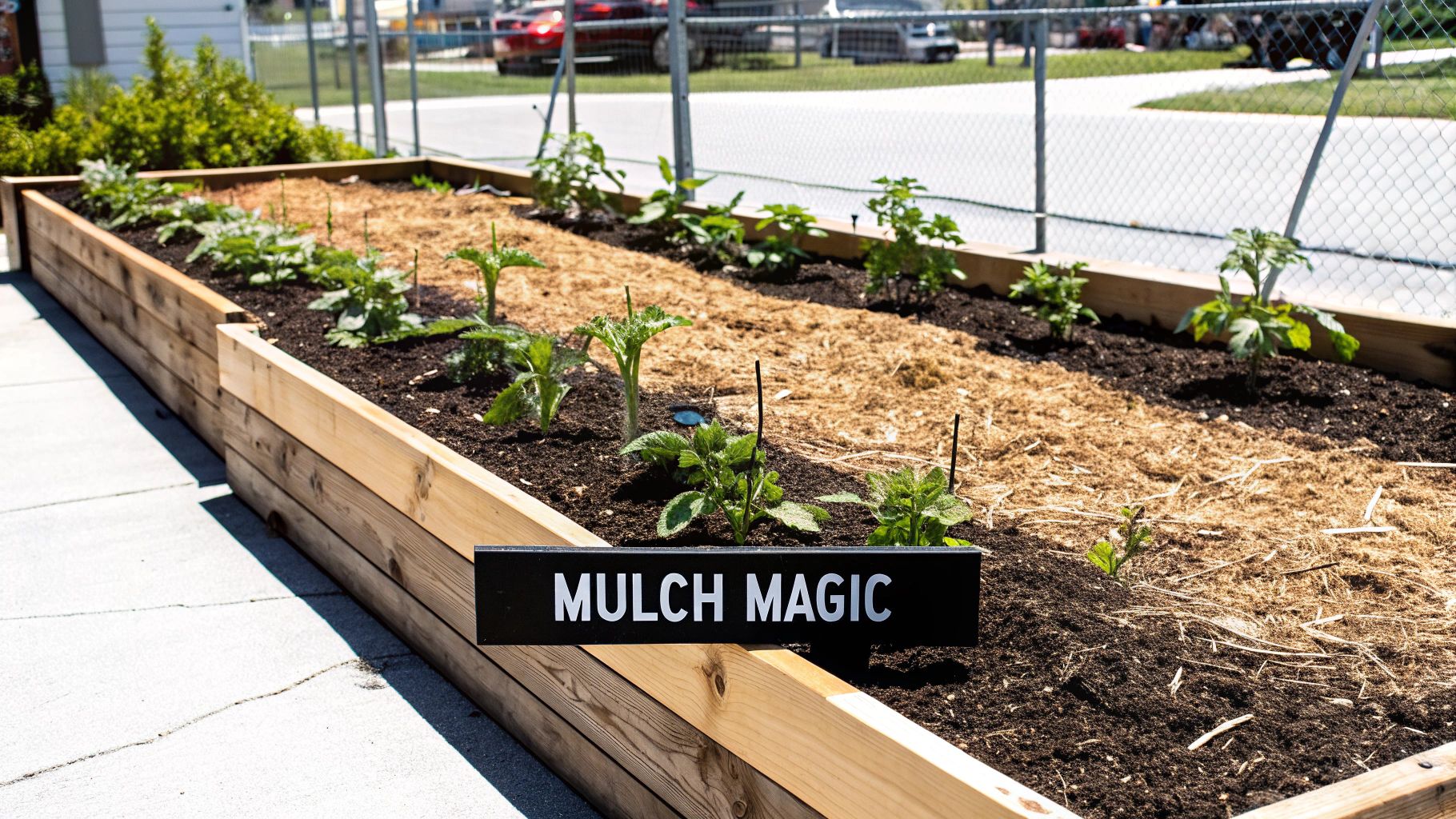
Putting Mulch to Work in Your Georgia Garden
The effectiveness of mulching is on display across our region. You can see it in the immaculate displays at Gibbs Gardens in Ball Ground, where extensive mulching maintains pristine beds. Local community gardens in Roswell often use donated wood chips from city tree services, demonstrating a sustainable, community-focused approach. This technique is versatile enough for Dahlonega vineyards, which mulch between vine rows to suppress weeds and conserve critical moisture.
For homeowners, the choices are abundant. Many in Milton favor pine straw for its classic aesthetic and its tendency to acidify the soil, a perfect match for beloved local plants like azaleas, camellias, and rhododendrons.
Practical Tips for Effective Mulching
To maximize the benefits of this organic weed control method, follow these specific guidelines:
- Proper Depth: Apply a layer of organic mulch 2 to 3 inches deep. Too thin, and weeds will push through; too thick, and it can suffocate plant roots or retain excessive moisture.
- Create a "Donut," Not a "Volcano": Always keep mulch a few inches away from the base of plant stems and tree trunks. Piling mulch directly against them traps moisture and can lead to rot and disease.
- Timing is Key: Apply mulch after the soil has warmed in the spring. Mulching too early can trap cold temperatures in the soil, slowing down plant growth.
- The Cardboard Trick: For areas with stubborn, persistent weeds like Bermuda grass or nutsedge, lay down a layer of plain brown cardboard (remove all tape) before applying your mulch. This creates a highly effective, biodegradable light barrier.
- Annual Refresh: Top up your mulch layer each spring to maintain its depth and effectiveness as the bottom layer decomposes into the soil.
2. Hand Weeding and Hoeing: The Foundation of a Pristine Garden
While modern techniques offer convenience, the timeless practice of hand weeding and hoeing remains one of the most effective and precise organic weed control methods available. This hands-on approach involves either manually pulling weeds from the soil or using tools to sever them at the root. For homeowners in Johns Creek and Milton who demand precision around delicate flowers or vegetable starts, this method is unparalleled, ensuring that only the unwanted plants are removed.
This traditional technique allows for immediate and targeted action against invasive species common to North Georgia, like English ivy or wintercreeper, before they can establish a foothold. It is a fundamental practice in creating a meticulously cared-for landscape, connecting the gardener directly to the health and condition of their soil and plants.
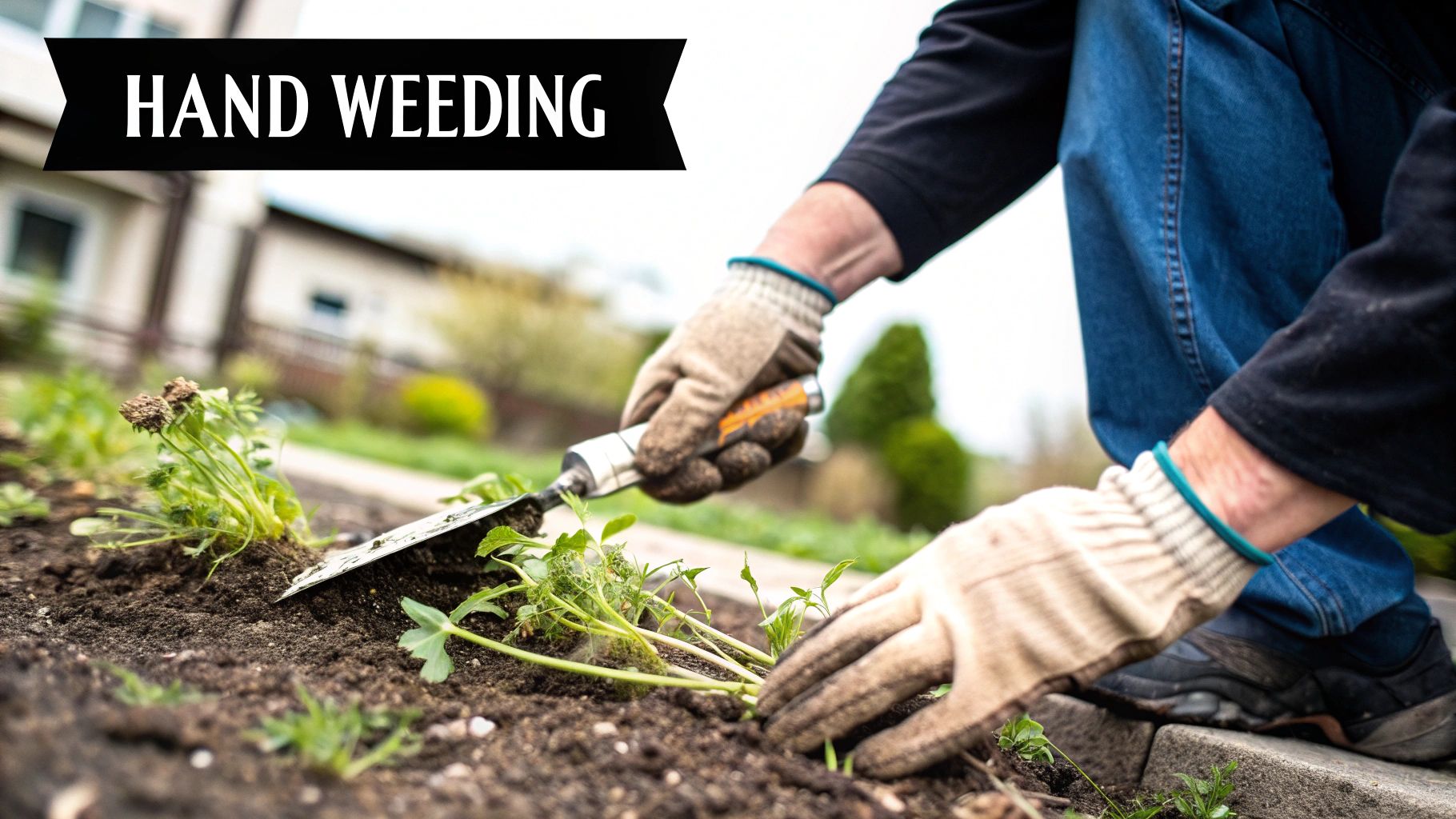
A Tradition of Diligence in Georgia Gardens
The power of diligent hand cultivation is evident across our region. The Atlanta Botanical Garden maintains its immaculate themed gardens through the constant, careful work of its horticultural staff, manually removing any weed that dares to sprout. Small-scale organic operations like those found at farmers' markets in Cumming rely on efficient hoeing techniques to keep their beds productive and weed-free without chemicals. This method allows them to work closely between rows of crops where machinery cannot go.
For the home gardener, this means taking a few minutes each day to walk the garden beds is far more effective than a massive, back-breaking effort once a month. It’s about consistency over intensity, a practice that keeps garden beds looking their best from spring through fall.
Practical Tips for Effective Manual Weeding
To master this foundational organic weed control method, apply these time-tested strategies:
- Weed When the Soil is Moist: Pulling weeds after a good rain or a deep watering is significantly easier. The entire root system is more likely to slide out of the damp soil without breaking.
- Timing is Everything: Remove weeds before they flower and set seed. This is the most critical rule. As the old saying goes, "one year's seeding makes seven years' weeding."
- Use the Right Tool for the Job: For deep-rooted invaders like dandelions or thistle, a hori-hori knife or a dandelion weeder is essential to extract the entire taproot.
- Keep Your Hoe Sharp: A sharpened hoe blade slices through weed stems effortlessly just below the soil surface. Use an oscillating or stirrup hoe for quick, shallow cultivation between rows.
- Compost or Dispose: Add weeds without seeds to your compost pile. Weeds that have already flowered or have persistent root systems (like nutsedge) should be bagged and thrown in the trash to prevent them from spreading.
3. Cover Cropping and Green Manures
A powerful organic weed control method gaining traction on North Georgia farms and in ambitious home gardens is cover cropping. This regenerative technique involves planting specific crops, known as green manures, not for harvest but to protect and enrich the soil. These living mulches create a dense canopy that shades out weed seedlings and a thick root system that outcompetes weeds like henbit and chickweed for water and nutrients, effectively smothering them before they can establish.
Beyond weed suppression, cover crops are transformative for the heavy clay soil common from Johns Creek to Dahlonega. They prevent erosion from intense Georgia rainstorms, add crucial organic matter when tilled in, and improve soil structure for better aeration and water retention. This approach proactively builds a healthy, weed-resistant soil ecosystem from the ground up.

Putting Cover Crops to Work in Your Georgia Garden
While large-scale regenerative farms have popularized multi-species cocktails, the principles are perfectly adaptable for our area. You can see this concept in action at educational farms near Milton, where fall-planted crimson clover is used to suppress winter annuals and fix nitrogen for the next season's corn or tomatoes. North Georgia vineyards are also adopting cover crops between rows to manage weeds and improve soil health.
For the home gardener, this means planting a fast-growing crop like buckwheat in a vegetable bed during a summer fallow period or using a mix of winter rye and hairy vetch to protect and feed the soil over the winter. These practices not only control weeds but also lay the groundwork for a more fertile garden next spring. Discover more about how these plants can enhance your garden's foundation and how to improve soil on barefootorganicsllc.com.
Practical Tips for Effective Cover Cropping
To leverage this powerful organic weed control method in your garden, follow these specific guidelines:
- Choose by Season: Plant cool-season covers like winter rye or Austrian winter peas in the fall. Use warm-season options like buckwheat or cowpeas for quick summer coverage.
- Plant Densely: To achieve maximum weed suppression, don't be shy with your seeds. Follow the recommended seeding rates on the package to create a thick, impenetrable stand.
- Terminate on Time: The key is to cut down or terminate the cover crop before it goes to seed. If allowed to mature, your cover crop can become a new weed problem.
- Create a Mulch Mat: For no-till gardens, use a mower or weed trimmer to chop the cover crop down, leaving the residue on the surface as a nutrient-rich mulch mat.
- Plan Your Timing: After terminating the cover crop, wait about two to three weeks before planting your main garden crops. This allows the green manure to begin decomposing and releasing its nutrients into the soil.
4. Flame Weeding: A Precision Tool for Tough Spots
For stubborn weeds that pop up in the cracks of a Johns Creek driveway, along gravel paths in Milton, or between pavers on an Alpharetta patio, flame weeding offers a precise and powerful organic weed control method. This technique utilizes a specially designed propane torch to superheat the water within a weed's cells, causing them to burst. The goal isn't to incinerate the plant but to deliver a split-second blast of intense heat that makes it wilt and die, typically within a few hours.
Flame weeding is highly effective against young, broadleaf annual weeds. By destroying the foliage, you prevent the plant from photosynthesizing, eventually starving its root system. It’s an ideal solution for non-flammable surfaces where manual pulling is difficult or impossible, providing immediate results without disturbing the soil or introducing chemicals into areas where children and pets play.
Putting Flame Weeding to Work in Your Georgia Landscape
While it may seem like an industrial method, flame weeding has practical applications right here in our community. Imagine clearing weeds from fence lines on a horse farm in Milton without risking chemical runoff, or a Dahlonega winery using a targeted flame to clear weeds at the base of established grapevine trunks. It’s the perfect tool for maintaining the pristine look of stone hardscaping and driveways that are common throughout North Georgia.
This method allows property owners to tackle persistent weeds in specific, hard-to-reach areas with surgical precision. Companies like Flame Engineering and Red Dragon have made professional-grade tools accessible to homeowners, making this one of the most effective organic weed control methods for managing cracks and crevices.
Practical Tips for Effective Flame Weeding
Safety and technique are paramount for success with this method. Follow these guidelines to use a flame weeder effectively and safely:
- Timing is Key: Treat weeds on a calm, humid morning. The moisture in the plant cells helps conduct the heat, and the lack of wind ensures the flame stays directed where you want it.
- Wilt, Don't Burn: The goal is a quick pass. Move the flame over the weed just long enough to see it visibly wilt or change color, which indicates the cell walls have ruptured. There's no need to char it to ash.
- Target the Young: This method is most effective on small weeds, ideally under two inches tall. Larger, more established weeds may require multiple treatments spaced a few weeks apart to fully exhaust their root systems.
- Safety First: Always have a fire extinguisher or a charged water hose nearby. Clear the area of any dry, flammable debris like pine straw or dead leaves before you begin.
- Know Your Weeds: Flame weeding is excellent for annuals. Tough perennials with deep taproots, like dandelions or thistle, will likely re-sprout and need repeated applications to deplete their energy reserves.
5. Soil Solarization: Harnessing the Georgia Sun's Power
For establishing new garden beds or reclaiming areas in Johns Creek and Milton that have been completely overrun by persistent weeds, soil solarization is a powerful, chemical-free solution. This organic weed control method uses a clear plastic tarp to trap the intense summer sun, heating the topsoil to temperatures that are lethal for many weed seeds, pathogens, and pests. It effectively pasteurizes the top six inches of soil, creating a clean slate for future planting.
This technique is a testament to using our region's climate to our advantage. The long, hot, and sunny days typical of a Georgia summer from July through August provide the perfect conditions to superheat the soil. By raising soil temperatures to 110-140°F, solarization effectively "cooks" the life out of tough adversaries like nutsedge tubers and deeply buried Bermuda grass rhizomes, all without a single drop of herbicide.
Putting Solarization to Work in Your Georgia Garden
While pioneered in agricultural hubs, the principles of solarization are perfectly suited for North Georgia. Imagine a community garden in Alpharetta preparing new plots for fall planting or a homeowner in Cumming finally tackling a stubborn patch of weeds that has resisted all other efforts. This is where solarization shines, offering a definitive reset for a heavily infested area.
The technique is particularly effective for preparing vegetable beds. Local organic growers and ambitious home gardeners can use this method to significantly reduce the weeding workload for their fall crops like kale, broccoli, and carrots, ensuring the plants get a strong, competition-free start.
Practical Tips for Effective Solarization
To properly leverage this potent organic weed control method, precise execution is crucial:
- Timing is Everything: Begin the process during the hottest and sunniest part of the year, typically from late June to mid-August, for 4 to 6 weeks.
- Prepare the Bed: Clear the area of existing plants and debris. Till the soil to a depth of 6-8 inches to expose buried weed seeds and improve heat transfer.
- Saturate the Soil: Water the area thoroughly until the soil is moist at least 12 inches deep. Wet soil conducts heat far more effectively than dry soil.
- Use Clear Plastic: Cover the moist soil with a clear, UV-stabilized plastic tarp (1 to 4 mil thick). Black plastic gets hot on the surface but doesn't transmit heat as deeply into the soil profile.
- Seal the Edges: Dig a small trench around the perimeter of the bed and bury the edges of the plastic tarp with soil. This traps the heat and moisture, creating a greenhouse effect.
- Patience is Key: Leave the plastic in place for at least 4 weeks; 6 to 8 weeks is even better for tackling the toughest weeds and soil-borne diseases.
- Minimize Disturbance: After removing the plastic, avoid deep digging or tilling. This prevents bringing untreated weed seeds from deeper soil layers to the surface. Plant your new crops with minimal soil disturbance.
6. Corn Gluten Meal: A Natural Pre-Emergent for Georgia Lawns
For homeowners in Johns Creek and Milton looking to prevent weeds before they start, corn gluten meal offers a unique organic weed control method. Discovered by researchers at Iowa State University, this byproduct of corn processing acts as a natural pre-emergent herbicide. It works by releasing proteins into the soil that inhibit the root development of germinating seeds, effectively stopping weeds like crabgrass and chickweed from ever taking hold.
Beyond its herbicidal properties, corn gluten meal doubles as a slow-release fertilizer. Containing roughly 10% nitrogen, it feeds your turf as it breaks down, promoting a thicker, healthier lawn that is naturally more resistant to weed invasion. This dual-action benefit makes it a popular choice in organic lawn care programs across North Georgia, from residential properties to public green spaces.
Putting Corn Gluten Meal to Work in Your Georgia Lawn
The concept of using a natural byproduct for weed control has seen widespread application. Many organic golf courses rely on corn gluten meal to maintain pristine fairways without synthetic chemicals. Similarly, some certified organic farms use it between rows of established crops to suppress annual weeds, demonstrating its effectiveness in a commercial setting.
For a homeowner in Alpharetta, this means you can apply a product that not only prevents weeds but also safely nourishes your lawn, making it a great option for families with children and pets. For those looking for more insight into how this product fits into a larger strategy, you can explore various natural weed control methods on barefootorganicsllc.com.
Practical Tips for Effective Corn Gluten Meal Application
To get the most out of this pre-emergent, precise timing and application are crucial. Follow these guidelines for the best results:
- Timing is Key: Apply in early spring, just as the forsythia bushes finish blooming and before dogwoods are in full bloom. This is when soil temperatures in Georgia typically reach the 55°F needed for crabgrass germination. A second application in late summer can target fall-sprouting weeds.
- Watering Window: For best results, water the lawn lightly before application to help the granules stick to the soil. After spreading, keep the area dry for 24-48 hours. This allows the proteins to do their work; too much water too soon will wash it away.
- Avoid with New Seeds: Do not apply corn gluten meal if you plan to overseed your lawn or plant new seeds within the next 6 weeks, as it will prevent your desired grass seeds from germinating too.
- Apply Evenly: Use a drop spreader to ensure even, consistent coverage across your entire lawn. Under-application will lead to patchy and ineffective results.
- Be Patient: Corn gluten meal is a long-term strategy. The most significant reduction in weeds is typically seen after three or more consecutive years of spring and fall applications, as you gradually deplete the weed seed bank in your soil.
7. Occultation (Light Deprivation Tarping)
For tackling large, heavily weeded areas or preparing new garden beds in North Georgia, occultation is a powerful, labor-saving organic weed control method. This technique, also known as tarping, involves covering a section of soil with an opaque, light-blocking material like a heavy silage tarp. By completely cutting off sunlight, the tarp prevents photosynthesis, effectively killing existing weeds and preventing new seeds from germinating. It's a cornerstone of no-till farming that homeowners in Johns Creek and Milton can adopt to create clean planting beds with minimal soil disturbance.
Unlike solarization, which relies on the intense summer heat to cook weeds, occultation works year-round by starving them of light. This makes it an incredibly versatile strategy for our four-season climate. It not only clears vegetation but also creates a moist, favorable environment for earthworms and beneficial microbes, which work to improve soil structure under the cover. The result is a friable, weed-free bed ready for planting.
Putting Tarping to Work in Your Georgia Garden
This method has been popularized by world-renowned market gardeners, but its principles are perfectly suited for home gardens. Imagine a patch of stubborn English ivy or Bermuda grass taking over a corner of your Alpharetta yard. Instead of endless digging or spraying, you can simply cover the area with a tarp for a season. By the following spring, the problematic growth will be gone, and the soil will be ready for a new flower bed or vegetable patch.
Local community gardens and small-scale farms from Cumming to Dahlonega are increasingly using this technique to manage weeds between seasons. It’s an efficient way to "reset" a bed after a harvest, ensuring the next crop gets a clean, competition-free start.
Practical Tips for Effective Occultation
To maximize the benefits of this organic weed control method, follow these specific guidelines:
- Choose the Right Material: Use heavy-duty, UV-stabilized silage tarps (at least 5-6 mil thick). They are durable enough to last for years, making them a sustainable investment.
- Prep the Area: Before laying the tarp, mow or trim any tall weeds or vegetation. This ensures the tarp makes good contact with the soil surface, which is crucial for blocking all light.
- Secure the Edges: The tarp must be held down securely to prevent wind from getting underneath and to keep light out. Use sandbags, bricks, rocks, or soil to weigh down all edges and any seams.
- Be Patient: Timing depends on the season and the type of weeds. For annual weeds in the summer, 3 to 6 weeks is often enough. For tough perennial weeds like nutsedge, you may need to leave the tarp in place for an entire growing season or longer.
- Plant Immediately: Once the tarp is removed, the bed is ready. To keep the area weed-free, disturb the soil as little as possible and plant your desired crops or flowers right away, then apply a layer of mulch.
8. Vinegar-Based Herbicides
For targeting pesky weeds in driveway cracks and along fence lines in Johns Creek or Milton, vinegar-based herbicides offer a potent, fast-acting organic weed control method. This approach uses horticultural-grade vinegar with a high concentration of acetic acid (20% or more), which acts as a contact herbicide. It works by rapidly breaking down the cell walls of plant foliage, causing them to dehydrate and "burn down," typically within hours of application.
Unlike the 5% acetic acid found in household vinegar, these stronger solutions are powerful enough to kill the foliage of young, tender annual weeds on contact. It's a non-selective, post-emergent solution, meaning it will damage any plant it touches. This makes it an excellent tool for hardscapes and targeted spot treatments where you need to clear unwanted growth quickly without synthetic chemicals.
Putting Vinegar Herbicides to Work in Your Georgia Landscape
This method is particularly effective for managing the common weeds that pop up in the gaps of patios in Alpharetta or along the edges of walkways in Cumming. Municipalities sometimes use similar products to control weeds in sidewalk cracks, demonstrating their utility in hard-to-reach areas. Likewise, many USDA-certified organic farms utilize approved vinegar-based products for pre-planting bed preparation to give their crops a clean start.
For homeowners, products containing 20-30% acetic acid provide a readily available option for spot-treating areas away from desirable plants. It's the ideal choice for those moments when a weed appears in a gravel path or between pavers, offering a quick knockdown without disturbing the soil or surrounding landscape.
Practical Tips for Using Vinegar Herbicides
To use this organic weed control method safely and effectively, follow these specific guidelines:
- Safety First: ALWAYS wear protective gear, including gloves, long sleeves, and safety glasses. Horticultural vinegar with 20%+ acetic acid can cause skin and eye irritation.
- Timing is Key: Apply on a hot, sunny, and dry day. The sun's heat accelerates the desiccation process, maximizing the herbicide's effectiveness. Avoid application if rain is expected within 24 hours.
- Target Young Weeds: Vinegar is most effective on young, annual weeds that are less than five inches tall. It burns the tops but may not kill the established roots of tough perennial weeds like Bermuda grass or nutsedge.
- Spray for Full Coverage: Thoroughly coat the weed's foliage until it is dripping wet. For better adhesion, add a small amount of natural dish soap (about 1 oz per gallon) to your sprayer to act as a surfactant.
- Protect Your Plants: Use a piece of cardboard as a shield to protect nearby flowers, shrubs, or lawn grasses from overspray. Vinegar is non-selective and will damage any plant it touches. For more on protecting your landscape, you can explore information about natural pest and weed management strategies.
- Repeat as Needed: For stubborn perennial weeds, be prepared to reapply every one to two weeks. Repeatedly killing the top growth can eventually exhaust the root system.
Organic Weed Control Methods: Side-by-Side Comparison
| Method | Implementation Complexity 🔄 | Resource Requirements 💡 | Expected Outcomes 📊 | Ideal Use Cases 💡 | Key Advantages ⭐⚡ |
|---|---|---|---|---|---|
| Mulching | Moderate – initial labor for application 🔄 | Organic/inorganic materials, moderate | 70-90% weed reduction, improved soil health 📊 | Vegetable gardens, ornamentals, trees | Water retention, soil improvement, cost-effective ⭐ |
| Hand Weeding and Hoeing | High – labor-intensive, frequent repetition 🔄 | Basic tools only | 100% effective if thorough, immediate results 📊 | Small to medium gardens, selective weeding | Zero chemicals, environmental-friendly, exercise benefit ⭐ |
| Cover Cropping and Green Manures | High – planning and timing required 🔄 | Seeds, planting effort, some equipment | Suppresses weeds while building soil fertility 📊 | Off-season or between crops, soil health | Nitrogen fixation, erosion control, habitat for beneficial insects ⭐ |
| Flame Weeding | Moderate – safety precautions needed 🔄 | Propane fuel, torch equipment | Effective on young annual weeds, fast treatment 📊 | Pathways, driveways, crop rows early season | No soil disturbance, organic-approved, fast acting ⭐⚡ |
| Soil Solarization | Low to moderate – requires 4-6 weeks setup 🔄 | Clear plastic sheeting | 90-95% topsoil weed seed kill, pathogen control 📊 | New beds, heavily infested soil, hot climates | Chemical-free, improves soil structure, low cost ⭐ |
| Corn Gluten Meal (Pre-emergent) | Low – timed applications 🔄 | Powder product, precise timing | Up to 90% annual weed reduction over 3 years 📊 | Lawns, gardens, ornamentals pre-emergence | Natural pre-emergent, adds nitrogen fertilizer ⭐ |
| Occultation (Light Deprivation Tarping) | Low – simple application but long duration 🔄 | Opaque tarps, weights/staples | Kills weeds by light deprivation in 2-6 weeks 📊 | No-till gardens, bed preparation, perennial weed control | Works in any climate, preserves soil structure, reusable ⭐ |
| Vinegar-Based Herbicides | Moderate – multiple applications and PPE 🔄 | Horticultural vinegar, spray equipment | Fast foliage kill, less root control 📊 | Spot treatments on young annual weeds | Fast-acting, organic-approved, inexpensive for spot use ⭐ |
Creating Your Integrated Weed Management Plan for a Thriving Georgia Lawn
Navigating the world of weed control can feel like a constant battle, especially against persistent North Georgia invaders like crabgrass and nutsedge. However, as we've explored, the solution isn't found in a single application of a harsh chemical. True, lasting success comes from building a strategic, multi-layered defense using a combination of powerful organic weed control methods. Moving away from a reactive mindset of simply killing weeds to a proactive one of building a resilient landscape is the most significant shift you can make for your lawn and garden.
The core principle that ties all these methods together is this: a healthy, thriving ecosystem is the ultimate weed deterrent. Weeds are opportunistic; they exploit bare soil, compacted ground, and nutrient-deficient turf. By focusing on creating conditions where desirable plants flourish, you naturally squeeze out the competition.
Synthesizing Your Organic Strategy
Think of the eight methods we've covered not as a menu to choose from, but as a toolbox. The right tool depends on the job. A homeowner in Johns Creek with a few rogue dandelions in their fescue will have different needs than someone in Dahlonega clearing a large, weed-choked plot for a new vegetable garden.
Let's recap the key takeaways and how they fit together:
- Foundation First (Cultural Controls): The most effective, long-term strategies are those that build soil and turf health. A thick, 3-inch layer of mulch in your garden beds and a dense lawn actively fed by cover crops create physical and biological barriers that weeds struggle to penetrate. This is your first and best line of defense.
- Targeted Strikes (Manual & Thermal Controls): For the inevitable weeds that do break through, immediate action is crucial. Hand weeding and hoeing remain undefeated for their precision and effectiveness on young weeds. For tougher situations, like weeds in sidewalk cracks or fencelines, flame weeding offers a targeted, chemical-free way to destroy plant tissue on contact.
- The Big Reset (Large-Scale Solutions): When facing a heavily infested area, sometimes you need to start fresh. Soil solarization and occultation (tarping) are powerful techniques to clear large patches of land, killing off existing weeds and their seed bank to give you a clean slate for planting.
- Proactive Prevention (Natural Amendments): The key to reducing future work is preventing weeds from ever sprouting. Applying corn gluten meal in early spring and fall acts as a natural pre-emergent, inhibiting seed germination. Meanwhile, targeted sprays of vinegar-based herbicides can knock back existing annual weeds without leaving harmful residues in the soil.
Putting It All Together: An Integrated Approach
The real power of these organic weed control methods is unleashed when you combine them into a cohesive, year-round plan. For example, a resident in Milton might start the spring by applying corn gluten meal to their lawn, follow up by laying fresh mulch in their flowerbeds, and commit to a weekly 15-minute walk-through to hand-pull any emerging weeds. This integrated approach is far more effective and sustainable than any single action.
By layering these strategies, you are not just managing weeds; you are cultivating a robust and healthy environment. You’re creating a landscape in Cumming or Alpharetta that is safer for your children and pets to play on, healthier for local pollinators, and better for the long-term vitality of your soil. This holistic view transforms lawn care from a chore into a rewarding act of stewardship.
Ready to implement a professional, holistic strategy tailored to your specific North Georgia lawn? The team at Barefoot Organics specializes in creating lush, healthy turf using science-backed organic weed control methods and soil-building programs. Contact Barefoot Organics today for a free quote and discover how a customized organic plan can give you the beautiful, weed-resistant lawn you've always wanted.