

A popular non-toxic weed killer is a simple mix of vinegar, salt, and dish soap. This trio works as a powerful, all-natural herbicide that dries out and breaks down unwanted plants without leaving a legacy of nasty chemicals in your soil.
Why North Georgia Families Are Choosing Safer Lawn Care
Picture this: your kids and pets are running around on a lush green lawn in Cumming or Alpharetta, and you don't have a single worry about what they might be tracking into the house. That's the peace of mind driving a real shift in how we approach lawn care here in North Georgia.
From Johns Creek to Milton, homeowners are starting to look past the old "spray and pray" chemical methods. Instead, they're searching for safer, eco-friendly ways to handle weeds.
This move toward natural solutions isn't just about curb appeal; it's born from a genuine concern for family health and our local environment. Our region’s climate, with its humid summers and heavy downpours, means synthetic herbicides can easily wash into local creeks and streams. This runoff can throw the delicate ecosystems in Forsyth and Cherokee Counties completely out of whack. For a growing number of families, the risk just isn't worth it anymore.
The Growing Demand for Natural Solutions
The desire for a safer lawn isn't just a local trend—it’s a reflection of a much larger, nationwide movement toward sustainability. This has kicked off some explosive growth in the world of bioherbicides, which are natural weed killers made from microbes, plants, or other biochemicals.
Globally, the bioherbicides market hit USD 3,369.4 million in 2024 and is expected to surge to USD 7,873.2 million by 2030. That’s a staggering 15.2% annual growth rate. North America is leading the charge, with homeowners in communities like Dahlonega ditching traditional chemicals over health and environmental concerns.
It's clear that people want solutions that don't just work, but also align with their values.
The Real-World Benefits of Going Non-Toxic
Switching to a non-toxic approach gives you more than just peace of mind. The ripple effects create a healthier, more resilient yard for everyone.
- You’re Protecting Your Soil: Synthetic chemicals can kill off the essential microorganisms that keep soil alive and healthy. Over time, your lawn becomes dependent on more and more chemical inputs. Natural solutions, on the other hand, help preserve this vital soil life.
- You’re Safeguarding Local Wildlife: Herbicides don't stop at weeds. They can harm the good guys, too—like bees, butterflies, birds, and other wildlife that call your backyard home.
- You’re Creating a True Backyard Haven: A lawn treated with non-toxic methods is a genuine sanctuary. It’s a place where you can walk barefoot, have a picnic, and let the kids play without giving it a second thought.
When you choose a non-toxic weed killer recipe, you’re doing more than just getting rid of weeds. You’re making an investment in the long-term health of your lawn, your family, and our beautiful North Georgia environment.
This change in mindset sets the stage for a smarter, more sustainable lawn care strategy. A great first step is understanding what you’re up against. You can learn how to spot the bad guys with our guide on identifying weeds in Georgia.
Up next, we’ll get into the practical, powerful, and simple recipes you need to make this vision a reality.
Three Proven Non-Toxic Weed Killer Recipes for Your Yard
Alright, now that you see why so many of your neighbors in Cumming and Johns Creek are ditching harsh chemicals, it's time for the fun part. Making an effective, non-toxic weed killer is far easier than you might think, and you probably already have most of the ingredients hiding in your pantry.
I’m going to walk you through three of my favorite, field-tested recipes. Each one is tailored for a specific challenge you'll run into here in North Georgia, and they're all simple to mix and safe when you use them correctly.
The Everyday Weed Warrior
This is your workhorse solution. Think of it as the first line of defense against the common weeds popping up in your driveway, along the fence, or between sidewalk cracks. It's a classic mix for a good reason—it’s cheap, simple, and it gets the job done fast.
What You'll Need:
- 1 Gallon of White Vinegar (5% acidity): The acetic acid is what does the work here. It pulls all the moisture right out of the weed's leaves, effectively drying it out from the top down.
- 1 Cup of Salt: Any basic table salt or rock salt will do. This just speeds up the dehydration process and messes with the plant's internal water balance.
- 1 Tablespoon of Liquid Dish Soap: Soap is the secret ingredient. It acts as a surfactant, breaking down that waxy, protective layer on the weed’s leaves. This helps the vinegar and salt mixture cling to the plant instead of just beading up and rolling off.
How to Mix It:
Just pour the entire gallon of vinegar into a garden sprayer you've dedicated solely to weed control. Add the salt and dish soap, then give it a good, vigorous shake for about a minute to make sure all the salt dissolves. That’s it—you're ready to spray.
Remember, this is a non-selective killer. It will damage or kill any plant it touches, grass included. That’s what makes it perfect for those cracks in your Milton driveway or along a gravel path where you want nothing to grow.
The Tough Weed Tamer
We all have them—those stubborn, deep-rooted weeds that seem to mock us from the cracks in a patio or walkway. For those guys, you need to bring out the heavy artillery.
This recipe uses horticultural vinegar, which packs a much bigger punch with an acetic acid concentration of 20-45%. It's way more potent than what you cook with. You can usually find it at garden supply stores around Dahlonega or just order it online.
A Quick Word of Caution: This stuff is serious. Because the acid concentration is so high, it can irritate your skin and eyes. Do yourself a favor and wear gloves and protective eyewear when you're mixing and spraying it.
What You'll Need:
- 1 Gallon of Horticultural Vinegar (20% or higher): This is what will quickly burn down even the most resilient weeds.
- 1/4 Cup of Biodegradable Dish Soap: Just like before, this helps the vinegar stick to the leaves for maximum effect.
You might notice there’s no salt in this recipe. That’s intentional. The high-strength vinegar is usually more than enough on its own, and leaving out the salt is a better choice for areas near garden beds where you don't want salt building up in the soil over time.
This visual guide shows the simple process many homeowners follow when deciding on their lawn care approach, moving from initial concern to research and finally, taking action.
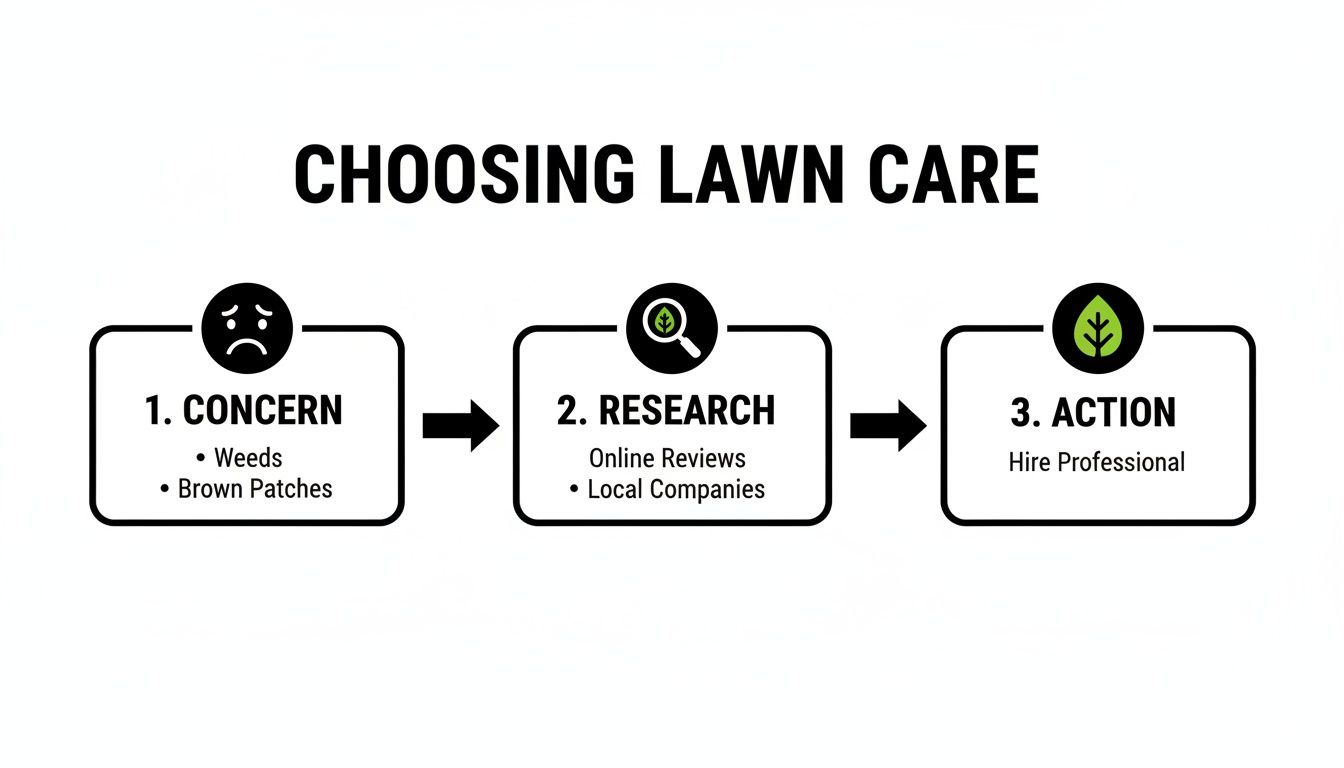
Ultimately, this flow illustrates that choosing a safer, non-toxic solution is a deliberate and informed decision, not just a random guess.
The Garden Guardian
What about the weeds that are cozying up right next to your prize-winning tomatoes or your favorite flowers? Spraying any kind of vinegar solution, no matter how mild, is a risky game because of overspray. For these delicate situations, the best tool isn't a spray at all—it's just boiling water.
What You'll Need:
- A Kettle of Boiling Water
How to Apply It:
It really is as simple as it sounds. Carefully carry a full kettle of boiling water out to the garden and pour it directly on the base of the weeds you want to kill. The extreme heat instantly cooks the plant’s cell structure from the inside out, killing it within a few hours.
This targeted approach is perfect for:
- Weeds popping up through mulch beds.
- Annoying growth between patio pavers.
- Clearing a patch of ground before you plant something new.
The beauty of this method is the precision. You have absolute control over where the water goes, so your perennials and annuals stay safe. It's a clean, surgical strike that leaves zero residue, making it a favorite for organic gardening fans from Cumming to Johns Creek.
Getting the Application Right for the Best Results
Mixing up a non-toxic weed killer is half the battle, but how you apply it is what really separates a wilting weed from one that lives to fight another day. Here in North Georgia, our classic blend of hot, sunny days and unexpected rain showers makes timing and technique absolutely critical.
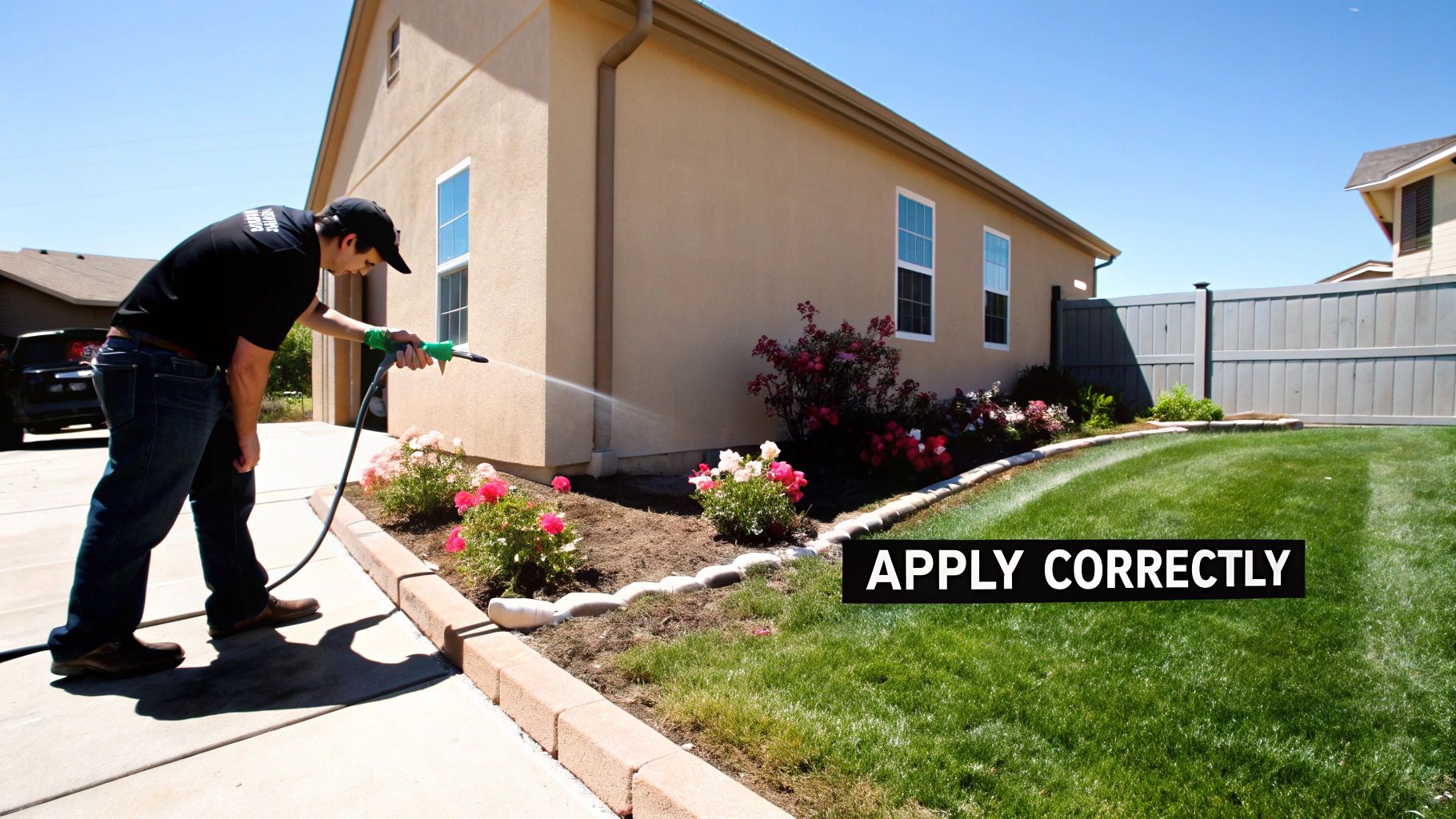
You wouldn't paint a fence in a downpour, right? The same logic applies here. Your goal is to give that homemade solution the best possible window to do its job on those unwelcome plants.
Choose the Perfect Day and Time
Timing is everything. To give your DIY spray maximum punch, you need two things we get plenty of in Forsyth County: sunshine and calm winds.
The acetic acid in vinegar works by yanking moisture right out of a plant's leaves. Bright, direct sun supercharges this process, basically baking the weeds after you've sprayed them. Hitting them on a cloudy day will still have an effect, but it’ll be much slower and less impressive.
The sweet spot for application is mid-morning on a hot, sunny day. You want to wait for the dew to burn off but get in before the afternoon heat gets too intense. This gives the solution hours of peak sun to really work.
Keeping an eye on the wind is just as important. A stray gust can carry your vinegar spray right onto the hydrangeas you've babied all season or the Bermuda grass you've worked so hard on. Because these recipes are non-selective, any overspray will harm or kill the plants you actually want to keep.
Master Your Application Technique
A good technique is all about precision—targeting only the weeds and not the surrounding landscape. It’s less about soaking the ground and more about coating the enemy plant from top to bottom.
Key Application Tips:
- Get Up Close: Switch your sprayer nozzle to a direct stream instead of a wide mist. This gives you pinpoint accuracy, which is a must when you’re treating weeds in your flowerbeds in Alpharetta or along your lawn's edge in Milton.
- Coat Every Leaf: For the spray to be effective, it has to touch the plant's foliage. Be sure to spray the entire surface of the weed—including the undersides of the leaves—until it's wet, but not to the point of excessive dripping.
- Stay Low: Keep the sprayer wand close to the ground. This simple habit dramatically reduces the chance of wind drift, protecting your good plants and making sure the solution lands where it’s supposed to.
This careful approach is a game-changer for families. If you're a homeowner in Johns Creek or Cumming, you've probably hesitated before spraying chemicals where your kids and pets play. You're not alone. This concern is fueling a massive shift toward safer alternatives, and the booming bioherbicide market proves it. Projections show the global market is set to grow from USD 2,513.63 million in 2024 to an estimated USD 5,264.44 million by 2032. North America is leading the charge with a 36.25% share, all thanks to regulations pushing back on synthetic chemicals. You can learn more about the growth of bioherbicides from Fortune Business Insights.
Know When to Reapply
While DIY weed killers are great at killing the top growth of a plant, they don’t always knock out deep-rooted perennials in one shot. This is especially true for some of our stubborn Georgia invaders, like dollarweed or the infamous crabgrass.
Don't be surprised if you need to reapply your solution every week or two for those tougher weeds. Each time you spray, you weaken the plant, forcing it to burn through its energy reserves to regrow. Over time, this repeated stress will exhaust the root system and finally kill the weed for good. For targeted advice on one of our area's most challenging weeds, take a look at our guide on how to get rid of crabgrass naturally.
Building a Lawn That Naturally Resists Weeds
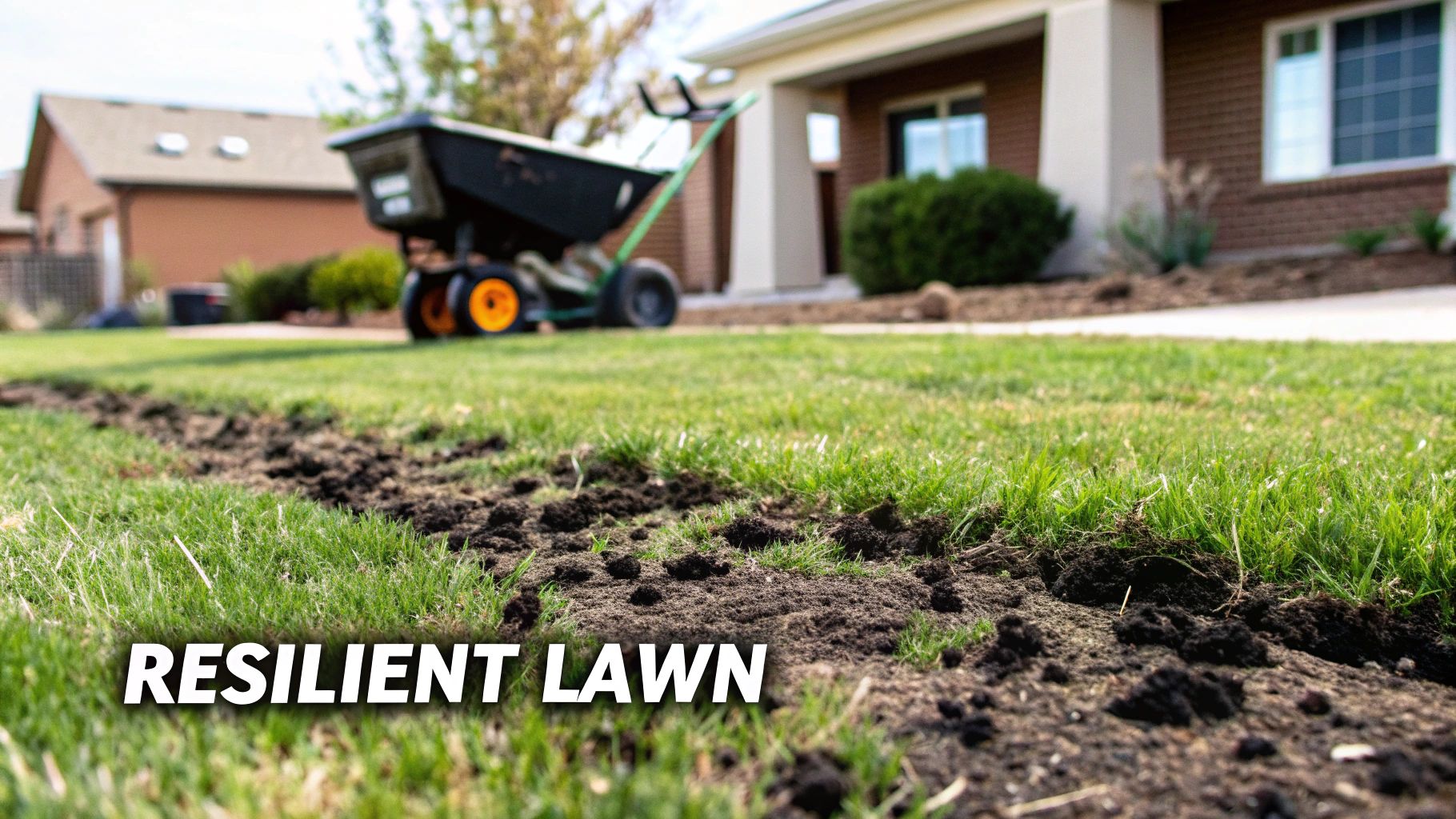
Spraying weeds with a non-toxic recipe is a great reactive measure, but the real secret is creating a lawn that doesn't let them get a foothold in the first place. A genuinely healthy, dense turf is its own best defense. When you shift your focus from just killing weeds to proactively building a resilient lawn, you create an environment where your grass thrives and weeds simply get squeezed out.
This is what we call an integrated approach, and it’s about playing the long game for your lawn here in Cumming or Johns Creek. It's how you build a sustainable little ecosystem right in your own backyard.
Cultivating Healthy Georgia Soil
The foundation of any great-looking lawn is what’s going on underground. Here in North Georgia, we're known for our heavy, compacted red clay. That kind of soil is tough for grass roots to penetrate, making it difficult for them to reach the water and nutrients they need to grow strong.
When grass has shallow, weak roots, it leaves plenty of bare patches and thin areas for opportunistic weeds like crabgrass and clover to invade. The fix is to improve that soil structure, and two of the best ways to do that in our region are aeration and top dressing.
- Core Aeration: This is the process of pulling small plugs of soil out of the lawn. It’s a simple concept, but it works wonders to relieve that compaction, allowing air, water, and nutrients to finally get down to the root zone where they’re needed most. For lawns in Alpharetta and Milton, doing this once a year can completely change the game for that stubborn clay.
- Top Dressing: Right after you aerate is the perfect time to spread a thin layer of high-quality organic compost over the lawn. Think of it as a vitamin boost for your soil. The compost slowly works its way into those aeration holes, enriching the clay with crucial organic matter and improving its texture over time.
Smart Mowing and Watering Habits
How you cut and water your lawn has a massive impact on its ability to fight off weeds. A common mistake I see homeowners make is cutting their grass way too short, thinking it looks neater.
In reality, scalping the lawn just stresses out the grass, exposes the soil to direct sunlight, and creates the perfect incubator for weed seeds to sprout.
Pro Tip: Mow high. For the turf types common in Georgia, like Bermuda and Zoysia, you should be aiming for a mowing height of 2 to 2.5 inches. Taller grass blades create a thick canopy that shades the soil, which is a natural and effective way to stop weed seeds from ever germinating.
Your watering strategy is just as important. Ditch the daily, shallow sprinkling. That only encourages shallow roots. Instead, water your lawn deeply but less often. This approach trains the grass roots to dig deeper for moisture, making the entire lawn more robust and drought-tolerant. A good rule of thumb for an established lawn in Cumming or Johns Creek is to provide about one inch of water per week, delivered in one or two sessions.
Your Lawn Care as an Integrated System
The best way to think about your homemade weed killer is not as a silver bullet, but as just one tool in a much larger lawn care system. When you combine targeted spot-treatments with practices that build healthy soil and promote thick, dense turf, you create a powerful positive feedback loop.
A healthier lawn naturally suffocates weeds, which means you'll find yourself needing to spray less and less as time goes on. This complete strategy is the true key to achieving a gorgeous, resilient, and low-maintenance lawn that's also safe for your family and the environment. By embracing these natural weed control methods, you can build a lawn that works with nature, not against it.
When Your Weed Problem Needs a Professional Eye
Don't get me wrong, those DIY non-toxic weed killers are fantastic. They're perfect for zapping the odd weed that pops up in sidewalk cracks or along your fence line in Cumming. They give you a safe, effective way to tackle small problems right away.
But here's the thing: sometimes, a stubborn weed problem is really your lawn trying to tell you something is seriously wrong. It’s a symptom of a much deeper issue that a simple spray just can't fix.
When you find yourself spraying the same spots over and over, only to see the weeds return with a vengeance, your lawn is sending up a flare. This often points to poor soil health, major nutrient imbalances, or a widespread infestation that has taken hold deep underground. Trying to fix that with a spray bottle is like putting a band-aid on a broken arm—you’re not addressing the real issue.
Is It Time to Call for Backup?
So, how do you know when you’ve crossed the line from a simple DIY job to a situation that needs a professional? If you're nodding along to any of these scenarios on your Milton or Alpharetta property, it’s probably time to bring in an expert.
- Weeds have taken over more than 30% of your lawn. When you have huge patches that are more weeds than grass, spot-treating is a losing battle. It’s a clear sign your turf is too weak to compete.
- The same weeds keep coming back, angrier than ever. You spray them, they disappear, and two weeks later they’re back. This usually means you’re fighting deep-rooted perennials that your homemade mix can't reach.
- Your grass is thin, patchy, or just looks sad. Yellowing or weak-looking turf means your lawn is struggling. The culprit could be compacted soil, a lack of key nutrients, or a pH imbalance—all of which create a perfect welcome mat for weeds.
- You’re battling a super-villain weed. Some of our Georgia specialties, like nutsedge or wild violet, have incredibly complex root systems (think tubers and rhizomes). Getting rid of them for good requires a more strategic, professional approach.
The Barefoot Organics Approach: Getting to the Root of It
This is where a local team that knows North Georgia soil makes all the difference. Our Natural Lawn Care Program at Barefoot Organics is built to solve these core problems, not just mask the symptoms. We use a comprehensive, chemical-minimal strategy that goes way beyond what a simple homemade recipe can accomplish.
For families from Alpharetta to Dahlonega, we focus on rebuilding your lawn’s health from the soil up. Professionals tackling large-scale lawn renovations or complex landscaping projects often use specialized tools like Exayard AI landscaping takeoff software to accurately map out the scope and materials needed for the job.
A healthy, thriving lawn is the best weed deterrent there is. Our goal isn't just to kill weeds; it's to build a lawn so dense and vigorous that weeds don't have a chance to get started.
This proactive mindset is catching on. Throughout the rolling hills of Forsyth County, homeowners are shifting to non-toxic solutions to protect their families and the local environment. The global weed control market reflects this trend, jumping from USD 27,094.8 million in 2021 to a projected USD 53,286.3 million by 2033, with North America leading the way. The push for eco-friendly options and the rise of herbicide-resistant weeds are making natural, integrated methods more important than ever. You can discover more insights about the weed control market on cognitivemarketresearch.com.
Our program is designed to give your lawn what it truly needs. We start with services like soil analysis to pinpoint nutrient deficiencies, use core aeration to loosen that tough Georgia clay, and apply top dressing to feed the soil with rich organic matter. By fixing the foundation, we help you grow a lawn that can naturally choke out weeds for good.
Your Questions About Natural Weed Control Answered
Going with a natural weed killer recipe is a different way of thinking about lawn care, and it's smart to ask a few questions before you dive in. We hear the same great ones from homeowners all over Cumming, so we've put together some straight answers to help you get started.
Will a Vinegar-Based Weed Killer Harm My Grass?
Yes, it absolutely can, and this is the most important thing to get right. Vinegar-based solutions are non-selective, meaning the acetic acid that fries a dandelion will do the exact same thing to your prized Zoysia or Bermuda grass.
The secret is all in how you apply it. You have to be precise. Use a sprayer set to a narrow, direct stream to hit only the weed. For those stubborn weeds that pop up right in the middle of your lawn in Alpharetta, I’ve seen people use a small foam brush to literally "paint" the solution onto the weed's leaves. It guarantees your grass stays untouched. This is exactly why these recipes are so perfect for sidewalk cracks and gravel paths where you want nothing growing at all.
A simple rule I always follow: never spray on a breezy day. Even a little bit of wind can carry that mist over to your favorite flowers or shrubs, and you’ll end up with damage you never intended. Precision is everything here.
How Long Does It Take for These Recipes to Work?
You'll be pleasantly surprised by how fast you see results. On a hot, sunny day, you can often spot weeds starting to wilt and turn brown in just a few hours. You’ll see a significant die-off within 24 hours. The sun and vinegar work together to dehydrate the plant’s leaves very quickly.
But, it's important to have the right expectations. These DIY recipes are fantastic at killing the top growth of a plant. For flimsy annual weeds, that’s usually enough to do the trick. The challenge comes with the tough perennial weeds we see all over North Georgia—think dandelions or clover with those deep, stubborn taproots. They’ll often try to regrow from the root.
This is where you have to be persistent. You might need to reapply the spray every couple of weeks. Each time you do, you're weakening the plant, forcing it to burn through its energy reserves until, eventually, the root is too exhausted to come back.
Are These DIY Recipes Truly Safe for My Kids and Pets?
This is the number one reason families in Johns Creek and Milton make the switch, and the answer is a resounding yes. When you're using common household vinegar, salt, and a bit of biodegradable dish soap as directed, they are safe for your family.
Once the spray has dried on the leaves—which usually only takes an hour or two on a sunny afternoon—the area is perfectly safe for kids and pets to get back to playing. That peace of mind is probably the biggest benefit of taking a natural approach to your yard.
Can I Make a Large Batch and Store It for Later?
You can, but I always recommend mixing a fresh batch right before you plan to use it. It just works better. This ensures your non toxic weed killer recipe is at full strength, giving you the best, fastest results. The acetic acid in vinegar is most potent when it's fresh.
If you do mix up a bigger batch, just be smart about it:
- Label it clearly. You don’t want any mix-ups. Use a dedicated, clearly marked container.
- Store it safely. Keep it sealed and tucked away where kids and pets can't get to it.
- Shake it like crazy. The salt is going to settle at the bottom. Before you use it again, you have to shake the container really well to get everything mixed back together.
Honestly, to keep things simple and effective, most people find it easiest to just mix what they need for the day. It only takes a minute and guarantees you're hitting the weeds with your strongest stuff.
While a non toxic weed killer recipe is a great tool, building a truly tough and beautiful lawn requires looking at the bigger picture. If you're tired of fighting the same weed battles year after year, it might be time to bring in some professional help. Barefoot Organics specializes in creating healthy, vibrant lawns from the soil up, using natural methods that get you lasting results.
Get Your Free Estimate Today and Let's Build a Lawn You'll Love