

When you’re starting a new lawn in North Georgia, that first feeding is everything. Whether you've just put down seed or rolled out fresh sod in Cumming, Alpharetta, or Johns Creek, what you do next can make or break your new turf. You need a specialized starter fertilizer, and there’s a good reason for it: our challenging red clay soil.
This initial application gives new roots the high-phosphorus boost they desperately need to dig in and get established. It's the single most important step in building a thick, resilient lawn from the ground up.
Giving Your New North Georgia Lawn the Best Start
So, you're ready for a lush, green lawn that can actually handle our local climate. Maybe you're starting from scratch in Milton, doing a complete backyard makeover, or just patching up a trouble spot in Dahlonega. No matter the project, success starts with that first feeding.
The combination of Georgia's humidity and dense clay soil means you can't just toss out any old bag of fertilizer and expect great results. This isn't just about a quick pop of green; it's about building a healthy ecosystem right from the start. A good starter fertilizer is formulated specifically for root development, which is the top priority for new grass. Without that strong foundation, your new lawn will struggle to anchor itself, leaving it weak and vulnerable to drought, disease, and the brutal summer heat we get across North Georgia.
Why a Natural Approach Is a Game-Changer Here
Opting for natural, low-chemical lawn care is more than a passing trend. It's a smarter, more effective way to grow a lawn that’s not only beautiful but also truly usable for your family. Homeowners all over Cumming and Alpharetta are ditching harsh synthetic chemicals, and it’s fueling a massive shift in the lawn care world.
In fact, the natural lawn fertilizer market hit USD 5.5 billion globally in 2023 and is on track to nearly double to USD 10.2 billion by 2032. Why the boom? It’s driven by families who want a yard that’s safe for kids and pets to play on—a top priority in our communities.
The goal is to work with North Georgia's environment, not against it. A natural approach feeds the soil, which in turn feeds the grass. This creates a self-sustaining system that's far more resilient to pests, weeds, and stress.
What You'll Learn in This Guide
I’ve designed this guide to give you the confidence and know-how to feed your new lawn the right way. It’s all practical, actionable advice tailored for our local conditions in areas like Cumming and Johns Creek. We'll cover everything you need to know.
- Decoding Your Soil: How to tackle common problems like compaction and nutrient deficiencies in our classic clay-heavy ground.
- The Power of Starter Fertilizer: We'll dive into why the nutrient ratio in a new grass fertilizer is different and why it's the key to explosive root growth.
- Safety First: Learn how a natural approach creates a stunning lawn that’s also a safe playground for your children and pets.
- Playing the Long Game: This is about more than just one application. It's a philosophy of care that builds a healthy lawn for years, cutting down on the need for constant chemical fixes.
By focusing on these core principles, you'll be well on your way to establishing a vibrant green space that truly elevates your home and lifestyle.
How to Prep Your Georgia Clay Soil for New Grass
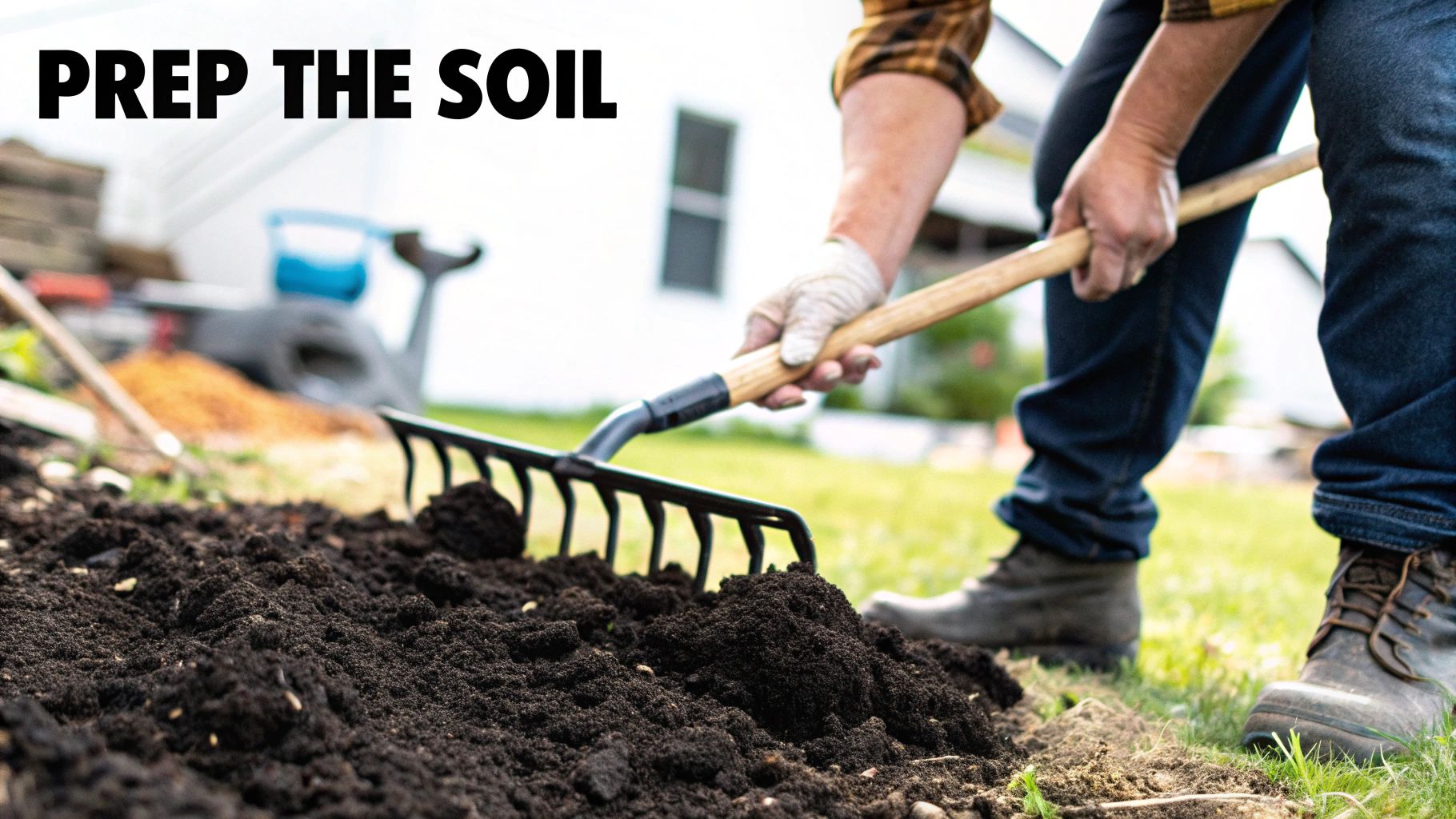
Before you even think about cracking open a bag of new grass fertilizer, let's talk about the ground it’s going into. Here in North Georgia, from Milton to Dahlonega, that means we’re dealing with our infamous red clay. Simply tossing seed or laying sod on top of that hard, unprepared ground is a recipe for a weak, patchy lawn.
Think of it like building a house—you wouldn't skip the foundation. In lawn care, proper soil prep is that foundation. This initial groundwork gives new roots a welcoming home where they can stretch out, find water, and absorb nutrients. Honestly, it's the most important part of making sure your investment in new grass pays off.
Clearing the Way for New Growth
First things first, you need a clean slate. A new lawn can’t thrive if it’s immediately fighting with stubborn weeds, rocks, and other junk left over from whatever was there before.
Start by clearing the entire area. Pull up existing weeds by the root or use a method to kill them off completely. Then, rake away any sticks, large stones, or other debris that could physically block root growth. You can get more general tips on how to prepare soil for planting, but the key is to be thorough.
Breaking Up and Breathing Life into Clay Soil
Georgia clay is notorious for compaction. Over time, it can become as hard as concrete, making it nearly impossible for delicate new grass roots to push through. That’s why aeration and amending aren't just suggestions; they’re essential.
Core aeration is your best weapon against compaction. This process pulls small plugs of soil out of the ground, creating channels that let air, water, and nutrients finally get down to the root zone. I always recommend renting a core aerator and going over the entire space several times. You really can't overdo it at this stage.
Once you've opened up the soil, it's time to amend it. This is your chance to fundamentally change that heavy clay into something much more hospitable for a healthy lawn.
Spread a generous layer of high-quality organic matter—good compost or a premium topsoil blend works great—across the aerated ground. Aim for a layer of one to two inches. Next, use a tiller or a sturdy garden rake to work this new material into the top four to six inches of your existing clay. This physically breaks up the dense clay and introduces organic material that dramatically improves drainage and the soil's ability to hold nutrients.
The Smartest First Step: A Soil Test
How can you know what your soil truly needs? Guessing is a good way to waste money and get frustrating results. A soil test is the only way to get a clear, unbiased picture of what’s going on underground.
A simple soil test gives you two critical pieces of information:
- Soil pH: It tells you if your soil is too acidic or too alkaline. Most turfgrasses need a pH between 6.0 and 7.0 to thrive. Our Georgia clay is often very acidic, which "locks up" key nutrients, making them useless to your grass even if you add fertilizer.
- Nutrient Deficiencies: The test reveals the current levels of crucial nutrients like phosphorus and potassium. This allows you to choose amendments and a starter fertilizer that address specific needs instead of just throwing a generic product at the problem.
You can grab a test kit from your local University of Georgia Cooperative Extension office in your county. Taking the time to amend your soil based on these results—like adding lime to correct an acidic pH—before you plant is far more effective than trying to fix things later. It's the one step that truly sets your new lawn up for long-term success.
Picking the Right Organic Starter Fertilizer
Walking into a garden center can feel like a pop quiz you didn't study for. You're hit with a wall of brightly colored bags, all screaming promises of a perfect, green lawn. But here’s a pro tip for anyone starting a new lawn in Alpharetta or Cumming: grabbing just any bag of new grass fertilizer is one of the most common—and costly—mistakes you can make.
The nutritional needs of brand-new seedlings or freshly laid sod are worlds apart from what your established lawn craves.
Your mission is to find what's called a "starter" fertilizer. This isn't just marketing speak; it's a specific formula designed to fuel the most critical stage of a new lawn's life: establishing deep, healthy roots. Think of it as a specialized diet for an infant plant. It delivers exactly what new grass needs to build a strong foundation in our Georgia clay, helping it survive that first brutal summer.
What Do the N-P-K Numbers Mean for a New Lawn?
Every bag of fertilizer has three numbers printed on it, like 10-18-10. This is the N-P-K ratio, and it tells you the percentage of Nitrogen (N), Phosphorus (P), and Potassium (K) inside. For a new lawn, that middle number—Phosphorus—is the absolute star of the show.
- Nitrogen (N): This is all about top growth. It’s what gives grass that vibrant, deep green color.
- Phosphorus (P): This is the root-builder. It provides the energy for a dense, vigorous root system, helping your new grass get a firm grip in the soil fast.
- Potassium (K): Think of this as the all-around health tonic. It boosts disease resistance and helps the grass handle stress from drought or temperature swings.
You'll notice starter fertilizers are always heavy on phosphorus. That 10-18-10 ratio is a classic example. The blend is intentionally designed to push the plant's energy downward into the soil, creating a robust root network before it even thinks about growing tall and green.
Organic vs. Synthetic: Why Natural Is a Smarter Choice in North Georgia
You have two main paths you can take here: organic or synthetic. Synthetic fertilizers work fast, giving you a quick visual pop of green. The problem? They do next to nothing for the long-term health of your soil. For homeowners in Johns Creek and Milton, going organic delivers far superior, lasting results.
An organic starter fertilizer doesn’t just feed the grass; it feeds the soil. It’s made from natural materials like bone meal, compost, or feather meal that break down slowly. This process not only releases nutrients gently but also improves your soil's structure over time.
This slow-and-steady approach is much safer for new grass, virtually eliminating the risk of "fertilizer burn" that can easily scorch fragile seedlings. Even better, it fosters a thriving community of beneficial microbes in the soil. This living ecosystem helps your lawn naturally defend itself against pests and diseases, which is why organic is often considered the best organic lawn fertilizer for a truly sustainable yard.
Thinking about the bigger picture, this shift to natural products is a major trend. The lawn and garden consumables market is huge, with fertilizers accounting for 42.7% of all revenue. As this market grows toward an estimated USD 36.7 billion by 2035, a huge driver is North Georgia families demanding safer products. They're actively avoiding synthetics, which have been linked to 15-20% higher pet toxicity incidents.
Beyond safety, organic fertilizers improve soil so it holds water better, potentially cutting your watering needs by up to 25%—a massive advantage during our hot, dry Georgia summers.
For homeowners in Milton, Dahlonega, and the surrounding areas, the choice between organic and synthetic starter fertilizers comes down to your priorities. While synthetics offer a quick fix, organics build a foundation for long-term health, safety, and resilience. This table breaks down the key differences to help you decide what's best for your family and your new lawn.
| Feature | Organic Fertilizer | Synthetic Fertilizer |
|---|---|---|
| Nutrient Release | Slow and steady, feeding the soil and plants over time. | Fast-acting, delivering a quick burst of nutrients directly to the plant. |
| Soil Health | Improves soil structure, water retention, and microbial life. | Does not improve soil health; can harm microbial populations over time. |
| Risk of Burn | Very low risk of burning delicate seedlings or new sod. | High risk of fertilizer burn if over-applied or not watered in properly. |
| Safety | Generally safe for children and pets to be around after application. | Often requires a waiting period before kids and pets can safely use the lawn. |
| Environmental Impact | Made from natural, renewable sources. Minimal risk of nutrient runoff. | Manufactured from non-renewable resources. Higher risk of runoff into waterways. |
| Long-Term Results | Builds a self-sustaining, resilient lawn that requires less intervention. | Creates a dependency on chemical inputs for continued greenness. |
Ultimately, choosing an organic starter fertilizer is an investment. You're not just growing grass for this season; you're building a healthier, more resilient, and safer lawn for years to come.
Real-World Scenarios: Applying This in Your Yard
Let's put this into practice with a couple of common North Georgia situations.
-
You're Planting Fescue Seed in Johns Creek This Fall: It's September, and you're about to spread your seed. The perfect approach is to apply a granular organic starter fertilizer right along with the seed. The slow-release phosphorus will get to work all fall and winter, building a powerful root system that will be ready to take off next spring.
-
You're Laying Zoysia Sod in Alpharetta in Late Spring: It's May, and the sod is on its way. For this job, your best bet is to spread the organic starter fertilizer directly onto your prepared soil before you lay the sod. This puts those essential nutrients right where the new roots will be reaching, giving them an immediate food source to tap into and establish themselves quickly.
By understanding what those numbers on the bag really mean and opting for a natural, soil-building fertilizer, you’re doing so much more than just feeding grass. You're making a long-term investment in the health, beauty, and safety of your lawn.
Mastering Fertilizer Application for Seed and Sod
You've picked out the perfect organic fertilizer for your new grass—that's a huge step. But even the best product on the shelf won't do much good if it's not applied correctly. The real goal here is to give every square inch of your new lawn an even, consistent supply of nutrients, whether you're working with seed in Cumming or laying down sod in Alpharetta.
Getting the application technique right is what makes the difference between a lush, uniform carpet of green and a patchy, striped disaster. It's also how you avoid the dreaded "fertilizer burn," which happens when too much product scorches those delicate new grass blades. A little care now ensures your investment in time and money really pays off.
The Right Tools for an Even Spread
When you're working with granular fertilizers, you’ll be reaching for one of two tools: a broadcast spreader or a drop spreader.
For big, open lawns like many we see in the Cumming area, a broadcast (or rotary) spreader is your best friend. It flings the granules out in a wide arc, letting you cover a lot of ground quickly. A drop spreader, on the other hand, is all about precision. It drops the fertilizer straight down, making it the perfect choice for smaller yards or for getting clean, crisp lines along driveways and flower beds.
Whichever tool you choose, calibrating it is non-negotiable. Your fertilizer bag will have recommended settings for different spreader models. Find yours, set the dial, and then do a quick test pass on your driveway or a tarp. This tiny bit of prep work can save you from accidentally dumping half the bag in one spot.
Timing Your Application for Seed vs. Sod
How and when you apply that fertilizer depends entirely on whether you're starting from seed or laying sod. Each method has its own playbook for getting nutrients right where they need to be.
For a Newly Seeded Lawn
With a new seeded lawn, you've got a couple of solid options for timing your fertilizer application.
- Option 1: Fertilize Before Seeding. You can spread your starter fertilizer across the prepared soil and then lightly rake it into the top inch. This puts the food right under where the seeds will land.
- Option 2: Fertilize After Seeding. The other way to go is to spread your seed first, then immediately follow up with the fertilizer right over the top.
Honestly, both methods work great. The key is that the nutrients are in the germination zone from the moment you start watering, giving those brand-new roots an immediate food source to tap into.
For Newly Laid Sod
When you're laying sod, the strategy is much more specific, and I'd argue, more critical to get right.
- You must apply starter fertilizer to the bare soil before you lay down the sod. Spread it evenly across the entire area where the sod will go.
This creates a nutrient-packed bed for the new turf to settle into. As the roots begin to push out from the bottom of the sod mats, they'll grow directly into that fertilized soil, which encourages them to anchor down fast and establish a strong foundation.
Pro Tip: Whatever you do, never toss granular fertilizer on top of new sod. The granules get stuck between the blades and will absolutely cause severe burn spots. The only right way is to feed the soil underneath first.
This decision-making process is a crucial part of starting a new lawn off right.
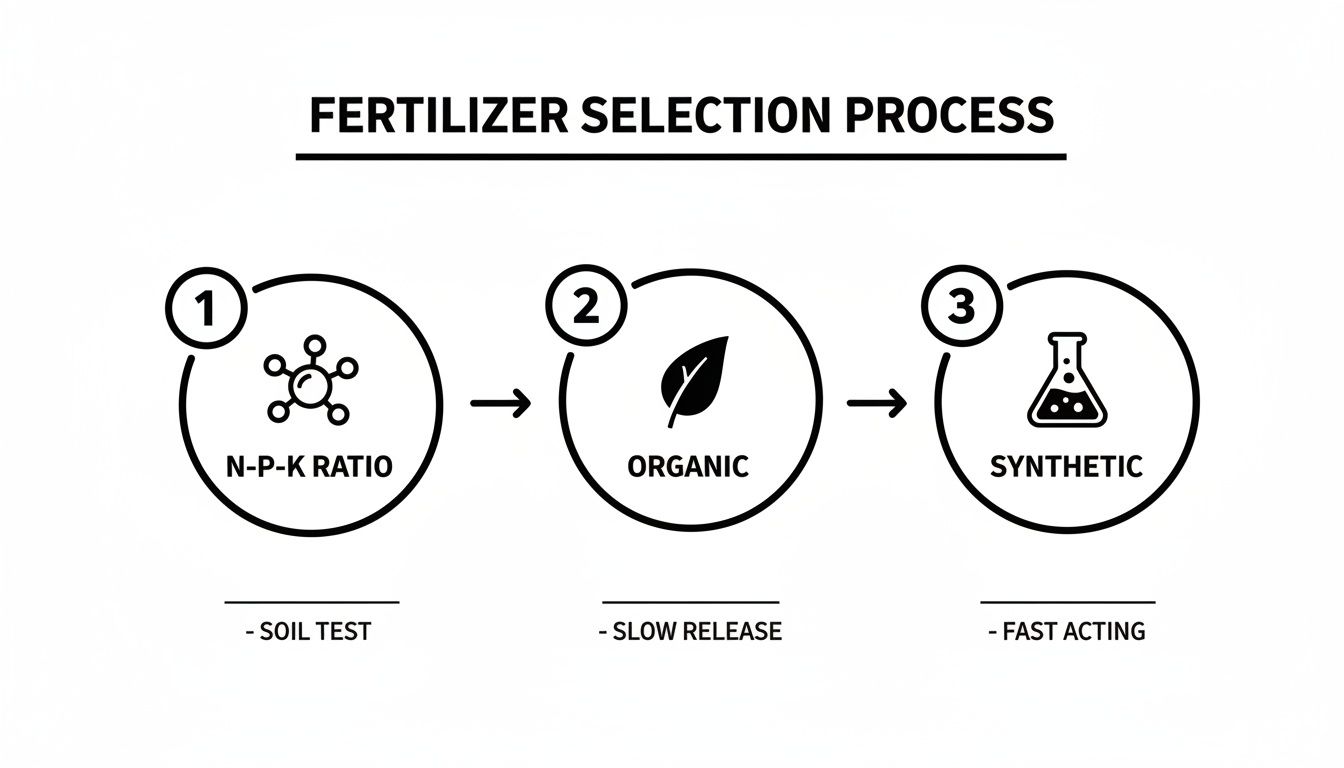
As the chart shows, figuring out what your lawn actually needs—through a soil test and understanding N-P-K ratios—is the essential first step before you even think about specific products.
Watering It In Correctly
Once the fertilizer and seed are down (or the sod is laid on top of the fertilized soil), it's time to water. This isn't just about quenching the thirst of your new grass; it's about activating the fertilizer and helping it move from the surface down into the root zone.
Give the whole area a gentle but thorough soaking. You want to moisten the top few inches of soil without creating puddles or runoff—the last thing you want is to wash away all your hard work. This first watering kicks off the process of breaking down the organic granules, starting the slow release of nutrients that will sustain your new lawn for the critical weeks to come.
If you're still weighing your options, learning more about the differences between liquid vs. granular fertilizer can help you understand how each type interacts with soil and water. Making the right choice here will give your new North Georgia lawn the absolute best start possible.
Watering and Mowing: Your New Lawn's First Few Weeks
Getting that starter fertilizer down is a huge step, but what you do next is just as important. The next few weeks are make-or-break for your new grass. This is when all that time and money you've invested either pays off in a gorgeous lawn or, well, doesn't. For anyone trying to grow grass from Milton to Dahlonega, getting the watering and mowing right is everything.
Let's walk through exactly what your new lawn needs to establish deep, healthy roots and get ready for that famous Georgia heat.
The New Lawn Watering Schedule
For the first week or so, think of your new lawn as being incredibly thirsty. Your job is to keep that top inch of soil consistently moist, but you have to be careful not to drown it. The goal is a "damp sponge" feel, not a "mud puddle." Finding that sweet spot is what encourages seeds to pop and new sod roots to start grabbing hold of the soil underneath.
- For New Seed: You'll want to water lightly but frequently. Aim for two to three times a day for just 5-10 minutes each time. This keeps the seeds moist without creating little rivers that wash them all away.
- For New Sod: Go for a deep soak once a day, preferably in the morning. You need to make sure the water gets all the way through the sod mat and into the soil below. Check it—the soil should be damp 3-4 inches deep.
After that first critical week, you can slowly start watering less often but for longer periods. This is a crucial trick: it forces the roots to grow deeper to find water, which is exactly what builds a tough, drought-resistant lawn down the road.
You're essentially training your lawn. The goal is to move from those frequent, shallow sips to deep, infrequent drinks. A mature North Georgia lawn is happiest with about one inch of water a week, given all at once or split into two sessions.
The First Mow: When and How to Do It
That first mow can be a little stressful. If you cut too early, you can literally pull the new seedlings right out of the ground. But if you wait too long, the tall grass can get stressed and weak.
So, how do you know it's ready? If you laid sod, give a corner a gentle tug. If it holds on and gives you some resistance, the roots are setting. For a seeded lawn, the visual cue is height—wait until the new blades are about 3-4 inches tall.
When you're ready to make that first cut:
- Raise your mower deck to the highest setting. You never want to cut more than the top third of the grass blade, especially on the first go. Hacking it down too short will shock the young plant.
- Make sure your mower blade is sharp. A dull blade doesn't cut; it tears the grass, leaving ragged edges that are an open invitation for disease.
- Never mow a wet lawn. It’s bad for the mower, and you’ll get clumps and an uneven, messy cut.
Getting that first mow done is a huge milestone. It’s a sign that your lawn is on its way from a fragile newcomer to a properly established part of your yard.
Moving from Starter to Maintenance Fertilizer
The starter fertilizer you put down gave your lawn a powerful boost, focusing all its energy on building a strong root system. Now, as the grass starts to mature, its diet needs to change. Around six to eight weeks after planting, it’s time to shift gears to a regular, balanced maintenance fertilizer. This is how you build a lawn that can really handle the Alpharetta humidity or the summer sun in Dahlonega.
This approach is part of a much bigger shift in how people care for their lawns. The global market for organic turfgrass fertilizers, valued at USD 192.27 million in 2024, is growing fast because homeowners want better, more sustainable options. North America is leading the way, with more of us choosing natural products that actually improve the soil over time.
Unlike synthetic chemicals, which can wash away and pollute our local waterways, organic options from companies like Barefoot Organics create a healthy soil ecosystem. That's the secret to a naturally thick, resilient lawn. You can learn more about the growth of the organic turfgrass market and the positive impact it's having.
Got Questions About Fertilizing Your New Georgia Lawn?
Even with a perfect plan, a few questions always crop up when you’re trying to establish a new lawn. From timing to safety, getting straight answers is the key to feeling confident about your new turf. Here in North Georgia, we get a lot of the same calls from homeowners in Cumming, Alpharetta, and all over the surrounding areas.
I’ve pulled together the most common ones right here. Think of this as your personal troubleshooting guide, with practical answers that actually work for our local clay soil and climate. Let's clear up the confusion so you can get back to growing that beautiful lawn.
How Soon Should I Fertilize New Grass Seed or Sod?
This is easily the number one question we hear, and the answer is simpler than you might think: get it done right away! That initial growth spurt is the most critical time for your grass to develop strong roots, and it needs a good meal to get started.
If you’re working with new grass seed, the best time to apply a starter fertilizer is either right before you spread the seed or immediately after. This puts essential nutrients, especially phosphorus, exactly where those new roots will be searching for them.
For those laying sod, the timing is even more specific. You’ll want to apply your starter fertilizer to the prepared soil just before you start laying the sod rolls down. This ensures the new roots grow directly into a nutrient-rich environment from day one, which really encourages them to anchor down fast and firm.
Is an Organic Lawn Truly Safe for My Kids and Pets?
It absolutely is. Honestly, this peace of mind is one of the biggest reasons we see families in communities like Milton and Johns Creek making the switch to organic lawn care. Natural fertilizers are built from things like compost, bone meal, or other plant-and-animal-based materials, not a list of harsh synthetic chemicals.
Unlike synthetic products that often require a strict waiting period, you don't have that worry with organic options. Once it's watered in and dry, the lawn is ready for play. It’s a simple way to create a beautiful yard that’s also a worry-free space for your family.
While it’s always smart to water the fertilizer in and let the lawn dry before the kids and dogs start running around, the risk associated with organic products is incredibly low. You get that lush, green lawn without the nagging concern about chemical exposure.
What Are the Telltale Signs of Over-Fertilizing?
Going too heavy with fertilizer is an easy mistake to make, and the signs are pretty hard to miss—especially if you're using synthetic products. It's often called "fertilizer burn," and it happens when the high concentration of chemical salts literally pulls the moisture right out of the grass blades.
Keep an eye out for these classic symptoms:
- Yellow or brown patches that look scorched or burnt.
- Noticeable streaks of discoloration where your spreader might have overlapped.
- Wilted or limp grass, even when the soil feels moist.
One of the best parts about using an organic new grass fertilizer is that the risk of burning your lawn drops dramatically. Organic products release their nutrients slowly as they break down in the soil, providing a gentle, steady feeding instead of a sudden chemical shock. If you think you've over-applied a synthetic product, your best bet is to water the area deeply for several days to try and flush those excess salts down through the soil.
When Should I Just Call a Professional Lawn Service?
Look, taking care of your own lawn can be incredibly rewarding, but there are definitely times when calling in a pro is the smartest move you can make. It isn't about giving up; it's about protecting your investment and making sure your new lawn gets off to a successful start.
You might want to consider calling for help if you find yourself in these situations:
- You're staring down a huge yard and just don't have the time or equipment to do it right.
- You're dealing with that classic, compacted Georgia clay that needs serious aeration and soil amendments.
- You've tried before and it didn't work out, and you just want to guarantee success this time.
- You're not confident about soil testing, picking the right products, or creating a long-term care plan.
A local specialist who really understands the challenges of growing grass in places like Cumming and Alpharetta can remove all the guesswork. They can build a program tailored specifically for your lawn, ensuring you get a healthy, beautiful turf that your family can safely enjoy for years to come.
If you're ready to skip the trial-and-error and give your new lawn the best possible start, Barefoot Organics is here to help. Our natural lawn care programs are designed specifically for North Georgia soils, creating a lush, safe, and beautiful lawn without harsh chemicals. Get your free, no-obligation quote today and let us build the foundation for a yard you'll love.