

Welcome to the ultimate guide for homeowners in Cumming, Alpharetta, and across North Georgia who are ready to win the war on weeds without resorting to harsh chemicals. The unique red clay soil and humid climate of our region, from Johns Creek to Dahlonega, can make weed control a relentless battle. Common culprits like crabgrass, broadleaf plantain, and dollarweed thrive here, often making lawns look patchy and uncared for.
Many homeowners feel trapped between wanting a pristine, green lawn and protecting their families, pets, and local environment from synthetic herbicides. But what if you didn't have to choose? This article explores seven proven, powerful natural weed control methods specifically adapted for our Georgia environment.
We'll move beyond generic advice to provide actionable, eco-friendly strategies that build a healthier, more resilient lawn from the ground up. This guide will show you how to implement effective techniques like mulching, corn gluten meal application, and even solarization. Prepare to learn how a lush, weed-free landscape can be both beautiful and safe for everyone to enjoy.
1. The Protective Shield: Mastering Mulching for Georgia Gardens
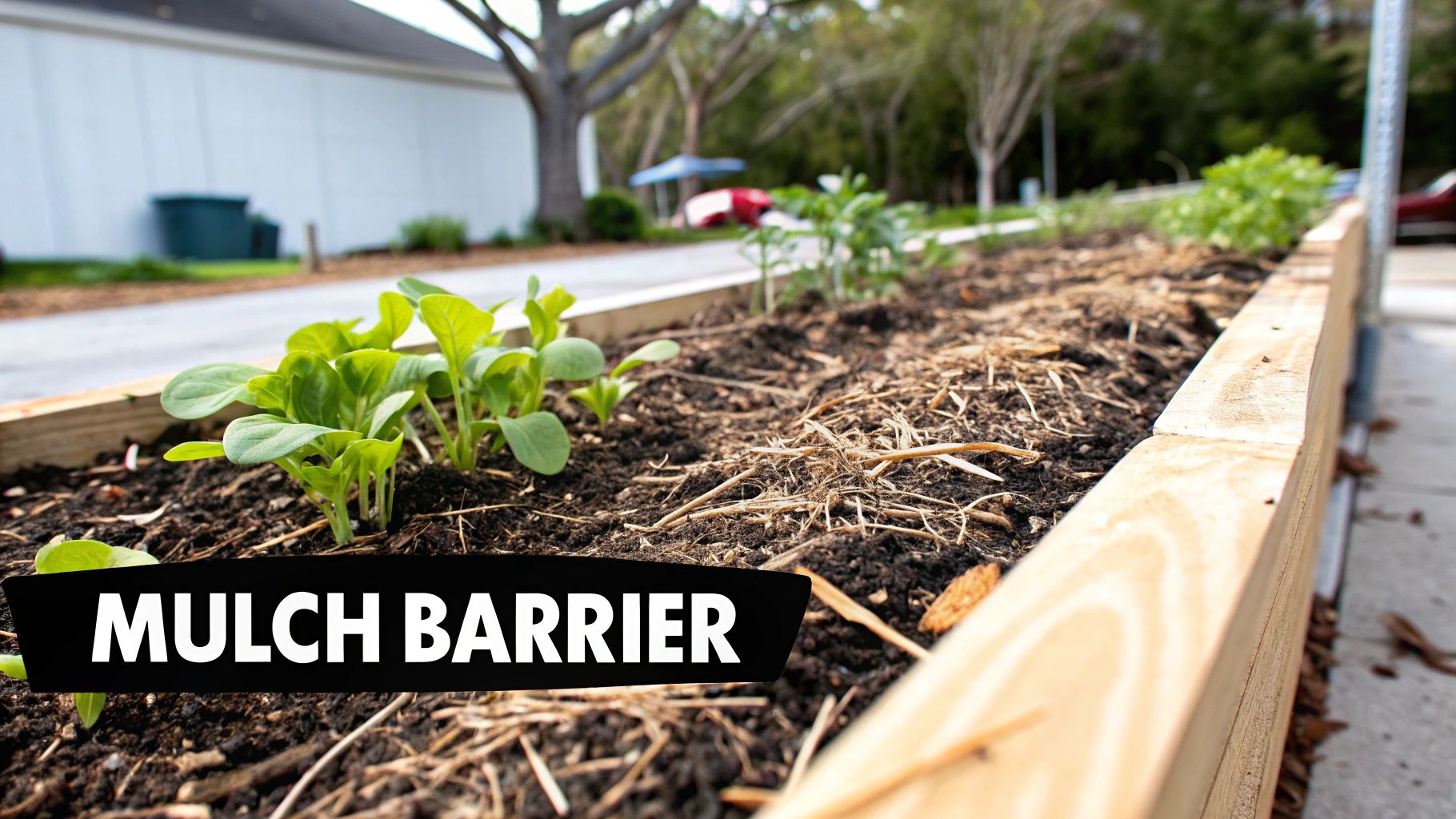
Mulching is a foundational technique in any organic lawn care strategy, and it stands as one of the most effective natural weed control methods for North Georgia landscapes. This method involves covering the soil surface around your desired plants with a layer of organic or inorganic material. This simple act creates a physical barrier that blocks sunlight from reaching the soil, preventing the germination of common local nuisances like crabgrass, chickweed, and clover.
For homeowners in communities from Johns Creek to Dahlonega, mulch offers a dual benefit. Beyond suppressing weeds, it acts as a protective blanket, retaining essential moisture in our clay soil during hot, dry summers and insulating plant roots from winter chills. This means less time spent watering and healthier, more resilient plants that can naturally outcompete invasive weeds for resources.
Practical Application and Tips
Successfully implementing mulching is about more than just spreading bark chips. Proper technique ensures maximum weed prevention and plant health.
- Optimal Depth: Apply a consistent layer of mulch 3-4 inches deep. Anything less won't effectively block sunlight, while a deeper layer can suffocate plant roots.
- Create a "Donut": Always keep mulch 2-3 inches away from the stems of plants, shrubs, and tree trunks. Piling mulch against the base can trap moisture, leading to rot and creating a haven for pests.
- The Cardboard Trick: For areas with stubborn, persistent weeds, lay down a layer of plain cardboard or newspaper (without glossy inks) before applying your mulch. This adds an extra light-blocking layer that will naturally decompose over time.
- Choose Wisely: Select mulch that complements your plants. Pine straw is a popular choice in North Georgia for acid-loving plants like azaleas, blueberries, and rhododendrons. Hardwood mulches or quality compost work well for most other garden beds. In fact, using finished compost as mulch can both suppress weeds and enrich your soil simultaneously. Discover more about the benefits of using high-quality compost on barefootorganicsllc.com.
- Annual Refresh: Organic mulches like pine straw and shredded bark break down over time. Plan to refresh the layer annually to maintain its depth and weed-blocking effectiveness.
2. The Power of the Pull: Hand Weeding and Cultivation
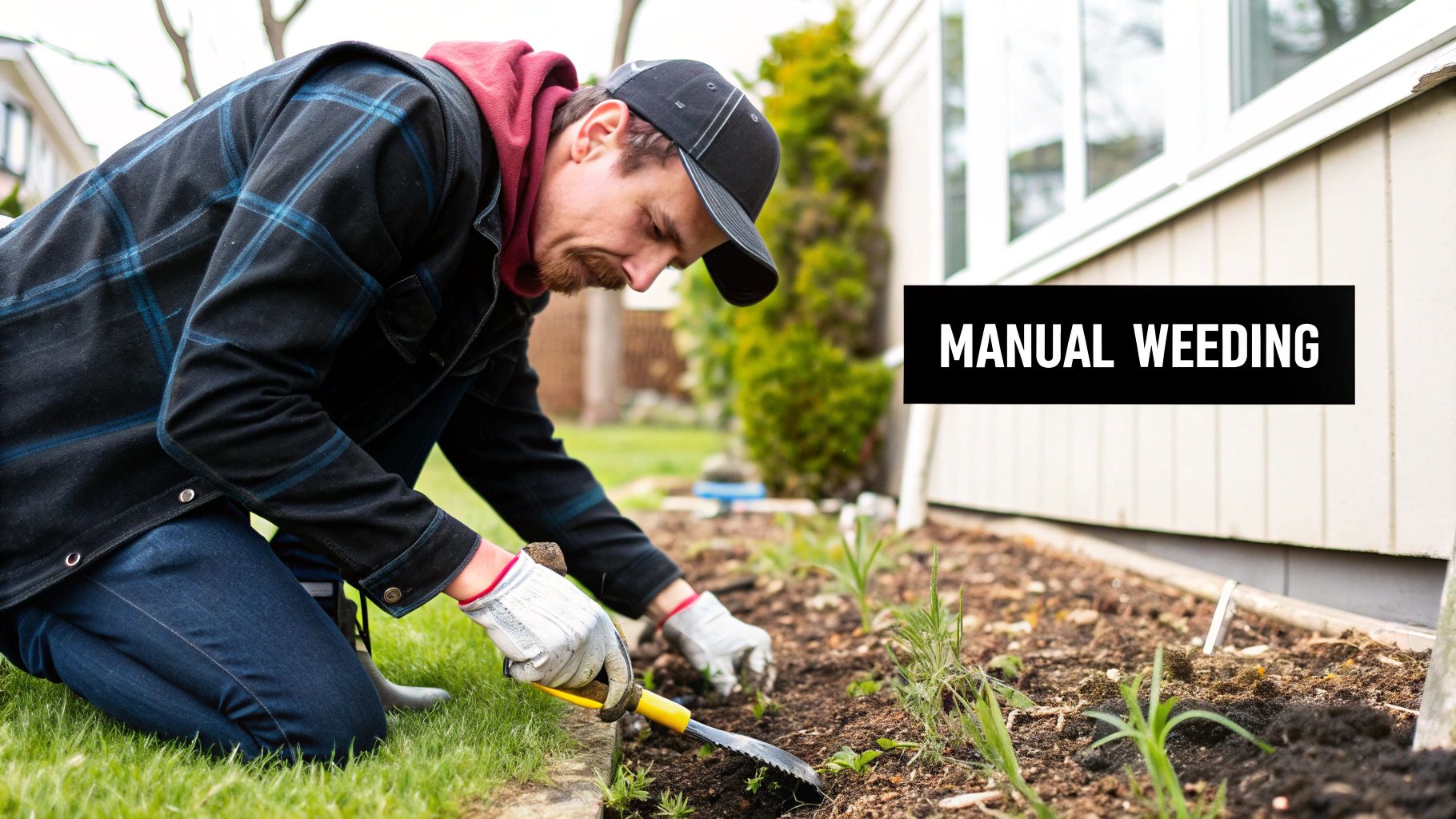
While it may seem old-fashioned, the deliberate practice of hand weeding is one of the most immediate and effective natural weed control methods available. This time-tested technique involves manually removing unwanted plants from your garden beds, lawns, and landscapes. By pulling or digging out weeds, you physically eliminate the competition for water, nutrients, and sunlight, giving your desired plants the advantage they need to thrive.
For property owners from Cumming to Alpharetta, hand weeding provides a precise, chemical-free solution to tackle invasive species common to our area, like dandelions and nutsedge, without endangering children, pets, or local wildlife. It offers a satisfying, hands-on connection to your garden and allows you to address problem areas with surgical accuracy before they escalate into larger infestations. This method is the very foundation of organic care, ensuring a healthy and pristine landscape.
Practical Application and Tips
Effective hand weeding is about technique and timing, not just brute force. Following a few key principles can transform this chore into a highly efficient gardening strategy.
- Timing is Everything: Weed after a good rain or a deep watering session. The moist soil in North Georgia's clay makes it much easier to pull out the entire weed, taproot and all, preventing it from resprouting.
- Get Them Before They Seed: The most critical time to weed is before the plants produce flowers and set seed. Removing a single dandelion before it seeds can prevent hundreds of new weeds from sprouting in your lawn.
- Use the Right Tools: For deep-rooted weeds like thistle or dandelions, a dandelion fork or hori-hori knife is invaluable. For shallow-rooted annuals in garden beds, a scuffle hoe can quickly clear large areas with minimal effort.
- Target the Entire Root: When pulling, grasp the weed as low on the stem as possible and pull steadily. Wiggling the plant gently can help loosen its grip. Leaving even a small piece of the root behind can allow many persistent weeds to regrow.
- Work Methodically: Tackle your garden in small, manageable sections. This systematic approach ensures you don't miss any spots and makes the task feel less overwhelming. It also allows you to inspect your plants for pests or diseases as you go.
3. The Preventative Strike: Harnessing Corn Gluten Meal Pre-emergent
For North Georgia homeowners seeking proactive natural weed control methods, corn gluten meal (CGM) offers a powerful, preventative solution. Discovered by researchers at Iowa State University, this byproduct of corn processing acts as a natural pre-emergent herbicide. It works by releasing proteins into the soil that inhibit root formation in sprouting seeds, effectively stopping common annual weeds like crabgrass and dandelion before they even break the surface.
Unlike post-emergent methods that treat existing weeds, CGM is a preventative strike that gives your established turf the upper hand. For families in areas like Alpharetta and Milton, this means fewer weeds invading play areas throughout the season. Furthermore, CGM provides a significant secondary benefit: it's a rich source of slow-release nitrogen. As it breaks down, it feeds your lawn, promoting the dense, healthy turf that is the best long-term defense against weed invasions.
The infographic below summarizes the key benefits of incorporating corn gluten meal into your lawn care routine.
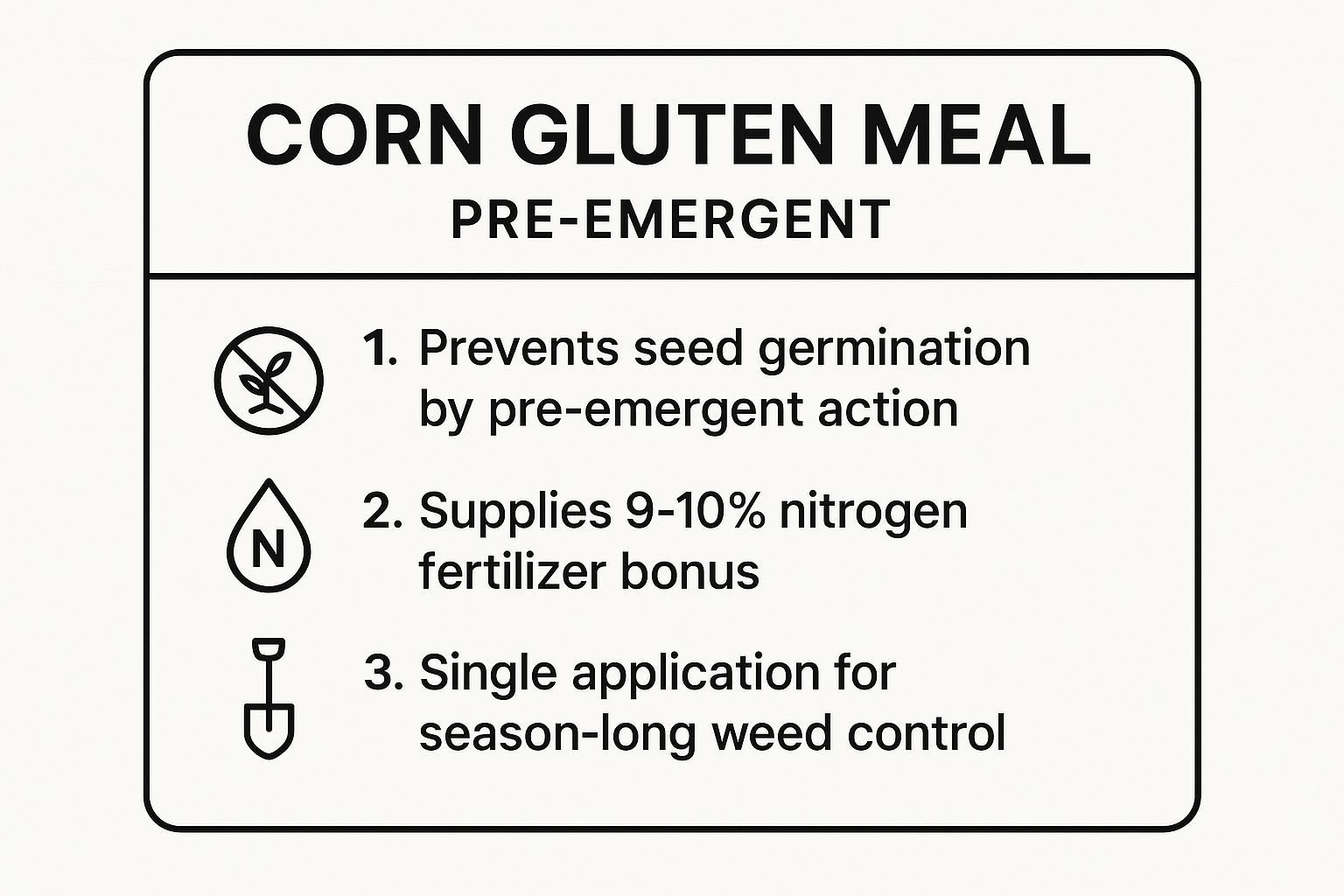
This dual-action approach of preventing new weeds while fertilizing existing turf makes CGM a highly efficient and valuable tool for organic lawn management.
Practical Application and Tips
Timing and application rates are critical for getting the most out of corn gluten meal. Following best practices ensures you stop weeds in their tracks and feed your lawn effectively.
- Timing is Everything: Apply CGM in early spring, just before weed seeds begin to germinate. In the Cumming area, this is typically when the forsythia bushes start to bloom, well before soil temperatures consistently reach 50°F. A fall application can also help control winter annuals.
- Application Rate: Use approximately 20 pounds of granular CGM per 1,000 square feet of lawn for effective coverage. Ensure you distribute it evenly with a spreader for consistent results.
- Activate It: After applying, water the area lightly (about a quarter-inch of water). This moisture is necessary to activate the proteins that inhibit seed germination.
- Avoid New Seeding: Do not use CGM in areas where you plan to sow grass seed. Its pre-emergent action will prevent your new grass from establishing. Wait at least 6 weeks after application before seeding.
- Consider a Liquid Option: For easier and more uniform application, liquid formulations are also available. Discover the advantages of a professional-grade liquid corn gluten product on barefootorganicsllc.com.
4. The Double Barrier: Landscape Fabric and Ground Covers
For a powerful, long-term solution to persistent weeds, combining landscape fabric with living ground covers offers a robust double barrier. This professional-grade technique is one of the most durable natural weed control methods, ideal for perennial beds, pathways, and sloped areas common in the hilly terrain of North Georgia. The landscape fabric acts as a physical shield, blocking sunlight and preventing stubborn invaders like nutsedge and dallisgrass from ever reaching the surface.
Unlike impermeable plastic sheeting, quality landscape fabric is permeable, allowing essential water, air, and nutrients to reach the soil and nourish plant roots. For property managers in Alpharetta or homeowners in Milton establishing new garden beds, this method provides a clean, low-maintenance foundation. When paired with a dense living ground cover, it creates a powerful synergy: the fabric provides the initial block, and the plants quickly cover the area, outcompeting any opportunistic weeds that might try to find a seam.
Practical Application and Tips
Proper installation is the key to creating an effective and long-lasting weed barrier. Cutting corners here can lead to frustrating maintenance issues down the road.
- Thorough Soil Prep: Before laying down any fabric, completely clear the area of all existing weeds, roots, and rocks. Amending the soil with quality compost at this stage will give your desired plants a healthy start.
- Generous Overlap: To prevent weeds from exploiting gaps, always overlap the edges of the fabric by at least 6-8 inches. This creates a continuous, impenetrable barrier across the entire bed.
- Secure Firmly: Use landscape staples or pins to secure the fabric to the ground. Place a pin every 3-4 feet along the seams and around the entire perimeter to keep it from shifting.
- Precise Planting Holes: When you're ready to plant your ground cover or shrubs, use a sharp utility knife to cut a small 'X' in the fabric. Make the hole just large enough for the plant's root ball to minimize any exposed soil where weed seeds could land.
- Add a Protective Topping: Cover the installed fabric with 2-3 inches of mulch, like pine straw or shredded bark. This top layer protects the fabric from UV degradation, improves the visual appeal, and adds another layer of weed suppression.
5. The Living Canopy: Companion and Dense Plantings
Leveraging the power of plant synergy is one of the most elegant natural weed control methods available. This strategy involves using companion planting and dense plantings to create a living, self-sustaining barrier that naturally suppresses unwanted growth. By strategically placing plants close together, you create a dense canopy that shades the soil, preventing weed seeds from getting the sunlight they need to germinate and thrive.
For property owners from Alpharetta to Milton, this approach transforms garden beds from a constant battleground into a cooperative ecosystem. Certain plants, through a process called allelopathy, even release natural chemicals that inhibit the growth of nearby competitors. This means your desired flowers, vegetables, and groundcovers do the weeding for you, creating a resilient landscape that requires less maintenance and intervention over time.
Practical Application and Tips
Implementing this living mulch system is about smart design and understanding how plants interact. Proper planning ensures your garden not only looks full and lush but also actively fights weeds.
- Plan for Density: The core principle is to eliminate bare soil. Space your plants just close enough so that when they reach maturity, their leaves will touch, forming a continuous canopy. This is particularly effective for suppressing common local weeds like spurge and nutsedge.
- Layer Vertically: Mimic a natural forest floor by planting in layers. For instance, in a bed with taller shrubs, add medium-sized perennials and then fill the remaining gaps with a low-growing, spreading groundcover like Creeping Phlox or Ajuga. This multi-layered approach maximizes competition for both light and soil resources.
- Embrace Classic Companions: Utilize time-tested pairings. The "Three Sisters" method, planting corn, beans, and squash together, is a perfect example. The corn provides a trellis for the beans, the beans fix nitrogen in the soil, and the large squash leaves spread out to shade the ground, smothering potential weeds.
- Choose Fast Growers: To establish a weed-proof canopy quickly, select plants known for vigorous growth. Fast-spreading groundcovers or perennials that fill in rapidly are excellent choices for choking out weeds before they can get a foothold in your Cumming garden.
- Mind Your Neighbors: Ensure companion plants have similar requirements for sunlight, water, and soil pH. Grouping acid-loving plants together or sun-loving plants together ensures they will thrive and effectively outcompete weeds rather than each other.
6. The Quick Burn: Using Vinegar-Based Herbicides
When you need a fast-acting solution for weeds popping up in cracks and crevices, vinegar-based herbicides offer a powerful, non-selective option among natural weed control methods. This approach utilizes acetic acid, the active component in vinegar, to burn the foliage of unwanted plants. It works by disrupting cell membranes, causing the plant to lose moisture rapidly and desiccate, leading to a quick "burn down" of the leaves and stems.
For homeowners in Alpharetta or Milton dealing with stubborn weeds in driveways, patios, or along fence lines, this method provides immediate visual results. Unlike systemic herbicides that take days to work, horticultural vinegar can wither weeds within hours, especially on a sunny day. It’s an excellent spot-treatment tool for hard-to-reach areas where manual pulling is difficult, offering an organic alternative to synthetic chemical sprays.
Practical Application and Tips
To use vinegar effectively and safely, precision and the right formulation are key. Simply grabbing kitchen vinegar won't be enough for most tough North Georgia weeds.
- Choose Horticultural Strength: Standard household vinegar contains only 5% acetic acid. For effective weed control, use a horticultural vinegar with a 20-30% acetic acid concentration. This higher strength is necessary to break down the waxy cuticle on tougher weeds.
- Timing is Everything: Apply on a warm, sunny, and calm day. The heat and sunlight accelerate the desiccation process, maximizing the herbicide's effectiveness. Avoid windy days to prevent the spray from drifting onto your prized plants.
- Add a Surfactant: Weeds often have a waxy coating that causes liquids to bead up and roll off. Add a small amount of natural dish soap (a teaspoon per gallon) to your vinegar solution. This acts as a surfactant, helping the spray stick to and coat the weed leaves.
- Protect Desirable Plants: Vinegar is non-selective, meaning it will damage any plant it touches. Use a piece of cardboard as a shield to protect nearby flowers, shrubs, or lawn turf from overspray.
- Repeat as Needed: Vinegar-based herbicides are contact-only and do not affect the root system. Perennial weeds like dandelion or thistle will likely regrow from the roots. Plan to reapply every 2-3 weeks to exhaust the plant's energy reserves and achieve long-term control. While focused on weeds, understanding how different natural solutions interact with the environment is crucial. For more insights on organic landscape management, explore our guide to natural pest control on barefootorganicsllc.com.
7. The Power of the Sun: Using Solarization to Sterilize Soil
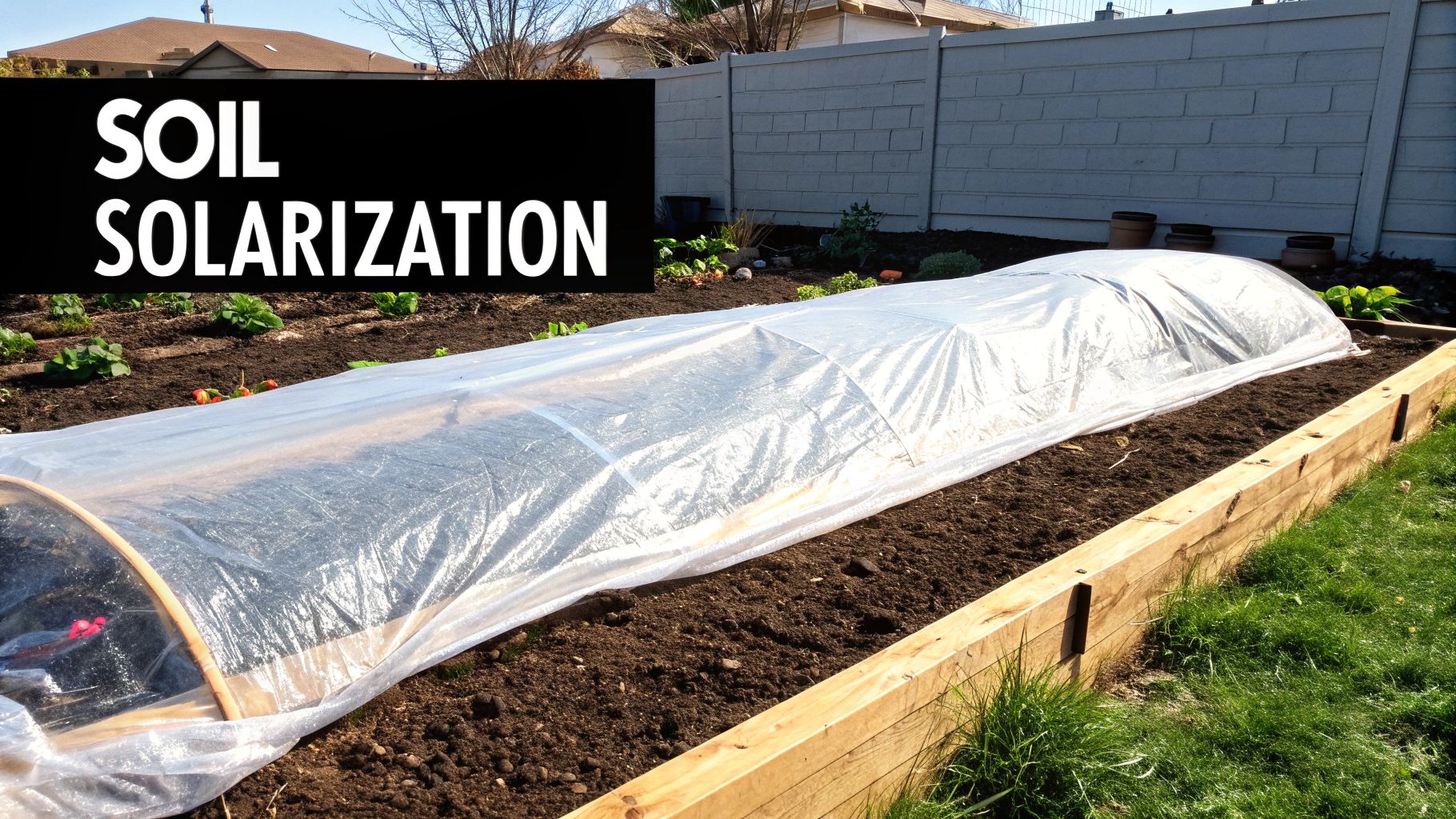
Soil solarization is a powerful, passive technique that harnesses the intense Georgia sun, transforming it into one of the most effective natural weed control methods available. This process involves covering a prepared, moist section of soil with a clear plastic sheet for an extended period during the hottest part of the year. The clear plastic creates a greenhouse effect, trapping solar radiation and heating the top six inches of soil to temperatures lethal for many weed seeds, seedlings, and even soil-borne pathogens.
For homeowners in areas like Cumming and Alpharetta looking to establish a new garden bed or clear a patch of land infested with persistent weeds, solarization offers a chemical-free reset button. It effectively "cooks" weed seeds from aggressive local invaders before they can ever sprout, providing a clean slate for new plantings. This method is particularly useful for preparing vegetable gardens or new lawn areas, ensuring your desired plants get a head start without competition.
Practical Application and Tips
To successfully implement solarization, precise timing and proper technique are crucial for achieving the high temperatures needed to neutralize weed seeds.
- Timing is Everything: This method relies on heat and sunlight, so it must be done during the hottest and sunniest part of the year. For North Georgia, this means planning your solarization for June, July, or August to maximize its effectiveness.
- Prepare the Bed: First, clear the area of any existing plants and debris. Till or cultivate the soil to a depth of about 12 inches to create a smooth surface and bring weed seeds closer to the heat. Water the area thoroughly until the soil is moist several inches deep; the moisture is essential for conducting heat.
- Seal It Tight: Use a clear, UV-stabilized plastic sheeting (1-4 mils thick) to cover the prepared area. Bury the edges of the plastic in trenches or weigh them down securely with rocks or soil. The goal is to create an airtight seal to trap as much heat and humidity as possible.
- Be Patient: Leave the plastic in place for a minimum of 6 to 8 weeks. During this time, the sun will heat the soil to temperatures that can reach over 130°F, which is sufficient to kill most weed seeds, nematodes, and fungal pathogens.
- Minimize Disturbance: Once the solarization period is over, remove the plastic and plant your desired vegetation with minimal soil disturbance. Deep tilling will only bring new, viable weed seeds from deeper soil layers to the surface.
Natural Weed Control Methods Comparison
| Method | Implementation Complexity 🔄 | Resource Requirements ⚡ | Expected Outcomes 📊 | Ideal Use Cases 💡 | Key Advantages ⭐ |
|---|---|---|---|---|---|
| Mulching | Medium – initial labor to apply mulch | Low to medium – materials like straw, wood chips | Effective weed suppression plus soil moisture retention and improvement | Vegetable gardens, pathways, acid-loving plants | Dual weed control and soil benefits; sustainable and cost-effective |
| Hand Weeding and Cultivation | High – labor intensive and frequent | Low – basic hand tools required | Immediate, selective weed removal | Small gardens, high-value crops, detailed maintenance | 100% chemical-free, precise targeting, immediate results |
| Corn Gluten Meal Pre-emergent | Medium – timing critical application | Medium – purchase of product | Prevents weed seed germination, adds nitrogen fertilizer | Lawns, organic farms, existing perennial beds | Natural pre-emergent with fertilizer benefit; safe for kids/pets |
| Landscape Fabric & Ground Covers | Medium to high – proper installation required | Medium to high – cost of fabric and installation | Long-term weed suppression, reduces maintenance | Commercial landscapes, slopes, perennial borders | Durable, moisture-retentive, professional appearance |
| Companion Planting & Dense Plantings | Medium – planning and plant knowledge needed | Low – requires only plants | Natural weed suppression via competition and allelopathy | Permaculture, food forests, organic farms, ecological gardens | Creates sustainable, multi-benefit garden ecosystems |
| Vinegar-Based Herbicides | Low – straightforward application | Low – inexpensive, common household product | Fast foliar burn on young weeds, temporary control | Pathways, driveways, spot treatment in gardens | Rapid action, biodegradable, safe when dry |
| Solarization | Medium – requires preparation and seasonal timing | Low to medium – plastic sheeting and site prep | Kills weed seeds and pathogens through soil sterilization | New garden beds, invasive weed zones, organic growing | Chemical-free, effective seed bank elimination |
Building Your Organic Defense: A Strategy for a Weed-Free Future
Navigating the world of organic lawn care can feel complex, but as we've explored, the core principle is simple: build a healthy ecosystem from the ground up. The most effective natural weed control methods are not isolated actions but interconnected parts of a holistic strategy. A one-time application of vinegar won't transform your lawn, just as pulling a few weeds won't prevent new ones from emerging. True success comes from layering these techniques to create a landscape that naturally suppresses and outcompetes unwanted growth.
Think of it as building a fortress for your turf. Your foundation is healthy, well-aerated soil. The walls are a thick, deep layer of mulch in your garden beds and dense plantings in your lawn that leave no room for intruders. Your sentries are pre-emergents like corn gluten meal, which stop weed seeds from ever germinating in the first place. Finally, your rapid-response team consists of targeted hand-weeding and a bottle of homemade vinegar spray for any stubborn invaders that breach your defenses.
Your Year-Round Organic Weed Control Calendar
For homeowners from Cumming to Dahlonega, this proactive approach is key to managing common North Georgia weeds like crabgrass and chickweed without harsh chemicals. Your strategy should adapt with the seasons:
- Early Spring (February-March): Apply corn gluten meal to prevent summer annual weeds before they sprout. This is a crucial first strike.
- Spring & Summer (April-August): Focus on building turf density through proper mowing and watering. Spot-treat any visible weeds with vinegar or by hand. Refresh mulch layers in garden beds to block sunlight and retain moisture.
- Fall (September-October): This is the ideal time for aeration and overseeding in the Alpharetta and Johns Creek area. A thick, healthy fescue lawn going into winter is your best defense against winter weeds. A second application of corn gluten meal can help manage winter annuals like henbit.
This layered, season-specific plan transforms lawn care from a reactive battle into a proactive partnership with nature. It's about creating an environment where your desired plants thrive and weeds simply cannot gain a foothold. By embracing this strategic mindset, you're not just fighting weeds; you're cultivating a resilient, self-sustaining landscape that is safer for your family, pets, and the local North Georgia environment. It’s an investment that pays dividends in beauty, health, and peace of mind.
Ready to implement a professional, pet-safe program without the guesswork? The experts at Barefoot Organics specialize in creating tailored Natural Lawn Care Programs that leverage these very methods, optimized for our unique North Georgia soil and climate. Visit Barefoot Organics to see how we can help you achieve a lush, beautiful, and truly organic lawn.