

When it comes to getting a truly beautiful lawn in North Georgia, using a natural fertilizer for grass isn't just an option—it's the best long-term strategy you can have. Instead of forcing a quick, artificial green-up with harsh chemicals, a natural approach is all about building healthy, living soil. That's the secret to a lawn that can stand up to our tough clay and sweltering summers in areas like Cumming, Johns Creek, and Alpharetta.
What you get is a self-sufficient lawn that’s stronger, genuinely greener, and much safer for your family and pets.
Why Natural Fertilizer Is a Game-Changer for North Georgia Lawns
Let's face it: growing that perfect lawn in places like Cumming or Alpharetta can be a real battle. We're usually up against Georgia's notorious red clay soil, which can be as dense and stubborn as a brick. It's this unique soil that makes natural fertilization more than just an eco-friendly choice—it's the smartest, most effective way to care for your lawn around here.
Think of synthetic fertilizers as an energy drink for your grass. They pump it full of nitrogen for a fast, bright green flush. It looks great for a little while, but this approach completely ignores the soil itself, doing absolutely nothing to improve its long-term health.
The Problem with Synthetics on Our Clay Soil
For homeowners from Johns Creek to Milton, that quick chemical fix often creates bigger headaches down the road. The high salt content in synthetic fertilizers can wipe out the beneficial microbes that your soil needs to thrive. Over time, you’ll start seeing problems like:
- Increased Soil Compaction: The clay gets even tighter, making it tough for roots to dig in and find water.
- Shallow Root Systems: Your grass gets lazy, waiting for its next easy meal at the surface. This makes it incredibly vulnerable during our hot, dry summers.
- Nutrient Runoff: When a classic Georgia downpour hits, all those unused chemicals just wash away, polluting local streams and wasting your money.
- Thatch Buildup: The unnatural, rapid growth creates a thick, suffocating layer of dead material that chokes out the healthy turf.
A healthy lawn starts with healthy soil. The real goal isn't just feeding the grass blades; it's about creating a thriving ecosystem under the surface that can support your lawn all on its own, year after year.
Building a Stronger Lawn From the Ground Up
A natural fertilizer for grass works on a completely different philosophy. It feeds the soil, not just the plant. Ingredients like compost, worm castings, and other natural amendments are broken down slowly by the microorganisms living in the soil. This process gradually builds a rich, dark, fertile foundation for your turf.
This slow-and-steady approach gives your Bermuda, Zoysia, or Fescue a gentle, consistent supply of nutrients to draw from as needed. More importantly, it directly tackles our biggest challenge: the clay. Adding organic matter lightens up the soil, improving aeration and helping it hold water better.
You’re not just getting a temporarily greener lawn—you’re building one that’s naturally more drought-tolerant and resistant to disease. A complete natural lawn care plan goes beyond just feeding; it fosters a healthy ecosystem and cuts down the need for chemicals, which can include eco-friendly pest control solutions for your home.
Ultimately, this is about moving away from short-term fixes and focusing on long-term lawn health. If you want to solve the real cause of most lawn issues in places like Dahlonega, you have to start by learning how to improve soil. It's the only way to build a foundation that can handle everything our Georgia climate throws at it.
Decoding Your Georgia Soil Before You Fertilize
Trying to fertilize your lawn without first understanding what’s in the soil is like trying to bake a cake without a recipe. You might toss in a little of this and a little of that, but you’re just guessing. For homeowners in Johns Creek and Alpharetta, this guesswork is a surefire way to waste money and end up with a lawn that never quite looks its best.
Before you spread a single ounce of natural fertilizer, you need to know what your yard is actually asking for. Our Georgia red clay has a reputation for being acidic and often short on key nutrients, but the only way to know for sure is to test it.
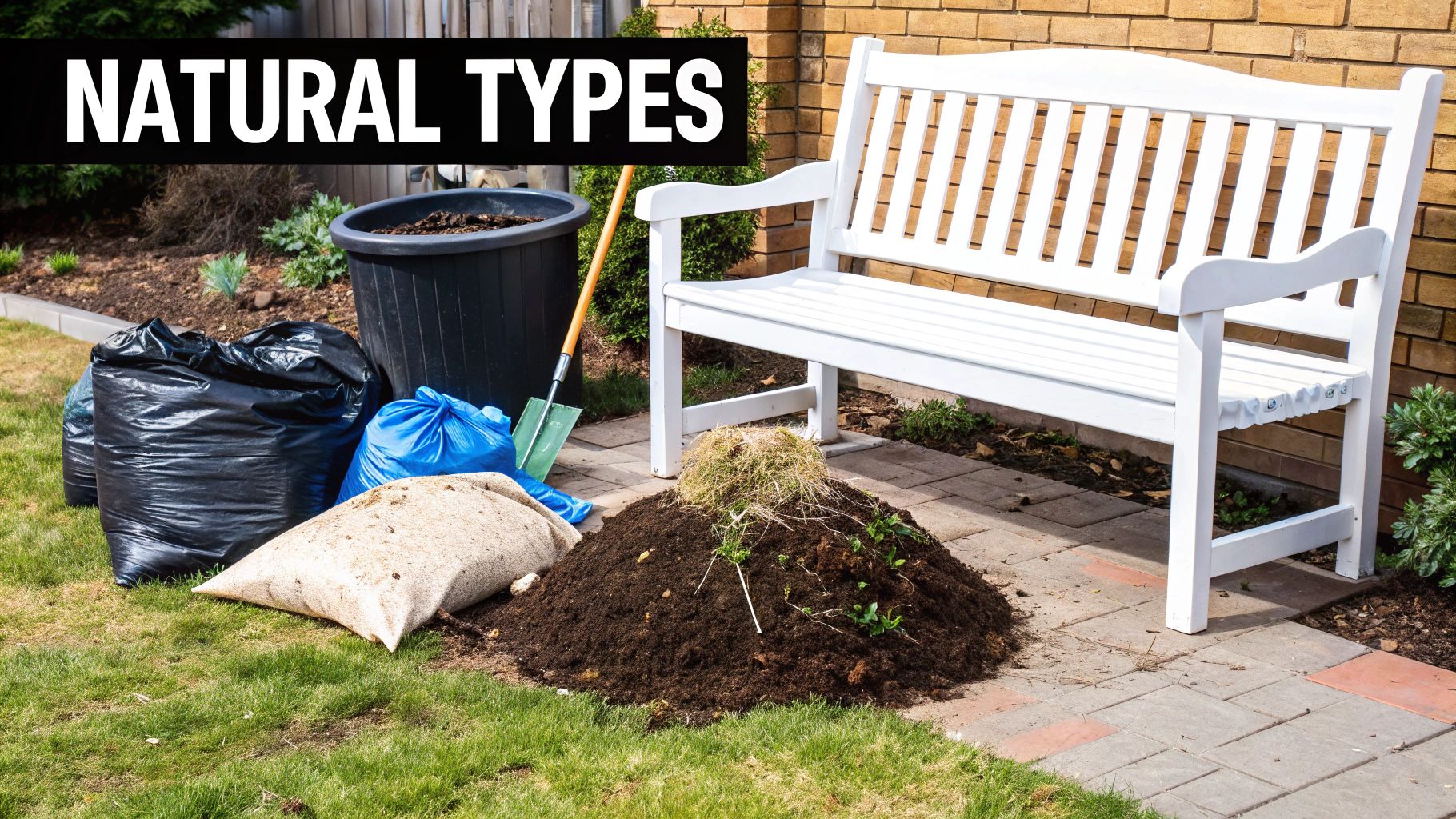
Your Secret Weapon: The UGA Extension Office
Thankfully, getting a professional soil analysis is simple and incredibly affordable. The University of Georgia (UGA) Extension program has offices in or near every county, including Forsyth and Fulton, making it a game-changing resource for any local homeowner in Cumming and the surrounding areas. For a small fee, they’ll give you a detailed, scientific breakdown of your soil's health.
The process is straightforward. You’ll just collect a few soil samples from different spots on your lawn, mix them in a clean bucket to get a good representative sample, and let it air dry. After that, just drop it off at your local extension office. In about two weeks, you’ll get a report that is basically a personalized blueprint for your lawn care.
Making Sense of Your Soil Test Results
When you get your report back, you’ll see a series of letters and numbers that might look a bit intimidating at first. Don't worry—they tell a simple story about what your lawn needs to thrive. The key things to look for are pH, N, P, and K.
- Soil pH: This measures how acidic or alkaline your soil is on a scale from 0 to 14. For most Georgia turfgrasses like Bermuda and Zoysia, the sweet spot is between 6.0 and 6.5. If your pH is too low (acidic), your grass can't properly absorb the nutrients you’re feeding it, no matter how much fertilizer you apply.
- N (Nitrogen): This is the star player for lush, green growth. A soil test will show if your levels are low, but nitrogen moves around in the soil, so reports often just give a standard recommendation based on your grass type.
- P (Phosphorus): Absolutely critical for strong root development, phosphorus helps your lawn establish itself and get through stressful times like a drought. Our clay soil often locks up phosphorus, making it unavailable to plants even when it's present.
- K (Potassium): Think of potassium as the "immune system" nutrient. It helps your lawn manage water, handle temperature extremes, and fight off disease—all essential for surviving a hot Milton summer.
Getting your soil tested removes all the guesswork. It shifts you from a reactive "what's wrong with my lawn?" mindset to a proactive, data-driven plan. You’ll know that every natural amendment you apply is exactly what your yard is hungry for.
Understanding these basics is the real first step to effective lawn care. For those who want to dig a bit deeper, you can check out our guide on how to test soil pH and what those results mean for your fertilization strategy.
Turning Data Into a Real-World Action Plan
Let's walk through a common scenario. Imagine your soil test comes back with a low pH of 5.2 and deficient potassium (K) levels—a very familiar story here in the Dahlonega area. This report tells you two critical things.
First, your immediate priority isn't fertilizer; it's raising the pH. The report will almost certainly recommend applying lime to correct the acidity. This one step "unlocks" the soil, finally allowing your grass to access the nutrients that are already there.
Second, it tells you to look for a natural fertilizer for grass that’s rich in potassium. This means you can skip the generic, balanced blends and instead choose targeted organic amendments that address your lawn's specific needs. You'll save money and get much better results. This data-driven approach is the foundation of a truly successful natural lawn care program.
Choosing the Right Natural Ingredients for Local Grass
Once your soil test gives you the lay of the land, it's time for the fun part: picking the right ingredients to build a truly resilient North Georgia lawn. Think of it like cooking a great meal—different ingredients serve different purposes. The goal here isn't a quick chemical fix for a green lawn, but a long-term investment in your soil's health. This is especially true when you're up against our notorious dense, red clay in Cumming and the surrounding areas.
This move toward sustainable lawn care isn't just a local thing, either. The global market for natural lawn fertilizers was valued at a whopping $5.5 billion in 2023 and is on track to hit $10.2 billion by 2032. It’s clear people everywhere are catching on to the idea that a healthy lawn starts from the ground up.
Core Ingredients for Georgia's Clay Soil
For those of us with lawns in Cumming, Alpharetta, and the surrounding areas, a few key ingredients consistently get the job done. These are the workhorses you’ll rely on to break up that clay and provide a steady diet for your grass.
- Compost: This is, without a doubt, the champion for our soil. High-quality compost is alive with microbes that get to work breaking down compacted clay, which improves both airflow and water retention. It’s less of a fertilizer and more of a master soil conditioner, creating the perfect home for grass roots to dig in deep.
- Worm Castings (Vermicompost): You can think of worm castings as compost on steroids. They are packed with beneficial bacteria and enzymes that make nutrients immediately available to your grass. A little bit goes a long way, and it’s my go-to for giving new sod or struggling patches a serious boost.
- Milorganite: This is a classic slow-release fertilizer made from heat-dried microbes. It's a favorite among homeowners because it's nearly impossible to burn your lawn with it. Milorganite provides a steady drip of nitrogen and iron, which is fantastic for giving Bermuda and Zoysia that deep, rich green during our long growing season.
These ingredients are all about feeding the life in your soil. Instead of a chemical jolt, they provide a balanced diet that supports the microscopic ecosystem responsible for making nutrients available to your grass. As you'll see, the benefits of host compost go far beyond simple nutrition; they fundamentally change your soil for the better.
Specialty Amendments for Specific Lawn Goals
Beyond the essentials, some natural products can pull double duty, feeding your lawn while tackling common problems like weeds. These are fantastic additions to a well-rounded natural lawn care routine in Johns Creek and Milton.
One of the best dual-action ingredients out there is corn gluten meal. When you apply it in early spring before weed seeds have a chance to sprout, it acts as a natural pre-emergent. It works by stopping new roots from forming on germinating seeds, which is a huge help in the fight against crabgrass. As a bonus, it slowly breaks down and provides a gentle dose of nitrogen to your turf.
To help you decide what's best for your yard, here's a quick rundown of some common natural ingredients and where they shine.
Comparing Natural Fertilizer Ingredients For Your Georgia Lawn
| Ingredient | Primary Nutrients | Best For | Application Tip |
|---|---|---|---|
| Compost | Balanced N-P-K, micronutrients | All grass types, especially for improving clay soil structure. | Topdress lawn with a thin 1/4 to 1/2 inch layer and rake in. |
| Worm Castings | Nitrogen, calcium, beneficial microbes | Giving new sod a boost or reviving struggling patches. | Mix into soil before planting or use as a targeted topdressing. |
| Milorganite | Nitrogen (6%), Iron (4%) | Bermuda and Zoysia for deep greening during peak season. | Apply with a broadcast spreader. It's non-burning, making it user-friendly. |
| Corn Gluten Meal | Nitrogen (9%) | Fescue and Zoysia as a pre-emergent for crabgrass. | Apply in early spring before soil temps consistently hit 55°F. |
| Alfalfa Meal | Nitrogen, growth hormones | All grass types, especially for a gentle spring green-up. | Excellent soil conditioner that adds organic matter. Breaks down quickly. |
Choosing the right mix from this list depends entirely on your soil test results and what you're trying to achieve, whether it's breaking up clay, greening up your Bermuda, or stopping weeds before they start.
The real magic of a natural approach is the synergy. You're not just throwing down a single product; you're introducing a variety of organic materials that work together to build a self-sustaining, healthy soil ecosystem. This creates a lawn that is naturally tougher against drought, disease, and weeds.
This infographic shows just how effective a consistent natural fertilizer program can be, from promoting faster growth to cutting your long-term costs.
The proof is right there. Investing in your soil's health pays off, not just with a more beautiful lawn but with a more efficient and sustainable yard over time.
By focusing on ingredients that improve soil structure and deliver slow-release nutrition, you're setting your lawn up for long-term success. It's an approach that directly tackles the biggest challenges we face in North Georgia, turning our stubborn red clay into a fertile foundation for a stunning lawn.
A Seasonal Lawn Care Calendar for the Cumming Area
In North Georgia, timing is everything. You can have the best natural fertilizer in the world, but if you apply it at the wrong time of year, you’re just wasting time and money. It’s like watering your lawn in a downpour.
To get that lush, resilient turf in places like Cumming or Dahlonega, you need a clear, season-by-season playbook. This isn't generic advice; it's a calendar built specifically for our local climate and the grasses we grow here—warm-season favorites like Zoysia and Bermuda, and the cool-season Fescue that needs a helping hand through our intense summer heat.
Following this schedule helps you stop reacting to problems and start proactively building a healthier lawn.
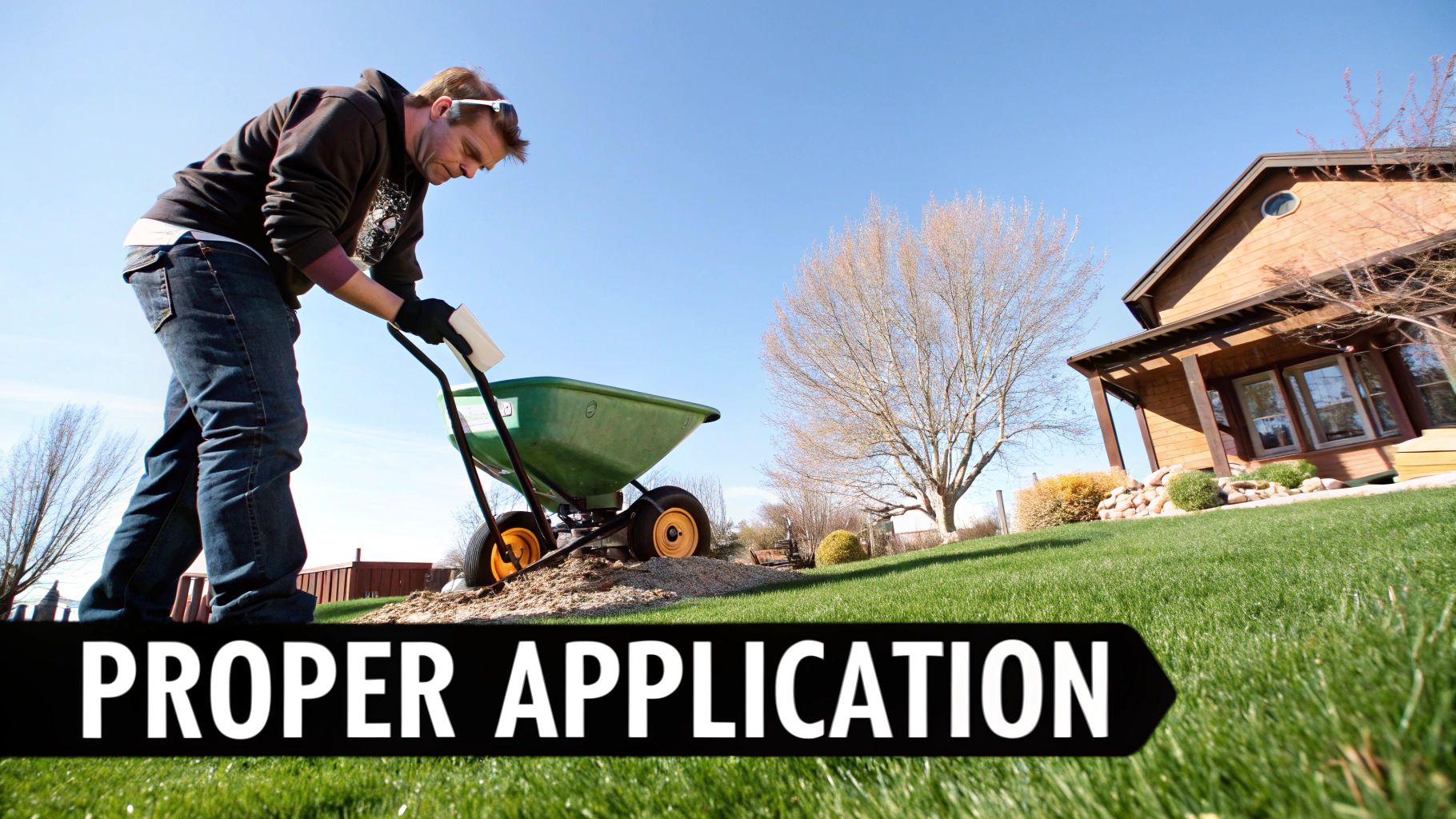
Early to Mid Spring Wake Up Call
As the chill finally leaves the air in late March and April, your lawn is slowly stirring from its winter nap. This is a delicate time, especially for Bermuda and Zoysia. Your goal is to give it a gentle nudge, not a powerful jolt.
Hold off on the fertilizer until your warm-season grass is about 75% green. Hitting it with heavy nitrogen too early can be a mistake. It forces blade growth before the roots are ready, leaving the new shoots vulnerable to a late-season frost.
- Your Main Goal: Gently feed the awakening turf and get ahead of early weeds.
- What to Apply: A light application of a low-nitrogen organic fertilizer, like alfalfa meal, is perfect. A thin top dressing of quality compost works wonders, too.
- Pro Tip: If you want to stop crabgrass before it starts, this is your window. Get your corn gluten meal down before the soil temperature consistently hits 55°F.
Summer Vigor and Stress Management
Once May and June roll in, our warm-season grasses are hitting their peak growing season. Now is the time to feed them for that deep-green, robust growth. Your lawn is working hard, and it needs consistent fuel to build the kind of dense turf that naturally chokes out weeds and stands up to foot traffic.
For the Fescue lawns in areas like Alpharetta, however, summer is all about survival. The focus shifts from aggressive growth to simply helping it endure the heat and inevitable dry spells.
You’re not alone in wanting a safer, more sustainable lawn. The global market for organic turfgrass fertilizers was valued at $192.27 million in 2025 and is expected to climb to $299.58 million by 2032. You can dive deeper into this trend by exploring the full market analysis of organic fertilizers.
Fall Preparation for Winter Dormancy
When the brutal summer heat finally starts to break in September and October, your lawn care strategy needs to shift again. We're moving from promoting growth to preparing for the cold months ahead. Honestly, this is probably the most important fertilization window of the entire year.
Your Bermuda and Zoysia are slowing their top growth, but the roots are still active beneath the surface, busy storing energy for next spring’s green-up. Feeding them the right stuff now pays huge dividends later.
- Your Main Goal: Strengthen the root system and toughen up the grass for winter.
- What to Apply: Look for a natural fertilizer that's lower in nitrogen but higher in potassium (K). This nutrient is crucial for disease resistance and cold hardiness.
- Fescue Focus: For Fescue, fall is go-time. This is the prime season to aerate, overseed, and apply a quality starter fertilizer to push strong, healthy growth before winter sets in.
Winter Soil Conditioning and Rest
From late November through February, your Bermuda and Zoysia lawns in Johns Creek are dormant. This is not the time to apply a natural fertilizer for grass. Any nutrients you put down will likely just sit on the surface, go unused, and wash away.
But winter is the perfect time to work on your lawn's foundation: the soil itself. This is your best opportunity to address the core issues with our Georgia red clay without messing with the grass's growth cycle. If a fall soil test showed your pH was low, now is an excellent time to apply lime. You can also spread a light top dressing of compost, letting the winter rains and freeze-thaw cycles work it into the soil for you.
Think of it as a long, slow spa treatment for your soil, getting it ready for a spectacular performance next spring.
Getting Your Hands Dirty: Practical DIY Fertilizer Recipes
Alright, let's roll up our sleeves. This is where we move from theory to a satisfying weekend project. Mixing your own natural fertilizer is a lot easier than you might think, and honestly, it’s the absolute best way to give your lawn in Cumming or Alpharetta exactly what it’s hungry for.
You don't need a lab coat or fancy equipment. A trusty wheelbarrow, a shovel, and a basic broadcast spreader are all it takes. Think of it less like a science experiment and more like cooking a fantastic meal for your soil. I’ve refined these recipes over the years to deal with the specific challenges we see right here in our North Georgia lawns.
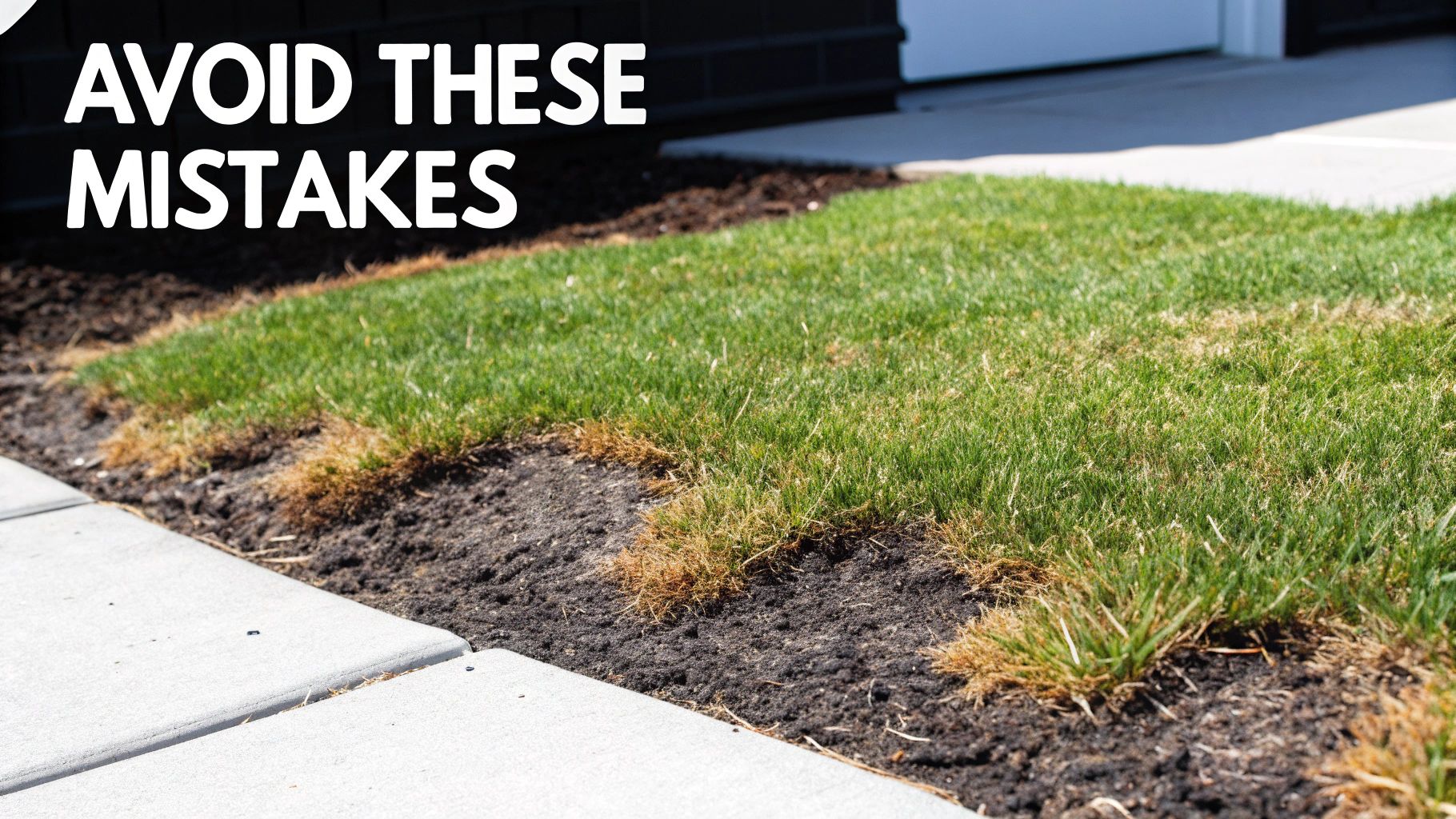
Recipe 1: The Spring Green-Up Blend
This is the mix I use in early to mid-spring, right when the Bermuda or Zoysia is about 75% greened up. It's designed to deliver a gentle, slow-release nitrogen kick that encourages lush top growth without shocking the roots, which are still waking up.
- Ingredients (for 1,000 sq. ft.):
- 2 good shovelfuls of high-quality, finished compost
- 1 shovelful of alfalfa meal
- 1/2 shovelful of Milorganite
Just toss everything into your wheelbarrow and mix it until the color is consistent. Load up your spreader and walk the lawn. The alfalfa meal gives a quick but gentle nitrogen bump, while the compost and Milorganite provide a steady diet for the weeks to come.
Recipe 2: The Clay-Busting Mix
If you're in Johns Creek or Milton, you know the struggle with our dense red clay. This recipe is your secret weapon. It’s loaded with organic matter and best applied in the fall or winter to work on improving soil structure while your lawn is dormant.
- Ingredients (for 1,000 sq. ft.):
- 4 generous shovelfuls of rich compost
- 1 shovelful of coarse sand (make sure it's not fine play sand)
- 1 shovelful of worm castings
Here, the focus is less on immediate feeding and more on long-term soil therapy. That heavy dose of compost brings in beneficial microbes, the sand physically breaks up the clay, and the worm castings supercharge all that microbial activity. For best results, spread this as a top dressing right after you've aerated.
This hands-on approach isn't just a local trend; it's part of a massive global shift. The organic fertilizer market, valued at $12.0 billion in 2024, is expected to explode to $38.6 billion by 2034. It's all driven by people wanting safer, healthier outdoor spaces. You can see more on this trend by checking out the full market report.
Recipe 3: All-Season Soil Conditioner
Think of this as your go-to maintenance blend for the heat of summer and the transition into early fall. It provides balanced, slow-and-steady nutrition to keep your lawn resilient when the stress is high.
- Ingredients (for 1,000 sq. ft.):
- 3 shovelfuls of compost
- 1 shovelful of Milorganite
- 1/2 shovelful of kelp meal
What makes this combo so effective is how the ingredients work together. You get a steady supply of nitrogen and iron from the Milorganite, a wide range of nutrients from the compost, and over 60 trace minerals and natural growth hormones from the kelp meal. It’s the perfect recipe for strengthening your turf against heat and drought, keeping that Dahlonega lawn looking good all season long.
Got Questions About Natural Lawn Care in Georgia? We've Got Answers.
Making the leap to a natural lawn care program is a smart move, but it's natural to have questions. It's a whole different mindset, shifting away from quick-fix chemicals and focusing instead on building a healthy foundation from the soil up.
We talk to homeowners from Cumming to Alpharetta every day, and a few key questions always pop up. Let's tackle them head-on so you can feel confident in your decision.
How Long Until I See Results on My Georgia Clay?
This is the big one, and the honest answer is: it takes a little patience. Our dense clay soil needs time to transform. Unlike synthetic fertilizers that give you an almost instant, artificial green-up, natural methods work by healing and enriching the soil first.
You'll see subtle improvements in the first season—things like the ground absorbing water better instead of it running off. But the real payoff, the deep green color and improved drought resistance you're looking for, usually shows up in year two or three. You're playing the long game here.
Think of it this way: synthetics are like a payday loan for your lawn—a quick fix with a high cost later. A natural approach is a long-term investment that pays you back for years to come.
Can I Really Use Natural Fertilizer on My Bermuda or Zoysia Lawn?
You bet! In fact, our local warm-season grasses like Bermuda and Zoysia absolutely thrive on it. These grasses are naturally aggressive spreaders, and they respond beautifully to the slow, steady nutrition that organic fertilizers provide.
By feeding your lawn consistently throughout its long growing season, you avoid the sudden, weak growth spurts that synthetic nitrogen bombs can cause. This means less thatch buildup and a stronger, more resilient turf. Just time your main applications after the lawn fully greens up in the spring and keep it going through the hot summer months.
Do Natural Fertilizers Actually Help with Weeds?
They do, but it's more about strategy than brute force. The number one way natural lawn care fights weeds is by creating a lawn that's so thick and healthy, there's simply no room for weeds to get started. A dense turf is your best defense, hands down.
But some ingredients pull double duty:
- Corn Gluten Meal: This is a fantastic natural pre-emergent. Applied in early spring, it can stop seeds like crabgrass from ever sprouting.
- Healthy Soil: When your soil is alive and full of organic matter, your grass grows deep, strong roots. This allows it to easily outcompete the shallow-rooted weeds that love our compacted clay.
It's a one-two punch: you choke weeds out with thick turf while actively preventing new ones from germinating.
Are These Products Safe for My Kids and Pets?
For most families, this is the most important question of all. And the answer is a resounding yes. The core ingredients of a natural program—things like compost, worm castings, and alfalfa meal—are completely safe. Your kids and pets can be back on the lawn right after an application, no waiting period needed.
Of course, it's always smart to read the bag of any product you buy. Some commercial organic blends, like Milorganite, might suggest watering the product in before letting pets roam, just to be safe. But the peace of mind you get from knowing your yard is free from harsh chemicals is priceless. If you're looking to improve your whole yard, you can find a lot of great general gardening tips to get you started.
At Barefoot Organics, this is what we do. We help families all over North Georgia build beautiful, resilient lawns that are safe for everyone to enjoy. If you're ready to see the difference a soil-first approach can make, let's talk. Get your free quote today by visiting us at https://barefootorganicsllc.com.