

If you're a homeowner in Cumming, Alpharetta, or Johns Creek, you know the frustration. You look out at your yard, and there it is again: that stubborn, sprawling crabgrass. It’s a battle we fight every year in North Georgia. The good news? You can win the war without resorting to harsh chemicals. A smart plan centered around a natural crabgrass killer is the key to safely getting your lawn back.
Your Local Guide to a Crabgrass-Free Lawn

From Milton all the way up to Dahlonega, that annual fight with crabgrass can feel like a losing proposition. This opportunistic weed absolutely loves our hot, humid summers, and it thrives in the dense red clay soil we have here in North Georgia. But you don't have to douse your yard in synthetic chemicals that could be harmful to your kids, pets, and the local ecosystem.
Think of this guide as your local blueprint for a healthier, more beautiful yard. We're going to focus entirely on organic strategies that are specifically tailored for our climate here in the Cumming area. It’s not about quick fixes that don't last; it’s about building a truly resilient lawn from the soil up.
What This Guide Covers
Our strategy is simple but powerful. First, we’ll get into how to handle any crabgrass you can already see, using methods that are both safe and effective. But even more important is the long game: creating a thick, vibrant turf that naturally chokes out weeds before they can even get started. A dense, healthy lawn is always your best defense.
The secret to long-term success isn't just killing the weeds you see. It's about creating an environment where your grass flourishes and crabgrass simply can't find room to grow.
By the time you're done reading, you'll have a clear, actionable plan to:
- Correctly identify crabgrass when it pops up in your lawn.
- Understand its life cycle so you can time your attack perfectly.
- Prevent new crabgrass seeds from ever sprouting in the first place.
- Safely get rid of visible weeds without damaging your desirable grass.
To really get the upper hand on crabgrass, you have to get inside its head. Here in our humid Georgia climate, from Cumming all the way up to Dahlonega, this pesky weed isn’t a year-round menace. It’s a warm-season annual that follows a pretty predictable schedule.
Knowing that schedule is the secret weapon. It’s how you time your natural prevention strategy to hit it where it hurts, before it ever becomes a problem.
Crabgrass lives by a simple calendar: it sprouts in the spring, grows like crazy all summer, drops a ton of seeds in late summer, and then dies off with the first hard frost. Those seeds—and there are thousands of them—just hang out in your Johns Creek or Alpharetta lawn all winter, waiting for the soil to warm up so they can start the whole cycle over again.
Honestly, the entire war against crabgrass is won or lost in the spring.
The Spring Germination Window
The make-or-break moment in the crabgrass lifecycle is germination. This is the exact point when last year’s seeds wake up from their winter nap and start to sprout.
For this to happen, the soil temperature needs to consistently hit 55°F to 60°F for a few days in a row.
Around North Georgia, this usually happens sometime between late February and mid-March. A great natural sign to watch for is the forsythia bushes in your Cumming neighborhood. When you see those brilliant yellow blooms pop, that’s nature’s alarm clock telling you the soil is warm enough for crabgrass to get going.
It all boils down to this: preventing those seeds from ever sprouting is a thousand times easier than trying to kill tough, established plants in the middle of a scorching Milton summer.
Summer Growth and the Seed Explosion
Once a crabgrass seedling breaks through the soil, it has one mission: grow as fast as possible. It spreads out low and wide, forming those ugly, sprawling patches that can easily smother your beautiful Bermuda or Zoysia turf.
By mid-summer, a single crabgrass plant can churn out an incredible 150,000 seeds.
This massive seed drop is its survival plan for next year. It’s exactly why yanking weeds out in July feels like you’re fighting a losing battle—the damage for next year is already being done right under your nose. When you understand this cycle, you can switch from being reactive (killing a few plants) to being proactive (stopping the seeds). That’s the cornerstone of any successful natural control program.
Stop Crabgrass Before It Starts With Natural Pre-Emergents
The smartest way to win the battle against crabgrass is to prevent it from ever starting. A proactive approach, using a natural pre-emergent herbicide, is the secret weapon for stopping those stubborn seeds from ever seeing the light of day. This is truly the foundation of any successful organic lawn care plan here in North Georgia.
For those of us in Cumming and Alpharetta, the champion of organic pre-emergents is Corn Gluten Meal. It's a simple byproduct of corn processing that works wonders by preventing tiny new seeds from forming roots. Think of it as an invisible, natural shield over your soil that stops crabgrass in its tracks.
This infographic breaks down the lifecycle of crabgrass, from its first sprout in spring to when it drops new seeds in late summer.
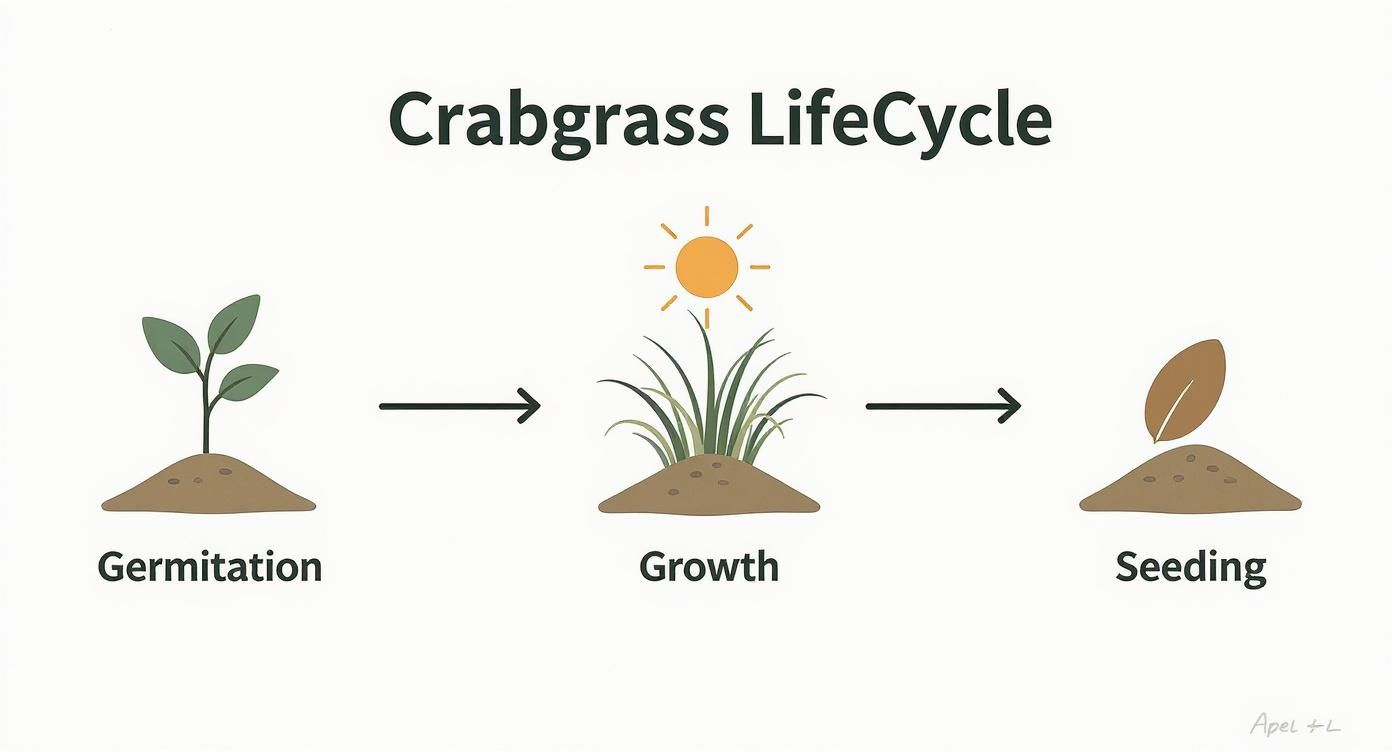
As you can see, hitting that early germination window is where you'll get the most bang for your buck, well before the plant has a chance to establish itself.
The Right Timing for North Georgia Lawns
With natural pre-emergents, timing is absolutely everything. If you apply Corn Gluten Meal too early, it can lose its effectiveness before the seeds sprout. Too late, and you've missed the window entirely.
For lawns in Milton, Johns Creek, and throughout Forsyth County, your sweet spot is typically late February to early March. You're aiming to get it down just before the soil temperature consistently stays at that magic 55°F mark—and as we've said, the blooming forsythia bushes are your best natural signal that it's go-time.
A common question we get is, "What's the ideal timing for my specific area?" To help, we've put together a simple guide based on the typical weather patterns here in the Cumming area.
Natural Pre-Emergent Timing Guide for North Georgia
| Month | Key Indicator | Action Required |
|---|---|---|
| Late February | Soil temps approaching 55°F, Forsythia buds swelling. | Get ready. Purchase Corn Gluten Meal and check your spreader. |
| Early March | Forsythia bushes are in full bloom. | Apply now! Spread Corn Gluten Meal evenly across the lawn. |
| Mid-March | Forsythia blooms begin to fade. | Your window is closing. Apply immediately if you haven't yet. |
| April | Consistent warm weather has arrived. | The primary germination window has passed. Shift to post-emergent strategies. |
This timeline helps visualize the narrow but critical window for a successful application. Being prepared is half the battle.
How To Apply Corn Gluten Meal
Once you've nailed the timing, the actual application is pretty straightforward. Here’s how to do it right:
- Measure your lawn: First, figure out the square footage of your turf to know how much product you need.
- Calculate the amount: The standard application rate is 20 pounds of Corn Gluten Meal per 1,000 square feet. Don't skimp—you need enough to create a consistent barrier.
- Spread it evenly: Use a broadcast spreader to ensure you get even, wall-to-wall coverage. A patchy application can leave openings for crabgrass to sneak through.
- Water it in: Lightly water the lawn right after you apply it. This moisture is what "activates" the corn gluten, allowing it to get to work.
One crucial tip: hold off on overseeding your lawn at the same time. This natural pre-emergent is non-selective, meaning it will prevent new grass seed from germinating just as effectively as it stops crabgrass.
To round out your strategy, you can explore more of our natural weed control methods.
Choosing natural options like this is part of a significant shift in lawn care. In fact, the global market for bioherbicides is on track to hit USD 7.87 billion by 2030. This reflects a huge demand from homeowners and regulators for safer, more sustainable solutions.
What To Do When Crabgrass Still Shows Up
Even with the best game plan, a few stubborn crabgrass plants might still muscle their way into your Alpharetta or Johns Creek lawn. It happens. Once you spot those ugly, sprawling weeds, it’s time to switch from defense to offense. The goal here is to get them out before they have a chance to drop their seeds.
Believe it or not, the most effective natural weapon is often your own two hands. Hand-pulling is fantastic for young crabgrass or when you only have a few scattered plants to deal with.
My pro tip? Wait until after it rains or give the area a quick watering first. The damp soil lets go of the roots much more easily, so you can yank the whole plant out at once and it won't grow back.
Tackling Weeds in Tricky Spots
For those annoying weeds that pop up in sidewalk cracks or in random spots on the lawn, you need to be a bit more surgical. The methods below are non-selective, which is just a fancy way of saying they’ll kill any plant they touch, so careful aim is everything.
- Horticultural Vinegar: This isn't your kitchen vinegar. It's a much stronger solution that you can spray directly on the crabgrass. On a hot, sunny day in Cumming, the acetic acid dries out the leaves fast. Just be super careful not to get any on your good Bermuda or Zoysia grass.
- Boiling Water: It doesn't get much simpler than this. Pouring boiling water right on a crabgrass plant will kill it, roots and all. This is my go-to for weeds in driveway cracks or between patio stones where there’s no risk to the surrounding lawn.
When you're dealing with crabgrass that's already grown, you're not just pulling a weed. You're stopping that single plant from dropping its payload of up to 150,000 seeds. Every plant you remove is a huge victory for preventing a bigger problem next season.
It's no surprise that more and more homeowners are looking for safer, natural options. While the overall market for herbicides is huge—expected to hit nearly USD 46.6 billion by 2033—the demand for bioherbicides is really taking off as people move away from harsh chemicals.
These spot treatments are just one piece of the puzzle. To see how they fit into a complete, year-round strategy, take a look at our guide on choosing a pet-friendly crabgrass killer. Combining smart removal with practices that boost your lawn's health is the surest way to manage the weeds you have now and build a stronger defense for the future.
Build a Crabgrass-Proof Lawn from the Ground Up

Here's the secret: the most effective natural crabgrass killer isn't something you buy in a bag or bottle. It's the lawn itself. A thick, vibrant, and healthy lawn is the ultimate defense, because crabgrass is a classic opportunist. It looks for weak spots—thin patches, stressed-out turf, or bare soil—and moves right in.
If you focus on building a truly robust lawn, you’re creating an environment where crabgrass simply can't get a foothold.
For homeowners here in Cumming or Alpharetta, the journey starts with how you mow. One of the most common mistakes I see is people cutting their grass way too short. This scalping exposes the soil to sunlight, which is like rolling out the welcome mat for crabgrass seeds to sprout.
A simple adjustment can make a world of difference. Try raising your mower deck. For the warm-season grasses we have in North Georgia, like Bermuda and Zoysia, aim for a mowing height of 2 to 3 inches. This taller cut allows the grass blades to form a dense canopy that shades the soil, keeping it cool and dark—exactly what crabgrass seeds hate.
Feed Your Lawn the Right Way
A well-fed lawn is a strong lawn, but it takes more than just fertilizer. Getting your watering and aeration right is just as critical as mowing tall. These practices build resilience from the soil up, turning your turf into an inhospitable place for weeds.
-
Water Deeply, Not Daily: It’s tempting to give your lawn a quick sprinkle every day, but this actually encourages shallow, weak roots. Crabgrass loves this. Instead, give your lawn a good, deep soaking once or twice a week. This forces your grass to grow deep, tough roots that can easily outcompete weeds for water and nutrients.
-
Aerate Annually: Let's face it, our Georgia red clay can get packed down like concrete. This compaction suffocates grass roots. Core aeration—the process of pulling small plugs of soil from the lawn—is the perfect remedy. It breaks up that compaction, allowing vital air, water, and nutrients to reach the root zone and fuel vigorous growth.
A healthy lawn isn’t just about the green grass you see on top. It’s all about the living soil underneath. When the soil is healthy, it provides everything your turf needs to dominate and choke out weeds on its own.
Building this strong foundation is a total game-changer. To really get into the nuts and bolts of creating this ideal environment, take a look at our guide on how to improve soil for sustainable, long-term lawn health. This focus on fundamentals is what truly creates a crabgrass-proof yard.
Common Questions About Natural Weed Control
When you're making the switch to a natural approach for your lawn, it’s only natural to have a few questions. From Alpharetta to Milton, we hear a lot of the same concerns from homeowners, so let's clear up some of the most common ones. Getting these details right is the key to a healthy, crabgrass-free yard.
When Is the Best Time to Apply a Natural Pre-Emergent?
Timing is everything with pre-emergents, and it's probably the most frequent question we get. You have to get ahead of the crabgrass before it even starts.
For lawns in areas like Cumming and Johns Creek, your target window is typically late February through mid-March. The real key isn't the calendar, though—it's the soil temperature. You're waiting for it to consistently hit and hold 55°F.
A great, time-tested natural indicator? Keep an eye on the forsythia bushes. When they burst into those vibrant yellow blooms, it's go-time. If you apply the pre-emergent too early, it might break down and lose its punch before the crabgrass seeds even think about sprouting. Wait too long, and you've missed your chance because germination is already underway.
Is Horticultural Vinegar Safe for My Bermuda or Zoysia Grass?
This is a critical point to understand: horticultural vinegar is non-selective.
In plain terms, that means it will damage or kill any plant it touches, including your prized Bermuda or Zoysia turf.
Think of it as a precision tool, not a broadcast spray. It’s perfect for spot-treating a rogue crabgrass plant or clearing out weeds from cracks in your driveway or sidewalk. Just be incredibly careful to avoid any overspray onto the grass you want to keep. It's most effective on young, tender weeds.
Is My Lawn Too Far Gone This Year?
It's a frustrating sight—a lawn that seems to be more crabgrass than turf. But it's never too late to start turning things around.
While a pre-emergent won't do anything for the crabgrass that’s already there, you can take immediate action. Start hand-pulling what you can and carefully spot-treating the rest. The goal is to stop those existing plants from going to seed and dropping thousands of new problems for next year.
Even more importantly, you can start building a stronger lawn right now. Focus on good cultural practices like mowing high and watering deeply but infrequently. These simple habits encourage your turf to develop deep roots and a thick canopy, which is the best long-term defense against any weed invasion. You're setting the stage for a much more successful spring next year.
Ready to build a resilient, beautiful lawn without harsh chemicals? Barefoot Organics provides expert, natural lawn care solutions designed specifically for our North Georgia climate. Get your free online quote and start your journey to a healthier, crabgrass-free yard today at https://barefootorganicsllc.com.