

Most fall lawn advice starts with a rake. For North Georgia lawns, that’s often the wrong starting point.
If you’ve got bermuda or zoysia in Cumming, Alpharetta, Johns Creek, Suwanee, or Duluth, leaves aren’t automatically waste. Managed correctly, they’re raw material. They can feed the lawn, cover thin spots, and help you avoid hauling away nutrients your grass could use.
The catch is simple. Generic national advice usually assumes cool-season turf and lighter soils. North Georgia gives you warm-season grass, humidity, clay, and often a heavy mix of oak and maple drop. Mulching leaves into grass works here, but only if you do it with some discipline.
Why Mulching Leaves is Your Lawn's Best Kept Secret
Bagging every leaf off a North Georgia lawn is often the less efficient option, especially on bermuda and zoysia growing over red clay. In many yards, the better move is to shred those leaves finely and return them to the turf before they turn into a matted layer.
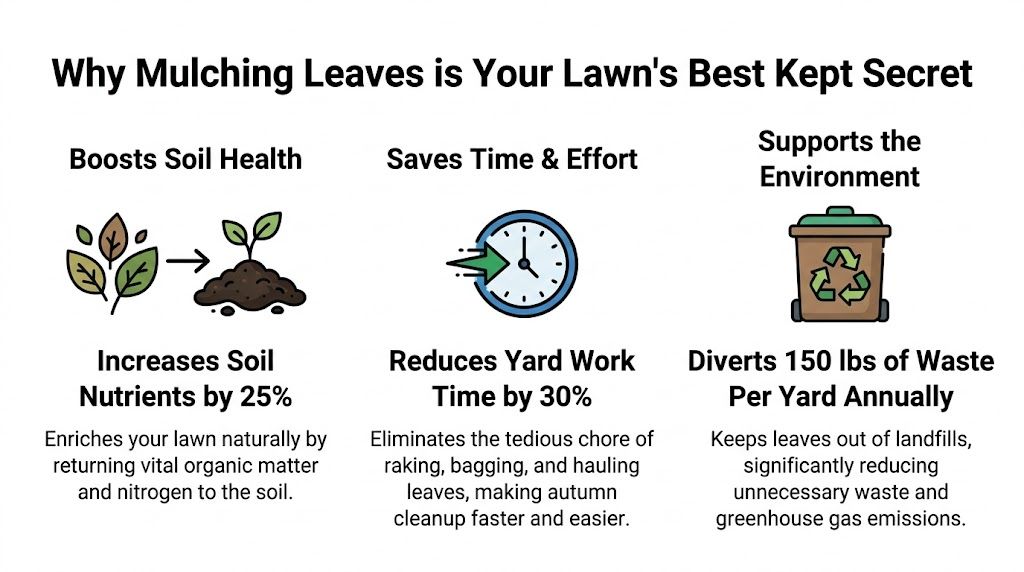
Leaves feed the soil instead of filling bags
Mulched leaves add organic material right where warm-season lawns need it. That matters here because clay soil tends to seal up, hold water too long after rain, and bake hard in dry weather. Fine leaf particles will not fix clay overnight, but they do support better soil structure over time and give soil microbes something to work on.
That is one reason I prefer mulching light to moderate leaf drop on established lawns instead of hauling everything away. You keep more of the natural nutrient cycle in the yard and cut down on the volume of waste at the same time.
For homeowners already focused on building better soil, adding compost works well alongside leaf mulching. This guide to compost for lawns covers how to improve turf without relying only on bagged fertilizer.
It can help the lawn crowd out weeds
Leaf dust and small shredded pieces settle into the canopy and cover exposed soil between grass blades. On a thick bermuda or zoysia lawn, that extra cover helps reduce the open spots where winter weeds and spring germinators get started.
Michigan State University notes that regular mulch mowing can reduce common lawn weeds over time, including dandelions and crabgrass, and their summary also explains how leaves left on pavement can contribute to phosphorus runoff into waterways. That is detailed in the MSU leaf mulching summary.
Practical rule: If the mower turns leaves into confetti and grass is still visible, you’re feeding the lawn. If leaves sit on top in a blanket, you’re setting up trouble.
North Georgia lawns need timing, not perfection
Our leaf drop usually comes in rounds, not all at once. Oaks hang on. Maples dump fast. One corner of the yard may be manageable while another is buried after a windy weekend. That pattern favors mulching, because small amounts handled regularly break down well in warm-season turf.
The trade-off is real. Bermuda and zoysia do not tolerate a heavy, wet leaf cover sitting too long on top, especially once growth slows in fall. On clay, trapped moisture can linger, and shaded areas can stay slick and compacted longer than people expect.
Good results come from staying ahead of the drop. A few timely passes with the mower usually do more for the lawn than one big cleanup day followed by stacks of bags at the curb.
The Right Way to Mulch Leaves Into Your Grass
The process matters more than the idea. Most failures with mulching leaves into grass come from trying to chop too much at once, mowing wet leaves, or leaving pieces too large.
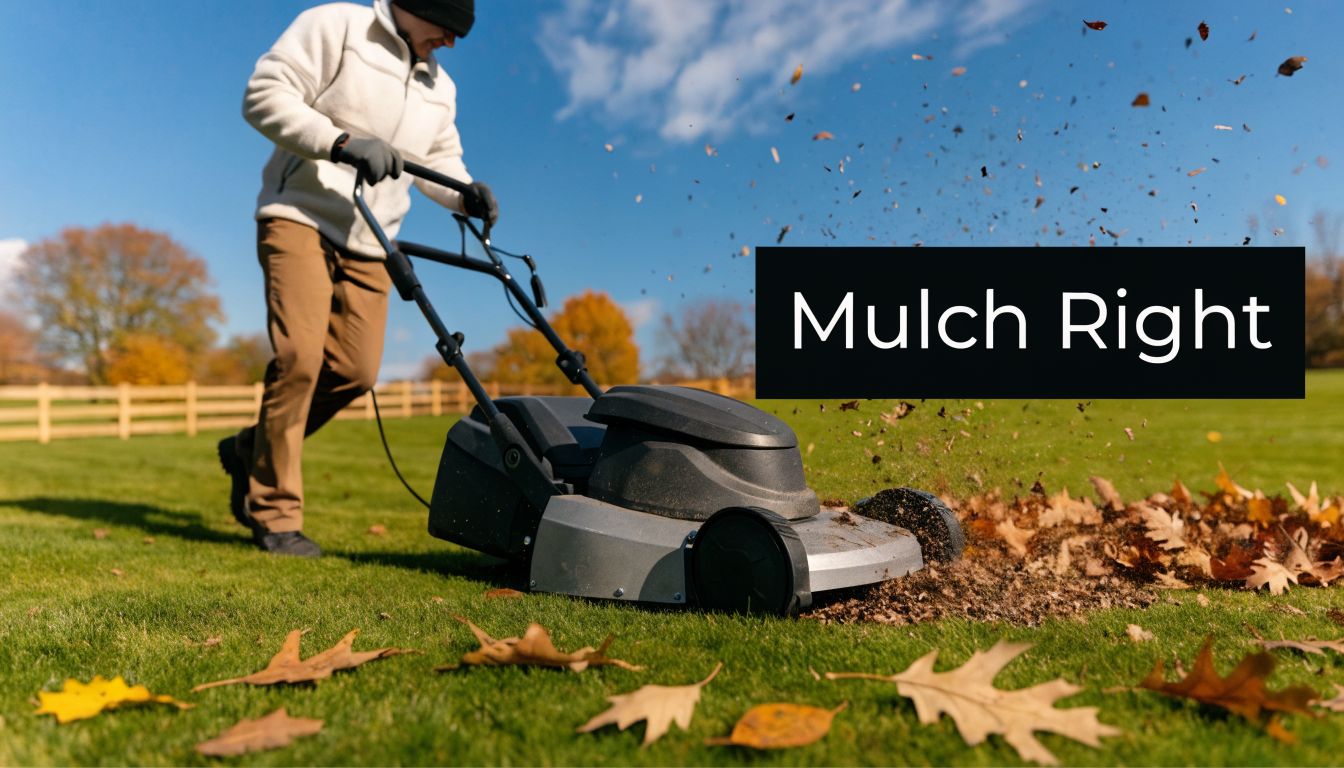
Start with mower setup
Take the bagger off. Mulching only works if the material stays under the deck long enough to be cut repeatedly.
For most Georgia lawns, set the mower at the high end of the deck range, typically 3 to 4 inches, so you don’t scalp warm-season turf while still giving the blade room to shred leaves. Dry leaves are the target. Wet leaves smear, clump, and stick inside the deck.
Before you begin, check three things:
- Blade condition: A sharp rotary blade shreds instead of tears.
- Deck cleanliness: Built-up debris cuts airflow and lowers mulching performance.
- Leaf depth: Light to moderate coverage is easy. Thick piles need staged passes.
Use a pattern that actually reduces volume
Don’t wander randomly across the lawn. Mow in a circular pattern from the outside toward the center so the mower creates a central windrow.
According to the Colorado State mulching guidance, this pattern can reduce leaf volume by 70-90%, and 2 to 4 passes over the windrows can shred leaves to dime-sized pieces. The same guidance says a nitrogen application of 2-4 lbs per 1,000 sq ft after mulching can speed microbial breakdown.
That’s the visual target. Not “gone.” Finely chopped.
A useful companion read is this breakdown of side discharge vs mulching, especially if you’re deciding how to run your current mower.
If you can still see grass through the leaf fragments, you’re in good shape. If the lawn looks sealed over, make another pass or remove some material.
Finish with an inspection, not a guess
Walk the lawn after mowing. Don’t just look from the driveway.
You want:
- Small fragments scattered evenly across the turf.
- Grass still visible through the mulch layer.
- No wet clumps stuck in low spots or at turns.
- No thick windrows left behind along fence lines or beds.
If the layer still looks heavy, change direction and mow again. Cross-mowing often fixes what a single direction leaves behind.
What works well
- Light weekly passes: Best during steady fall drop.
- Dry afternoon mowing: Usually gives the cleanest cut.
- Multiple passes on oak-heavy lawns: Oak leaves often need more work than softer leaves.
- Follow-up nitrogen when needed: Helps decomposition move instead of stall.
What usually fails
- Waiting too long: Huge piles force the mower to act like a chipper.
- Mulching after rain: Leaves mat and clog.
- Stopping after one pass: Large pieces stay on top and smother turf.
- Ignoring corners and edges: Those spots collect thick deposits fast.
For bermuda and zoysia, this process should feel controlled, not rushed. You’re not trying to clear every leaf in one shot. You’re trying to convert leaf fall into a fine surface layer the lawn can absorb over time.
Choosing Your Leaf Mulching Equipment
You probably don’t need fancy equipment to start. You do need the right tool for your yard’s leaf volume.
A small lawn in Johns Creek with a couple of deciduous trees has different needs than a shaded lot in Milton or Roswell with a long season of oak drop. The best setup depends on how much material hits the turf and how often you’re willing to mow.
Standard rotary mower
For many homeowners, a regular rotary mower is enough.
It works best when leaf fall is moderate and you stay on schedule. If you mow often and the leaves are dry, a standard mower can handle routine mulching just fine. This is the most practical option for average suburban lots in Cumming, Suwanee, and Duluth.
The downside is efficiency. If the yard gets buried, you’ll spend more time making repeat passes.
Mulching kit or dedicated mulching mower
This is the upgrade that makes sense when leaf season feels like a weekly battle.
A mulching blade and matching baffle setup usually keeps material under the deck longer, which improves shredding. For medium-size lawns with recurring heavy drop, this setup makes the process cleaner and more consistent.
It’s a good middle ground if you want better results without adding another machine to the garage.
Standalone leaf mulcher or shredder
This isn’t the default choice for most lawns. It’s more useful when you have more leaves than turf can reasonably absorb at one time.
In heavily wooded properties, a standalone shredder helps process overflow for beds, garden areas, or compost piles. It doesn’t replace the mower for routine lawn mulching. It solves the excess problem.
| Yard situation | Best equipment choice | Why it fits |
|---|---|---|
| Small lawn with light leaf drop | Standard rotary mower | Simple, affordable, enough capacity |
| Medium lawn with steady fall leaf volume | Mulching kit or dedicated mulching mower | Better shredding, less rework |
| Large or wooded property with overflow | Rotary mower plus standalone mulcher | Lets you mulch the lawn and process extra leaves separately |
Buy equipment for your leaf volume, not for marketing claims. A good mower used at the right time beats an expensive machine used after leaves have already matted down.
Mulching Solutions for North Georgia Lawns
North Georgia lawns need a different conversation than the one you get from national lawn articles.
Bermuda and zoysia behave differently from fescue and Kentucky bluegrass. Clay soil drains differently than loam. Our fall weather can swing from dry to muggy fast, and that changes how fast leaf material breaks down.

Warm-season turf needs tighter control
University of Georgia-related findings summarized in this regional discussion note that warm-season grasses like bermudagrass can accumulate thatch faster with organic mulches, and mulched plots saw a 25% higher incidence of large patch fungus, while integrating aeration and a properly timed nitrogen application mitigated this risk by 40% by speeding decomposition, as described in this piece on mulching leaves and lawn care timing.
That doesn’t mean don’t mulch. It means don’t treat bermuda and zoysia like they can tolerate careless layering.
If leaf depth builds past what the mower can reduce into a light visible layer, remove part of it. If the lawn already has a thatch problem, solve that first instead of burying it under more organic material.
Clay soil changes the risk profile
North Georgia clay holds water, compacts easily, and often drains unevenly. That creates two common problems with leaf mulching:
- Low spots stay wet longer, so leaf fragments can mat there first.
- Compacted soil slows airflow, which makes breakdown slower and fungal pressure worse.
That’s why aeration matters so much here. Opening the soil changes the entire equation by improving movement of air, water, and microbial activity through the root zone. If you’re working with hard red clay, this guide on how to improve clay soil for grass is worth reading.
Timing matters more than people think
For North Georgia, the safest rhythm is steady mulching through the season instead of waiting for the yard to fill up. Mid-fall is usually the sweet spot to stay ahead of heavy accumulation and rain-driven matting.
Use a hybrid approach when needed:
- Mulch the routine drop: That keeps nutrients on site.
- Remove overflow from dense zones: Especially under clustered oaks.
- Keep leaves off shaded wet pockets: Those are the first areas to go sour.
- Watch zoysia entering dormancy: It won’t recover quickly if smothered.
A practical local standard
For lawns in Alpharetta, Johns Creek, and Forsyth County, mulching works best when the lawn already has decent air movement, minimal compaction, and no active disease pressure. If any of those conditions are missing, adjust the plan. Mulching isn’t a religion. It’s a tool.
On warm-season grass, the question isn’t “Should I mulch leaves?” The better question is “Can my lawn break this material down fast enough without staying wet under it?”
That’s the difference between a lawn that benefits and one that struggles.
When to Bag Leaves Instead of Mulching
Mulching leaves into grass is usually the better first option. It isn’t the right option every time.
There are situations where bagging or removing leaves protects the lawn better than trying to force them through the mower. In North Georgia, the biggest trouble spots are drought-slowed decomposition, diseased foliage, and layers that get too thick too fast.
Conditions that call for removal
Recent North Georgia drought-related reporting summarized in this article on why you should mulch leaves instead of sweeping them to the curb notes that drought conditions can slow leaf decomposition by 30-50%, while mulched leaves can also improve soil moisture retention by 15%. That trade-off is useful, but slower breakdown means you have to manage the layer carefully so it doesn’t mat.
That’s one reason drought years require more judgment. A benefit can turn into a problem if too much material sits too long.
Another issue people miss is drainage off the roofline. If gutters overflow, roof water can dump into the same lawn zones where leaf matter is collecting. That creates soggy strips and compacted splash areas. If that sounds familiar, this explanation of what happens if you don't clean your gutters is a useful companion read because leaf cleanup and water management are closely connected.
Mulch vs. Bag Decision Guide
| Scenario | Recommended Action | Reason |
|---|---|---|
| Leaves are dry and scattered in a light to moderate layer | Mulch | The mower can shred them finely and spread them through the canopy |
| Leaves are wet, stuck together, or already matted | Bag or remove first | Wet material clumps and sits on top of the turf |
| The lawn has diseased leaves from a problem tree | Bag | You don’t want to keep questionable material in the turf system |
| You’re dealing with pine needles, magnolia leaves, or other slow, tough material | Mostly bag, mulch lightly if mixed with easier leaves | These materials usually don’t break down as cleanly in turf |
| A dense pile has built up faster than you can reduce it | Remove part, then mulch what remains | Thick layers can smother warm-season grass |
| The lawn is drought-stressed and decomposition is moving slowly | Use a lighter mulching approach or remove excess | Slower breakdown raises the risk of a surface mat |
Use judgment, not one rule
The cleanest lawns in late fall usually come from mixed tactics. Mulch what the turf can handle. Remove what it can’t.
That approach is especially sensible for larger North Metro Atlanta lots where tree cover changes from one side of the yard to the other. The front may mulch beautifully. The back fence line under oaks may need partial removal every time.
A Smarter Fall Cleanup with Barefoot Organics
A lot of fall cleanup advice treats every leaf like a problem. On North Georgia lawns, that is usually the wrong starting point.
For Bermuda and Zoysia growing over hard clay, the better question is how much leaf material the lawn can process without staying wet on top. Shredded leaves can help feed soil life and add organic matter in a place that often needs it. Whole, soggy layers do the opposite. They seal the surface, slow airflow, and keep that clay-heavy root zone from drying out.
That trade-off matters more here than it does in generic national lawn guides.
At Barefoot Organics, we look at leaf mulching as part of the full lawn system, not a one-day cleanup job. The goal is to return usable organic matter to the turf where it makes sense, then remove the excess before it turns into a mat. Earlier research noted that mulched leaves can return meaningful nutrients to the lawn. In practice, that matters most on mature warm-season turf that does not need a heavy fall feeding.
The bigger system matters
Leaf mulching pays off when the lawn has the capacity to break that material down. In North Georgia, that usually comes back to a few basics:
- Core aeration: Opens tight clay soil so air, water, and microbial activity can move through the root zone.
- Topdressing: Helps improve surface structure in lawns that stay dense and slick after rain.
- Measured fertility: Supports turf health without pushing unnecessary growth late in the season.
- Regular observation: Catches problem spots early, especially shaded edges, fence lines, and low areas where leaves collect fast.
This is why some yards do well with mulching all season, while others need a mixed approach. A sunny Bermuda front lawn on a slope can often handle shredded leaves with no issue. A shaded Zoysia side yard with compacted clay may need lighter passes and occasional removal.
What homeowners should take away
Use the lawn in front of you, not a rule from a national checklist.
If the grass is healthy, the leaves are being chopped fine, and the surface is not staying matted or slick, mulching is usually the smarter cleanup method. If the lawn already struggles with compaction, slow drainage, or disease pressure, remove part of the leaf load and deal with the soil problem at the same time.
That is the practical approach we use. Keep the organic matter your lawn can use. Take away what your turf cannot handle.
Frequently Asked Questions About Mulching Leaves
Is mulching leaves safe for kids and pets
Yes, in normal lawn conditions it’s a common and sensible practice because you’re recycling shredded plant material already on the property. The main concern isn’t safety from the leaf fragments themselves. It’s whether the lawn is staying too wet or developing disease pressure because too much material was left in place.
How often should I mulch during peak leaf drop
As often as needed to prevent accumulation from turning into a blanket. In many North Georgia yards, that means treating leaf season like part of the mowing schedule. Smaller, regular passes work better than waiting for a major cleanup day.
What about oak leaves
Oak leaves can be mulched, but they usually need more passes than softer leaves. If the mower leaves larger pieces behind, keep going in a different direction or reduce the layer before trying again.
Can I mulch pine needles into the lawn too
Usually not as a primary strategy. Pine needles and similarly tough or waxy material don’t behave like ordinary deciduous leaves in turf. They’re better handled separately or in very small mixed amounts.
Will mulched leaves create thatch
Shredded leaves themselves aren’t the same thing as true thatch. The issue in North Georgia is that warm-season lawns can already lean toward thatch and moisture problems if they’re compacted or overlayered. The fix is proper shredding, airflow, and not letting the surface seal over.
What should the lawn look like after I’m done
You should still see the grass. The leaf particles should look small and spread out, not like a continuous cover. If the lawn looks buried, the job isn’t finished yet.
If you want a lawn care plan built for North Georgia conditions, Barefoot Organics can help you combine leaf mulching, aeration, topdressing, and natural lawn care into one practical system. Homeowners across Cumming, Johns Creek, Milton, Alpharetta, Roswell, Marietta, Forsyth County, East Cobb, Cobb County, Gwinnett County, and Cherokee County can request a free quote for a healthier lawn that’s safer for children, pets, and the environment.