

Every fall, the same thing happens in North Georgia. A yard in Alpharetta or Johns Creek looks tidy on Monday, then one cold front rolls through and suddenly the lawn disappears under a layer of oak, maple, and sweetgum leaves. Most homeowners see a cleanup job. A lawn technician sees raw material.
Leaves for mulch are one of the simplest ways to turn seasonal mess into something useful. They can protect exposed soil, feed turf and planting beds, and help a hard Georgia yard act a little less like baked brick. Done right, they also cut down on bagging, hauling, and all the noise that comes with blowing everything to the curb.
Done wrong, they create a soggy mat, smother grass, hold too much moisture against stems, and invite complaints about fungus, bugs, and a yard that looks neglected.
That difference matters here. North Georgia isn’t dry, loose, sandy ground. We deal with humidity, clay, shade, compaction, and long wet spells that punish lazy mulch habits. The advice that works in a cooler, drier region often needs adjustment in Cumming, Suwanee, Duluth, and the rest of North Fulton and Forsyth County.
Your Yard's Untapped Treasure Introduction to Leaf Mulching
A familiar yard in late fall usually looks like this. The driveway is lined with drifts of leaves. The grass underneath is patchy where damp piles sat too long. Beds around shrubs are bare in some spots and overloaded in others. The first instinct is to rake, bag, and get rid of all of it as fast as possible.
That’s understandable, but it misses what leaves can do once they’re handled correctly. The same material that makes a yard look messy can become a protective mulch layer for trees, shrubs, vegetable beds, and even parts of the lawn. Instead of treating fallen leaves as trash, it’s more useful to treat them as a seasonal soil amendment that happens to arrive on-site.
In practice, the shift is simple. Keep the good material on the property, shred it, and put it where it helps. That might mean mowing leaves into the lawn, spreading them in a ring around a tree, or using them to cover open soil in garden beds through winter.
Leaves are only a problem when they stay whole, stay wet, and stay in one place too long.
Homeowners who already enjoy working on their yard often find that leaf mulch opens up other design ideas too. If you're rethinking bed edges, slopes, or planting zones, these creative landscaping ideas to transform your yard can help you see where natural mulch fits into a bigger plan.
What changes when you stop hauling leaves away
The biggest benefit is practical. You already have the material. You don’t need to buy bags of dyed mulch just to cover bare soil while free organic matter is sitting in the yard.
There’s also a quality difference. Shredded leaves break down into something softer and darker than raw wood mulch, and they blend well into natural lawn care. Around roots and in garden beds, that breakdown supports better soil texture over time.
What North Georgia homeowners need to know first
Leaf mulching isn’t automatic. Magnolia leaves behave differently than maple leaves. A shaded Roswell backyard behaves differently than a sunny lawn in Cumming. And a heavy clay bed that drains slowly needs a lighter hand than a raised vegetable bed.
That’s why the best leaf mulch advice isn’t just “leave the leaves.” It’s “prepare them right, place them right, and keep an eye on moisture.”
Why Your Georgia Clay Soil Loves Leaf Mulch
Georgia clay has two habits that frustrate homeowners fast. It compacts easily, and once it compacts, water either sits on top or runs off before roots can use it. That’s a bad setup for lawns, shrubs, and garden beds.
Leaf mulch helps because it softens the surface and feeds the soil life that slowly improves structure underneath. It doesn’t turn red clay into fluffy loam overnight, but it does move the ground in the right direction. As shredded leaves break down, they add organic matter that helps the soil open up, hold moisture more evenly, and drain with less crusting at the top.
A lot of homeowners still think of leaves as waste. That’s changing. A 2025 National Wildlife Federation survey found that 46% of respondents repurpose collected leaves as mulch or compost, and the same release notes that yard waste, including over 10 million tons of leaves annually, makes up 12% of municipal solid waste. When landfilled, that waste decomposes anaerobically and emits methane, which the release describes as over 25 times more potent than CO2 in heat-trapping potential. The same source also notes that shredded leaves leach micronutrients such as calcium and magnesium and support microbial activity, which is exactly what worn-out clay soil needs (National Wildlife Federation leaf survey and yard waste findings).
Soil improvement starts at the surface
Most turf problems in North Georgia don’t start with the grass blade. They start below it. If the soil is tight and lifeless, the lawn never gets stable for long.
Leaf mulch helps in a few practical ways:
- It cushions the soil surface so heavy rain doesn’t hit bare clay and seal it over.
- It feeds microbes and other soil life as it decomposes, which supports gradual structure improvement.
- It reduces surface temperature swings around roots in winter and summer.
- It slows evaporation so the soil doesn’t swing as hard between soggy and bone dry.
For homeowners dealing with hardpan conditions, this works best as part of a broader soil strategy. If your lawn stays dense and compacted no matter what you throw at it, this guide on how to improve clay soil for grass is worth reading alongside your leaf mulch plan.
Why this matters more in Alpharetta than people think
Clay soil punishes shortcuts. A thin scattering of shredded leaves can help. A thick pile of whole leaves can make the problem worse by blocking airflow and holding too much moisture at the top.
That’s why the goal isn’t just adding organic matter. The goal is adding it in a form the soil can absorb over time.
Practical rule: In Georgia clay, the best mulch is the one that stays airy, breaks down steadily, and never seals the soil shut.
The result isn’t flashy in the first week. It shows up later as better root activity, easier digging, a lawn that stays more even after rain, and beds that don’t dry out as brutally in summer.
The Best and Worst Leaves for Mulching in Your Yard
Some leaves for mulch are easy to work with. Others fight you every step of the way. The trick is knowing which piles can go straight under a mower and which ones need extra sorting, lighter use, or a different destination altogether.

In most North Georgia yards, the best mulch material comes from common deciduous trees with leaves that shred easily and don’t form a slick, leathery mat. Maple is excellent. Many oak leaves work well once shredded. Birch and similar thinner leaves usually break down without much fuss. These are the leaves that disappear into beds and lawns instead of sitting there looking like a mistake.
The problem leaves are the ones that stay stiff, waxy, or slow to break down. Magnolia is the classic example. Whole magnolia leaves can stack like shingles and hold moisture in all the wrong places. Pine needles are useful in some settings, but they don’t behave like shredded broadleaf mulch. Black walnut deserves caution because many gardeners prefer not to spread it freely around sensitive planting areas.
North Georgia Leaf Mulch Guide
| Leaf Type | Decomposition Rate | Acidity/Notes | Best Use |
|---|---|---|---|
| Maple | Fast to moderate | Easy to shred, low hassle | Lawn mulching, garden beds, around shrubs |
| Oak | Moderate | Fine when shredded, can be plentiful in local yards | Tree rings, beds, lawn blending |
| Birch | Fast | Light texture, breaks down cleanly | Vegetable beds, flower beds |
| Sweetgum | Moderate | Works better shredded well because texture can clump | Mixed bed mulch, compost blend |
| Magnolia | Slow | Waxy, leathery, can mat badly | Use sparingly, mix with other leaves, avoid thick layers |
| Pine needles | Slow | Better treated as a separate mulch type | Paths, acid-tolerant planting areas |
| Black walnut | Variable | Use caution around sensitive plants | Compost separately or use selectively |
What to use freely and what to handle carefully
A mixed leaf pile from a typical Alpharetta neighborhood is usually fine after shredding. You don’t need to sort every leaf like a lab sample. If the pile is mostly ordinary deciduous leaves, it’s usually workable.
Sort when you notice obvious troublemakers:
- Magnolia-heavy piles need extra shredding and thinner application.
- Leaf piles with sticks and seed balls should be cleaned up before you spread them in beds.
- Wet, matted piles are better loosened and dried a bit before use.
- Unknown tree leaves near problem plants should be used conservatively until you see how they behave.
The easiest rule to remember
If a leaf breaks down when you squeeze it after shredding, it usually makes decent mulch. If it stays stiff, glossy, and plate-like, don’t pile it thick around roots.
That one judgment call prevents a lot of the failures people blame on leaf mulch itself.
How to Prepare Leaves for Mulch The Critical Shredding Step
If there’s one step that decides whether leaf mulching works or fails, it’s shredding. Whole leaves are the problem. Shredded leaves are the solution.
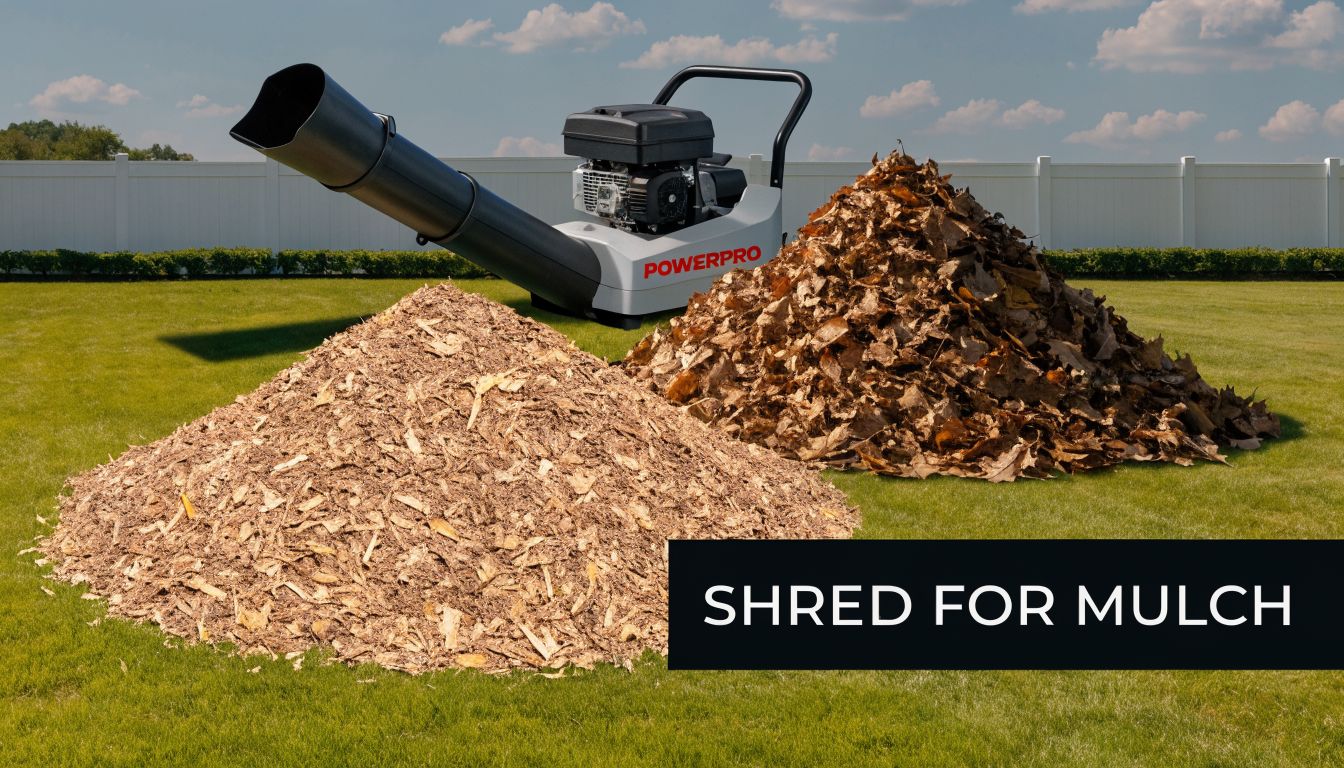
Whole leaves settle, overlap, trap moisture, and form a blanket that blocks light and airflow. On a lawn, that can smother turf. In a bed, it can seal the soil surface and stay wet too long. In North Georgia, where humidity sticks around, that’s asking for trouble.
Shredding changes the texture. It creates smaller pieces that stay looser, decompose faster, and sit more evenly around plants. According to Penn State Extension’s discussion of mulched leaves, Michigan State University research shows sustained application of mulched leaves improves grass quality and cuts broadleaf weed incidence. That same resource explains that mulching with high-deck mowers helps leaves decompose rapidly instead of smothering turf, and it also notes NG Turf’s observation that this approach can eliminate weeds like crabgrass over three years by blanketing bare spots.
Three practical ways to shred leaves
Most homeowners don’t need fancy equipment. They need the right method for the amount of leaf drop they have.
Mulching mower
This is the simplest option. Spread leaves into a manageable layer and mow over them with the deck set high enough to keep the mower from bogging down. Two passes, preferably in different directions, usually gives a much better texture than one.Bagging mower pass after mulching
Some people like to mulch first, then do a final pass with the bag attached to collect the shredded material. That works well when you want to move the leaf mulch into beds or around shrubs instead of leaving it in the lawn.Dedicated shredder
A leaf shredder makes sense if your property gets buried every season or if you manage leaves for several bed areas. It gives a more uniform product, but it’s another machine to store, feed, and maintain.
What the finished material should look like
You’re not trying to make powder. You want small, rough pieces that don’t knit back together into a sheet.
A good test is visual. If the pile still looks like recognizable whole leaves with only a few tears, keep going. If it looks fluffy and chopped, you’re close.
Shred until the leaves stop behaving like leaves and start behaving like mulch.
Common mistakes that create bad results
A lot of problems blamed on leaves for mulch come from preparation shortcuts.
- Mowing wet piles creates clumps that smear instead of shred.
- Trying to mulch too much at once overloads the mower and leaves half-processed material.
- Using low mower settings can scalp turf and still fail to chop leaves properly.
- Spreading unshredded leaves in beds almost always turns into matting after the first rain.
If you want to keep extra material and let it break down further, simple compost bin designs and plans can help you store shredded leaves without letting them blow all over the yard.
Applying Leaf Mulch for Georgia's Humid Climate
Application is where local judgment matters most. Generic mulch advice tells people to spread leaves and walk away. In North Georgia, that can backfire fast if the material goes on too thick or sits tight against stems and trunks.
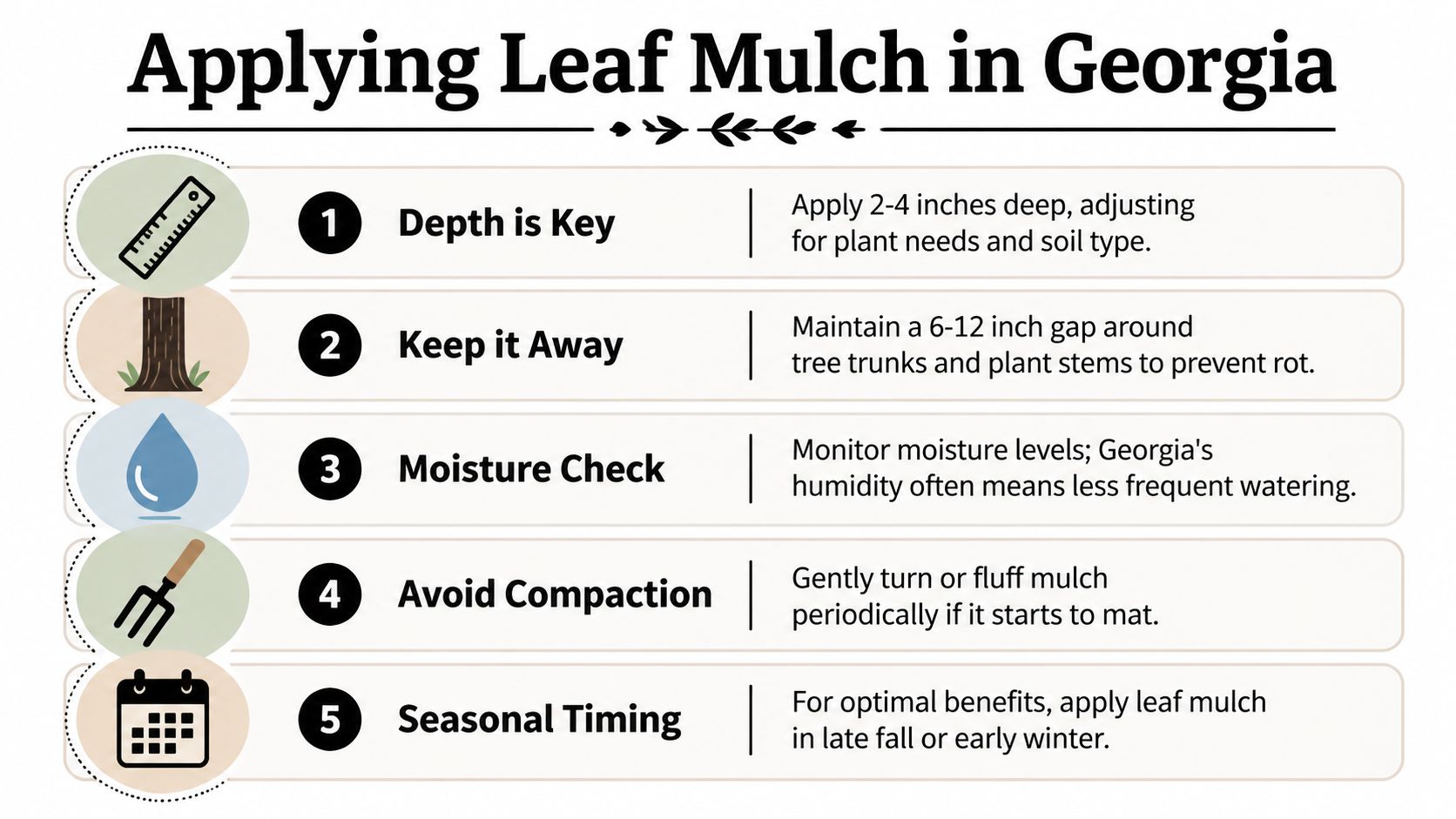
The main challenge is moisture. One source warns that waxy leaf cuticles can create a dense wet mat that traps oxygen and causes root rot, which deserves extra attention in North Georgia because of the region’s 45 to 50 inches of annual rainfall and common clay soils (Dallas Garden guidance on leaf matting and moisture risk). That doesn’t mean leaf mulch is a bad idea here. It means sloppy leaf mulch is.
How to use leaves for mulch in lawns
For lawns, keep it light. The goal is to mow leaves into the turf, not bury the grass under a blanket.
If you can still see grass blades after mulching, you’re usually in good shape. If the surface looks covered with a pasted-down layer, stop and make another pass or remove some material.
Use this approach when:
- Leaf drop is moderate and spread across the lawn
- The turf is still actively getting light
- You want organic matter worked into the surface gradually
Skip lawn mulching temporarily when the leaves are already wet and packed down. In that case, loosen them first or collect and shred them for bed use.
How to mulch beds and shrubs without causing rot
Beds are where shredded leaf mulch shines, but only when air can still move. A loose layer helps protect bare soil and moderate moisture. A packed layer over clay can stay wet for too long.
For most beds in this region, the safest approach is to spread a modest layer, then check it after rain. If it settles into a slick sheet, fluff it. If it still looks airy, leave it alone.
Keep mulch back from direct contact with:
- Tree trunks
- Shrub crowns
- Perennial stems
- Vegetable starts and low leafy crops
That gap matters more here than people realize. Constant contact between damp mulch and living stems is one of the fastest ways to create rot and stress.
Field note: Around trees and shrubs, a clean ring with breathing room beats a perfect-looking volcano every time.
Timing matters in North Georgia
Late fall through early winter is usually the easiest window. Leaves are available, plants are slowing down, and the mulch can settle in before spring growth pushes through.
Spring use can still work, but watch moisture more closely. Warm wet weather speeds decomposition and can also increase the chance of fungal issues if the layer gets dense.
A practical seasonal rhythm looks like this:
Fall collection and shredding
Handle the first heavy drops before they mat down in place.Late fall application
Use the cleanest shredded material in beds, around shrubs, and in thin lawn passes.Winter observation
Watch shaded areas and low spots after rain.Early spring adjustment
Pull back material from emerging stems and fluff any compacted patches.
Places where leaf mulch tends to fail
Some spots need restraint, not enthusiasm.
- Low wet corners already struggle with drainage.
- Deep shade near foundations stays damp longer than open beds.
- Dense evergreen plantings can trap air and hold moisture.
- Heavy magnolia leaf layers often mat sooner than homeowners expect.
In those zones, use a thinner layer, mix leaves with other organic material, or skip leaf mulch entirely until drainage improves.
Safe and Effective Leaf Mulch Maintenance
The safest leaf mulch is the kind you keep an eye on. Once it’s down, the job isn’t over. It just shifts from application to observation.
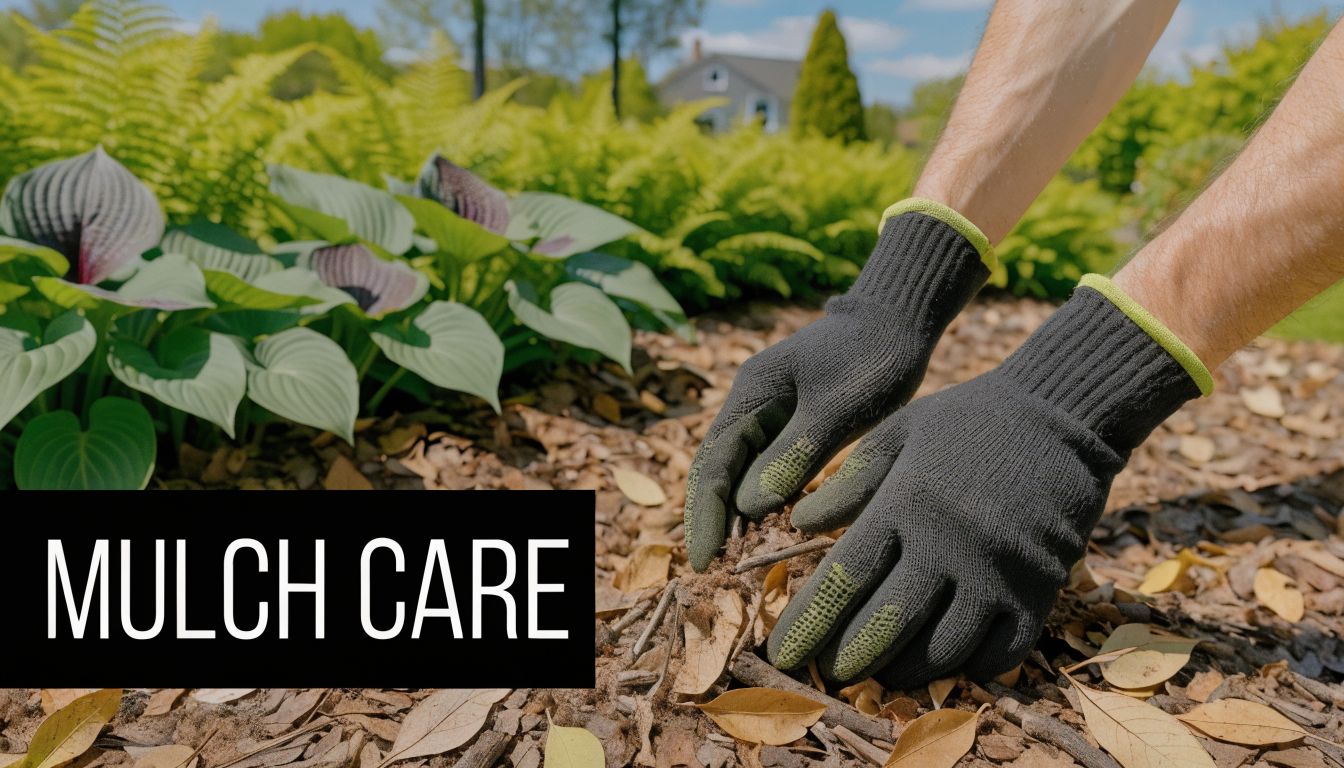
For families with kids and pets, that’s good news. Properly prepared leaf mulch is a simple, chemical-free material. The safety issues usually come from moisture buildup, moldy compaction, hidden debris, or pests finding a stable place to stay.
What to check after rain
After a wet stretch, walk the yard and inspect the mulch instead of judging it from the patio.
Look for these signs:
- Slimy surface texture means the layer is too dense and needs fluffing.
- Musty smell near stems often points to poor airflow.
- Visible mold on top can show up when wet leaves stayed packed too long.
- Standing moisture underneath means the soil and mulch combination is holding too much water.
If you see those signs, loosen the mulch with a rake or gloved hands and pull it back from the plant base. The correction is usually simple if you catch it early.
Do leaves attract pests
They can, especially when they stay wet and compacted. Pill bugs, earwigs, and other moisture-loving pests prefer protected, damp areas. That doesn’t mean shredded leaves automatically create a pest issue. It means neglected mulch can.
The easiest prevention is basic maintenance:
- Keep it airy
- Don’t pile it against structures or stems
- Remove thick mats quickly
- Avoid overwatering mulched areas
Wet mulch invites problems. Loose mulch supports soil.
How to know it’s helping the soil
Good leaf mulch gradually disappears. That’s a feature, not a failure. If the material is breaking down, darkening, and blending into the top layer of soil, it’s doing its job.
You’ll often notice practical improvements before you notice dramatic visual ones. The soil may feel easier to work. Water may soak in more evenly. Beds may crust less after heavy rain. Turf edges may stop feeling so hard underfoot.
If your yard already suffers from tight, lifeless ground, pair mulch with mechanical relief where needed. These strategies for how to fix compacted soil can make mulch more effective because the soil has a better chance of breathing underneath it.
When to refresh and when to remove
Refresh leaf mulch when the old layer has mostly broken down or when bare soil starts showing again. Don’t keep stacking fresh layers on top of soggy leftovers.
Remove or reduce it when:
- spring stems need room to emerge
- a bed stays chronically damp
- the mulch has turned into a heavy mat
- pests keep sheltering in one problem zone
That kind of maintenance is light, but it’s not optional. Leaf mulch works best when it stays managed, not abandoned.
DIY Leaf Mulch vs Calling a Pro When to Hire Barefoot Organics
Leaf mulching is one of the better DIY jobs in lawn care because the raw material is already there. If you have a modest yard, a good mower, and the time to stay on top of leaf drop, you can do a lot yourself and get solid results.
That said, “free” leaves don’t mean a free project. The primary cost is time, equipment, effort, and consistency. One source on the broader value of leaves notes that a proper cost-benefit analysis should account for labor, shredder or mower needs, and whether the nutrient value of leaves, described there as containing 50 to 80% of a tree’s nutrients, leads to fertilizer savings over 2 to 3 years (Joe Gardener discussion of leaves as mulch and compost). That’s exactly the right frame for homeowners and property managers.
DIY makes sense when the job is manageable
For many homes, especially smaller lots in Johns Creek or Duluth, DIY is realistic if you already own a mulching mower and don’t mind working in stages.
DIY usually fits when:
- Leaf volume is moderate
- You enjoy yard work and can stay ahead of the drop
- Most leaves can be mulched directly into the lawn
- Beds are small enough to topdress by hand
In those cases, the process can be satisfying. You keep material on-site, reduce waste, and improve the yard without bringing in much from outside.
Professional help makes sense when the property fights back
Larger lots in Forsyth County, North Fulton, or Cherokee County can turn leaf season into a moving target. One weekend of work doesn’t always solve it. New layers keep dropping, shaded areas stay damp, and bed cleanup turns into a much bigger task than people expected.
Hiring a professional is usually the smarter choice when:
- The property has heavy mature tree cover
- You don’t own the right mower or shredding equipment
- There are steep slopes, dense beds, or awkward access points
- Physical limitations make repetitive raking and hauling unrealistic
- You want the natural benefits without spending your weekends doing the labor
The real question isn’t can you do it
Most homeowners can handle some version of leaf mulching. The better question is whether you can do it at the right time, with the right prep, and with enough consistency to avoid the common failures.
That’s where a lot of DIY plans break down. The leaves don’t get shredded enough. The layer goes on too thick. A busy week turns one wet pile into three. Then the homeowner decides leaf mulch doesn’t work, when the actual issue was execution.
The best mulch plan is the one that actually gets done before the pile turns into a problem.
For property managers and busy families, that matters. A natural lawn approach only works when the maintenance rhythm matches real life.
Embrace Natural Lawn Care This Fall
A yard full of leaves doesn’t have to mean extra waste, noisy cleanup, and stripped-bare beds going into winter. In North Georgia, leaves for mulch can do real work when they’re shredded well, applied with restraint, and managed for our humidity and clay.
That’s the part many generic guides miss. The material itself isn’t the issue. The method is. Whole leaves packed into wet layers create problems. Shredded leaves used thoughtfully can protect soil, support turf, and make planting beds healthier over time.
For homeowners in Cumming, Alpharetta, Johns Creek, Suwanee, and Duluth, the smartest approach is usually simple. Use the leaves your yard already gives you. Keep the mulch airy. Watch moisture around stems and trunks. Adjust for shade, drainage, and heavy clay instead of following one-size-fits-all advice.
If you enjoy doing the work, leaf mulching is one of the most practical natural lawn habits you can build. If the property is too large, the timing is too tight, or the cleanup keeps getting ahead of you, there’s nothing wrong with getting help.
A healthier lawn often starts with using what’s already on the ground.
If you want help turning fall leaf drop into healthier soil and a cleaner, safer yard, Barefoot Organics can help with natural lawn care adapted for North Georgia conditions. Reach out for a free quote if you need support with leaf management, soil improvement, or a full lawn program built around children, pets, and long-term soil health.