

A beautiful, weed-free lawn isn't about constantly spraying chemicals. It's about cultivating a thick, healthy turf that naturally crowds out any invaders before they can get a foothold. The most effective approach is a year-round strategy that starts with smart prevention in the spring and adapts as the seasons change. This is especially true here in North Georgia, where our humid climate can make weeds feel like an unstoppable force.
The Foundation of a Weed-Free Georgia Lawn
If you're dreaming of a lush, green yard in Cumming or Johns Creek without the endless weeding, you've come to the right place. The real secret isn't found in a bottle; it's built from the ground up by creating a lawn so robust that weeds simply don't have space to grow.
We’re going to move past the quick, temporary fixes and focus on building a resilient turf ecosystem. I'll walk you through a seasonal game plan tailored specifically for our North Georgia climate, helping you finally get the upper hand on common culprits like crabgrass, dandelions, and that notoriously stubborn nutsedge. It all starts with the fundamentals.
This timeline gives you a great visual overview of the key tasks for each season, from getting ahead of weeds in the spring to prepping your lawn for winter.
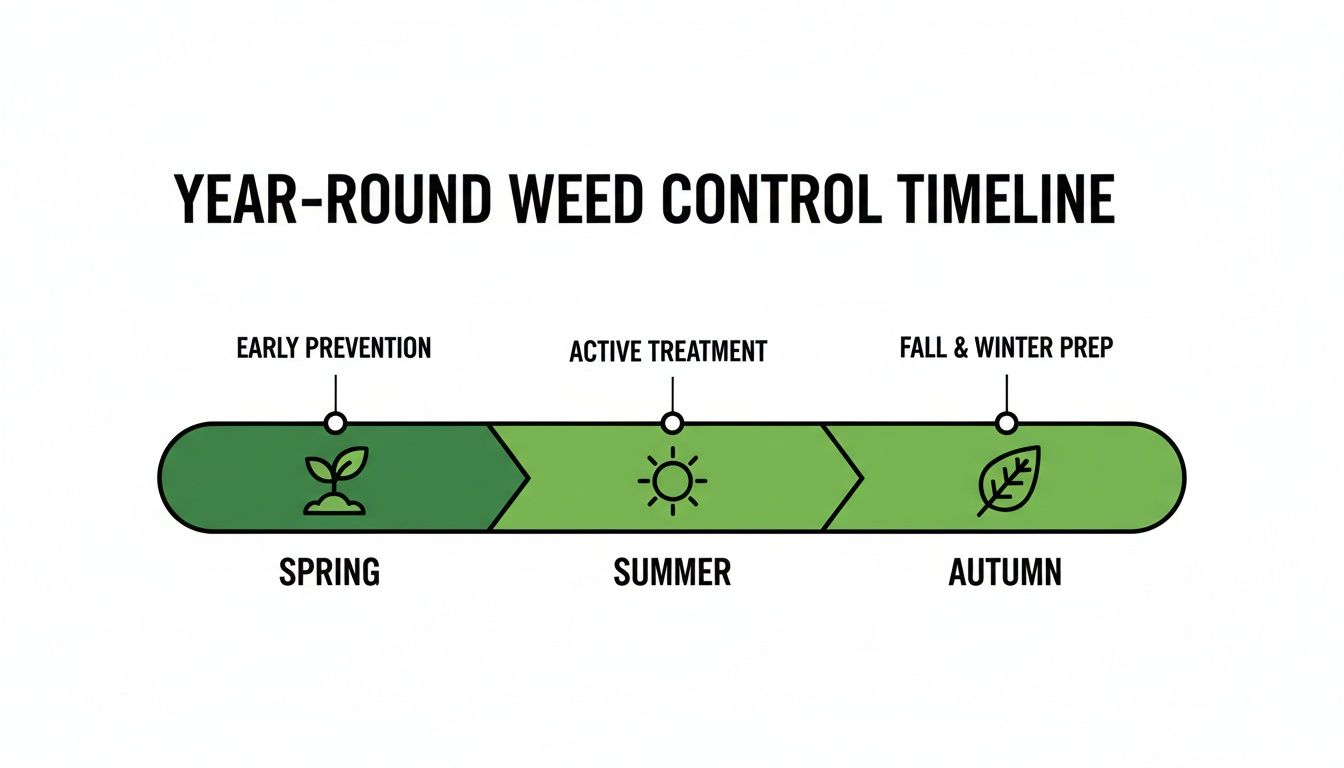
As you can see, successful weed management is a continuous cycle of care, not a one-and-done treatment.
Why a Proactive Plan Matters
Playing defense against weeds—waiting until they pop up before you do anything—is a losing battle. Once weeds get established in your Milton or Alpharetta lawn, they start a war with your grass for critical resources.
- They steal everything: Weeds are aggressive thieves, robbing your grass of essential water, nutrients, and sunlight.
- They ruin the look: Nothing disrupts that perfect, uniform green carpet faster than a patch of ugly weeds.
- They spread like wildfire: Many of the weeds we see around here are incredibly aggressive, turning a tiny problem into a full-blown infestation in no time.
The core principle of natural weed control is simple: a dense, healthy lawn is the best defense against weeds. By focusing on soil health, proper mowing, and strategic watering, you create an environment where grass thrives and weeds struggle.
This proactive mindset is more than just a trend. The global weed control market is projected to grow from $27 billion in 2021 to nearly $34 billion by 2025. North America makes up a massive 34% of that market, largely driven by homeowners in humid climates like ours who are tired of battling invasive weeds.
Think about the rampant crabgrass and dandelions we see after a wet spring in Cumming and Johns Creek. It's no wonder there's a huge shift toward safer, more sustainable alternatives, especially for families in Forsyth County with kids and pets playing outside.
Understanding Your Local Environment
From Dahlonega down to Alpharetta, every lawn faces its own unique set of challenges. Our heavy red clay soil, combined with high humidity and the specific needs of turfgrasses like Fescue and Bermuda, creates the perfect storm for certain types of weeds.
A truly successful weed control program is never a one-size-fits-all solution. It’s about understanding what your specific yard needs to flourish. Before you can fight them, you have to know what you're up against.
Identifying Common North Georgia Weeds
This table is a quick-reference guide to help you identify the most common weed culprits in our area and the best natural strategies to stop them.
| Weed Name | Appearance | Peak Season | Natural Control Tactic |
|---|---|---|---|
| Crabgrass | Low-growing, light green grass that spreads out in a star-like pattern. | Summer | Pre-emergent application in early spring is key. Mowing high also helps shade it out. |
| Dandelion | Bright yellow flower that turns into a white puffball; has a long, deep taproot. | Spring & Fall | Hand-pulling after rain when the soil is soft. Ensure you get the entire taproot to prevent regrowth. |
| Nutsedge | Shiny, V-shaped blades that grow faster than turfgrass; has a triangular stem. | Summer | Avoid pulling, as it leaves "nutlets" behind that sprout new plants. Focus on improving soil drainage. |
| Poa Annua | A lighter green, clumping grass with shallow roots and visible seed heads. | Spring & Fall | Apply corn gluten meal as a pre-emergent in late fall. Improve lawn density through overseeding. |
| Clover | Three-leaf clusters with small white or pink flowers; often indicates low nitrogen. | Spring & Summer | Increase soil nitrogen levels with organic fertilizer. A healthy, well-fed lawn will choke it out. |
| Chickweed | Small, matted plant with tiny white, star-shaped flowers and shallow roots. | Cool Seasons | Improve air circulation and sunlight exposure. Easy to remove by hand or with a garden hoe due to its weak roots. |
Knowing your enemy is the first step. Once you can identify what’s growing, you can choose the right strategy to manage it effectively without resorting to harsh chemicals.
This guide will give you the framework, but the real key is to observe your own lawn and see how it responds. For a more structured approach, you might find our customizable lawn care schedule template helpful for keeping your efforts organized. Throughout this guide, we'll break down the specific, actionable steps you can take each season to transform your yard into a resilient, beautiful outdoor space the whole family can enjoy.
Getting Your Lawn Ready for Spring in North Georgia
As the ground finally starts to thaw and warm up across North Georgia, our lawns begin to wake up. Unfortunately, so do the weeds. For anyone with a yard from Cumming to Dahlonega, spring is without a doubt the most important season for weed control. This is your best shot—really, your only shot—to get a jump on aggressive weeds like crabgrass before they even sprout.
Winning the spring battle means thinking ahead. Instead of chasing weeds all summer long, you're creating a lawn that’s so healthy and dense that weeds simply don't have a chance to get started. It’s about setting the stage now for a great-looking lawn all year.
It All Starts with the Soil
Before you even think about putting down a single product, you’ve got to know what you’re working with. Here in North Georgia, we're known for our heavy red clay, especially in Forsyth County. This soil is often acidic and easily compacted, which is a perfect storm for stressing out your grass and rolling out the welcome mat for weeds.
The smartest first move you can make is a simple soil test. You can grab a kit from the Forsyth County Extension Office, and the results will give you a clear picture of your soil’s pH and what nutrients it might be missing.
- pH Level: Most turfgrasses, like Bermuda and Fescue, do best in soil with a pH between 6.0 and 7.0. If your soil is too acidic (a common issue here), your grass struggles to absorb nutrients, leaving it weak and thin.
- Nutrient Gaps: The test will show if you’re low on the big three—nitrogen, phosphorus, or potassium. Fixing these deficiencies with the right organic fertilizers gives your turf the fuel it needs to thicken up.
With this information in hand, you can amend your soil intelligently instead of just guessing. You’re giving your lawn the exact foundation it needs to crowd out weeds on its own.
The Secret Weapon: Pre-Emergent Timing
If there’s one tool you need in your spring toolkit, it’s a pre-emergent. This isn't a weed killer; it's a preventative measure that creates a barrier on the soil's surface, stopping weed seeds from germinating in the first place. It’s your absolute best defense against annual grassy weeds.
For a natural, organic approach, corn gluten meal is a fantastic choice. Not only does it help prevent weed seeds from sprouting, but it also breaks down into a slow-release nitrogen fertilizer, feeding your lawn at the same time.
But here’s the thing I can't stress enough: it’s not just what you apply, but when you apply it. Put it down too early, and it can break down before the weed seeds wake up. Put it down too late, and you've completely missed the boat.
So how do you know the perfect time? Forget looking at the calendar—look at nature. The ideal time to apply a pre-emergent is when your soil temperature stays at a consistent 55°F. For those of us in the Milton and Alpharetta area, there's a timeless trick: watch for when the dogwood trees start to bloom. That’s nature’s signal that crabgrass is about to pop. To really dial in your timing, you can learn more about when to apply pre-emergent in our specific region.
Let Your Lawn Breathe
After a long, wet winter, that clay soil we talked about can get packed down hard. This compaction literally suffocates your grassroots, blocking air, water, and nutrients from getting where they need to go. Relieving this pressure is a game-changer for lawn health.
This is where core aeration comes in. The process involves a machine that pulls up small plugs of soil, and the benefits are immediate and profound.
- Breaks Up Compaction: It instantly loosens the soil, giving grassroots the space to stretch out and grow deeper.
- Boosts Nutrient Absorption: Those new channels are a direct highway for fertilizer, water, and oxygen to get right to the root zone.
- Promotes Thicker Turf: By encouraging stronger roots, aeration helps your lawn grow denser, physically squeezing out the space weeds need to sprout.
Doing a core aeration in the spring gives your lawn the head start it desperately needs. It creates the perfect foundation for a thick, healthy turf that can defend itself against the summer weed onslaught that’s sure to come.
Navigating the Summer Weed Invasion
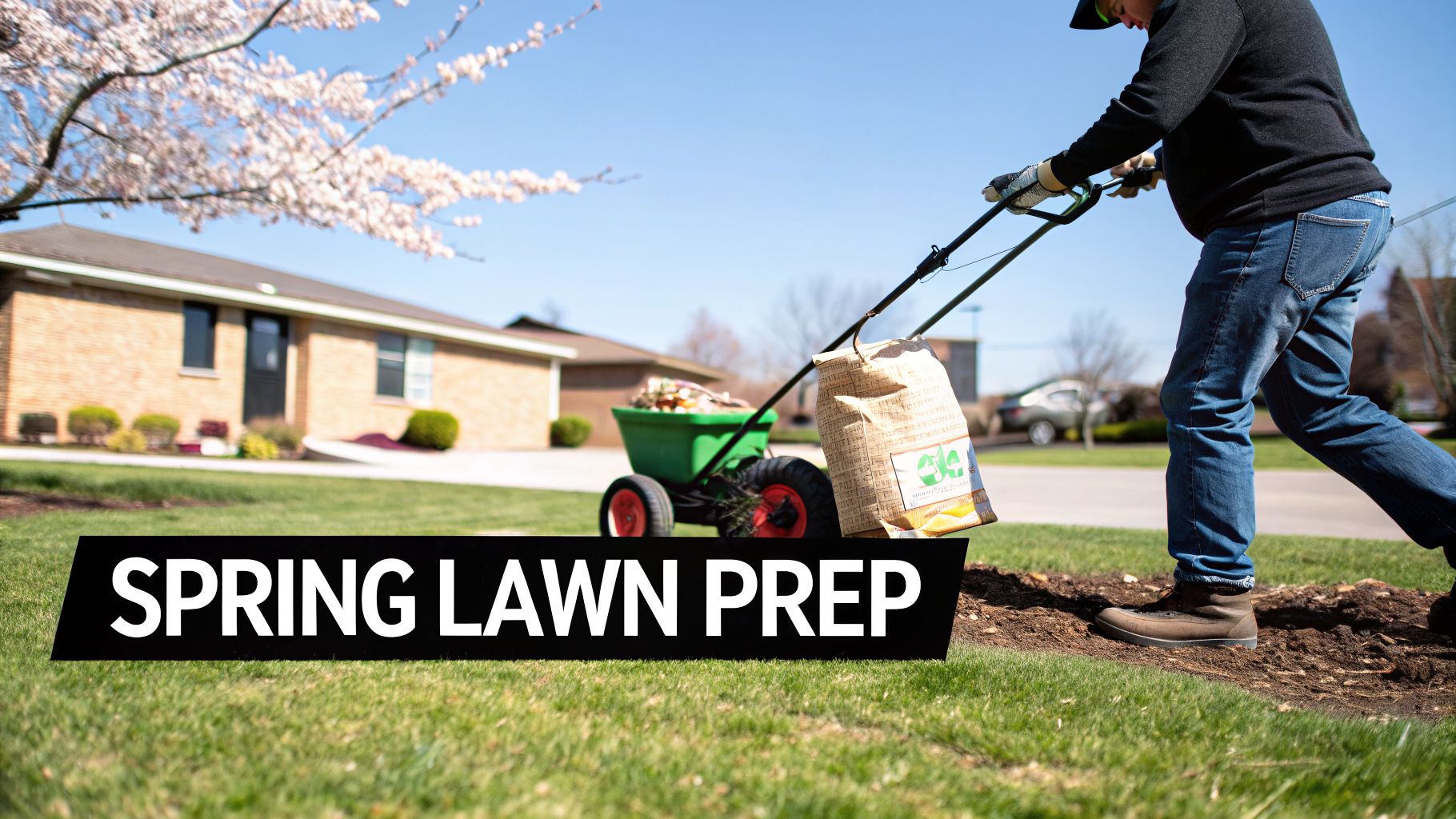
As the calendar flips to summer in North Georgia, the battle for your lawn really heats up. The intense sun and thick humidity that settle over areas from Johns Creek to Milton create a paradise for some of our most aggressive weeds, turning a once-managed yard into a daily struggle.
Your spring prep work was crucial, but now the game changes. It's less about broad prevention and more about smart maintenance and targeted control. This is the season where aggressive weeds like the notorious nutsedge and stubborn dallisgrass try to stage a hostile takeover.
Adjust Your Mowing Mindset
Believe it or not, one of your most powerful tools against summer weeds is your lawnmower. It’s tempting to scalp the lawn short for that super-neat, manicured look, but that’s one of the biggest mistakes you can make during a Georgia summer.
The real key is to mow high. For the Fescue lawns common throughout Forsyth County, this means setting your mower deck to 3.5 or even 4 inches. If you have Bermuda, you can aim for around 2 inches.
This simple adjustment does two critical things for your lawn's health:
- The taller grass blades create a dense canopy that shades the soil. This natural light barrier stops many weed seeds from ever getting the sunlight they need to germinate.
- It encourages your grass to grow deeper, more resilient root systems. Deeper roots are the secret to surviving summer drought and heat stress without breaking a sweat.
A lawn cut too short is a stressed lawn, and a stressed lawn is an open invitation for every weed in the neighborhood. Think of taller grass as a living mulch that naturally outcompetes the invaders.
Master the Art of Deep Watering
Just as important as how you mow is how you water. Many homeowners get into the habit of light, frequent watering, but this actually helps the weeds more than your lawn by keeping the soil surface constantly damp.
To build a truly drought-tolerant lawn, you need to switch to a deep and infrequent watering schedule. This means watering for a longer period, but only once or twice a week, depending on rainfall.
The goal is to deliver about one inch of water each week. This forces your grass roots to grow deep into the soil in search of moisture, making the whole lawn tougher and less dependent on you during those inevitable dry spells in Johns Creek and Alpharetta.
Shallow-rooted weeds like crabgrass just can't compete when the soil surface is dry but the moisture is several inches down. You’re essentially training your grass for success. If you see crabgrass popping up anyway, our guide on getting rid of crabgrass has more specific advice.
Targeted Strikes for Stubborn Weeds
Even with perfect mowing and watering, some weeds will inevitably break through. A week of heavy rain can cause a sudden explosion of nutsedge, whose shiny, fast-growing blades seem to appear overnight. When this happens, it’s time for a more surgical approach.
Resist the urge to pull nutsedge! You’ll almost always leave its underground "nutlets" behind, which will simply sprout into new plants. For these pop-up invaders, spot treatments with a pet-safe, natural product are your best bet.
Horticultural vinegar, for instance, is a great non-selective, natural option. It works by burning down the plant tissue it touches. Just be careful to apply it directly to the weed, as it will also harm your grass. This method is perfect for weeds in driveway cracks or isolated spots, giving you a quick win without introducing harsh chemicals into your yard.
Laying the Groundwork for a Strong Autumn Comeback
When the summer heat finally breaks in North Georgia, it’s easy to think your lawn care duties are over. But if you’re serious about a natural weed control plan that actually works, fall isn’t the end—it’s the most important season of the year. This is your window to set the stage for a lush, weed-free lawn next spring.
The cooler air and more consistent rain we get in autumn create the perfect environment for strengthening your turf, especially for the Fescue lawns so many of us have from Alpharetta to Dahlonega. Your goal now is to build a thick, dense carpet of grass that will be its own best defense against weeds come springtime.
The Power Couple: Aeration and Overseeding
If there’s one thing you do for your lawn this fall, make it the one-two punch of core aeration and overseeding. Our heavy clay soil, especially in places like Forsyth County, gets incredibly compacted after a long summer of foot traffic, mowing, and intense heat. That compaction literally suffocates your grassroots.
Core aeration is the solution. It works by pulling up small plugs of soil, creating channels that let air, water, and nutrients finally reach the root zone where they’re needed most. It’s like hitting a reset button for your soil, creating the perfect bed for new seed.
Immediately following aeration with overseeding is what truly transforms your lawn. It’s not just about filling in patches; it's a strategic move for several reasons:
- Eliminates Bare Spots: Weeds see bare patches as an open invitation. Overseeding slams the door shut.
- Boosts Turf Density: A thick lawn is a physical barrier. It literally crowds out weed seeds, denying them the space and sunlight they need to even get started.
- Upgrades Your Grass: Modern seed blends, particularly turf-type tall fescue designed for our climate, bring better disease and drought resistance to your entire lawn.
When you're buying seed, always look for a high-quality blend specifically formulated for our unique North Georgia conditions.
Feed Your Lawn for a Long Winter's Nap
Fall fertilizing is completely different from spring feeding. You're not trying to push fast, green top growth. Instead, the goal is to feed the roots, helping them store up energy to survive the winter. This is what fuels that explosive, healthy green-up next spring before the weeds wake up.
I always recommend an organic, slow-release fertilizer that’s lower in nitrogen for this time of year. It provides a steady, gentle feed all winter long without triggering a growth spurt in pesky cool-season weeds like poa annua (annual bluegrass), which just loves a high-nitrogen fall meal.
Think of fall feeding as putting your lawn to bed with a full stomach. You're giving it the reserves it needs to wake up strong and healthy, ready to outcompete the early spring weeds.
This approach is becoming more and more common. The market for biological weed control is projected to grow at over 7% CAGR through 2036, which is much faster than chemical methods. It's a clear sign that homeowners are more aware of the health risks. Here in areas like Cumming or Forsyth County, where our kids and pets are always on the grass, a healthy soil ecosystem can cut the need for weed control products by as much as 50%. You can dig deeper into these biological weed control market trends to see where the industry is heading.
Don't Rake Your Leaves—Mulch Them!
When the leaves start piling up, resist the urge to rake them all to the curb. Those leaves are pure gold for your lawn—a free source of incredible organic matter.
Just mow right over them with a mulching mower. You might have to make a couple of passes, but the tiny shredded leaf pieces will break down quickly. They'll feed the beneficial microbes in your soil, improve its structure, and return valuable nutrients right back where they belong. It’s a simple, no-cost way to build a healthier, more self-sufficient lawn for the years ahead.
When to Partner with a Lawn Care Professional
Tackling natural lawn care on your own is incredibly rewarding, but let's be honest—sometimes, you hit a wall. You can do everything by the book, like mowing high, watering deeply, and using the right organic treatments, but the lawn just won't cooperate. This is a story I hear all the time from homeowners from Cumming to Alpharetta, where our heavy clay soil and stubborn weeds can feel like an unbeatable team.
Knowing when to call for backup is a huge part of winning the long game. It’s not about giving up; it’s about bringing in an expert with the right tools and knowledge to give your lawn the fighting chance it deserves.

Warning Signs Your Lawn Needs a Pro
Sometimes the signs are subtle, but other times they're as obvious as a yard full of dandelions. If you're nodding along to any of these, it might be time to think about professional help.
Here are a few tell-tale signs:
- Widespread Weed Infestations: You're way past spot-treating a few intruders. Tough weeds like nutsedge or dallisgrass have staged a full-scale invasion, and you feel like you're fighting a losing battle.
- Persistently Thin or Patchy Turf: Despite your best efforts with overseeding and fertilizing, the lawn just won't fill in. Those bare spots are an open invitation for more weeds to move in.
- No Response to Treatments: You've applied organic fertilizers and soil amendments, but your grass still looks tired, pale, or stressed. This usually points to a deeper issue, like severe soil compaction or a major nutrient imbalance that a DIY kit can't fix.
If this sounds like your yard, a professional can deliver the breakthrough you've been looking for.
The Value of a Professional Diagnosis
Off-the-shelf products are designed for a generic lawn, but our North Georgia lawns are anything but generic. A real lawn care pro doesn’t just start spraying; they start by digging into the root cause of the problem.
At Barefoot Organics, our process always starts with a professional soil analysis. This is much more than a simple pH test from a hardware store. It gives us a detailed breakdown of your soil’s nutrient levels, organic matter content, and overall health. With that data, we can build a truly custom treatment plan designed for what your lawn actually needs.
Hiring a professional isn't just about paying someone to spread fertilizer. It's about getting a partner who understands the local ecosystem and can spot underlying issues—from hidden grub damage to subtle fungal diseases—that the untrained eye would almost certainly miss.
This targeted approach saves you time, money, and a whole lot of frustration. No more guessing games—just giving your lawn exactly what it's hungry for.
Specialized Services That Make a Difference
Beyond the diagnosis, professionals have access to equipment and treatments that are simply out of reach for most homeowners. And for our tough Georgia clay, these services can be the difference between a struggling yard and a thriving one.
Take our advanced core aeration service, for example. We use commercial-grade machines that pull much deeper plugs than the typical rental unit you’d find. This makes a massive difference in breaking up severely compacted soil, allowing air and water to finally reach the roots.
Following that up with a top dressing of our custom-blended organic compost is another game-changer. This process lays down a rich layer of organic matter that:
- Immediately improves soil structure.
- Feeds the beneficial microbes in your soil.
- Helps your lawn hold onto moisture during our blistering hot summers.
These are the kinds of intensive treatments that build a healthy foundation for the long haul.
When you're searching for local experts, it helps to know how they connect with customers. Many top-tier companies use effective SEO for landscapers to reach homeowners in specific areas like Milton or Johns Creek. This helps ensure you can find a team that truly gets the unique challenges of your neighborhood. Bringing in a pro gives your lawn the expert care it needs to overcome stubborn problems and finally start flourishing.
Answering Your Top Natural Weed Control Questions
Switching to a natural lawn care plan is a whole new way of looking at your yard. Instead of reaching for a quick chemical fix, you're building a healthy ecosystem from the ground up. It’s totally normal to have questions as you get started, so let's tackle some of the most common ones we hear from homeowners around Cumming, Johns Creek, and throughout North Georgia.
These are the real-world, practical answers you need to move forward with confidence.
How Long Does This Actually Take to Work?
This is the big one, isn't it? It’s probably the first thing people ask, and it's crucial for setting the right expectations. Let's be clear: natural weed control is a marathon, not a sprint. While a chemical herbicide might kill a weed in a day, the organic approach works by systematically improving your soil and turf health until weeds simply can't compete.
You'll absolutely see a difference in the first season—fewer weeds, healthier grass. But to get that truly thick, resilient lawn that chokes out weeds on its own? That typically takes 2-3 years of consistent effort. Your patience is rewarded with a genuinely healthy lawn that needs far less work in the long run.
I always tell people to think of it this way: chemicals just treat the symptom (the weed), but a natural approach cures the underlying disease (the poor soil and thin turf that let weeds thrive in the first place).
Is This Stuff Really Safe for My Kids and Pets?
Yes, absolutely. For many families in Alpharetta and Milton, this is the entire reason they make the switch. Safety is the cornerstone of the organic method.
Products like corn gluten meal or horticultural vinegar are made from natural sources. They don't leave behind the persistent chemical residues that are a major concern with synthetic treatments.
Of course, it's always smart to keep kids and pets off any freshly treated lawn until it's had a chance to dry, but you gain real peace of mind. You're creating a yard that’s truly a family space, not a chemical minefield.
Can I Seriously Get Rid of Tough Weeds Without Chemicals?
You bet, but it takes more strategy than just grabbing a spray bottle. You have to learn to outsmart the weed by targeting its specific weaknesses and life cycle.
Let's look at two of North Georgia's worst offenders:
- Crabgrass: This is an annual weed, which means the whole game is won or lost in early spring. Your silver bullet is a timely application of a natural pre-emergent like corn gluten meal. It stops the seeds from ever sprouting, so you solve the problem before it even begins.
- Nutsedge: This perennial is a whole different beast. It survives because of the little "nutlets" it forms underground. The key isn't just killing the blades you see; it's about changing the soggy soil conditions it loves. Improving drainage with core aeration is huge, as is encouraging thick turf growth to crowd it out.
It's that combination—targeted timing, smart cultural habits, and building a powerhouse lawn—that wins the war, not just a single battle.
What’s the Single Most Important Thing I Can Do?
If you only do one thing differently, make it this: mow your lawn high. It is, hands down, the simplest and most powerful thing you can do for natural weed control.
For the Fescue lawns so common across Forsyth County, that means setting your mower deck to 3.5 to 4 inches.
Just this one small change has a massive ripple effect. The taller grass blades create a dense canopy that shades the soil, blocking the sunlight that weed seeds need to germinate. It also forces the grass to grow deeper roots, making your entire lawn stronger and more drought-tolerant when our brutal Georgia summers hit. This one habit can slash your weed problems dramatically.
Figuring out the right approach for our local conditions can be a challenge. If you'd rather have an expert handle the details, Barefoot Organics is here to help. Our team provides specialized, natural lawn care solutions designed specifically for North Georgia's unique climate and soil. Get your free online quote today!