

Think of a lawn fungicide treatment as targeted medicine for your grass. It’s a specific application we use to stop fungal diseases in their tracks—or prevent them from ever starting. It's the solution for those frustrating brown patches and odd-colored spots that seem to pop up overnight, especially in our warm, humid North Georgia climate.
Your Guide to a Healthy North Georgia Lawn
If you live anywhere from Cumming and Alpharetta to the broader Forsyth and Gwinnett counties, you know a beautiful green lawn is more than just grass; it’s a point of pride and the place where family memories are made. Unfortunately, that same heat and humidity we love also creates a perfect storm for turf diseases.
Fungal spores are always present in the soil. Most of the time, they’re harmless. But when the conditions are just right, they can explode in numbers, overwhelming your lawn’s natural defenses.
Your lawn's "immune system" is really in the soil. Healthy soil, teeming with beneficial microbes, helps grass naturally fight off disease. But things like compacted earth, poor drainage, or even watering at the wrong time of day can weaken this system, leaving your turf wide open to attack.
Why Your Georgia Lawn Is at Risk
The triggers for a full-blown fungal outbreak are incredibly common here, from Milton to Johns Creek and Dahlonega. Getting a handle on these factors is the first real step toward keeping your lawn healthy.
- Prolonged Leaf Wetness: Fungi need moisture to reproduce. If your grass blades stay wet for more than 10 hours straight—often from watering in the evening or poor air circulation—it's like rolling out the welcome mat for disease.
- High Humidity and Warm Nights: Those classic sticky Georgia summer nights are when fungus really gets to work. Diseases like brown patch can spread like wildfire under these conditions.
- Compacted Soil: Tightly packed soil chokes the roots, cutting off access to air, water, and nutrients. This stress weakens the grass and creates a perfect breeding ground for fungus. Poor drainage is a huge part of this problem, and learning how to improve drainage in your yard is key to building a stronger lawn from the ground up.
At the end of the day, a fungicide treatment isn't just about killing a disease. It's about tipping the scales back in your lawn's favor. The best approach is always a proactive one, focused on strengthening the turf from the soil up to create a lawn that can defend itself.
We built this guide specifically for our fellow North Georgia homeowners. We'll walk through how to spot common local diseases like brown patch and dollar spot, explain your treatment options, and show you how to build a lawn care plan that prioritizes long-term health and is safe for your family, pets, and our local environment.
Identifying Common Lawn Diseases in Georgia
Before you can even think about a lawn fungicide treatment, you have to put on your detective hat. It’s a lot like a doctor diagnosing an illness—you can’t prescribe the right medicine without knowing what you’re up against. Getting the diagnosis right is the crucial first step.
Here in North Georgia, from Cumming to Alpharetta, our climate is a special kind of perfect for lawn fungus. Those warm days and humid nights we know so well create a paradise for several turf diseases that can wreak havoc on your lawn.
Guessing wrong can be a costly mistake. You might waste money on a treatment that doesn't work while the real problem gets worse. For example, using a product for dollar spot when you actually have brown patch won't get you anywhere. Knowing what to look for is your best defense.
This flowchart is a great starting point for figuring out if you're dealing with a disease or something else entirely.
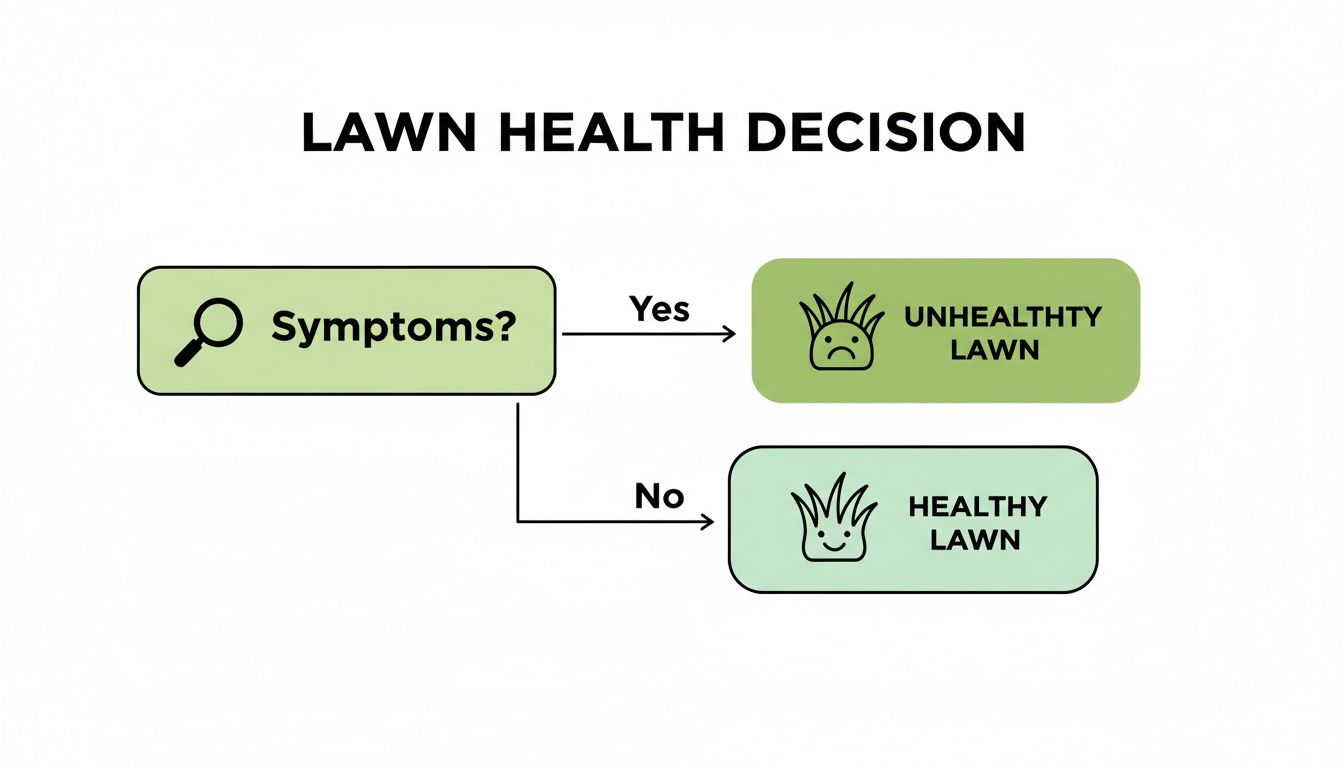
Simply put, if you see symptoms, it’s time to investigate. If your lawn looks healthy, just keep up the great work.
North Georgia's Common Lawn Fungal Diseases
To help you get a better handle on what might be happening in your yard, we've put together a quick-reference table. It covers the most common culprits we see in local lawns around Cumming, Milton, and Johns Creek.
| Fungus Name | Visual Symptoms | Commonly Affected Grass | Peak Season in GA |
|---|---|---|---|
| Brown Patch | Roughly circular, light-brown patches (inches to feet wide). A grayish "smoke ring" may appear on the edges in the morning. | Tall Fescue (most common), can also affect warm-season grasses. | Summer |
| Dollar Spot | Small, sunken, straw-colored spots the size of a silver dollar. Hourglass-shaped lesions on grass blades. Cobweb-like growth in morning dew. | All turf types, especially lawns low in nitrogen. | Late Spring through Fall |
| Large Patch | Large, circular patches of discolored or dead grass, often with a "doughnut" shape as the center recovers. Blades pull easily from sheaths. | Zoysia, Centipede, St. Augustine, and other warm-season grasses. | Fall and Spring |
Remember, this table is a starting point. Environmental conditions and lawn health can cause symptoms to vary, but it's a solid guide for initial identification.
A Closer Look at Brown Patch
Brown patch is hands-down the most frequent and destructive disease we see in Tall Fescue lawns across the Cumming and Alpharetta area. Caused by the fungus Rhizoctonia solani, it absolutely loves it when nighttime temperatures stay above 68°F and the humidity is high. Sound familiar? That’s a classic Georgia summer.
You'll spot it as roughly circular areas of thinned, light-brown grass that can grow from a few inches to several feet across. The tell-tale sign, often visible in the morning dew, is a grayish "smoke ring" around the outer edge of the patch. That ring is where the fungus is actively spreading.
While it’s a nightmare for Fescue, it can pop up in warm-season grasses too. It attacks the leaf blades, and although a mature lawn can often bounce back, a young lawn can be completely wiped out.
Don't Underestimate Dollar Spot
The name might sound harmless, but dollar spot can cause some serious damage. It shows up as small, straw-colored, sunken spots, typically about the size of a silver dollar. In the taller grass of a home lawn around Alpharetta or Johns Creek, these spots can merge and look much larger.
The real giveaway for dollar spot is the distinct lesion it creates on the individual grass blades. Take a close look for tan-colored, hourglass-shaped spots that have a reddish-brown border. On a dewy morning, you might also see a cobweb-like fuzz (that’s the mycelium, or fungal body) covering the infected spots.
Dollar spot gets going from late spring through fall when days are warm (59°F to 86°F) and nights are cool enough for heavy dew to form. Its presence often points to a lawn under stress, especially one that’s hungry for nitrogen.
Correctly identifying the fungus is more than half the battle. Once you know whether you're facing the large, smoky circles of brown patch or the bleached, coin-sized marks of dollar spot, you can move forward with a targeted and effective lawn fungicide treatment plan.
Large Patch: The Warm-Season Grass Nemesis
While brown patch goes after cool-season grasses, a close relative of the same fungus causes a similar problem in warm-season lawns like Zoysia, Centipede, and St. Augustine. We call this one large patch, and it’s most active during the cool, wet weather of fall and spring.
You'll really notice the symptoms in the spring when your lawn starts to green up, revealing large, circular patches of grass that look discolored or dead. The fungus attacks the leaf sheaths right down by the soil, causing them to rot. A good test is to gently pull on a discolored blade at the edge of a patch; if it slides right out of its sheath, you're likely looking at large patch.
These spots can get bigger and even merge, sometimes creating a "doughnut" pattern as the center grass recovers while the outer ring keeps expanding. For a deeper dive into this and other issues, check out our guide on what causes brown spots in grass to better understand all the potential culprits.
Choosing Your Lawn Fungicide Treatment Approach
Once you’ve figured out which fungus is making a mess of your North Georgia lawn, it’s time to decide how to fight back. When it comes to lawn fungicide treatment, you really have two main paths to choose from: the conventional route using synthetic chemicals, or a natural, organic approach that builds up the soil for the long haul. The choice you make doesn't just affect the fungus; it impacts the entire ecosystem in your yard.
Think of it like this: your lawn is sick, and you're playing doctor. One option is a powerful, fast-acting antibiotic. The other is a long-term plan of probiotics and immune-boosting vitamins. Both are aimed at recovery, but they get there in fundamentally different ways.
The Conventional Chemical Method
Synthetic fungicides are basically the antibiotics of the lawn care world. They're engineered for a targeted strike, designed to interrupt the life cycle of fungal cells and stop a disease dead in its tracks. For a homeowner in Alpharetta watching brown patch tear through their fescue, this kind of quick fix can seem like a lifesaver.
These products work by targeting and disrupting specific fungal processes, which effectively kills the active disease. This can give you almost immediate visual relief, which is a big reason why they’re still such a popular choice for many people.
But this approach has its downsides. Just like a strong antibiotic can mess with the good bacteria in your gut, synthetic fungicides can harm the beneficial microbes living in your soil. These microscopic organisms are absolutely essential for breaking down nutrients and maintaining a healthy soil structure—the very foundation of a tough, resilient lawn. On top of that, many families in Cumming and Milton are growing more concerned about the potential risks these chemicals pose to kids and pets who want to play on the grass.
The Natural and Organic Alternative
The organic approach to lawn fungus is less about a full-on assault and more about building strength from within. It’s like a probiotic for your soil, aiming to create such a robust, healthy ecosystem that diseases can’t find a place to take hold. Instead of just nuking the bad guys, it focuses on cultivating an army of good guys to keep them out.
This method uses natural solutions that work with the environment, not against it. Common organic treatments include things like:
- Neem Oil: This oil, which comes from the neem tree, has natural fungicidal properties. It disrupts a fungus's ability to grow and reproduce without wiping out the beneficial life in the soil.
- Biological Fungicides: These products contain beneficial bacteria or fungi that either out-compete the disease-causing pathogens for resources or attack them directly. It’s basically introducing natural predators to keep the harmful fungi in check.
- Soil Amendments: This is a big one. Adding high-quality compost or other organic matter improves soil structure, aeration, and how well it holds water. This creates an environment where grass thrives and fungi struggle.
This philosophy is really a modern shift in how we think about lawn care. It’s a move away from short-term chemical fixes and toward a long-term strategy of preventing disease by focusing on incredible soil health. It’s all about creating a lawn that is naturally strong enough to defend itself.
This change isn't just a feeling; you can see it in the numbers. In the U.S. home and garden fungicide market, demand for organic options is booming as homeowners become more aware of chemical risks—a trend we see right here in family-focused communities like Johns Creek and Cumming. The market, valued at USD 442.4 million in 2024, is projected to grow by a healthy 5.5% each year, driven largely by these health and environmental concerns. You can dive deeper into these market trends and the growth of organic lawn solutions on grandviewresearch.com. The data confirms it: families are actively looking for safer, more sustainable ways to care for their yards.
Building Your Lawn's Natural Disease Defense
A truly beautiful lawn, especially here in North Georgia's unique climate, is a resilient one. While a lawn fungicide treatment is an excellent tool for knocking out an active disease, the real long-term goal is to build a lawn that can fight back on its own. This means shifting our focus from simply reacting to problems to creating a healthy, balanced ecosystem where fungal diseases just can't get a foothold.
Think of it this way: fungicides are like emergency medicine, but prevention is your lawn's daily wellness plan. By focusing on smart cultural practices and nurturing the soil itself, you're essentially building a natural defense system. It’s a smart investment that not only gives your family in Cumming or Alpharetta a healthier lawn but also cuts down on long-term costs and the need for constant treatments.
Smart Cultural Practices for Georgia Lawns
Your first line of defense is creating a lawn environment that fungus hates. These simple, consistent habits can make a massive difference in preventing the exact conditions that diseases like brown patch and dollar spot are looking for.
- Deep, Infrequent Watering: Give your lawn a good, deep drink, but only when it needs it—about one inch per week is a good rule of thumb. This simple change encourages grass roots to grow deep, making your turf stronger and much more resilient during dry spells.
- Early Morning Irrigation: When you water is just as critical as how much. Watering early in the morning lets the grass blades dry out completely during the day. If you water in the evening, the grass stays wet all night, creating a perfect, damp breeding ground for fungus. In fact, leaf wetness lasting over 10 hours dramatically increases the risk of disease.
- Proper Mowing Height: Whatever you do, don't scalp your lawn! Mowing too short puts a ton of stress on the grass, leaving it wide open to attack. For Fescue lawns, which are common here in the Cumming area, aim for a height of 2.5 to 3.5 inches. For warm-season grasses like Zoysia in Johns Creek, sticking to the recommended height is key for a dense, healthy stand.
These aren't just items on a to-do list; they're the foundational habits of a disease-resistant lawn.
Unlocking the Power of Healthy Soil
The real secret to a naturally tough lawn lies right under your feet. Your soil isn't just dirt; it's a living, breathing ecosystem packed with billions of beneficial microbes. These microscopic allies are the unsung heroes of your lawn, breaking down organic matter, feeding nutrients to the grass, and actively out-competing harmful pathogens for space and food.
When we rely too heavily on synthetic chemicals, we risk disrupting this delicate balance. An organic, soil-first approach, on the other hand, is all about strengthening this microbial community.
A biologically active soil creates a natural defense system against pathogens. By feeding the soil with organic matter and encouraging beneficial microbial life, you essentially give your lawn a robust immune system that can fight off infections on its own.
One of the best things you can do for your soil is core aeration. This process of pulling small plugs of soil from the lawn breaks up compaction, allowing air, water, and nutrients to finally reach the root zone. For the heavy clay soils we see all around Milton and Dahlonega, annual aeration isn't just a good idea—it's essential for a thriving lawn. It literally opens up the soil, creating a healthier home for both roots and microbes. For a deeper dive, check out our guide on how to treat lawn fungus naturally, which explores more of these soil-focused strategies.
The demand for lawn disease control is huge—the global market hit USD 1,317.7 million in 2021 and is still climbing. This shows just how much pressure homeowners are under from fungal threats. For folks in Cumming and Johns Creek, this data just reinforces the advantage of natural alternatives. Building up soil health has been shown to boost a lawn's resilience by 40% over synthetic programs alone. You can see these trends for yourself in the latest lawn disease control market reports. It’s clear proof that investing in prevention through soil vitality isn't just an eco-friendly choice—it's a powerfully effective one.
When to Call in the Professionals for Your Lawn
There's a real satisfaction that comes from tending to your own lawn, but sometimes, a stubborn fungal disease just won't quit. For homeowners across Cumming, Milton, and Dahlonega, recognizing when it's time to bring in an expert can save you time, money, and a whole lot of stress. A successful lawn fungicide treatment is less about the product and more about a professional diagnosis and a smart, long-term strategy.
It's a frustrating feeling. You've tried the store-bought sprays, you're watering correctly, but those brown patches just keep getting bigger. When you see the disease spreading faster than you can treat it, that's your cue to call for backup.
Then there's the guesswork. If you're not 100% sure if you're looking at brown patch, dollar spot, or something else, you could be applying the wrong treatment altogether. It’s like taking the wrong medicine; it won't help and might even make things worse. An expert can pinpoint the exact culprit and map out a precise plan of attack.
The Real Value of a Pro's Touch
Hiring a professional service means you're getting more than just a person with a sprayer. You're partnering with someone who has deep, firsthand knowledge of the specific turf challenges we face here in the Cumming area and surrounding communities like Alpharetta and Johns Creek. We live and breathe the local climate, soil conditions, and the common fungal diseases that love our humid summers.
This local expertise gives you a serious edge:
- Spot-On Diagnosis: We can quickly identify the fungus plaguing your lawn, which means we use the right treatment right from the start. No wasted time or money.
- Better Tools for the Job: Professionals have access to highly effective, often natural, treatments you simply can't find on store shelves. This allows for a much more targeted and powerful approach.
- A Holistic Strategy: We don't just put a band-aid on the problem. We create a year-round plan that gets to the root cause—usually poor soil health—to stop the disease from making a comeback.
This shift toward expert lawn care is part of a bigger picture. The global market for lawn and garden fungicides, valued at USD 3,320 million in 2024, is projected to climb to USD 5.2 billion by 2035. For families in the Cumming, GA area, this trend makes perfect sense. They know that expert, proactive care can prevent up to 80% of common lawn diseases, ensuring their yard is a beautiful, safe place for kids and pets to play. You can read more about these market insights on wiseguyreports.com.
Is It a Recurring Nightmare?
Maybe the clearest sign you need professional help is a problem that keeps coming back. If you feel like you're fighting the same lawn disease every single summer, it's a huge red flag that the underlying conditions in your soil and lawn are the real issue. A single treatment is never going to fix a chronic problem.
A professional looks past the visible symptoms to the health of the entire ecosystem. By improving soil biology, aeration, and nutrient balance, we help you build a lawn that is naturally tough and less likely to get sick in the first place.
This is what gives you true peace of mind. You can stop worrying about the next fungal outbreak and just trust that your lawn is being proactively cared for. For our neighbors in Cumming and the surrounding areas, a tailored, natural program from Barefoot Organics is the key to restoring your lawn's health so you can get back to enjoying your beautiful outdoor space.
Your Questions About Lawn Fungicide Answered
Even with the best intentions, lawn fungus can be a real head-scratcher. We get a lot of questions from homeowners across Cumming, Alpharetta, and all over North Georgia, so we've put together some answers to the ones we hear most often.
How Do I Know if It's Fungus or Just a Thirsty Lawn?
This is easily the most common question we get, especially when the Georgia heat is cranked up in July and August. At a glance, a brown, stressed-out lawn can look a lot like a lawn with a disease, but there are some tell-tale signs to look for.
Drought stress usually causes a uniform browning or a wilting, folded look across big, undefined areas of your yard. Fungus, on the other hand, is a bit more artistic—it tends to show up in distinct patterns like circles, spots, or weird-looking patches.
For instance, brown patch creates those classic circular rings, sometimes with a grayish, smoky-looking border that’s easiest to see in the morning dew. A good first step is to simply check the soil. If you know your lawn is getting enough water but you're still seeing these specific patterns, fungus is the likely culprit.
Are Organic Fungicides Really as Good as the Chemical Stuff?
Absolutely, but they work in a completely different way. Think of it like this:
A chemical fungicide is like a strong antibiotic. It’s designed to wipe out the active fungus fast, but it often takes out the good guys—the beneficial microbes in your soil—along with the bad. An organic approach is more like a probiotic and a powerful immune booster for your entire lawn.
Instead of just killing the problem, natural treatments focus on building up the soil's health. This empowers your grass to naturally resist and recover from disease on its own. While you might not see the instant knockdown of a synthetic spray, you're building long-term resilience without putting your kids, pets, or the local environment in Johns Creek and Milton at risk. The ultimate goal is to grow a lawn that’s too healthy to get sick in the first place.
How Often Will My Lawn Need a Fungicide Treatment?
That really depends on the philosophy behind the treatment. Conventional programs that rely on synthetic chemicals often get you on a treadmill of repeated applications, sometimes every few weeks, especially during the humid summer months. You end up constantly chasing and treating symptoms as they pop up.
A natural, soil-first approach is different. We're not locked into a rigid, chemical-heavy schedule. The entire focus is on creating and maintaining healthy, living soil all year long.
This strategy strengthens the turf’s own defenses, which means preventative or curative treatments are needed way less often—if at all. We keep a close eye on lawn health and the weather conditions from Cumming to Dahlonega, applying a targeted lawn fungicide treatment only when it’s truly necessary as part of a bigger, holistic care plan.
Is It Possible to Stop Lawn Fungus from Ever Coming Back?
Completely eliminating fungal spores from the environment is impossible—they're just a natural part of living in Georgia. But you can absolutely stop them from becoming a recurring nightmare. The secret is to make your lawn a terrible place for disease to set up shop.
You do this by sticking to the smart cultural practices we’ve been talking about:
- Water Correctly: Watering deep and not too often, always in the early morning, is your best defense.
- Mow High: Keeping your mower at the right height (like 2.5 to 3.5 inches for Fescue) makes the grass less stressed.
- Aerate Annually: In our dense clay soils here in the Cumming, GA area, core aeration is a game-changer. It breaks up compaction and gets air to the roots.
Above all, focusing on nurturing vibrant, microbially rich soil gives your lawn the strong "immune system" it needs to fend off infections on its own. A healthy lawn is a strong lawn, and that’s the best prevention you can get.
Ready to give your North Georgia lawn the expert, natural care it deserves? The team at Barefoot Organics specializes in creating resilient, beautiful lawns that are safe for your family and pets. Let us help you build a stronger, healthier lawn from the soil up. Get your free online quote today!