

When it comes to lawn fertilizer, potassium is the unsung hero. It's the silent bodyguard for your turf, working behind the scenes to build strength and resilience. While nitrogen gets all the credit for that lush, green top growth, potassium is all about total plant health. It's the key to better drought tolerance, disease resistance, and cold hardiness—things every lawn in Cumming, Johns Creek, and Alpharetta desperately needs.
Potassium: The Unsung Hero of Your Georgia Lawn
Let's be honest, when homeowners in Cumming or Johns Creek think about feeding their lawn, nitrogen is the first thing that comes to mind. It delivers that deep, vibrant green we all love to see. But while nitrogen is busy pushing out new blades, potassium is the real workhorse, building a strong foundation to keep the whole system thriving.
Here's an easy way to think about it: if nitrogen is the gas pedal making your car go fast, potassium is the tough frame, the reliable engine, and the quality tires. It’s what ensures your car can actually handle bumpy roads and bad weather. Without enough potassium, your lawn is all show and no go—vulnerable to the first sign of stress.
Why Potassium Is a Non-Negotiable for Georgia Lawns
Here in North Georgia, our lawns are up against some serious challenges. The sweltering summer heat in Alpharetta can bake a weak lawn, and those unexpected cold snaps we get around Dahlonega can cause brutal winter damage. This is precisely where the right lawn fertilizer potassium makes all the difference.
A lawn with plenty of potassium is simply better prepared to handle these pressures. It has an internal support system that gives the grass the grit it needs to push through.
Potassium is all about resilience. It helps regulate the turf's internal systems, allowing it to conserve water during a drought and reinforcing cell walls to fight off disease and handle temperature swings. A lawn that's low on potassium is just exposed and weak.
This nutrient is basically your lawn's immune system and hydration manager rolled into one. It helps control the tiny pores on grass blades (stomata) that open and close to manage water. With the right potassium levels, your grass can stand up to the dry spells we often see in Milton and Forsyth County without turning into a brown, crunchy mess.
Building a Foundation for Health
A truly healthy lawn is more than just a pretty green color in the spring. It’s about building a robust foundation that can handle kids playing, pesky insects, and our wild Georgia climate all year round.
Once you grasp the role of potassium, you can shift your focus from just "greening up" the lawn to cultivating genuine, lasting turf health. In this guide, we'll walk you through exactly how to manage this vital nutrient, sharing some insider tips from our experts at Barefoot Organics on how to build a lawn that’s not just green, but truly resilient.
Why Potassium Is Key to Resilient North Georgia Turf
If nitrogen gives your lawn that pop of vibrant green, think of potassium as its personal trainer. It’s the nutrient working behind the scenes, building a tough, resilient foundation from the inside out. This is absolutely critical for the grasses we have here in North Georgia, whether you have Bermuda, Zoysia, or Fescue.
Potassium’s main job is to strengthen the grass at a cellular level. It fortifies the cell walls of each blade, making them physically tougher. For lawns in places like Cumming and Johns Creek, that means your turf can better handle the daily grind—from kids and pets playing to the regular stress of mowing.
This internal strength is also your lawn's best defense against our region's famously unpredictable weather.
Building Resistance to Georgia's Climate Extremes
Here in North Georgia, our climate can swing wildly. The blistering summer heat in Alpharetta can scorch a weak lawn, while a sudden cold snap up near Dahlonega can cause serious winter damage. This is where having the right amount of potassium in your lawn fertilizer really becomes a game-changer.
Potassium acts like an internal regulator for the grass. It helps control the tiny pores on the grass blades (called stomata) that manage water loss.
A lawn with plenty of potassium is like a well-hydrated athlete. It manages water efficiently, staying strong during drought and heat, which helps prevent that dreaded brown, crispy look.
This water regulation is a huge deal for drought resistance. When a dry spell hits Milton, a lawn rich in potassium can conserve moisture and stay healthier for much longer. You can find more strategies for this in our guide on how to protect your grass during the demanding summer months. When winter rolls around, potassium also helps the turf prepare for dormancy, protecting it from frost and freeze damage.
The Engine of Overall Plant Vigor
Beyond just building strength, potassium is responsible for activating dozens of enzymes inside the grass plant. These enzymes are the catalysts for everything from photosynthesis to energy transfer. Without enough potassium, all these vital processes slow to a crawl, leaving you with a weak, sluggish lawn that’s an open invitation for disease.
It’s like the spark plugs in your car. You can have a full tank of gas (nitrogen), but the engine won't run right if the spark plugs aren't firing. Potassium makes sure all the internal systems are firing on all cylinders, leading to a truly vigorous and healthy plant.
This nutrient's role is a massive part of the global lawn care picture. The potash fertilizer market, which is where we get our potassium, is projected to hit USD 21.51 billion in 2025 and is expected to grow to USD 28.45 billion by 2030. While potassium chloride is the most common source, potassium sulfate is often preferred for more sensitive turf types.
To really see the difference potassium makes, it helps to put it side-by-side.
Potassium's Impact On North Georgia Lawns
This table breaks down what you can expect from a lawn with proper potassium levels versus one that's running low, especially considering our local climate challenges in Cumming, Milton, and the surrounding areas.
| Lawn Health Metric | Lawn With Sufficient Potassium | Lawn With Potassium Deficiency |
|---|---|---|
| Drought Tolerance | Manages water efficiently, stays green longer during dry spells. | Wilts quickly, turns brown and dormant under heat stress. |
| Wear Resistance | Recovers quickly from foot traffic and mowing. | Stays matted down, shows wear patterns easily. |
| Disease Resistance | Strong cell walls help fend off common fungi like brown patch. | More susceptible to disease outbreaks and slower to recover. |
| Cold Hardiness | Better prepared for dormancy and protected from winter damage. | Suffers from significant dieback after frosts and freezes. |
In the end, making sure your turf gets the right potassium lawn fertilizer isn't just about making it look good. It's a long-term investment in its health, building a truly robust lawn that can handle everything the Georgia climate decides to throw at it.
How to Spot Potassium Deficiency in Your Lawn
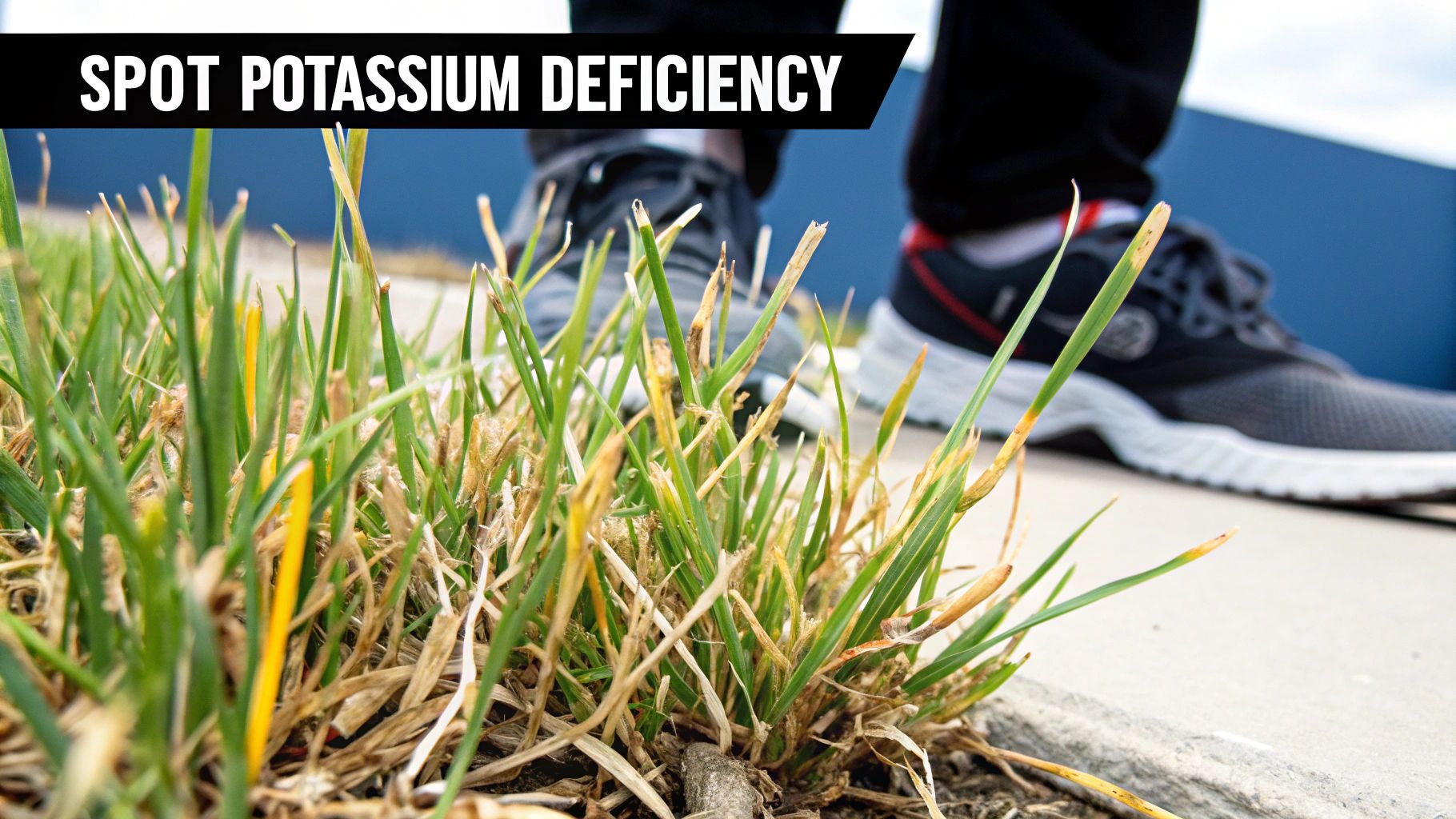
Trying to figure out what’s wrong with your North Georgia lawn can feel like a bit of a mystery. Is that yellow patch from a lack of nitrogen, a fungus, or just the brutal heat of a Cumming summer? More often than you’d think, the real problem is a potassium deficiency—a sneaky issue that even experienced homeowners can misdiagnose.
The trick is knowing what to look for. Unlike a nitrogen issue that turns the whole blade pale, a potassium deficiency has a very specific signature. You’ll see yellowing that starts at the very tip of the grass blade and creeps down along the outer edges. This tell-tale sign almost always shows up on the older, more mature grass blades first, even while new growth looks perfectly fine.
Why does this happen? Because potassium is a mobile nutrient. When the plant senses a shortage, it literally pulls potassium from its older leaves to send to the new, growing shoots. So if you’re noticing yellow margins on the older blades of your Zoysia or Bermuda, low potassium should be high on your list of suspects.
Beyond Just Yellowing
Yellowing edges are the classic symptom, but a lawn that’s low on potassium will show other signs of stress, too. It starts to lose its backbone, kind of like a building with a shaky frame.
You might notice the grass stems themselves seem weak and flimsy. When you walk across the lawn, the blades don't spring back; they stay matted down, leaving your footprints behind long after you've passed. This loss of resilience, or "turgor pressure," is a direct result of potassium's job in regulating water inside the plant's cells.
Another huge red flag for homeowners from Alpharetta to Milton is a sudden vulnerability to turf diseases.
A lawn that constantly battles fungal issues like brown patch or dollar spot, even with good watering habits, is often silently crying out for potassium. Without enough of it, the turf's natural defenses are down, making it an easy target for common local pathogens.
Think of it this way: a healthy, well-fed lawn can shrug off minor infections on its own. A potassium-starved lawn, on the other hand, is basically rolling out the welcome mat for disease.
Connecting the Dots to Poor Performance
Often, the clues to potassium deficiency aren't just one-off symptoms but a consistent pattern of poor performance. If your lawn just seems to wilt at the first sign of any kind of stress, that’s a major hint.
Here are a few common scenarios that should make you think about potassium levels:
- Poor Heat and Drought Tolerance: Your lawn is the first one in the neighborhood to go brown and dormant during a dry spell in Johns Creek.
- Weak Winter Survival: The grass has a hard time greening up in the spring and shows a lot of dead patches after a cold Dahlonega winter.
- Slow Recovery: It takes forever for the turf to bounce back from routine stresses like mowing, foot traffic, or a minor pest problem.
These issues really drive home why the right kind of lawn fertilizer potassium is so vital. One of the best sources is potassium sulfate, which is great for most grass types and really boosts overall turf quality. Its value is clear in the market, too; global projections show the potassium sulfate industry is expected to grow from USD 5.4 billion in 2025 to USD 8.7 billion by 2035. You can explore more data about these market trends and how they shape the products available to homeowners.
By learning to read these visual cues and performance patterns, you can stop guessing and start giving your lawn the targeted support it actually needs to thrive.
How to Know for Sure: Testing Your Soil for Potassium
Seeing yellowing grass is a good clue, but it's still just a clue. Guessing what your lawn needs is a recipe for frustration and wasted money. To really get to the bottom of it and apply the right amount of potassium, you need hard data.
This is where a professional soil test comes in. Honestly, it's the single most powerful tool you can have for building a great lawn. It takes you from guessing to knowing.
Think of it like a check-up for your yard. A soil test gives you a detailed report card on everything happening in your soil—not just potassium (K), but also nitrogen (N), phosphorus (P), and, crucially, your soil's pH level. For anyone dealing with the clay soils here in Cumming, Alpharetta, and across North Georgia, this step isn't optional; it's essential.
Without that data, you're just throwing fertilizer down and hoping for the best. That can hurt your wallet, your lawn, and our local environment.
Your Best Local Resource: The UGA Extension Office
When you need a reliable soil analysis, your best bet is right around the corner. The University of Georgia (UGA) Extension offices, with locations serving Forsyth, Cobb, Gwinnett, and Cherokee counties, offer affordable and incredibly detailed soil tests for homeowners.
Relying on a local expert like the UGA Extension is a game-changer. Their recommendations are based on decades of research specifically on Georgia's unique red clay soil and climate, giving you advice that's far more valuable than any generic, one-size-fits-all product.
Their reports don't just throw numbers at you. They give you specific recommendations dialed in for your exact grass type. You'll know precisely how much potassium your Zoysia or Bermuda lawn needs to handle our hot summers and push through the colder months.
How to Collect a Perfect Soil Sample
Getting a good soil sample is easy, but you have to do it right. A sloppy sample will give you bad data, and bad data leads to bad decisions.
Just follow these simple steps to get a sample that tells the true story of your lawn:
- Get Your Gear: All you need is a clean bucket, a garden trowel or spade, and the soil sample bags from the UGA Extension office. You can usually pick them up for free.
- Pick Your Spots: Walk your lawn in a zig-zag pattern and take 8-12 small samples from different areas. Be sure to avoid any oddball spots like right next to the driveway, under a bird feeder, or where the dog always goes.
- Dig to the Right Depth: For an established lawn, you need soil from the root zone. Plunge your trowel about 4-6 inches deep and pull up a vertical slice of soil.
- Mix It All Together: Toss all your soil slices into the clean bucket. Once you've gathered all your samples, break up any big clumps and mix everything together really well. This creates a single, composite sample that represents your whole lawn.
- Bag It and Tag It: Fill the sample bag to the line with your mixed soil. Write your name and address clearly on the label, then just drop it off at your local Extension office in Cumming, Marietta, or wherever is closest.
This whole process ensures the lab gets a true average of your soil's condition, not just a snapshot from one random spot. For an even deeper dive into what your report will tell you about soil acidity, check out our guide on how to test soil pH.
When that report comes back, you'll finally have the exact information you need to give your lawn the potassium it’s been asking for—and build that deep, resilient strength that makes for a truly beautiful yard.
How to Apply Potassium Fertilizer for the Best Results
Okay, you've got your soil test results in hand. Now it's time to put that knowledge into action. Applying fertilizer might sound as simple as "grab a bag and go," but there's a real art and science to it, especially with the dense clay soils we see around Cumming and Johns Creek. Getting the timing, technique, and product right is what makes the difference between a so-so lawn and a truly healthy one.
First things first, let's decode the fertilizer bag. You'll always see three numbers on the front, something like 10-10-10 or 5-0-20. This is the N-P-K ratio, and it stands for Nitrogen (N), Phosphorus (P), and Potassium (K). That third number, 'K', is the one we're focused on here. If your UGA Extension report says you need potassium, you'll be looking for a bag where that third number is nice and high.
This whole process—from gathering a sample to reading the report—is designed to take the guesswork out of lawn care.
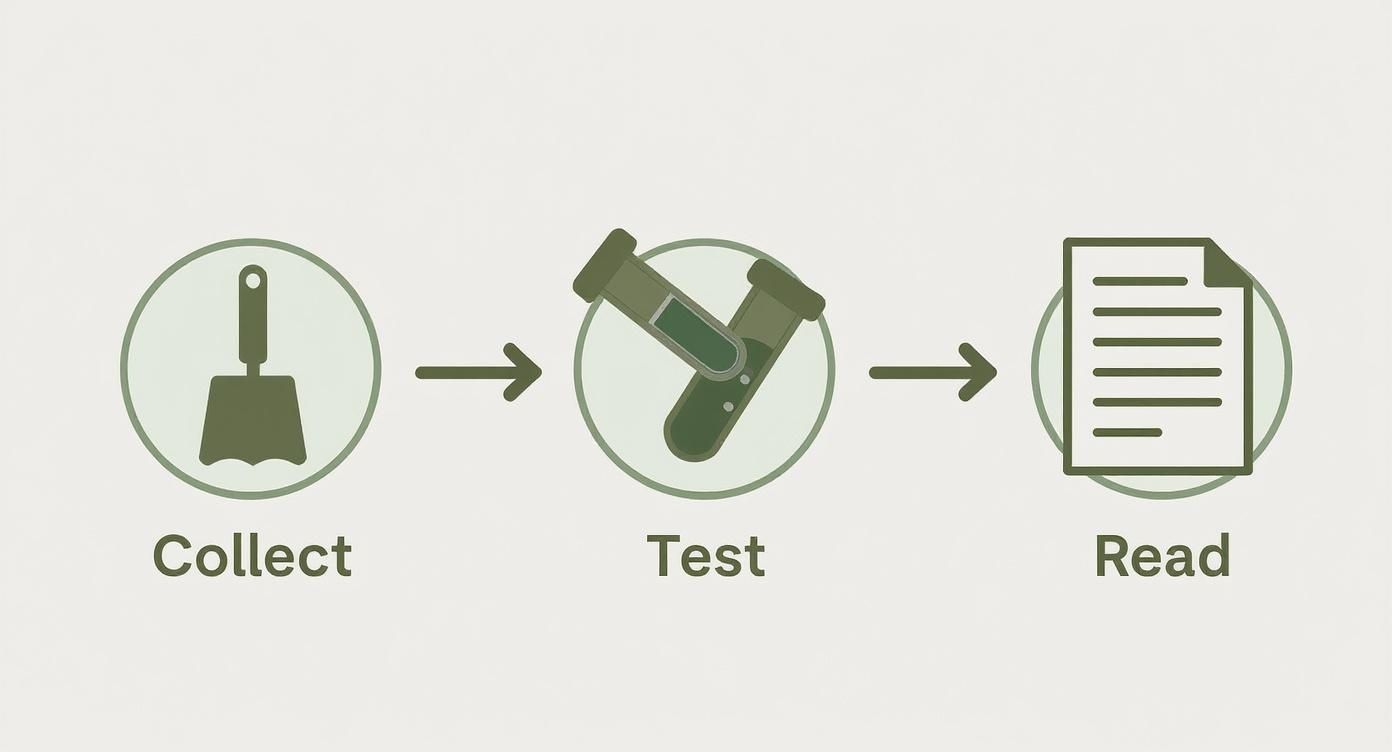
Instead of just hoping for the best, you're giving your lawn exactly what it's asking for.
Choosing the Right Potassium Source for Georgia Clay
Not all potassium is the same. Around here, you’ll typically find two main types: Muriate of Potash (MOP) and Sulfate of Potash (SOP). While MOP is common and often cheaper, Sulfate of Potash is generally the better choice for lawns in our area, from Alpharetta to Milton.
Why? SOP, or potassium sulfate, is much lower in salts and completely chloride-free. This is a huge deal for our local turfgrasses like Bermuda and Zoysia, which can get stressed out by high chloride levels. The demand for SOP tells the story—the global market hit USD 3.48 billion in 2024 and is expected to climb to USD 5.01 billion by 2032. You can discover more about the growth of potassium sulfate fertilizers to see just how important it's become for quality turf management.
When to Apply Potassium for Maximum Impact
Timing is everything. You want to give your lawn what it needs when it needs it most. For us here in North Georgia, there are two ideal windows for a lawn fertilizer potassium treatment.
- Late Spring (May/June): As we roll into the summer heat, a shot of potassium is like a power-up for your turf. Think of it as giving your lawn a big gulp of Gatorade before a marathon—it builds resilience to handle the brutal Georgia sun and potential drought stress.
- Fall (September/October): A fall application is just as critical. This feeding helps the grass pack away energy in its roots for the winter, kind of like a bear fattening up for hibernation. It ensures the lawn has the reserves to survive the cold and come back strong and green next spring.
Applying potassium in the fall is a long-term investment in next year's lawn. It ensures your turf has the internal resources to survive cold snaps near Dahlonega and green up faster when spring arrives.
Proper Application Technique
Having the right product and the right timing won't mean much if the application is sloppy. Proper technique ensures every square foot of your lawn gets what it needs without any waste or damage.
First, calibrate your spreader. Every fertilizer has different-sized granules, so you can't just guess the setting. The bag will have a recommendation—start there. A well-calibrated spreader gives you that nice, even coverage and helps you avoid those ugly green and yellow stripes. For a complete walkthrough, check out our guide on how to fertilize a lawn correctly.
Next, walk at a steady, even pace. You'll want to overlap your passes just a little to make sure you don't leave any gaps. A pro tip is to apply half the fertilizer walking north to south, and the other half walking east to west. This crisscross pattern is the best way to guarantee uniform coverage.
Finally, and this is crucial, always water the fertilizer in right after you finish. You don't need to flood the lawn—a light watering of about a quarter-inch is perfect. This washes the granules off the grass blades and gets them down into the soil, where they can start dissolving and feeding the roots. It's a simple step that activates the fertilizer and prevents any chance of leaf burn.
Leave the Guesswork to the Pros
There's a certain satisfaction in DIY lawn care, but when it comes to balancing crucial nutrients like potassium, precision is everything. That’s where experience really shines. For homeowners here in Cumming and the surrounding North Georgia areas, trading the cycle of trial-and-error for professional expertise is the surest way to get a truly resilient lawn.
Partnering with a local expert like Barefoot Organics means you can stop guessing. It's less about just spreading fertilizer and more about adopting a seamless, science-backed strategy for your specific patch of green.
We don't start with a bag of fertilizer; we start with your soil. A professional soil test is the foundation of our entire approach, giving us the exact data we need to build a custom nutrient plan. After all, the dense clay in Alpharetta requires a different touch than the soil in the rolling hills near Dahlonega.
A Strategy Built on Science and Local Know-How
Our Natural Lawn Care Program is designed around proactive, targeted care. We've seen firsthand that a one-size-fits-all approach just doesn't work here. A lawn in Johns Creek faces different challenges than one in Milton, and our plans reflect that reality.
When it comes to potassium, this tailored strategy means:
- Targeted Applications: We apply high-quality, often organic-based, potassium sources at the most effective times of the year—late spring to build summer stress tolerance and again in the fall to prepare the turf for winter.
- Building Soil Health: Our methods go beyond just feeding the grass blades. We focus on improving the soil structure itself, which makes it easier for your lawn’s roots to access and use potassium and every other nutrient more efficiently.
- Continuous Monitoring: We're on your lawn throughout the year, keeping a close eye on its health. This allows us to make adjustments on the fly, responding to our unpredictable Georgia weather and your lawn's specific performance.
Your Partner for a Healthy North Georgia Lawn
Choosing a professional service is an investment in your peace of mind. You get a team that lives and breathes North Georgia's unique climate and soil challenges. Instead of spending your weekends trying to decipher soil reports and calibrate a spreader, you can just sit back and enjoy a thick, healthy lawn that's safe for your kids and pets.
At Barefoot Organics, our goal is to build a lasting relationship with you and your lawn. We see ourselves as stewards of your property, dedicated to creating a vibrant, beautiful outdoor space through responsible and effective practices.
Ultimately, working with a pro turns lawn care from a constant chore into a reliable investment. It’s the best way to ensure your turf gets the right lawn fertilizer potassium and other vital nutrients, building a foundation of health that will pay dividends for years to come.
Frequently Asked Questions About Potassium for Lawns
Even after walking through all the details, a few questions always seem to come up. Here are some of the most common ones we hear from homeowners in Cumming, Alpharetta, and right across North Georgia when we talk about potassium in lawn fertilizer.
Can I Use the Same Fertilizer on My Bermuda and Fescue Lawns?
This comes up a lot, especially since so many properties around Johns Creek have sunny spots with Bermuda and shadier areas with Fescue. While you could use the same bag in a pinch, it's really not the best approach. These two grasses are on completely different schedules and have unique nutritional needs, particularly for potassium.
- Bermuda and Zoysia (Warm-Season Grasses): These grasses are hungry for potassium in late spring to brace for summer heat and again in the fall to prepare for going dormant.
- Fescue (Cool-Season Grass): Fescue gets the most benefit from potassium in the fall. This application strengthens its roots for the winter and sets it up for a powerful green-up come spring.
For a truly healthy lawn, timing your potassium applications to match each grass type makes a world of difference.
Is It Possible to Apply Too Much Potassium?
You bet. While it's not going to scorch your lawn the way too much nitrogen will, overdoing it with potassium creates its own set of headaches. An excess of potassium can actually block the grass from absorbing other vital nutrients, like magnesium and calcium.
This is exactly why we always bring it back to the soil test. It stops you from guessing and potentially wasting money on nutrients your lawn doesn't even need. Stick to the application rates on your soil test report and the product label, and you'll be in good shape.
Over-application is one of those common missteps that can knock your soil's nutrient balance completely out of whack. A professional soil test is your best defense against accidentally creating a new problem while trying to solve an old one.
Does Leaving Grass Clippings on the Lawn Provide Enough Potassium?
Leaving your clippings on the lawn—a practice called "grasscycling"—is one of the best things you can do for your soil's health. Those clippings are full of nutrients, including nitrogen and a bit of potassium, and they can definitely reduce how much fertilizer you need to apply.
But for the dense clay soils we have here in Milton and Forsyth County, grass clippings alone are rarely enough to get potassium levels where they need to be. Think of it as a great daily supplement, not the whole meal. A targeted potassium application in the spring and fall is still the most reliable way to build that deep-down resilience your lawn needs.
Ready to stop guessing and give your lawn the professional care it deserves? The experts at Barefoot Organics build custom, science-backed nutrient plans for a resilient, beautiful lawn. Visit our website to get your free online quote from Barefoot Organics today.