

Just because the temperatures have dropped in Cumming, GA doesn't mean your lawn care duties are over. It’s a common mistake to think that when the grass goes dormant, everything stops. Unfortunately, a whole host of winter weeds didn't get the memo. If you're seeing green patches in your brown lawn, you're not alone. We see this issue in neighborhoods all over Forsyth County every winter.
Tough little weeds like henbit, chickweed, and annual bluegrass (poa annua) absolutely love North Georgia's mild, damp winters. While your Bermuda or fescue lawn is resting, they’re busy setting up shop, stealing resources from our native clay soil, and setting the stage for a weak, patchy lawn come springtime. Dealing with them now is key to having a great lawn later.
Ready to get ahead of winter weeds before they take over? Give Barefoot Organics a call today for a free lawn evaluation and we’ll create a plan that’s right for your Cumming home.
Why This Matters: You Can't Ignore Winter Weeds in Your Cumming Lawn
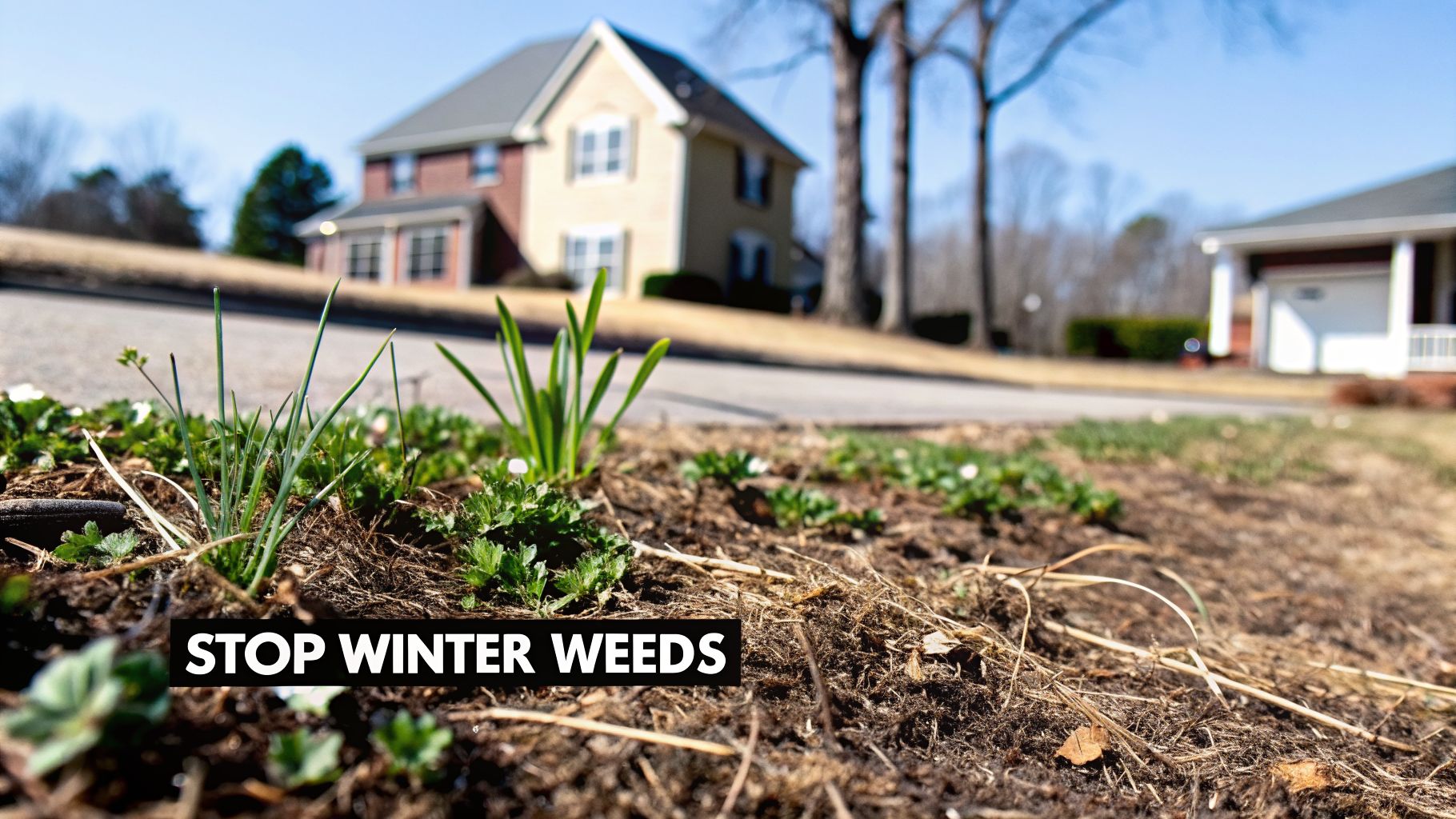
While your lawn looks like it’s sleeping, there’s a battle happening just beneath the surface. Many homeowners I talk to in the Cumming and greater Forsyth County area think a brown, dormant lawn means no problems. That's a costly assumption that can lead to headaches when spring arrives.
These winter annuals are perfectly designed for our Georgia climate. They sprout in the fall and early winter, sinking their roots deep into our red Georgia clay soil while your grass is taking a much-needed break. They aren't just an ugly green patch in a brown lawn; they're actively undermining your lawn's health for the coming year.
The Real Damage Happening Under the Surface
Think of it as a silent invasion. These weeds are doing more than just looking messy.
- Stealing Nutrients: Weeds are greedy. Chickweed and henbit are notorious for sucking up the vital nutrients and water that your turf’s roots need to store for a strong spring green-up. This is especially true in the nutrient-poor clay soil common in North Atlanta.
- Blocking Sunlight: As they spread, they form thick, dense mats that can literally smother your dormant grass. When warmer weather finally arrives, your lawn is shaded out before it even has a chance to grow. This is how thin, patchy lawns start.
- Spreading Seeds: A single annual bluegrass plant can drop hundreds, sometimes thousands, of seeds. If you let it go, you're not just dealing with one weed—you're guaranteeing a much bigger headache next winter.
Across neighborhoods from Johns Creek to Alpharetta, we've seen how unchecked winter weeds can rob a lawn of up to 20-30% of its potential vitality. It's why our Natural Lawn Care Program at Barefoot Organics focuses on strengthening the soil and turf roots first. A healthier lawn is its own best defense. A fortified root system is much better at fighting off these invaders naturally. This isn't just theory; it's based on what we've seen work time and again in Cumming lawns.
A Quick Tip from the Field: In many Cumming-area HOA communities, a yard full of winter weeds can get you a friendly (or not-so-friendly) violation letter right as spring begins. Tackling them in winter keeps your lawn looking sharp and keeps you in good standing with the neighborhood association.
If you wait until you see a full-blown invasion in April, the damage is already done, and they've already seeded the next generation. That's why having a proactive winter plan from a local team that knows the climate from Suwanee to Canton is so crucial. Don't let your lawn fall behind your neighbors'.
Treatment Breakdown: Identifying Common Winter Weeds in Cumming, GA
Before you can tackle winter weeds, you have to know what you’re up against. In my experience treating lawns here in Cumming, grabbing a generic weed killer off the shelf is a surefire way to waste a Saturday afternoon and get zero results. Different weeds need entirely different treatments, so a correct ID is your first, most critical step.
The cool, damp winter we get in North Georgia is the perfect environment for a handful of specific weeds. They absolutely thrive while your Bermuda or Zoysia lawn is dormant, and learning to spot them early on is the key to protecting your lawn for a beautiful spring.
Key Winter Weeds to Spot in Cumming
Here are the usual suspects we see taking over lawns from Canton to Buford every winter.
- Annual Bluegrass (Poa Annua): This is easily one of the most common invaders we treat in Forsyth County. Look for distinct, light green, bunchy patches that stick out like a sore thumb against your dormant, brown Bermuda grass. It grows fast and drops a shocking number of seeds, making it a top priority for winter treatments.
- Henbit: You’ve probably seen this one. Henbit is unmistakable with its square stems, rounded leaves with scalloped edges, and tiny purple flowers. It tends to grow upright and can quickly form thick patches, especially in the sunnier parts of your lawn.
- Common Chickweed: This weed is a real mat-former, creating dense, low-growing blankets that can easily choke out your turf. It has small, egg-shaped leaves and little white flowers that look almost like tiny stars. Chickweed loves the moist, cool soil we see all over North Atlanta in the winter months.
Local Insight: We constantly see homeowners in newer construction areas around Cumming and Suwanee battling poa annua. The topsoil gets so disturbed during building, and without a well-established lawn, the red clay becomes a perfect breeding ground. An organic-based program can get ahead of it before it becomes a full-blown infestation.
Why Correct Identification Matters in Forsyth County
Misidentifying a weed often leads to using the wrong product. Best case scenario, nothing happens. Worst case? You could actually damage your desirable turfgrass, like burning fescue that you thought was a weed. For example, the product needed to control a broadleaf weed like henbit is completely different from what’s needed for a grassy weed like poa annua.
This is where having local expertise really pays off. We know the specific weed pressures homeowners from Milton to Dawsonville face year after year. Our technicians are trained to spot these invaders on sight and apply the precise, targeted treatment that actually works. For a closer look at these and other pesky plants, you can learn more about common winter weeds that affect Georgia lawns.
Application Process: Your Winter Weed Control Calendar for Cumming Lawns
Anyone with a lawn in Forsyth County knows that our weed control schedule is anything but one-size-fits-all. What works in other states just doesn't apply to our unique Georgia climate. The real secret to keeping your lawn clear through winter and into spring is all about timing—syncing your efforts with North Georgia’s weather patterns.
To give you a clearer picture, here’s a breakdown of the key windows for winter weed control in areas like Cumming, from those critical late fall applications to a final push before spring.
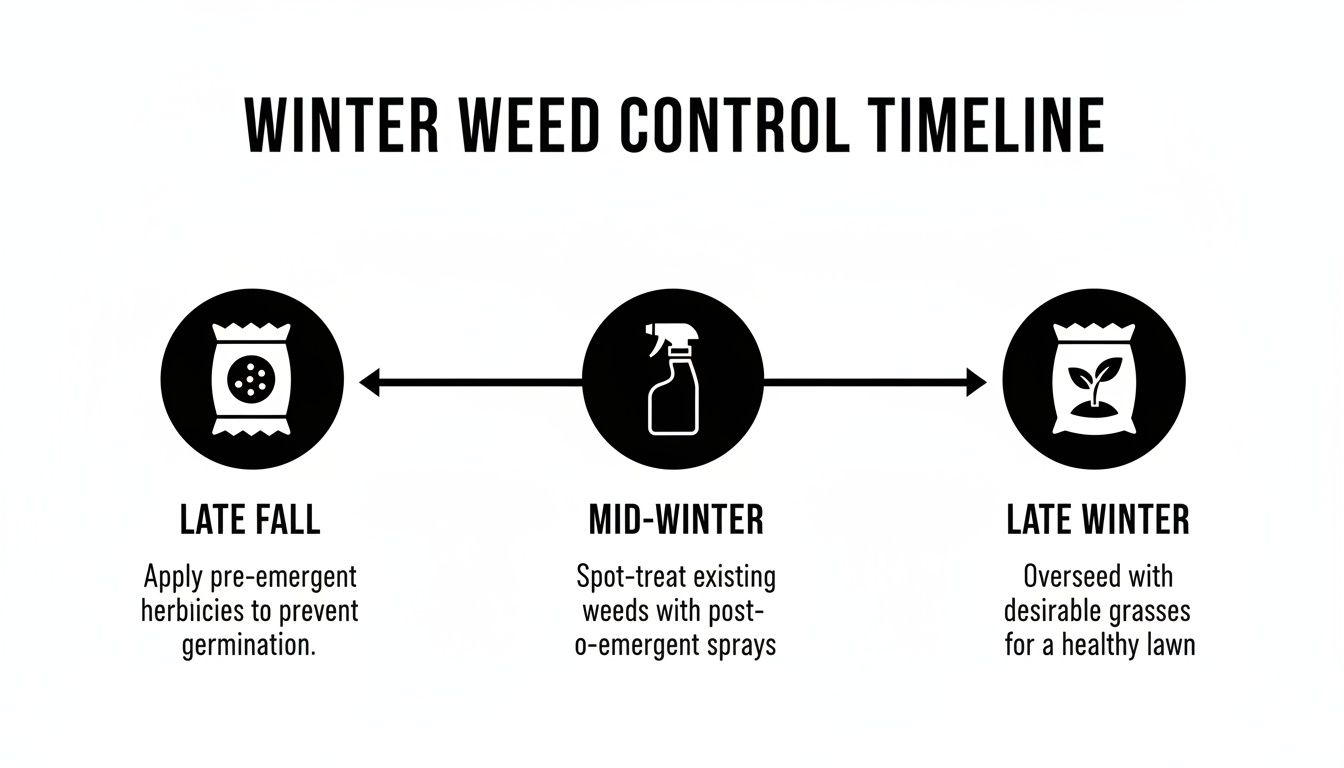
Think of it as a season-long strategy. You’re not just reacting to weeds; you’re getting ahead of them and knocking out any that manage to pop up. Following this rhythm is how homeowners from Milton to Suwanee keep their lawns looking great all year.
Late Fall (November – December)
This is your first, and arguably most critical, window of opportunity. The focus here is putting down a pre-emergent herbicide to stop winter annuals like poa annua (annual bluegrass) and henbit before they even start. As the soil gets colder, a well-timed application forms a barrier that prevents these seeds from sprouting. We see it all the time in Cumming—homeowners who wait too long are stuck playing catch-up all winter. Don't make that mistake.
Mid-Winter (January – Early February)
Even with a solid pre-emergent in the fall, a few stubborn broadleaf weeds can still find their way through our Georgia clay. Mid-winter is the perfect time for targeted post-emergent spot treatments. Because your Bermuda or Zoysia lawn is dormant, we can safely target visible weeds like chickweed or dandelions without harming the turf. It’s like a surgical strike that cleans up the lawn, ensuring it’s clear and ready for the spring green-up.
Late Winter (Late February – Mid-March)
For lawns from Alpharetta to Dawsonville, this is the most important application of the entire year. As the ground finally starts to warm up, it’s time for a second round of pre-emergent, this time aimed squarely at preventing crabgrass. Miss this window, and you’re setting yourself up for a summer-long headache as that 90-degree heat arrives. Crabgrass is an absolute monster to control once it gets going in North Georgia. For a deeper dive on getting this step just right, take a look at our guide on when to apply pre-emergent in the Cumming area.
Our Barefoot Organics clients across Forsyth County benefit from this tailored approach. We apply pre-emergents in late fall, knowing that Georgia's weather can prevent a large percentage of spring weed problems. This simple step helps prevent 70-85% of spring weed issues without relying on harsh chemicals. It's a method gaining traction, as property managers in places like Cherokee County are increasingly favoring safer, biological agents that break down weeds naturally. This shift reflects a broader understanding of how proactive, timely care can significantly reduce weed pressure, as noted in recent weed control research.
Ready to put these strategies to work? Call Barefoot Organics today for a free lawn evaluation, and we’ll create a winter game plan that’s tailored specifically for your property.
Why Choose Barefoot Organics for Winter Weed Control in Cumming, GA?

When you're fighting winter weeds, you have choices. The problem is, the big national chains often see your Cumming lawn as just another pin on a map, treating it the same way they would a yard in Ohio or Texas. That one-size-fits-all approach is a recipe for frustration and wasted money, especially in our unique North Georgia climate.
We see things differently at Barefoot Organics. We're a local, Forsyth County-owned business. We live here, we work here, and we tackle the same lawn care headaches in our own yards that you do in yours. Our mission is to provide straightforward, honest lawn treatment that actually works for homeowners in Cumming.
Local Expertise That Truly Matters for North Georgia Lawns
Our team’s experience isn’t from a corporate manual; it's earned right here in our local soil. We know firsthand how stubborn our red Georgia clay can be. We understand the kind of brown patch fungus that summer humidity brings, and we get the pressure of meeting the high HOA standards in so many Cumming subdivisions.
This local knowledge is the foundation of every service we offer.
- Bermuda & Fescue Specialists: So many North Georgia lawns are either Bermuda, fescue, or a mix of both, which can be a real headache. We know exactly how to treat each grass type, so we'll never apply a product meant for dormant Bermuda to your vibrant green fescue, which could seriously damage it.
- Climate-Specific Timing: Our treatment calendar isn’t based on a national average. It’s built around Forsyth County's specific weather patterns, ensuring pre-emergents go down at the perfect time to head off notorious weeds like poa annua and crabgrass before they even get started.
- A Soil-First Philosophy: We believe a healthy lawn is its own best defense against weeds. Our organic-based programs are designed to improve your soil structure and health, creating a thick, resilient turf that naturally crowds out weeds for good. We specialize in lawn health restoration.
When you call us for winter weed control near me, you won't get a call center hundreds of miles away. You’ll talk to a local expert who knows the specific challenges in neighborhoods from Johns Creek and Alpharetta to Milton and Suwanee.
Safer Solutions for Your Cumming Family and Pets
As a local business, we're deeply invested in the well-being of our community. That’s why we always prioritize using pet-safe and kid-friendly lawn treatments. We know your lawn is where your kids play tag and your dog chases squirrels—it’s an extension of your home.
Our approach is to minimize harsh chemicals, focusing instead on targeted applications and effective organic-based products. We always provide clear, simple instructions after a treatment, so you know exactly when it’s safe for your family to get back to enjoying the yard. This commitment to safety is a cornerstone of our residential lawn service. For a deeper understanding of our philosophy, check out our page on natural weed control methods.
Don’t settle for a generic plan this winter. Call Barefoot Organics today to get your free, no-obligation lawn evaluation and see the difference that real, local expertise can make for your Cumming lawn.
Frequently Asked Questions About Winter Weeds in Cumming, GA
Working with lawns in Forsyth County, we hear the same questions pop up every winter from homeowners in Cumming, Johns Creek, and all over the area. Here are some straightforward answers to the things we get asked most often.
Q: Is it too late to treat winter weeds in my Cumming lawn?
A: No, it's almost never too late to get winter weeds under control in Cumming. While a fall pre-emergent is the best defense, targeted post-emergent treatments work great on existing henbit and chickweed. Tackling them now stops them from seeding and creating a bigger problem for your Forsyth County lawn this spring.
Q: What are these little purple flowers in my dormant Bermuda grass?
A: If you're seeing tiny purple flowers in your dormant Bermuda lawn in Cumming, you're almost certainly looking at Henbit. It’s one of the most common winter annuals in North Atlanta. It loves our mild winters and steals nutrients your grass needs for a healthy spring green-up. We have specific treatments to handle it.
Q: Are your winter weed treatments safe for kids and pets in Cumming?
A: Absolutely. As a local company serving families in Cumming, Alpharetta, and Johns Creek, safety is our top priority. We focus on effective, organic-based lawn care designed with pets and children in mind. We just advise keeping them off the lawn until the treatment is dry, which usually only takes a couple of hours.
Q: When is the right time for crabgrass pre-emergent in Cumming, GA?
A: In Cumming and Forsyth County, the key is to apply crabgrass pre-emergent before soil temperatures consistently reach 55 degrees. This window is typically late February to mid-March. Timing is critical in our Georgia climate—too early and it wears off, too late and the crabgrass has already started growing.
Q: Can't I just pull winter weeds by hand in my yard?
A: While pulling a few stray weeds by hand is fine, it's not effective for a widespread lawn problem. Many winter weeds in Georgia, like annual bluegrass (poa annua), have roots that break easily or scatter thousands of seeds when pulled. A professional post-emergent treatment is a much more reliable solution.
Q: Do you service lawns outside of Cumming?
A: Yes, we do! While we are based in Cumming, Barefoot Organics provides lawn treatment and weed control services to homeowners throughout Forsyth County and surrounding communities, including Alpharetta, Johns Creek, Suwanee, Milton, Dawsonville, Sugar Hill, and Buford. If you're in the North Atlanta area, give us a call.
Q: Why are winter weeds so bad in new construction neighborhoods?
A: We see this a lot in the growing communities around Cumming. During construction, the topsoil is stripped away, leaving compacted red Georgia clay. This disturbed ground is the perfect environment for opportunistic weeds like poa annua to take hold before a healthy lawn can get established. Our lawn health restoration programs are designed to fix this.
Don't let winter weeds get the upper hand and ruin your spring lawn. The local experts at Barefoot Organics know exactly how to handle North Georgia's most stubborn invaders with treatments that are safe for your whole family.