

To get rid of ants for good using natural methods, you have to know what you’re up against. The first step is always figuring out which type of ant you have, because that tells you everything about their behavior.
Some tactics, like using vinegar or essential oils, are great for messing up their scent trails and keeping them out. But for a long-term fix, you’ll want to use something like a borax and sugar bait that they take back to the colony. For those of us here in Cumming and the surrounding North Georgia area, knowing the local troublemakers is key to picking the right approach.
Understanding Common Ants in North Georgia
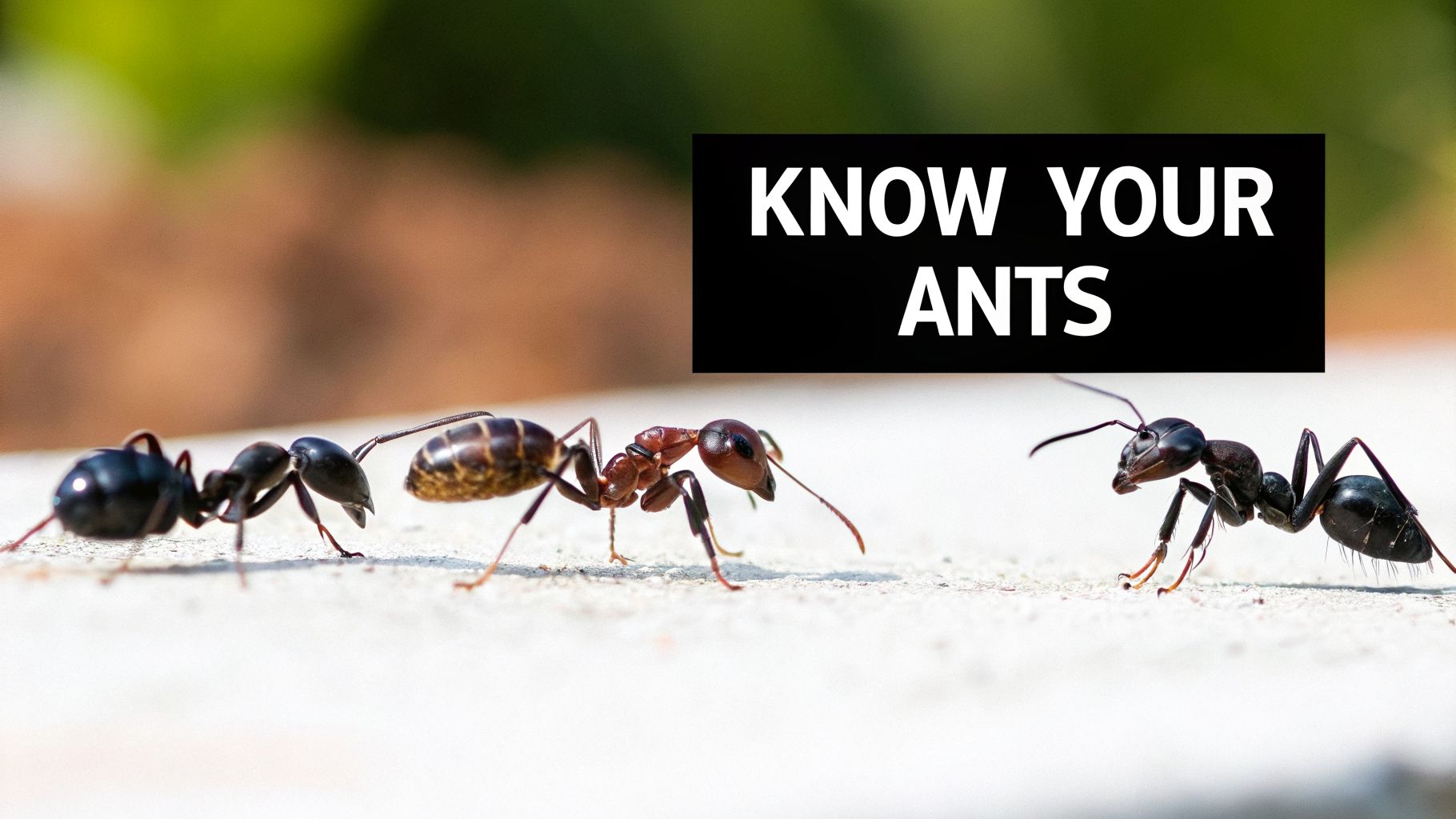
Before you can win the war against ants in your Cumming home, you have to know your enemy. Different ant species have their own unique nesting habits, food preferences, and behaviors. This is why a one-size-fits-all approach so often falls flat. Identifying the specific invader is the foundation of any effective, lasting strategy.
It's a common reaction in Forsyth County: you see a line of tiny black ants and immediately grab a spray. The problem is, that only kills the foragers you see. It does nothing to the queen and the thousands of other ants back in the nest, who will just send out more troops tomorrow. A much smarter approach is to observe them for a bit, which helps you tailor your natural methods for maximum impact.
Identifying Your Unwanted Houseguests
The ants trailing across your kitchen counter in Alpharetta are probably a different species from the ones building mounds in your Dahlonega lawn. Each one calls for a distinct game plan. Let’s break down the most common culprits you’ll likely run into around here.
- Odorous House Ants: These are the tiny, dark brown or black ants famous for that rotten coconut smell they let off when you crush one. They’re the ones you see marching in long, determined lines into the kitchen, on a mission for sweets and water.
- Argentine Ants: Looking very similar to odorous house ants, these light to dark brown ants are a serious challenge. They form massive "supercolonies" with multiple queens, which means wiping out one nest barely makes a dent. We see them all the time in Johns Creek and Milton.
- Carpenter Ants: If you see a large, black ant, especially near damp or rotting wood, pay attention. These guys are more than a nuisance; they can damage your home's structure. They don’t eat wood like termites do, but they chew through it to build their nests, leaving behind little piles of sawdust-like material called frass.
- Fire Ants: Famous for their nasty tempers and painful stings, fire ants build those obvious, mounded nests in sunny spots on the lawn. Accidentally disturb a mound in your Cumming yard, and you’ll quickly face a swarm of angry ants delivering venomous stings.
Knowing you have Odorous House Ants versus Carpenter Ants is the difference between a simple pantry clean-out and a call to a professional to prevent serious structural damage. Identification is your first and most powerful tool.
From Identification to Proactive Prevention
Once you know what kind of ant you're dealing with, your focus should immediately shift to prevention. The goal is simple: make your home as unappealing to them as possible. Cut off the resources they need to survive, and they'll go elsewhere. This is a far more effective long-term strategy than just reacting when you see them.
Think of your home's foundation as its first line of defense. Ants are masters of finding a way in and can squeeze through the tiniest cracks. Spend a weekend afternoon sealing up gaps around pipes, windows, and along the foundation. You’ll be amazed at how many future headaches you can prevent.
Controlling moisture is just as important. A leaky faucet under the sink, a clogged gutter, or poor drainage around your house creates a perfect, damp environment that ants love—especially Carpenter Ants. Fixing these issues not only helps kill ants naturally by taking away their water source but also protects your home from water damage. Simple habits, like keeping mulch and firewood piles away from your foundation, get rid of the bridges ants use to walk right into your house.
By combining smart identification with proactive prevention, you create a robust defense that keeps your North Georgia home pest-free without reaching for harsh chemicals.
Safe and Natural Indoor Ant Repellents
When you find a line of ants marching across your kitchen counter in Alpharetta, the instinct is to grab the harshest chemical spray you can find. But you don't have to. Your pantry probably has everything you need to stop them in their tracks—safely and naturally.
These DIY methods work by disrupting the invisible pheromone trails ants leave behind for their nestmates to follow. It’s like erasing their GPS directions. Instead of just killing the few ants you see, you're confusing the entire colony and making your home an unattractive destination.
Erase Ant Trails with a Simple Vinegar Solution
One of the most effective tools I recommend is plain old white vinegar. Ants navigate using scent, and vinegar’s powerful aroma completely wipes out their chemical trail, leaving any newcomers hopelessly lost.
Making a spray is simple. Just mix equal parts white vinegar and water in a spray bottle. I like to add about 10-15 drops of peppermint or lemon essential oil to cut the vinegar smell and add another layer of repellent power. Shake it up, and you're ready to go.
Spray the solution directly on the ants and along their entire path—baseboards, countertops, window sills, you name it. This erases their highway and prevents reinforcements from finding their way in.
Create Potent Barriers with Essential Oils
Certain essential oils are fantastic ant deterrents. Their strong scents are overwhelming to ants, who will steer clear of any area treated with them. Peppermint oil is the go-to for most people, but I’ve also seen great results with tea tree, cinnamon leaf, and citrus oils like orange or lemon.
For a quick fix, just put a few drops of peppermint oil on a cotton ball and tuck it into corners where you see ants entering. Under sinks, inside cabinets, or near small cracks in the wall are perfect spots. It’s a simple trick I’ve shared with homeowners from Cumming to Johns Creek, and it works.
You can also create a barrier spray by adding 15-20 drops of your chosen oil to a spray bottle filled with water. Mist this along doorways, windowsills, and other entry points to create a "no-go zone." The scent fades, so be sure to reapply every few days to keep the barrier fresh. For more ideas, you can check out guides on how to get rid of ants naturally using simple home ingredients.
Block Entry Points with Common Household Items
Sometimes, the best defense is a good old-fashioned roadblock. You can use everyday items to create physical barriers that ants simply refuse to cross. It’s a great way to kill ants naturally indoors by stopping them before they even get started.
- Used Coffee Grounds: That morning brew does more than wake you up. Ants can't stand the smell and acidity of coffee grounds. Sprinkle a line of them across exterior door thresholds or along windowsills where you’ve seen activity.
- Cinnamon: Whether it's ground or in stick form, cinnamon is a powerful and fragrant repellent. Ants find its strong scent irritating and won't cross a line of it. This is a great-smelling option for inside kitchen cabinets.
- Chalk or Diatomaceous Earth: A thick line of chalk works because the fine powder messes with the ants' sensory systems. Food-grade diatomaceous earth has the same effect, sticking to their bodies and disrupting their ability to navigate.
While many of these solutions are pet-friendly, it’s always smart to be mindful of your furry family members. If you’re looking for more ways to keep your home pest-free without putting pets at risk, check out our resources on safe pesticides for pets. Using these simple, natural tools, you can defend your Dahlonega home from ants without ever reaching for a chemical spray can.
Using Natural Baits to Get Rid of the Entire Ant Colony
When you've got a full-blown ant invasion in your Cumming home, just repelling them isn't enough. You need to go on the offensive. The only way to truly kill ants naturally and for good is to take out the entire colony, queen and all. That’s where natural baits come into play—they cleverly turn the ants' own biology against them.
Unlike a spray that only kills the foragers you can see, a good bait works slowly. The worker ants think they've found a jackpot of sweet food, so they haul it back to the nest. There, they share it with everyone, including the queen. This is the secret to wiping out the problem at its source, not just temporarily thinning the herd.
The goal is to create a layered defense. You can use deterrents to steer ants away from certain areas and guide them directly toward the baits you've laid out for them.
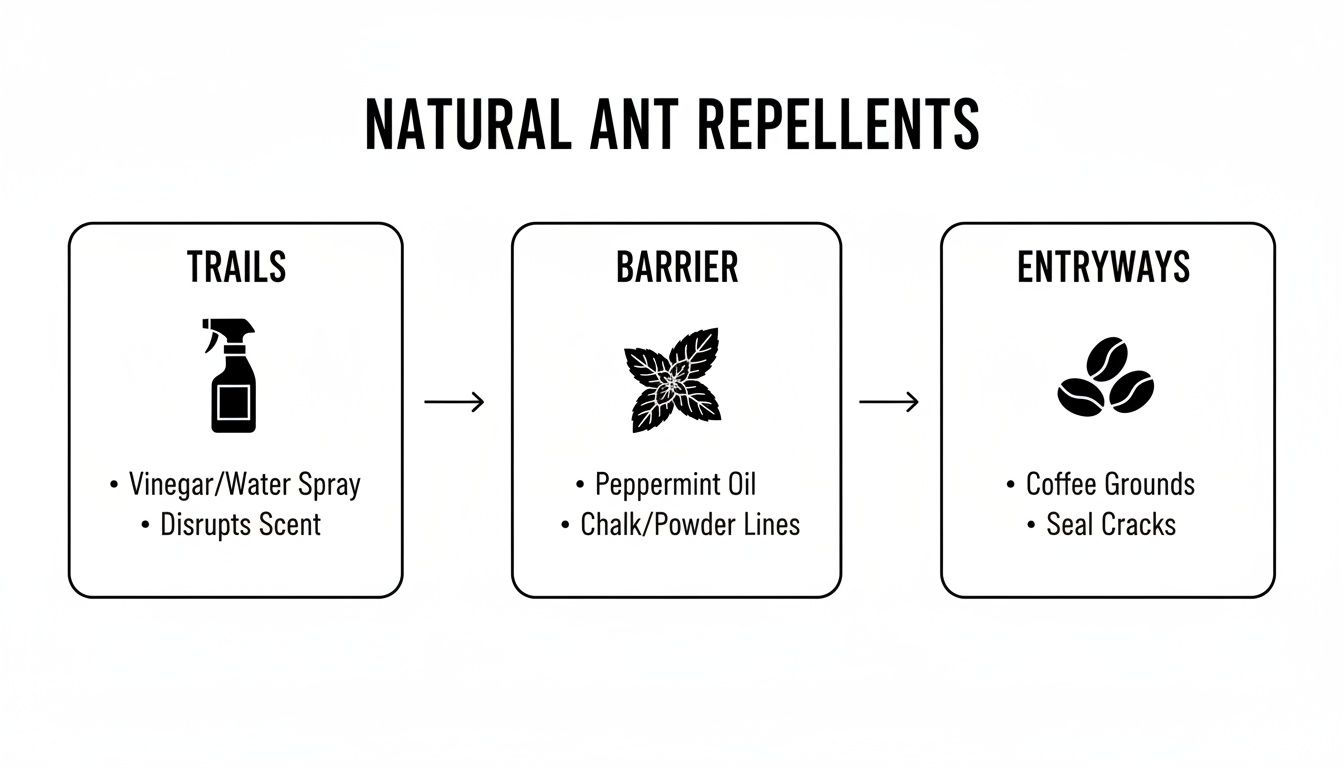
As you can see, blocking their favorite routes with things they hate makes your carefully placed baits the most attractive option available.
The Classic Borax and Sugar Bait
This is one of the most reliable DIY baits out there, and it only requires two simple ingredients: borax and sugar. Borax is a naturally occurring mineral that’s deadly to ants, but it works slowly enough to let the workers spread it throughout the nest back in Johns Creek or Alpharetta before it takes effect.
Here’s how to mix it up:
- Combine your ingredients. You'll want a ratio of one part borax to three parts powdered sugar. Using powdered sugar is key—its fine texture blends perfectly with the borax, so the ants can't just pick out the sweet stuff and leave the poison behind.
- Make it a paste. Add just a few drops of water at a time and stir until you have a thick, syrupy paste. The consistency should be easy for ants to eat and carry, not a watery mess.
- Set your bait stations. Spoon the paste into something small and shallow, like a plastic bottle cap, or just dab it onto a small piece of cardboard. Place these "stations" right in the middle of any ant trails you've spotted.
Safety First: Borax is natural, but it's still toxic if ingested. Always, always place these baits where pets and children cannot get to them. Think under the stove, behind the fridge, or deep inside a pantry cabinet.
You’ll need some patience here. At first, you might see more ants as they swarm the bait—this is a good thing! It means they're taking it back to the colony. Give it a few days, and you should see a dramatic drop in ant traffic.
Diatomaceous Earth for a Different Approach
Another fantastic tool for your natural pest control kit is diatomaceous earth (DE). This isn't a bait but a physical killer. DE is a soft powder made from the fossilized remains of tiny aquatic organisms. While it feels like flour to us, it’s covered in microscopic sharp edges that are lethal to insects.
DE works by scratching the ant's waxy exoskeleton, which causes them to dehydrate and die. Since it kills on contact, it’s perfect for creating deadly perimeters.
- How to apply it: Use a bulb duster or a small squeeze bottle to puff a very thin layer of dust. You're aiming for a light, barely-there coating, not thick piles.
- Where to put it: Apply DE along baseboards, under sinks, around trash cans, and across any thresholds in your Milton home. Pay close attention to any cracks or gaps where you suspect ants are getting in.
- An important note: Make sure you're using food-grade diatomaceous earth. This type is safe for homes with pets and children, though you should still avoid breathing in the dust during application.
Natural Ant Bait and Killer Comparison
Choosing the right tool for the job can feel overwhelming. This quick comparison should help you decide which natural method fits your specific situation.
| Method | Best For | How It Works | Pet/Child Safety Notes |
|---|---|---|---|
| Borax Bait | Total colony elimination. | Slow-acting stomach poison. Workers carry it back to the queen. | Toxic if ingested. Must be placed out of reach. |
| Diatomaceous Earth | Creating deadly barriers and treating cracks. | Physical action; scratches the exoskeleton, causing dehydration. | Food-grade DE is non-toxic. Avoid inhaling dust. |
| Boiling Water | Immediately destroying outdoor nests in soil/pavement. | Instant kill with extreme heat. | High risk of burns. Keep pets and kids far away. |
| Vinegar/Oil Sprays | Erasing scent trails and acting as a contact repellent. | Disrupts pheromones and repels ants. | Generally safe, but essential oils can be irritating to some pets. |
Ultimately, the best strategy is a combined one. No single method is a silver bullet, but using baits and barriers together creates a powerful defense.
Research backs this up. A study on Argentine ants, a common nuisance here in North Georgia, showed that combining targeted baits with low-toxicity perimeter treatments reduced ant activity by 80% to 95% over eight weeks. You can dig into the specifics in the full study from the University of California Riverside. It confirms what we see in the field all the time: a multi-pronged, natural approach works best.
Tackling Ant Mounds in Your Lawn and Garden
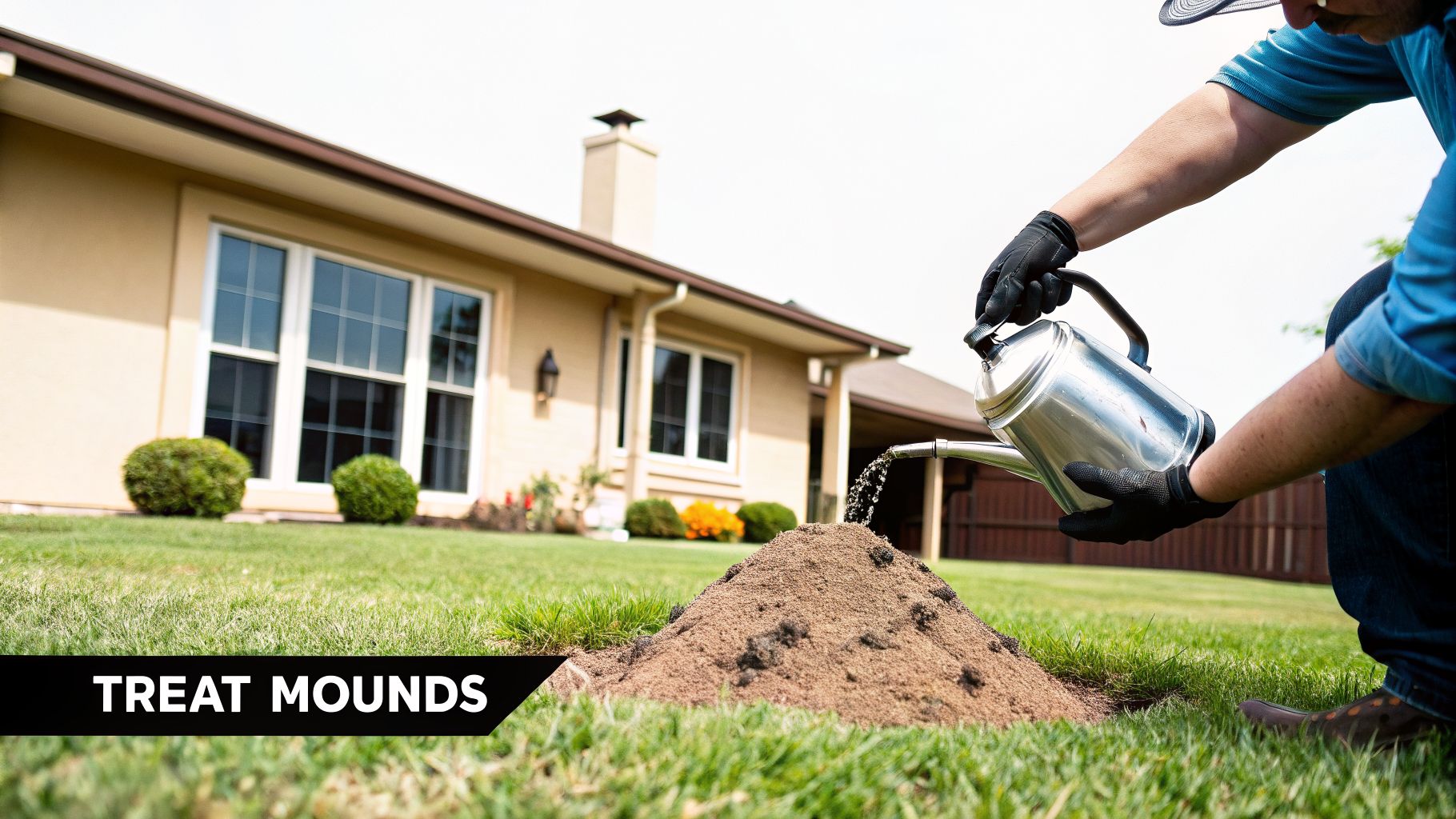
There’s nothing that ruins a beautiful lawn in Cumming or Alpharetta faster than a series of unsightly ant mounds. They turn a lush green space into a minefield, making it impossible to walk barefoot or let the kids and pets play freely. When you spot these mounds, you need a direct, powerful, and natural approach that hits the problem hard without harming your turf.
Moving from indoor baiting to outdoor warfare requires a real shift in tactics. While indoor solutions are all about precision and luring ants, mound treatments are about delivering a swift, targeted strike right to the heart of the colony. The goal here is to knock out the nest and the queen in one go, preventing the colony from just packing up and moving a few feet over.
The Simple Power of a Boiling Water Drench
One of the oldest and most effective tricks in the book is the simple boiling water drench. It’s a completely chemical-free method that’s surprisingly potent against outdoor ant colonies, especially the aggressive fire ants we see all over North Georgia.
Fire ants, a notorious pest from Cumming to Dahlonega, can often be managed with this straightforward technique. Pouring scalding water (190°F to 212°F) directly into the mound can achieve a 20% to 60% elimination rate on imported fire ant nests. According to entomologists at Texas A&M, this method works best on cool mornings or just after a rain when the ants are clustered near the surface.
The key to success is volume. You'll need at least three gallons of boiling water per mound to make sure it penetrates deep into the colony's tunnels.
Crucial Safety Warning: Handling this much boiling water is no joke. Always wear closed-toe shoes and heat-resistant gloves. Clear the area of pets and children before you start, and pour slowly and carefully to avoid splashing that could cause severe burns or damage nearby plants.
Strategic Application for Maximum Impact
Timing and technique are everything if you want to kill ants naturally with this method. A quick pour in the middle of a hot afternoon will likely miss the queen and a huge portion of the workers who are out foraging.
Here’s how to get it right:
- Treat Early in the Morning: Ants are less active and closer to the nest in the cool morning hours. This is your best window of opportunity.
- Use a Large Pot: A stockpot or a big kettle is perfect for boiling and carrying the amount of water you'll need.
- Pour Directly and Slowly: Stand right over the mound's central opening. Pour the boiling water slowly so it soaks down into the ground instead of just running off the sides.
- Be Thorough: Make sure you drench the entire visible mound and a small perimeter around it to catch any satellite tunnels.
Keep in mind, this method will probably kill a patch of grass right on the mound. It’s a small price to pay for getting rid of a painful fire ant colony, and the grass will grow back. If not, you can easily reseed the small area.
Beyond the Drench: It All Connects to Lawn Health
Directly treating ant mounds is a reactive measure, but the best long-term strategy is creating a lawn that ants find uninviting in the first place. A healthy, dense turf is its own best pest deterrent. Weak, patchy grass with compacted soil is basically an open invitation for ants to move in and set up shop.
This is where your treatment efforts connect to your broader lawn care routine. Things like core aeration, proper mowing height, and balanced, natural fertilization create a robust ecosystem. The healthier your lawn's root system is, the harder it is for ants to establish their sprawling underground networks. You can explore more about this holistic approach in our guide on how to kill fire ants naturally and build a resilient yard.
By combining direct, natural treatments like the boiling water drench with a focus on overall soil and turf health, you create a two-pronged defense that keeps your Cumming lawn beautiful, safe, and naturally pest-resistant.
Knowing When to Call a Professional for Help
DIY methods are fantastic, natural ways to handle most common ant problems. For many homeowners in places like Cumming or Johns Creek, they’re often all you need. But let's be realistic—sometimes, even the most dedicated efforts just don't cut it.
The real key to protecting your home and your sanity is knowing when to hang up your DIY hat and call in a pro.
Sometimes, despite your best efforts with baits and repellents, the ants just keep coming back. A recurring infestation is a huge red flag. It usually points to a much deeper issue, like a massive, hidden colony tucked away in a wall void or a persistent outdoor "supercolony" you simply can't find. When you feel like you've tried everything and they still show up, it’s time for a different game plan.
Recognizing the Signs of a Serious Problem
Not all ant invasions are created equal. A few sugar ants sniffing around the kitchen is one thing, but some situations are on a whole different level and really need an expert eye. If you spot any of the following, it’s a good idea to get a professional opinion.
You suspect Carpenter Ants. This is a big one. Finding little piles of what looks like sawdust (we call it frass) near wooden beams or window sills is a serious warning sign. Carpenter ants can cause real structural damage, and a pro can confirm what you're dealing with and target their nests directly, no guesswork involved.
The Fire Ant Mounds are Overwhelming. A couple of fire ant mounds are manageable. But when your entire yard in Alpharetta or Milton starts to feel like a minefield, it becomes a genuine safety hazard for your family and pets. Professionals have the right equipment and experience to tackle large-scale fire ant problems safely.
The Colony is Inside Your Walls. Hearing faint rustling sounds in the walls? Seeing ants marching out of electrical outlets or tiny cracks in the drywall? That's a clear sign you have a well-established colony living inside your home's structure. This is far beyond what simple baits can fix.
A professional service doesn’t just eliminate the ants you can see; they play detective to find the root cause. This means tracking down and treating the source colony, identifying and sealing entry points you might have missed, and setting up a long-term prevention strategy that’s actually tailored to your property.
The Advantage of Professional Organic Pest Control
Calling a professional doesn't mean you have to give up on your commitment to natural solutions. In fact, a nature-first service like Barefoot Organics brings advanced, eco-friendly strategies to the table that go way beyond what most homeowners can access. We can use integrated tactics, blending low-impact products with biological controls to get results that last. For example, when it comes to comprehensive natural pest control in the garden, we might explore effective methods like using neem oil for natural pest control.
Modern pest management science has shown time and again that these integrated approaches work incredibly well. Some large-scale projects have successfully paired low-toxicity baits with natural enemies, like specific types of fungi and even phorid flies, to suppress fire ant populations over the long haul—often outperforming harsh chemical treatments alone.
If your efforts to kill ants naturally aren’t getting the job done, don’t get discouraged. For those really tough or persistent infestations in the Cumming, Milton, and Dahlonega area, leaning on an expert is the smartest, most effective move you can make. Find out how our organic pest control services can provide a lasting, safe solution for your home.
Your Questions About Natural Ant Control Answered
After digging into all the ways to handle ants naturally, from wiping out their trails to flooding outdoor mounds, you probably still have a few questions. That’s completely normal. Getting a handle on a stubborn ant problem in your Dahlonega home can feel like a moving target, and you want to make sure you’re using the right approach.
Let’s tackle some of the most common questions we hear from homeowners all over North Georgia. We'll clear up the confusion so you can get to work with confidence, armed with the right info to protect your home safely and effectively.
How Long Do Natural Methods Take to Work?
This is probably the number one question on everyone's mind. The honest answer? It really depends on the method you choose and the size of the ant army you're up against.
- Immediate Repellents: Things like a vinegar spray or a peppermint oil barrier get to work instantly. The moment you spray, you’ve scrambled their pheromone trails and put up a "Do Not Cross" sign. This is perfect for stopping an active trail dead in its tracks.
- Slower-Acting Baits: A borax and sugar bait, on the other hand, is a long game. It’s designed to work slowly on purpose so the worker ants have time to carry the bait back to the nest and share it with the queen. You might even see more ants at first as they swarm the bait, but within a few days to a week, you should see their numbers plummet.
- Direct Mound Treatments: Pouring boiling water on a fire ant mound gives you immediate, visible results, wiping out a huge part of the colony right away. For a really big or deep mound, though, you might need a follow-up treatment to finish the job.
Are Natural Ant Killers as Effective as Chemicals?
For the vast majority of ant issues we see in homes, the answer is a big yes. The real difference isn’t about effectiveness—it's about strategy. Chemical pesticides often rely on a "spray and pray" tactic, killing ants on contact with a broad-spectrum poison.
Natural methods are more surgical. They work by disrupting ant behavior, creating physical barriers, or—most importantly—targeting the colony at its source. While a borax bait might take longer to work than a chemical spray, the end result is often more permanent because it eliminates the queen. No queen, no colony.
Think of it this way: a chemical spray is like mowing over a weed. It looks gone for a bit, but the root is still there, ready to sprout again. A natural bait is like pulling the weed out by the root, making sure it doesn't just pop back up next week. This is the core principle behind why we see such great, lasting results in homes from Alpharetta to Cumming.
Can I Combine Different Natural Methods?
Absolutely—in fact, you should! A multi-pronged strategy is almost always better than relying on a single tactic. When you combine methods, you attack the problem from all angles and create a layered defense that ants just can't seem to figure out.
For example, a solid plan for a kitchen invasion in Johns Creek might look like this:
- Clean and Repel: First, wipe down all your counters and floors with a vinegar solution to erase their invisible scent trails.
- Create Barriers: Next, place cotton balls soaked in peppermint oil near known entry points like windowsills, baseboards, or small cracks.
- Deploy Baits: Finally, set out your borax and sugar bait stations in out-of-the-way spots along their old trails, but make sure they're a little distance away from your repellent barriers. You want to steer the remaining ants right into your trap.
This combination of repelling, blocking, and baiting is way more powerful than any one of these methods on its own. It’s a smart, comprehensive way to kill ants naturally and take back your space for good.
When you feel like you've tried everything and the ants are still marching in, or if you're dealing with a massive or destructive infestation, it's time to call for backup. Barefoot Organics provides professional, nature-focused pest control that gets to the root cause of your ant problem, keeping your North Georgia home safe for your family and pets. Get your free quote today.