

Yes, lime is absolutely good for your grass, and if you live in North Georgia, it’s often the secret weapon for a truly healthy lawn. For homeowners in places like Cumming, Alpharetta, and Johns Creek, applying lime is one of the most important steps you can take to get that lush, green look.
Think of it this way: lime isn't fertilizer. Instead, it’s the key that unlocks the food your lawn needs to thrive, especially in our dense, acidic clay soil.
The Quick Answer for Your Georgia Lawn
Have you ever felt like you’re doing everything right—watering, fertilizing—but your lawn still looks yellow, thin, and just… sad? The problem is almost certainly hiding right under your feet.
The iconic red clay soil we have throughout Forsyth County, from Milton all the way up to Dahlonega, is naturally acidic. This acidity creates a tough environment for grass, essentially locking up essential nutrients and making your fertilizer far less effective. You can feed your lawn all day, but if the soil chemistry is off, the grass simply can't eat.
Applying lime is the single best way to fix this imbalance. It’s a soil conditioner that raises the pH level, bringing it into the sweet spot where your turf can finally absorb the nutrients it’s been starving for.
What Lime Really Does for Your Grass
Instead of just feeding the plant, lime fixes the foundation—the soil itself. This chemical adjustment creates a cascade of positive effects for your lawn.
Here’s a breakdown of what’s happening underground:
- Unlocks Nutrients: Lime’s primary job is to raise the soil pH. This makes vital nutrients like nitrogen, phosphorus, and potassium—the "big three" for lawn health—chemically available for your grass roots to absorb.
- Boosts Fertilizer Efficiency: When the pH is balanced, the fertilizer you spread actually gets used by the grass. This means you get a much better return on your investment and less nutrient runoff.
- Strengthens Grass: With proper access to food, your turf develops deeper, stronger roots. A strong root system makes your lawn more resilient against drought, summer heat, and heavy foot traffic.
- Reduces Weeds and Moss: Many common weeds and mosses absolutely love acidic soil where grass struggles. By balancing the pH, you create an environment where your turf can naturally crowd them out.
Just imagine turning your patchy, yellowing North Georgia lawn into a thick, vibrant green carpet that your kids and pets can safely enjoy all year. That’s the real power of a well-timed lime application.
This is especially true in areas like Cumming, Alpharetta, and Forsyth County, where our red clay soils often test with pH levels dipping below 6.0. Correcting this can boost grass growth by an extra 10-15% from a single treatment. In practical terms, a homeowner in Johns Creek or Milton could see a noticeably thicker, greener lawn in just a few months. You can read more about the benefits of liming your soil to see exactly how this process works.
Why Soil pH Is the Secret to a Greener Lawn
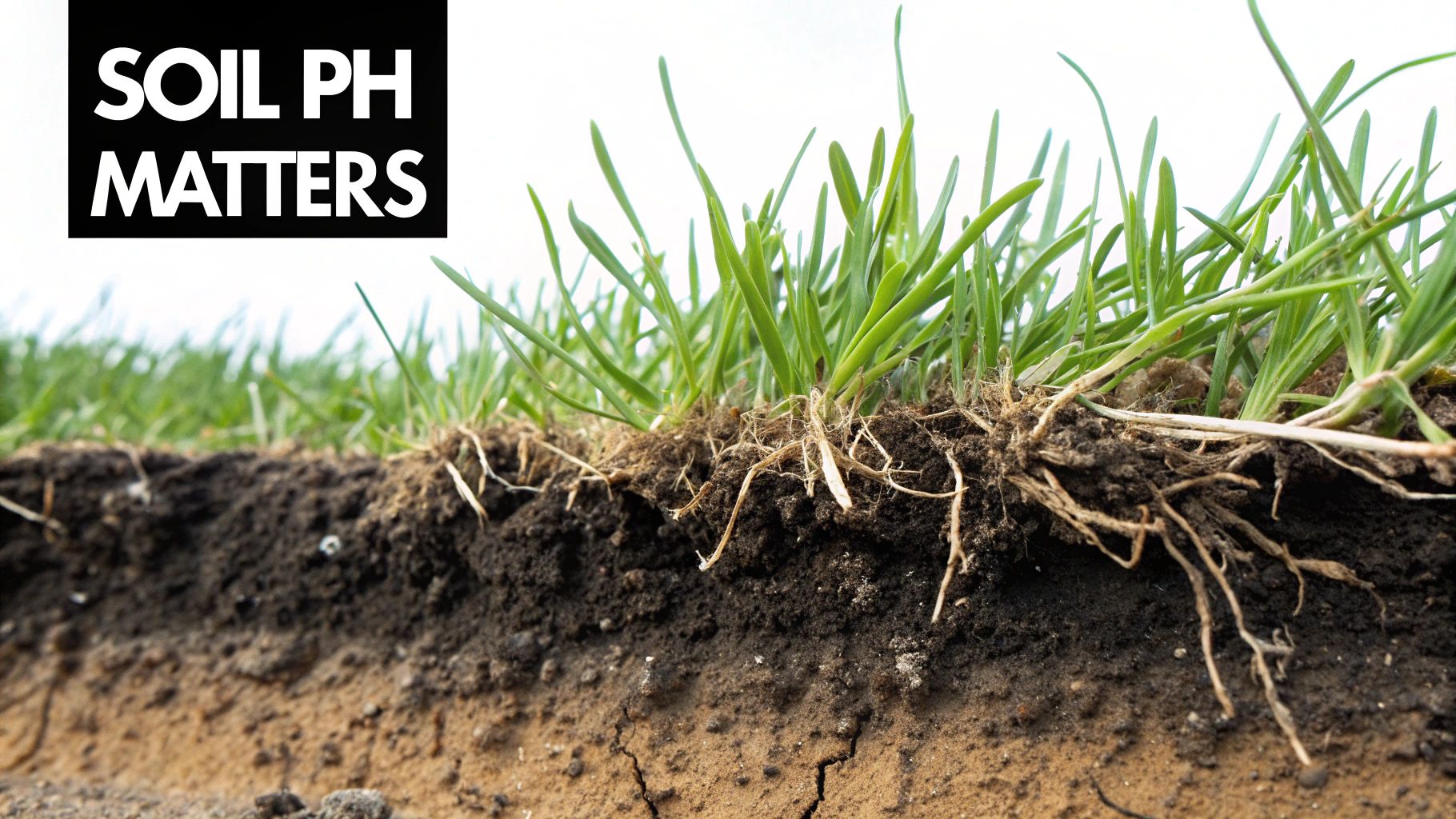
To really get why lime can be so transformative for your grass, we need to dig a little deeper—right into your soil’s chemistry. Think of your soil's pH level as the gatekeeper for nutrients. If that gate is locked, it doesn't matter how much you fertilize or water; your grass simply can't get what it needs to thrive.
Here in North Georgia, from Milton to Dahlonega, we're famous for our dense, red clay. While it’s part of our landscape's character, this soil is also naturally acidic. That low pH is often the hidden culprit behind a yard full of frustrations.
The Problem with Acidic Soil
When your soil gets too acidic, it kicks off a chemical reaction that essentially puts vital nutrients on lockdown. All those essential minerals in your fertilizer—like nitrogen for that deep green color, phosphorus for strong roots, and potassium for overall resilience—get trapped. They’re "locked up" in the soil.
It's like serving your lawn a gourmet meal behind a locked door. The food is right there, but the grass roots can't physically get to it. This directly leads to a weak, yellowing lawn that’s an open invitation for weeds, moss, and disease.
Key Takeaway: Correcting soil pH isn't just another task on the lawn care checklist. It's the foundational step that makes every other treatment you do—from fertilizing to watering—far more effective.
In the rolling hills of Forsyth and North Fulton counties, where our iconic Bermuda and fescue grasses are constantly fighting these acidic conditions, lime is a game-changer. Research from institutions like the University of Georgia Extension confirms that a pH below 6.0 seriously hampers the availability of key nutrients. This leaves your turf weak and vulnerable to the heat, foot traffic, and drought that are just a part of life in North Georgia.
Understanding the pH Scale
The pH scale is just a simple way to measure how acidic or alkaline something is, ranging from 0 to 14. A perfect 7.0 is neutral. Anything below that is acidic, and anything above is alkaline.
Most of our turfgrasses, especially the fescue and Bermuda so common in Alpharetta and Johns Creek, are happiest in a slightly acidic to neutral range—ideally between 6.2 and 7.0. The problem is, our native clay soil often registers well below this sweet spot, sometimes dropping into the low 5s.
- Below 6.0 (Too Acidic): Nutrients are locked up and unavailable. Moss and weeds that love acidic soil, like crabgrass and plantain, start to take over.
- 6.2 to 7.0 (The Sweet Spot): Nutrients are easily accessible. Your grass grows thick and strong, naturally choking out unwanted invaders.
- Above 7.5 (Too Alkaline): This is less common around here, but it can lock up a different set of nutrients and cause its own set of lawn health problems.
This is exactly why just piling more fertilizer on a struggling lawn often yields disappointing results. It’s like trying to shout louder at someone who doesn't speak your language—it doesn't fix the fundamental communication breakdown.
How Lime Solves the Problem
Applying lime directly addresses this nutrient lockout. Lime is a completely natural product made from ground limestone, which contains calcium carbonate and magnesium carbonate. These compounds work to neutralize the acidity in the soil, raising the pH back into that optimal range where your grass can flourish.
By "sweetening" the soil, lime basically unlocks the pantry door. It allows your grass to finally absorb the nutrients that were already there all along, leading to a greener, denser, and more resilient lawn. This simple adjustment is often the missing piece of the puzzle between a frustrating yard and a beautiful, healthy landscape.
How to Know if Your Lawn Needs Lime
Your lawn has its own way of telling you when something's wrong. For homeowners here in Cumming or Alpharetta, learning to read those signals is the first step. You might be tempted to just throw more fertilizer at the problem, but if the issue is soil pH, that’s like trying to fill a leaky bucket. Paying attention to specific warning signs will point you toward the real culprit: acidic soil.
One of the biggest red flags we see in our region is a lawn that just won't green up, no matter how much you feed it. If you're fertilizing on schedule but your grass stays a sad, pale yellow, that’s a classic sign that the nutrients are "locked up" by acidic soil. It’s a frustrating cycle—you’re spending time and money, but your grass is essentially starving because it can't access the food right under its nose.
Look for Visual Clues in Your Yard
Beyond just poor color, other clues can pop up right in your yard. Next time you're outside, take a walk around your property in Johns Creek or Milton and keep an eye out for these tell-tale signs.
- Persistent Moss Patches: Moss absolutely loves shady, damp, acidic soil—the exact conditions where healthy grass gives up. If you're seeing patches of that velvety green moss creeping in, especially in areas that stay wet, it's a huge hint that your soil pH is too low.
- Specific Weed Invasions: Some weeds aren't just nuisances; they're indicators. Certain types, like sorrel, plantain, and even crabgrass, thrive in acidic conditions where your turfgrass struggles to compete. An invasion of these particular weeds can be a sign they’re taking advantage of the imbalance.
- Poor Fertilizer Response: This one is a dead giveaway. You fertilized weeks ago, followed all the instructions, and… nothing. That lack of response is a classic symptom of nutrient lockout from low pH.
Important Note: These visual signs are great clues, but they aren't a final diagnosis. They strongly suggest a problem with acidic soil, but they can't tell you how severe it is or exactly what it will take to fix it.
The Only Way to Know for Sure Is a Soil Test
Spotting moss or yellowing grass is a great start, but it’s still just an educated guess. The only way to get a precise, actionable answer is with a professional soil test. This is, without a doubt, the most important thing you can do before even thinking about putting lime on your lawn.
A soil test takes you from guessing to knowing. It gives you an exact number for your soil's pH, showing you precisely where it stands relative to the ideal range—around 6.2 to 7.0—for North Georgia grasses like Fescue and Bermuda. Any reading below that sweet spot means your lawn is a prime candidate for a lime application.
This is the scientific approach we rely on at Barefoot Organics to take all the guesswork out of the picture. We collect soil samples from your property, whether you're in Cumming or Dahlonega, to get a clear picture of what’s happening underground. For a deeper dive into how this all works, check out our guide on how to test soil pH.
With that hard data in hand, we can build a smart, effective plan just for your lawn. Instead of blindly spreading a generic amount of lime, we calculate the exact rate needed to gently nudge your soil back into balance. This ensures you get the best results without wasting product or, worse, over-applying and creating a new set of problems.
The Right Way to Apply Lime for Best Results

So, you've figured out your lawn needs lime. That's a huge first step, but the real magic is in the application. Spreading lime correctly is just as important as the diagnosis itself—it's where timing, product choice, and technique all come together to finally "sweeten" your soil and unlock your lawn's full potential.
This isn’t a situation where "more is better." It’s all about precision. For homeowners from Cumming to Dahlonega, getting this part right means you get the maximum benefit without wasting product or time. A botched application can delay results or, even worse, create a whole new set of imbalances in your soil.
When to Apply Lime in North Georgia
Timing is everything, especially with North Georgia's distinct seasons. While you can technically put down lime any time of year, we have two prime windows that use our local climate to get the job done right.
-
Fall: This is my personal favorite. Applying lime in the fall gives it the entire winter to work its way into the soil. The consistent rain and the natural freeze-thaw cycles of a Georgia winter do a fantastic job of breaking down the limestone and getting it deep into the ground.
-
Early Spring: This is a close second. An early spring application gets the pH moving in the right direction just as your grass is waking up from dormancy. It preps the soil for the growing season and makes your spring fertilizers much more effective.
The secret ingredient for both seasons? Moisture. Water is the vehicle that carries lime down into the root zone where it actually neutralizes the acidity. Our predictable fall and spring rains do most of the heavy lifting for you.
Choosing the Right Type of Lime
When you go to buy lime, you'll generally find two main types. Both are made from ground limestone, but their form makes a huge difference in how you apply them and how quickly they get to work.
Key Insight: The form of lime you choose directly impacts how easy and clean the job is. For a uniform, predictable result that doesn't leave you covered in dust, picking the right product is essential.
You'll notice that professional lawn services in areas like Alpharetta and Milton almost exclusively use pelletized lime, and for good reason. It’s designed to be spread evenly with minimal dust, which means the product lands exactly where you want it to. For a more detailed walkthrough, check out our guide on how to apply lime to your lawn.
Choosing the Right Lime for Your Lawn
Not all lime is created equal. The product you choose affects the ease and cleanliness of the application. Here's a quick comparison to help you decide.
| Type of Lime | Description | Best For | Application Notes |
|---|---|---|---|
| Pelletized Lime | Pulverized lime mixed with a binding agent to form small, uniform pellets. | Homeowner and professional use. | Spreads easily and evenly with a standard broadcast spreader. The low-dust formula makes for a much cleaner job. |
| Pulverized Lime | Finely ground limestone that has the consistency of powder or fine dust. | Primarily agricultural or commercial use. | Very dusty and notoriously difficult to spread evenly without specialized equipment. Can be incredibly messy. |
For most homeowners, pelletized lime is the clear winner for its simplicity and effectiveness.
The Most Important Rule: Application Rates
Now for the most critical part of the whole process: how much lime does your lawn actually need? The only correct answer comes from your soil test results. Applying lime is a precise science, not a guessing game.
Your report will tell you exactly how many pounds of lime are needed per 1,000 square feet to bring your soil's pH into the sweet spot for your grass type. If you apply too little, you won't fix the problem. If you apply too much, you can send the pH too high, which just locks up a different set of essential nutrients.
On an established lawn, we never recommend applying more than 50 pounds per 1,000 square feet in a single go. If your soil test calls for a heavier rate, the best practice is to split it into two applications—one in the fall and another in the spring. This gradual approach avoids shocking the soil and ensures a steady, balanced adjustment.
Creating a Truly Healthy Lawn Beyond Just Lime
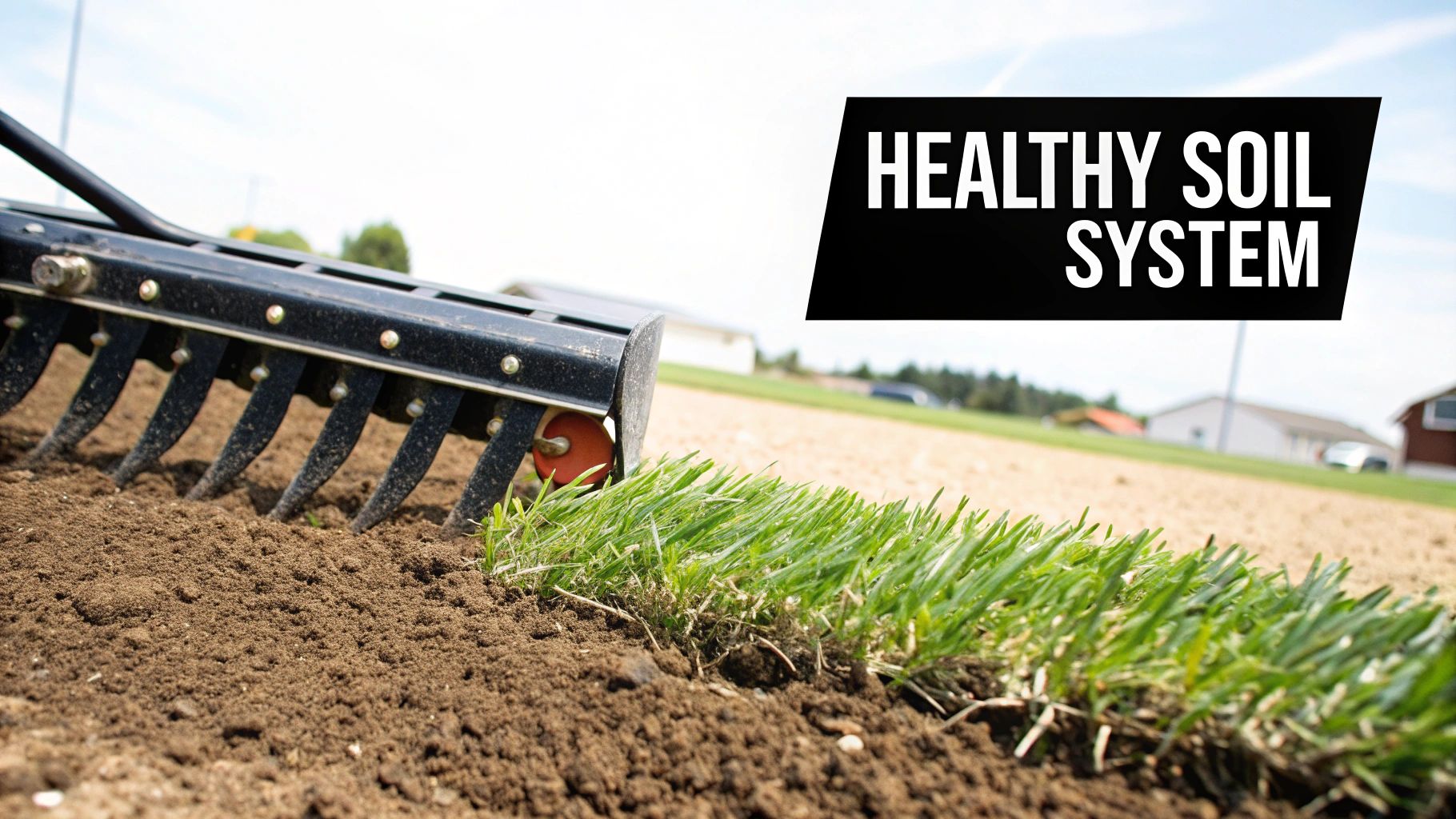
Putting down lime is a huge step forward for our acidic clay soil here in North Georgia, but it's not the end of the story. Think of it this way: lime is the key that unlocks your soil’s hidden potential. If you want a truly tough, healthy lawn that can handle our sweltering summers and intense downpours, you have to follow up with other good practices.
Lime sets the stage, but it needs a supporting cast. Practices like core aeration and organic topdressing work hand-in-glove with liming, creating a powerful cycle of soil improvement. Together, they build a strong foundation from the ground up, getting you off the treadmill of temporary fixes and onto the path of lasting lawn vitality.
Breaking Through with Core Aeration
Picture your lawn's soil as a brick. Over time, foot traffic, mowing, and our naturally dense clay compact it until water and nutrients can barely squeeze through. It's a classic problem across Forsyth County and surrounding areas like Milton and Johns Creek, and it chokes the life out of your grass, making any treatment—including lime—far less effective.
Core aeration is the answer. We use a machine to pull out small plugs of soil, creating thousands of little channels that let your lawn breathe again. These channels become superhighways for everything your grass roots are begging for.
- Deeper Lime Penetration: Aeration gives the lime a direct path down into the root zone, which dramatically speeds up the pH-balancing process.
- Improved Water and Oxygen Flow: It instantly relieves compaction, allowing critical water and oxygen to flood the root system and fuel new growth.
- Enhanced Nutrient Absorption: Fertilizer and other treatments actually get down where they're needed instead of just sitting on top.
Simply put, aeration preps the soil to get the absolute most out of the lime you apply.
Building Rich Soil with Organic Topdressing
So, you’ve used lime to fix the pH and aeration to open up the soil. What’s next? You enrich it. Applying an organic topdressing is like serving your lawn a five-star meal, packed with nutrients and beneficial microbes.
Topdressing is just the simple act of spreading a thin layer of rich, organic material—like a high-quality compost—over the turf. This material works its way into the aeration holes and settles on the soil surface, kickstarting a whole host of good things.
A balanced pH from lime creates the perfect home for the beneficial microbes introduced through topdressing. These microbes are the tiny engines that drive a healthy soil ecosystem, breaking down organic matter and making nutrients available to your grass.
This process rebuilds our often-lifeless clay soil by adding vital organic matter, which improves its structure and water-holding capacity. A lawn with living, breathing soil is naturally more resilient to drought and better at fighting off diseases and pests on its own.
Taking care of your lawn this way is part of a bigger picture. For a complete view, it helps to follow a seasonal home maintenance checklist that keeps your entire property in great shape. By combining lime with aeration and topdressing, you’re not just treating symptoms—you’re building a fundamentally healthy ecosystem that will support a gorgeous lawn for years.
Common Questions We Hear About Liming Your Lawn
When it comes to liming, folks all over North Georgia, from Cumming to Alpharetta, tend to ask the same great questions. Getting the right answers is the first step to feeling confident about what you're putting on your yard. Let's tackle some of the most common ones we hear.
How Long Does It Take for Lime to Actually Work?
This is probably the number one question we get, and the short answer is: it’s a marathon, not a sprint. Lime starts dissolving and reacting with the soil as soon as you water it in, but the real magic happens over time. You might start to see your grass get a richer, deeper green within a few months as it finally starts pulling up nutrients it couldn't access before.
But for the full, pH-balancing effect? You're looking at six months to a year, sometimes even longer. Think of it less like a quick fix and more like a long-term investment in building a healthy foundation for your lawn.
Can I Put Down Lime and Fertilizer at the Same Time?
I'd strongly advise against it. While it might seem like you're saving a step, applying certain fertilizers and lime together can trigger a chemical reaction. This reaction can release the nitrogen from your fertilizer into the air as a gas, meaning you're essentially throwing away your money and effort.
A much better approach, especially for our local lawns in Johns Creek and the surrounding areas, is to apply lime in the fall or early spring. This gives it plenty of time to start adjusting the soil pH, setting the stage for your regular fertilizer to do its job properly when the time comes.
Will Lime Kill the Moss in My Yard?
This is a classic myth. Lime itself doesn't kill moss directly. What it does do is fix the sour, acidic soil that moss absolutely loves and your grass absolutely hates.
Moss thrives where grass struggles—in acidic, compacted soil that’s low on nutrients. By liming, you're not attacking the moss; you're changing the underlying conditions to favor lush, thick turf. As your grass gets healthier and denser, it naturally chokes out and outcompetes the moss. It’s a sustainable, long-term solution, not a quick chemical kill.
Is Lime Safe for My Kids and Pets?
Absolutely. When applied properly, the agricultural lime we use is just finely ground limestone—a natural, non-toxic mineral. It’s a fantastic choice for families in Forsyth County who want a beautiful lawn without introducing harsh synthetic chemicals into their outdoor space.
Safety First: Once the lime is spread and watered into the lawn thoroughly, the area is perfectly safe for kids and pets to get back to playing. The water is key; it helps the lime pellets start breaking down and moving into the soil where they need to be.
Ready to stop guessing and start giving your lawn what it actually needs? The team at Barefoot Organics provides professional soil testing and custom lime applications to restore balance to your soil and unlock your lawn's true potential. Get your free, no-obligation quote today!