

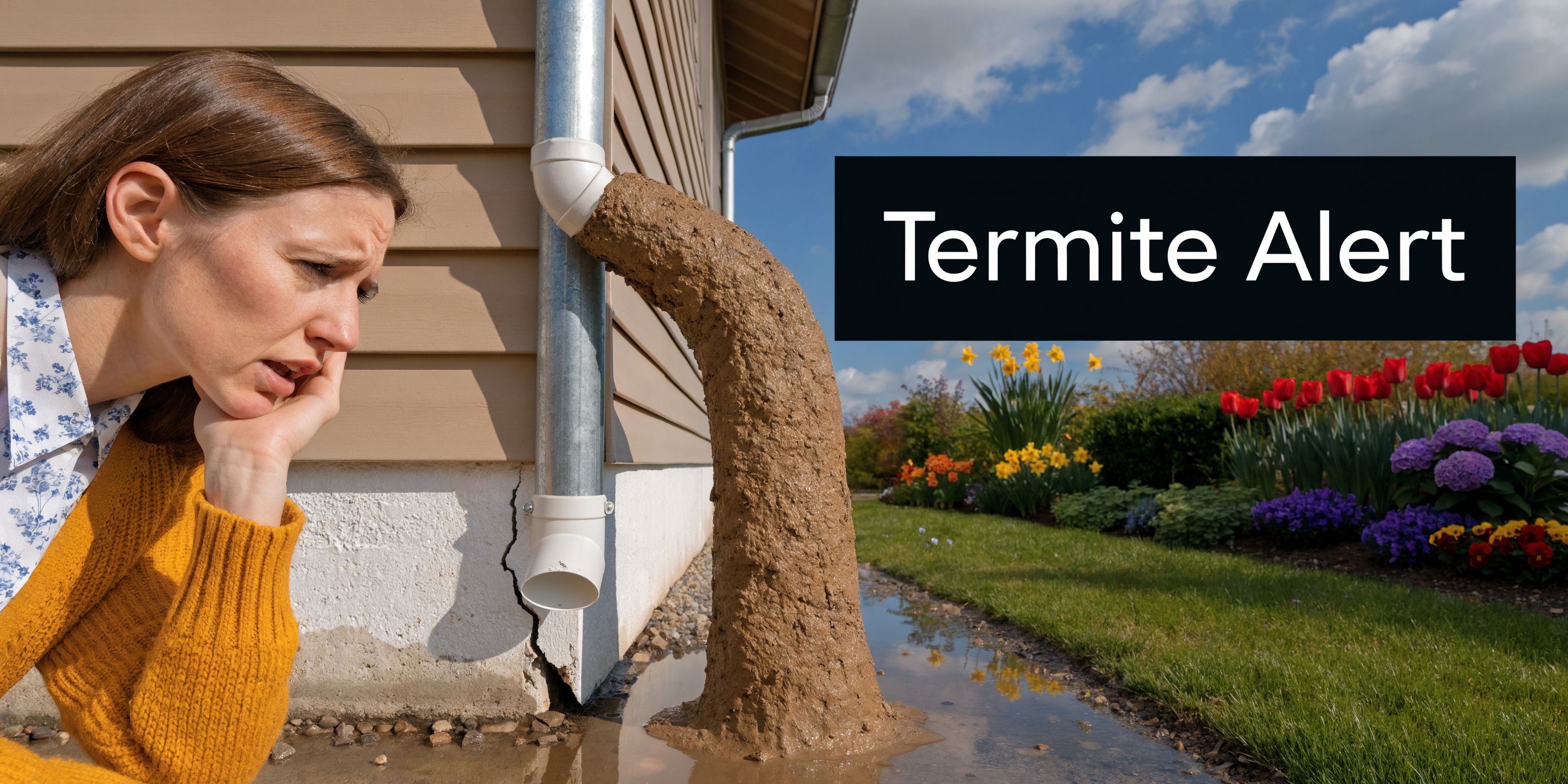
Spring in Cumming has a way of making termite problems show up at the worst time. You walk outside after a warm rain, notice a few winged insects near the window, then spot a muddy line climbing the foundation by the hose bib. If you live in Forsyth County, that is not unusual. It is one of the most common early warnings homeowners catch while doing normal yard work.
Termites are a structural pest problem, but around North Georgia they are also a property health problem. Moisture, drainage, mulch, wood contact, and our red Georgia clay all play a role in how much pressure a home sees. If you are trying to figure out how to treat termites without jumping to the harshest option, the right answer depends on what kind of termite activity you have, where it is happening, and how close treatment will be to kids, pets, wells, drains, or garden areas.
If you want a practical first step, call for a Free Lawn & Property Health Evaluation and start with the conditions around the home that make termite pressure worse. That gives you a clearer path before you commit to any treatment.
Your Guide to Termite Treatment in Cumming GA
A lot of homeowners in Cumming first notice termites by accident. One family sees swarmers around a back door during spring pollen season. Another finds a mud tube behind shrubs while pulling weeds along the foundation. Someone else hears from a neighbor in Alpharetta or Johns Creek that a pest company treated half the street, and suddenly they start checking their own crawl space.
That concern is valid. In this part of North Georgia, termite pressure fits the environment. Warm weather, humidity, wood framing, mulch beds, shaded foundation lines, and compacted clay soil all create conditions termites like.
What matters most is not panicking and not guessing. A homeowner can do a useful first inspection, but treatment choices should match the problem.
What homeowners in Cumming usually need to know first
Some people expect one universal answer. There is not one.
A termite issue near a deck post is different from active feeding inside a wall. A home in a newer Forsyth County subdivision with tight drainage issues is different from an older property in Dawsonville or Canton with mature trees, heavier shade, and more moisture around the structure.
Here is the practical starting point:
- If you see mud tubes or swarmers near the house, assume you need a close inspection.
- If activity is in structural wood, lean toward professional treatment.
- If the property has a well, cistern, French drain, or irrigation concerns, treatment selection gets more careful.
- If your main concern is family and pet exposure, ask about lower-chemical options, bait systems, and localized treatments instead of assuming trench-and-treat is the only path.
A smart termite plan in Cumming starts outside the house. Drainage, mulch depth, wood-to-soil contact, and moisture around the slab often explain why pressure shows up where it does.
Why this guide matters locally
Homeowners in Cumming, Milton, Suwanee, Buford, and the rest of North Atlanta deal with more than just insect pressure. They also deal with HOA expectations, expensive exterior repairs, and yards that swing from heavy rain to drought. That combination makes prevention just as important as treatment.
The goal here is simple. Give you a straight answer on what works, what has trade-offs, and how to treat termites in a way that fits North Georgia conditions.
Why Termite Control Is a Non-Negotiable for North Georgia Homeowners
A lot of termite problems in Cumming start with a house that looks fine from the street. The lawn is trimmed, pine straw is fresh, shrubs are neat, and the damage is still building where nobody sees it. By the time a homeowner notices soft trim, a stuck door, or activity near a deck, termites have often been working for a while.
That is why termite control needs to be treated as routine property protection in North Georgia, not as a one-time reaction.
Our local conditions give subterranean termites plenty of opportunity. Forsyth County homes deal with humid summers, mild winters, frequent rain, and long stretches where moisture lingers around the foundation. Red clay soils make it tougher because they can hold water near the home, then shrink and harden as conditions dry out. That movement creates small gaps around slabs, steps, utility penetrations, and porch connections, which are all places termites can use.
The risk also changes from yard to yard. A shaded lot with mature trees and heavy mulch usually holds moisture longer than a newer, open lot. A sprinkler head that stays aimed at the foundation can raise pressure in one corner of the house while the rest of the property stays dry. In my experience around Cumming and Forsyth County, termite pressure often follows moisture patterns before homeowners ever connect the two.
Professional treatments exist for a reason. Soil treatments and bait systems can both do the job, but they solve different problems and come with trade-offs. Liquid barriers are often chosen when active pressure needs to be controlled fast around the structure. Bait systems can be a better fit for homeowners who want a lower-chemical approach and ongoing monitoring, especially where wells, drainage features, or family exposure concerns affect the decision.
What matters most is choosing the method that fits the house, the site, and the homeowner's priorities.
For North Georgia families, termite control is also tied to the rest of the property. Mulch piled too high, wood touching soil, poor drainage, dense plantings against the foundation, and overwatered lawn edges all raise the odds of trouble. That is one reason a healthy yard matters beyond appearance. Good grading, smart irrigation, and cleaner foundation lines support termite prevention in a way generic advice usually misses.
A few local conditions raise concern quickly:
- Moisture staying near the slab or crawlspace after rain
- Mulch, pine straw, or soil covering the foundation edge
- Deck posts, lattice, or siding sitting too close to soil
- Irrigation overspray hitting the house
- Dense shrubs that block airflow and hide inspection points
Homeowners who want safer, family-friendly solutions should pay attention to those conditions first. Reducing termite pressure before treatment starts often leads to a better result and a more targeted plan. Around Cumming, the best termite work is rarely just about the product. It is about correcting the moisture and access conditions that invited the problem in the first place.
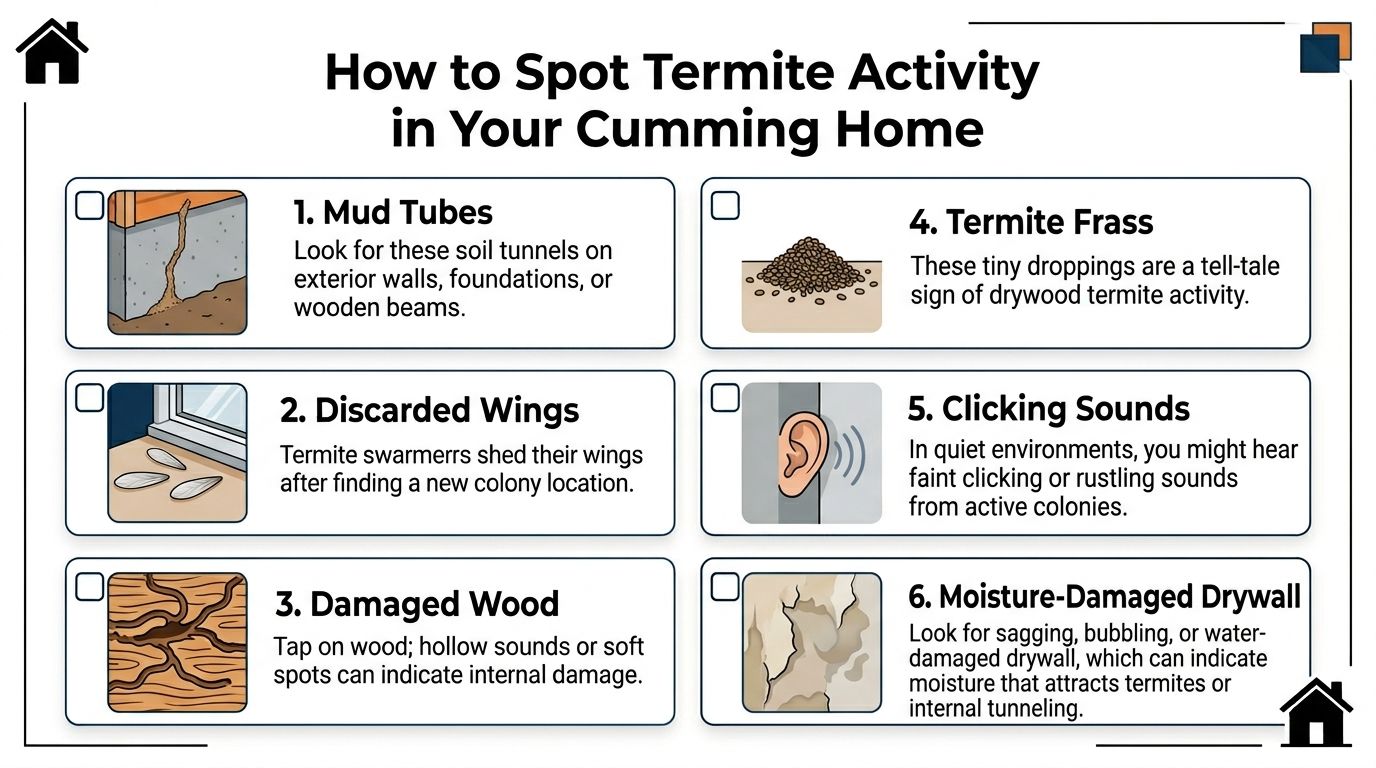
How to Spot Termite Activity in Your Cumming Home
Homeowners often catch the first signs themselves. That is helpful, as long as you know what you are seeing.
Start outside before you check inside
Most termite inspections around Cumming should begin at the exterior foundation. Walk the full perimeter slowly. Bring a flashlight and a flat screwdriver.
Look closely at:
- Foundation walls and brick veneer for mud tubes
- Deck posts and stair stringers where wood sits near soil or concrete
- Foundation vents and utility lines where termites can travel in hidden areas
- A/C drip lines and hose bibs because steady moisture changes the risk profile
- Mulched beds and pine straw that cover the slab edge
Mud tubes are one of the clearest signs for subterranean termites. On many Forsyth County homes, they show up as thin dirt tunnels running up block, concrete, brick, or behind shrubs tight to the house.
Know what swarmers do and do not mean
Spring swarms make people nervous for good reason. If you see winged termites indoors or near doors and windows, do not brush it off.
Swarmers do not tell you the full size of the problem. They do tell you termites are active nearby. A pile of discarded wings on a sill, in a garage corner, or under a light fixture deserves attention.
Flying ants get confused with termites frequently during spring in North Georgia. The simplest homeowner-level takeaway is this: if you are not sure, save a sample or take a clear close photo and get it identified. Guessing wastes time.
Check wood the right way
Termite-damaged wood often looks normal from the outside. The surface can stay intact while the interior is hollowed.
Use a screwdriver handle or knuckle to tap exposed wood around:
- door frames
- garage trim
- deck framing
- crawl space joists
- fence lines close to the home
If it sounds hollow, feels thin, or breaks open in layers, you may have termite activity. If the wood is soft, dark, and crumbly, moisture damage or rot may also be part of the problem.
Common North Georgia hotspots
Certain places deserve extra attention in Cumming, Alpharetta, and Suwanee homes:
- Plumbing entry points
Termites often use openings where pipes pass through slabs or walls. - Garage slabs and expansion joints
These areas can hide entry routes that are easy to miss during a casual walkaround. - Planted beds against the house
Fresh mulch looks neat, but it can cover warning signs. - Stored wood and scrap lumber
Firewood, old timber pile, and construction debris near the home raise the odds of trouble. - Moisture-prone rear elevations
North-facing or shaded sides of the home often stay damp longer after rain.
If you find one clear sign, stop there and document it. Smashing tubes, spraying a random insecticide, or scraping away evidence can make a proper diagnosis harder.
An Honest Look at Professional Termite Treatments
In Forsyth County, the treatment method matters almost as much as the diagnosis. Clay-heavy soil, crawl spaces, slab joints, mulch beds against foundations, and long wet stretches in spring all affect what works and what creates unnecessary disruption.
Professional termite treatment usually falls into three buckets. Liquid soil treatments, bait systems, and targeted wood or structural treatments. Each can solve the right problem. Each can also be the wrong fit if the house, the site, or the family’s comfort level is ignored.
Liquid barrier treatments in Cumming soil
For active subterranean termites, liquid soil treatments are still the standard choice on many North Georgia homes. The goal is straightforward. Put a continuous treated zone in the soil where termites are traveling so they contact it before they get into the structure.
On a typical Cumming property, that often means trenching along the foundation and drilling through concrete areas such as garage slabs, porches, or patios where soil is covered. It can work effectively when the application is complete and the house layout allows good access.
The trade-off is obvious once you see the process in person. It is more invasive than other options, and quality matters a lot. A missed section near a stoop, utility line, or expansion joint can leave a gap. Homes with drains, shallow wells, or drainage features also need extra caution.
Bait systems for lower-disruption control
Bait systems are a practical option for families who want less drilling and less broad soil treatment around the home. Stations are installed in the ground, monitored, and serviced over time as termites find and feed on them.
This approach is slower.
It is also useful on properties where lower-impact treatment matters, or where ongoing monitoring has real value because the home backs up to woods, stays damp, or has a history of termite activity. Around Cumming, I often see baiting make more sense on lots with developed grounds where homeowners have put time and money into keeping the yard healthier and less chemical-dependent. That same mindset is part of broader organic pest control options for North Georgia homes.
Special cases with wells, cisterns, and drains
Some properties need a more careful plan from the start. If a home has a well, cistern, French drain, or unusual water movement around the foundation, a standard liquid treatment may not be the first choice.
In those cases, bait systems or a mixed approach often make more sense because they reduce the amount of product placed into the soil. The best contractors slow down here, map the water features, and explain the trade-offs clearly instead of forcing the same treatment on every house.
What about fumigation
Fumigation has a place, but it is rarely the first recommendation for the subterranean termite problems most homeowners deal with in Cumming. It is generally reserved for serious drywood termite infestations or cases where termites are spread through inaccessible wood and spot treatment is unlikely to reach the full problem.
It works, but it comes with major preparation, temporary displacement, and no residual protection in soil.
Here is the practical comparison:
| Treatment type | Best fit | Upside | Trade-off |
|---|---|---|---|
| Liquid barrier | Active subterranean termites around foundations | Strong control and residual protection | Trenching and drilling are often required |
| Bait system | Homes needing lower soil disturbance or ongoing monitoring | Less invasive and useful near sensitive water features | Slower results and service depends on regular monitoring |
| Localized wood treatment | Small, defined activity in accessible wood | Targeted application with less broad treatment | Hidden or widespread infestations can be missed |
| Fumigation | Serious drywood termite infestations | Whole-structure reach | High disruption and no soil protection |
Safe and Natural Termite Options for Your Cumming Family
Families in Cumming, Milton, and Roswell ask a fair question. How do you treat termites without turning the whole yard into a chemical project?
The honest answer is that safe and natural termite options exist, but they work best when matched to the right situation. They are strongest for prevention, lower-pressure problems, and localized wood issues. They are not always a replacement for a full structural treatment.
Borate treatments for exposed wood
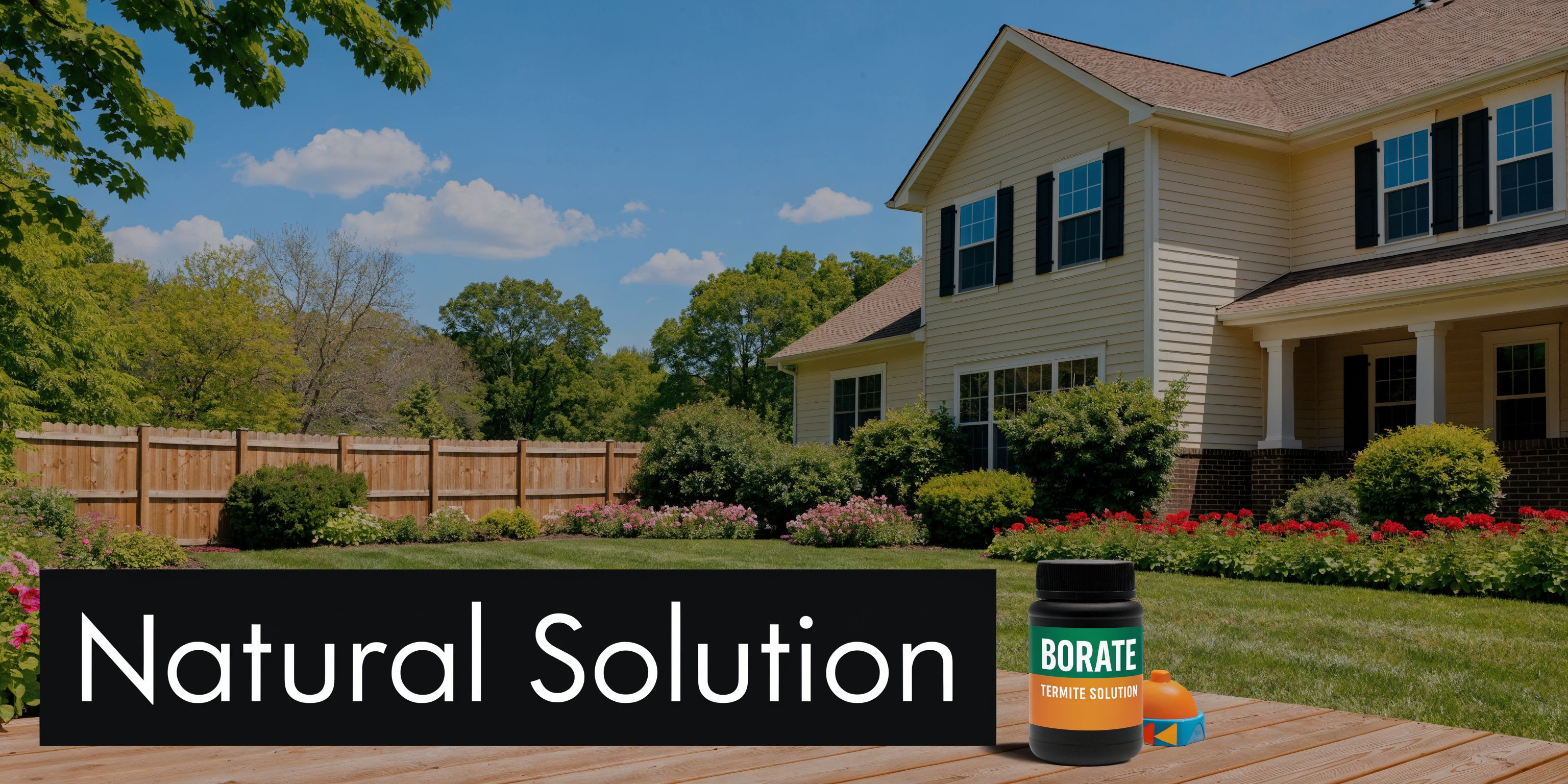
Borate is one of the most useful lower-chemical tools for wood that is accessible. It is especially practical during renovations, additions, deck work, shed construction, or any time raw wood is exposed before being sealed.
This is a strong fit for:
- exposed framing during remodels
- deck components before final finish
- fences and outbuildings
- wood elements near moisture-prone areas
Borate is not magic. It does not solve a hidden colony in soil. What it does well is protect treated wood and help stop feeding where the product can penetrate.
Localized treatment instead of broad treatment
Some homes have a specific termite issue in one accessible piece of wood. In those cases, a targeted injection or spot treatment can make more sense than a broad response.
One especially interesting option is a pinene-based localized injection method for drywood termites. This method uses pinene from pine trees as a lure and, when paired with a low-volume insecticide bait, achieved more than 95% mortality and used 30 to 50% less chemical than tenting in the reported research (pinene termite method summary).
That is promising for enclosed homes where owners want to avoid the disruption of tenting. It is also a reminder that targeted treatments can be both practical and family-conscious when the infestation type fits the method.
Natural support methods that help, but do not replace core treatment
Homeowners often ask about diatomaceous earth, beneficial nematodes, or other natural additions. These can be part of a lower-impact property plan, especially where you are also trying to keep the lawn and planted areas healthier for children and pets.
The key is to use them appropriately:
- Diatomaceous earth can help in dry, limited-use situations, but it is not a full structural termite treatment.
- Beneficial nematodes may fit broader soil biology goals, though they are not the same as a professional colony elimination strategy.
- Bait stations are often the best bridge between “natural-minded” and “effective” because they limit broad soil treatment while still targeting the colony.
For homeowners who prioritize lower-risk products around animals, practical reading on safe pesticides for pets helps frame the right questions before any treatment is applied.
The safest termite treatment is not always the lightest treatment. It is the treatment that solves the actual problem without unnecessary exposure or unnecessary disruption.
What usually does not work well
A lot of retail fixes sound appealing and fail in real conditions.
Spraying the outside of one mud tube rarely solves the colony. Tossing granules in mulch is not a strategy. Essential oils and casual DIY mixes may have a place in repelling some insects, but they do not replace a treatment plan for active termites in or under a house.
If you want low-chemical options, choose methods with a clear role. Borates for accessible wood. Baits for sensitive sites. Localized injections for defined wood infestations. Then pair those with moisture control and yard corrections.
Deciding Your Next Step DIY vs Hiring a Pro
Some termite situations allow for limited DIY action. Most do not.
The dividing line is not confidence. It is whether the problem involves the house itself, hidden access points, or treatment methods that require precision.
Cases where DIY can make sense
A homeowner can sometimes handle a small, isolated issue away from the structure. Think scrap lumber, an old timber pile, or a detached piece of wood that clearly is not part of the home.
DIY also makes sense for early prevention steps:
- removing wood debris
- cutting back mulch against the foundation
- fixing grade problems
- drying out wet zones
- replacing damaged wood-to-soil contact points
That kind of work lowers risk without pretending it is a substitute for termite control.
Cases where you need a professional
Call a licensed termite professional if you see:
- mud tubes on the home
- swarmers inside the house
- termite activity in framing, trim, or flooring
- damage around plumbing penetrations or slab edges
- signs near attached decks, porches, or garages
- any issue involving wells, drains, or complicated water movement
This is especially true in North Georgia where clay soil, expansion and contraction, and heavy rain can create hidden treatment gaps or unusual access routes.
A practical decision framework
Use this quick guide:
| Situation | DIY first step | Professional needed |
|---|---|---|
| Wood debris away from house | Remove and inspect area | Not always |
| Single suspicious insect sighting outdoors | Document and monitor | Sometimes |
| Mud tubes on foundation | Do not disturb, photograph | Yes |
| Swarmers indoors | Collect sample, reduce panic | Yes |
| Activity near well or French drain | Avoid trenching decisions yourself | Yes |
The biggest DIY mistake is partial treatment. Homeowners often treat what they can see and miss where termites are moving. The second biggest mistake is misapplication around water-sensitive areas.
If the house is involved, bring in a pro.
Long-Term Prevention A Healthy Yard Is Your First Defense
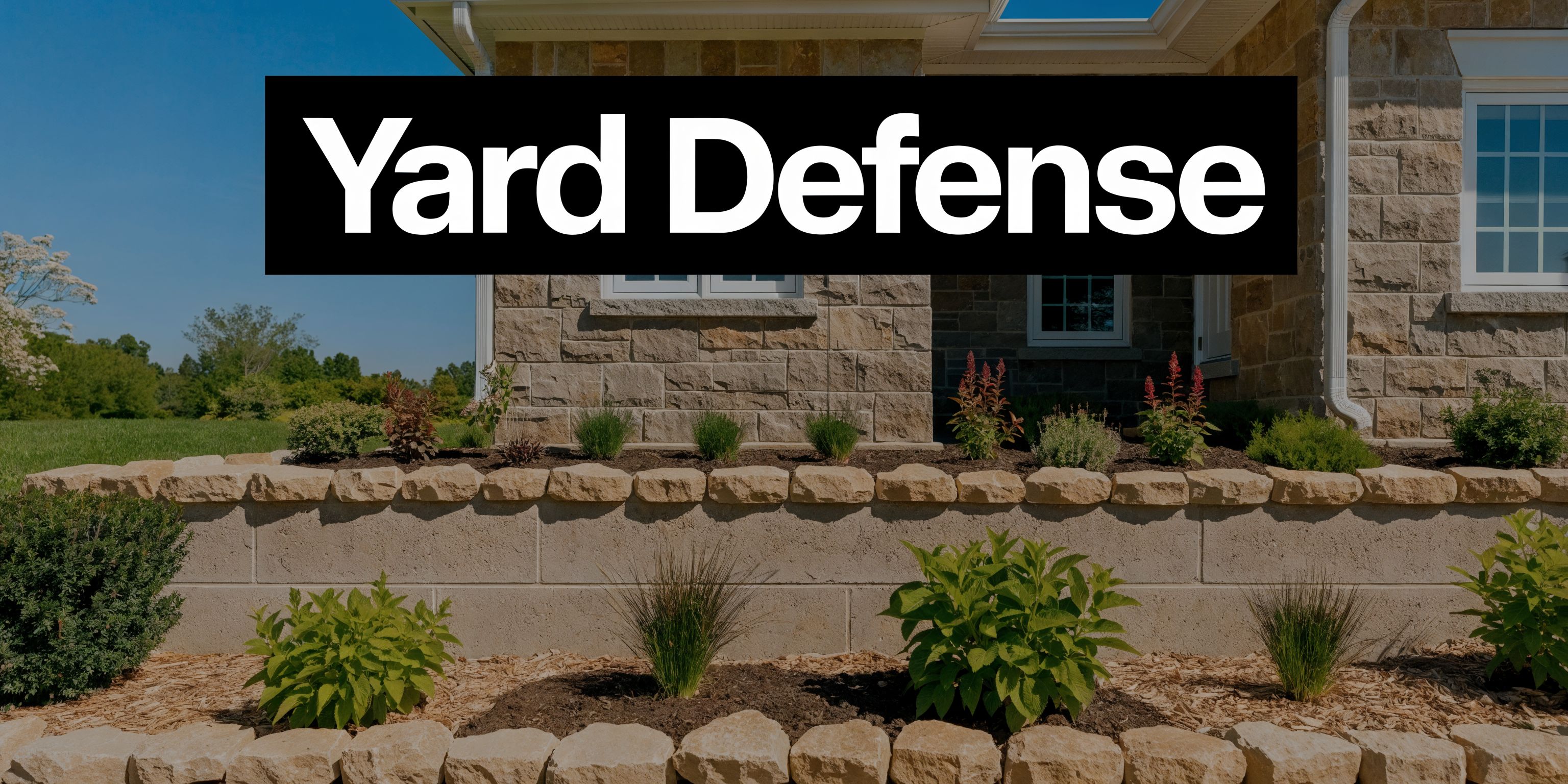
In Forsyth County, I see plenty of termite risk start outside the house, in the yard conditions that keep soil damp and the foundation hard to monitor. A home can look clean and well kept from the street while the beds along the wall stay shaded, wet, and hidden for days after a storm.
Manage water so the house can dry
North Georgia clay holds water longer than many homeowners expect. After a hard rain, that moisture can sit near the slab, porch footings, and planting beds, especially on the shaded side of the house. Then summer heat bakes the surface while deeper soil stays damp. That pattern creates steady termite pressure.
The best prevention work often starts with water control:
- Keep roof runoff moving away from the house so downspouts do not dump into beds at the foundation.
- Check sprinkler aim and timing so one wall is not getting wet every morning.
- Watch low spots near patios, stoops, and AC pads where water tends to linger.
- Correct drainage patterns that keep the same areas soggy after each storm.
If your lawn never seems to dry out, start with a practical guide on how to improve drainage in your yard. Better drainage helps the whole property, not just termite prevention.
Keep visibility around the structure
A healthy yard should let you see what is happening at the base of the home.
Dense shrubs, groundcover, stacked stone borders, and heavy decorative beds can hide the places where early termite activity shows up first. In Cumming neighborhoods with mature planting designs, I often find that the issue is not neglect. It is too much material packed too close to the house, which traps moisture, blocks airflow, and makes routine checks harder.
Leave enough open sightline at the foundation so you can inspect it without crawling through shrubs. Choose plant spacing and bed design that still look good but do not create a cool, damp pocket against brick, siding, or slab edges.
Choose prevention methods that fit family life
North Georgia homeowners usually want two things at the same time. They want termite protection that works, and they want to keep unnecessary chemical exposure low around kids, pets, pollinator beds, and vegetable gardens.
That is a fair standard.
Some lower impact tools can fit into termite risk reduction plans around children and pets, including bait stations, borate treatments, and targeted exterior corrections that reduce moisture and wood decay conditions. They still need to be chosen carefully and used for the right situation. A low chemical approach works best as part of a property plan, not as wishful thinking.
Tie yard health to pest pressure
Termite prevention and lawn health overlap more than many homeowners realize. Thin turf, compacted soil, runoff channels, overwatered fescue, and dense shade near the house all change how moisture behaves across the property.
A stronger yard does not guarantee a termite-free home. It does reduce the conditions termites prefer. Good turf cover slows erosion. Smarter irrigation keeps the foundation from staying wet. Better airflow and sun exposure help beds dry faster after rain.
That is the long game in Cumming. Build a yard that sheds water well, dries in a reasonable time, and lets you keep an eye on the structure year round.
Your Local Partner in Cumming for a Healthy Property
Homeowners in Cumming do not need more vague advice. They need a local read on what North Georgia yards are doing around the house.
That means understanding Forsyth County clay soil, summer humidity, runoff after hard storms, stressed fescue, dense Bermuda, mulch beds against brick, and the way moisture hangs around shaded foundation lines in neighborhoods from Cumming to Alpharetta, Milton, and Johns Creek.
A licensed termite specialist should handle an active structural infestation. That part needs the right training and the right materials.
But a stronger property starts earlier than that. It starts with drainage, soil health, turf density, grading, and reducing the conditions that invite pests in the first place. That is where a local lawn and property health expert can make a real difference.
If your lawn stays wet, your foundation disappears behind mulch, or your yard never seems to dry out after rain, those are not small issues. They are part of the termite conversation.
Common Questions About Termite Treatment in Forsyth County
Q: What is the best way to treat termites in Cumming GA?
A: For active subterranean termites, professional soil barrier treatments are widely used and highly effective. For homes with sensitive conditions like wells or drainage concerns, bait systems may be a better fit. The best option depends on where activity is showing and how the property handles water.
Q: Are termite treatments safe for kids and pets?
A: Many homeowners in Cumming ask this, and they should. Safety depends on the product, placement, and application method. Baits, borates, and localized treatments can reduce broad exposure in some situations. Ask specific questions before treatment, especially if children or pets use the yard daily.
Q: Can I treat termites myself?
A: You can handle cleanup, moisture reduction, and isolated wood issues away from the house. If termites are in the home, on the foundation, or near plumbing and slab areas, professional treatment is the safer call.
Q: Do termites get worse in wet North Georgia yards?
A: Wet conditions can make the area around your foundation more attractive to termites. In Forsyth County, poor drainage, clogged gutters, overwatered beds, and heavy clay soil all increase risk around the structure.
Q: What should I do if I find a mud tube on my house in Cumming?
A: Do not spray it and do not knock it all down. Take a photo, note the location, and schedule a professional inspection. That helps confirm whether the tube is active and what treatment path makes sense.
Q: Are bait stations a good option near me if I have a well?
A: Often, yes. For homes with wells, cisterns, or French drains, baiting is commonly considered a safer alternative to broad liquid soil treatment because it avoids the same level of trenching around sensitive water areas.
Q: Does lawn care really affect termite risk?
A: Yes. Drainage, irrigation habits, mulch placement, and soil condition all influence moisture around the house. In Cumming and across North Atlanta, a healthier, drier foundation zone usually means lower termite pressure.
If you want a healthier, more termite-resistant property in Cumming, start with the conditions around your home. Barefoot Organics helps homeowners across Cumming and Forsyth County improve drainage, strengthen lawns, and reduce moisture-related pest pressure with family-friendly, organic-based lawn care. Call today for a free lawn evaluation, request service, and build a property that works against termites instead of inviting them in.
Meta Title: How to Treat Termites in Cumming GA
Meta Description: Learn how to treat termites in Cumming, GA with practical, family-friendly advice for Forsyth County homes, lawns, drainage, and safer options.
Suggested URL Slug: /how-to-treat-termites-cumming-ga/
Internal Link Suggestions:
- /services/organic-pest-control/
- /how-to-improve-drainage-in-yard/
- /tag/safe-pesticides-for-pets/
- /services/lawn-fertilization/
- /services/pre-emergent-weed-control/
Schema Recommendations:
- LocalBusiness
- Service
- FAQPage