

It’s a feeling every homeowner in Cumming and Alpharetta knows: that pit in your stomach when you spot a brown circle or a weird, discolored patch marring your otherwise perfect lawn. When it comes to treating lawn fungus, the best natural approach isn't about finding a magic organic spray. It's about shifting your mindset from quick chemical fixes to building a healthier lawn from the ground up.
Why North Georgia is Going Green with Lawn Care
If you've noticed strange spots on your turf, you’re in good company. Our region's classic heat and humidity are exactly what lawn fungi love, creating the perfect environment for diseases to take hold. From Milton all the way up to Dahlonega, lawns are constantly fighting off stubborn problems like brown patch and dollar spot.
For years, the first instinct was to grab a heavy-duty chemical fungicide. But things are changing.
More and more, I see homeowners looking for safer, more sustainable ways to manage their lawns. This isn’t just some fleeting trend; it’s a real movement toward creating outdoor spaces that are genuinely healthy for our families, our pets, and our local environment.
This preference for eco-friendly solutions isn't just a local observation. Nationwide, organic and bio-based fungicides now make up 22% of the lawn disease control market. That's a huge jump from just 15% in 2020.
Think of this guide as your roadmap to joining that movement. We're going to get into practical, natural methods that do more than just put a bandage on the problem. Instead of just knocking back the symptoms, we'll focus on building a resilient lawn that can defend itself.
A natural approach really comes down to a few key benefits:
- Safety First: You get peace of mind knowing your kids and pets can roll around on the grass without you worrying about what they’re being exposed to.
- Long-Term Health: You’re building a strong soil ecosystem that naturally keeps diseases in check, meaning less work for you down the road.
- Environmental Responsibility: You’re helping protect our local waterways in Forsyth and Cobb County by preventing chemical runoff.
Ultimately, this is about working with nature, not against it, to get that lush, healthy lawn you want. And it’s clear this is what people want—a recent report showed that 68% of homeowners now opt for natural treatments over synthetic chemicals when given the choice. Learn more about the rise in sustainable lawn care.
Identifying Common Lawn Fungi in North Georgia
Before you can fix the problem, you’ve got to play detective. Figuring out exactly which fungal disease has crashed your lawn party is the first and most important move. It's like being a doctor—you can't prescribe the right medicine without a proper diagnosis. In our humid climate, from Milton all the way up to Dahlonega, a few usual suspects are almost always to blame.
Putting in a little effort to identify the fungus correctly will save you a ton of time, money, and headaches down the road. You wouldn’t use a hammer to fix a leaky pipe, and the same logic applies here. Applying the wrong treatment won't work and can sometimes make things worse.
Your Quick Reference: The Most Common Culprits
To help you get a quick read on what's happening out there, here's a simple guide. I've seen these pop up in lawns all over the Cumming area, so chances are, one of them is your culprit.
North Georgia Lawn Fungus Identification Guide
| Fungus Name | Visual Appearance | Common Season in GA | Most Affected Grass Type |
|---|---|---|---|
| Brown Patch | Circular, brownish-yellow patches. Look for a dark, smoky ring around the edge on cool, dewy mornings. | Late spring, summer | Fescue, Bermuda |
| Dollar Spot | Small, bleached, straw-colored spots about the size of a silver dollar. These can merge into larger patches. | Spring, fall | Bermuda, Zoysia |
| Red Thread | Pink or reddish thread-like strands growing from the grass tips. The lawn may look pinkish from a distance. | Cool, wet spring | Fescue, Ryegrass |
This table gives you a solid starting point. Knowing what to look for and when to look for it is half the battle won.
A Closer Look At The Big Three
For folks with Fescue and Bermuda lawns around Alpharetta and Johns Creek, a few diseases show up over and over again. Each one leaves a pretty clear calling card if you know what you’re looking for.
-
Brown Patch: This is hands-down the most common one I see. You'll spot these irregular, circular patches of brown, dying grass that can be just a few inches across or expand to several feet. The dead giveaway is often a dark, grayish "smoke ring" on the outer edge, which is most visible early in the morning when there's dew on the ground.
-
Dollar Spot: If you’re seeing small, bleached-out spots about the size of a silver dollar, that’s your sign. They look like someone dotted your lawn with little straw-colored polka dots. Left unchecked, these spots will multiply and merge, creating large, ugly patches that can really ruin your lawn's appearance.
-
Red Thread: This one is easy to spot once you know its signature. You'll actually see pink or reddish, thread-like strands growing right out of the tips of the grass blades. From a distance, the affected areas of your lawn will have a distinct pinkish or tan tint.
This infographic lays out the general game plan for tackling these issues with a natural, safe approach.
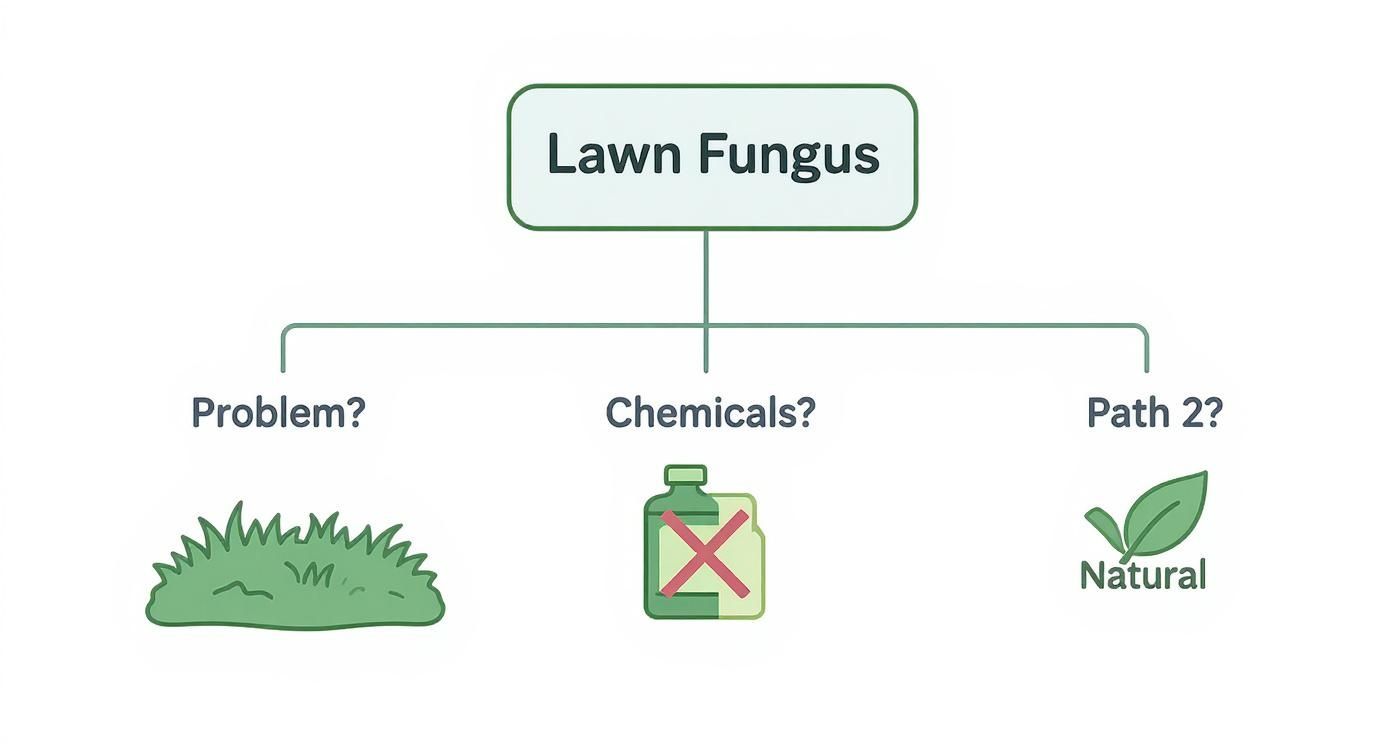
The main idea is that working with nature, not against it, is the best path to long-term lawn health without resorting to harsh chemicals.
But Is It Really a Fungus?
Hold on a minute. Sometimes, what looks like a classic fungal disease is actually something else entirely. It's a common question I get: what causes brown spots in grass? The answer could be anything from heavily compacted soil to dog urine spots or simply watering incorrectly.
My Pro Tip: Don't just look at the color of the patch. Get down on your hands and knees and examine the individual grass blades. Fungal diseases usually leave specific lesions or spots on the blades. Drought stress, on the other hand, typically causes the entire blade to wilt and turn brown from tip to root.
Learning to read your plants is a skill that pays off everywhere in your yard. Even knowing how to spot things like the white fuzz on a cactus, which is often a key to identifying plant mildew, sharpens your diagnostic skills. Once you're confident you've ID'd the fungus, you're ready to pick the right natural treatment and get your lawn back on track.
Putting Natural, Organic Fungus Treatments to Work
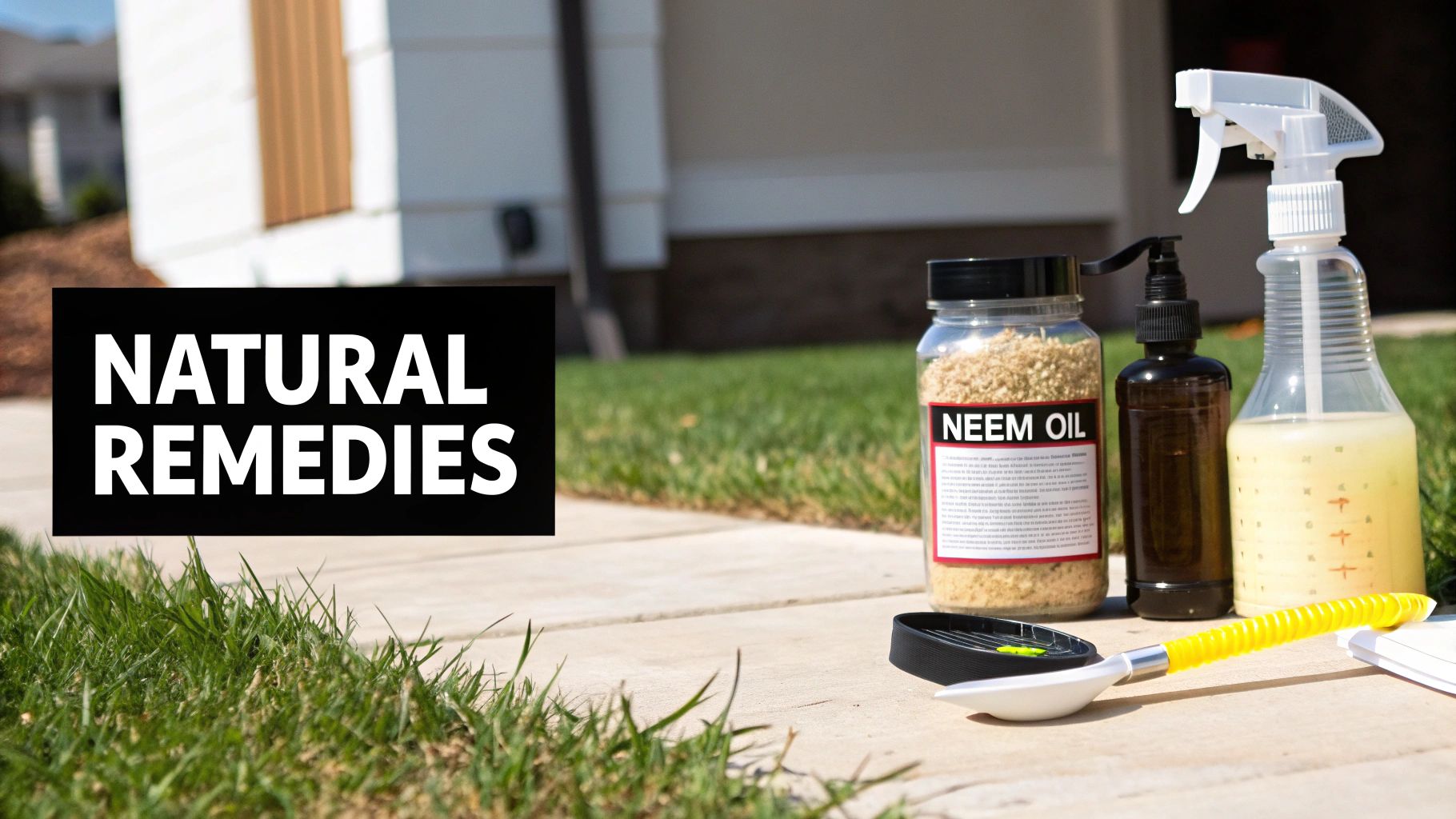
Alright, you've played detective and have a good idea of which fungus is crashing the party on your lawn. Now it's time to roll up your sleeves. If you're a homeowner in Johns Creek or Milton staring down a patch of brown Fescue, the last thing you want to do is douse your yard in harsh chemicals. The good news is, you don't have to.
There are some incredibly effective natural alternatives out there. These aren't like the synthetic fungicides that act like a scorched-earth treatment. Instead, they work with your lawn's ecosystem, suppressing the bad guys and creating an environment where your grass can thrive. Think of it less like a chemical blitz and more like shifting the balance of power back in your turf's favor.
Your Go-To Natural Fungicide Recipes
You can whip up some potent fungal treatments with ingredients you might just have in your garage or pantry. I've used these myself, and they're well-suited for the unique challenges of Georgia's climate.
1. The Neem Oil Solution
Neem oil is a fantastic all-rounder. It's a broad-spectrum fungicide that messes with the fungus's life cycle, and I've found it works wonders on common issues like dollar spot and leaf spot.
- The Mix: In one gallon of water, combine 2 tablespoons of 100% cold-pressed neem oil and 1 teaspoon of a gentle liquid soap, like Castile. The soap is key—it acts as an emulsifier, making sure the oil and water actually mix.
- How to Apply: Get it into a garden sprayer and give the affected areas a good, thorough coating.
2. The Baking Soda Spray
Yep, simple baking soda (sodium bicarbonate) can be a real asset. It works by changing the pH on the surface of the grass blades, making it a very unwelcoming place for fungal spores to set up shop. This is a great tool for prevention or for catching an outbreak in its earliest stages.
- The Mix: Blend 1 tablespoon of baking soda with 1 teaspoon of dormant horticultural oil in one gallon of water. That little bit of oil is important because it helps the solution cling to the grass.
- How to Apply: Spray it right onto the diseased patches. A word of caution: use this one in moderation. Too much sodium over time can be tough on your soil.
A Critical Tip for Application: The Georgia heat is no joke. Always apply these liquid treatments in the cool of the early morning, ideally between 6 a.m. and 9 a.m. Spraying in the midday sun is a recipe for scorched grass, and you'll end up causing more damage than you prevent.
Working With the Soil: Cornmeal and Compost
Beyond sprays, some of the most powerful natural treatments are the ones that work from the ground up. By introducing beneficial microorganisms, you're essentially recruiting a tiny army to fight on your lawn's behalf.
Using Cornmeal to Your Advantage
Regular, plain cornmeal (not the corn gluten meal used for weed prevention) is a fantastic soil amendment. It contains beneficial fungi that are natural enemies of the pathogens that cause diseases like brown patch.
- Application Rate: Simply spread the cornmeal over the affected areas as if you were fertilizing, using about 20 pounds per 1,000 square feet.
- Next Step: Water it in lightly. This "activates" the good microbes. This isn't an overnight fix; it’s a slow and steady approach that builds your soil's natural defenses week by week.
This strategy is even more effective when you pair it with a consistent feeding program. When you use a high-quality natural fertilizer for your grass, you give your turf the nutrients it needs to push out new, healthy growth and build resilience right from the roots.
The Science of Biological Controls
What's happening in the soil is pretty fascinating. Using these biological control agents is a proven strategy that's gaining a lot of traction in the organic lawn care world.
It's not just theory—research has shown that soils with fewer chemical fungicide applications often have far less disease. In some studies, dollar spot severity was reduced by as much as 78%. Beneficial microbes, like certain strains of Bacillus bacteria, actively go to war against these diseases.
While the consistency of some commercial microbial products can be a bit hit-or-miss (one study found reliable results from only 30% of treatments), the core principle is solid. Fostering a vibrant, healthy soil biome is one of the absolute cornerstones of successful organic lawn care.
Building a Fungus-Resistant Lawn with Smart Habits
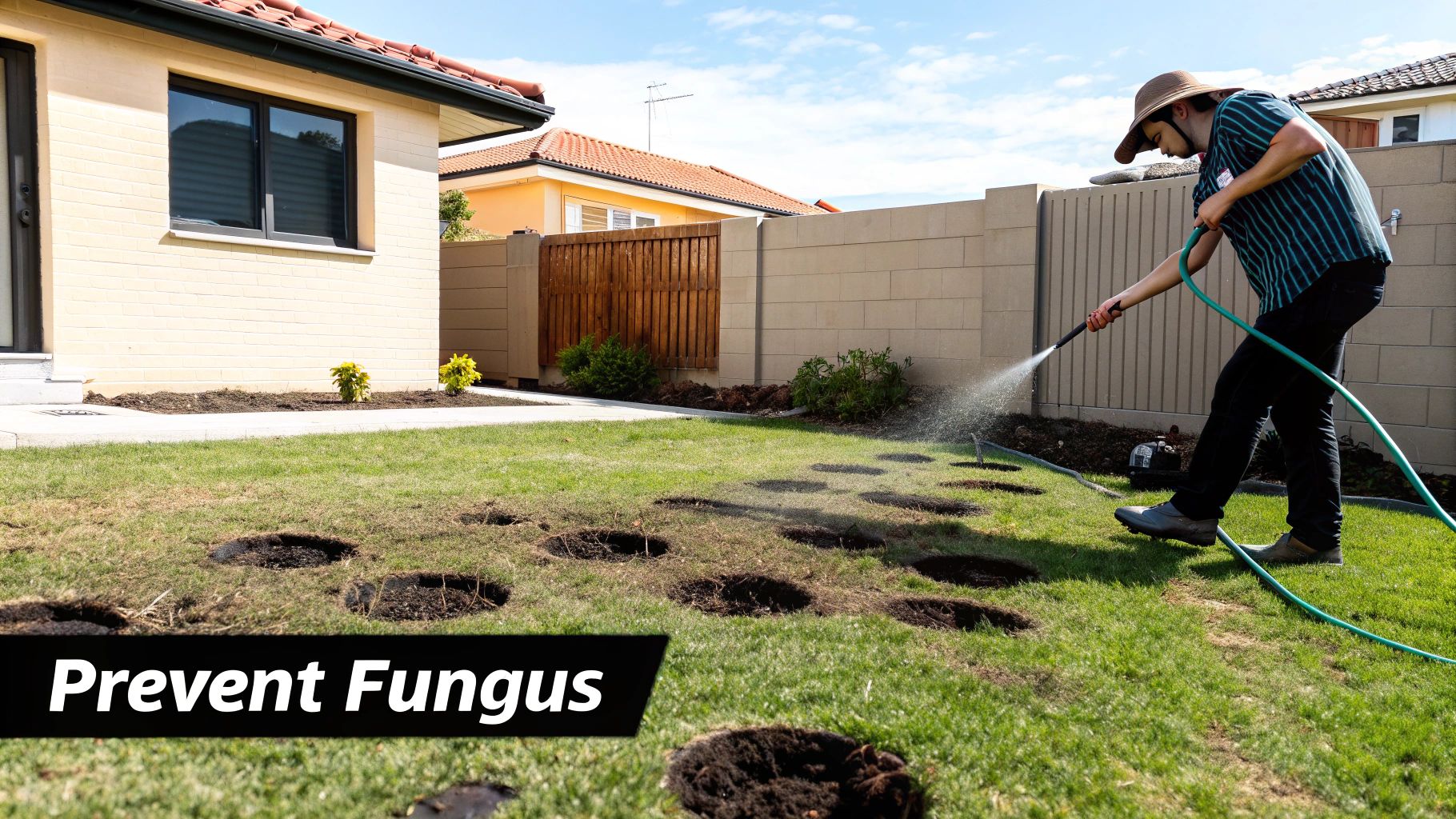
While natural sprays are great for tackling a fungus outbreak you can see, the real win is making your lawn a place where fungus just can't get started. Think of it like building up a strong immune system for your turf. The best way to treat lawn fungus naturally is to prevent it from ever getting a foothold, and that comes down to your everyday lawn care habits.
Here in North Georgia, with our notorious humidity from Cumming to Roswell, a few simple tweaks to how you water, mow, and care for your soil can change everything. These cultural practices are your best defense, creating a tough, resilient lawn that shrugs off disease on its own.
Master Your Watering Schedule
Fungus absolutely loves damp, stagnant conditions. The biggest mistake I see homeowners in Alpharetta make is watering too lightly and too often, which keeps the top layer of soil constantly moist—a perfect invitation for diseases like brown patch.
The secret is to water deeply but less frequently.
- Go for a Deep Soak: Your goal is to get water 6 to 8 inches deep into the soil every time. This encourages roots to grow down deep, making your grass tougher and more drought-tolerant.
- Time it Right: Water early in the morning, before 10 a.m. if you can. This gives the grass blades the entire day to dry off in the sun, so moisture isn't sitting on the leaves all night.
- Do the Screwdriver Test: Not sure if it's time to water again? Just try pushing a screwdriver into the ground. If it goes in easily for several inches, you’re good—the soil is still plenty moist.
Honestly, this one change is probably the single most powerful thing you can do to fight moisture-loving fungi.
Remember, a healthy lawn in our area typically only needs about one inch of water per week, and that includes whatever rain we get. Overwatering is basically rolling out the welcome mat for fungal disease.
Mow High and Let It Breathe
How you mow has a direct impact on airflow and sunlight—two things fungi hate. When you cut the grass too short, you stress it out, leaving it weak and vulnerable to attack.
For the turf types we see most often in North Georgia, stick to these heights:
- Fescue: Keep it on the taller side, around 3 to 4 inches. This height helps shade the soil, keeping it cooler and crowding out weeds.
- Bermuda and Zoysia: You can go a bit shorter with these, about 1.5 to 2.5 inches, but never scalp the lawn down to the dirt.
And please, use a sharp mower blade! A sharp blade gives a clean cut that heals fast. Dull blades just rip and tear at the grass, creating ragged wounds that are wide-open doors for fungal spores to get in.
Break Up Soil with Annual Aeration
That heavy clay soil we have across Forsyth and Cherokee counties gets compacted so easily. When soil gets packed down tight, water and oxygen can't get to the roots. You end up with a stressed, suffocating lawn that's a prime target for problems.
Core aeration is the non-negotiable fix for this. The process pulls small plugs of soil out of the lawn, instantly relieving compaction. This allows air, water, and nutrients to finally penetrate the root zone where they’re desperately needed. A lawn that can breathe and drink properly has much better drainage and a stronger root system, making it far more resistant to disease. If you want to dive deeper into the process, check out our guide on how to properly aerate and dethatch your lawn.
These habits aren't just chores; they are the foundation of smart, natural fungus management. In fact, research shows that just combining proper mowing, watering, and aeration can reduce fungal disease by up to 50%. One study of over 1,200 lawns found that homeowners who consistently followed these practices saw a 63% lower incidence of common diseases like brown patch and dollar spot. You can read more about these impactful lawn care findings yourself.
When to Call a Lawn Care Professional in Cumming
Look, even the most hands-on, DIY lawn enthusiast can hit a wall with stubborn fungus. While the natural treatments and cultural practices we've talked about are your first and best line of defense, knowing when to tag in an expert is just as important for protecting your turf.
Calling a local Cumming or Johns Creek lawn care specialist isn't admitting defeat. It's a smart, strategic move to save your lawn before things get out of hand.
Sometimes, despite your best efforts with neem oil or cornmeal applications, a particular fungus is just too aggressive or too widespread. Recognizing the signs that you’re fighting a losing battle on your own is key.
Red Flags That Signal It's Time for a Pro
There are a few clear signs that a fungus problem has moved beyond a simple DIY fix. If you're seeing any of these issues in your Alpharetta or Milton yard, it’s probably time to pick up the phone.
- The Fungus is Spreading Rapidly: You’ve been diligent with your natural treatments, but the brown patches are still expanding or new spots are appearing every few days. This kind of aggressive spread points to a deeper issue that likely needs a more potent, professional-grade solution.
- Large Areas are Dying Off: We're not just talking about a few small dollar spots here. If you have significant sections of your Fescue or Bermuda grass that are completely brown and lifeless, professional intervention is needed to prevent permanent turf loss.
- You're Unsure of the Cause: You've looked at pictures online and read the descriptions, but you still can't say for sure what you're dealing with. Is it brown patch, large patch, or just severe drought stress? A misdiagnosis means the wrong treatment, which wastes your time and money while the real problem festers.
Don't wait until half your lawn is a lost cause. The whole point is to act decisively when you realize your own efforts aren't turning the tide. A pro can get a diagnosis right the first time and deploy a plan before the damage gets extensive and expensive to fix.
What a Professional Brings to the Fight
When you bring in a professional lawn service from the Cumming area, you're getting more than just a different product in a spray tank. They have the tools, knowledge, and treatments that simply aren't available to homeowners.
A true lawn care expert can provide:
- Advanced Soil Diagnostics: They can take core samples and run detailed soil tests to pinpoint underlying problems. This could be anything from a major nutrient deficiency to a severe pH imbalance that’s making your lawn a perfect breeding ground for disease.
- Specialized Organic Treatments: Many local pros have access to commercial-grade biological fungicides and can brew custom compost teas specifically formulated for our challenging North Georgia red clay and climate.
- Integrated Pest Management (IPM): They won’t just treat the symptom. They’ll build a holistic plan that tackles the immediate fungus while also working to improve soil biology, fix drainage issues, and increase turf density for powerful, long-term prevention.
Common Questions About Going Natural With Fungus Control
Ditching chemical treatments for a more natural approach can bring up a lot of questions. It’s a totally different way of thinking about lawn care. Homeowners I talk to, from Cumming all the way up to Dahlonega, tend to ask the same things when they're getting started. Let's walk through some of the most frequent ones so you can feel confident in your game plan.
How Long Until I See Results with Natural Fungus Treatments?
When you go natural, patience really is a virtue. Unlike synthetic fungicides that act like a sledgehammer for a quick knockdown, natural options like neem oil or cornmeal work differently. They're all about improving the soil's biology and tipping the scales in your lawn's favor, which takes a little more time.
You might start to notice a difference in a week or two, but getting the fungus truly under control often takes a few applications over the course of a season. The key is consistency. These treatments deliver their best punch when you combine them with the smart cultural practices we talked about—like deep watering and mowing high.
Is It Safe to Use These Treatments on My Fescue in the Summer?
That's a great question. Our cool-season fescue lawns are already having a tough time during a sweltering Alpharetta summer. The last thing you want to do is add more stress.
When using any oil-based solution, like neem oil, the rule is simple: always apply it very early in the morning. Get it done before the sun gets high and the temperatures start to climb. This completely avoids the risk of leaf scorch.
For treatments that work on the soil, like spreading cornmeal or spraying compost tea, you're good to go anytime. They're perfectly safe. Just remember the golden rule: never apply any liquid treatment in the blazing midday sun.
Can I Stop Lawn Fungus from Ever Coming Back?
Honestly, trying to eliminate fungus completely is a losing battle. The spores are a natural and constant part of our North Georgia environment, especially with our trademark heat and humidity. They're always there, waiting for the right conditions.
The goal isn't total eradication—it's management. You want to create a lawn ecosystem so robust and healthy that fungus simply can't gain a foothold.
By staying on top of your watering, mowing, and aeration, you can make outbreaks rare and far less severe. A thick, vibrant lawn is its own best bodyguard.
My Neighbor Gets Fast Results with Chemicals. Why Should I Bother?
It's true, chemicals can wipe out the symptoms fast. But that quick fix often creates a long-term problem. Synthetic fungicides don't just kill the bad guys; they also wipe out the beneficial microbes that are the lifeblood of healthy soil. This creates a weak, vulnerable lawn that becomes dependent on the next chemical dose.
The natural path is about building a self-sufficient ecosystem in your own backyard. When you cultivate rich, living soil, you grow stronger turf that can fend for itself against fungus, pests, and even drought. And on top of it all, you get the peace of mind knowing your kids and pets are playing on a truly safe surface.
Ready to build a resilient, fungus-resistant lawn without the harsh chemicals? The experts at Barefoot Organics specialize in natural lawn care programs designed specifically for the challenges of our North Georgia climate. Get your free online quote today!