

Ever get that nagging, itchy feeling after spending time in your yard? You're not just imagining it. There's a surprisingly simple way to check if you're dealing with fleas. Just pull on a pair of tall, white socks and take a slow stroll through the shady, damp spots on your lawn. If you start seeing tiny, dark specks latching onto the fabric, you've got an active flea problem that needs to be dealt with.
Confirming a Flea Problem in Your North Georgia Yard

Before you can even think about reclaiming your outdoor space, you need to know exactly what you're up against. The "white sock test" isn't just an old wives' tale; it's a genuinely effective diagnostic tool for any homeowner in Cumming, Alpharetta, or Milton. Fleas are attracted to the warmth and movement of a potential host, and their dark bodies are impossible to miss against the white background.
This quick test helps you pinpoint the exact hotspots where fleas are congregating. Make sure you check the places they love most:
- Underneath decks and porches where the ground is cool and stays moist.
- Along the edges of your property, particularly if you're near wooded areas like in Dahlonega.
- Around your pet’s favorite shady nap spots.
- Anywhere you have dense ground cover, overgrown bushes, or piles of leaves.
Why North Georgia is a Flea Paradise
Let's face it, our region’s climate is a big part of the problem. The constant warmth and high humidity create a perfect breeding ground for fleas. What might be a minor seasonal annoyance elsewhere becomes a year-round battle for those of us in Johns Creek and Forsyth County. This environment kicks the flea life cycle into overdrive, allowing just a few pests to multiply into a massive infestation in only a couple of weeks.
In our humid climate, mowing the lawn short and clearing out leaf litter can eliminate up to 80% of potential breeding grounds. You can find out more about our regional flea challenges and why our area is such a magnet for them.
Fleas don’t just magically appear. They’re usually hitching a ride into your yard on wildlife like squirrels, raccoons, and deer—all common visitors in North Georgia, from Milton to Dahlonega. Of course, our own pets can easily pick them up on walks and bring them right to our doorstep.
Before you can tackle the problem, it helps to know where to look. Here's a quick checklist to help you identify the high-risk areas in your yard and what you can do about them right away.
North Georgia Flea Hotspot Checklist
| Flea Hotspot Area | Why Fleas Thrive Here | What You Can Do Today |
|---|---|---|
| Under Decks/Porches | Shady, moist, and protected from the elements. | Rake out debris, improve airflow, and discourage pets from resting here. |
| Tall Grass & Weeds | Provides cover and retains moisture. | Mow the lawn regularly and keep it at a shorter height (around 3 inches). |
| Leaf Piles & Debris | Perfect hiding spot for flea eggs, larvae, and pupae. | Bag up leaves and yard waste immediately. Don't let them sit. |
| Shady, Moist Soil | Ideal conditions for flea larvae to develop. | Improve drainage and trim back overhanging branches to let more sunlight in. |
| Pet Resting Areas | Flea eggs fall off pets and contaminate these spots. | Regularly wash pet bedding and keep their outdoor favorite spots clean. |
Focusing your efforts on these hotspots is the first and most crucial step in disrupting the flea life cycle and taking back your yard.
Understanding The Enemy: The Flea Life Cycle
To truly get rid of fleas for good, you have to fight them at every single stage of life. Just spraying for the adult fleas you see is like putting a bandage on a bullet wound. Why? Because a staggering 95% of the flea population is made up of eggs, larvae, and pupae hiding out in your soil and yard debris.
Here's how the cycle works:
- Eggs: A single adult female can lay up to 50 eggs per day. These tiny white specks fall right off your pet or a wild animal and into your lawn.
- Larvae: The eggs hatch into larvae that immediately burrow into the soil to escape sunlight. They survive by eating organic matter and "flea dirt" (which is essentially adult flea feces).
- Pupae: Next, the larvae spin a tough, protective cocoon and become pupae. This is the hardiest stage—they can stay dormant for months, just waiting for the right vibration or warmth to signal that a host is nearby.
- Adults: As soon as an adult flea emerges, its only goal is to find a blood meal so it can survive and start the whole miserable cycle all over again.
This is exactly why you need a proactive, multi-front approach. By focusing on creating a healthy, resilient lawn, you attack this cycle at its weakest points and make your yard a place where fleas simply can't survive.
Building a Flea-Resistant Lawn Naturally
A healthy, thriving lawn is one of your most powerful and natural defenses against fleas. Forget the harsh chemicals for a moment. You can actually transform your yard in Milton or Forsyth County into an environment that’s genuinely inhospitable to these pests. The whole idea is to cultivate strong, resilient turf that leaves no room for fleas to hide, breed, or thrive.
Think of your lawn as a living, breathing barrier. A thick, dense carpet of grass simply doesn't offer the bare, moist soil that flea larvae need to survive. A sparse, stressed-out lawn, on the other hand, is basically an open invitation for an infestation to move in.
Master Your Mowing Technique
How you mow your lawn in North Georgia has a direct impact on its flea population. It’s tempting to cut the grass as short as possible for that super-manicured look, but this actually works against you. Scalping the lawn exposes the soil to direct sun, stressing the grass and creating the dry, dusty conditions that fleas, ironically, love for laying their eggs.
For common grasses in our area like Fescue or Bermuda, try to keep the blades around three inches tall. This height is the sweet spot. It's tall enough to shade the soil, keeping it cool and retaining moisture for the grass roots, but it also promotes enough airflow to discourage the damp, stagnant conditions fleas need. Mowing high encourages deeper root growth, which leads to a healthier, more robust lawn that naturally crowds out pests.
Rethink Your Watering Schedule
Fleas absolutely thrive in consistently damp environments. A common mistake I see homeowners in Alpharetta and Cumming make is watering their lawns lightly and frequently. This practice creates the exact shallow, moist soil layer where 95% of the flea population—the eggs, larvae, and pupae—grows and develops.
The fix? Water deeply, but infrequently.
- Water Early in the Morning: This gives the grass blades and top layer of soil plenty of time to dry out during the day, which cuts down on that surface-level humidity fleas love.
- Water Deeply: Give your lawn a good soak, aiming for about one inch of water per session. This encourages the grass roots to grow deeper into the soil, making your turf more drought-tolerant and resilient overall.
- Water Infrequently: Instead of a little bit every day, water your lawn just once or twice a week, depending on the rainfall. This lets the topsoil dry out between sessions, creating an environment that kills off flea larvae.
This strategy hits the flea life cycle right where it’s most vulnerable. By taking away the constant moisture they depend on, you effectively turn your lawn into a desert for developing fleas, stopping a new generation before it even has a chance to hatch.
Eliminate Flea Hideouts and Habitats
Fleas are masters of hiding. They look for dark, protected areas filled with organic debris, so your lawn care routine should include systematically removing these potential five-star flea hotels. A great place to start is by dethatching your lawn to remove that thick layer of dead grass, roots, and stems that builds up between the soil and the green blades. This "thatch" layer is a perfect incubator for flea larvae.
It's also essential to eliminate other potential habitats. Understanding the principles of clearing overgrown brush can significantly reduce the areas where fleas thrive. Wildlife, from deer in Dahlonega to raccoons in Johns Creek, are primary carriers of fleas into our yards. Trimming back shrubs and sealing off spaces under decks and porches can cut down on flea harborage spots by as much as 70%.
The Professional Organic Approach
Sometimes, building a truly resilient lawn requires more than just good mowing and watering habits. Professional organic treatments can really accelerate the process, helping you create a dense turf that is fundamentally resistant to pests.
Core aeration is a fantastic service for this. The process involves pulling small plugs of soil from the lawn, which reduces compaction and allows air, water, and nutrients to penetrate deep into the root zone. Healthier soil leads directly to stronger, denser grass growth.
Following aeration with top dressing—applying a thin layer of compost or rich organic matter—is like giving your soil a super-boost. This introduces beneficial microbes that improve soil structure and help your lawn outcompete pests naturally. A comprehensive approach using these techniques is foundational to our philosophy on natural pest control for lawns. By focusing on the health of the soil and the plants, we create a yard that not only looks great but actively works to keep pests like fleas at bay.
Tackling an Active Infestation With Natural Treatments
Sometimes, even with the best lawn care habits, fleas just happen. A few hitch a ride on a visiting squirrel or your own pet, and before you know it, they've set up shop. This is when you need to switch from prevention to direct action.
The good news? You don't have to douse your Johns Creek yard in harsh chemicals. The secret to winning this battle is understanding that only 5% of the fleas are the biting adults you see. The other 95%—the eggs, larvae, and pupae—are hiding out of sight in the soil and thatch. To truly get rid of them, you have to break their life cycle by targeting that hidden majority.
Nature’s Most Effective Flea Fighters
Forget the questionable home remedies you see online. When it comes to real results, two natural powerhouses stand out: beneficial nematodes and diatomaceous earth. They work in very different ways but are both fantastic for stopping the next generation of fleas before they can hatch.
Beneficial Nematodes
These are your microscopic secret agents. They are tiny, naturally occurring worms that hunt down pests living in the soil, including flea larvae. Best of all, they are completely harmless to people, pets, plants, and even good guys like earthworms and bees.
- How They Work: You simply mix the nematodes with water and spray them across your lawn. They get to work immediately, seeking out and destroying flea larvae in the soil. You can see flea populations drop by as much as 90% within a week.
- Application Tips: For those of us here in Cumming and North Georgia, the ideal time to apply them is during the mild, moist conditions of spring and fall. Give your lawn a good watering before and after you spray to help these little warriors travel through the soil and find their targets.
Diatomaceous Earth (DE)
This isn't a poison; it's a mechanical killer. DE is a fine powder made from the fossilized remains of ancient aquatic organisms. Always make sure you're using food-grade DE, which is safe for yards with pets and kids.
- How It Works: To a flea, this soft powder is like crawling through shards of glass. The microscopic edges cut through their waxy exoskeleton, causing them to dehydrate and die.
- Application Tips: Lightly dust the powder in the dry, shady spots where fleas love to hang out—think under the porch, along fence lines, or in your dog’s favorite napping spot under the big oak tree. Just remember, DE is only effective when it's dry, so you'll need to reapply it after a heavy rain.
Choosing the Right Natural Treatment for Your Yard
Deciding between these options depends on your specific situation. This table breaks down the key differences to help you choose the best natural flea treatment for your lawn.
Natural Flea Treatment Comparison for Your Yard
| Treatment Method | How It Works | Best For | Pet and Child Safety |
|---|---|---|---|
| Beneficial Nematodes | Microscopic worms that hunt and kill flea larvae in the soil. | Treating the entire lawn, especially moist and irrigated areas. Best for widespread infestations. | Completely safe. They are natural soil organisms that don't harm people, pets, or plants. |
| Diatomaceous Earth (Food-Grade) | A fine powder that physically dehydrates and kills fleas on contact. | Dry, targeted areas like under decks, along foundations, and in pet lounging spots. | Safe when used as directed. Avoid inhaling the dust during application. |
Ultimately, both are excellent, non-toxic tools. You can even use them together—nematodes for the lawn and DE for the specific dry spots—for a powerful, one-two punch against fleas.

When to Call in a Professional
While DIY treatments can be very effective, sometimes an infestation is just too overwhelming. This is especially true for large properties or for homes in places like Dahlonega that border wooded areas, where wildlife is constantly re-introducing fleas.
That’s when a professional natural lawn care program really makes a difference. At Barefoot Organics, we use high-quality, targeted natural products that go after the fleas without disrupting the delicate balance of your yard's ecosystem.
A professional treatment isn't just about spraying and hoping for the best. It's about a trained eye assessing your property, identifying the specific flea hotspots, and applying the right products at the right time for maximum impact. It's smart, strategic pest control.
Our team understands the unique soil and climate challenges here in North Georgia. We build a comprehensive pet-safe lawn treatment plan that tackles existing pests and improves your lawn’s overall health, making it a place you and your family can truly enjoy without worry.
Your Integrated Flea Control Strategy
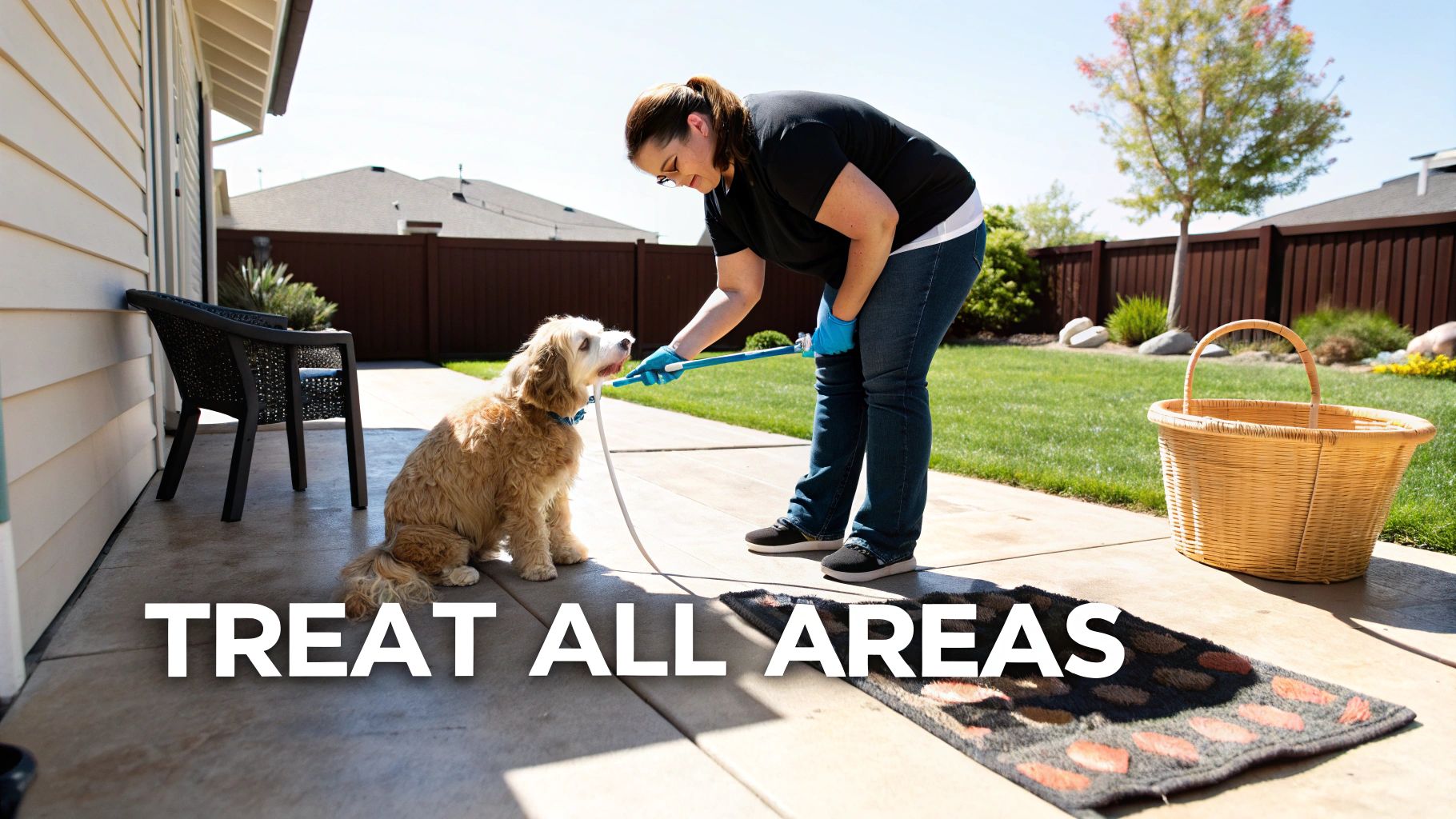
Treating your yard is a fantastic start, but it's just one piece of the puzzle. To really win the war on fleas, you have to think about every place they live and breed. I've seen it countless times: a homeowner does a great job on their lawn, but the fleas keep coming back. Why? Because the battle isn’t just in the yard; it’s also inside your home and on your pets.
If you don't address all three fronts at once, you’re basically leaving the door open for fleas to regroup and launch a fresh attack. Think about it. You can have a pristine lawn in Alpharetta, but if your dog picks up a few hitchhikers from the park, they'll bring the problem right back to your doorstep. For families in Cumming and the surrounding areas, a comprehensive strategy isn't just a good idea—it's essential.
Creating a United Front Against Fleas
The mission is to shut down every avenue fleas can use. That means your pet, home, and yard treatments need to happen in a coordinated way. It's a shocking fact, but the adult fleas you spot on your dog or cat only make up about 5% of the total infestation. The other 95% are eggs, larvae, and pupae hiding deep in your carpets, your pet's bed, and the soil in your yard.
When you tackle all three areas simultaneously, you finally break their life cycle. You’re hitting the adults on the pet, the developing fleas in the house, and the breeding grounds outside. There's simply nowhere left for them to run.
Protecting Your Pet: The First Line of Defense
Fleas need a host, and your pet is their favorite ride. Keeping them protected is the single most important thing you can do for long-term flea control.
Your first stop should always be your veterinarian. They’ll know the best and safest flea preventatives for your pet’s specific breed, age, and health history. From there, your pet-care routine should include a few layers of defense:
- Vet-Approved Preventatives: Monthly topical treatments or oral medications are the heavy hitters. They kill adult fleas fast, often before they even have a chance to lay eggs.
- Regular Bathing: A good bath with the right shampoo can wash adult fleas right down the drain. After you’ve sorted out the yard, learning about choosing the best flea shampoo for your dog is a great next step.
- Frequent Combing: Grab a fine-toothed flea comb and run it through your pet’s fur daily, especially after they’ve been outside. It’s a great way to catch newcomers before they settle in.
Your pet is a walking flea magnet. Treating them isn't just about their comfort; it’s the cornerstone of your entire yard protection strategy. An unprotected pet will constantly re-seed your lawn with new flea eggs.
Fortifying Your Home: The Indoor Battleground
Any flea that catches a ride inside on your pet is going to head straight for your carpets, furniture, and pet bedding to lay eggs. An indoor flea problem can get out of hand quickly, so you have to be relentless with your cleaning.
Here’s where to focus your energy for the biggest impact.
A Rigorous Cleaning Routine
- Vacuum Everything, and Then Vacuum Again: During an active infestation, you need to vacuum your carpets, rugs, and furniture every single day. The vibrations actually trick flea pupae into hatching, and the vacuum sucks them up before they can jump on a host. Pro tip: empty the canister or toss the bag outside immediately after you’re done.
- Wash Bedding in Hot Water: All pet bedding, blankets, and even your own throw rugs should go into the wash at least once a week. Use the hottest water setting the fabric can handle to kill fleas at every stage.
- Bring in the Steam: For really tough infestations, nothing beats a steam cleaner. The high heat is lethal to fleas, eggs, larvae, and pupae hidden deep in carpet fibers and upholstery.
By pairing diligent pet care with a serious home cleaning schedule, you’re creating an environment where fleas simply can’t survive. This three-pronged attack is the only way to truly reclaim your home and yard for good.
Knowing When to Call a Professional for Your Lawn
You’ve put in the work. You’ve mowed, cleared out the debris, and maybe even tried a few natural treatments, but those pesky fleas just keep coming back. It's a frustratingly common story for homeowners around here, especially in places like Cumming and Johns Creek where the warm, humid climate is a flea’s best friend.
While DIY methods can be a great first line of defense, there's a point where a stubborn infestation just calls for a heavier hitter. Recognizing that moment is the key to finally getting the problem solved for good. Calling in a professional isn't about admitting defeat; it's about making a smart, strategic move for your family and your sanity.
Signs It's Time for Professional Help
So, how do you know when you've hit that tipping point? If you find yourself nodding along with any of the scenarios below, it’s probably time to pick up the phone.
- The Fleas Keep Coming Back: You feel like you've won the battle, but a few weeks later, they're back. This maddening cycle usually means you're missing a hidden breeding ground or not fully breaking their life cycle.
- You Have a Large or Wooded Property: If your home in Dahlonega or Milton backs up to the woods, you're fighting a constant wave of fleas hitching a ride on wildlife. Managing a large yard with that kind of pressure requires a more strategic, wide-scale approach.
- The Numbers Are Just Overwhelming: Is the white sock test coming back with dozens of fleas in just a few seconds? When your family and pets are miserable, a severe infestation needs to be knocked down fast with professional-grade solutions.
- You Just Want It Done Right: Sometimes, you just need the peace of mind that comes with a guaranteed, hands-off solution. A professional service brings the right equipment and know-how to solve the problem efficiently, letting you get back to enjoying your yard.
The Advantages of a Professional Lawn Service
Bringing in a service like Barefoot Organics offers more than just a quick fix. It’s a strategic advantage in the war against fleas, backed by a deep understanding of North Georgia's specific environmental challenges.
A professional assessment can uncover issues you might not see, like hidden moisture problems or specific types of vegetation that are acting as flea magnets. It’s this expert eye that can finally break the cycle of re-infestation for good.
For those tough flea problems in Alpharetta or the surrounding communities, our technicians can develop a program that’s built for your property’s unique layout and needs. We don’t just focus on eliminating the current problem; we work to strengthen your lawn’s natural defenses to keep fleas from coming back.
Our comprehensive yard treatment for ticks and fleas goes way beyond a simple spray. It’s about restoring the long-term health of your entire lawn ecosystem, which is truly the most effective way to reclaim your yard for good.
The reality is, fleas aren't going away. Pest professionals report that 56% have seen no decrease in flea cases over the last year, and another 28% have actually seen an increase. You can dive deeper into these trends in the latest flea market report. When you’re up against a persistent enemy, professional help is your best bet for getting ahead of the curve.
Got Questions About Georgia Flea Control? We’ve Got Answers.
Even with a solid game plan, you're bound to have questions. When you're dealing with something as stubborn as fleas in North Georgia, the details really do matter. We hear these questions all the time from homeowners from Cumming to Milton, so let's clear a few things up.
How Long Does It Really Take to Get Rid of Fleas in My Yard?
This is always the first question, and the honest-to-goodness answer is it’s a process. It's not a one-and-done deal. To completely knock out a flea population, you have to break their entire life cycle, which can take anywhere from a few weeks to a couple of months. Think of it as a marathon, not a sprint.
Those adult fleas you see hopping around? They're just the tip of the iceberg—only about 5% of the total infestation. The other 95% are eggs, larvae, and pupae hiding out in the soil and under leaves. One treatment might kill the adults, but a whole new generation is just waiting for their turn to hatch.
Stick with a consistent plan of smart lawn care and targeted treatments, and you should see a big drop in adult fleas in about two to four weeks. But don't stop there. You absolutely have to keep it up for at least six to eight weeks to catch the new fleas as they emerge, before they can lay more eggs and start the cycle all over again.
Are Natural Options Like Nematodes Actually Effective in Georgia's Climate?
Absolutely. In fact, our warm, humid climate in places like Johns Creek and Alpharetta is the perfect environment for beneficial nematodes to get to work. These are microscopic living organisms, and they need moisture to move through the soil and hunt down flea larvae.
They are incredibly effective because they attack the flea life cycle at its weakest point, right where the larvae are trying to grow. And unlike harsh chemicals, nematodes are completely safe for your kids, pets, wildlife, and the good guys in your garden like bees and earthworms.
Expert Tip: For the best results here in North Georgia, put down beneficial nematodes when it's milder in the spring or fall and the ground is damp. The key to success is watering your lawn before and after you apply them—it's like you're building a superhighway for your tiny flea-fighting allies.
Can I Skip Treating My Pets and Just Focus on the Yard?
I know it’s tempting to think you can, but unfortunately, it’s a strategy that's doomed to fail. Your pets are the primary food source and taxi service for fleas. An untreated pet is basically a furry shuttle, bringing new fleas home from the park or the neighbor's yard and dropping them right back onto your lawn.
You could have the most pristine, flea-free yard in the state, but one walk around the block is all it takes for your dog or cat to pick up hitchhikers and re-seed your entire property with fresh eggs. A truly effective flea control plan has to be a coordinated attack.
You have to hit all three hot spots at once:
- The Yard: To destroy the breeding grounds.
- The Home: To get rid of eggs and larvae in carpets, pet beds, and furniture.
- The Pet: To kill the adult fleas and prevent them from coming back.
Talking to your vet about a reliable, monthly flea preventative for your pet isn't just a good idea—it's a non-negotiable part of any serious plan.
Do I Need to Worry About Fleas in My Cumming Yard During Winter?
Yes, you do. While flea activity definitely slows down when it gets cold, our North Georgia winters are usually mild enough that they don't completely wipe out the population. Fleas are amazing survivors.
The pupae stage is especially tough. Those tiny cocoons can stay dormant in protected spots—think leaf piles, under the deck, or in a crawlspace—just waiting for the first warm, humid day of spring to hatch. This is why it can feel like a massive flea explosion comes out of nowhere as soon as the weather turns nice.
That resilience is exactly why year-round preventative lawn care is so important. By keeping your yard tidy and free of debris, you get rid of the insulated hiding spots where these pupae love to spend the winter. A little vigilance all year long is the secret to preventing a springtime flea nightmare.
Tired of fighting a losing battle against fleas in your North Georgia yard? Let the experts at Barefoot Organics create a safe, effective, and natural lawn care plan that protects your family and pets. Get your free online quote today and take the first step toward a beautiful, flea-free lawn you can truly enjoy.