

If you're a dog owner in places like Cumming or Alpharetta, the secret to saving your lawn from those dreaded urine spots is acting fast. The single most effective thing you can do is dilution.
Simply hosing down the spot right after your dog goes can stop the concentrated nitrogen from burning the grass blades. It sounds almost too simple, but this one habit is the cornerstone of keeping your yard green and healthy.
Your Quick Guide To A Dog-Friendly Georgia Lawn
Here in North Georgia, from Milton all the way up to Dahlonega, we love our outdoor spaces. That absolutely includes sharing a beautiful lawn with our four-legged family members. But let's be honest—those yellow and brown patches can drive anyone crazy.
The good news? You can have a lush, green lawn and a happy dog. It’s not impossible.
The real culprit isn't acid, which is a common myth. The problem is an overload of nitrogen in your dog's urine. Imagine pouring a whole jug of potent liquid fertilizer on one tiny patch of grass. It’s just too much of a good thing, and it scorches the turf.
A proactive approach is always the best defense. Simple habits, consistently applied, make a significant difference in preventing lawn burn before it starts. Instead of constantly repairing damage, you create a system where your dog and your lawn can coexist beautifully.
Building A Foundation For Success
Getting to a spot-free lawn comes down to a few key strategies that all work together. Once you get these basics down, you'll feel empowered to handle the problem for good.
Here’s what a solid, pet-friendly lawn care routine is built on:
- Immediate Dilution: This is your first line of defense, hands down. Rinsing the area right after your dog does their business is a simple, proven fix. It can prevent up to 90% of lawn scorching by spreading out that intense nitrogen load before it can do damage. Dog urine alters soil chemistry in a concentrated blast, and you can learn more about how this works from the experts at Preventive Vet.
- Smart Hydration: Gently encouraging your dog to drink more water is a fantastic way to dilute their urine from the inside out. When they're well-hydrated, their urine is naturally less concentrated.
- Targeted Training: This is a game-changer. Teaching your dog to use a specific, designated "potty spot"—maybe an area with mulch or pea gravel—protects your main lawn entirely.
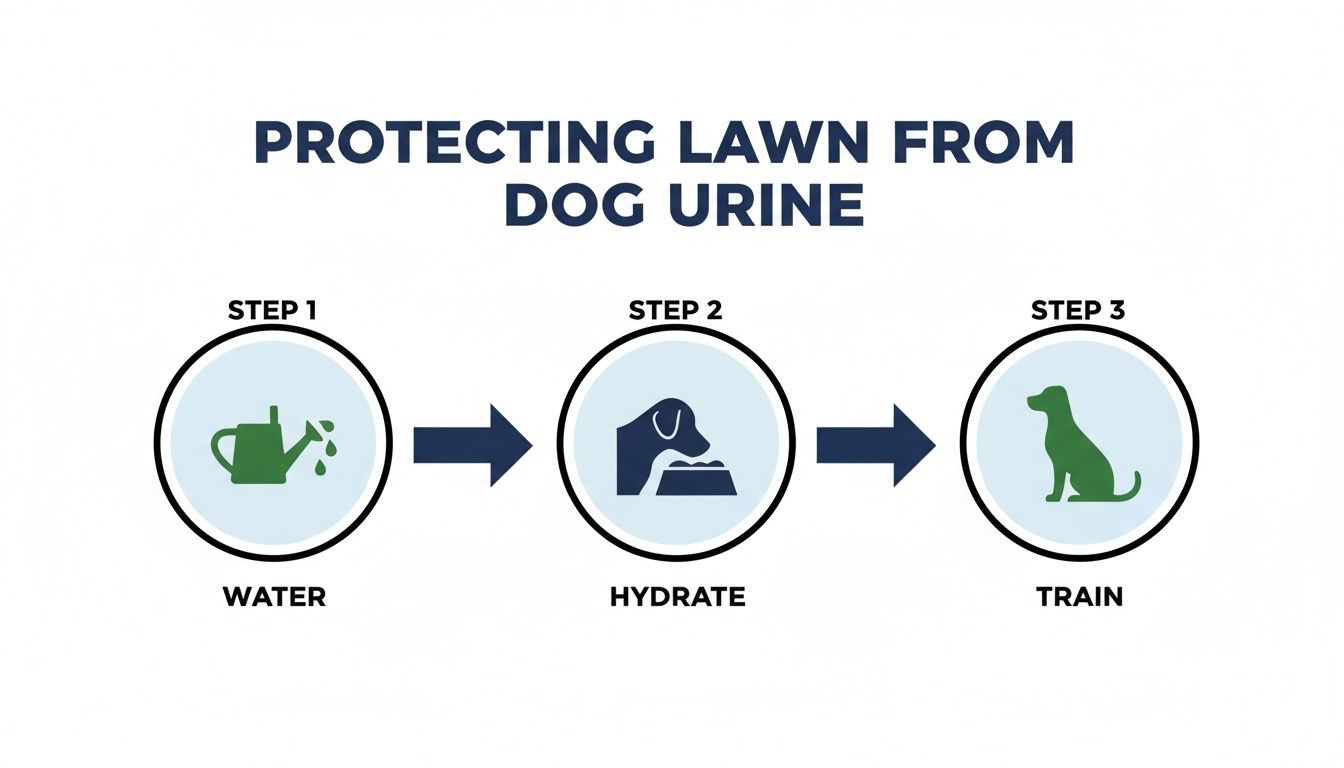
When you see it laid out like this, it’s clear how combining immediate lawn care (watering) with proactive pet care (hydration and training) creates a complete and effective solution.
When you see a spot form, time is of the essence. Here’s a quick-reference guide to what you should do right away.
Immediate Actions To Protect Your Lawn
| Tactic | Why It Works | Local Tip for Georgia Lawns |
|---|---|---|
| Water Dilution | Flushes the concentrated nitrogen and salts away from the grass roots, preventing the chemical burn. | During our hot, dry summers in the Cumming area, have a watering can or a hose with a gentle nozzle ready by the door. Quick action is critical when the sun is intense. |
| Encourage Hydration | Dilutes the urine at the source, making each potty break less potent and less damaging to the grass. | Add a splash of low-sodium chicken broth to your dog’s water bowl or place multiple water stations around the yard to encourage drinking. |
| Redirect and Reward | Training your dog to use a non-turf area (mulch, gravel, etc.) contains the issue and saves your lawn. | Use high-value treats to reward them only when they go in the designated spot. Consistency is key to building the new habit. |
These first-response tactics are your best bet for minimizing damage on the spot. By making them a regular habit, you're building a strong defense for your North Georgia lawn.
Why Dog Urine Kills Your Georgia Grass
If you've got a lawn anywhere from Johns Creek to Dahlonega, you know the sight all too well: frustrating, dead-looking brown spots popping up in your beautiful green grass. Many people think it's because dog urine is acidic, but that’s a common myth. The real reason for those burn marks is a classic case of too much of a good thing—nitrogen.
To get a handle on how to protect your lawn, you first have to understand what's actually happening. Your dog’s body naturally breaks down the protein in their food. A major byproduct of that process is nitrogen, which then gets flushed out in their urine.
Think of it like this: when your dog pees in one spot, they're essentially dumping a highly concentrated dose of liquid fertilizer. A little bit of nitrogen is fantastic for grass, but this intense, localized blast is way too much for the grass blades to handle. It literally scorches them, causing them to turn yellow and die.
The Science Behind the Burn
A few things can crank up the nitrogen concentration in your dog's urine. For starters, a high protein diet for dogs often means more nitrogenous waste. Dehydration is another big factor. If your dog isn't drinking enough water, their urine becomes much more potent and damaging to the grass.
Have you ever noticed a super lush, dark green ring of grass growing around the dead brown patch? That "halo effect" is the smoking gun for nitrogen burn. It happens right where the urine has spread out and diluted to the perfect concentration, acting like a spot-on fertilizer and making that little ring of grass healthier than the rest of the lawn. While it looks better than a dead spot, it's still a sign of an imbalance and can be one of the many reasons you're seeing brown spots in your grass.
The takeaway here is simple: dog urine isn't inherently "bad" for grass. The problem is the delivery system—it's too much nitrogen in too small of an area. This is a chemical burn, not an acid burn.
Just How Bad Is It?
The effect of concentrated dog urine on soil chemistry can be pretty dramatic. In parks and suburban yards around the Cumming area, repeated peeing in the same areas can fundamentally change the soil. In fact, some studies have shown that dog urine can spike soil ammonium levels to over 100 mg/kg in popular spots. That's more than four times the recommended cleanup level for contaminated industrial soils! These extreme nitrogen levels completely throw off the soil's chemistry, making it toxic for grass.
And it’s not just a female vs. male dog thing, despite what you might have heard. Female dogs often get the blame because they tend to squat and empty their entire bladder in one go, creating a super-concentrated puddle. Male dogs, on the other hand, usually lift a leg and "mark" their territory in smaller squirts across a wider area, spreading the nitrogen load around. But really, any dog that squats to pee—puppies, older dogs, and even some males—can cause those intense, lawn-killing spots. Knowing how this nitrogen cycle works is key for homeowners in Forsyth County looking for lawn care solutions that actually fix the problem.
Thinking Ahead: Proactive Strategies for a Pet-Friendly Yard
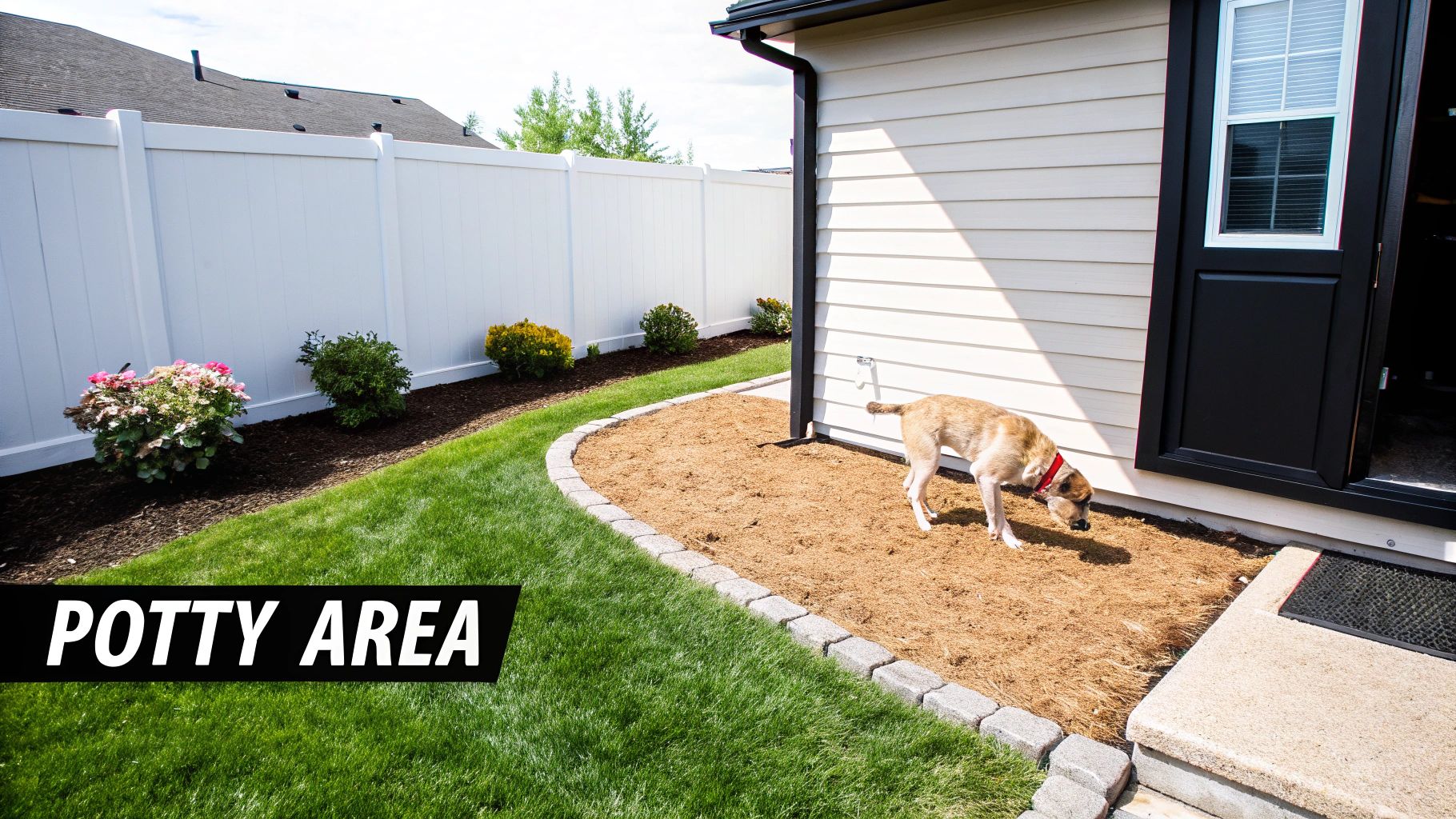
The absolute best way to handle lawn burn is to stop it before it even has a chance to start. Rather than constantly being on the defensive and patching up brown spots, a little proactive thinking will save you a ton of time and frustration. For those of us in Cumming and the surrounding areas, a few smart habits can make all the difference in creating a yard where both your family and your four-legged friends can thrive.
Honestly, two of the most effective strategies are just simple tweaks to your dog's daily routine: setting up a dedicated potty area and making sure they're drinking enough water. These aren't complex solutions, but they do require consistency to become habits that stick.
Give Your Dog a Designated Potty Spot
Training your dog to use one specific area of the yard is a total game-changer. Seriously. It redirects all that concentrated nitrogen away from your main lawn, containing any potential damage to a single, easy-to-manage spot.
The key is picking the right location and surface to make it inviting for them.
- Location: Find a spot that’s out of the main line of sight but still easy for your dog to get to. A side yard or a tucked-away corner usually works perfectly.
- Material: In that spot, ditch the grass. Replace it with something pet-friendly that drains well. Pea gravel and natural mulch are fantastic choices because they make cleanup a breeze.
- Training: This is where consistency comes in. Every time you go out, lead your dog on a leash to the new spot. Use a simple command like "go potty," and when they do their business, reward them immediately with praise and a really good treat.
Patience is your best friend here, but the payoff—a gorgeous, spot-free lawn—is well worth it. It’s so much easier to maintain one small patch than to be reseeding areas all over the yard. And if you’re curious about which turf can handle the occasional miss, our guide on pee-resistant grass varieties has some great recommendations for North Georgia.
Keep an Eye on Diet and Hydration
What goes into your dog directly affects what comes out. While you can't get rid of the nitrogen in their urine, you can definitely dilute it right at the source, which makes it far less damaging to your grass.
Encouraging your dog to drink more water is one of the simplest yet most effective ways to protect your lawn. A well-hydrated dog has less concentrated urine, which means less nitrogen hitting your grass with every potty break.
Make sure fresh, clean water is always available, especially in multiple spots outdoors during our hot Georgia summers. I've even seen some folks in Alpharetta add a tiny splash of low-sodium chicken broth to the water bowl to entice their dogs to drink more.
You might also see dietary supplements sold as "lawn savers." While they sound tempting, it's critical to always consult your veterinarian before adding anything new to your dog's diet. Some of these products work by altering urinary pH, which can unfortunately lead to serious health problems like bladder stones.
Ultimately, a healthy dog and a healthy lawn go hand-in-hand. Looking after their internal health is just another part of creating a truly pet-friendly yard. For a deeper dive, check out a complete guide to dog gut health to see how it connects to their overall wellness.
Building a Resilient Lawn from the Ground Up
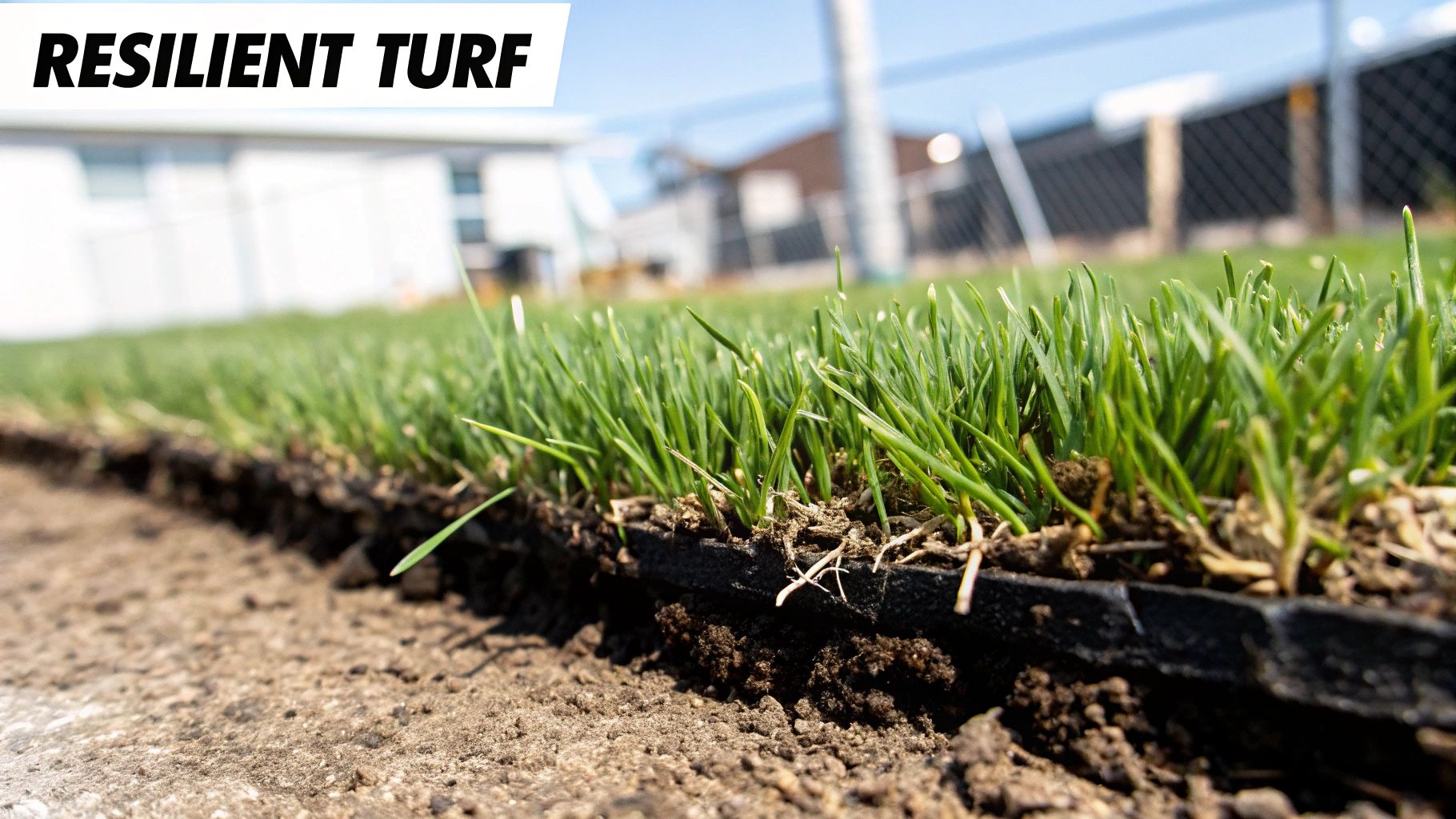
While training your dog and hosing down spots are great in-the-moment fixes, the best long-term defense against urine damage is a lawn that’s just plain tough. A genuinely healthy, robust turf can shrug off stress and bounce back in a way a weak lawn never could.
For homeowners here in Cumming and across Forsyth County, building that strength starts from the soil up. It's about choosing the right grass and, even more critically, fostering healthy soil.
Choosing the Right Grass for the Job
Your choice of grass is a huge first step. Not all grasses are created equal when it comes to handling the high nitrogen content in dog urine—some will burn at the slightest touch, while others are surprisingly resilient.
For yards in Alpharetta and Milton, a smart grass selection can make a world of difference in preventing those dreaded brown spots.
Studies have shown that some grasses, like fescue and perennial ryegrass, don't just survive urine spots—they can sometimes even thrive with the extra nitrogen, growing greener and thicker. On the flip side, more sensitive types like Kentucky bluegrass and Bermudagrass often suffer severe, lasting burns.
Before you re-sod your entire yard, it helps to know what you’re working with. Here’s a quick comparison of grasses that do well in our North Georgia climate and how they stand up to our four-legged friends.
Comparing Dog Urine Resistant Grasses for North Georgia
| Grass Type | Urine Tolerance | Sunlight Needs | Maintenance Level |
|---|---|---|---|
| Tall Fescue | High | Full Sun to Part Shade | Moderate |
| Perennial Ryegrass | High | Full Sun | Moderate |
| Bermudagrass | Low-Moderate | Full Sun | High |
| Zoysia | Moderate | Full Sun to Part Shade | Moderate |
As you can see, grasses like Tall Fescue are often a top contender for pet owners in the Cumming area because they check a lot of boxes: good urine tolerance, flexible sun requirements, and manageable upkeep.
A lawn with deep, healthy roots is like a fortress. It can withstand assaults from heat, drought, and yes, even concentrated dog urine, by quickly accessing water and nutrients to repair itself before severe damage sets in.
This brings us to the real secret weapon… what's happening underneath the blades.
The Real Game-Changer Is Healthy Soil
You can have the best grass seed in the world, but it will struggle in poor, compacted soil. For homeowners all over Forsyth and North Fulton Counties, the key to a truly pet-proof lawn lies in creating a soil environment that’s alive with beneficial microbes. This biologically active soil doesn't just hold roots; it actively works to buffer the nitrogen shock from dog urine.
Think of healthy soil as a sponge. When urine hits compacted dirt, the nitrogen has nowhere to go and fries the grass roots. But when it lands on healthy, aerated soil, that liquid gets absorbed and dispersed. The microbes in the soil immediately get to work breaking down the excess nitrogen, turning it into something the lawn can actually use.
This is where professional organic lawn care makes a massive difference. Services tailored for our local environment can completely change the game:
- Core Aeration: This is the process of pulling small plugs of soil from the lawn to relieve compaction. It’s like opening up windows underground, allowing water, oxygen, and nutrients to get deep into the root zone where they’re needed most.
- Organic Topdressing: By applying a thin layer of rich compost, we're literally feeding the soil's microbiome. This improves drainage, helps the grass absorb nutrients, and builds a resilient foundation that allows your lawn in Johns Creek to thrive alongside your pets.
By focusing on the health of your soil, you're building up your lawn's natural immune system. It’s a proactive strategy that pays off year after year. For more on this, check out our guide on how to grow grass with dogs at https://www.barefootorganicsllc.com/how-to-grow-grass-with-dogs/.
How to Repair Urine Spots and Maintain Lawn Health
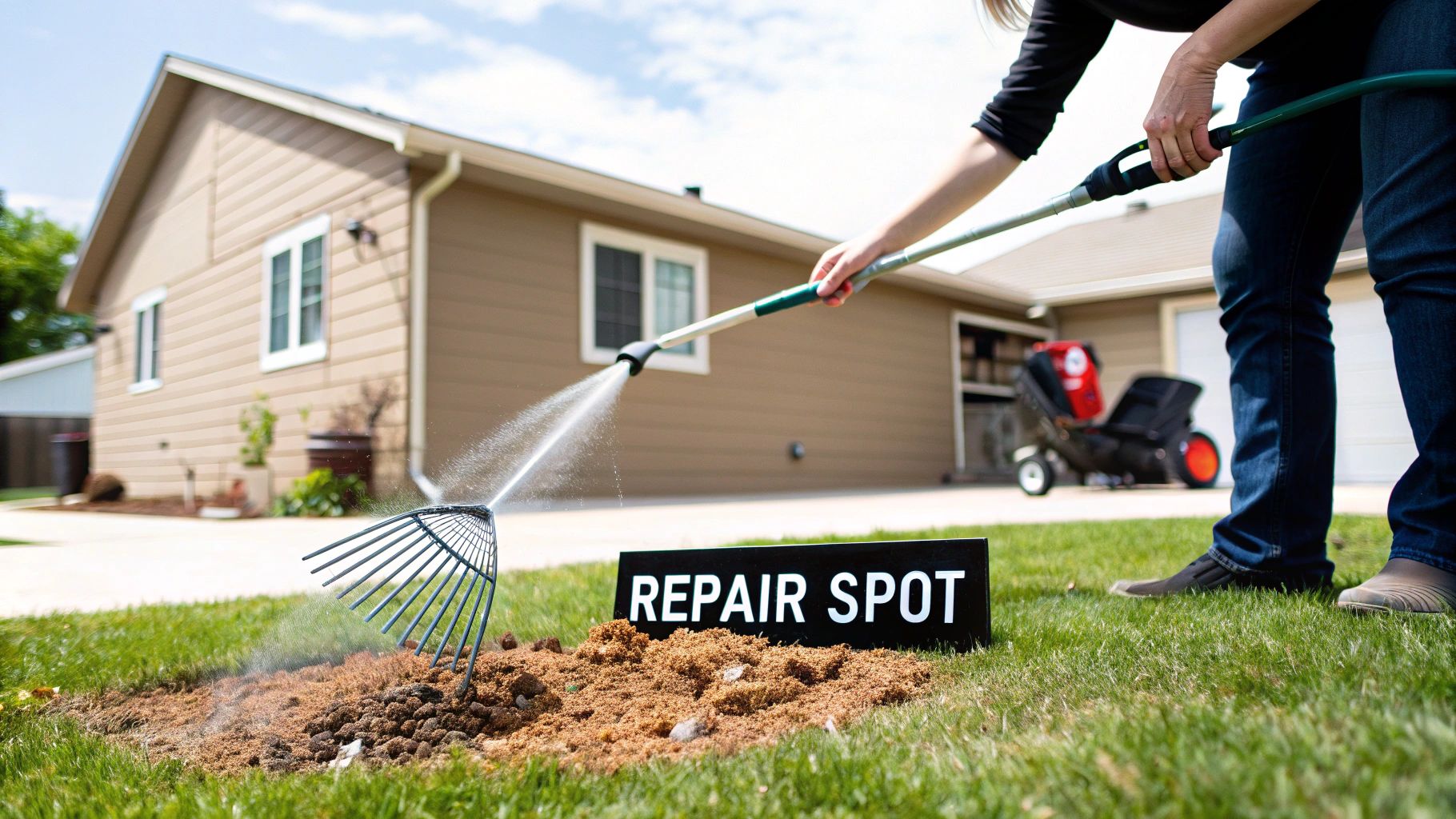
Even with the best training and lawn care, a brown spot is bound to pop up now and then. It happens. When it does, your goal is to not just fix the damage but also to strengthen that area so it doesn't become a recurring problem.
The process itself isn't complicated, but doing it right is what makes the new grass grow in strong and blend seamlessly with the rest of your lawn. A quick, thoughtful repair job is a huge part of learning how to protect your lawn from dog urine for the long haul.
A Step-by-Step Guide to Fixing Urine Spots
When you find a dead patch, resist the urge to just toss some seeds on it and hope for the best. That scorched soil is usually loaded with residual salts and nitrogen, which is a terrible environment for new seedlings to sprout.
To give your new grass a fighting chance, here’s what I recommend:
- Flush the Area Thoroughly: Before anything else, grab the hose and give the dead spot a deep soaking for several minutes. This is crucial for leaching the excess nitrogen and salts down into the soil, away from where the new, delicate roots will be.
- Rake and Remove Dead Grass: Gently rake out all the brown, dead grass from the patch. You’re clearing the way for new growth and exposing the soil underneath. Just be careful not to tear up the healthy grass around the edges.
- Amend the Soil: Now, add a thin layer of good-quality compost or topsoil to the bare spot. This introduces beneficial organic matter and helps neutralize any lingering effects from the urine.
- Reseed and Water: Sprinkle a high-quality grass seed—one that matches your lawn type—over the fresh soil. Lightly press the seeds down for good soil contact, then water gently. The key from here is to keep the area consistently moist until the new grass is well-established.
Adapting Repairs for North Georgia Seasons
Your repair strategy really needs to sync up with our local climate, from the hot Dahlonega summers to the cooler fall months over in Cumming. For reseeding, timing is everything.
Trying to grow new grass seedlings during the intense heat of a Georgia summer is an uphill battle. You’re often better off just flushing the spots immediately and holding off on any major reseeding until early fall.
The best time to reseed fescue and other cool-season grasses in North Georgia is from September to mid-October. The soil is still warm enough for germination, but the cooler air reduces stress on the young grass, giving it plenty of time to establish strong roots before winter sets in.
A consistent organic lawn care program is your most powerful ally here. A truly healthy, robust lawn is naturally better at crowding out the weeds that always try to invade weakened urine spots. Better yet, biologically active soil helps break down the excess nitrogen much faster, which minimizes the damage in the first place and makes your repair efforts far more successful.
When to Call In the Pros
Sometimes, you can do everything right and still feel like you're losing the battle against those pesky brown spots. If you've tried all the DIY tricks and your lawn in Cumming or Johns Creek is still struggling, it might be time for some professional backup. Widespread damage, soil that feels hard as a rock, and yellowing grass that just won't green up are all signs that the problem runs deeper than the surface.
This is where a professional organic lawn care program, like ours at Barefoot Organics, can really turn things around. We go beyond just treating the spots; we focus on rebuilding your lawn's health from the ground up. Think of it as the ultimate, pet-safe reset for achieving that lush, resilient turf you've been dreaming of.
The Professional Organic Advantage
For homeowners in Alpharetta and Milton, bringing in a professional service isn't just about convenience—it's about getting access to expertise and specialized treatments that aren't available at your local garden center.
A professional assessment can pinpoint underlying issues that are holding your lawn back, like poor microbial activity or nutrient lock-up. When the soil can't properly process the nitrogen from dog urine, you'll be fighting an uphill battle. Fixing these foundational problems is the secret to long-term success.
Our whole philosophy is about creating a thriving ecosystem right in your backyard. We don’t just feed the grass; we feed the soil.
Here’s a look at what that involves:
- Deep-Dive Soil Testing: We start by getting to know your soil on a chemical level. This analysis tells us exactly what's missing and what it needs to thrive.
- Custom-Blended Organic Treatments: Based on the soil test, we apply tailored, completely pet-safe products that build a healthy soil food web.
- Core Aeration: This is a game-changer. We pull small plugs of soil from the lawn to break up compaction. This allows precious water, air, and nutrients to get deep into the root zone where they're needed most.
By focusing on the soil biology first, we help you cultivate a lawn that is naturally tough and resilient. It's truly the best defense for anyone wondering how to protect their lawn from dog urine for good.
Common Questions About Dog Urine and Your Lawn
As a lawn care pro in North Georgia, I hear the same questions over and over from homeowners in places like Cumming and Alpharetta. Let's tackle a couple of the most common myths I see floating around about dog urine spots.
Are "Lawn Saver" Dog Treats a Good Idea?
I get this one a lot. You see these treats and supplements promising to neutralize your dog's urine from the inside out. The truth is, their effectiveness is a big question mark, and more importantly, they can come with health risks.
Most of these products work by changing the pH of your dog's urine. Messing with their natural chemistry like this can sometimes lead to urinary tract problems or even painful bladder stones. The simplest, safest first step? Just get your dog to drink more water to naturally dilute their urine.
And this is crucial: Always, always consult your veterinarian before adding any new supplement to your dog's diet. Their health comes first.
Can I Just Put Lime on the Urine Spots?
This is probably the biggest myth in the world of lawn care and dogs. The damage from dog urine isn't from acid—it's from a nitrogen overload, basically a concentrated dose of fertilizer.
Lime is alkaline; its job is to raise soil pH when it's too acidic. If you just dump lime on those spots without knowing your soil's actual pH, you could throw the whole balance out of whack and create even bigger problems for your grass. Stick to diluting the nitrogen with water and focus on improving your soil health instead.
The single most effective long-term strategy I've seen is creating a designated potty area. It contains the problem to one spot, protects the rest of your beautiful lawn, and makes cleanup a breeze.
Setting one up is straightforward. Pick a spot that's out of the main line of sight and cover it with something paw-friendly like cedar mulch or pea gravel. For the first few weeks, you'll need to be consistent: take your dog there on a leash, use a command like "go here," and give them a ton of praise and a small treat the second they do their business. Consistency is what makes this work.
Ready to build a resilient, pet-friendly lawn that can stand up to anything? The team at Barefoot Organics specializes in creating healthy, vibrant turf from the soil up, using pet-safe, natural solutions tailored for our North Georgia climate. Get your free quote today at https://barefootorganicsllc.com.