

Getting your lawn ready for spring here in Cumming, GA, involves more than just waiting for the first warm day to mow. To get that deep green, healthy look that stands up to our brutal Georgia summers, you need a game plan. Homeowners across Forsyth County often find themselves fighting weeds and thin grass because they missed the critical window for spring prep. A successful spring lawn starts now, by cleaning up winter debris, tackling our native red clay soil, and knowing exactly when to make that first cut.
Ready to stop guessing and get a lawn you love? Barefoot Organics offers local, expert lawn treatment services right here in Cumming.
Get Your Free Lawn Evaluation Today!
Why Spring Lawn Prep Matters in Cumming
After a long winter, your lawn is waking up hungry. Those first few surprisingly warm days we get in February and March are the starting gun for weed season. If you wait until you see a problem, you’ll spend all summer battling issues that could have been prevented—a story I hear all too often from homeowners from Alpharetta to Dawsonville. A smart spring strategy is the best way to tackle the classic challenges every lawn in Forsyth County faces: heavily compacted Georgia clay soil, a massive crabgrass explosion, and the unavoidable 90+ degree summer heat that can fry even a healthy yard. This isn't just about looking good for a few weeks; it's about building a tough, resilient lawn that thrives all year long and meets your subdivision's HOA standards.
The First Steps to a Healthier Cumming Lawn
The path to a lush lawn that’ll make you the envy of your neighborhood starts with a few basic, but absolutely critical, chores. Nailing these early tasks sets the stage for everything else that follows, from weed control to feeding your turf.
- Clean Up Winter Debris: Before you do anything else, your lawn has to breathe. Get out there and rake up all the leaves, pine straw, and twigs that have piled up. This matted-down layer smothers the turf, traps moisture, and is a perfect breeding ground for fungal diseases like brown patch, which loves our humid spring weather.
- Scout for Early Weeds: Take a walk around your yard. You’ll likely spot winter weeds like henbit or chickweed trying to get a foothold before your Bermuda or Fescue grass wakes up. Dealing with them now with a professional post-emergent spot treatment is far easier than trying to control a full-blown invasion later.
- Prep Your Mower: Don't wait until the grass is a foot high to discover your mower won't start. A dull blade rips and tears the grass, leaving it with jagged edges that invite disease. Make sure the blade is sharp, the oil is changed, and you're ready for that all-important first mow.
This graphic gives you a clear visual for timing these initial steps in our North Georgia climate.
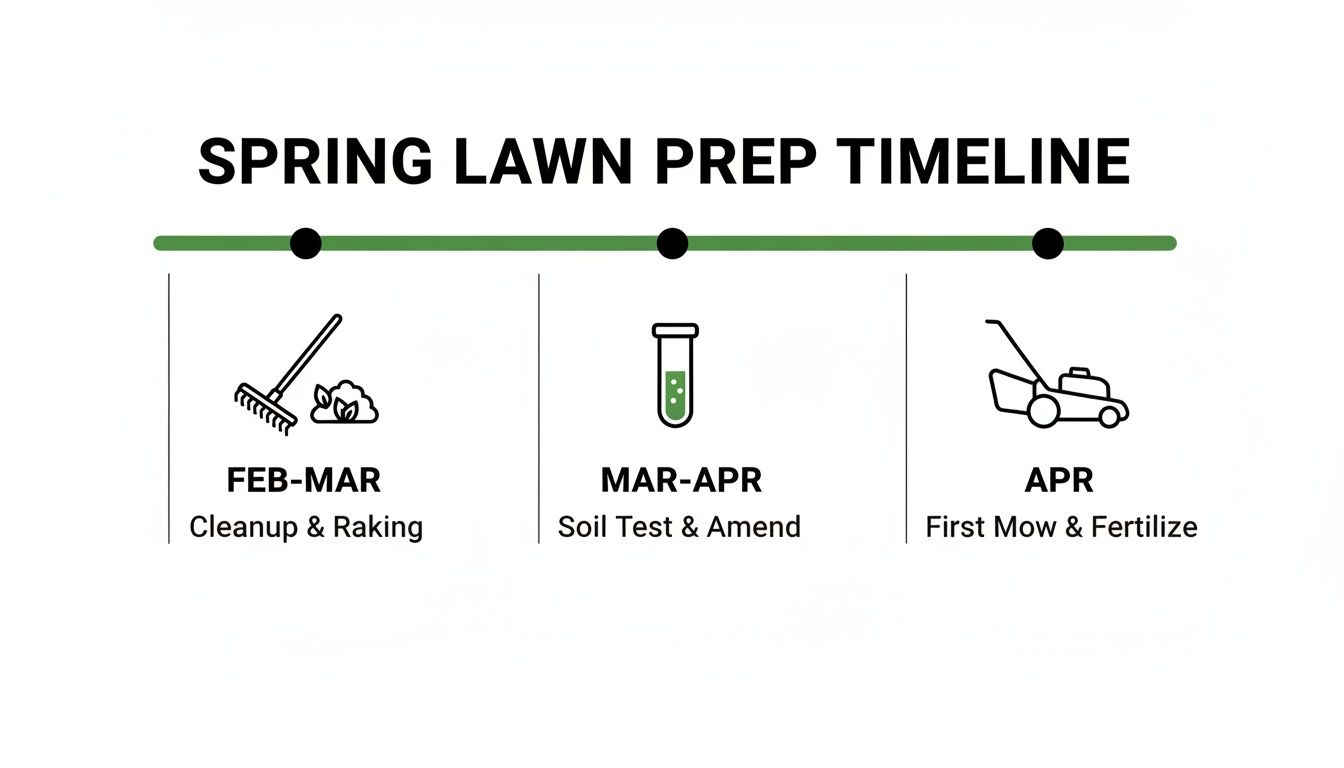
As you can see, the work really starts in late winter, well before many people even think about their lawns.
Spring Lawn Treatment Timeline for Forsyth County
To make it even clearer, here’s a simple timeline for homeowners in Cumming, Johns Creek, and Milton. Timing is everything, and this schedule is based on years of treating lawns in our local weather patterns.
| Month | Task | Why It's Critical in Forsyth County |
|---|---|---|
| Late Feb | Rake & Clean Up Winter Debris | Exposes grass to sunlight and air, preventing fungal growth that loves our damp, mild late winters. |
| Early March | Soil Test & Pre-Emergent Application | A soil test reveals what our red clay is missing. A professional pre-emergent application stops crabgrass before it ever starts. |
| Late March | First Mow & Post-Emergent Treatment | Cut grass high (3-4 inches) to encourage deep roots. Nipping existing weeds now prevents a summer-long battle. |
| April | Fertilize & Consider Aeration | Fertilization feeds hungry grass for spring green-up. Core aeration breaks up compacted clay, allowing roots to breathe. |
This timeline is a fantastic starting point, but remember to watch the weather—an unusually warm February or a cold snap in March might shift these dates by a week or two. This is where a professional lawn program removes the guesswork.
Dealing with Red Georgia Clay and Soil Compaction
Let’s be honest: most of us in Cumming, Suwanee, and the surrounding North Atlanta area are working with dense, nutrient-lacking red Georgia clay. This soil gets rock-hard, choking out grassroots and preventing water and nutrients from getting where they need to go. If you ignore the soil, everything else you do is just a temporary fix.
For anyone in Forsyth County trying to grow a great lawn, the single most important thing you can do is understand your soil. A professional soil test takes all the guesswork out of the equation. It tells you exactly what your lawn needs, so you can apply targeted treatments instead of just throwing down random fertilizer.
At Barefoot Organics, our entire philosophy is built on improving soil health. We know firsthand that a healthy lawn can only grow from healthy soil. That's why our seasonal lawn programs are designed to amend clay, boost drainage, and build a powerful root system that can handle the summer heat in communities from Buford to Canton.
For a more detailed month-by-month plan, take a look at our guide on the ideal lawn care schedule template tailored for North Georgia.
The Application Process for Spring Lawn Treatments
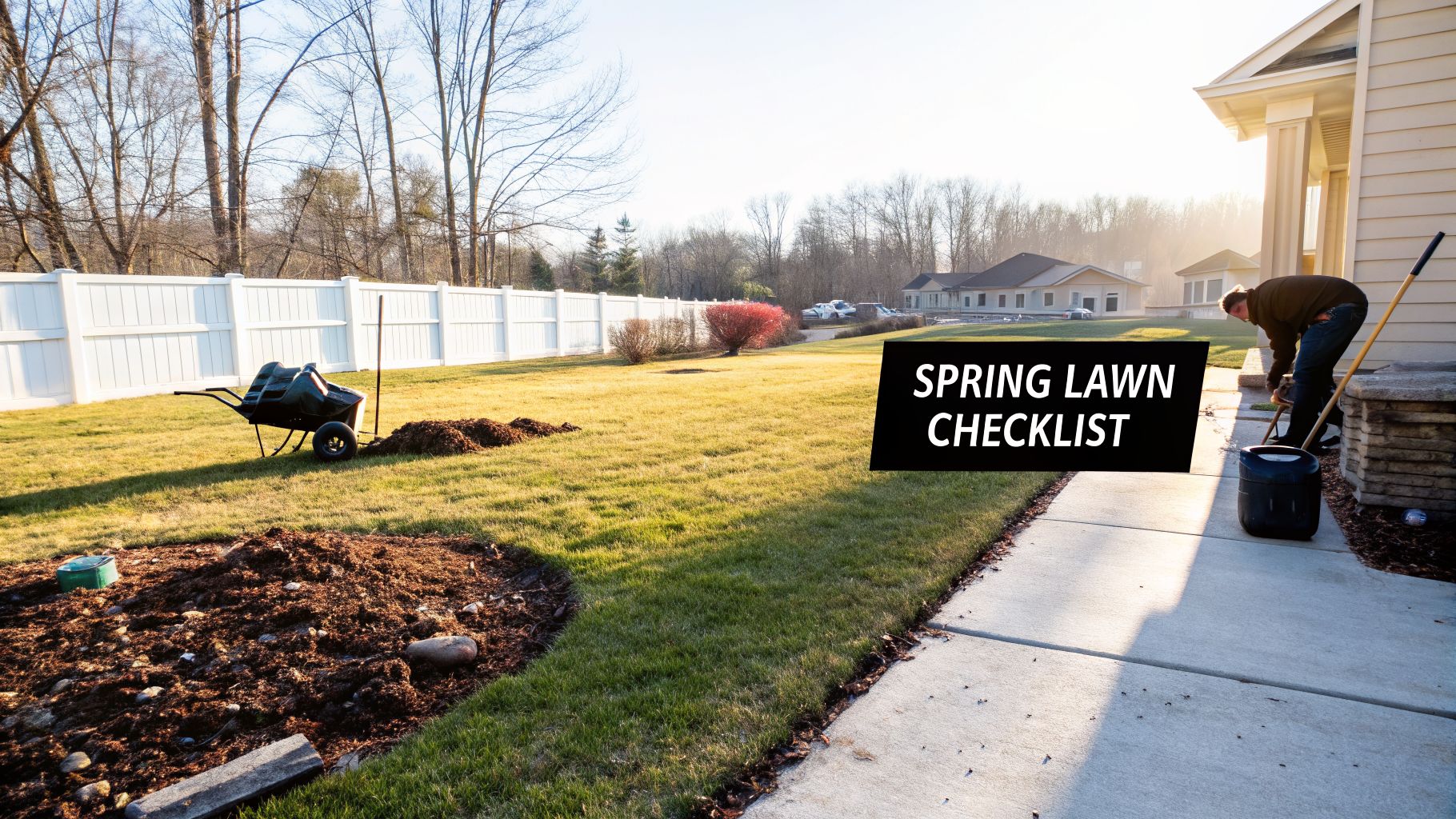
If there’s one thing I’ve learned about lawns from Cumming to Milton, it’s that our soil is the biggest hurdle. That heavy, red Georgia clay gets incredibly compacted over the winter. By spring, it can feel more like concrete than soil, literally choking the life out of your grassroots. Compaction creates a barrier that stops air, water, and fertilizer from reaching the roots.
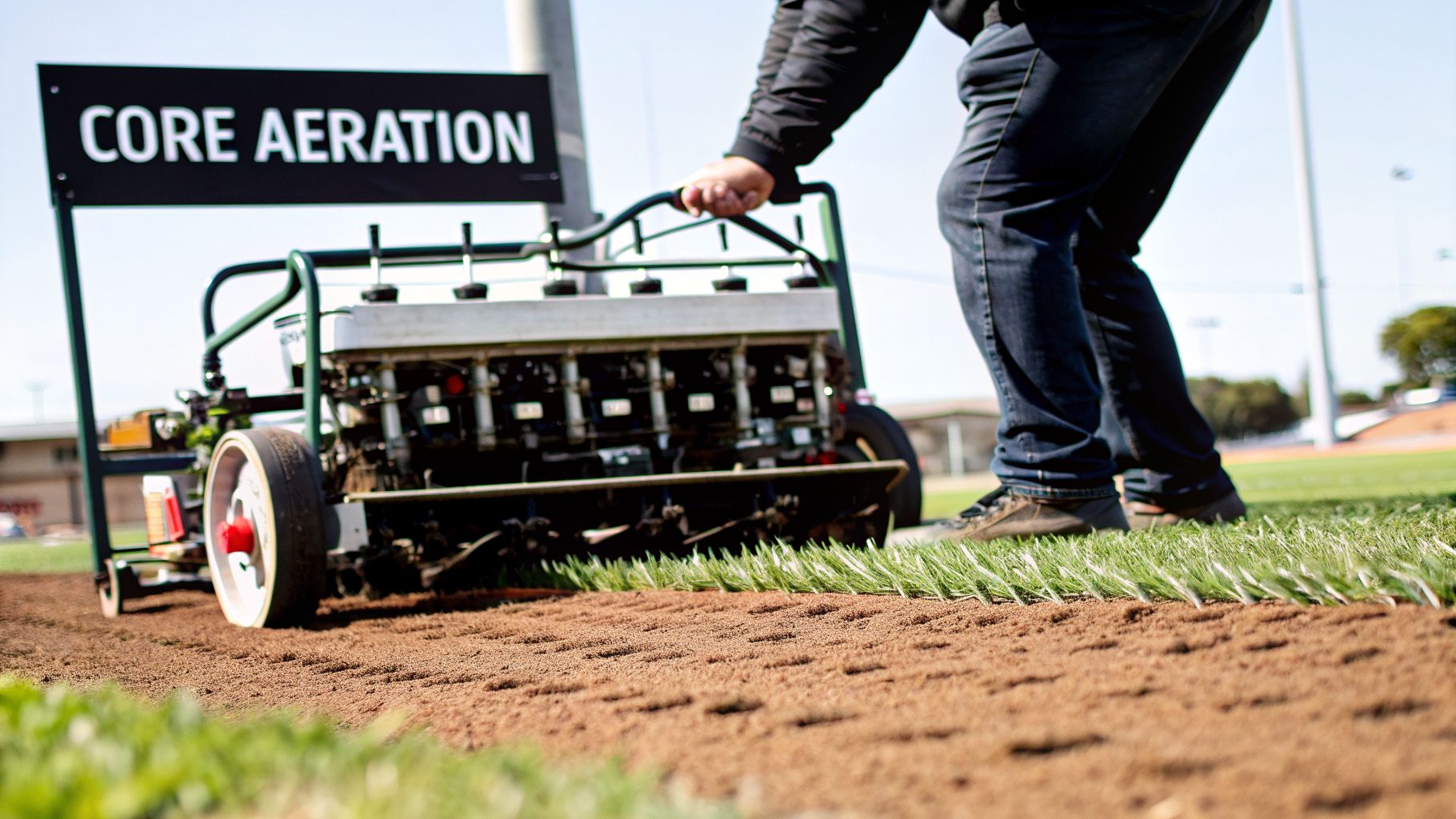
The Secret Weapon: Core Aeration for Cumming Lawns
For a lawn struggling with compacted soil, core aeration is the most important thing you can do. We use a professional machine to pull up small, finger-sized plugs of soil and thatch. This process instantly creates channels for air, water, and nutrients to penetrate deep into the root zone.
The results are powerful:
- Shatters Soil Compaction: It directly tackles the number one issue with our local clay.
- Boosts Nutrient & Water Access: Fertilizer actually reaches the roots, and water soaks in deep instead of running off.
- Promotes Deeper Roots: Stronger roots create a tougher, more resilient lawn that can handle the brutal summer heat.
- Manages Thatch Buildup: It helps break down that thick mat of dead grass that can smother new growth.
Don’t get the timing wrong. The most common mistake we see homeowners in Alpharetta and Johns Creek make is aerating at the wrong time.
- Bermuda & Zoysia Lawns: Aerate in late spring/early summer (May-July) when the grass is actively growing.
- Fescue Lawns: Aerate in the fall (September-October). Spring aeration on Fescue invites a massive crabgrass invasion.
You can get a more in-depth look at how this works by reading our guide on how to properly aerate your lawn.
Stopping Weeds Before They Start
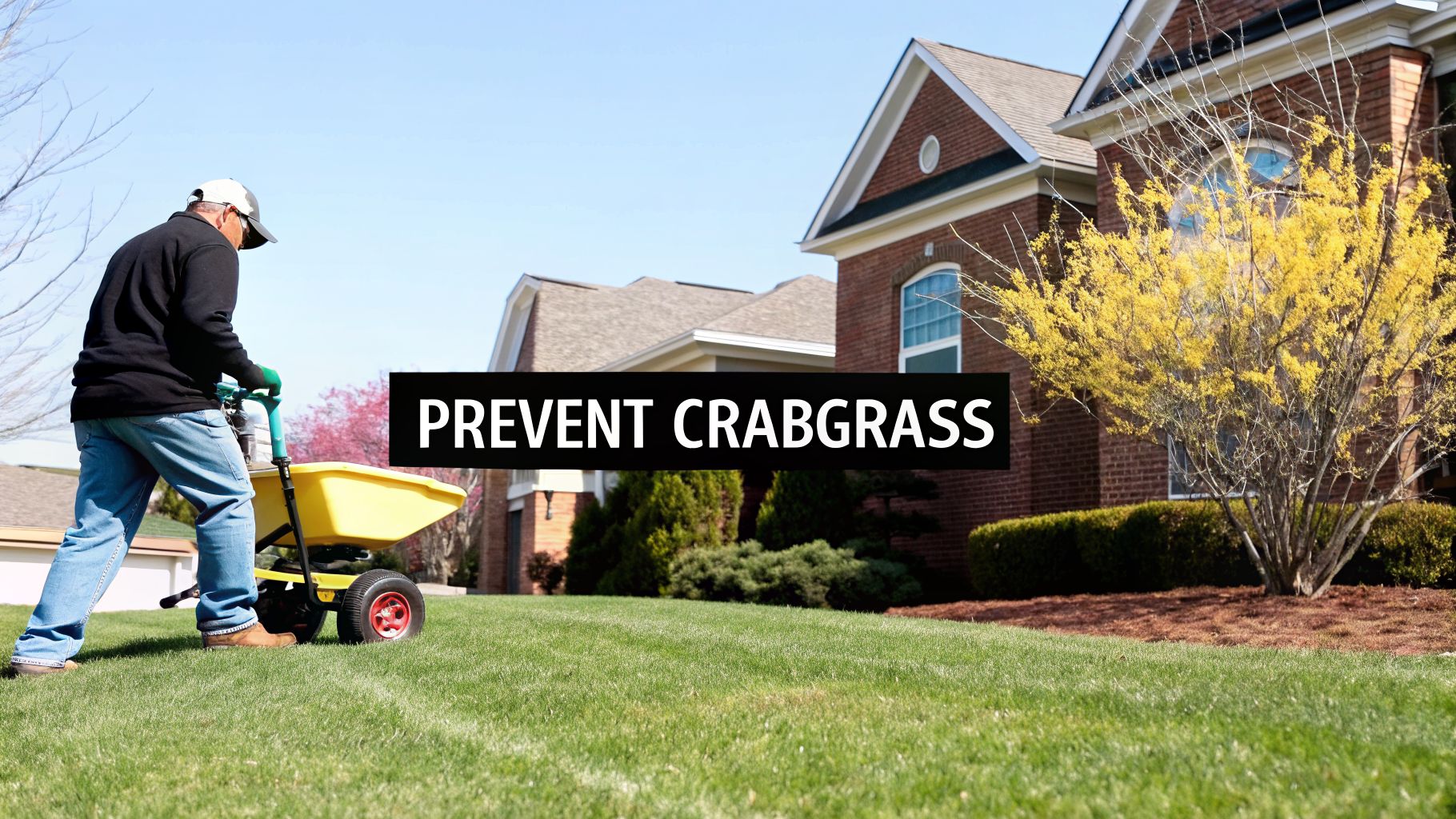
The secret to a weed-free lawn in Cumming isn't fighting the weeds you see; it’s preventing the thousands of seeds you don't see from ever sprouting. Your most powerful tool is a pre-emergent herbicide. When applied correctly in early spring, it creates a protective barrier that stops weed seeds, especially crabgrass, from germinating.
For us here in Cumming, the magic window is when soil temperatures consistently hold at 55 degrees Fahrenheit. This usually happens between late February and mid-March. A liquid post-emergent application handles any existing winter weeds at the same time. This one-two punch is the foundation of our local weed control service.
Proper Fertilizing and Seeding for North Georgia
Fertilizing is more than a "one-and-done" task. We use organic-based, slow-release formulas to provide steady nutrition your lawn actually needs, rather than a quick, unsustainable jolt of green. The goal of spring fertilization isn’t to force weak growth; it’s to encourage deep, strong roots that will carry your lawn through the North Georgia summer.
What about seeding? For thin Fescue lawns common in Forsyth County, spring is not the ideal time for a major overseeding project. That should always be done in the fall. However, a light spring seeding can help patch minor bare areas, provided you time it correctly around your pre-emergent application. For a deeper look into lawn nutrition, check out our guide on how to fertilize a lawn.
Smart Mowing and Watering for a Strong Cumming Lawn
Once you’ve handled soil health and weed prevention, proper mowing and watering are what build a lawn that survives our summer heat.
The All-Important First Mow
Before you start, make sure your mower blade is razor-sharp. A dull blade tears grass, inviting fungal diseases like brown patch. Mowing height is also critical for your grass type.
- For Bermuda Lawns: For the first cut, mow short, around 1.5 to 2 inches. This clears out dormant thatch and lets the sun hit new growth.
- For Fescue Lawns: Mow high from the start, at 3.5 to 4 inches. Cutting Fescue any shorter stresses the plant and robs it of its ability to shade its own roots—a key survival tactic for a Georgia summer.
Rethinking How You Water in Our Georgia Climate
One of the biggest mistakes homeowners in places like Sugar Hill and Canton make is watering a little bit every day. This trains roots to stay near the surface, creating a weak lawn. The smarter approach is deep and infrequent watering.
Your lawn needs about 1 inch of water per week, including rain. Instead of watering for 10 minutes daily, give it a good, long soak once or twice a week. This forces roots to grow deeper into the soil, building a tougher, more drought-tolerant lawn.
A professional lawn treatment program from Barefoot Organics helps build a healthier root system and soil structure, making your lawn more water-efficient and saving you money.
Why Choose Barefoot Organics in Cumming
We've walked through all the steps for getting a North Georgia lawn ready for spring. It’s a lot to tackle, and it’s clear a generic approach doesn’t work here. Your lawn in Cumming needs a specialized touch from a team that actually lives and works in Forsyth County.
Barefoot Organics isn't a faceless national chain. We’re your neighbors, focused on solving the exact frustrations you face—from compacted red Georgia clay to the inevitable crabgrass explosion. We know the precise window to apply pre-emergent in our climate, the right time to aerate a Bermuda lawn in Alpharetta, and how to help a Fescue lawn survive the summer heat up in Dawsonville.
Choosing a lawn service near me shouldn't be a gamble. You need a partner who understands your specific grass type, your soil, and your local HOA standards. We bring that practical, boots-on-the-ground experience to every lawn we treat, from Johns Creek to Canton.
Our goal is to get you real results using effective, organic-based products that are safe for your family and pets. We believe in building a healthy lawn from the soil up. If you're tired of guessing, let the local experts in Cumming give your lawn the professional head start it needs.
Don’t let your lawn fall behind the neighbors'. Call Barefoot Organics today to start your lawn program and protect your turf before summer heat stress begins!
Spring Lawn Care FAQ for Cumming, GA
As a local lawn expert in the Cumming area, I hear the same questions every spring. Here are the straightforward answers you need for your Forsyth County lawn.
Q: When should I apply pre-emergent in Cumming, GA?
A: In Cumming, pre-emergent weed control should be applied in late winter or very early spring before soil temperatures consistently reach 55 degrees. This is when crabgrass begins to germinate in Forsyth County lawns. The window is typically late February to mid-March, but watching the forsythia bushes bloom is a great natural indicator it's time.
Q: Is it better to aerate my Bermuda lawn in spring or fall in Georgia?
A: For Bermuda and Zoysia lawns in Georgia, it is far better to aerate in late spring or early summer (May-July). Aerating when the grass is actively growing allows it to recover quickly. Aerating too early in spring can damage the turf while it’s still waking up from dormancy, so we always advise our Cumming clients to wait.
Q: Can I fix bare spots in my Fescue lawn this spring?
A: Yes, you can patch minor bare spots in your Fescue lawn in early spring, but it's not ideal. The best time for major Fescue seeding in North Georgia is always the fall. New grass seeded in spring has a very tough time establishing roots before our intense summer heat and humidity arrive, requiring diligent watering to survive.
Q: What's the best way to deal with hard red clay soil in Cumming?
A: The best approach for our infamous red Georgia clay is a combination of core aeration and topdressing with organic compost. Aeration breaks up the compaction, creating channels for air and water. The compost falls into these holes, adding vital organic matter to the root zone and gradually improving your soil structure over time.
Q: How high should I mow my lawn in the spring in North Georgia?
A: Mowing height depends on your grass type. For Fescue lawns, which are common in many Cumming neighborhoods, you should mow high at 3.5 to 4 inches. This helps shade the soil and keep roots cool. For Bermuda lawns, you can start with a shorter cut around 1.5-2 inches to remove dormant material and encourage green-up.
Q: Are your lawn treatments safe for kids and pets?
A: Yes. At Barefoot Organics, we specialize in organic-based lawn care options. Our treatments are designed to be safe for your family and pets. We recommend staying off the lawn until the liquid product has had a chance to dry, which is typically about an hour depending on the weather. This gives homeowners in Cumming and Alpharetta peace of mind.
It can be useful to understand the wider landscaping and lawn care industry and the different services available.
Ready to skip the guesswork and get a lawn that’s the envy of your Cumming neighborhood? Let the local experts at Barefoot Organics create a customized, organic-based plan for your property.